
Do You Flip Chicken Breast in the Oven? Best Practice
You ask do you flip chicken breast in the oven because you want even cooking, good browning, and juicy meat. Flipping can help, especially when your oven heats unevenly or your chicken pieces are thick on one end.
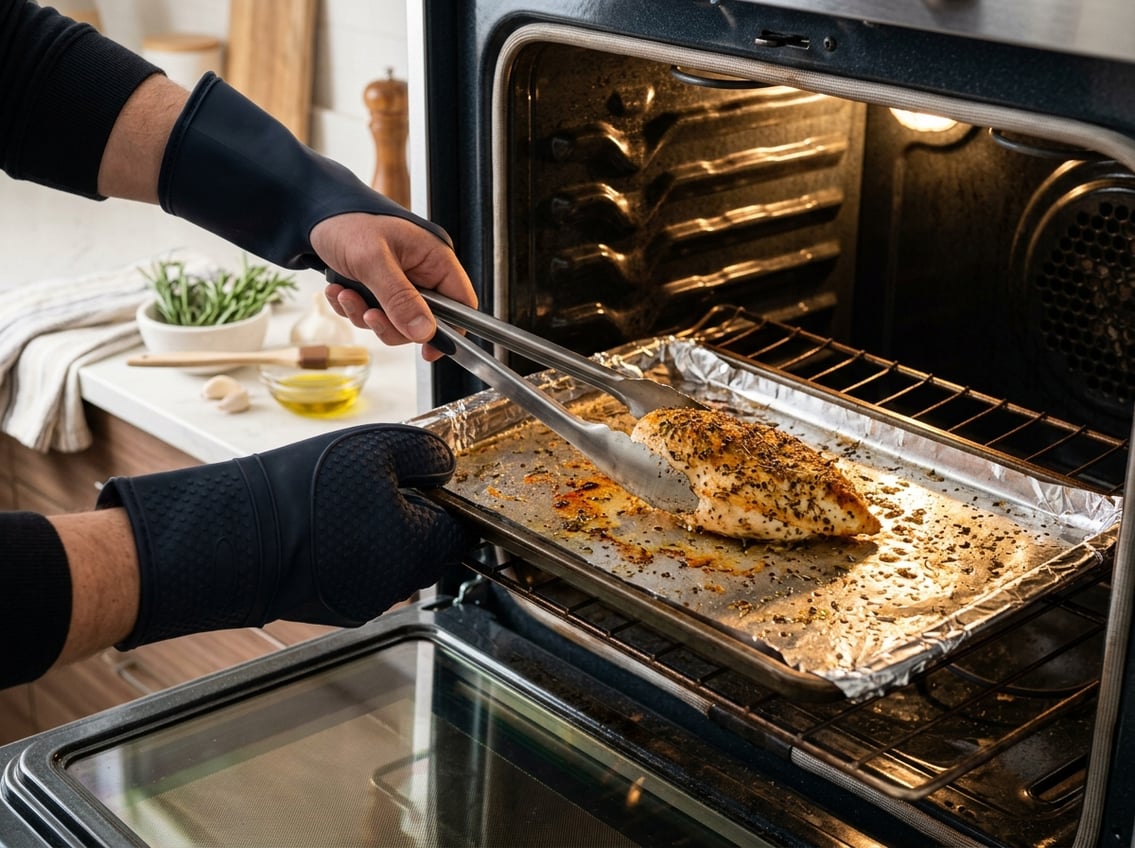
You do not always need to flip chicken breast, but flipping can improve browning and reduce the risk of one side drying out before the other side finishes. The best choice depends on your oven, the thickness of the chicken, and whether you are baking skin-on or skinless pieces.
If you want a dependable method, focus on even thickness, a moderate oven temperature, and a thermometer. Flipping is one useful tool, not the only one.
The Short Answer and When It Matters
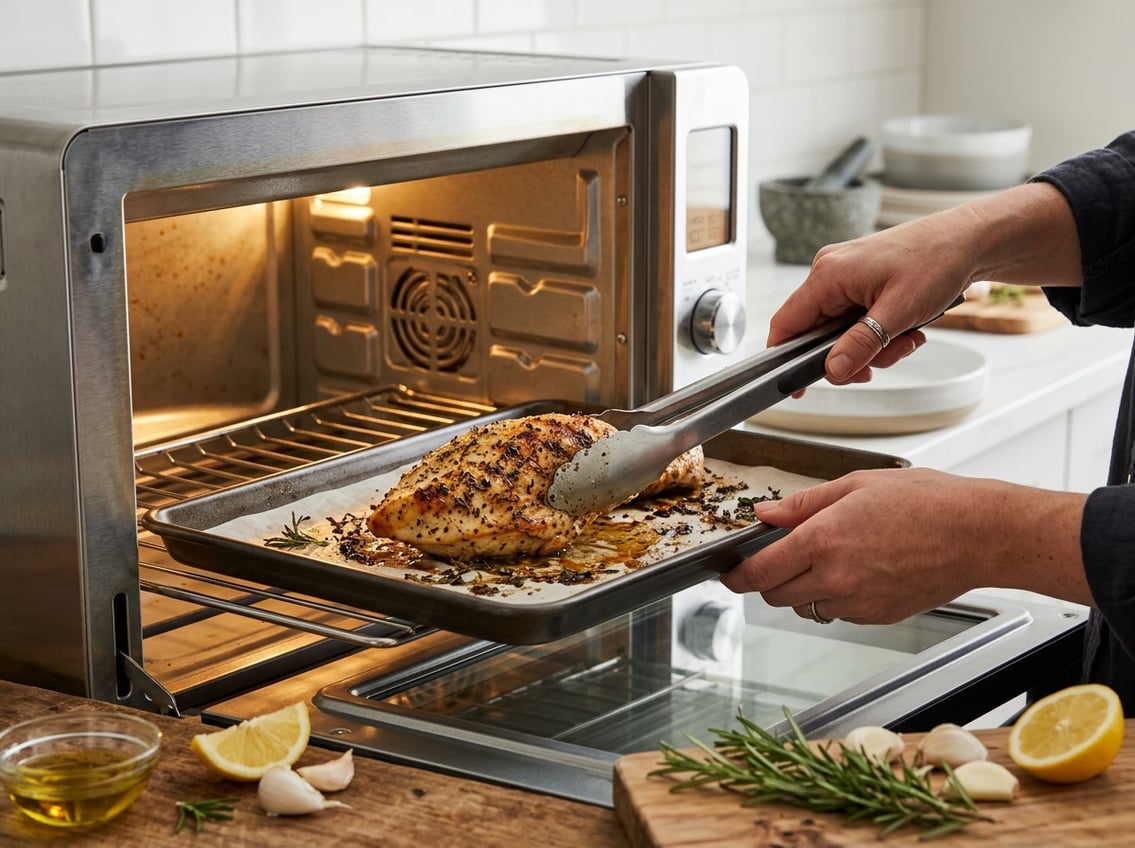
Flipping chicken breast in the oven usually improves even cooking and surface browning. Chef’s Resource notes that flipping helps both sides get similar heat exposure, which can reduce pale spots and dry edges.
You do not need to flip every time. If you use a convection oven, bake very thin chicken, or cook on a well-placed center rack, flipping may not matter as much.
When Flipping Chicken Breast Improves Results
Flipping helps most when your chicken breast is thick, uneven, or sits close to a strong heating source. It also helps when you want better color on both sides instead of browning only the top.
Flipping is useful for bone-in or skin-on pieces, especially if one side browns too fast while the inside still needs time.
When You Can Skip Flipping
You can skip flipping if your chicken breasts are thin and evenly sized, or if you use convection heat. A center rack with steady airflow can cook the meat evenly enough without turning it.
You can also skip flipping when you plan to slice the chicken for salads, bowls, or sandwiches, where perfect surface browning matters less.
How Browning and Even Cooking Change the Decision
Browning is a visual cue that makes the finished chicken look and taste better. Even cooking matters more than appearance because it affects moisture and food safety.
If one side sits much closer to the heat, flipping gives that side a break while the other side catches up. That simple step can make the texture more consistent.
How to Bake Chicken Breast for the Best Texture
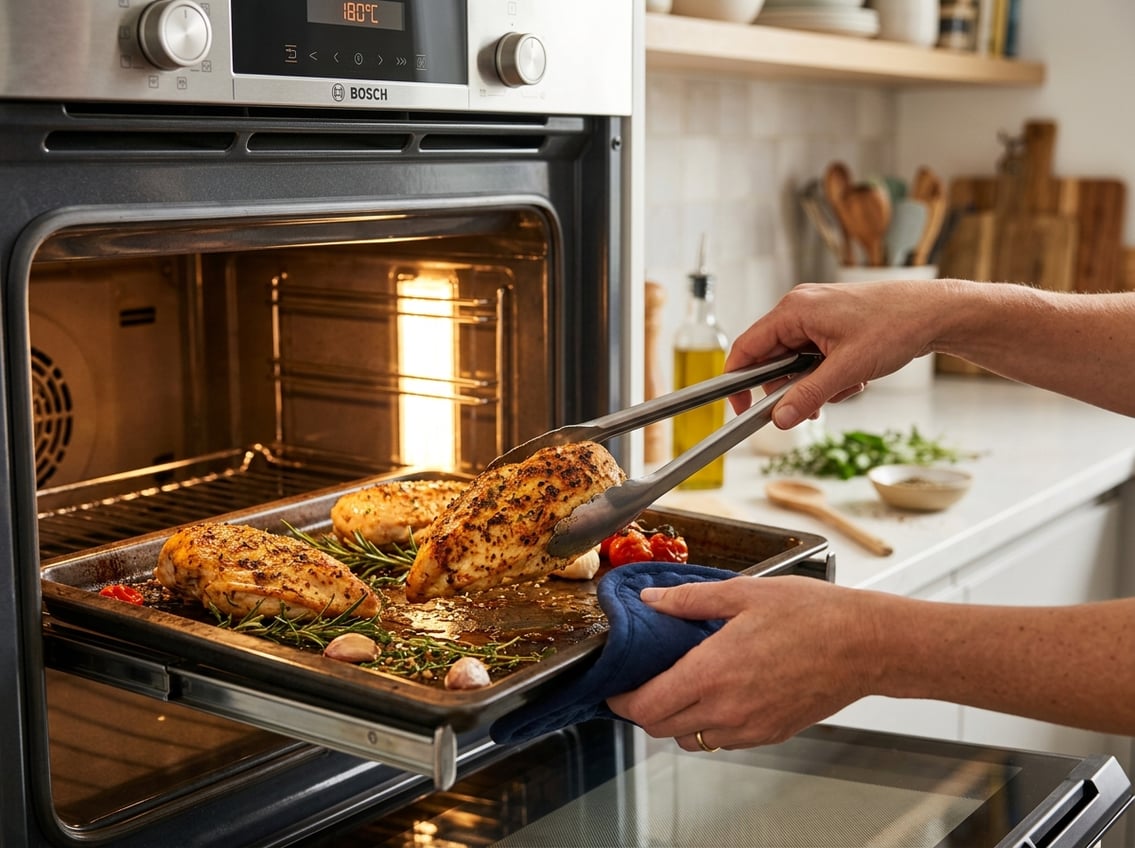
For good texture, focus on moderate heat, even sizing, and careful timing. The goal is cooked-through chicken that still feels tender, not dry meat with a dark crust.
Most of the work happens before the chicken goes into the oven, especially when you set up the pan and prepare the pieces evenly.
Best Oven Temperature and Timing
A common baking temperature for chicken breast is 375°F. Many cooks also use 400°F for faster roasting.
Chef’s Resource notes that 375°F is a solid middle ground for even cooking. Boneless, skinless breasts often take about 20 to 30 minutes depending on thickness.
If you want a little more browning, 400°F can work well with careful attention. Thicker breasts need more time, while thin cutlets need less.
When to Flip During Baking
If you are flipping, do it about halfway through the estimated bake time. That gives each side a similar amount of oven exposure and helps the top and bottom cook at a similar rate.
Use tongs or a spatula so you do not tear the surface. If the chicken is on parchment, be gentle so the seasoning stays in place.
How to Check for Doneness Safely
Use a meat thermometer and check the thickest part of the breast. The safe internal temperature for poultry is 165°F, as noted by Chef’s Resource.
Avoid guessing by color alone. Clear juices and firm texture can help, yet the thermometer is the most reliable way to know it is done.
What Affects Whether Flipping Helps
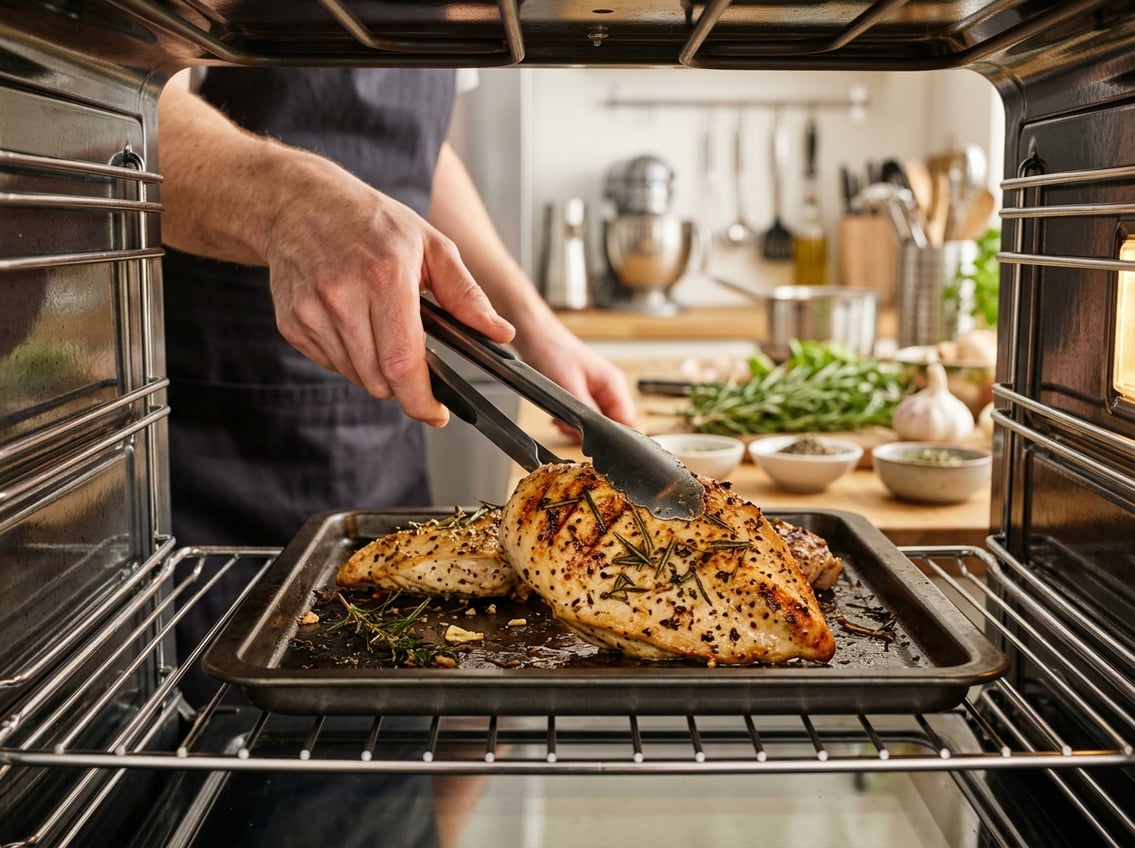
Your oven setup matters as much as the chicken itself. Heat source, airflow, thickness, skin, bone, and pan placement all change how useful flipping will be.
A piece that cooks evenly in one oven may need a turn in another. Small differences can change the result more than people expect.
Conventional vs. Convection Ovens
In a conventional oven, heat can be less even from top to bottom. Flipping helps balance that out when the heating element or hot spots favor one side.
A convection oven moves air with a fan, which usually gives more even browning. Chef’s Resource says flipping is less critical in convection, though it can still help a little.
Chicken Thickness, Skin, and Bone Structure
Thicker breasts need more time, so they are more likely to dry out on the outside before the center is done. Even thickness makes a bigger difference than most people think.
Skin-on breasts brown differently than skinless ones. Bone-in pieces often cook slower near the bone, so flipping can help when one side changes color faster.
Sheet Pans, Racks, and Oven Position
A center rack usually gives the most balanced heat. If the pan sits too low, the bottom can overcook before the top is ready.
A wire rack can improve airflow under the chicken, while a flat sheet pan may leave the bottom softer. Your choice depends on whether you want more browning or a simpler cleanup.
How to Keep Chicken Breast Juicy Without Overcomplicating It
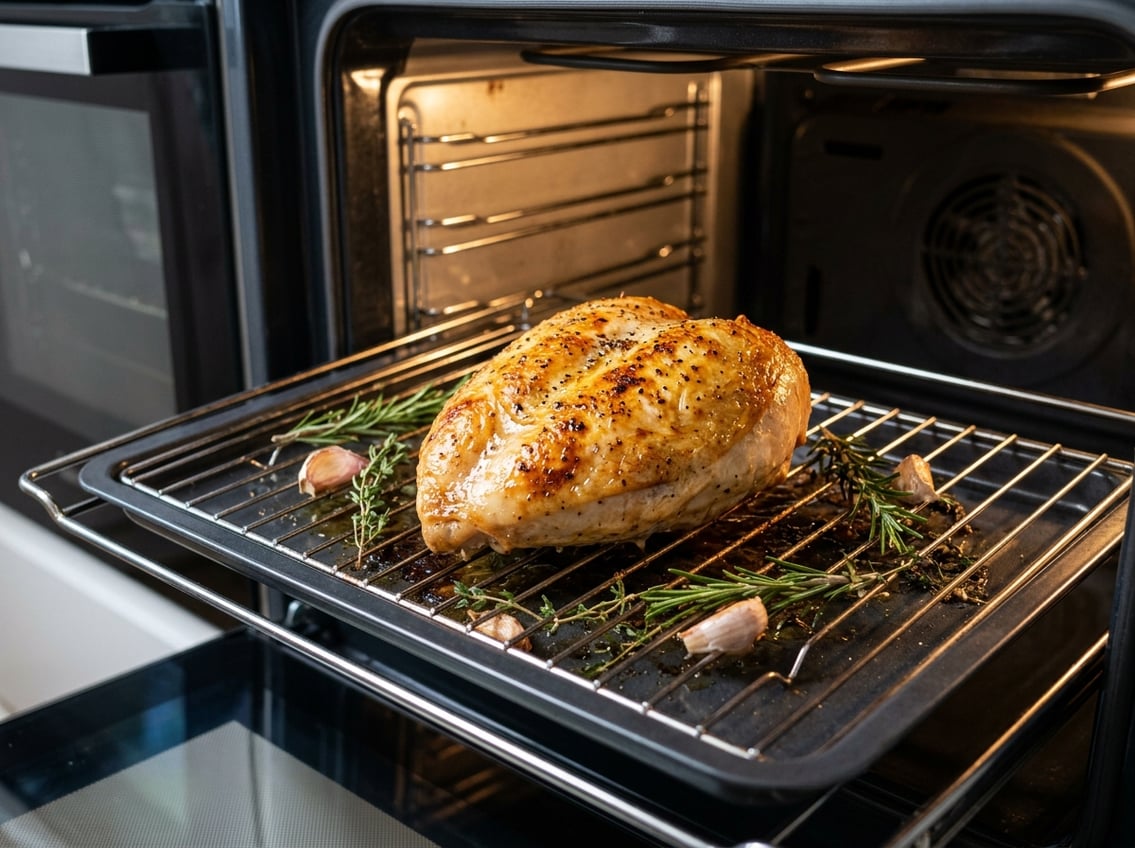
Juicy chicken breast comes from even heat and not overcooking it. Simple steps like leveling the meat, seasoning it well, and letting it rest do most of the work.
You do not need a complicated process to get a good result. A few basic habits make a clear difference.
Pounding to an Even Thickness
Pound the thickest part of the breast so the whole piece is closer to the same thickness. That helps the thin end and thick end finish at about the same time.
Even thickness can reduce the need for frequent flipping because the chicken cooks more predictably. It also helps the meat stay tender instead of drying out at the edges.
Seasoning, Oil, and Marinade Basics
Season the chicken before baking with salt, pepper, and simple spices. A light coating of oil helps the surface brown and keeps the seasoning in place.
A marinade can add flavor and a little extra moisture, though it will not fix overcooking. The best results still come from careful oven time and a thermometer.
Resting After Baking
Let the chicken rest for 5 to 10 minutes after it comes out of the oven.
Chef’s Resource recommends resting so the juices move back through the meat instead of spilling out when you slice it.
Loosely tent it with foil if you want to hold in heat.
This step helps the chicken stay moist and easier to cut.


