
How Do You Know Chicken Breast Is Good? Key Signs
You can check if chicken breast is good by looking at four things before you cook it: color, smell, texture, and packaging.
If the chicken looks normal, smells clean, feels firm, and is still within a safe storage window, it is usually fine to cook.
Raw chicken breast can look a little pale and still be fresh. You need to use more than one clue.
A single sign is rarely enough on its own.
If anything seems off, throw it out.
Chicken can cause foodborne illness with even a small mistake, so your checks should be simple and strict.
How To Check Chicken Breast Before You Cook It
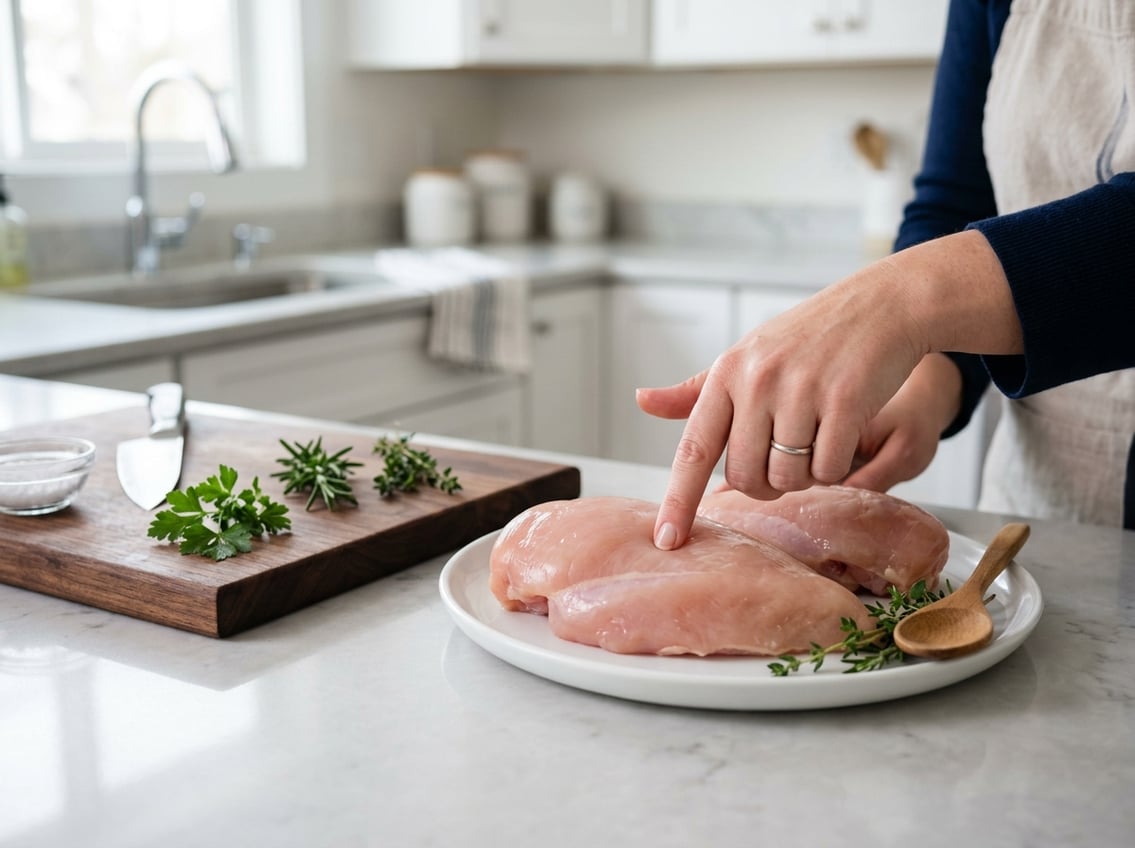
When you inspect raw chicken breast, judge the whole package, not just one feature.
Fresh chicken usually looks clean, smells very mild, and feels moist without being slimy.
A normal piece of raw chicken breast should also have no obvious damage to the package. There should be no signs of gas buildup or excess liquid.
Color Changes That Signal Freshness or Spoilage
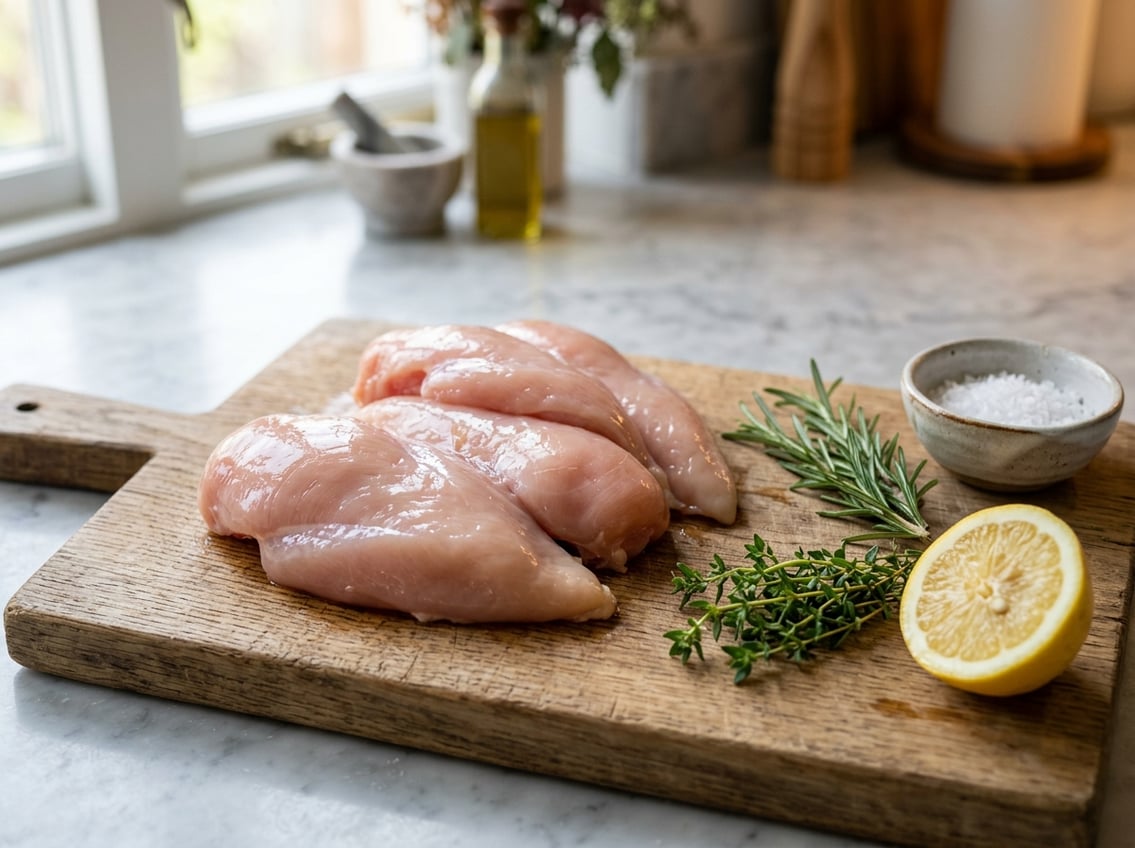
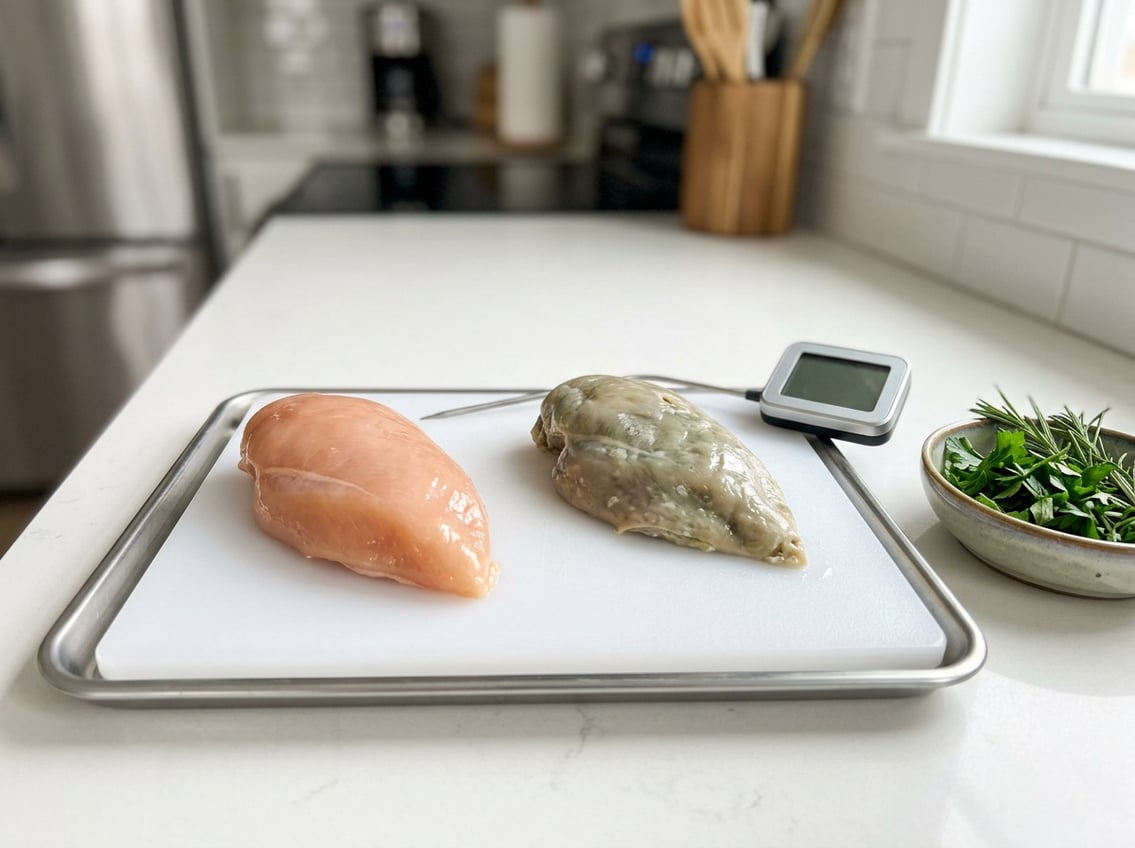
Fresh raw chicken breast is usually light pink with a pale, creamy tone.
Small color differences can happen from packaging and lighting, so do not panic over a slight shift.
Watch for gray, green, yellow, or dull brown areas, since those are stronger warning signs.
The USDA guidance on poultry freshness says color alone is not enough, so use it with smell and texture.
What Smell Can and Cannot Tell You
Fresh chicken should smell mild or nearly neutral.
A sour, rotten, sulfur-like, or ammonia-like smell is a bad sign.
Smell can help you catch spoilage, but it is not perfect.
Some harmful bacteria do not create a strong odor, so chicken that smells normal is not always safe if other signs are wrong.
Texture Signs Like Sliminess, Stickiness, and Firmness
Raw chicken breast should feel moist and slightly slippery, not sticky or tacky.
If it feels slimy, gooey, or coated, be cautious.
A good chicken breast should feel firm to the touch, not mushy.
Texture changes often show spoilage faster than color does.
When Packaging Liquid, Damage, or Dates Matter
A small amount of clear liquid in the package can be normal.
Thick, cloudy liquid or a package that is swollen, leaking, or torn is more concerning.
Check the date on the label, especially the “use by” or “sell by” date.
If the package is past the recommended storage window, do not rely on appearance alone.
When Chicken Breast Is Not Safe To Use
Some signs mean you should not cook the chicken at all.
Strong odor, visible mold, odd color, slimy texture, or a damaged package are clear reasons to discard it.
Raw chicken can carry dangerous bacteria even when it looks almost normal.
Safe judgment matters more than saving a few dollars.
Clear Spoilage Signs That Mean Throw It Out
Throw out chicken breast if you notice mold, a strong sour smell, sticky slime, or green and gray patches.
Discard it if the package is puffed up, leaking badly, or has been left warm too long.
If you are unsure, the safest choice is to toss it.
Taste is never a safe test for raw chicken.
Why Campylobacter and Other Bacteria Are a Concern
Raw chicken can carry bacteria such as campylobacter and salmonella.
These germs can cause stomach pain, diarrhea, vomiting, and fever.
The risk is not limited to chicken that looks bad.
That is why safe chicken handling matters even when the meat appears normal.
How To Prevent Foodborne Illness at Home
Keep raw chicken separate from ready-to-eat foods.
Wash your hands, cutting boards, knives, and counters after they touch raw chicken.
Cook chicken to a safe temperature, chill leftovers quickly, and never leave raw chicken out at room temperature for long.
These habits help prevent foodborne illness at home.
Storage and Handling Rules That Protect Quality
Good storage keeps chicken breast safer and helps it stay fresh longer.
The main goals are cold temperatures, clean packaging, and careful handling.
Raw chicken, fresh chicken, and chicken thighs follow the same basic food safety habits.
The same kitchen rules apply across most poultry.
How Long Fresh Chicken Lasts in the Fridge
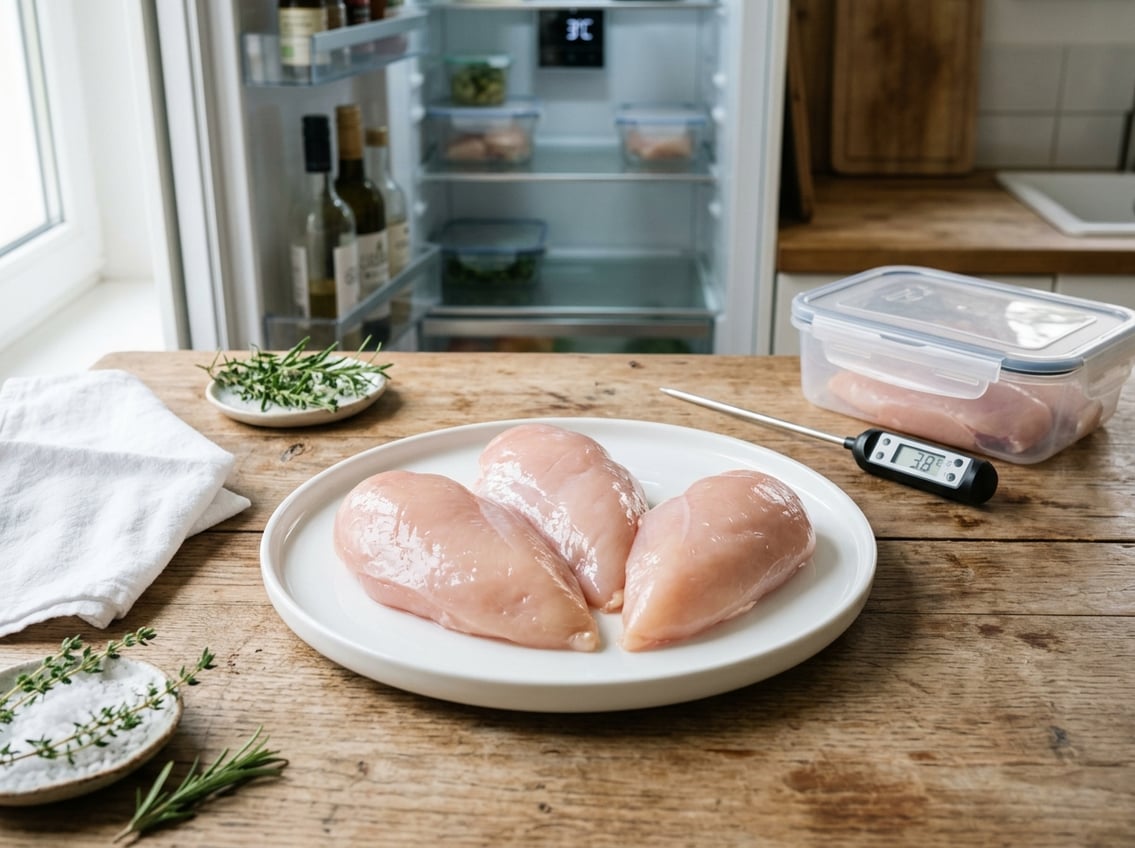
Raw chicken breast should stay in the refrigerator for only 1 to 2 days, according to storage guidance for raw chicken breast.
If you will not cook it in time, freeze it.
Keep your fridge at 40°F or below.
Place the chicken on the bottom shelf in a sealed container so juices cannot drip onto other foods.
Best Practices for Freezing and Thawing
Freeze chicken breast before it reaches the end of its fridge life.
Use airtight packaging to reduce freezer burn and protect texture.
Thaw it in the refrigerator, in cold water that you change often, or in the microwave if you plan to cook it right away.
Never thaw raw chicken on the counter.
Avoiding Cross-Contamination in the Kitchen
Use a separate cutting board for raw chicken.
If that is not possible, wash the board, knife, and counters right away with hot soapy water.
Keep raw chicken away from salad greens, bread, fruit, and cooked food.
Clean hands matter too, especially after touching packaging or trimming fat from the meat.
If You Decide To Cook It, Check Doneness Properly
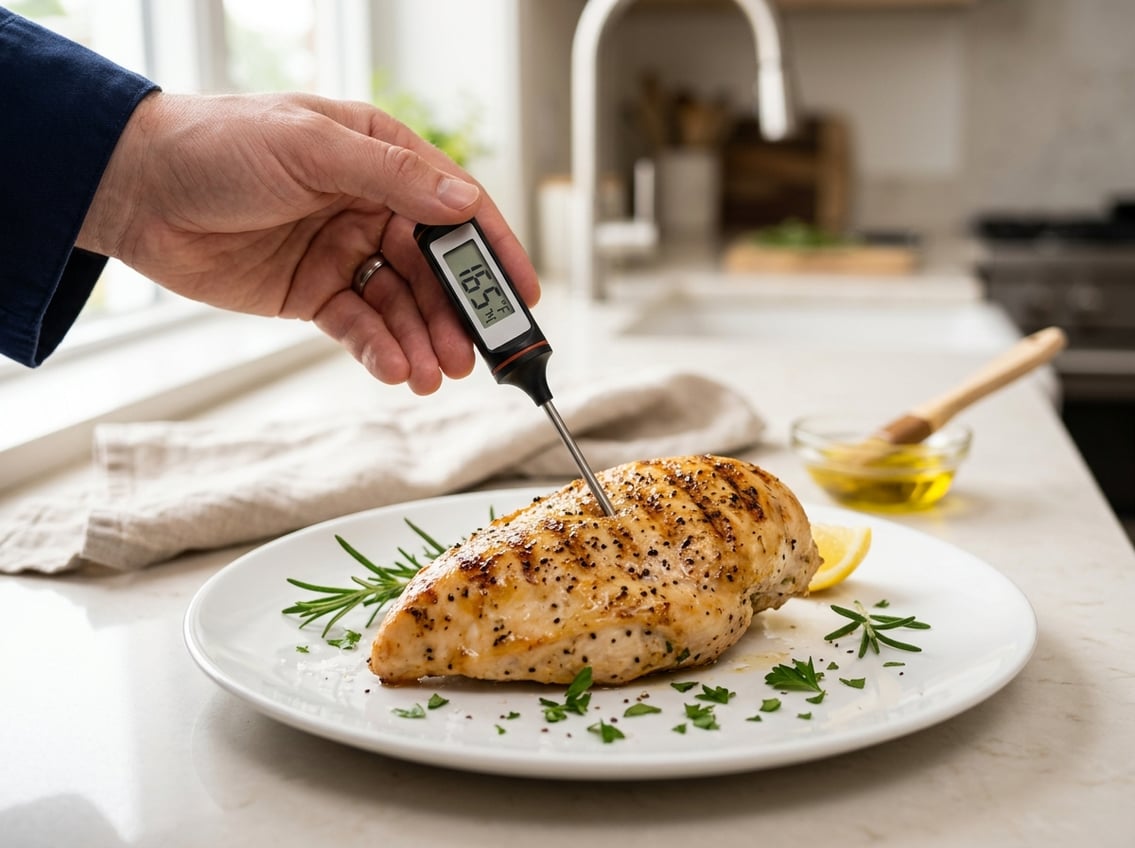
Once chicken breast is safe to cook, you need to check doneness the right way.
A thermometer gives you the most dependable result, while visual cues help confirm what you see.
Cooking chicken breast to the right point keeps it safe and helps avoid dry meat.
Why a Meat Thermometer Is the Most Reliable Method
A meat thermometer is the best tool for cooking chicken because color can fool you.
Insert it into the thickest part of the breast, away from bone or very thick fat.
Wait for the reading to settle before you decide the chicken is done.
Safe Internal Temperature for Cooking Chicken Breast
Chicken breast should reach 165°F for safety.
At that temperature, harmful bacteria die when the reading is taken in the thickest part of the meat.
If your chicken is below that number, keep cooking and check again.
This is the clearest way to know the meat is safe.
Visual and Texture Cues After Cooking Chicken
Cooked chicken breast looks opaque, white, and firm. Clear juices appear when you cut into the thickest part.
The meat springs back a little when pressed. If it feels soft, glossy, or rubbery in the center, cook it longer.


