
Are Chicken Breasts or Chicken Thighs Healthier? Key Differences
You may wonder, are chicken breasts or chicken thighs healthier for your needs. The answer depends on what you value most, because both cuts can fit a healthy diet.
Chicken breasts are usually the leaner choice. Chicken thighs give you more fat, richer flavor, and more staying power at the table.
If you want fewer calories and more protein per bite, chicken breast usually wins. If you want more taste and tenderness, chicken thigh often fits better.
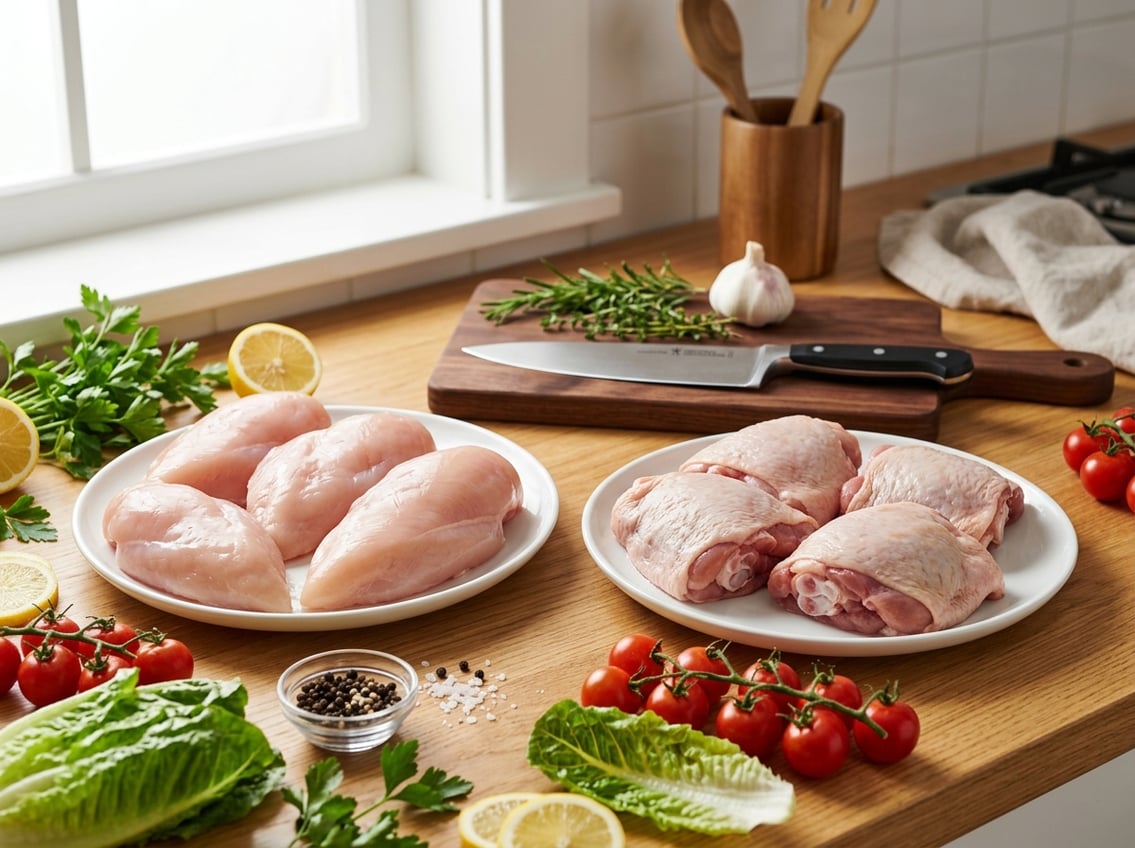
Both cuts provide lean protein, which matters if you are trying to build meals around filling, nutrient-rich foods. The better choice depends on your goals, your cooking method, and the rest of the meal.
The Short Answer: Which Cut Fits Which Goal
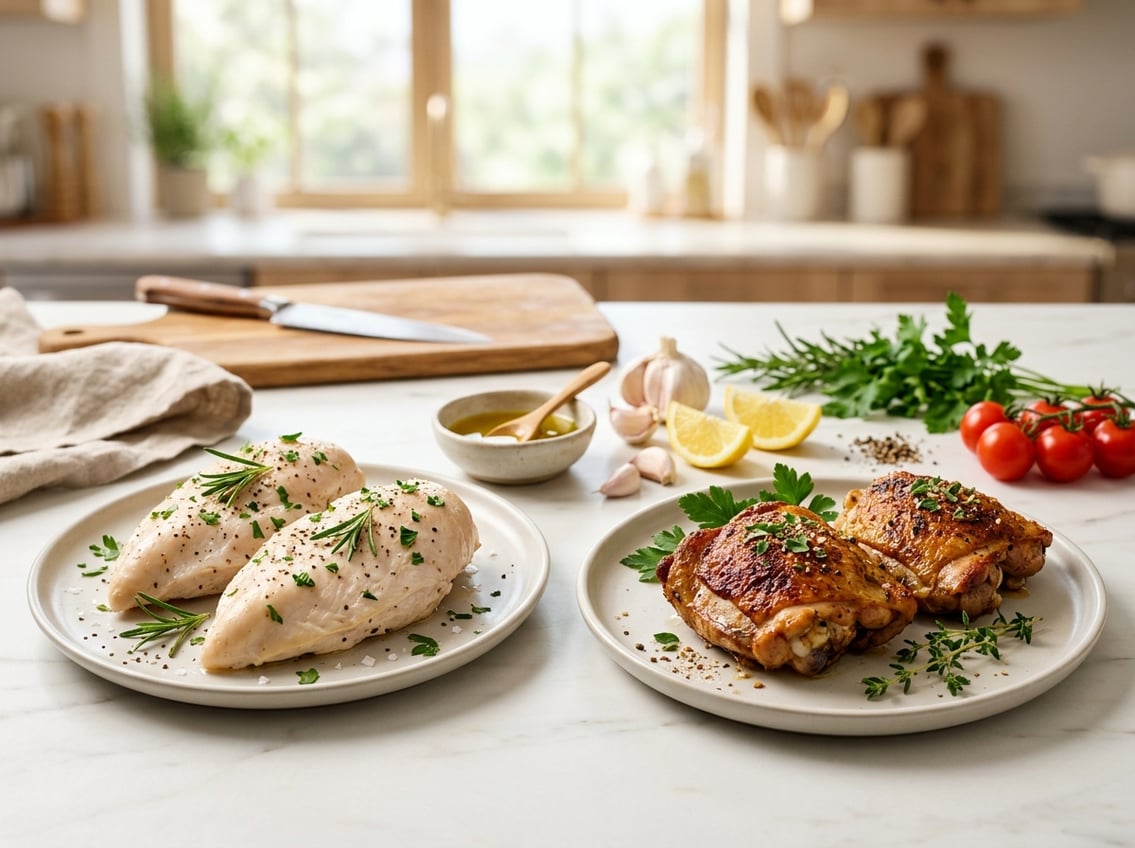
Choose chicken breast when you want a lean protein with fewer calories and less fat. Skinless chicken breast also gives you more protein for the calories you eat.
Pick chicken thigh when you want more flavor, more tenderness, and a meal that feels more satisfying. Skinless chicken thigh still fits a healthy pattern, especially when you control portion size and cooking fat.
Best Pick for Higher Protein and Fewer Calories
If your main goal is to maximize protein while keeping calories lower, choose chicken breast. According to Verywell Health, roasted skinless chicken breast has about 165 calories and 31 grams of protein per 100 grams, compared with 179 calories and 24.8 grams of protein for skinless chicken thigh.
That gap matters if you track macros, manage body weight, or try to keep meals lighter.
Best Pick for Flavor, Fullness, and Tenderness
If you care more about taste and texture, chicken thigh usually comes out ahead. It has more fat, which helps it stay moist during cooking and gives it a richer taste.
That extra fat can also make the meal feel more filling.
Why Neither Cut Is Automatically Healthier for Everyone
Neither cut is the right choice in every situation. Your total meal matters just as much as the cut itself, including sauce, skin, breading, portion size, and side dishes.
A large fried chicken breast can be less healthy than a modest roasted thigh.
Nutrition Differences That Matter Most
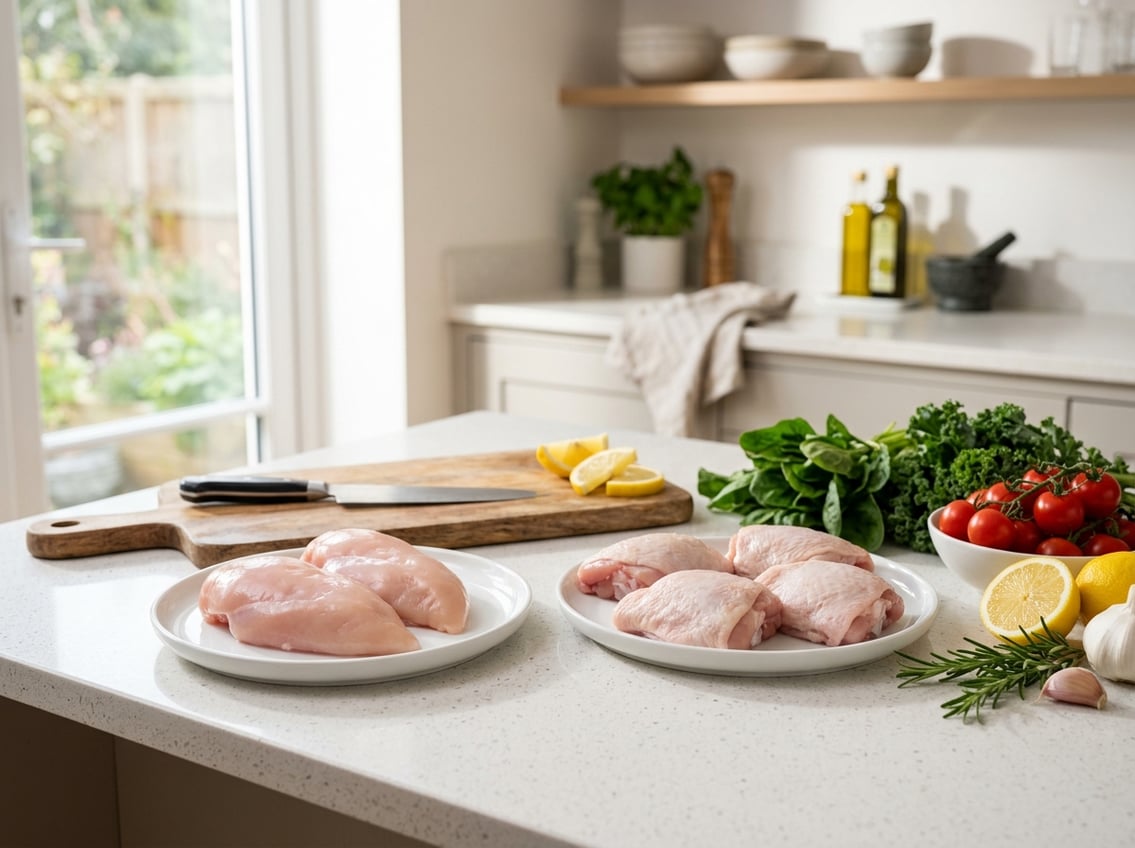
The biggest nutrition differences between chicken breasts and chicken thighs are calories, protein, and fat. Micronutrients matter too, since thighs tend to offer more iron and zinc, while breasts provide a little more choline and some B vitamins.
The comparison changes based on whether you choose skinless cuts and how large your serving is. Boneless, skinless portions make the most direct comparison.
Calories, Protein, and Fat Per Serving
Chicken breast is lower in fat and calories, which is why it is often labeled the leaner choice. Skinless chicken thigh has more fat, so it usually has more calories per serving.
If you want to get more protein without adding many extra calories, chicken breast is usually the better fit. A Verywell Health nutrition comparison shows that roasted skinless breast has more protein and less fat than roasted skinless thigh.
Micronutrients Like Iron, Zinc, B Vitamins, and Choline
Chicken thigh often has a small edge in some minerals. It can provide more iron, zinc, and vitamin B-12, which are useful for energy, blood health, and immune function.
Chicken breast can be stronger in some B vitamins and choline. According to Verywell Health, roasted chicken breast has more vitamin B-6 and choline per 100 grams, while thigh has more B-12, iron, and zinc.
How Skin, Portion Size, and Boneless Cuts Change the Comparison
The skin makes a big difference. Leaving the skin on can raise fat and calories by about 25% to 30%, according to Verywell Health.
Portion size matters just as much. A large serving of either cut can move the meal away from your health goals, even if the cut itself starts out lean.
Boneless cuts are also easier to compare, since bones change the edible portion and the nutrition label may vary.
How Cooking Method Changes the Health Profile
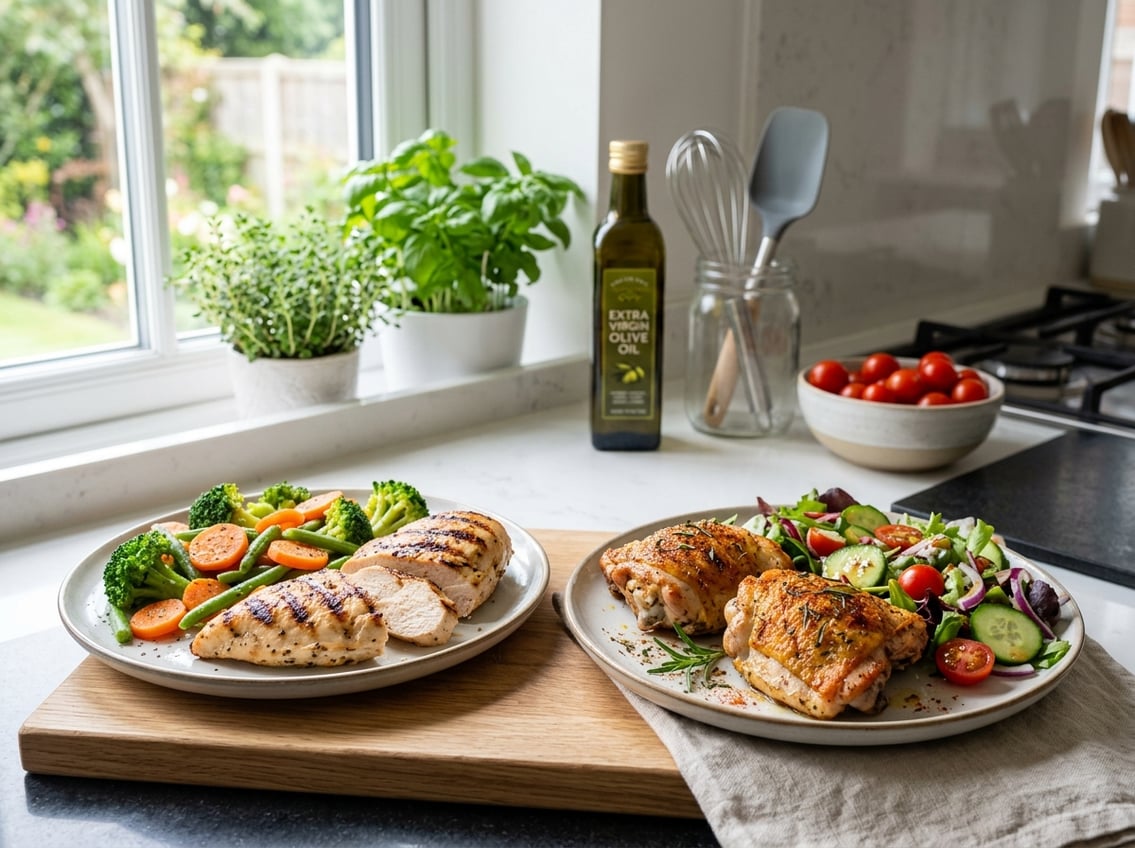
Cooking method can change a healthy chicken meal into a heavier one very quickly. Baking, roasting, and grilling usually keep calories and fat lower, while frying and breading raise them.
The same cut can look very different on the plate depending on how you cook it.
Baking, Roasting, and Grilling vs Frying
Baking, roasting, and grilling are usually the healthiest everyday methods. They do not require much added fat, and they help the chicken stay closer to its natural nutrition profile.
Frying adds oil and can add breading too, which increases calories and fat. As noted by Verywell Health, grilling, baking, and roasting are the healthier options compared with breaded or fried chicken.
How to Keep Chicken Breast Moist Without Adding Excess Fat
Chicken breast can dry out if you overcook it. To keep it moist, cook it to the right temperature, avoid high heat for too long, and let it rest before slicing.
A simple marinade, a quick brine, or cooking it with a little broth can help without adding much fat. These methods let you keep the lean protein benefits while improving texture.
How to Make Chicken Thighs Lighter Without Losing Flavor
Chicken thighs already have more flavor, so you do not need much extra fat to make them taste good. Remove the skin, trim visible fat, and use dry spices, citrus, herbs, or yogurt-based marinades.
Roasting thighs on a rack can also let some fat drip away during cooking. That keeps the meal lighter while preserving the tender texture people like in chicken thigh.
How to Choose Based on Real-Life Needs
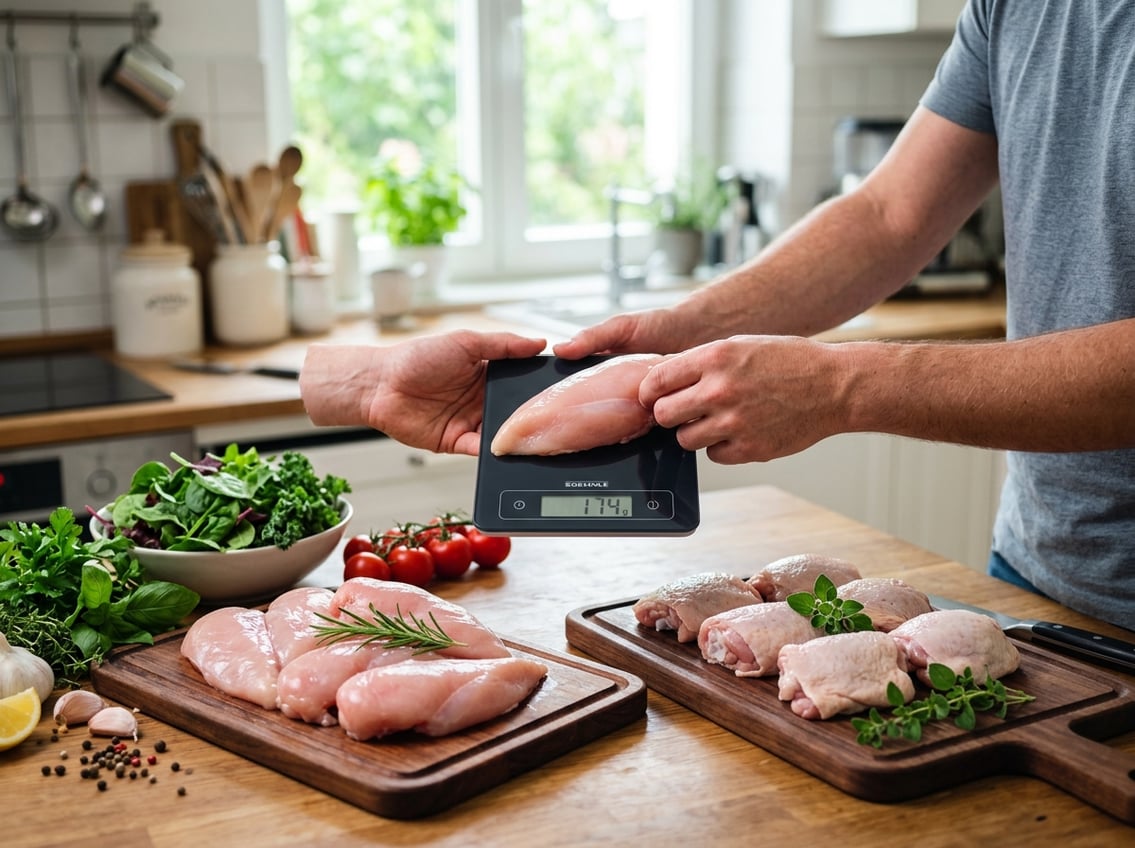
Your best choice depends on your daily routine, not just nutrition numbers. Chicken breasts and chicken thighs both work in healthy meals, and lean protein can fit weight loss, muscle building, or general healthy eating.
Price, prep time, and recipe style matter too. A cut you enjoy and cook well is often the one you will use more often.
Weight Loss, Muscle Building, and Everyday Healthy Eating
For weight loss, chicken breast often has the edge because it gives you more protein for fewer calories. That can make it easier to stay within your daily calorie target while still feeling satisfied.
For muscle building, either cut can work, since both provide complete protein. Chicken breast is more efficient for high-protein, lower-fat meals, while thighs can help if you need more calories or prefer fuller meals.
Budget, Meal Prep, and Recipe Versatility
Chicken thighs are often less expensive by the pound, which can help stretch your food budget. They also stay juicy in meal prep, so they hold up well in reheated dishes like rice bowls, soups, and stews.
Chicken breast is easier to use in salads, wraps, stir-fries, and simple grilled meals. If you cook in batches, both cuts can give you good variety across the week.
When Using Both Cuts Together Makes Sense
Using both cuts in the same week gives you a good mix of nutrition, taste, and convenience.
You can choose chicken breast for a lean protein meal. Use thighs when you want something richer or more tender.
You can even combine both cuts in the same dish.


