
Which Is More Tender Chicken Breast or Thigh? Quick Guide
Which is more tender chicken breast or thigh is a common kitchen question because the answer changes with cooking method, texture, and your goal for the meal.
In most home cooking, chicken thigh is usually more tender and forgiving. Chicken breast can feel tender only when you cook it with careful timing and control.

Chicken breast gives you a leaner bite and milder flavor. It also has a firmer texture.
Chicken thigh brings more juiciness and richer flavor. It feels softer after cooking.
If you want the most tender result with the least risk of dryness, thigh usually wins.
What Actually Makes One Cut More Tender
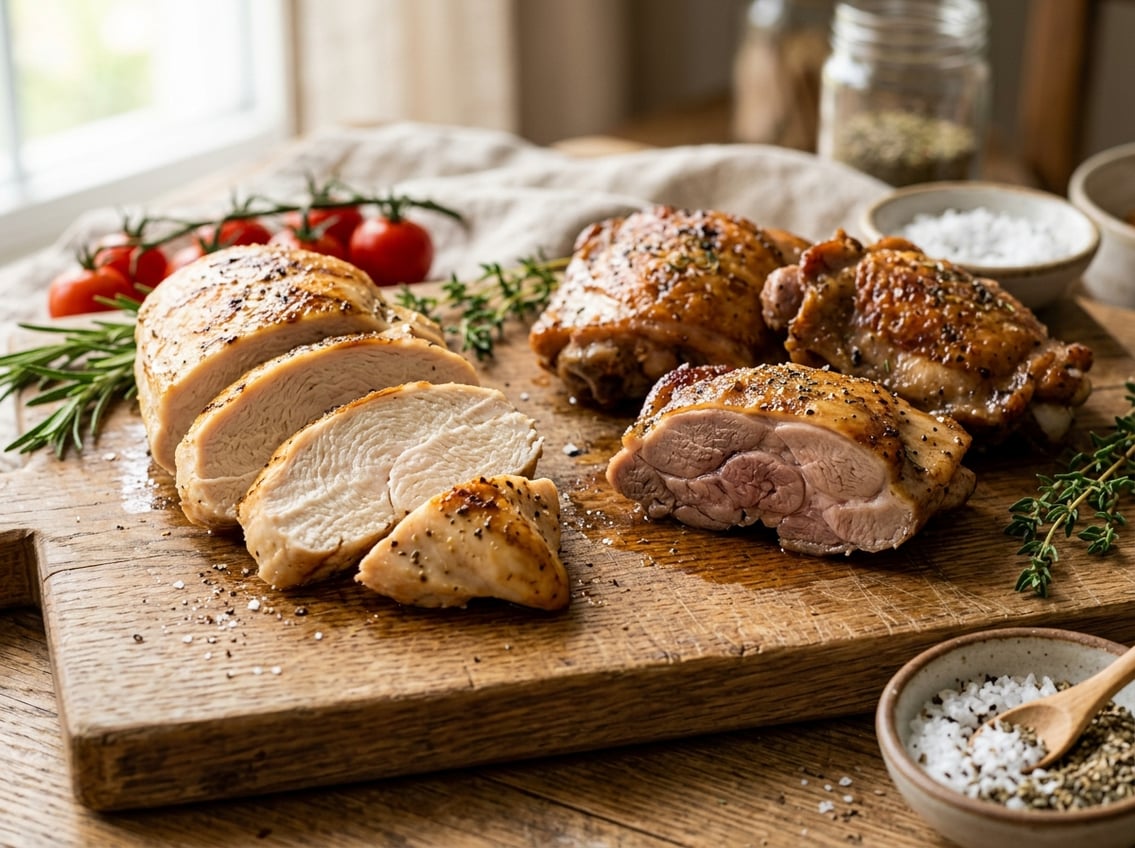
The cut’s muscle structure, connective tissue, and fat content affect tenderness. These factors shape how the meat feels before cooking and how much moisture it keeps as it cooks.
Muscle Structure, Connective Tissue, and Fat
Chicken breast comes from a muscle that does less work, so it has a finer texture and less connective tissue.
Chicken thigh comes from the leg, which does more work and has more collagen and structural support. Those differences make thighs more forgiving and breasts more likely to dry out.
Fat also affects how tender meat seems to you. It coats the fibers and helps the meat stay moist.
Fast-Twitch Fibers vs. Slow-Twitch Fibers
Chicken breast has more fast-twitch fibers, which are built for quick bursts of movement. These fibers are lean and can seem dry if you push them too far.
Chicken thigh has more slow-twitch fibers, which are built for steady use. That gives the meat a darker color and a softer bite after cooking.
Why Collagen and Fat Improve Juiciness
Collagen is a tough protein that softens with time and heat. In thighs, that collagen can turn into gelatin during longer cooking, which improves juiciness and tenderness.
Fat content helps protect the meat from dryness. Thighs hold up better during cooking, especially when you use heat for longer periods or at higher levels.
How Breast and Thigh Perform in the Kitchen
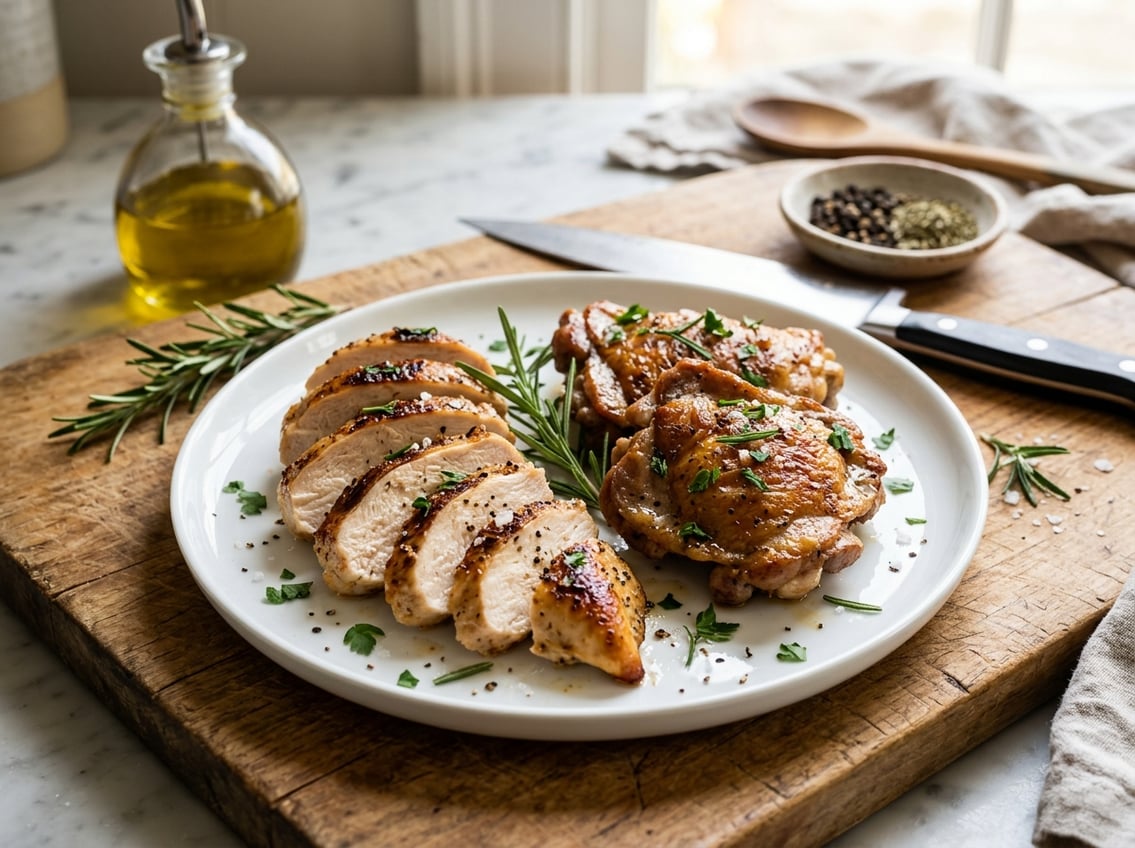
For skinless chicken, the difference is easy to notice. Skinless chicken breast works best when you want a lean cut with a clean flavor.
Skinless chicken thighs give you more moisture and a softer texture.
Best Uses for Skinless Chicken Breast
Skinless chicken breast fits well in salads, sandwiches, and meal prep. It also works for grilled chicken, baked chicken, and roasted chicken when you watch the cooking time closely.
This cut is useful when you want versatility and lower fat. It pairs well with strong sauces, marinades, and seasonings because the meat itself tastes mild.
When Skinless Chicken Thighs Work Better
Skinless chicken thighs are a strong choice when you want tenderness and flavor in the same bite. They hold up well in recipes where the meat cooks longer, such as braises and rich baked dishes.
They also stay moist in grilled chicken and roasted chicken more easily than breast. If your goal is a juicy result with less stress, thighs are often the better pick.
Skin-On Chicken and Moisture Retention
Skin-on chicken helps protect the meat during cooking. The skin adds a layer that can reduce moisture loss and improve browning.
That matters most for chicken thighs, since the skin adds even more richness and helps the cut stay juicy. Skin-on chicken breast can still dry out if overcooked, so the skin helps, yet timing still matters.
Cooking Methods That Help Each Cut Stay Tender
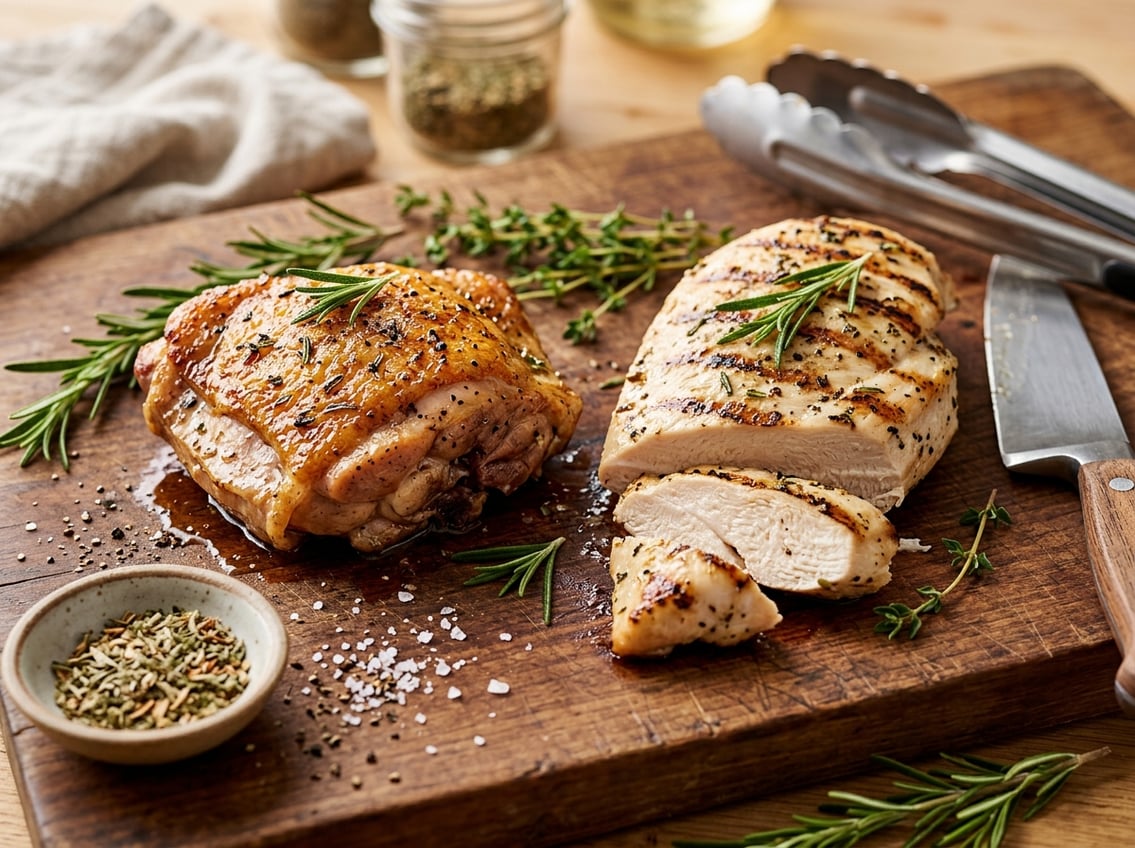
The best way to cook chicken breasts and chicken thighs depends on how much time and control you have. Breasts need precision, while thighs tolerate a wider range of cooking styles and temperatures.
How to Cook Chicken Breasts Without Drying Them Out
Chicken breasts stay tender when you avoid overcooking. Quick methods like grilling, frying, and baking work well if you use an internal temperature guide and pull the meat on time.
A thermometer is your best tool. For safety, cook chicken to 165°F, or 74°C, but breasts can become dry if you cook far past that point.
Many cooks remove breast meat just as it reaches the safe range, then let carryover heat finish the job. Gentle methods like poaching can also help.
Even cooking, short cooking time, and resting the meat after heat all support better texture.
How to Cook Chicken Thighs for Maximum Tenderness
Chicken thighs are more flexible. You can use roasting, baking, braising, stewing, slow cooking, grilling, or frying, and they still stay tender more easily than breasts.
Thighs can handle a longer cooking time because fat and collagen work in your favor. That is why they shine in braised dishes and slow cooking, where the meat has time to soften.
For the most tender result, cook thighs past the minimum safe point and into the range where collagen breaks down well. That gives you a softer, juicier bite.
Brining, Vinegar, and Temperature Control
Brining helps both cuts hold moisture. It is especially useful for chicken breast, since the extra salt can improve juiciness and reduce dryness.
Vinegar-based marinades can also help, as long as you do not soak the meat too long. Temperature control matters most of all, because overcooking is the fastest way to lose tenderness in breast meat.
For thighs, aim for steady heat and enough time for the texture to relax. For breasts, stop at the right internal temperature.
Nutrition Trade-Offs Beyond Tenderness
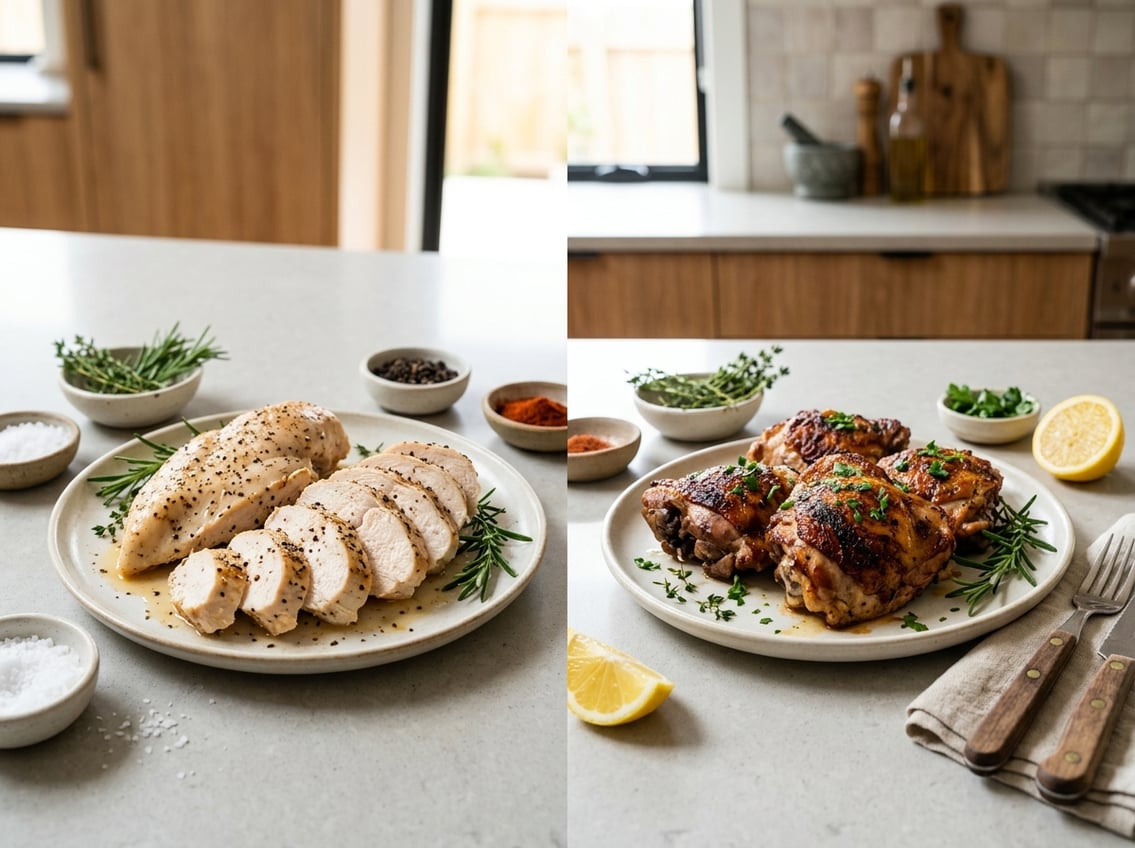
Tenderness is only one part of the choice. Calories, protein content, fat content, and key nutrients all matter when you choose between chicken breast and chicken thigh.
Calories, Protein Content, and Lean Protein
Chicken breast is usually the lean protein choice. It has fewer calories and more protein per calorie than thigh, which makes it popular for lower-fat meal plans.
Chicken thigh still gives you plenty of protein, just with more fat attached. If you want a lighter meal, breast is usually the better fit.
Fat Content, Monounsaturated Fat, and Flavor
Chicken thigh has more fat content, including more monounsaturated fat than breast in common nutrition comparisons. That extra fat supports flavor and helps the meat taste richer.
Chicken breast is milder and leaner, so it works well when you want seasoning, sauces, or dressings to lead the dish. Thigh gives you more built-in flavor, which can make the meal feel more satisfying.
Iron and Zinc Differences That Matter
Chicken thigh offers more iron and zinc than chicken breast. These minerals are important if you want a cut with more nutrient density beyond protein.
Chicken breast has a strong nutrition profile. It fits many healthy eating goals.
Your best choice depends on whether you value leanness, flavor, or a balance of both.


