
What’s the Best Way to Bake Chicken Breast? Juicy Method
What’s the best way to bake chicken breast? Use boneless skinless chicken breasts of similar size, season them well, bake them at high heat until they reach 165°F, and rest them before slicing.
This method gives you a baked chicken breast that stays juicy and cooks evenly.
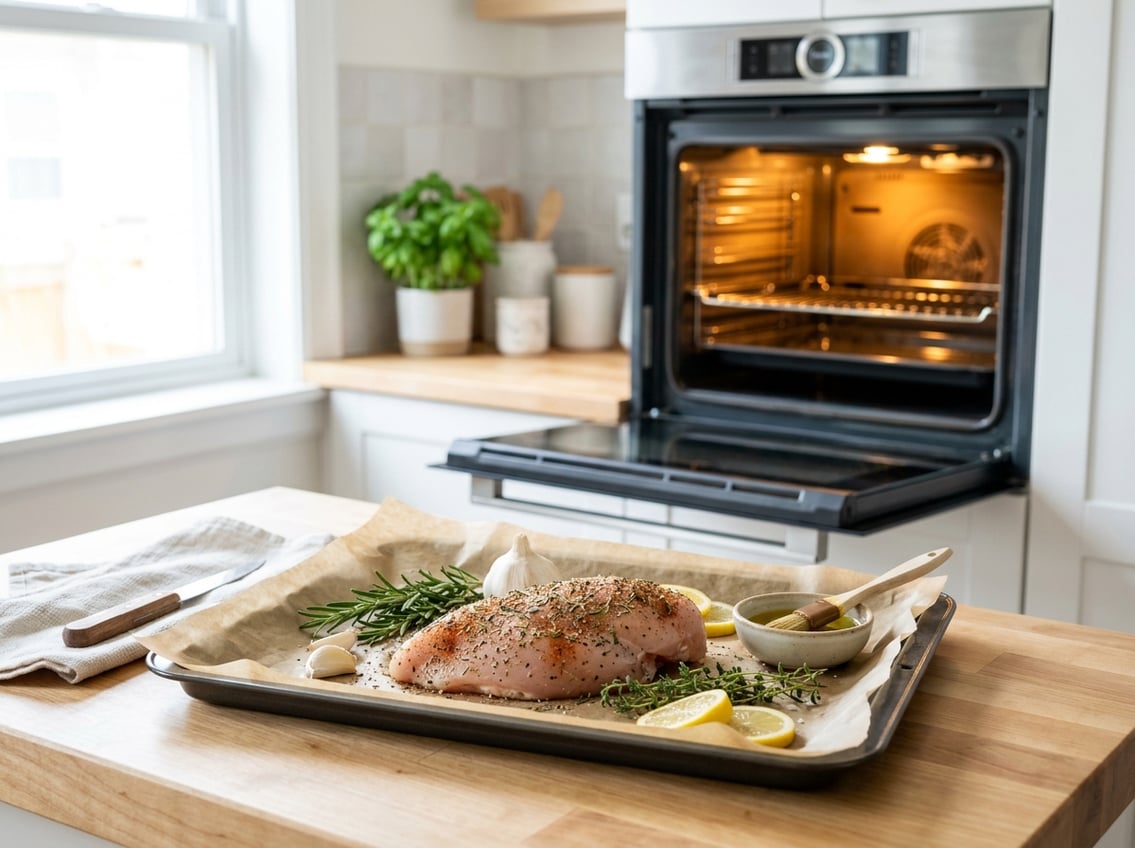
A good chicken breast recipe does not need many ingredients. The method matters most because lean chicken dries out fast when it cooks too long.
You can use this approach for baking chicken breasts in batches, whether you make one or several portions at once. It also works well for meal prep since the meat stays tender when stored and reheated properly.
The Best Method for Juicy Results
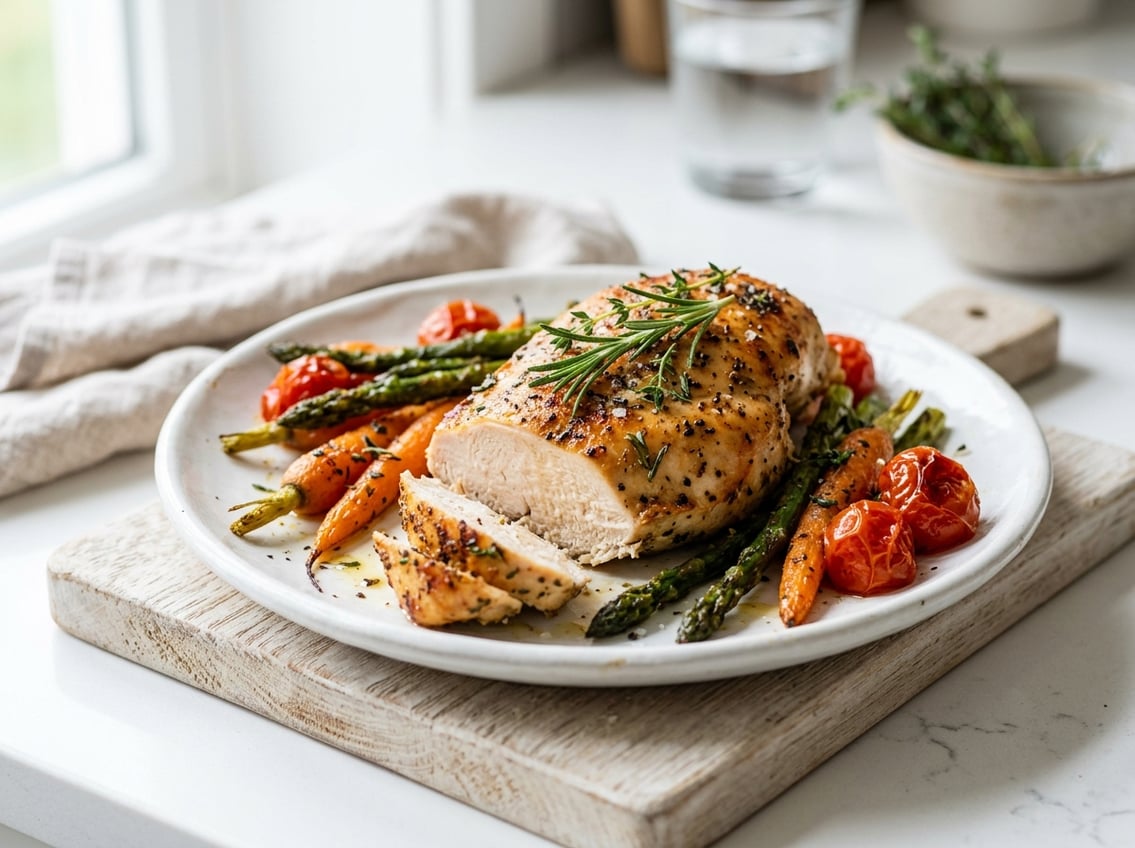
Start with even thickness, simple seasoning, and careful timing. If you want oven-baked chicken that tastes moist instead of dry, the details matter more than a long ingredient list.
A basic method makes it easier to judge how long to bake chicken breasts without guesswork. Better Homes & Gardens recommends baking uncovered at 375°F until the chicken reaches 165°F for 6- to 8-ounce pieces.
Use Boneless Skinless Chicken Breasts of Similar Size
Choose boneless skinless chicken breasts that are close in thickness and weight. That helps them finish baking at the same time.
If one piece is much thicker, pound it lightly to even it out. This makes baked chicken breasts cook more predictably.
Season Well and Add a Light Coat of Oil
Rub the chicken with a thin coat of oil before seasoning. The oil helps the spices stick and supports better browning.
Keep the seasoning even on both sides. Salt, pepper, and a few spices are enough for a simple baked chicken breast recipe.
Bake at High Heat Until 165°F
Bake the chicken in a preheated oven at 375°F to 425°F, depending on your recipe and thickness. A hotter oven helps the chicken cook fast enough to stay juicy.
Use an instant-read thermometer instead of guessing. The chicken is ready when the thickest part reaches 165°F.
Rest Before Slicing
Let the baked chicken breast rest for 5 to 10 minutes after it comes out of the oven. This gives the juices time to settle back into the meat.
If you slice too early, more moisture runs onto the cutting board.
Seasoning and Flavor Options
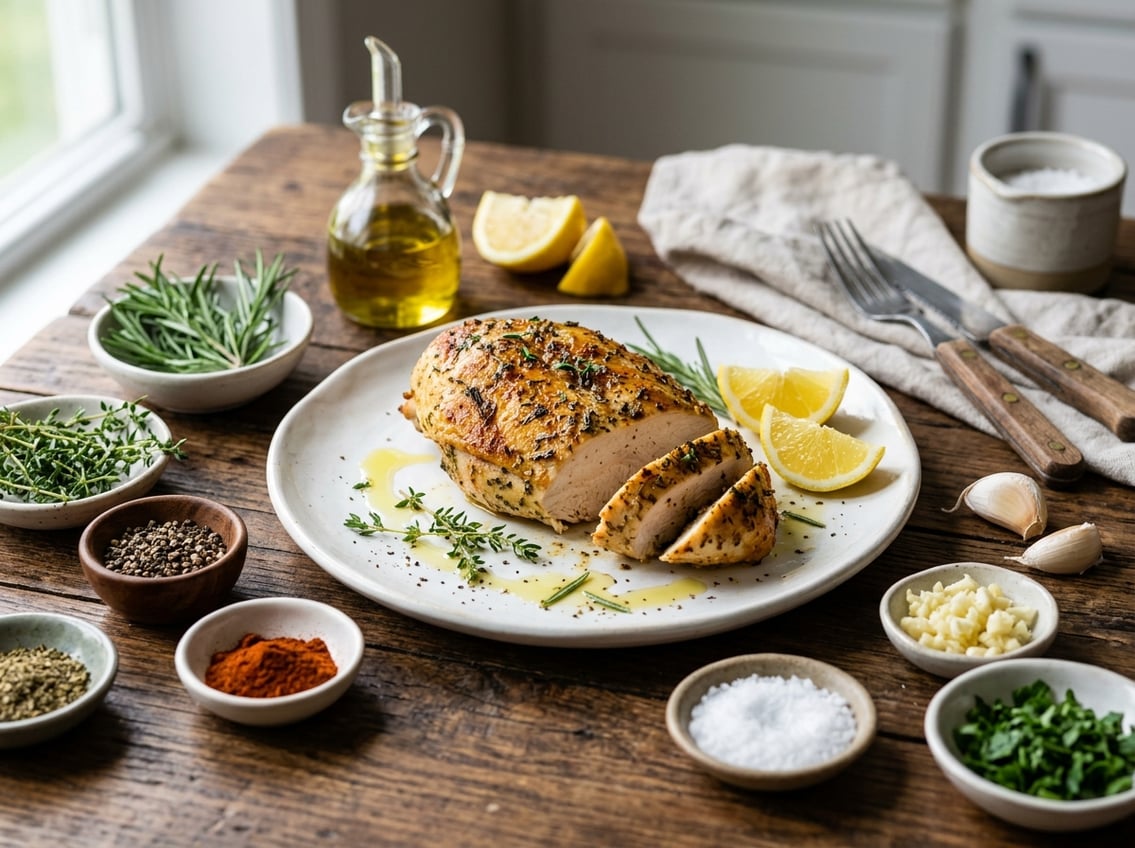
A simple baked chicken breast recipe works with many flavors. You can match the seasoning to the meal.
The easiest seasonings use pantry spices you already have. Garlic powder, onion powder, paprika, and dried oregano give oven-baked chicken a balanced flavor without a long prep time.
Simple Pantry Spice Blend
For a basic blend, use salt, black pepper, garlic powder, onion powder, paprika, and dried oregano. This mix works well with rice, potatoes, roasted vegetables, and pasta.
If you want more color, add extra paprika. For a more savory taste, increase the garlic and onion powder slightly.
When to Use Brining or Marinades
Use a brine or marinade when you want more flavor through the whole piece of chicken. Marinades are useful for bold dishes, while brining can help lean chicken hold onto moisture.
Dry seasoning works well when you want a faster dinner and a cleaner flavor.
How to Match Seasoning to Side Dishes and Meal Prep
Match the seasoning to what you plan to serve. Use lighter herbs for salads, grain bowls, and wraps, and use paprika or garlic-forward blends for roasted potatoes and vegetables.
For meal prep, keep the seasoning flexible. A mild baked chicken breast recipe lets you use the leftovers in different meals during the week.
Timing, Temperature, and Common Mistakes
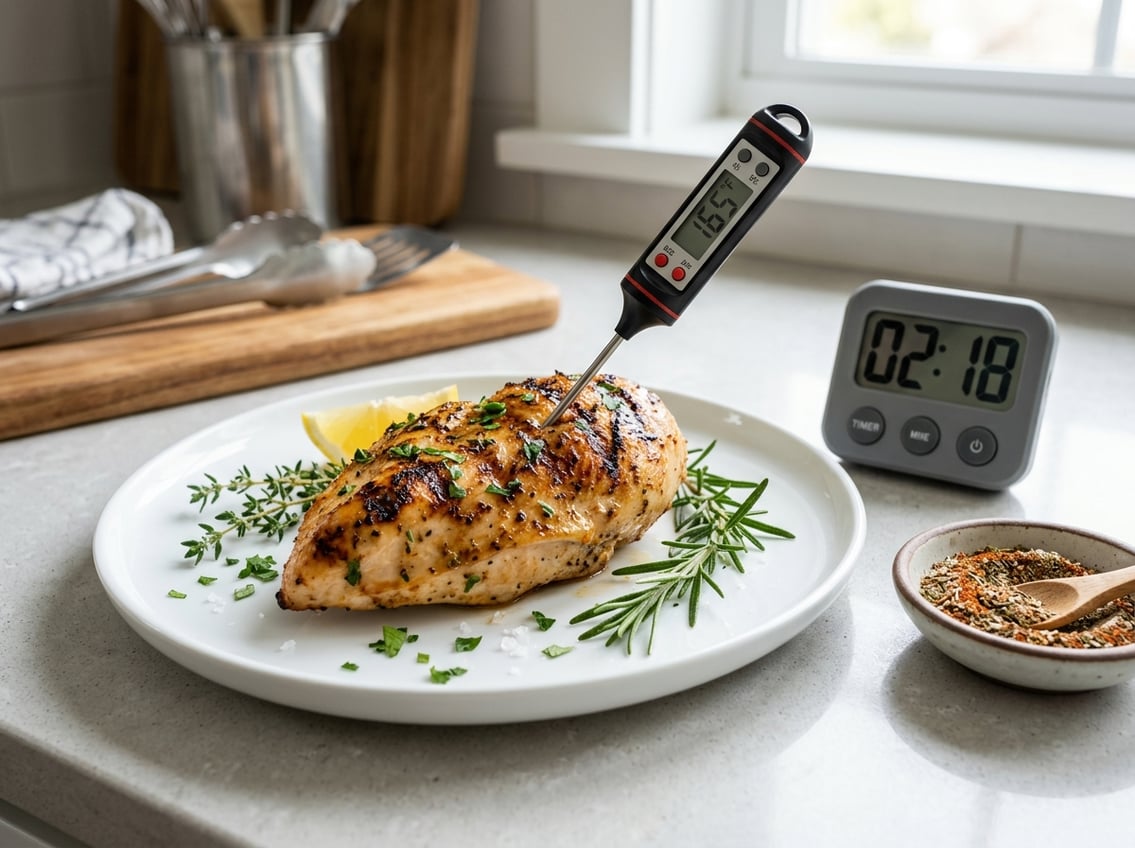
Timing matters because chicken breasts vary a lot in thickness. The same oven temperature can yield different results depending on the pan and the size of the pieces.
An instant-read thermometer removes the guesswork from baking chicken breasts. It also helps you avoid the most common error, which is cooking by time alone.
How Thickness Changes Bake Time
Thicker chicken breasts need more time, while thinner pieces cook faster. A very small breast may finish sooner than a large one, even in the same oven.
If your chicken pieces are uneven, check the thinnest ones first and the thickest ones last.
When to Check for Doneness
Start checking near the lower end of your expected bake time. For many standard boneless skinless chicken breasts, that is around 20 to 30 minutes depending on oven temperature and thickness.
Insert the thermometer into the thickest part of the meat. When it reads 165°F, the chicken is done.
Why Chicken Breast Turns Dry
Chicken breast turns dry when it cooks too long or at too low a heat for too long. Lean meat has less fat, so it dries out faster than thighs.
Skipping the rest time can also make it seem dry.
Should You Cover It or Bake Uncovered
Bake the chicken uncovered for even heat and light browning. Better Homes & Gardens recommends this method for proper cooking and color.
You can cover it after baking if you need to hold it warm.
Serving, Storing, and Using Leftovers
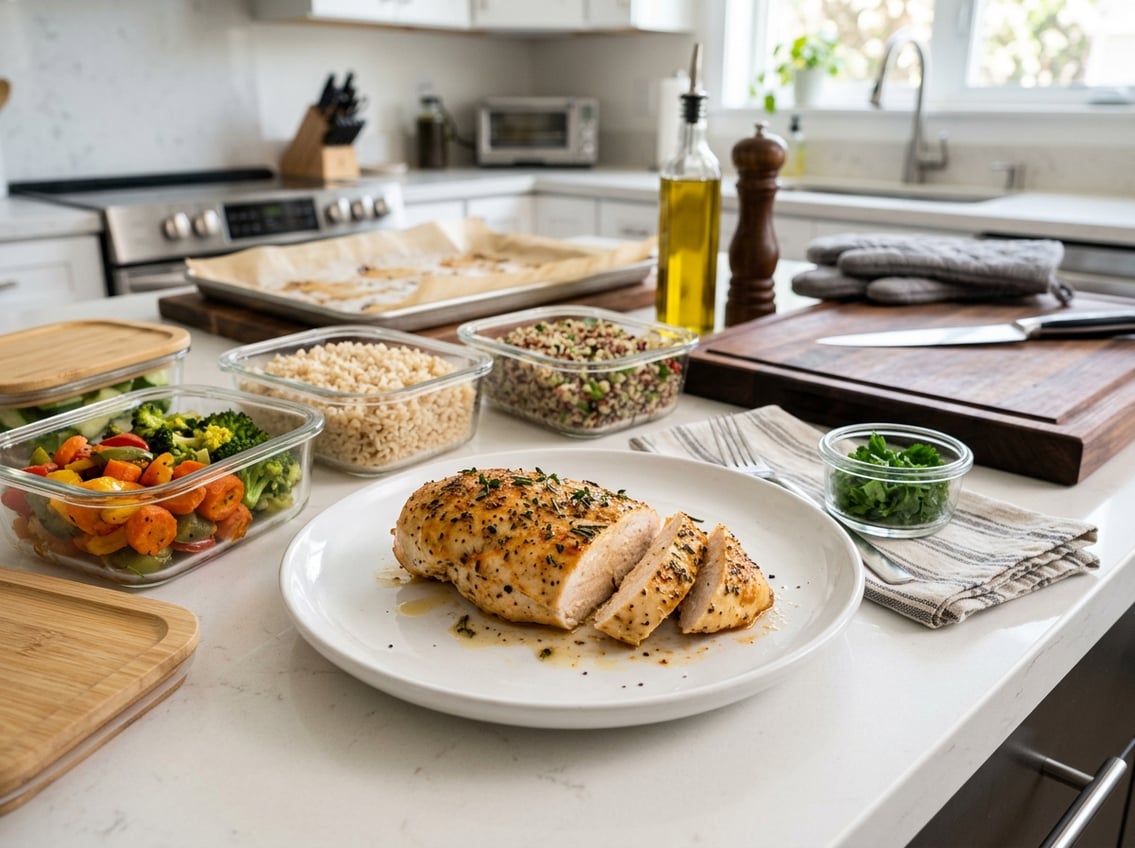
A baked chicken breast fits many meals. You can serve it with vegetables tonight, then use leftover chicken breast in lunch boxes later in the week.
Safe storage matters too. The American Heart Association recommends storing leftovers properly and using them within a few days.
Best Side Dishes for Baked Chicken Breast
Baked chicken breasts pair well with roasted potatoes, rice, pasta, green beans, broccoli, or a simple salad. The mild flavor also works with grain bowls and sheet pan vegetables.
If you season the chicken lightly, you can change the side dish without making the meal feel repetitive.
How to Store and Reheat Without Drying It Out
Cool the chicken, then store it in a sealed container in the refrigerator. Reheat only what you need so the rest stays tender.
For best results, warm leftover chicken breast gently in the oven with a little broth or water in the pan, then cover it with foil. Heat it just until it is warmed through.
Ideas for Leftover Chicken in Salads, Sandwiches, and Casseroles
Slice leftover chicken breast for green salads, pasta salads, wraps, and sandwiches.
Use it in quesadillas, soup, and grain bowls.
Add baked chicken breasts to a casserole with vegetables, rice, or noodles.
Transform leftover chicken into a fresh dinner instead of a repeat meal.


