
What Should Chicken Breast Look Like? Raw to Cooked
When you ask what chicken breast should look like, raw chicken should appear fresh, clean, and slightly glossy. Cooked chicken breast should look opaque, firm, and reach a safe internal temperature.
Color alone can mislead you, so you should check more than just appearance. Judge chicken breast by color, texture, moisture, and doneness, then confirm safety with a thermometer.
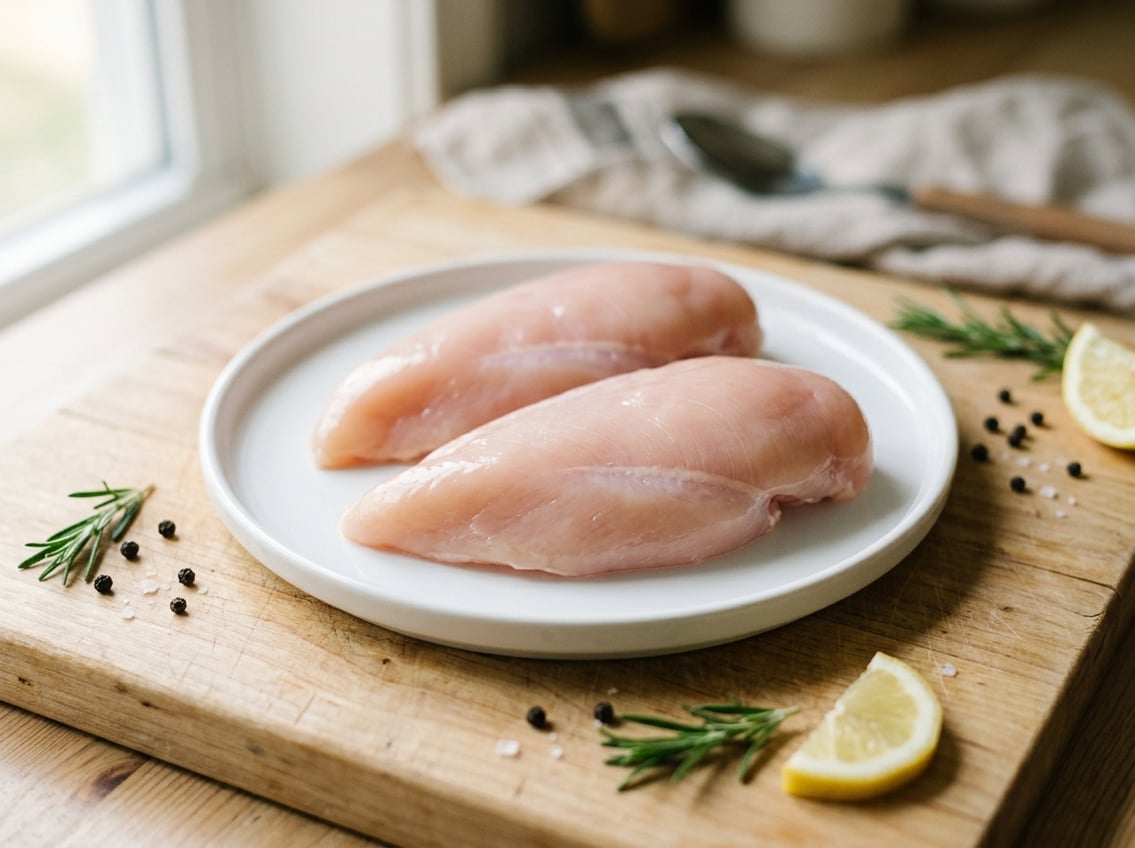
A visual check helps you avoid spoiled raw chicken and dry, overcooked meat. It also helps you know what cooked chicken breast should look like before serving.
Raw Chicken Breast Appearance
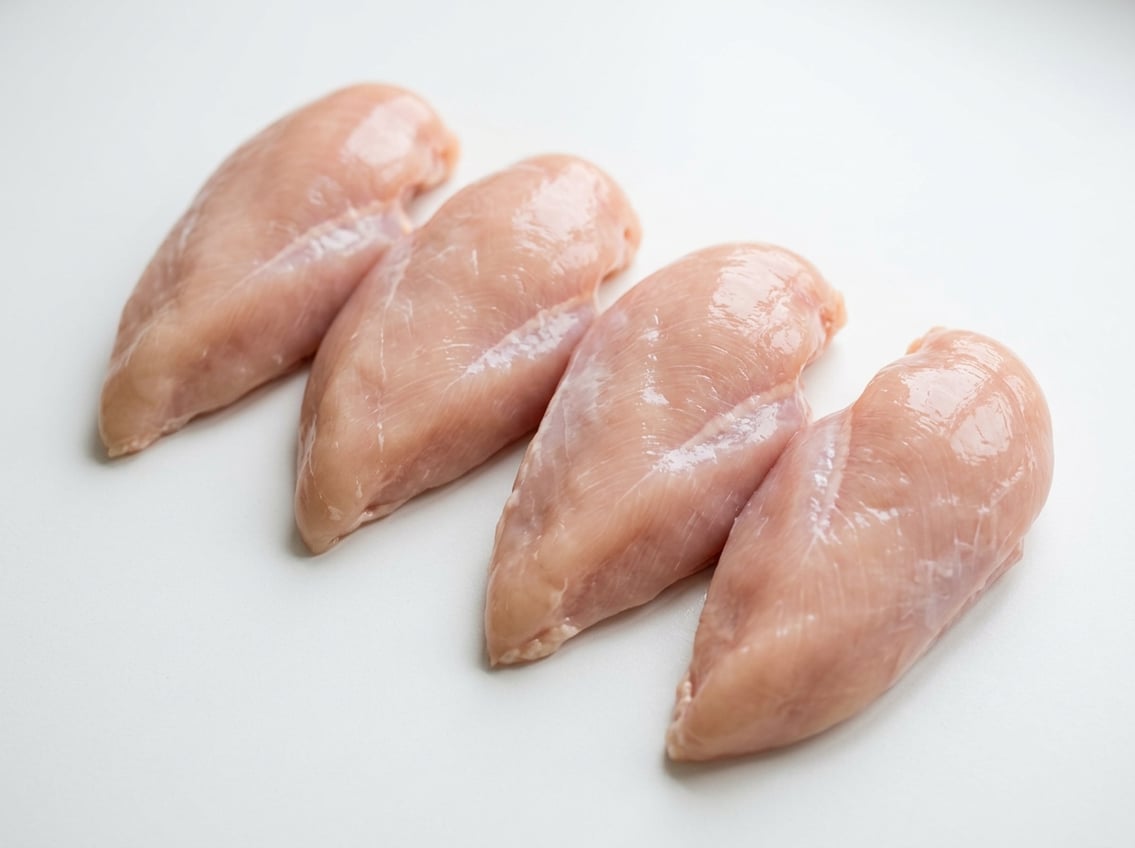
Raw chicken breast should look fresh, moist, and lightly colored. It should not look dull or slimy.
When you cook chicken breast, the raw appearance gives you your first clue about quality.
Normal Color, Texture, and Smell
Fresh raw chicken breast is usually pale pink to creamy white. A slight pink hue is normal, and a little variation between breasts is common.
The surface should look smooth and glossy, not dry. It should feel slightly tacky when touched, yet not slippery or slimy.
The smell should be very mild, with little to no odor.
Signs It May Be Old or Unsafe
You should be cautious if the chicken looks gray, dull, bluish-white, or very pale. A strong sour, ammonia-like, or rotten smell is a clear warning sign.
Slimy residue, sticky patches, or thick liquid in the package can also mean spoilage. If the meat feels overly slick or has mold, do not use it.
What Packaging and Surface Moisture Can Tell You
Packaging should be sealed, clean, and intact. Minimal liquid is normal, but a package sitting in a pool of juice can point to poor handling or age.
Check the sell-by or use-by date before buying. If the package is torn, leaking, or swollen, avoid it.
How to Tell When It Is Properly Cooked
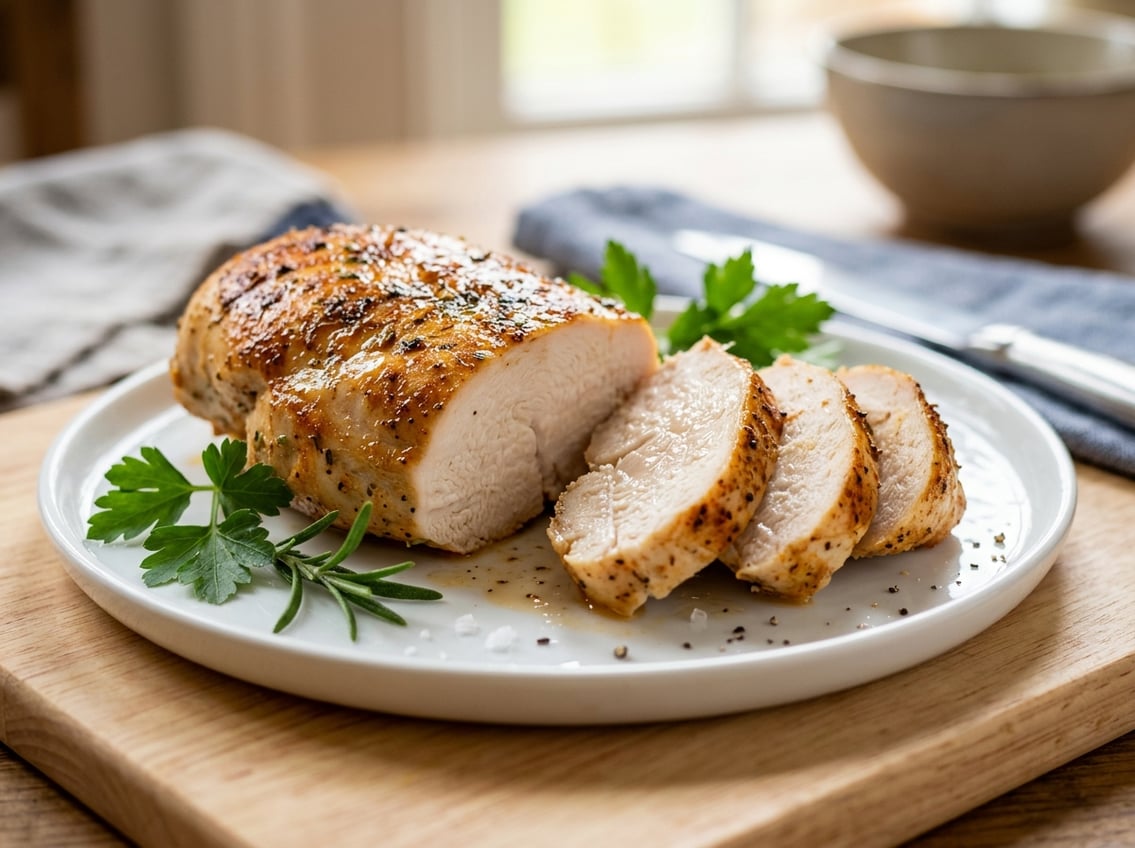
Properly cooked chicken looks opaque all the way through, with no raw, translucent center. The center color, the feel of the meat, and the internal temperature all show whether chicken is ready.
Color and Opacity in the Center
A done chicken breast is white or off-white in the center, not glassy or pink in a raw way. The meat should look opaque when you slice into the thickest part.
Clear juices are a helpful sign. The juices should run clear, not red or cloudy.
Texture, Firmness, and Clear Juices
Cooked chicken breast should feel firm when pressed. It should spring back a little instead of feeling soft or jiggly.
If you cut into it, the fibers should separate cleanly. When the juices run clear and the meat feels firm, you are much closer to safe doneness.
Using Temperature as the Final Check
Use a food thermometer for the most reliable test. Chicken breast should reach 165°F in the thickest part before you serve it.
Temperature matters because appearance can vary by cut and cooking method. Even if the outside looks finished, the inside may still be undercooked.
When Appearance Can Be Misleading
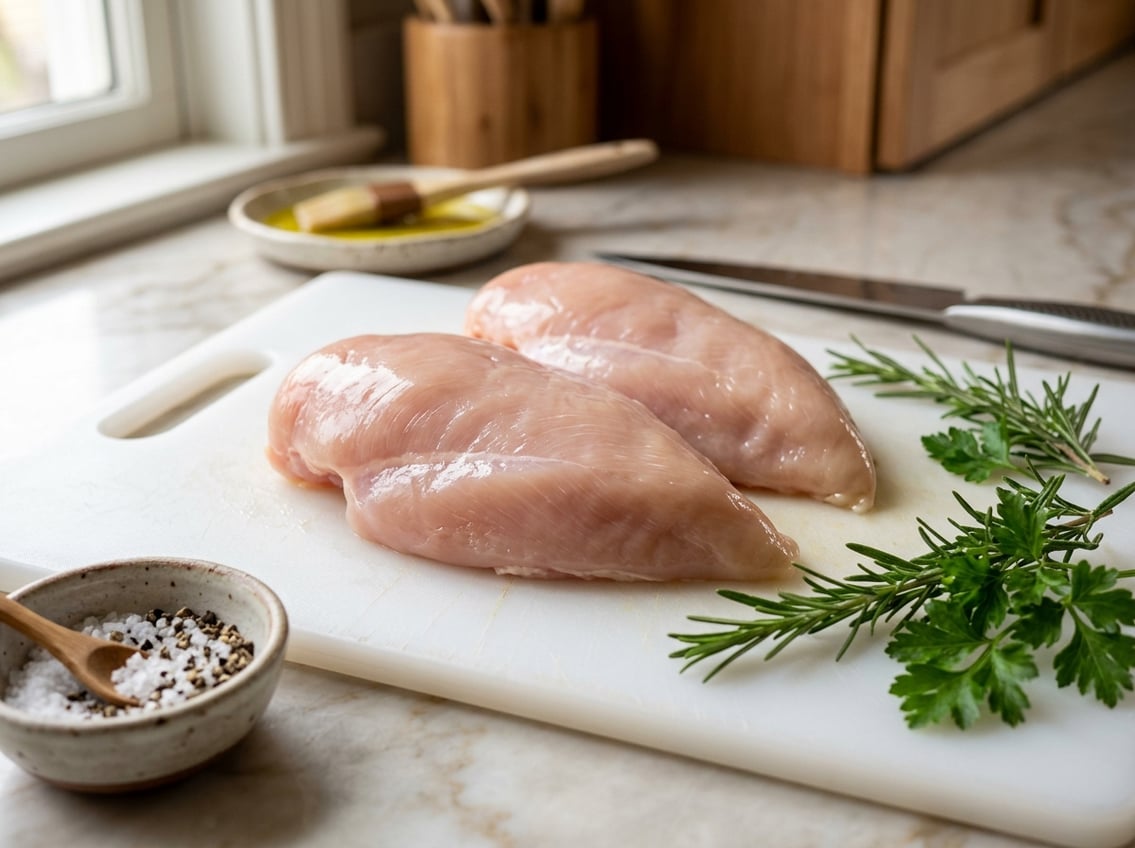
Chicken does not always look the way you expect. A breast can be safe and fully cooked while still showing a little pink, and it can also look done when it is not.
Why Fully Cooked Meat Can Look Slightly Pink
A faint pink color can remain in fully cooked chicken because of cooking method, bone contact, smoke, or the age of the bird. This is common in grilled or roasted chicken.
Color alone should not decide doneness. Temperature is the better test.
How to Spot Undercooked Chicken
Undercooked chicken usually looks translucent, wet, or glossy in the center. The texture may feel soft, rubbery, or gelatinous instead of firm.
If the juices are pink or the thickest part still looks raw, keep cooking it. Do not rely on the outside browning as proof that the center is done.
How Overcooked Meat Looks and Feels
An overcooked chicken breast often looks dry, pale, and tight. The surface may split or appear stringy, and the meat can lose its juiciness.
The texture turns tough and chewy. When you slice it, the fibers may look compressed instead of moist and tender.
Cooking Methods That Affect the Final Look
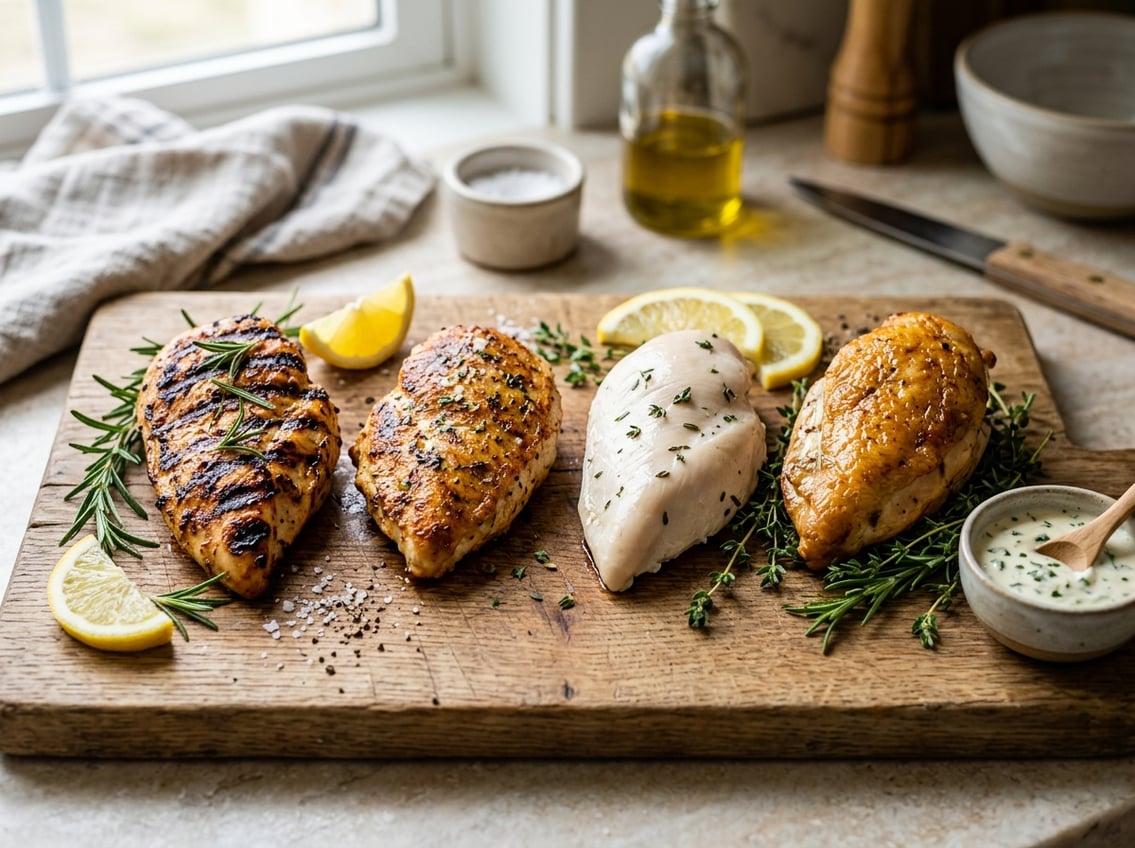
Different cooking methods change the final color, browning, and moisture of chicken breast. The look of the meat often tells you as much about the method as it does about doneness and flavor.
Pan-Searing for Browning Without Drying
Pan-searing gives you a browned exterior and a juicy interior when done well. A hot pan creates a golden crust that improves both appearance and flavor.
Do not crowd the pan and avoid overcooking the meat. A good sear can make the surface look rich and appetizing while the inside stays moist.
Baking, Grilling, and Carryover Cooking
Baking usually produces a lighter, more even color with less visible browning. Grilling adds char marks and a deeper color, which can make the chicken look more cooked than it is inside.
Carryover cooking matters with both methods. The meat keeps cooking after you remove it from the heat, so a thermometer reading near the end should guide your timing.
How Resting Changes Juiciness and Texture
Resting lets juices settle back into the meat after cooking.
If you cut too soon, the juices run out and the breast looks drier than it really is.
A rested chicken breast usually slices more cleanly.
That short pause often improves both the texture and the final serving appearance.


