
When Do You Season Chicken Breast for Best Results
When should you season chicken breast for the best results? You get the best flavor and texture by seasoning it at least 15 to 30 minutes before cooking, or even the night before if you use salt.
The timing matters because salt, black pepper, and dry spices work differently on the meat. The right timing helps you get a more seasoned chicken breast that stays juicy.
If you season too late, the outside can taste flat. Seasoning at the right time improves both flavor and moisture.
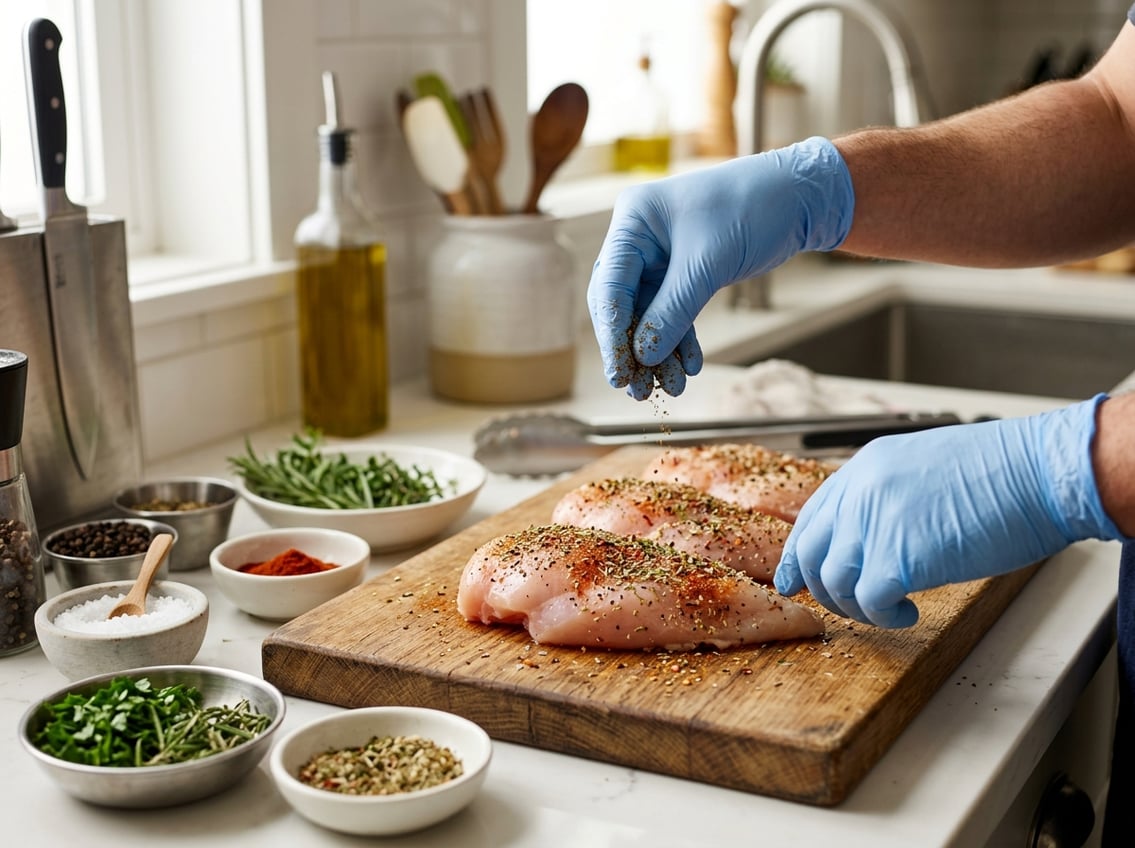
Best Time to Season Chicken Breast
The best time depends on how much flavor you want and how much time you have. A short rest after seasoning gives better results than applying spices at the last second.
Kosher salt, black pepper, and other dry spices all work well as long as they have time to cling to the surface. If you want juicy chicken, the salt timing matters most.
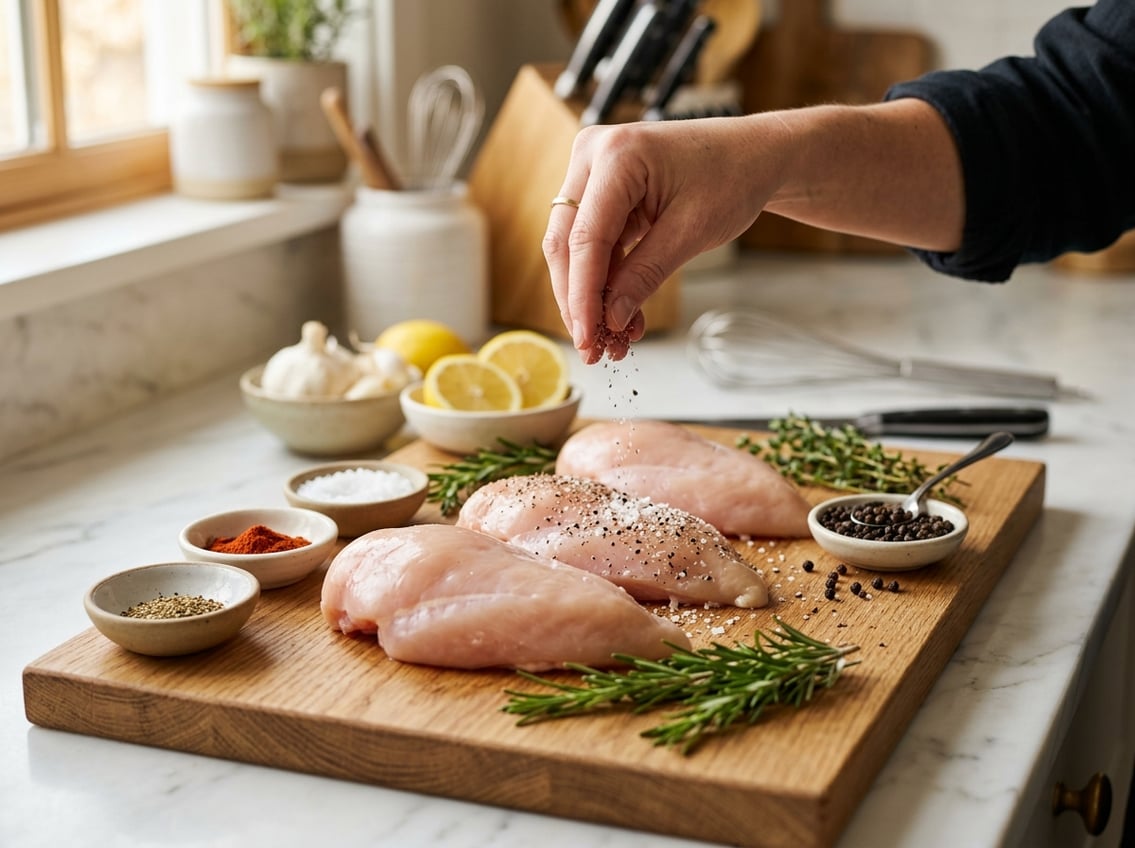
Seasoning Right Before Cooking
You can season chicken right before it goes into the pan, oven, or grill. This works well when you are short on time and still want basic flavor.
Use kosher salt, black pepper, and your main spices, then cook right away. The surface will taste seasoned, but the flavor will stay more on top than deeper in the meat.
Seasoning 15 to 30 Minutes Ahead
Seasoning 15 to 30 minutes ahead gives salt time to start pulling moisture to the surface and then reabsorbing it. That helps the chicken breast taste more even from edge to center.
This timing is a strong choice for most weeknight meals. It also gives dry spices a better chance to stick, which helps the chicken taste less bland.
Seasoning Overnight With Salt
Salting overnight gives you the most noticeable improvement in flavor and texture. Salt has time to move into the meat, which helps the chicken stay juicy during cooking.
Use this method when you want the best result and have extra time. A light coating of kosher salt is usually enough, and you can add black pepper and other spices closer to cooking if you want a fresher spice flavor.
How Salt and Dry Seasonings Affect Texture and Flavor
Salt does more than add taste. It changes how chicken holds moisture, while dry seasonings build the flavor you notice on the surface.
Kosher salt is the most important ingredient for texture. Garlic powder, onion powder, black pepper, and oregano add depth without making the chicken heavy or wet.
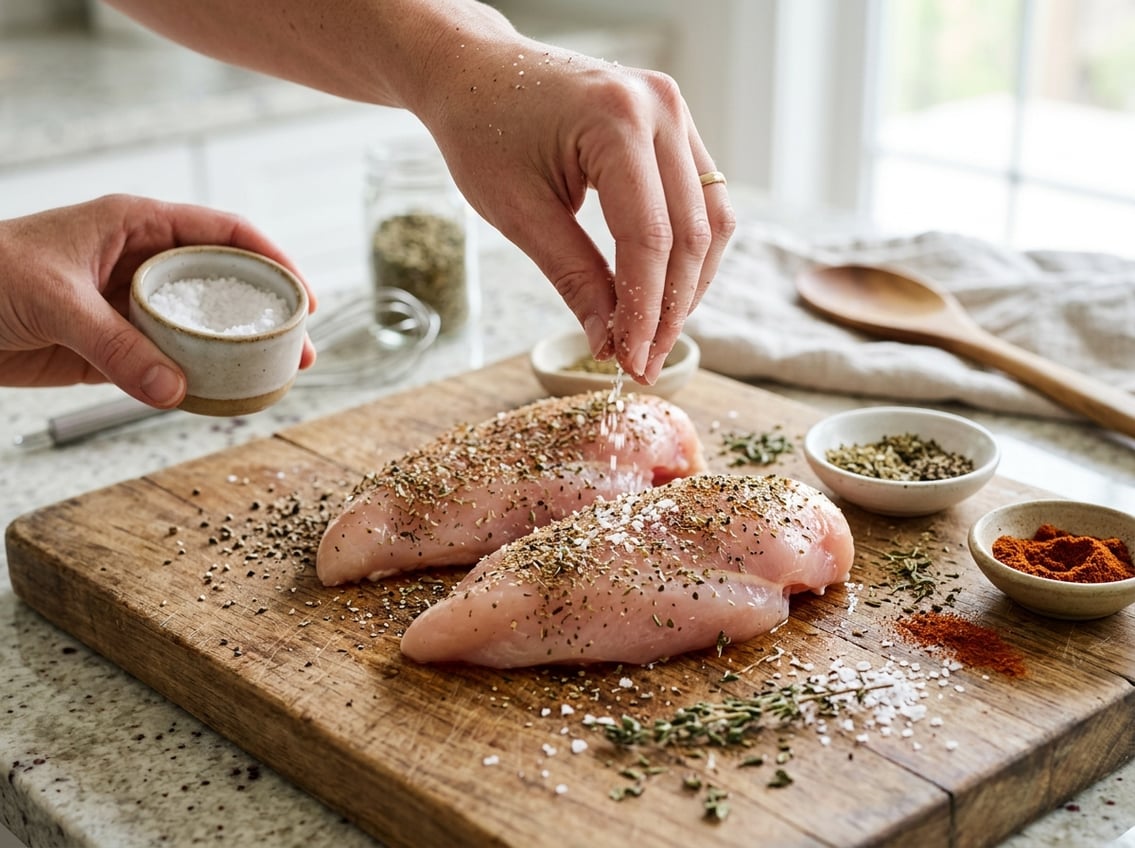
Why Kosher Salt Matters Most
Kosher salt spreads well and is easy to control by hand. It draws out some moisture at first, then that moisture mixes with the salt and gets pulled back into the meat.
That process helps the chicken taste better and stay juicier. It is one of the simplest ways to improve chicken without using a marinade.
How Garlic Powder and Onion Powder Build Flavor
Garlic powder and onion powder give chicken a strong savory base. They coat the surface evenly and do not burn as quickly as fresh minced garlic.
These seasonings are useful in homemade spice mixes and simple weekday meals. Pair them with salt, black pepper, and oregano for a clean, balanced flavor.
When Black Pepper Should Be Added
You can add black pepper before cooking in most cases. It blends well with salt and other dry spices and adds a mild sharp note to the crust.
If you cook over very high heat, add some pepper with the rest of the seasoning right before cooking so it does not lose its edge. Freshly ground pepper gives a stronger flavor than pre-ground pepper.
Choosing the Right Blend for the Cooking Method
The best seasoning blends for chicken depend on how you cook it. A simple blend works well for baked or pan-seared chicken, while stronger blends fit grilling and high-heat cooking.
Homemade spice blends give you more control over salt, heat, and herbs. Lemon pepper seasoning, creole seasoning, and blackened seasoning each create a different style of chicken breast.
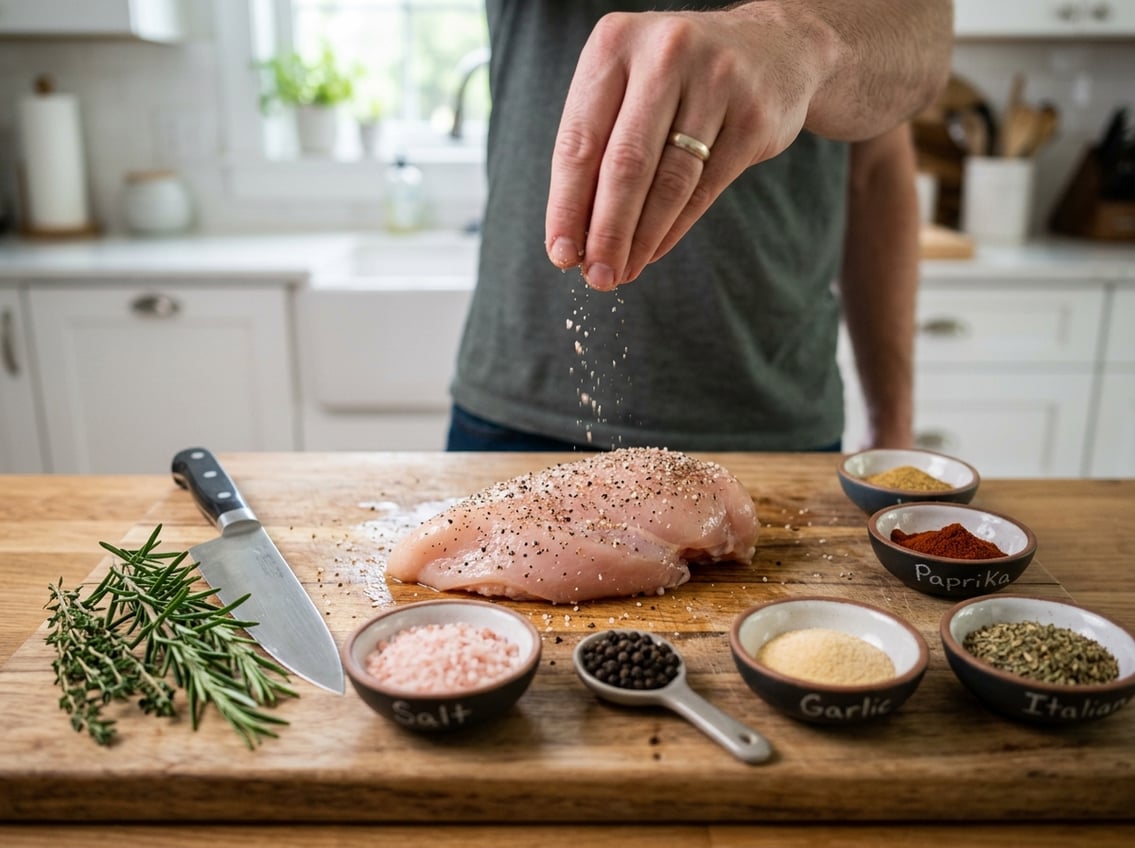
Simple Everyday Seasoning Blends for Chicken
For everyday cooking, keep it simple with kosher salt, black pepper, garlic powder, onion powder, and oregano. This blend works for baked chicken, skillet chicken, and meal prep.
If you want more depth, you can add paprika or dried parsley. A basic homemade blend gives you reliable flavor without overpowering the meat.
When to Use Lemon Pepper Seasoning
Lemon pepper seasoning works well when you want a bright, clean taste. It fits baked chicken breast, grilled chicken, and quick stovetop cooking.
It pairs well with olive oil and a light salt base. According to The Ultimate Guide to Seasoning Chicken Breasts, lemon pepper is one of the useful pantry seasonings for chicken.
When Creole Seasoning or Blackened Seasoning Works Best
Creole seasoning and blackened seasoning are better when you want bolder flavor and a darker crust. They work well on cast iron, on the grill, or in a hot oven.
Use them when the chicken can handle heat and a stronger spice profile. These blends are useful for a chicken breast that needs more presence on the plate.
Common Mistakes That Lead to Dry or Bland Chicken
Dry or bland chicken often comes from timing and technique, not just the seasoning itself. If you skip salt, crowd the pan, or rush the rest time, the flavor and texture both suffer.
A few small changes can make your chicken much better. Focus on dry surfaces, proper salt use, and a short rest after cooking.
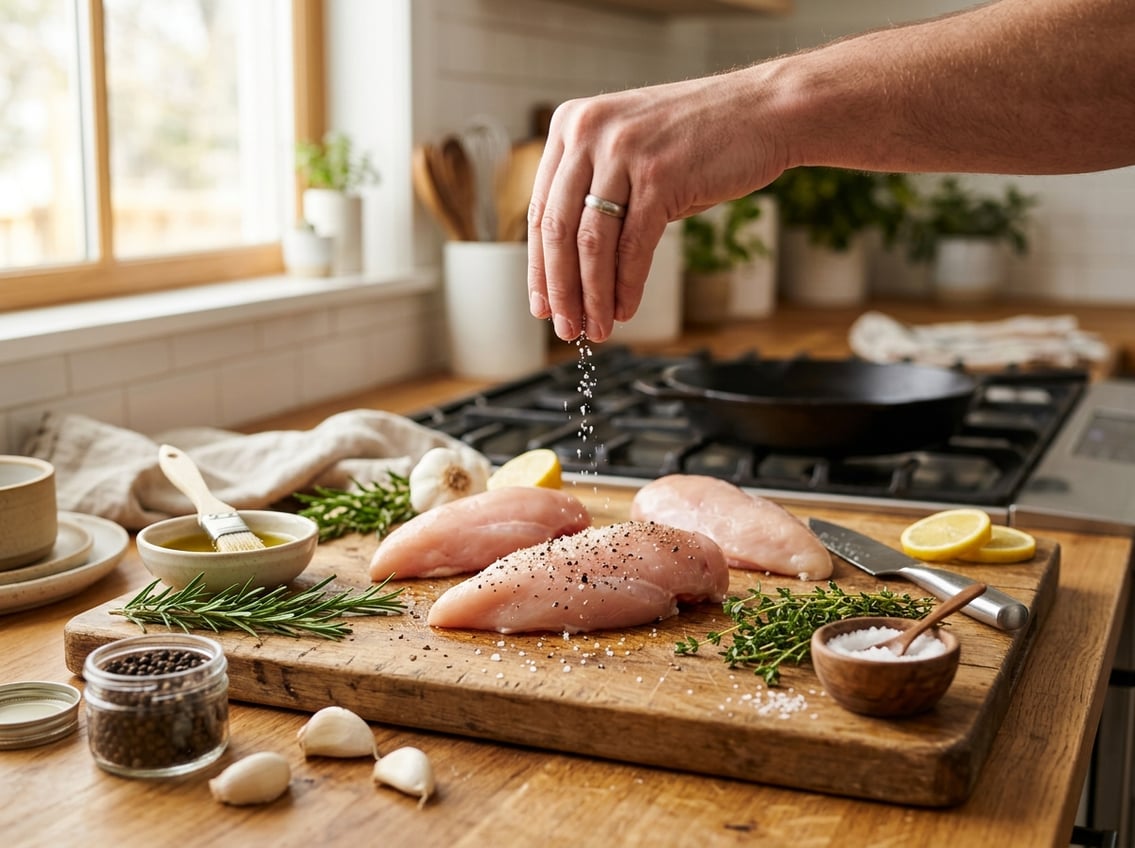
Adding Seasoning to Wet Chicken
Wet chicken makes spices slide off instead of sticking. Pat the surface dry with paper towels before you add kosher salt, black pepper, and other seasonings.
This helps the coating cling better and cook into a more even crust. It also reduces the chance of steaming instead of browning.
Under-Salting or Overcrowding the Pan
Under-salting leaves chicken flat and dull. Salt is the main ingredient that makes chicken breast taste balanced, so do not treat it like a small extra.
Overcrowding the pan traps steam, which can leave the chicken soft and pale instead of browned.
Skipping Rest Time After Cooking
Resting the chicken after cooking helps the juices settle.
If you cut it too soon, the juices run out onto the cutting board instead of staying in the meat.
Let the chicken rest for several minutes before slicing.
That small pause keeps the chicken juicy and preserves the seasoning.


