
What Is the Purpose of Brining Chicken Breast? Benefits
You may ask what the purpose of brining chicken breast is when the meat already cooks quickly. Brining helps chicken breast hold more moisture, take on more seasoning, and stay tender during cooking.
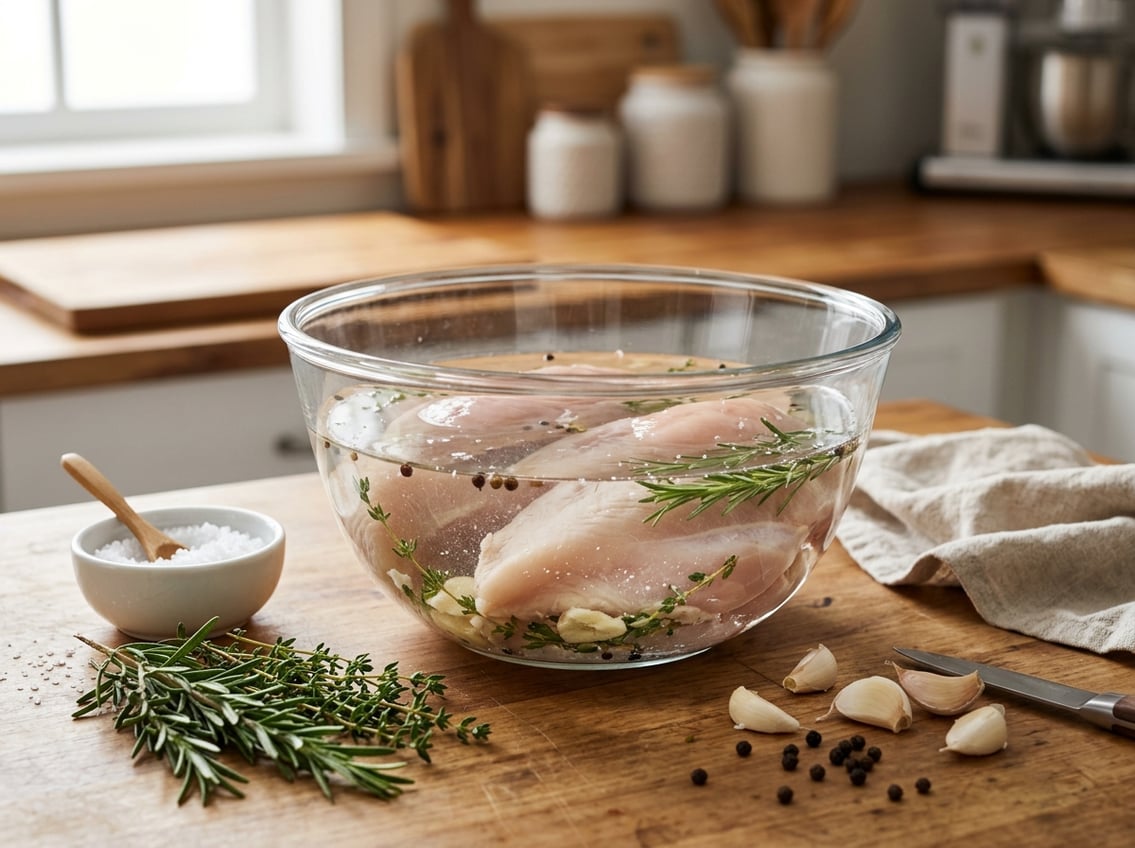
If you want juicier, more tender chicken breast with better flavor, brining gives you a simple way to improve lean meat before it ever hits the pan, grill, or oven.
This matters most with boneless skinless chicken breast, since it has little fat and dries out easily. A short brine can make a plain cut taste fuller and cook more evenly, especially for quick weeknight meals.
What Brining Actually Does to Chicken Breast
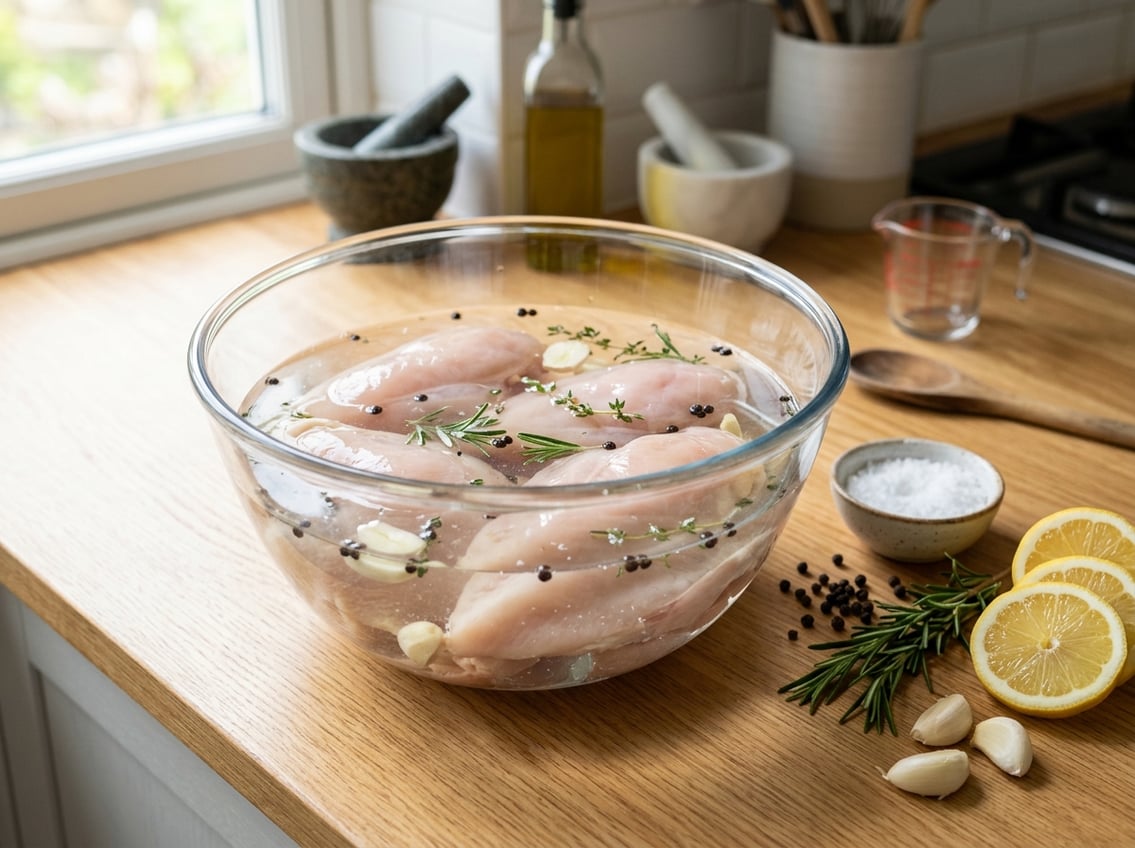
A chicken brine usually consists of a simple saltwater solution, though some recipes add sugar, herbs, or spices. During brining, salt moves into the meat and changes how it holds onto moisture as it cooks.
Wet brining and dry brining both help make juicy, tender chicken. Salt does more than season the surface; it affects the texture and makes the chicken breast more forgiving if you cook it a little longer than planned.
How a Saltwater Solution Improves Moisture Retention
A saltwater solution helps the meat keep more of its natural juices during cooking. According to Simply Recipes, brining helps chicken retain juices, which leads to a juicier final result.
That matters most with lean cuts like chicken breast. Since there is little fat to protect the meat, moisture retention becomes the main reason brining works so well.
Why Salt Penetration Makes Chicken More Flavorful
Salt seasons the meat from the inside, not just on the outside. This gives you more even flavor in each bite, especially in thicker pieces.
A brine solution can also carry mild flavor from add-ins like peppercorns, bay leaves, or garlic granules. These extra ingredients support the chicken brine and give the meat a cleaner, more balanced taste.
How the Brining Process Helps Create Tender Chicken
Brining changes the meat in a way that helps it feel softer and less dry. As noted in a guide from The Anthony Kitchen, brining can keep chicken juicy even when it cooks a little longer than intended.
Both dry brine and wet brining methods can improve the texture of boneless skinless chicken breast. The exact effect depends on brining time and brine concentration.
How to Brine Chicken Breast the Right Way
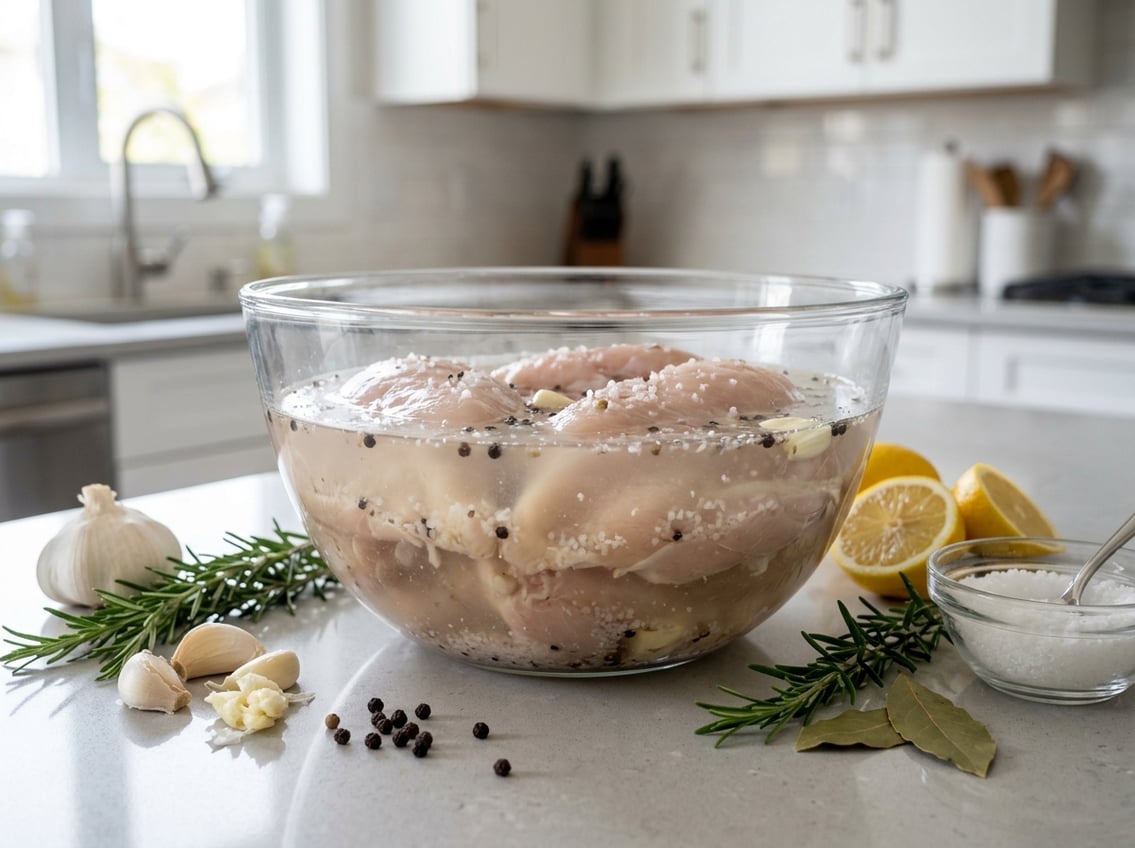
A good brine recipe does not need many ingredients. You need water, kosher salt, and a clean container that holds the chicken breast fully under liquid.
Use the right brine concentration, keep brining times short enough to avoid over-brining, and chill the brine if needed before adding the chicken.
Basic Brine Recipe and Brine Ingredients
For a basic brine for chicken breasts, use cold water and salt. A common starting point is 4 cups water with 33 grams salt, which is about 1/4 cup Diamond Crystal kosher salt or 2 tablespoons Morton’s kosher salt, according to Simply Recipes.
You can add peppercorns, bay leaves, or garlic granules for light flavor. Keep the mix simple, since the salt does the main work.
Simple brine recipe:
- 4 cups cold water
- 33 grams kosher salt
- 1 teaspoon peppercorns
- 1 to 2 bay leaves
- 1/2 teaspoon garlic granules
Stir until the salt fully dissolves. Use this brine for chicken breast only after the liquid is cool.
Choosing Between Diamond Crystal Kosher Salt and Morton’s Kosher Salt
Salt type matters because different brands weigh differently by volume. Diamond Crystal kosher salt is lighter and flakier, while Morton’s kosher salt is denser.
1/4 cup Diamond Crystal does not equal 1/4 cup Morton’s in the same brine concentration. If you swap brands, measure by weight when possible, or use a tested volume conversion.
How Long to Brine Chicken Breasts Without Over-Brining
Brining time matters as much as the recipe. For boneless skinless chicken breast, a short brining time is usually best.
A quick brine of 15 to 30 minutes is often enough for thin breasts. Thicker brined chicken breasts may need a little more time, though long soaks are not usually helpful for this cut.
If you are unsure, start short. You can always add flavor with seasoning after brining, but you cannot undo over-brining.
Cooking and Using Brined Chicken Successfully
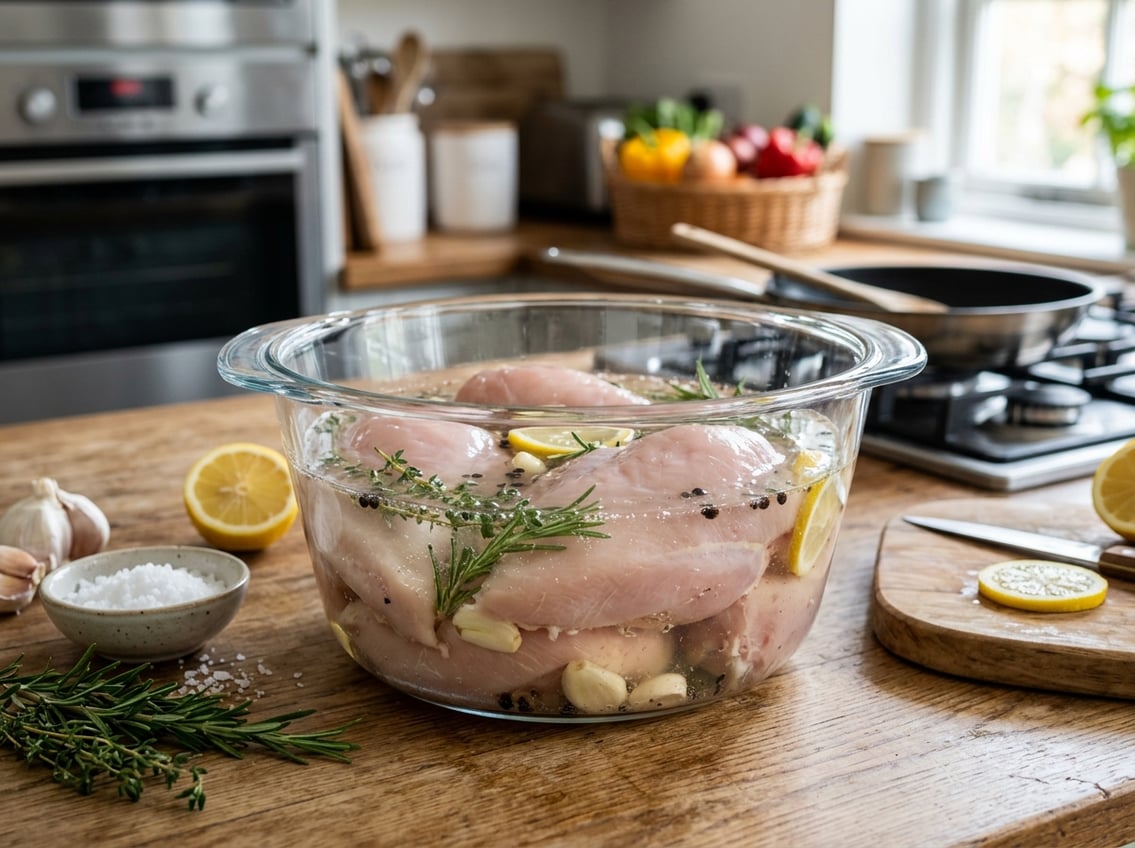
To cook brined chicken well, balance seasoning, heat, and timing. A brined chicken breast is already seasoned, so your main job is to cook it gently enough to keep it juicy.
A meat thermometer helps you avoid the mistake of cooking by guesswork.
How to Cook Brined Chicken Without Making It Too Salty
Before you cook brined chicken, pat it dry. This helps the surface brown better and keeps the salt from tasting too sharp.
Do not add a heavy salt rub after brining. Instead, use light seasoning, oil, and herbs, then cook with a method that gives steady heat.
Best Methods for Grilling Brined Chicken and Other Quick Cooks
Grilling brined chicken works especially well because it cooks fast and builds good flavor. You can also pan-sear or roast brined chicken breasts, as long as you watch the heat closely.
Quick cooking methods are useful for boneless skinless chicken breast because they reduce the chance of drying out the meat. Once the outside turns golden and the inside reaches the right temperature, the chicken is ready.
Using a Meat Thermometer for Better Results
A meat thermometer takes the guesswork out of cooking. It helps you stop at the right point before the chicken breast dries out.
Check the thickest part of the meat for the best result. Since brined chicken can stay juicy a little longer during cooking, a thermometer gives you a more reliable finish than time alone.
Mistakes, Alternatives, and When Brining Helps Most

Brining works well, yet a few common mistakes can erase the benefit. The biggest problems are too much salt, too much time, and forgetting that not every cut needs the same treatment.
Dry brining, wet brining, and no brine at all each make sense depending on the cut and your cooking plan.
Common Brining Mistakes to Avoid
The most common brining mistakes include using too much salt, brining for too long, and skipping the pat-dry step before cooking. Those errors can lead to over-brining or weak browning.
Another mistake is using random brining times without checking thickness. A thin breast and a thick breast do not need the same soak.
When Dry Brining Is Better Than Wet Brining
Dry brining can be a better choice when you want less mess and deeper surface seasoning. It works by salting the meat ahead of time and letting it rest uncovered or lightly covered.
Wet brining is often better when you want a fast moisture boost for lean chicken breast. Dry brine is easier for storage and cleanup, while wet brining is often preferred for a quick juiciness fix.
How Brining Chicken Thighs and Brining Pork Chops Compare
Chicken thighs have more fat and stay moist more easily than chicken breast. You can still season them and use a short brine, especially for grilling.
Pork chops are lean and can dry out, much like chicken breast. Brine concentration and brining times matter, and a short, controlled soak usually works best.


