
How Long After Buying Chicken Breast Can You Cook It Safely
If you want to know how long after buying chicken breast you can cook it, the safest answer is usually within 1 to 2 days if you keep it refrigerated at 40°F or below.
If you do not plan to cook it in that window, freeze it instead.
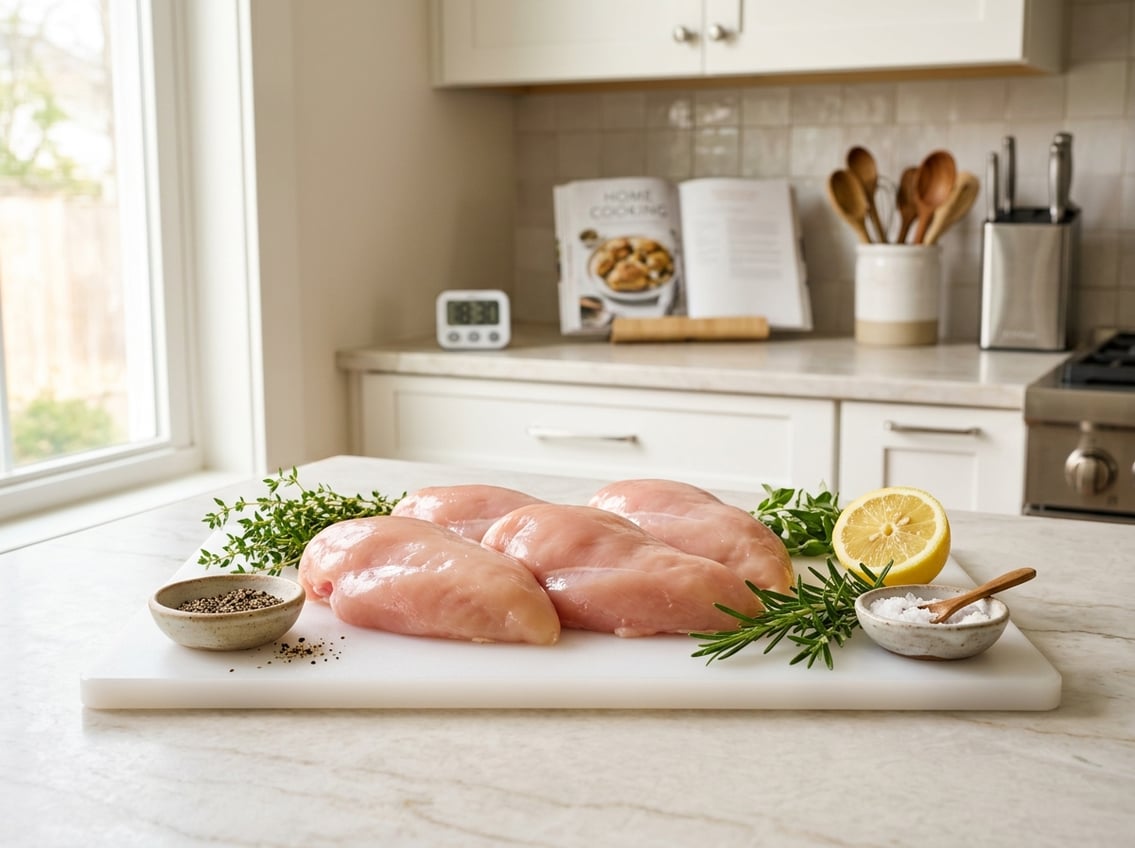
Bacteria can grow quickly on raw chicken if you keep it too warm or store it too long.
Proper storage also helps prevent cross-contamination, which happens when harmful germs from raw chicken spread to other foods, tools, or surfaces.
The Safe Window After Purchase
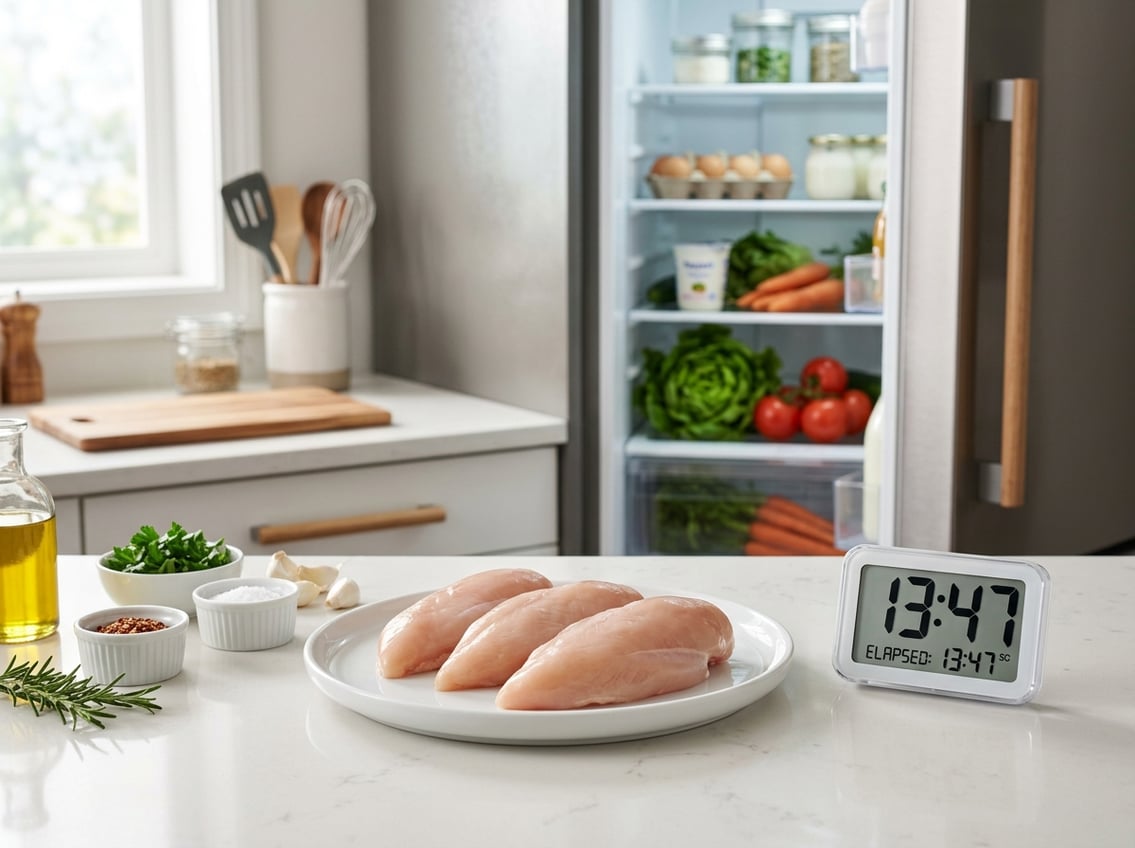
As soon as you buy fresh chicken, the clock starts on its short safe window in the refrigerator.
If you handle it properly, you can keep it safe long enough to cook as long as you stay within that narrow range and avoid cross-contamination.
Cook Raw Chicken Breast Within 1 to 2 Days
You should cook raw chicken breast within 1 to 2 days of purchase when you store it at or below 40°F, according to Fresh Chicken: How Soon Should You Cook After Buying?.
If you know you will not cook it soon, freeze it on the day you buy it.
How Sell-By, Use-By, and Best-By Dates Affect Timing
Date labels help with quality, but do not replace safe storage rules.
A sell-by date helps stores manage stock, while a use-by date is the clearest date for quality and safety.
A package may still be within date and unsafe if it sat too warm.
A package may be slightly past a best-by date and still be usable if it stayed cold, though freshness can decline.
When the 2-Hour Rule Changes Everything
The 2-hour rule applies any time raw chicken sits out at room temperature.
Refrigerate or freeze it within 2 hours of purchase, or within 1 hour if the temperature is above 90°F.
That time limit protects you when shopping runs long or the car is warm.
Once that window passes, discard the chicken if it has stayed unrefrigerated.
How to Store It So the Clock Does Not Speed Up
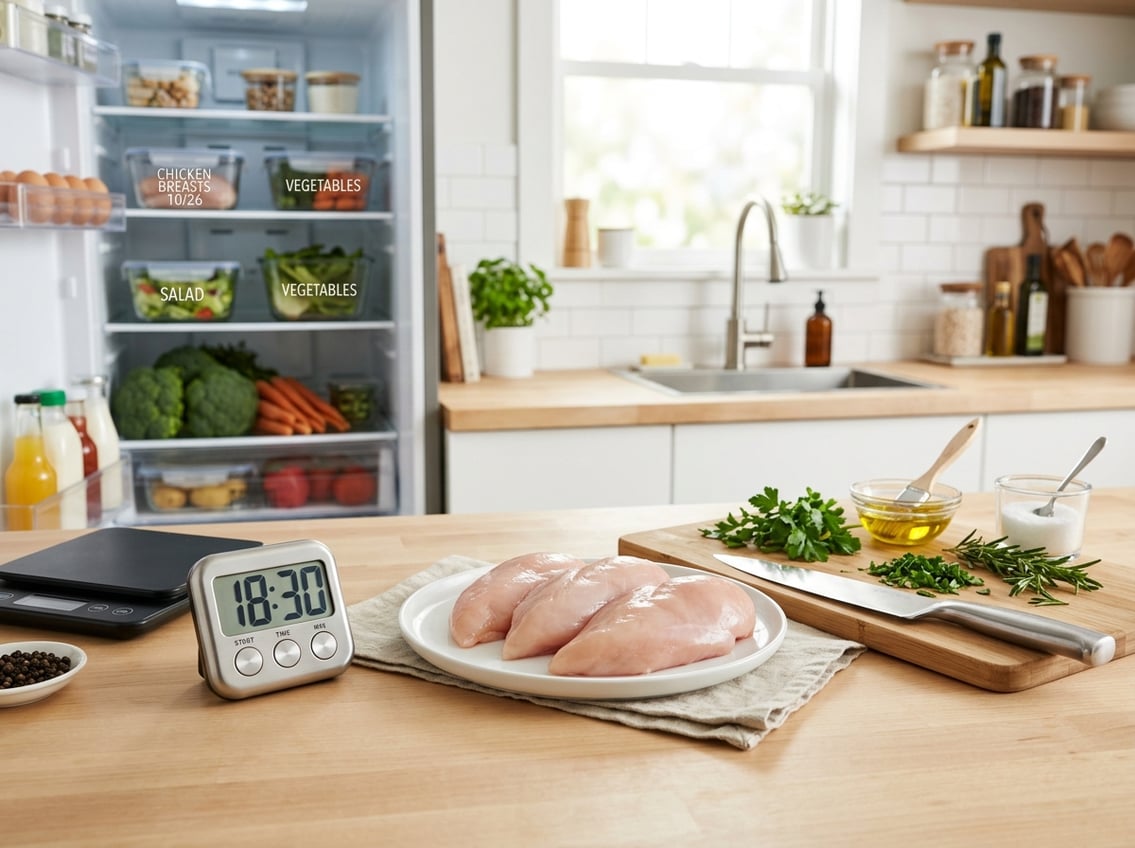
Cold storage slows bacterial growth, but only if the refrigerator stays cold enough and the chicken stays isolated.
Small storage mistakes can shorten the safe time and make cross-contamination more likely.
Refrigerator Temperature and Placement
Keep your refrigerator at 40°F or below, and place raw chicken on the lowest shelf.
That keeps drips from landing on ready-to-eat foods.
A fridge thermometer helps if you are not sure the appliance runs cold enough.
Store chicken in the coldest part of the fridge, not in the door.
Packaging, Leaks, and How to Prevent Cross-Contamination
Keep chicken in its original package if it is sealed and intact, or move it to a leakproof container.
If the package leaks, juices can spread to shelves, produce, and other food.
Wash your hands, clean cutting boards, and sanitize surfaces after handling raw chicken.
Separate raw chicken from salads, fruit, bread, and cooked foods at every step.
Signs Chicken Breast Is No Longer Safe
Do not use chicken if it smells sour, feels slimy, or has packaging that is torn or leaking.
A bad odor or sticky texture is a strong warning sign, even if the date label still looks current.
Color changes do not always mean it is unsafe, but they can be a clue that quality has dropped.
When in doubt, throw it out rather than risk foodborne illness.
Freezing for More Time
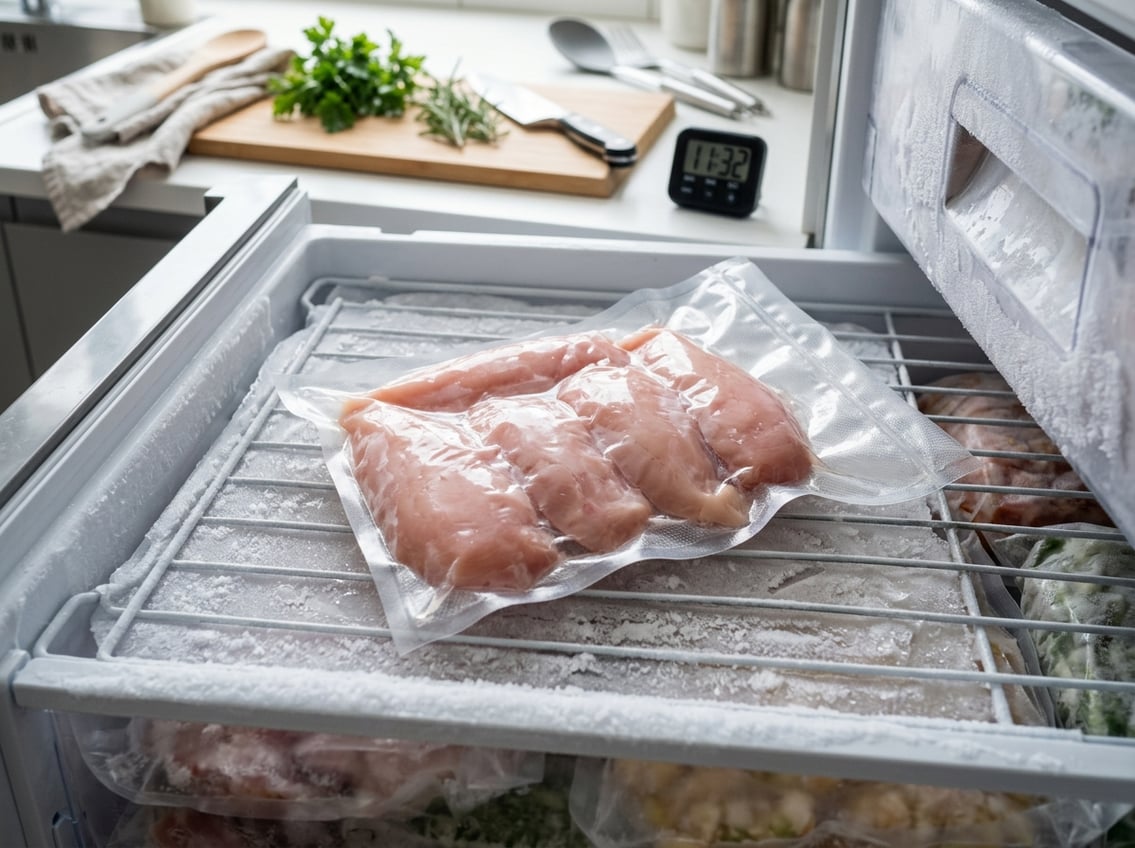
Freezing stops spoilage and gives you a much longer storage window than the refrigerator.
When to Freeze Raw Chicken
Freeze raw chicken breast if you will not cook it within 1 to 2 days.
The earlier you freeze it, the better the texture and flavor tend to stay.
If you bought extra chicken for meal prep, freeze portions the same day you shop.
That keeps chicken from sitting in the fridge while you try to fit it into your schedule.
Best Ways to Prevent Freezer Burn
Freezer burn happens when air reaches the chicken and dries it out.
Wrap it tightly in plastic wrap, foil, or a freezer-safe bag, then press out extra air before sealing.
Label the package with the date so you can track storage time.
For more background on safe storage, freezing chicken works best with airtight packaging and a freezer at 0°F or below.
How Long Frozen Chicken Breast Keeps Its Quality
Frozen chicken breast stays safe for a long time, but quality is best when you use it within about 9 to 12 months.
Over time, texture and flavor may decline, even if the chicken remains safe at 0°F.
If you portion chicken before freezing, you can thaw only what you need.
That reduces waste and helps you keep better track of what is in your freezer.
Thawing and Cooking Without Risk
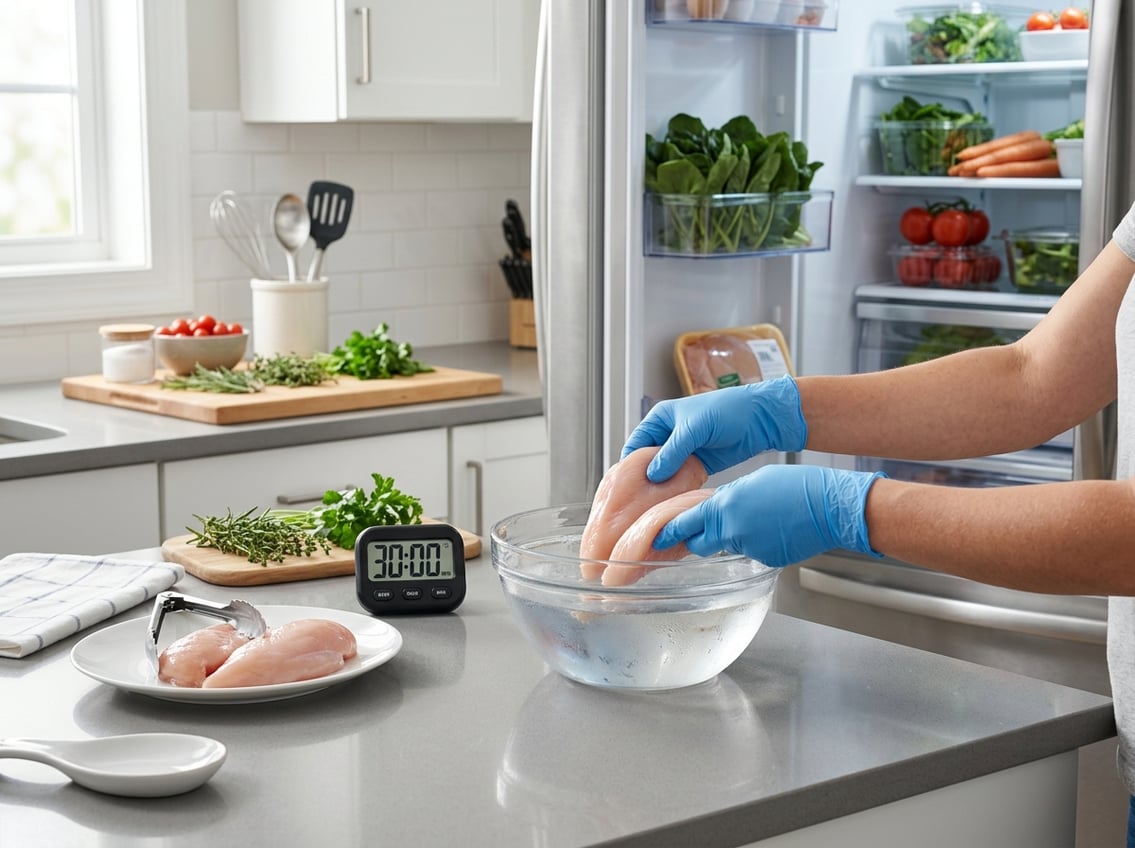
Safe thawing keeps the chicken cold enough to slow bacteria while you prepare it for cooking.
Poor thawing can raise the temperature of the outer layers while the center is still frozen.
Best Thawing Methods for Frozen Chicken Breast
The safest thawing method is in the refrigerator.
You can also use the microwave if you cook it right away after thawing.
Keep thawed chicken on a plate or in a container to catch drips.
That helps prevent cross-contamination in the fridge.
When to Thaw Chicken in Cold Water
You can thaw chicken in cold water if you need it faster than the refrigerator allows.
Use a leakproof bag, submerge it in cold water, and change the water every 30 minutes.
This method works well for same-day cooking.
It is not a good choice if you plan to leave the chicken out on the counter.
Minimum Safe Internal Temperature Before Serving
Cook chicken breast until the thickest part reaches 165°F. Use a food thermometer for the most reliable results.
Do not judge doneness by color alone. After cooking, let the chicken rest briefly.
Serve it hot and refrigerate leftovers within 2 hours.


