
Should Chicken Breast Be Cut Against the Grain? Quick Guide
Should you cut chicken breast against the grain? Yes, cutting against the grain usually gives you a more tender bite because it shortens the muscle fibers and makes the chicken easier to chew.
Chicken breast is already a fairly tender cut, so the difference is often small compared with tougher meats like beef.
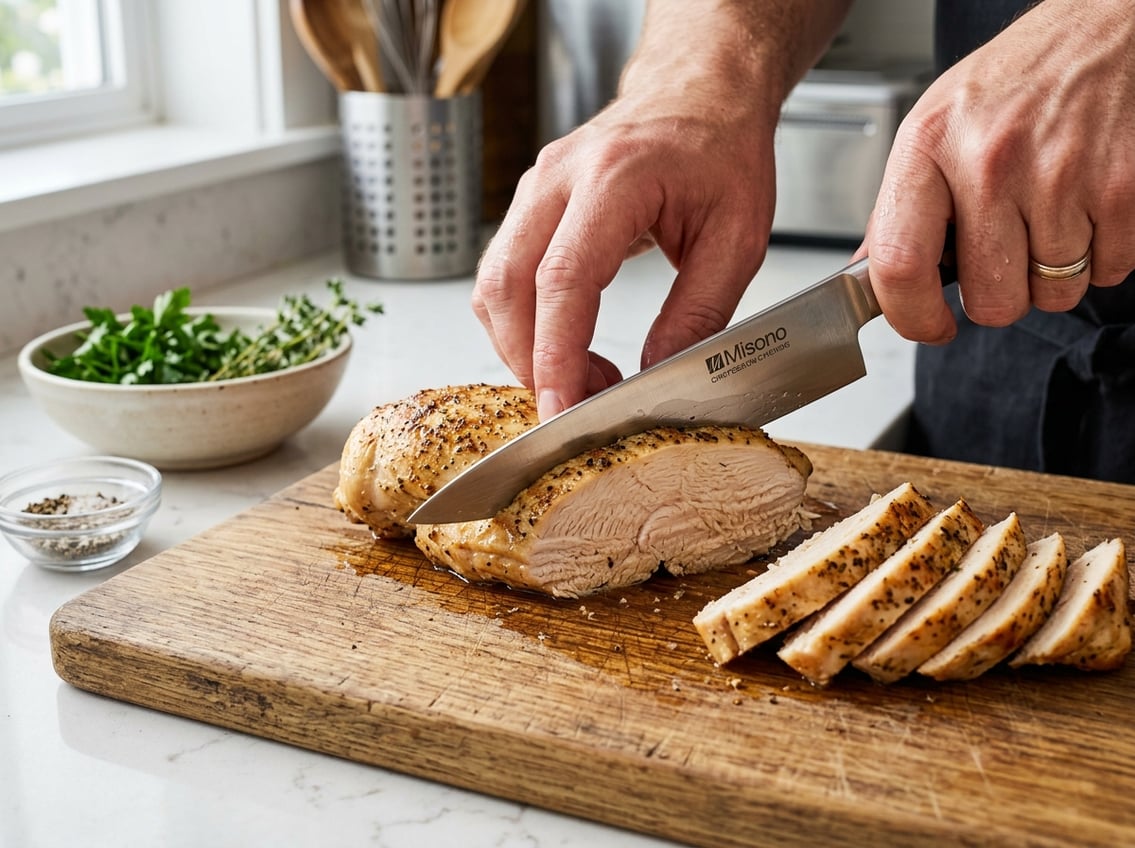
When you cut chicken breast, focus on keeping the slices easy to chew and suitable for your dish. Grain direction matters, but so does the shape of the breast, whether it is raw or cooked, and whether you need strips, cutlets, or pieces for a stir-fry.
The Short Answer: What Gives the Best Texture
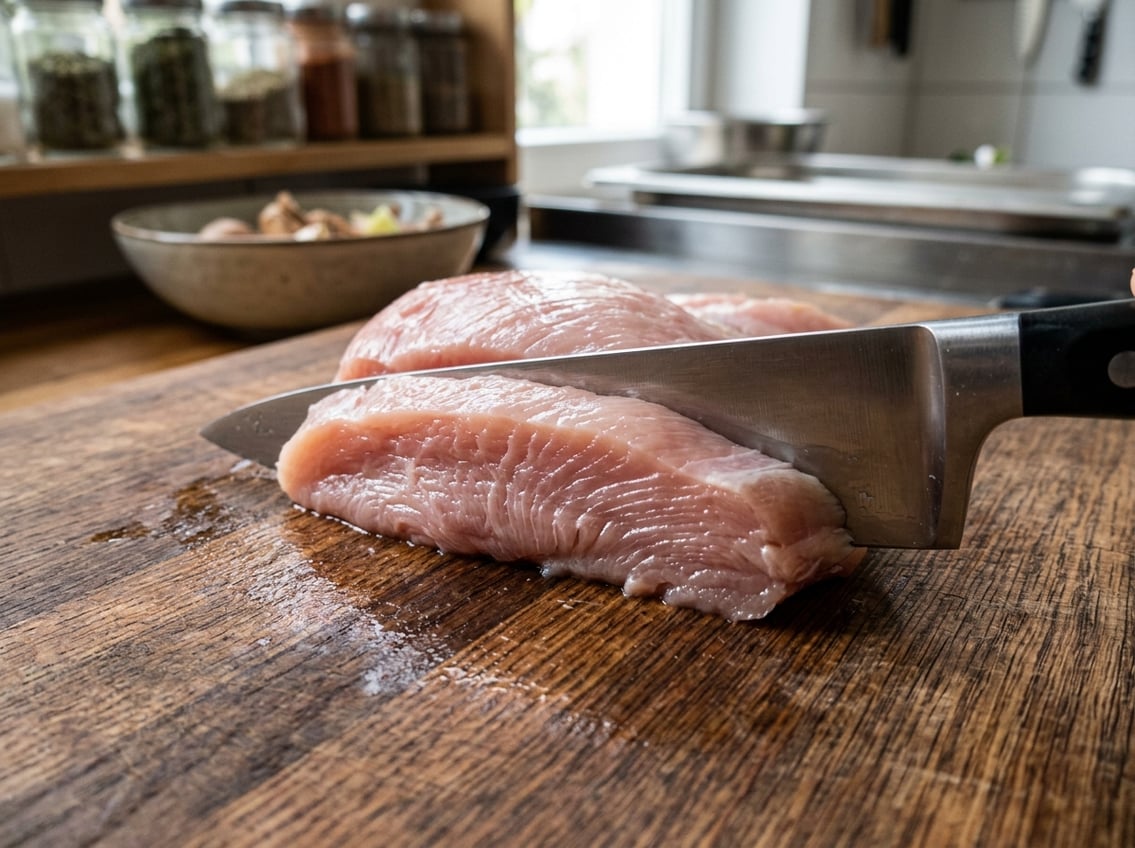
Cutting against the grain usually gives chicken breast the best texture because it shortens the muscle fibers. When you cut across those fibers, each bite feels more tender.
If you cut with the grain, the slices can hold longer muscle fibers intact. This does not make the chicken bad, especially if the breast is cooked well and sliced thin.
Why Cutting Against the Grain Usually Makes Chicken More Tender
The grain is the direction the muscle fibers run. If you cut perpendicular to that direction, you shorten the fibers, which makes chewing easier.
Many cooks prefer to cut chicken breast against the grain for lean cuts. This simple step can improve texture without changing the recipe.
When Cutting With the Grain Still Works Fine
You can cut chicken with the grain and still get good results. This works well when the chicken is sliced very thin, chopped for a filling, or mixed into a saucy dish.
If the chicken breast is juicy and properly cooked, the difference may be hard to notice. Many home cooks use whichever angle fits the shape of the meat and the recipe.
Why Chicken Breast Is Less Sensitive Than Beef to Slice Direction
Chicken breast has a looser grain structure than many beef cuts. Practical tests show that chicken breast is tender enough that slice direction often matters less than it does with tougher meats.
You should still aim to cut against the grain, especially for neat slices. At the same time, you do not need to stress over perfection.
How to Find the Grain in Chicken Breast
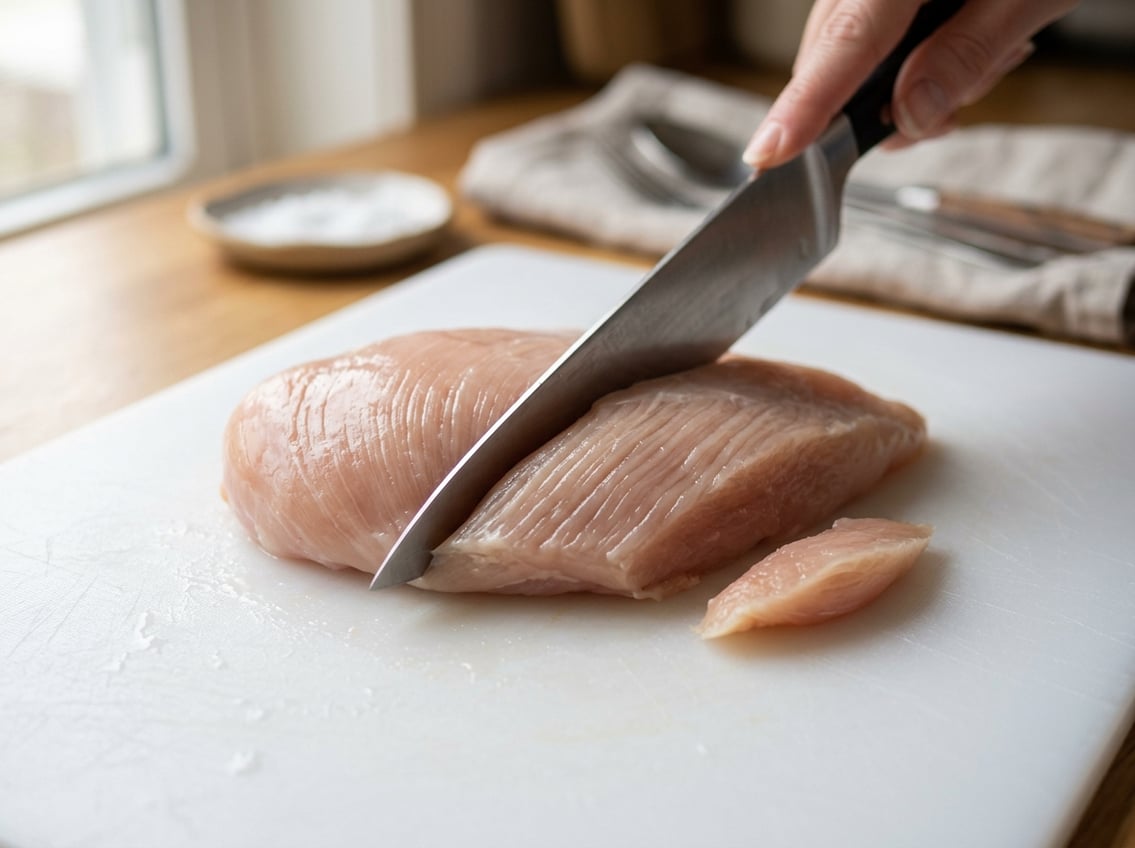
The grain in chicken breast is not always straight. It can curve, split, and fan out, which makes the lines harder to read at first glance.
Raw chicken shows the grain best when you look closely at the surface and the shape of the meat. Cooked chicken can make those lines easier to spot because the fibers tighten and separate a bit more.
What Grain Direction Looks Like on Raw Chicken
On raw chicken breast, the grain direction often appears as faint parallel lines in the meat. These lines show where the muscle fibers run.
A sharp knife helps, since you can adjust your angle as you move through the breast. If the breast is large, you may need to change direction partway through.
Why the Muscle Fibers Curve and Fan Out
Chicken breast is not a flat block of fibers. The muscle structure bends, and one section can shift direction near the thicker end.
That curved grain is one reason a straight knife stroke may not stay perfectly across the fibers from edge to edge. You can still get close enough for a good result.
How Cooked Chicken Reveals the Grain More Clearly
Cutting cooked chicken breast often makes the grain easier to see. The surface is firmer, so the fiber lines stand out more clearly when you slice into it.
If you are cutting cooked chicken, use the same idea and cut across the visible lines when you can. If the grain changes direction, adjust your knife angle as needed.
Best Ways to Slice for Different Cooking Situations

The best cutting method depends on how you plan to use the chicken. Thin strips, cutlets, and bite-size pieces each benefit from a slightly different approach.
A sharp knife and steady pressure matter more than forcing a perfect angle. In practice, you want even pieces that cook at the same rate and stay pleasant to eat.
How to Cut Chicken Breast for Strips, Slices, and Cutlets
For strips, lay the breast flat and slice across the grain into even pieces. This is a common approach for fajitas, stir-fries, salads, and pasta dishes.
For cutlets, first split the breast horizontally, then trim or pound it to an even thickness. If you need a guide on how to cut chicken for meal prep, this is one of the most useful methods.
When Cutting Chicken Against the Grain Matters Most
Cutting chicken against the grain matters most when the breast is thick, lean, or served in visible slices. It also helps when the chicken is part of a dish where texture is easy to notice, like grilled chicken over rice or sliced chicken in a sandwich.
If you are making thin strips for a fast-cooking recipe, the direction matters less than making the slices even. For thicker pieces, aim to cut chicken breast against the grain whenever possible.
How to Handle Partially Frozen or Fully Cooked Pieces
Wait until the surface of partially thawed chicken is firm but not rock hard before you cut it. This stage lets you make cleaner cuts and slice more evenly.
Let fully cooked chicken rest a few minutes before you slice it. Resting keeps more juices in the meat and makes the grain easier to see, so you can choose a better cutting angle.


