
What If Chicken Breast Is a Little Pink? Safety Guide
If you wonder what to do if chicken breast is a little pink, check the temperature, not the color. A pink tint can be normal in a fully cooked breast, but it can also mean the center is still undercooked.
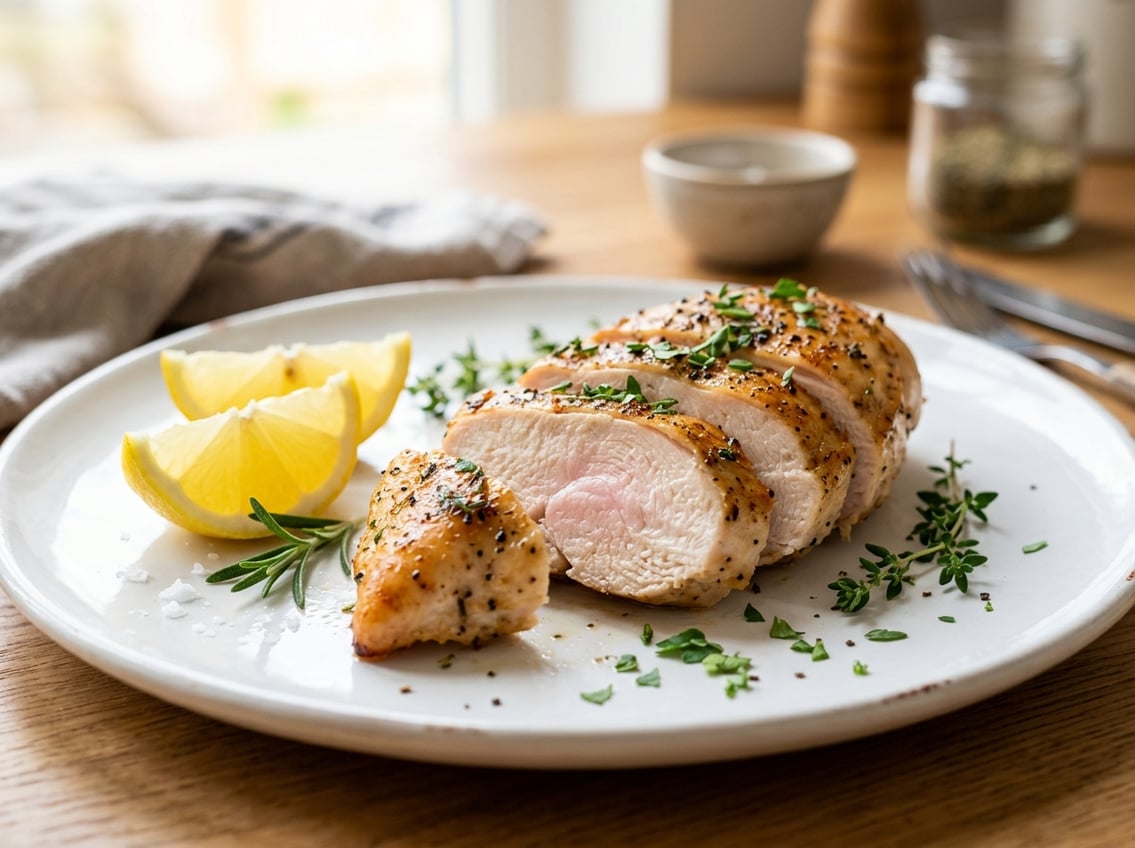
If your chicken breast has reached 165°F in the thickest part, you can safely eat it even if it still looks a little pink.
Color alone is not a reliable test because chicken can stay pink for several safe reasons. Your meat thermometer gives you the clearest answer every time.
How to Tell if It Is Safe to Eat
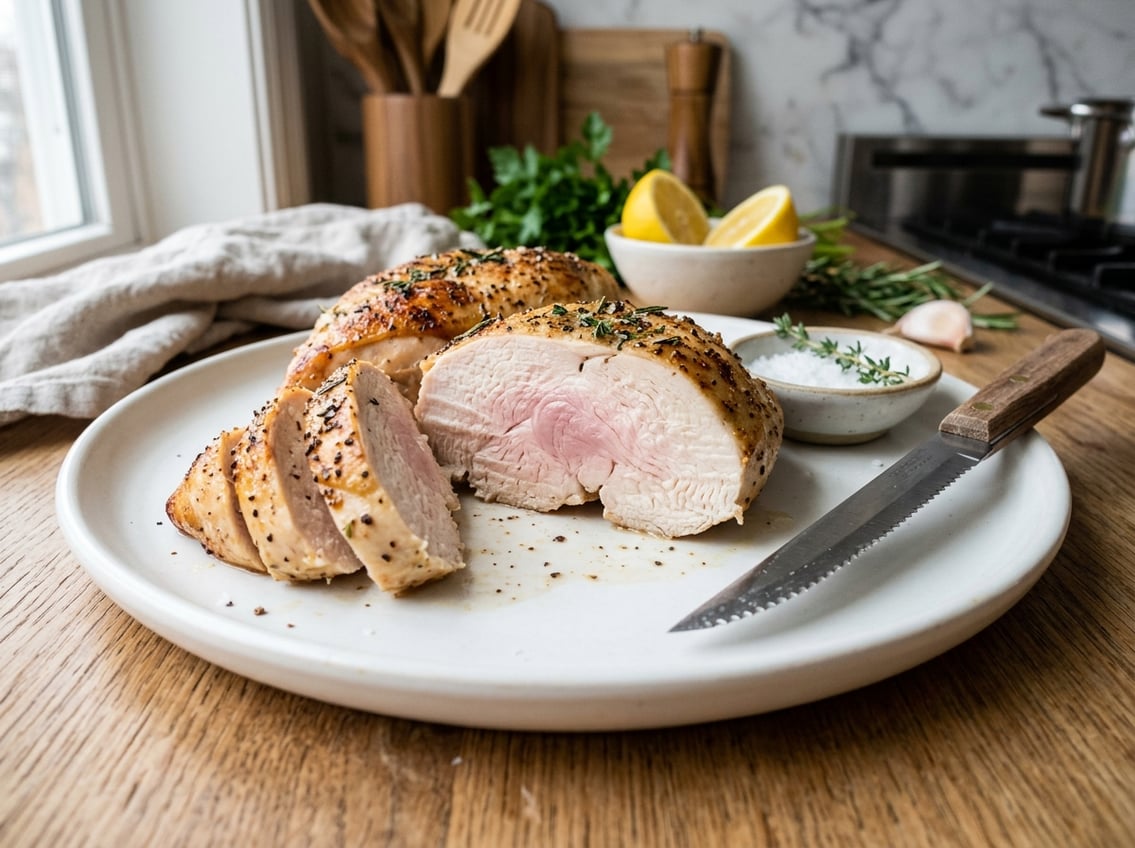
You should check temperature, not appearance. A pink chicken breast can be safe when the inside has reached the proper heat.
A white-looking piece can still be underdone.
Why Temperature Matters More Than Color
The USDA recommends 165°F for poultry, and that standard is based on food safety, not looks. Color can change for reasons that have nothing to do with doneness.
Pink chicken breast may come from age, storage, smoke, or even natural compounds in feed. That is why a meat thermometer matters more than the surface color or the juice test.
How to Use a Thermometer Correctly
Use a food thermometer or an instant-read thermometer to check the center of the breast. Insert it into the thickest part and wait for a stable reading.
Do not press against the pan, bone, or gristle, since that can give you a false number. If the reading is below 165°F, cook the chicken longer and check again in a few minutes.
Where to Check the Thickest Part
The thickest part is usually the middle of the breast, not the thin edge. If the piece is uneven, check more than one spot.
For bone-in chicken, aim near the center without touching the bone. A small shift in placement can change the reading, so use a food thermometer carefully and repeat if needed.
When Pink Is Normal and When It Is Not
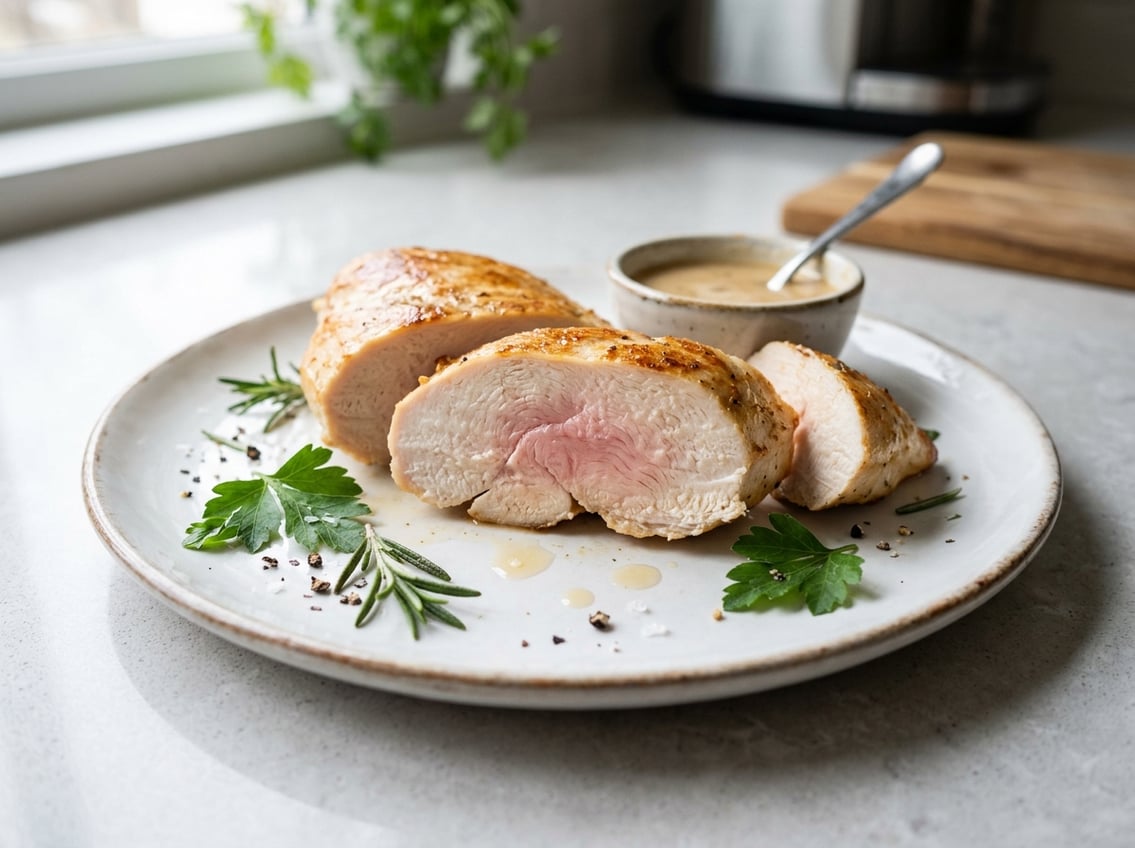
A slightly pink chicken breast is not always a warning sign. The question is whether the meat is fully heated through or still showing signs of undercooked chicken.
Safe Reasons Cooked Meat Can Stay Pink
Some chicken stays pink because of smoke, nitrites, or natural pigments in the bird. Younger birds and certain cooking methods can also leave a pink tint.
The area near the bone can also look pinker after freezing or roasting. That color alone does not prove the meat is unsafe if the temperature is correct.
Signs the Center Is Still Underdone
If the center feels soft and rubbery, that is a warning sign. A raw-looking, glossy center or a reading below 165°F means the chicken is still undercooked.
Clear color on the outside does not guarantee safety inside. When you see pink chicken breast and the thermometer is low, keep cooking.
Texture and Juices as Secondary Clues
Texture and juices can help, but they are not enough by themselves. Firm meat and clear juices are useful signs, yet they can still be misleading.
Use them only as backup clues after using a thermometer.
Health Risks and Food Safety Mistakes
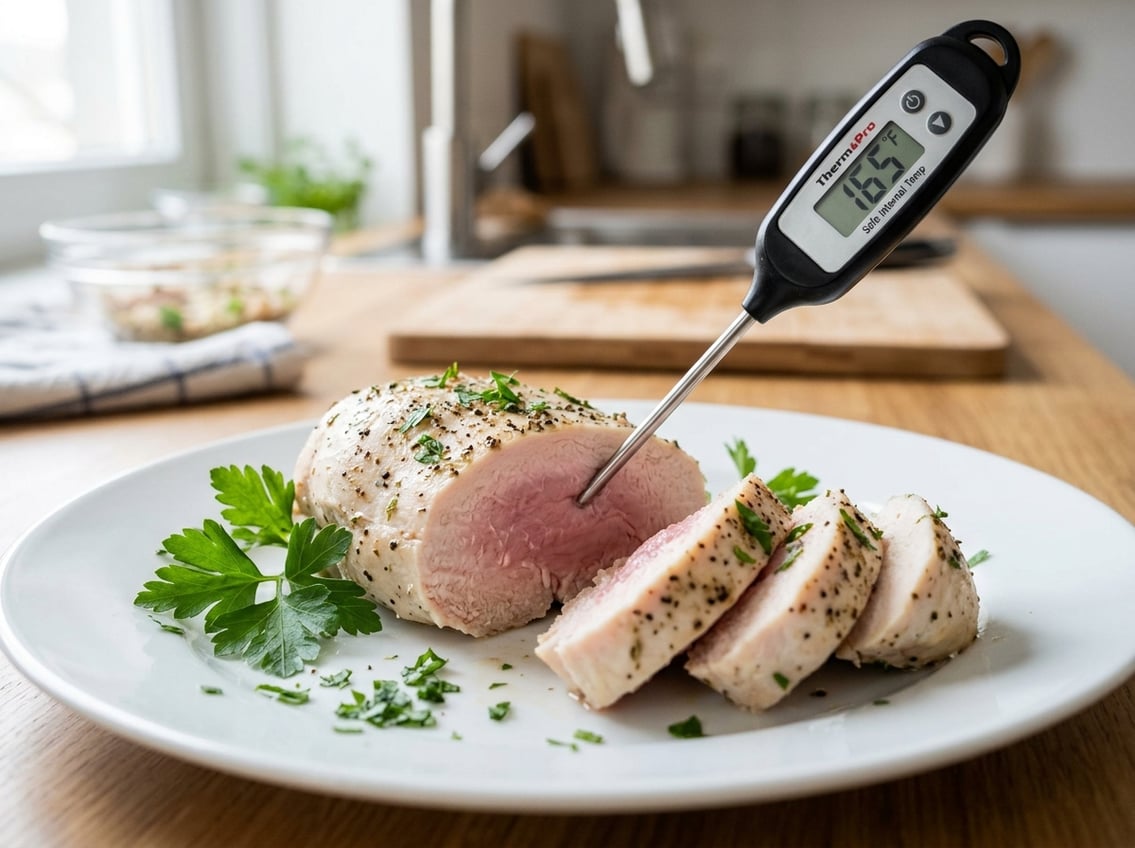
Undercooked chicken carries real food safety risks. Safe handling matters just as much as hitting the right temperature.
Bacteria Linked to Raw Poultry
Raw and undercooked chicken can carry bacteria such as campylobacter and salmonella. These germs are a common cause of foodborne illness.
You cannot tell by sight whether they are present. Using a food thermometer is the safest habit, not a visual guess.
Why Undercooked Meat Is Risky
If the center stays below 165°F, harmful bacteria may survive. That can lead to stomach cramps, nausea, vomiting, fever, and diarrhea.
A thermometer gives you a clear answer before you eat.
Handling Errors That Increase Contamination
Cross-contamination is a common mistake. Raw chicken juices on cutting boards, knives, hands, or plates can spread germs to ready-to-eat food.
Wash your hands after touching raw poultry, and keep raw and cooked chicken separate. Clean surfaces right away, and use a food thermometer instead of guessing based on color.
Best Cooking Practices for Better Results
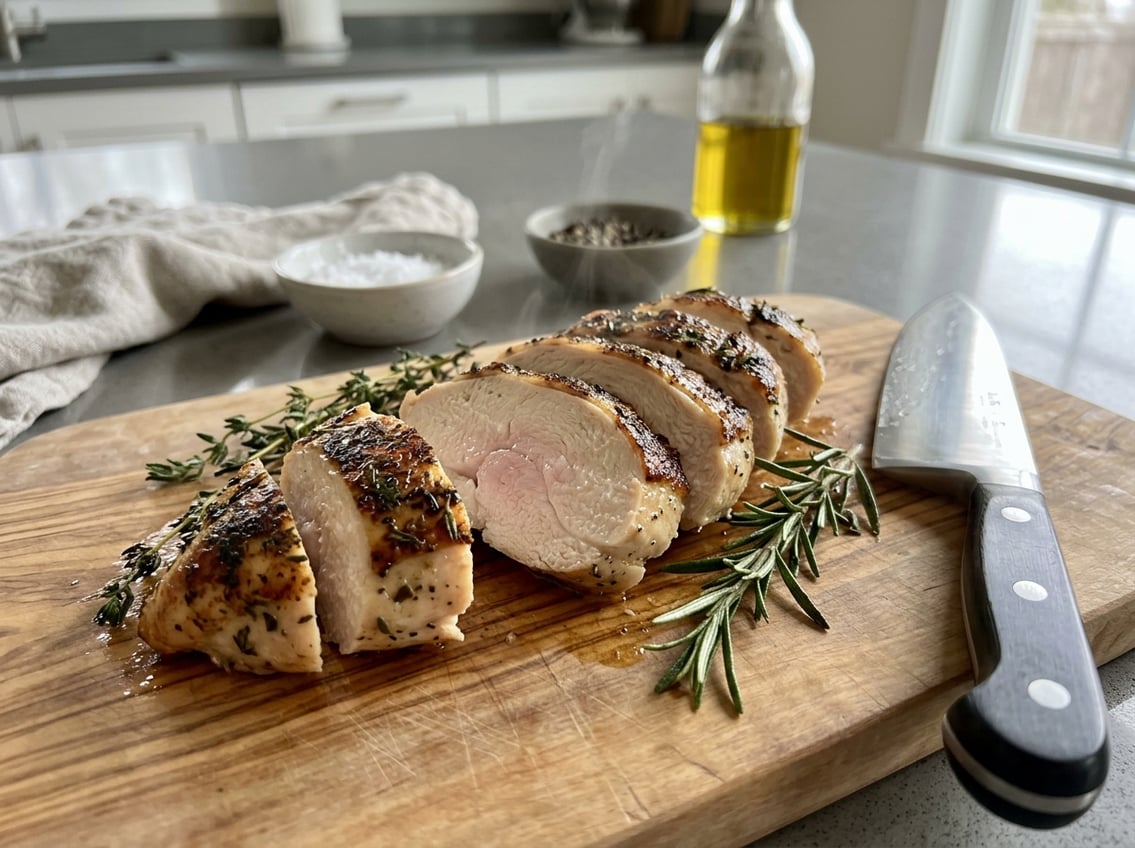
The goal is safe chicken that still stays juicy. Good technique helps you avoid both dry meat and undercooked spots.
Avoiding Dry Chicken While Hitting 165°F
Cook the breast evenly over medium heat or a steady oven temperature. An instant-read thermometer lets you stop at the right time instead of guessing and overcooking.
Thin parts may finish sooner than thick parts, so pay attention to the center. If you use a meat thermometer correctly, you can pull the chicken as soon as it reaches 165°F.
Resting, Carryover Heat, and Even Cooking
After cooking, let the chicken rest for a few minutes. Carryover heat can finish the center and help the juices settle.
Pound thick breasts to an even thickness before cooking if possible. Even pieces cook more evenly, which lowers the chance of a pink center and helps you avoid dry edges.
Common Mistakes When Cooking Chicken Breast
Many people rely on color alone when cooking chicken breast.
Cutting into the chicken too soon lets juices escape and can make you think it is done when it is not.
Avoid overcrowding the pan.
Cook on moderate heat and use a thermometer to ensure safety and better results.


