
Best Way to Cook Chicken Thighs: Methods, Tips, and Recipes
You want chicken thighs that are crispy on the outside and juicy and tender inside. Start with bone-in, skin-on thighs, sear them in a hot pan to render and crisp the skin, then finish in the oven until the meat reaches a safe, tender temperature.
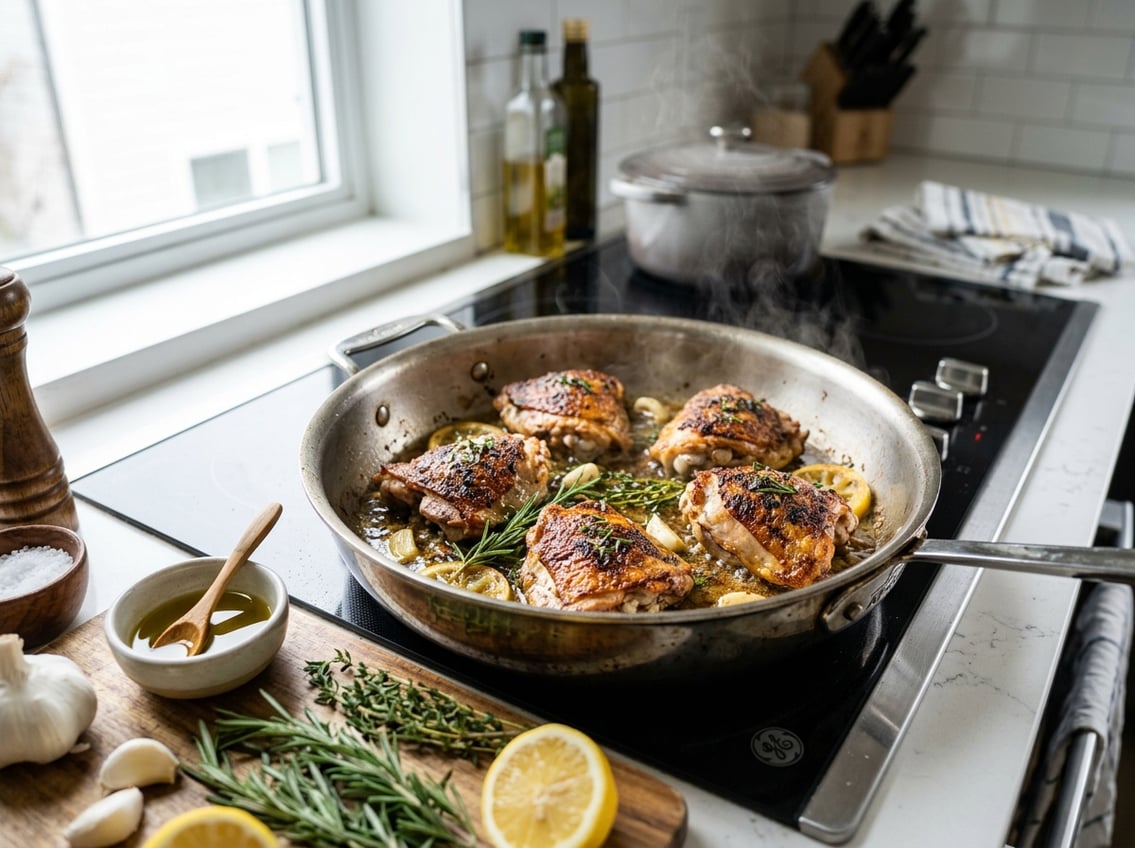
Learn how to choose the right cut and prep the thighs for maximum flavor and texture. Use skillet, oven, grill, air-fryer, braising, and frying techniques to match your time and equipment.
Decide if you want weeknight simplicity or a show-stopping recipe. Follow clear steps and temperature targets to turn basic chicken thigh recipes into consistently great meals.
Choosing the Right Cut of Chicken Thighs
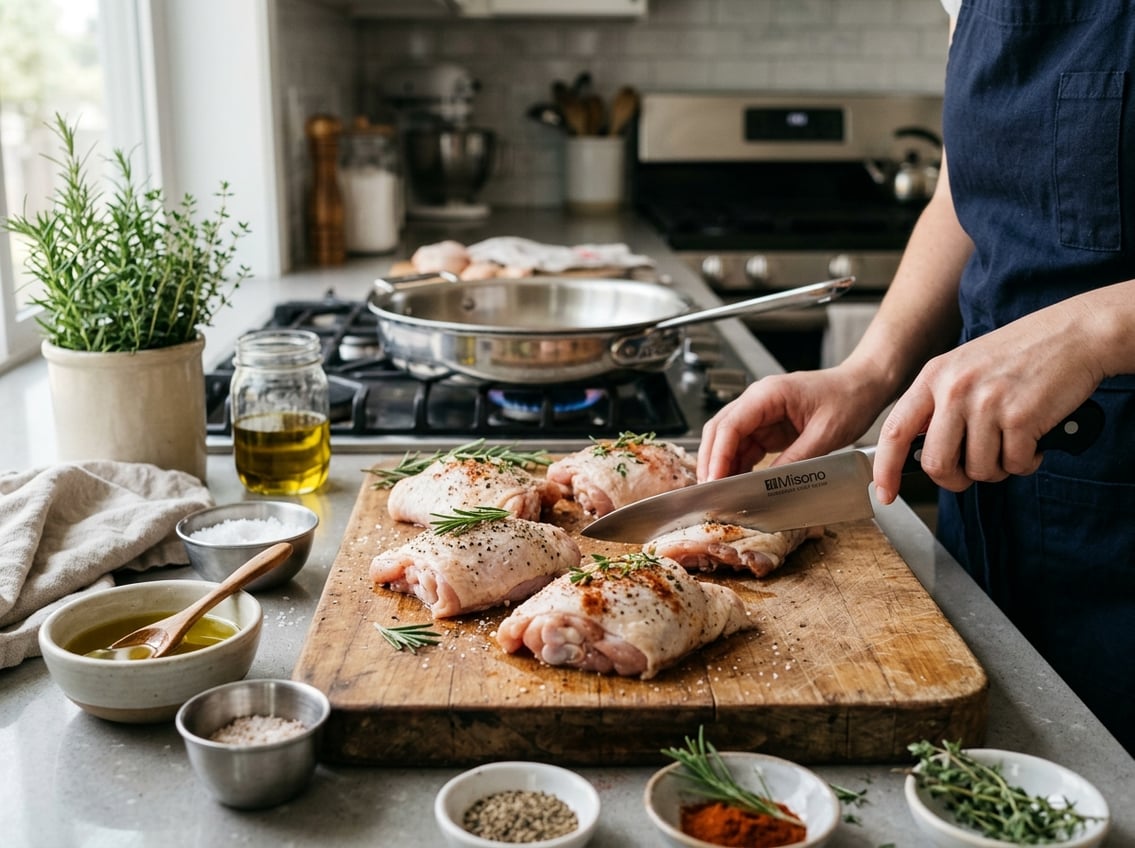
Pick thighs based on your desired texture, cook time, and flavor. Bone-in, skin-on thighs offer the most moisture and crisp skin.
Boneless and skinless thighs give speed and ease for quick recipes.
Bone-In vs. Boneless
Bone-in chicken thighs keep their shape and release collagen as they cook, which keeps the meat moist and gives richer mouthfeel. Choose bone-in for roasting, braising, or grilling to retain flavor and avoid drying out.
Boneless chicken thighs cook faster and are easier to slice for salads, tacos, or stir-fries. Use them for high-heat pan-searing, quick baking, and dishes needing uniform pieces.
If you plan long, slow cooking or want maximum juiciness, choose bone-in. If you need speed or easier eating, pick boneless.
Skin-On vs. Skinless
Skin-on chicken thighs get the crispiest exterior when seared or roasted because the rendered fat browns the skin. Keep the skin for oven-roasting, broiling, or pan-searing to get a crisp, flavorful crust and better moisture retention.
Skinless thighs reduce calories and cook a bit faster. They absorb marinades more directly and work well for stews, curries, or recipes where you’ll shred the meat.
If you want texture contrast and visual appeal, pick skin-on. For convenience, lower fat, or saucy dishes, choose skinless.
Types of Chicken Thighs for Each Cooking Method
Match the thigh type to the method. For pan-searing then oven-finish, use bone-in, skin-on for the best skin crisp and juicy interior.
For grilling or broiling, bone-in, skin-on thighs resist flare-ups and stay moist. For stir-fries, tacos, or quick sautés, use boneless, skinless thighs cut into even strips.
For braises and slow-cookers, bone-in thighs add gelatin and depth to the sauce. For salads, sandwiches, or weeknight sheets, boneless, skinless thighs save time and make serving easier.
Preparing Chicken Thighs for Cooking
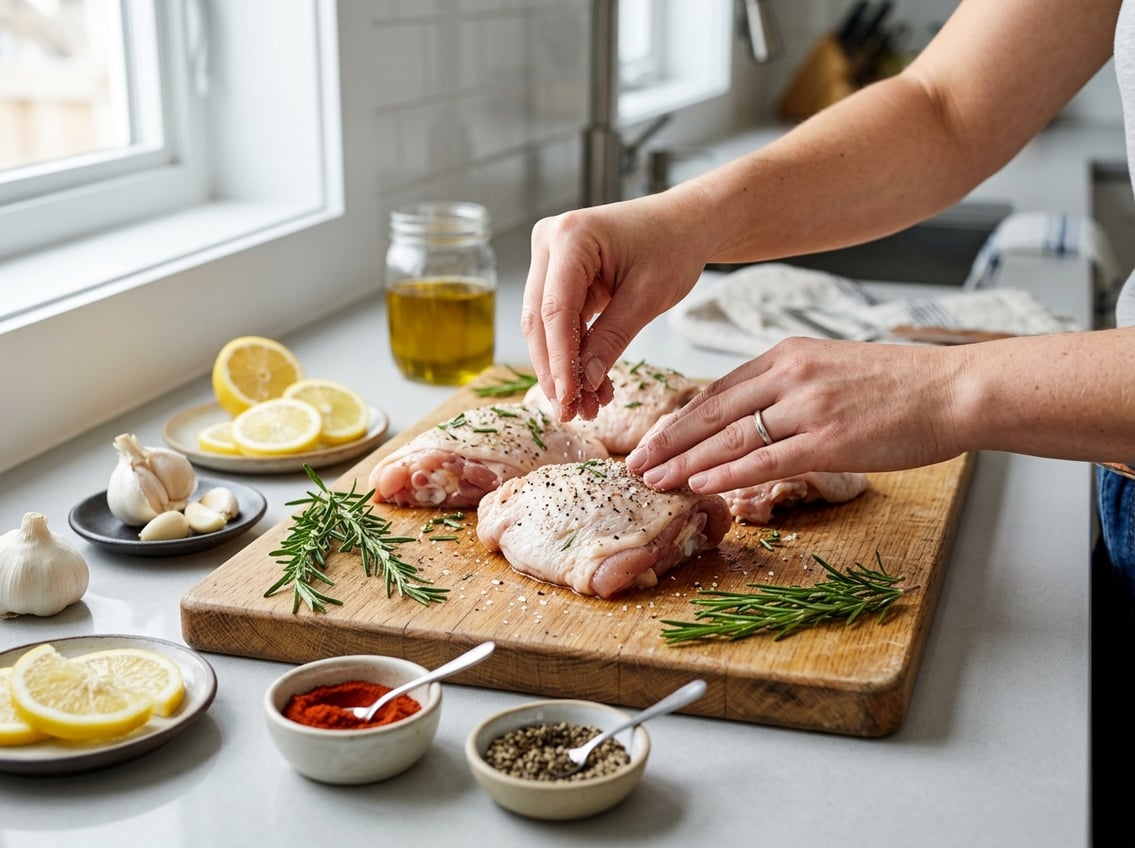
Handle thighs with care: remove excess fat and loose skin, dry them thoroughly, and apply salt, pepper, and flavorful fats or marinades. This helps the skin crisp and the meat stay juicy.
Trimming and Drying Techniques
Trim visible excess fat and any hanging skin flaps with a sharp paring knife. Removing large fat pockets prevents grill flare-ups and reduces greasy splatter in the pan.
Pat each thigh very dry with paper towels. Press firmly on both sides to remove moisture that prevents browning.
Drying for 15–30 minutes at room temperature or refrigerating uncovered for an hour improves crisping. If you keep bone-in, work around the joint and avoid cutting away meat near the bone.
For boneless thighs, trim ragged edges so pieces cook evenly and lie flat in the pan.
Seasoning and Marinades
Salt both sides with kosher salt at least 30 minutes before cooking or the night before for deeper flavor. Salt also tightens the skin for better crisping.
Use a simple dry rub of black pepper, paprika, and a pinch of oregano or thyme for aromatic depth. Press the rub lightly so it sticks.
For a wet marinade, mix olive oil, crushed garlic, lemon zest, and herbs. Marinate 30 minutes to 4 hours. Avoid long acidic marinades on thin or boneless thighs to prevent mushy texture.
Using Olive Oil and Spices
Coat thighs lightly with olive oil before cooking to promote even browning. Use about 1 teaspoon per thigh for pan-searing, or a thin brush across the skin when roasting.
Combine olive oil with spices: 1 tsp smoked or sweet paprika, 1/2 tsp cracked black pepper, and 1/2 tsp each dried oregano and thyme per pound of meat. Rub under and over the skin for concentrated flavor.
If you sear first, heat the oil until it shimmers but does not smoke. This crisps the skin quickly and locks in juices while the paprika and herbs toast.
Achieving Crispy, Juicy Chicken Thighs
Control three variables: surface dryness and heat for crispy skin, internal temperature and cooking time for juicy meat, and resting time for proper juice redistribution.
Use bone-in, skin-on thighs when possible and finish with high heat to get golden-brown, crackling skin without drying the interior.
Getting a Crispy Skin
Pat each thigh very dry with paper towels. Season skin with kosher salt at least 20–30 minutes before cooking or right before searing to draw out surface moisture.
Start skin-side down in a hot, oven-safe skillet over medium-high heat. Press thighs flat for full contact and render fat until deeply golden—about 6–8 minutes—then flip briefly.
Transfer the pan to a 400–425°F oven to finish. This approach yields golden-brown, crispy baked chicken thighs.
If you roast on a sheet, use a wire rack so hot air circulates under the thighs. For extra crisp, finish under a 500°F broiler for 1–2 minutes while watching closely.
Avoid overcrowding the pan; give each piece room to brown.
Maintaining Juiciness
Cook bone-in thighs to a safe and tender finish between 175°F and 185°F for best texture. Thighs have more connective tissue that breaks down at higher temperatures, producing juicier meat.
Check doneness with an instant-read thermometer inserted into the thickest part without touching bone. Sear first to lock in juices, then roast at a moderate oven temperature (350–425°F depending on method) to cook through without drying.
If using boneless thighs, reduce final temperature slightly and remove them earlier—around 165–170°F—to avoid overcooking.
Brines (salt + water) for 30–60 minutes improve moisture retention. Rinse and dry thoroughly before cooking to keep the skin crisp.
Resting and Serving Tips
After the thighs reach target temperature, rest them uncovered on a plate or wire rack for 5–10 minutes. Resting lets juices redistribute.
Serve skin-side up to preserve the crisp surface. If you plan a saucy dish, serve sauce on the side to keep the skin crackling.
Reheat gently in a 350°F oven on a rack to restore crispness.
Oven and Skillet Cooking Techniques
You get crisply browned skin and juicy meat by combining a hot pan sear with steady oven heat. Use a rimmed baking sheet or an oven-safe skillet to finish the thighs.
Rely on an instant-read thermometer to know when they’re done.
How to Bake Chicken Thighs
Preheat your oven to 400°F (205°C) for a balance of crispy skin and even cooking. Pat thighs dry, season well, and place skin-side up in a single layer on a rimmed baking sheet or in a shallow baking dish.
Leave at least 1 inch between pieces to prevent steaming.
For boneless thighs, check around 20–30 minutes. For bone-in, expect 30–40 minutes.
Use an instant-read thermometer inserted into the thickest part without touching bone. Remove at 165–175°F depending on your desired tenderness.
Rest meat 5 minutes before serving.
Using a Cast Iron Skillet or Oven-Safe Skillet
Heat a cast iron or oven-safe skillet over medium-high until very hot. Add a little oil, then place skin-side down and sear without moving for 4–6 minutes until deeply golden and the fat renders.
After searing, transfer the skillet directly to the preheated oven. The heavy pan holds heat evenly, so the thighs roast through without drying.
If you started in a baking dish, sear in a separate skillet then arrange thighs skin-side up before roasting.
How Long to Bake Chicken Thighs
Time varies by cut and oven temperature. At 400°F, boneless thighs take 20–30 minutes and bone-in thighs 30–40 minutes.
If you use 350°F, add 5–10 minutes. At 425°F, subtract 5–10 minutes but watch for burnt skin.
Always use an instant-read thermometer for accuracy. For tender results, pull boneless at 165°F and bone-in between 175–185°F.
Let thighs rest uncovered for 5 minutes so the temperature evens out and the skin stays crisp.
Finishing with the Broiler or Convection Oven
To boost crispiness, finish under a preheated broiler for 1–3 minutes, watching constantly to avoid burning. Keep the skillet or baking sheet on the middle rack if your broiler is strong.
If you have a convection oven, reduce the temperature by 25°F or shorten the time by about 15%. Convection gives more even browning and helps render skin fat faster.
Grilling and Air Frying Chicken Thighs
You can get juicy, well-browned thighs whether you cook over open flame or in an air fryer by controlling temperature, spacing, and resting time.
Focus on skin-on bone-in for the most forgiving results. Adjust time and flip strategy for boneless or unrolled thighs.
How to Grill Chicken Thighs
Start with room-temperature thighs, patted dry and lightly oiled. This helps the skin brown and prevents flare-ups.
Season with salt and pepper or a spice rub. For bone-in skin-on, aim for 350–400°F surface heat.
Use a two-zone fire: direct high heat for searing (2–3 minutes per side) and indirect medium heat to finish cooking. Place thighs skin-side down first to crisp, then move to indirect heat and close the lid.
Target internal temperature: 165°F at the thickest point near the bone. Rest for 5 minutes before serving.
If using boneless or unrolled thighs, reduce indirect time and watch closely. These can finish in 8–12 minutes total.
Avoid overcrowding the grate to keep air and smoke circulating.
Air Fryer Chicken Thighs for Crispiness
Coat thighs with 1 Tbsp oil per 6 pieces or use an oil sprayer. Oil promotes browning in the air-fryer environment.
Arrange in a single non-overlapping layer with space around each piece for hot-air circulation.
Set temperature to 400°F. Cook times:
- Boneless skinless (bundled): 10 min, flip, then 5–7 min.
- Unrolled boneless: about 10 min (no flip required).
- Bone-in (skin-on or not): 15 min, flip, then 10–15 min.
Check doneness with an instant-read thermometer at 165°F. Let thighs rest 2–5 minutes after cooking.
Reheat leftovers in the air fryer at 300°F for 5–7 minutes to restore crispness.
Tips for Outdoor and Indoor Grilling
Trim excess fat to prevent flare-ups. Keep a spray bottle of water nearby for small flames.
For charcoal grilling, bank coals to create a cooler indirect zone. For gas, turn off one burner for indirect cooking.
Use a meat thermometer instead of relying on timing alone.
For indoor alternatives, use a grill pan on medium-high or a broiler to mimic direct heat. Position skin-side up under the broiler to crisp, then lower heat to finish.
Let the cooked thighs rest on a wire rack to preserve crisp skin.
Other Delicious Methods
Frying gives the crispiest exterior in the least time. Broiling and braising offer high heat finish or melting tenderness.
Each method requires small, specific adjustments. Adjust oil temperature for frying, rack position for broiling, and use searing followed by simmering for braising.
How to Fry Chicken Thighs
Pat the thighs dry and season well. Moisture prevents crisping.
For pan-frying, use bone-in, skin-on thighs. Heat 1/4–1/2 inch of neutral oil to 325–350°F.
Place the thighs skin-side down and cook undisturbed until deep golden, about 8–12 minutes. Flip and reduce heat if the exterior browns too fast; finish until internal temp reads 165°F.
For deep frying, heat oil to 350°F and fry in small batches to keep the temperature steady. Fry for 10–14 minutes depending on size.
Drain on a rack to preserve crispness. Use a thermometer for oil and meat to avoid greasy or undercooked thighs.
Safety and texture tips:
- Don’t overcrowd the pan or basket.
- Rest 5 minutes before serving to let juices redistribute.
- For extra crunch, dredge in seasoned flour or a thin batter.
How to Broil Chicken Thighs
Broiling uses intense top heat to brown skin quickly. Position the oven rack 6–8 inches from the broiler element.
Pat thighs dry and brush skin lightly with oil. Season the thighs.
Preheat the broiler for 5 minutes. Place thighs skin-side up on a rimmed baking sheet or broiler pan.
Broil 6–10 minutes until the skin is deeply browned. Watch constantly to prevent burning.
If thighs aren’t cooked through after browning, lower the heat to 375°F and transfer to the oven until internal temp reaches 165°F. Use a thermometer because broiling can char before the center finishes.
Tips for even results:
- Use a wire rack over the sheet to allow hot air under the thighs.
- Rotate the pan halfway through if your broiler has hot spots.
- Trim excess fat to reduce flare-ups and smoke.
Braised Chicken Thighs for Tender Results
Braising creates fall-off-the-bone texture by combining an initial sear with slow, moist cooking. Start by patting thighs dry and seasoning them.
Sear the thighs skin-side down in a wide pot over medium-high heat until golden, about 6 to 8 minutes. Remove excess fat, then add aromatics like onion and garlic.
Deglaze the pot with wine or stock. Nestle the thighs back in, skin-side up.
Add liquid so it comes about halfway up the thighs. Cover, and simmer gently on the stovetop or in a 325°F oven for 25 to 40 minutes depending on size.
Check for an internal temperature of 165 to 175°F. If you want crisper skin after braising, remove the thighs and briefly broil or pan-sear them skin-side up.
Braising basics:
- Use a heavy pot with a tight lid, like a Dutch oven.
- Keep simmering gentle to avoid tough meat.
- Reduce the braising liquid into a sauce for serving.


