
How Long to Cook Chicken Thighs With Leg Attached: Reliable Oven Timing and Essential Tips
Cooking chicken thighs with the leg attached becomes simple once you know the timing. For bone-in, skin-on pieces, bake at 375–425°F (190–220°C) until the thickest part reaches 165°F (74°C), usually about 35–45 minutes at 375°F or 35–45 minutes at 425°F for crispier skin.
Aim for an internal temperature of 165°F (74°C) to ensure safety and keep the meat juicy.
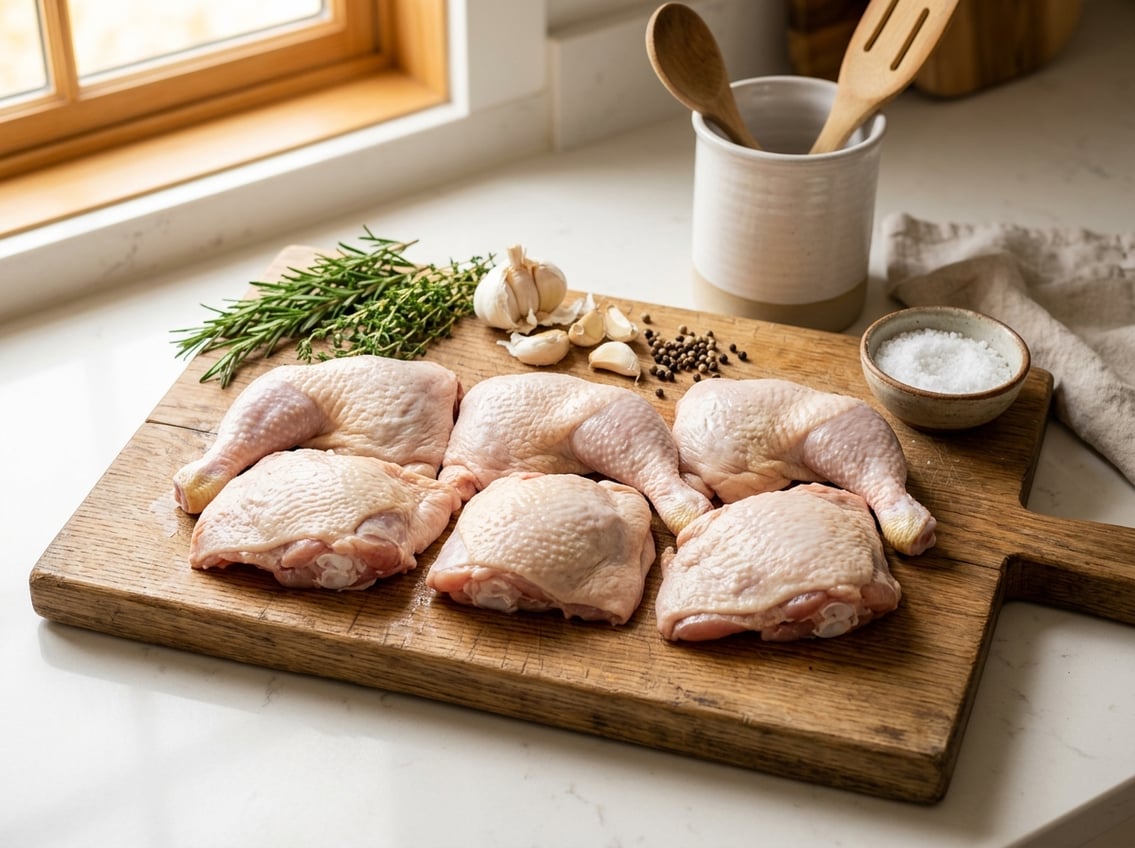
Cut type, bone-in versus boneless, oven temperature, and piece size all change the timing. Practical tips on seasoning, resting, and finishing techniques help produce crisp skin and tender dark meat.
Follow oven baking guidelines and troubleshooting advice for consistent results. Whether you want quick weeknight meals or a slow-roasted dinner, these tips apply.
Understanding Chicken Leg and Thigh Cuts
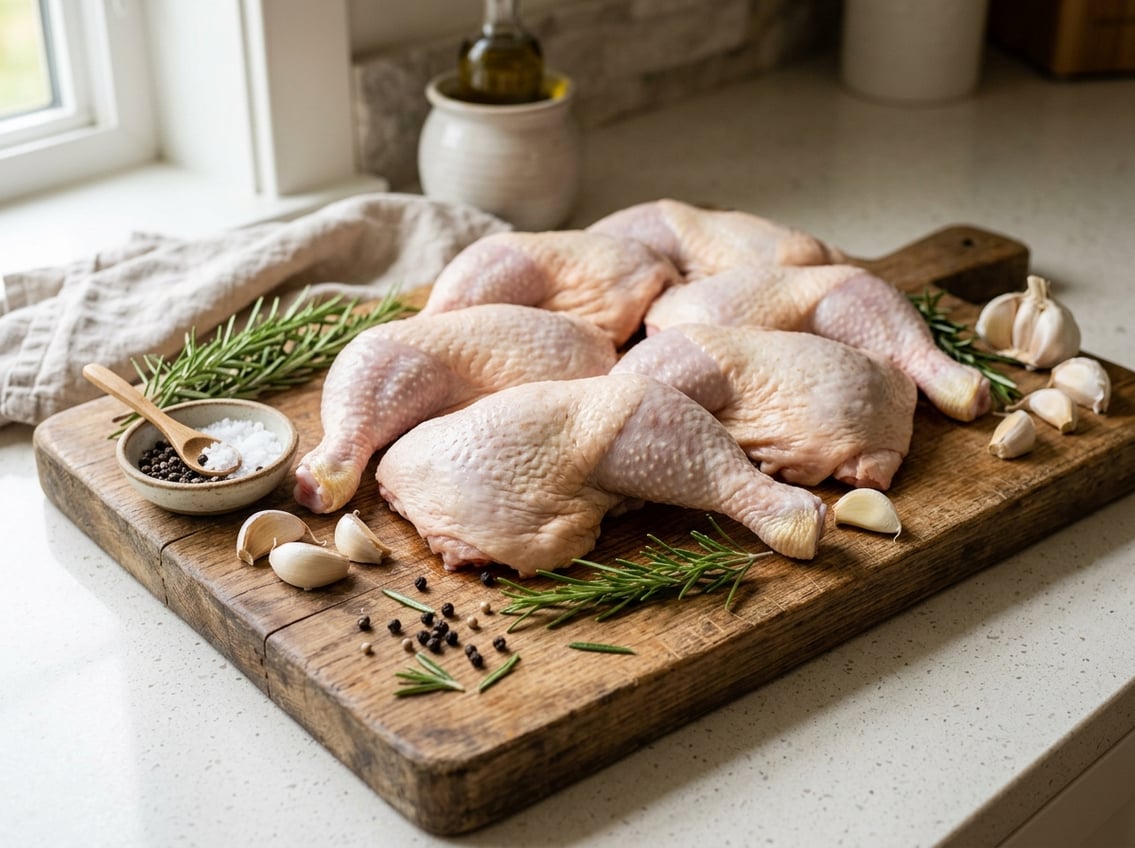
Identify which cut you have and how bone and skin affect cooking time. Pieces sold together behave differently in the oven or on the grill.
Chicken Leg Quarters Explained
Chicken leg quarters combine the thigh and drumstick with a portion of the back attached. Stores often sell them whole for roasting because the extra mass and bone promote slower, more even cooking than separate pieces.
Plan for longer cook times and slightly lower temperatures to let connective tissue break down without drying the skin. Check the internal temperature near the thickest part of the thigh without touching bone, aiming for 165°F (74°C).
Use a probe thermometer and allow 5–10 minutes resting time for juices to redistribute.
Bone-In vs. Boneless Chicken Thighs
Bone-in thighs include the femur and often the skin, while boneless thighs are trimmed of bone and sometimes skin. Bone and bone marrow retain heat and slow cooling, so bone-in thighs take longer to reach 165°F and tend to stay juicier after cooking.
Boneless thighs cook faster and suit quick sautés or higher-heat roasting. Baking at 425°F (220°C), boneless thighs finish in about 25–35 minutes, while bone-in need 35–45 minutes.
Adjust times based on thickness and whether skin is present. Always verify doneness with an instant-read thermometer.
Whole Chicken Legs Versus Drumsticks
Whole chicken legs usually mean the thigh attached to the drumstick, while drumsticks alone are just the lower leg. The larger thigh portion governs overall time because it contains more connective tissue and thicker muscle.
Drumsticks alone cook faster and crisp up more readily at high heat. Arrange pieces of similar size together or start whole legs earlier than drumsticks when mixing cuts.
Check temperature at the meatiest spot of the thigh for whole legs and at the center of the drumstick for drumsticks. Aim for 165°F (74°C) for both.
Oven Baking Guidelines for Juicy Results
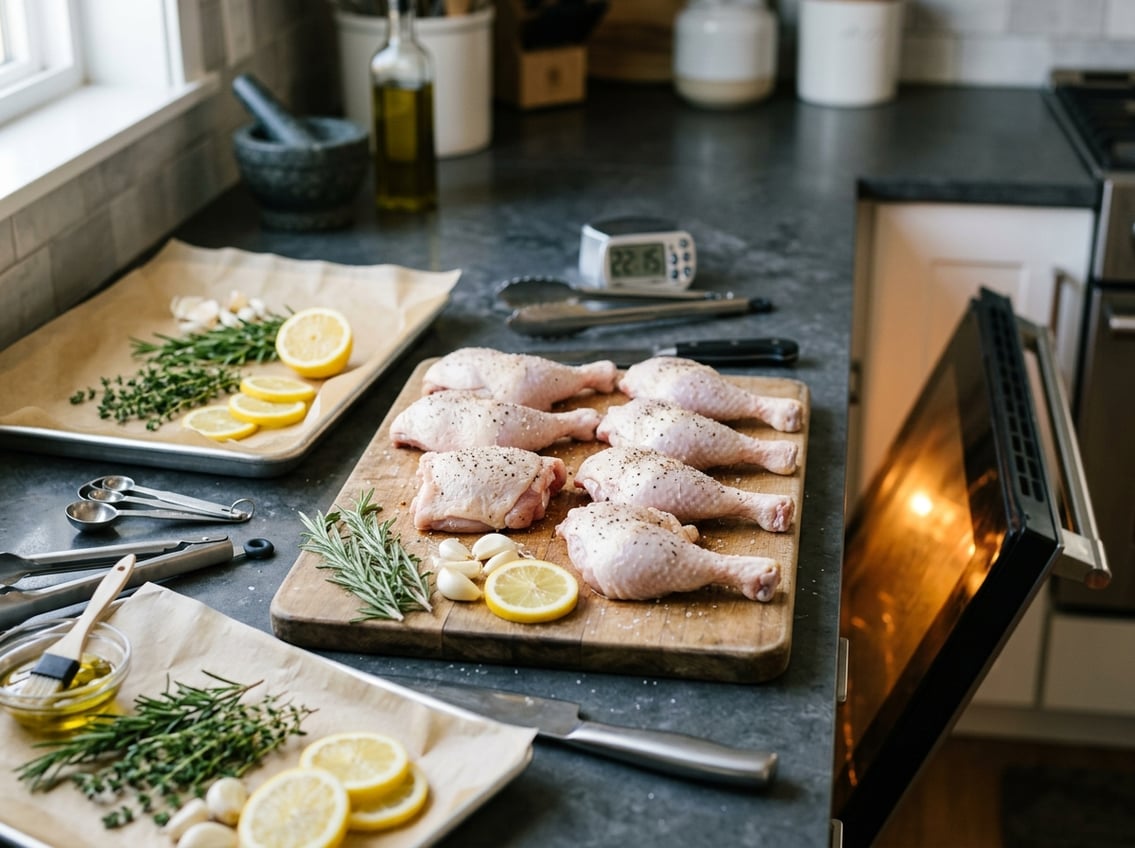
Use moderate to high oven heat and monitor internal temperature with an instant-read thermometer. Let the meat rest before serving for the best texture and juiciness.
Recommended Temperatures and Times
For bone-in chicken thighs with the leg attached, roast at 400°F (205°C) for juicy results. Expect 40–50 minutes for 4–8 ounce pieces, and larger leg quarters often need 50–60 minutes.
If you want crisper skin, start at 425°F (218°C) for the first 10 minutes, then reduce to 400°F to finish. For boneless or skinless thighs, bake 25–30 minutes at 425°F.
Baking chicken legs (drumsticks) alone at 375–400°F for 35–45 minutes works well. Use an elevated rack or a rimmed baking sheet lined with foil for even air circulation and easier cleanup.
Quick reference:
- 400°F: bone-in thighs with leg attached — 40–50 min
- 425°F: boneless thighs — 25–30 min
- 375–400°F: drumsticks — 35–45 min
- 350°F: gentle roast for larger leg quarters — 50–60 min
Checking Internal Temperature
Insert an instant-read thermometer into the thickest part of the thigh, avoiding bone for accuracy. The USDA minimum safe internal temperature is 165°F (74°C), but many chefs pull dark meat at 170–175°F for more tender texture.
Check temperature in two places for larger pieces: near the thigh bone and in the meatiest section of the drumstick. If juices run clear and the thermometer reads at least 165°F, the meat is safe.
If the surface browns too fast before the interior reaches temperature, tent the pieces loosely with foil and continue roasting. Use the thermometer rather than time alone to avoid undercooking or drying out chicken.
Resting and Serving Best Practices
Let cooked thighs rest 5–10 minutes after removing them from the oven. Resting allows internal juices to redistribute and keeps the meat moist.
For larger leg quarters, rest 10–15 minutes. During rest, keep pieces loosely tented with foil to retain heat without trapping steam.
After resting, carve or separate drumsticks from thighs as needed and serve immediately. Reheat leftovers gently (covered in a 300°F oven) to preserve moisture.
Factors Impacting Cooking Time
Several variables change how long a chicken thigh with the leg attached takes to reach doneness. Pay attention to piece size, bone presence, and any marinades or prep steps that affect moisture and surface temperature.
Size and Thickness of Pieces
Heavier, thicker pieces need more time because heat penetrates meat slowly. A large leg-and-thigh piece (about 10–12 oz) will take noticeably longer than a small 6–8 oz piece at the same oven temperature.
At roughly 1.25–1.5 inches thick, expect the longer end of the time range for your chosen temperature. Use consistent sizing to get even cooking across a tray.
If pieces vary, remove smaller ones early or start larger ones on a lower rack. Resting time after cooking also evens internal temperature by a few degrees.
Bone-In vs. Boneless Cooking Differences
Bones slow heat transfer, so bone-in chicken thighs with leg attached take longer than boneless thighs of the same weight. Expect differences of 8–15 minutes at typical oven temps (375–425°F / 190–220°C).
Bones also help retain moisture, so bone-in pieces often stay juicier even with slightly longer cook times. If you switch from bone-in to boneless, reduce cooking time and check internal temperature sooner.
Always use an instant-read thermometer and aim for 165°F (74°C) in the thickest part without touching bone.
Marinating and Prepping Tips
Marinades, brines, and wet rubs change surface moisture and thermal conductivity. A salt-based brine increases internal moisture and can reduce perceived dryness, but it doesn’t dramatically shorten cook time.
Oil-based marinades promote browning and crisp skin, which can make the meat look done earlier—confirm with a thermometer. Pat skin dry before roasting to speed browning and reduce steaming.
If you want crisp skin, start at a higher temperature (425°F / 220°C) for the first 10–15 minutes, then lower to finish. This alters total time but improves texture.
Use room-temperature pieces for even cooking by taking chicken out of the fridge 20–30 minutes before cooking. Seasoning and scoring thicker skin also help heat penetrate more evenly.
Seasoning, Marinades, and Preparation Tips
Salt, acid, fat, and aromatics form the core of flavor decisions. Think about texture goals—crispy skin or shreddable meat—before choosing how long to marinate or when to salt.
Classic and Creative Flavor Options
Salt, black pepper, garlic powder, and smoked paprika give a savory crust on bone-in chicken thighs and baked chicken legs. For herbs, use fresh thyme or rosemary tucked under the skin for direct flavor contact.
Lemon juice or vinegar brightens the meat; mix with olive oil, minced garlic, and oregano for a Mediterranean marinade. Try a soy-ginger marinade (soy sauce, toasted sesame oil, grated ginger, honey) for an Asian flavor that caramelizes well.
Yogurt or buttermilk plus cumin, coriander, and turmeric tenderize and add a tangy crust. Pat thighs dry, then apply rub or marinade.
For bone-in chicken thighs, marinate 2–8 hours. Avoid acidic marinades longer than 12–24 hours to prevent mushy texture.
Tips for Crispy Skin and Juicy Meat
Dry thoroughly by pressing into skin folds and patting until no surface moisture remains. This step matters more for chicken thighs than for lean cuts.
Salt at least 1 hour before cooking or overnight in the fridge, uncovered, to draw out and reabsorb moisture. This yields crisper skin.
Start skin-side down in a cold skillet to render fat slowly, or roast skin-up on a wire rack at 400–425°F so hot air circulates and fat drips away. Use a probe thermometer and pull bone-in thighs at about 175°F for tender, gelatinized meat.
Boneless thighs can come off nearer 165°F. If the meat is cooked but skin isn’t crisp, broil 2–4 minutes while watching closely.
Rest for 5–10 minutes before serving to let juices redistribute.
Baking Techniques and Recipe Variations
Use step-by-step methods to get even cooking, crisp skin, and juicy meat for chicken thighs with the leg attached. Adapt oven temperature, time, and equipment to the size of the pieces and the texture you want.
Basic Uncovered Roasting
Roast bone-in chicken thighs with legs attached at 400°F (200°C) for 35–45 minutes for average-sized pieces. Arrange skin-side up on a baking sheet or shallow pan so hot air circulates and the skin browns evenly.
Pat the skin dry and season under and over the skin. For larger legs or cold-from-fridge pieces, add 5–10 minutes and check internal temperature; target 165°F (74°C) in the thickest part near the bone.
Start at 425°F for 10–15 minutes to jump-start browning, then drop to 375°F for the remainder. This combination keeps juices inside while producing golden skin.
Broiling for Extra Crispiness
Broil for the last 2–4 minutes of cooking to crisp skin. Move the pan to the top rack so skin is 4–6 inches from the broiler element and watch closely.
Broil after the meat reaches about 155–160°F (68–71°C), then finish under the broiler until the surface reaches desired crispness and the internal temp hits 165°F (74°C).
Rotate the pan once for even broil results and keep the oven door slightly open if your broiler runs very hot. If you use sugary glazes, broil briefly as sugars brown rapidly.
Using a Rack or Sheet Pan
Elevate legs and thighs on a wire rack over a rimmed sheet pan to let fat drip away and air circulate. This yields crispier skin and prevents soggy bottoms.
Line the sheet pan with foil for easier cleanup and place chicken in a single layer with space between pieces. For smaller drumsticks or mixed thighs and drumsticks, rotate the pan halfway through if your oven has hot spots.
If you want pan juices for a sauce, roast directly in a shallow baking dish and spoon juices over the meat during the last 10 minutes. For maximum crisp, use the rack method.
Storage, Reheating, and Serving Suggestions
Store cooked chicken properly and reheat to a safe internal temperature. Use simple techniques to keep thighs and leg quarters juicy and flavorful when serving or repurposing.
Keeping Chicken Moist After Cooking
Let chicken legs or thighs rest for 5–10 minutes after baking. This allows juices to redistribute and keeps the meat tender when you carve or serve.
If you want to keep the skin crisp, tent the chicken loosely with foil during the rest period. Avoid wrapping it tightly.
To keep pieces warm before serving, place them in a shallow ovenproof pan at 200°F (95°C) for up to 20–30 minutes. Add a tablespoon of chicken broth to the pan if the meat feels dry.
For short holds under an hour, use a low covered skillet on the stove. Steam from the covered skillet prevents drying but will soften the skin.
When reheating sliced or shredded leftovers, toss them with a little reserved pan juices, butter, or a splash of broth. This small addition restores moisture and helps preserve the texture.
Safe Refrigeration and Freezing
Cool cooked chicken to room temperature within two hours after cooking. Refrigerate it in airtight containers or heavy-duty foil.
Label containers with the date. Use refrigerated cooked chicken within 3–4 days for safety and best quality.
To freeze, portion chicken leg quarters or thighs into meal-sized packages and remove as much air as possible. Freeze for up to 4 months for best texture.
Thaw chicken in the refrigerator overnight or use the defrost setting on a microwave for faster results.
Reheat chicken to an internal temperature of 165°F (74°C). Insert a probe thermometer at the thickest part of the thigh near the bone to check.
Only refreeze chicken that was thawed in the refrigerator after reheating it.
Creative Ways to Serve Leftovers
Shred baked chicken legs and thighs and add the meat to tacos with pickled onions and cilantro. Toss chicken chunks into a hearty salad with roasted vegetables and a mustard vinaigrette.
Use pulled chicken in sandwiches with slaw for a simple weeknight dinner. Remove skin and bones, then add shredded thigh meat to simmering broth with rice or noodles to make soups and stews richer.
Reheat chicken gently in the oven at 350°F (175°C), covered with foil for 15–20 minutes to preserve texture. Baste the chicken once with broth during reheating.
Crisp leftover skin under a broiler for 1–2 minutes and crumble it over grain bowls or mashed potatoes for extra contrast. Reheat slices in a skillet with a splash of oil and a lid on low heat to keep them juicy and refresh the crust.


