
What Is the Best Way to Cook Chicken Breasts to Keep Them Moist and Tender? Practical Methods
What is the best way to cook chicken breasts to keep them moist and tender? You can control the shape, salt level, heat, and resting time so the meat cooks evenly and does not dry out.
For most boneless skinless chicken breasts, flatten them, season them early, cook them gently, and check the temperature with a thermometer before you slice. This approach gives you a tender chicken breast with a juicy center and less risk of overcooking.
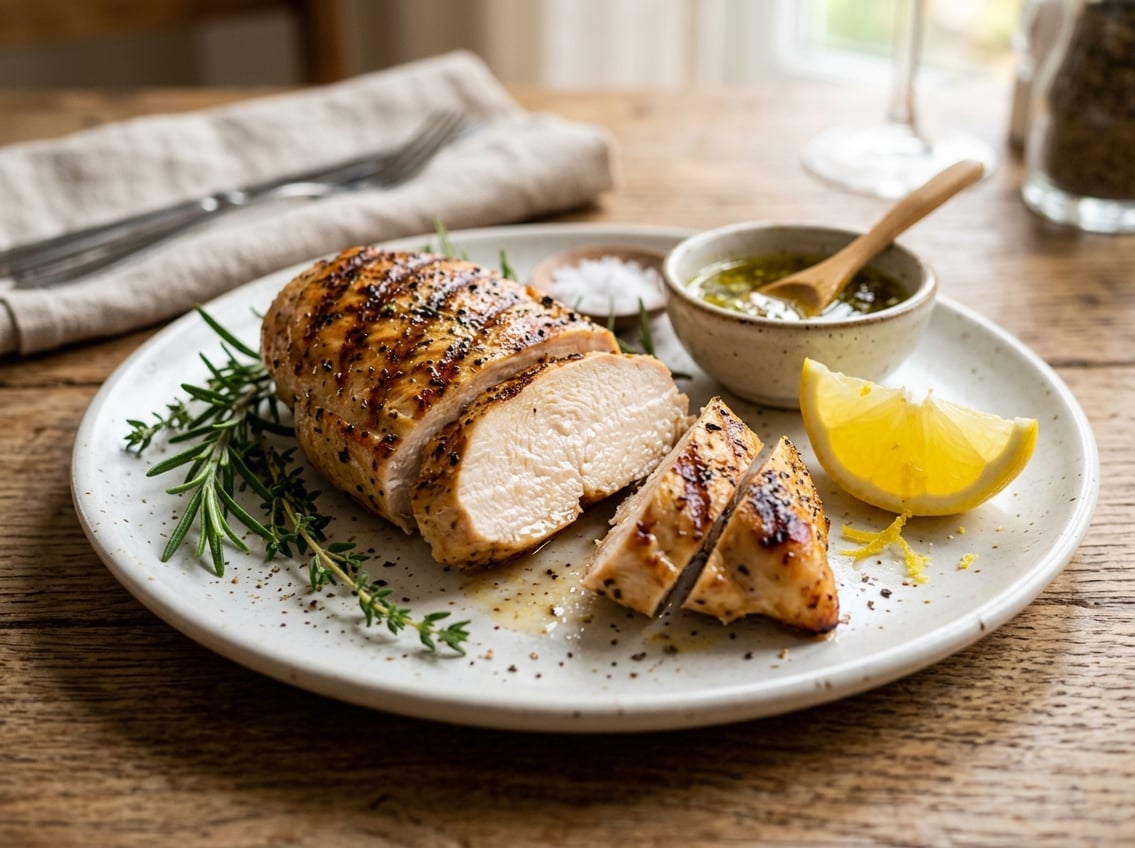
If you want a practical chicken breast recipe that works on a busy night, you do not need fancy steps. You need even thickness, enough salt, steady heat, and a short rest after cooking.
The Core Method for Juicy Results
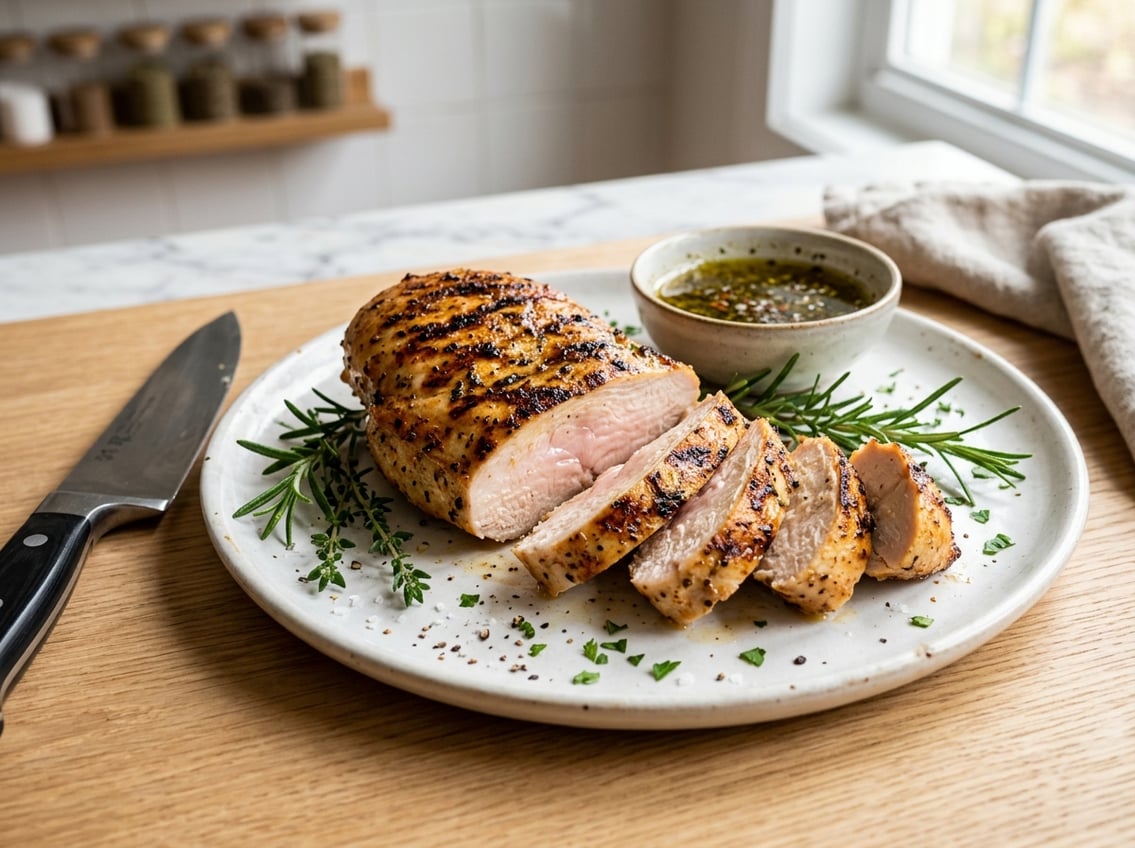
A juicy chicken breast starts with simple steps. You want the outside to cook without racing past the point where the center is done.
That is why even thickness and gentle finishing matter so much.
Flatten for Even Thickness
Pound boneless skinless chicken breasts to an even thickness before cooking. A thin tail cooks much faster than the thick center, and that uneven shape is a common reason a seasoned chicken breast turns dry at the edges.
Season Early With Salt or Use a Quick Brine
Salt helps the meat hold onto moisture and improves flavor. Even a short brine can make boneless skinless chicken breasts juicier, and you should pat them dry before cooking.
Cook With Controlled Heat and Finish Gently
Start with medium or medium-high heat for a short time. Lower the heat and cover the pan to let the chicken cook through more gently.
Check Doneness With a Thermometer and Rest Before Slicing
Pull the chicken when the thickest part reaches 165°F. Let it rest before cutting so the juices stay in the meat.
Best Cooking Methods by Situation
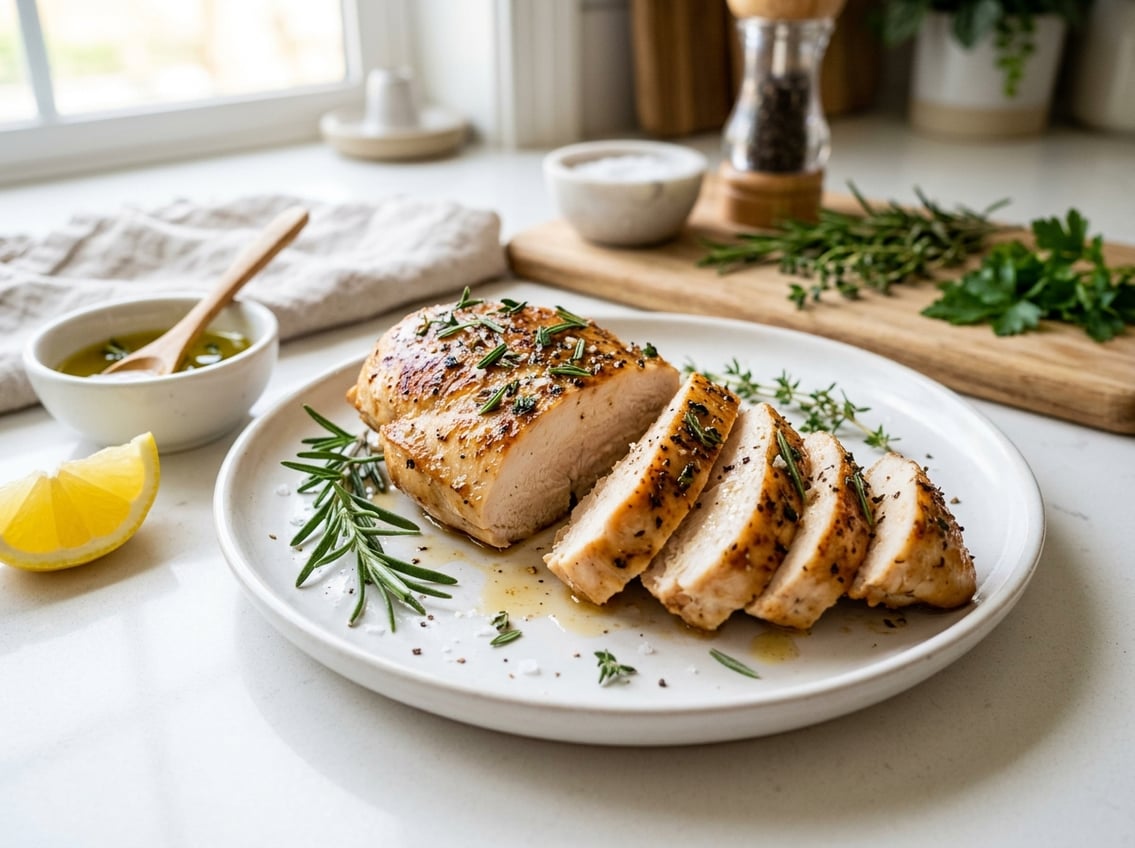
Your best way to cook chicken breast depends on your schedule and the cut you bought. For fast meals, oven work, or outdoor cooking, you can choose a method that protects moisture and keeps the meat tender.
Skillet Sear-and-Cover for Fast Weeknight Cooking
Sear the chicken briefly, reduce the heat, cover the pan, and let it finish gently so the inside stays tender.
Oven Baking for Batch Cooking and Meal Prep
Baking chicken breasts works well when you need several portions at once. Keep the oven at a moderate temperature and watch the internal temperature closely.
Sear Then Bake for Better Browning and Gentle Finishing
Sear chicken breasts first to give the outside better color. Finish in the oven to cook the center with less risk of overcooking.
Grilling Without Drying Out Lean White Meat
Grill chicken breasts over medium heat. Turn once and pull the chicken as soon as it reaches temperature.
Prep Choices That Improve Moisture and Flavor
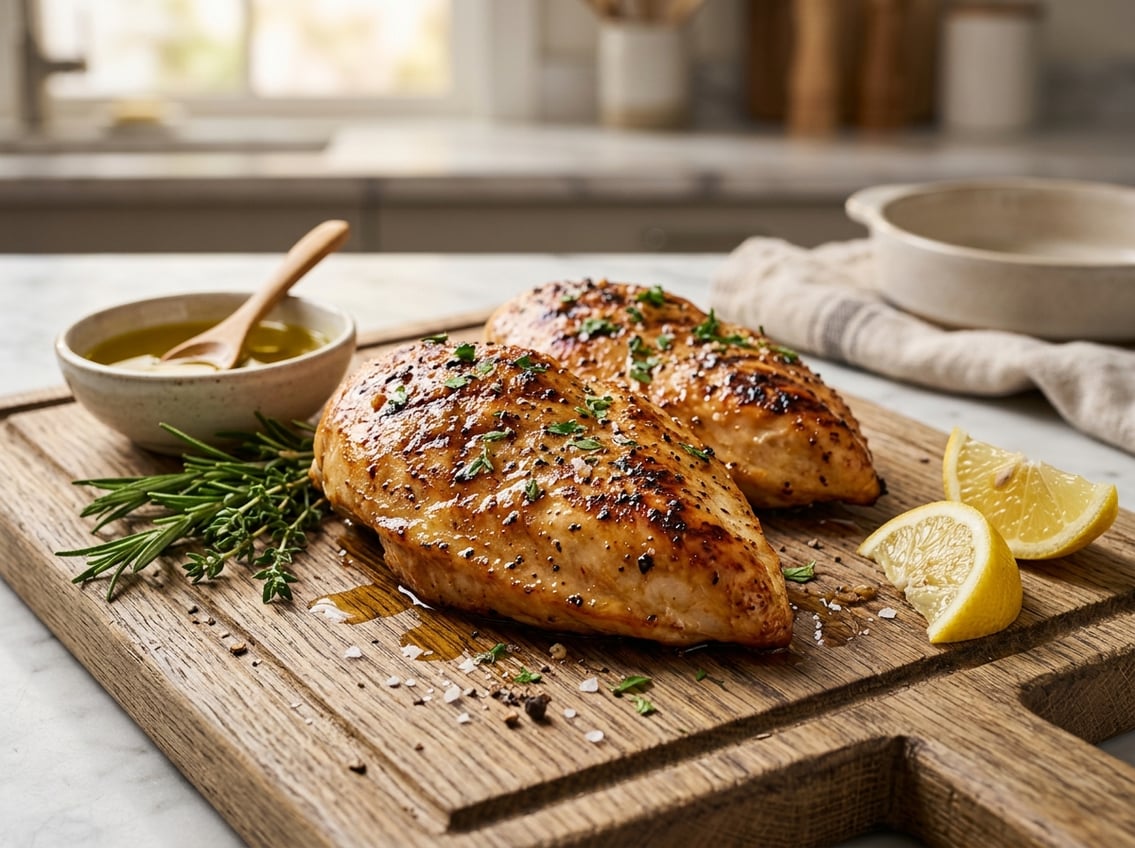
Your prep choices shape the final texture before the chicken ever hits the pan. Brining, marinating, and choosing the right cut all change how well your chicken breasts stay moist and tender.
When to Brine Instead of Marinate
Use a brine when your main goal is moisture. Brining seasons the meat all the way through and helps the chicken hold onto water, while many marinades focus more on surface flavor.
How Yogurt, Citrus, and Oil Affect Texture
Yogurt softens the surface and adds tang. Oil helps carry flavor and reduce sticking.
Citrus adds bright flavor, but long citrus marinating can make the outer texture a little softer, so keep the time reasonable.
Choosing Between Boneless and Bone-In Cuts
Boneless skinless chicken breasts cook faster and are easier to flatten, so they are useful for quick meals. A bone-in chicken breast often stays more protected from dry heat, though it needs more time.
How Thickness, Size, and Pan Crowding Change Cook Time
Thicker pieces need more time. Large pieces may need a lower heat finish to cook through evenly.
Crowding the pan traps steam and can make browning weak and cooking uneven, so leave room around each piece.
Common Mistakes That Dry Out Chicken
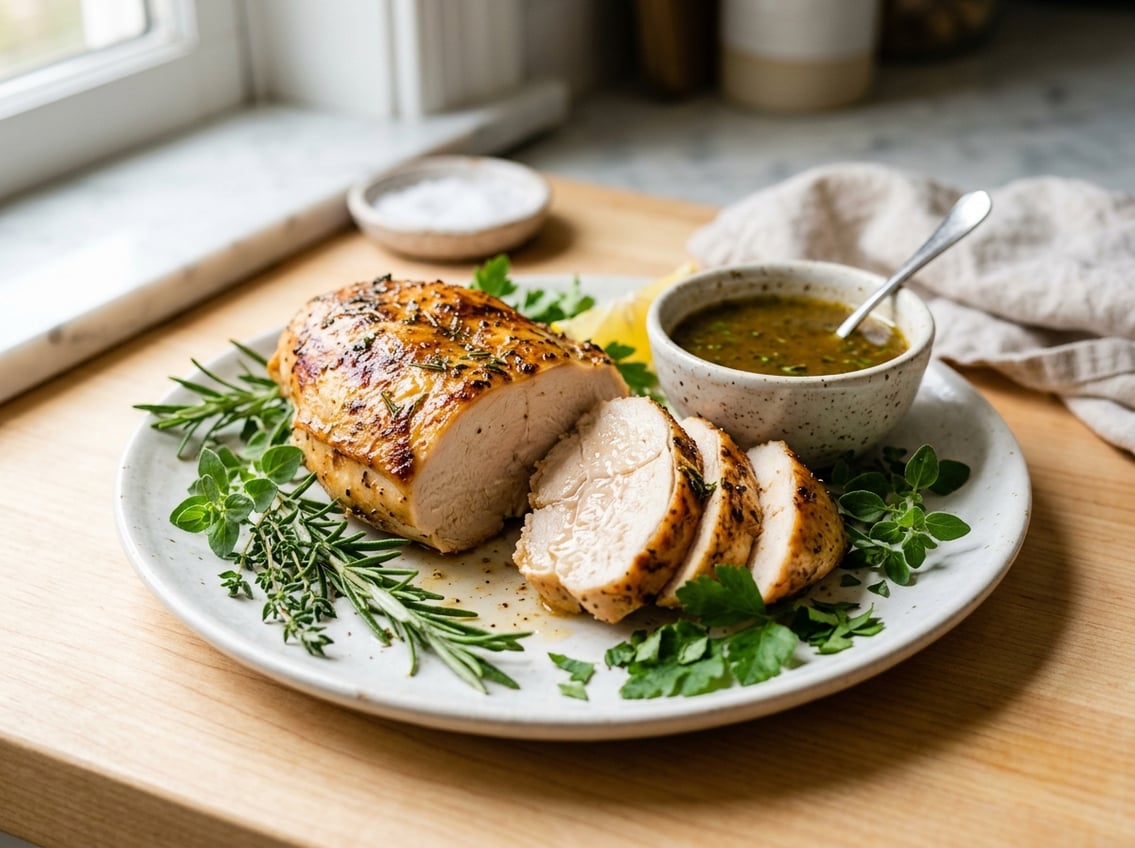
Dry chicken usually comes from a few preventable errors. Focus on temperature control, moisture, and consistent shape from the start.
Overcooking Past the Ideal Pull Temperature
Leaving the chicken on heat too long is the most common mistake. Even a few extra minutes can turn a juicy chicken breast into something stringy and dry.
Using High Heat for Too Long
High heat can help with browning, but too much of it dries the surface before the center is done. This is especially important when searing chicken breast or baking chicken breasts in a hot oven.
Skipping the Resting Period
If you slice right away, the juices run out. A short rest gives the meat time to settle and helps keep it moist.
Starting With Uneven or Wet Chicken
Uneven pieces cook unevenly. The thin parts dry out before the thick parts finish.
If you use wet chicken, it steams instead of browning well. This leads to weak texture and less control over the cooking process.


