
Do You Cover Chicken Breast in Oven? Best Method
Do you cover chicken breast in oven? In many cases, the best answer is yes, at least for part of the bake.
Covering chicken breast helps hold in moisture. Uncovering it near the end can give you better color and texture.
Your best method is often a hybrid approach. Cover it first, then uncover it to finish.
That balance gives you more control over drying, browning, and doneness.
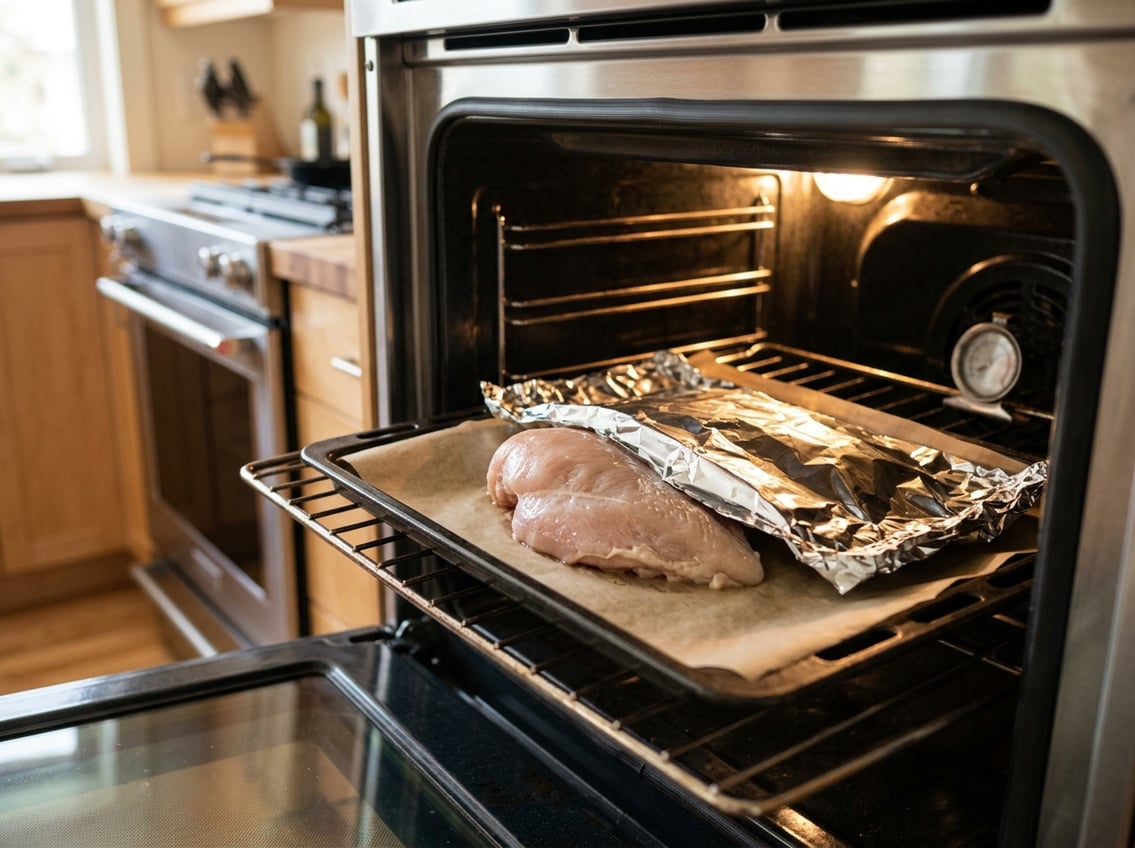
The right choice depends on the thickness of the breast and the oven temperature. You also need to consider whether you want a soft, saucy finish or a browned exterior.
A covered dish traps steam and helps the meat stay tender. An uncovered dish lets surface moisture evaporate, which can improve browning.
When to Cover and When to Leave It Uncovered
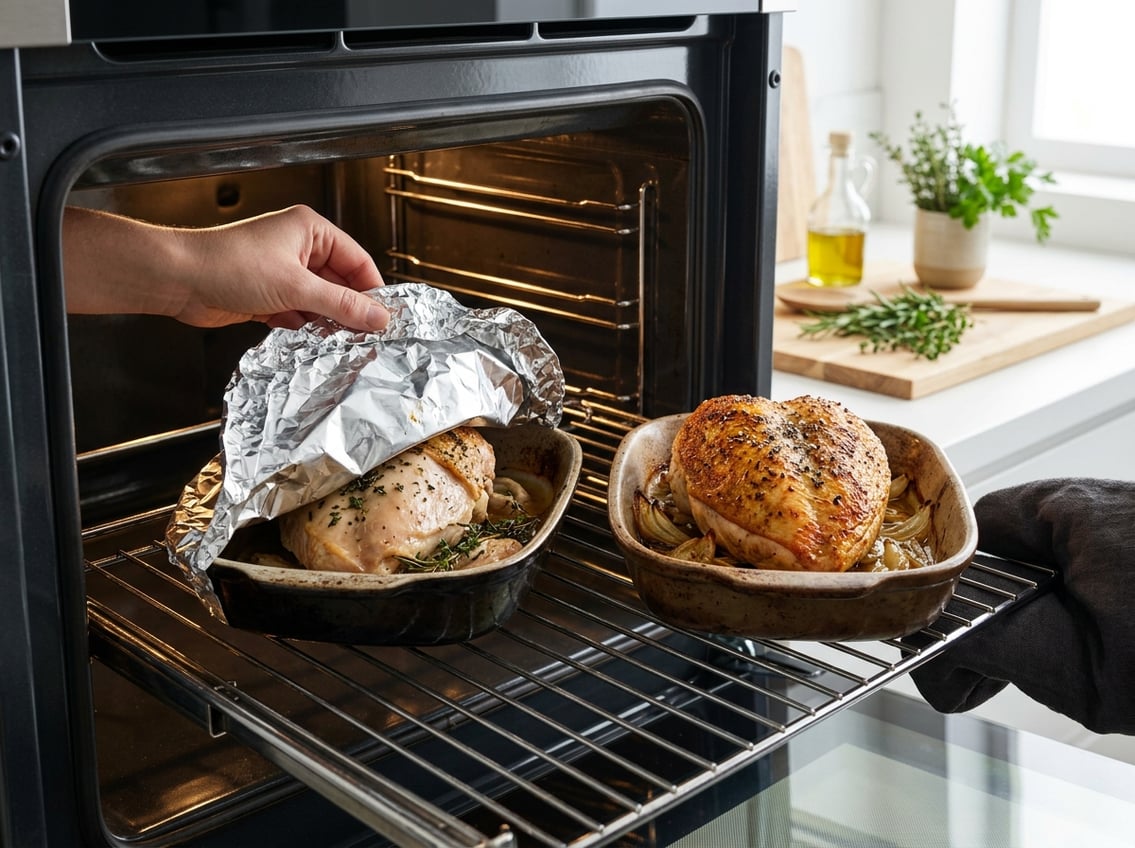
The choice to cover chicken breast when baking depends on the result you want. If you care most about moisture, covering chicken while baking usually gives you a more forgiving cook.
If you care most about browning, leaving it uncovered gives you better color on the surface.
A good rule is simple. Cover for tenderness, uncover for a drier heat finish.
That makes the final texture easier to control.
Best Choice for Juicy, Tender Results
If you want a juicy chicken breast, cover it to trap steam and slow moisture loss. This is useful for lean cuts, since they dry out faster than fattier pieces.
Covering also helps the meat cook more evenly. According to MeatChefTools, a foil or lid can help keep baked chicken tender by sealing in moisture during cooking.
When Uncovered Baking Makes More Sense
Uncovered baking works well when you want browning and a firmer surface. The dry heat of the oven helps the outside set and color faster.
This works well for thinner breasts or recipes with a sauce that should reduce. If the surface needs to dry a little for better color, do not cover it for the whole bake.
Why the Hybrid Method Often Works Best
A hybrid method often gives the most balanced result. Cover chicken breast at the start to protect moisture, then remove the cover near the end so the outside can brown.
That approach helps reduce the risk of a pale, soft surface. It also gives you a wider cooking window, which is useful when the breast size is uneven.
What Changes the Outcome in the Oven
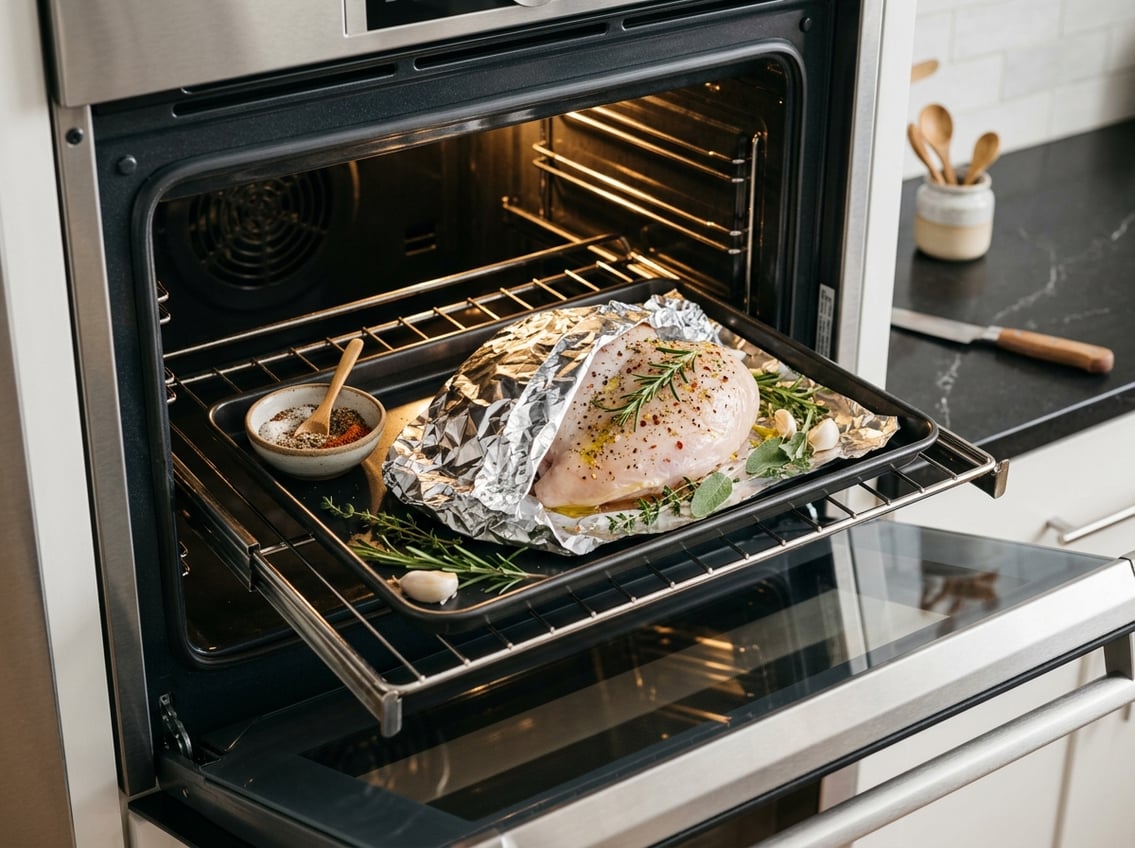
Several factors change whether you should cover chicken breast in oven or leave it open. Thickness, temperature, and added liquids all affect how fast the meat cooks and how much browning you get.
Small changes in cut size or sauce can shift the result a lot.
Chicken Breast Thickness and Cut Type
Thicker chicken breasts need more time in the oven, which raises the risk of a dry outer layer before the center is done. Covering helps protect the outside during that longer cook.
Bone-in breasts usually stay juicier than boneless ones. Boneless, skinless breasts are leaner, so they need more care and often benefit more from covering during part of the bake.
Oven Temperature and Cooking Time
Higher heat speeds up browning, which can be useful if you leave the chicken uncovered. It also increases the chance of overcooking the outside before the inside finishes.
Moderate oven heat gives you more control when you cover chicken breast while baking. A lower or moderate temperature paired with a cover can help the meat cook through more evenly.
Sauces, Marinades, and Browning Risk
Sauces and marinades can protect chicken breast from drying out, but they can also slow browning. If the surface is wet, uncovered baking may still leave you with a pale top.
Sweet marinades can brown fast, so they may need closer attention. In those cases, cover chicken breast early if the top is getting dark before the center is done.
How to Bake Chicken Breast Without Drying It Out
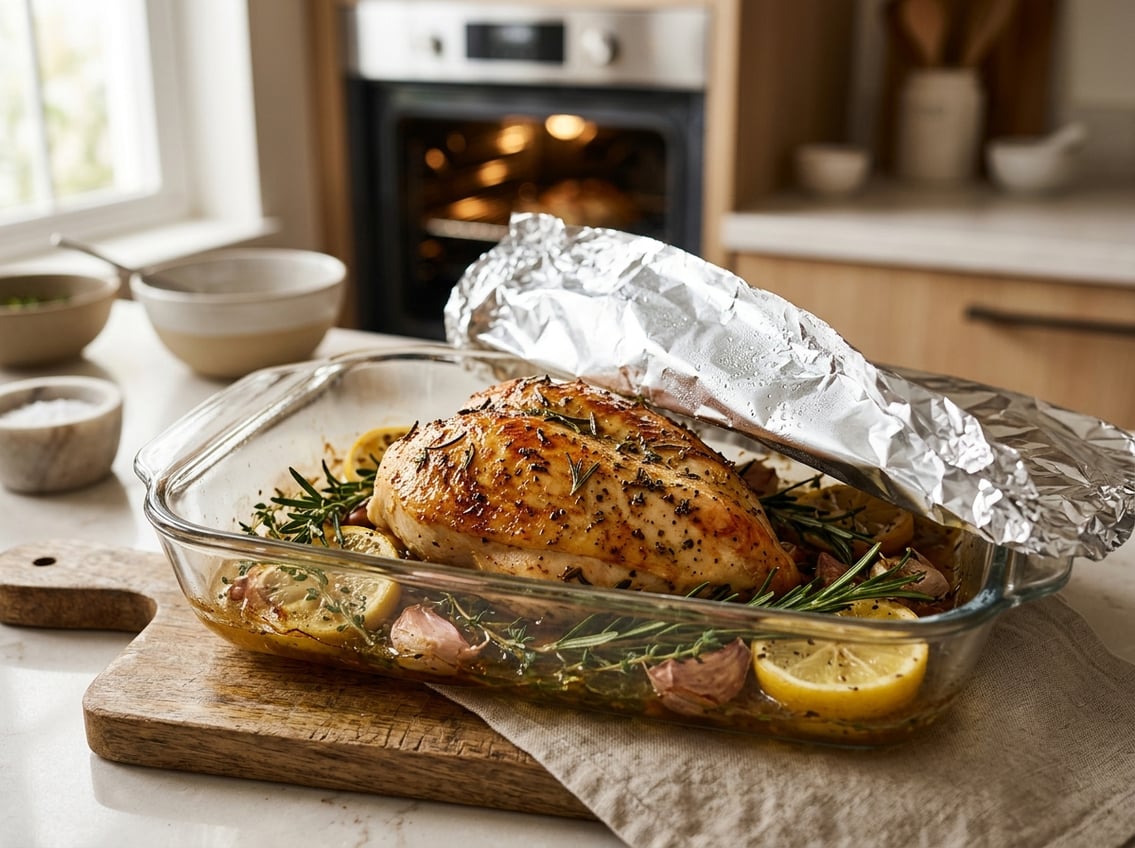
You can make a juicy chicken breast with a few simple habits. The main goals are to protect moisture and avoid overcooking.
Covering chicken while baking is one tool, not the only one. The best results come from using the right cover and watching the temperature closely.
Foil, Lid, and Parchment Options
Foil is the easiest way to cover chicken breast in the oven. It traps steam well and is useful when you want to prevent drying or fast browning.
A tight lid works in a similar way and can hold more steam than foil. Parchment gives lighter coverage and is better when you want some moisture control without sealing in as much steam.
Using Internal Temperature to Avoid Overcooking
The most reliable way to avoid dry chicken is to check the internal temperature. Chicken breast is safe at 165°F in the thickest part.
If you pull it from the oven right at that point, you reduce the chance of overcooking. A meat thermometer gives you more control than cooking by time alone.
Brining, Resting, and Other Moisture-Saving Tips
A short brine helps lean chicken stay moist during baking. Even 15 to 30 minutes in salted water improves texture.
Let the chicken rest after baking so the juices settle back into the meat. Pat the surface dry before baking if you want more browning.
Use a light coating of oil if the recipe allows it. Many home cooks start baking uncovered for color, then finish covered if the top browns too fast.
This method matches the two-stage approach noted in this chicken baking guide.


