
What Does Chicken Breast With Rib Meat Mean? Explained
Chicken breast with rib meat means you are buying a breast cut that still has a small amount of meat from the ribs attached. It is still mostly breast meat, with a bit of rib-side meat left on for flavor, moisture, and easier processing.
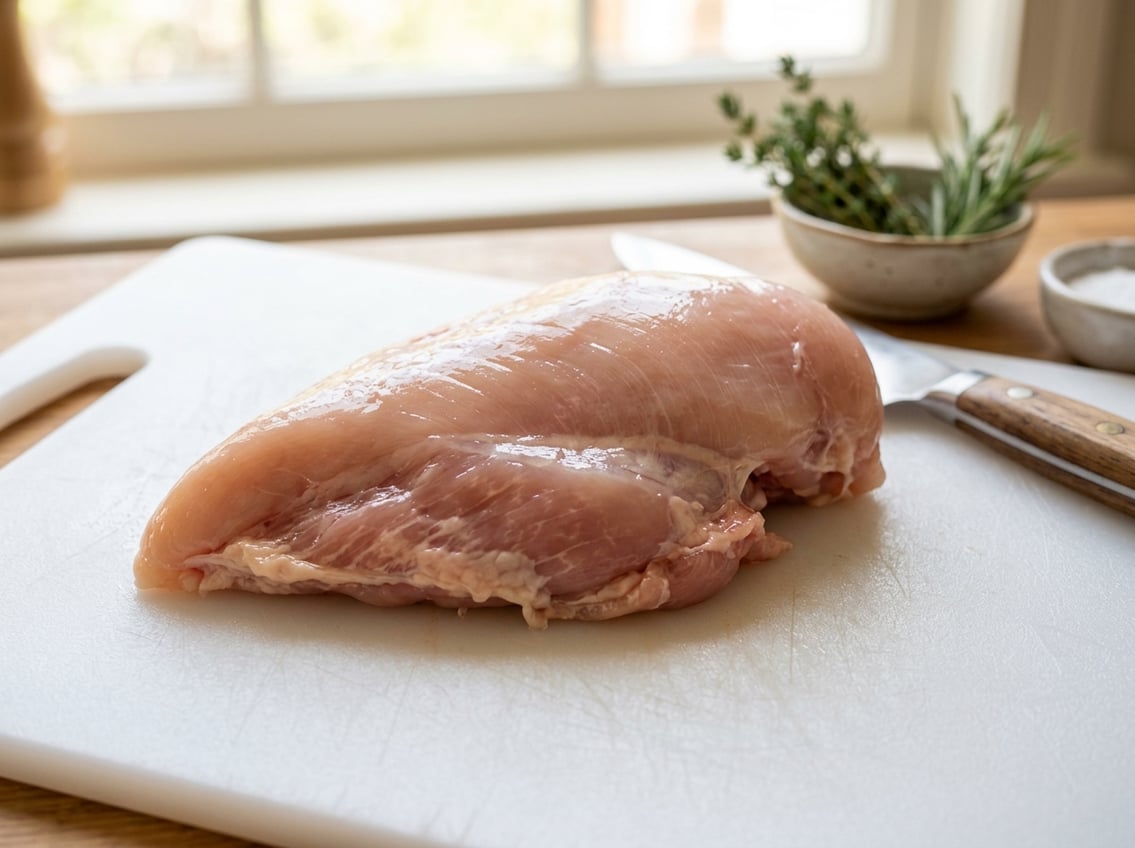
That label tells you the product is not pure breast meat. You should expect a small change in fat, texture, and taste compared with a plain boneless chicken breast.
This label is common in US food labeling, especially on packaged poultry. It mainly tells you that the breast was trimmed in a way that left some adjacent rib meat attached.
What the Label Is Actually Telling You
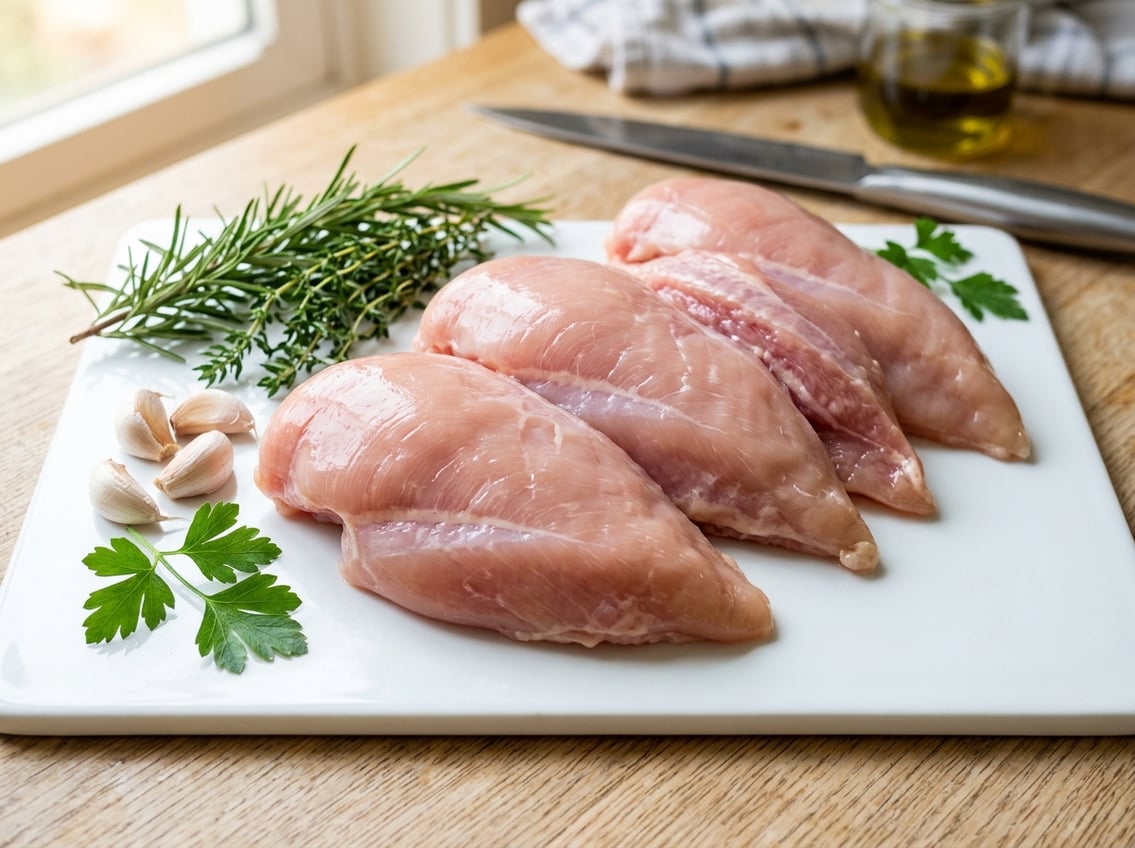
The label gives you a butchery detail, not a warning. You are still buying chicken breast, but the cut includes a small amount of rib meat, which is the meat closest to the ribs and breastbone.
That extra meat can change the look of the package and slightly affect flavor, juiciness, and nutrition. It is different from a plain breast, yet not the same as a separate cut like chicken tenderloin or a bone-in chicken breast.
Where Rib Meat Comes From on the Bird
Rib meat comes from the area attached to the ribs near the breast. In poultry processing, workers may leave that meat attached when they remove the breast from the carcass.
It is not a mystery ingredient. It is simply part of the chicken that remains on the cut after trimming, as described in this chicken breast with rib meat explanation.
How It Differs From Plain Breast Meat
Breast meat is the large, lean muscle on the front of the bird. Rib meat is a smaller section from the rib area, and it tends to have a slightly richer taste and a little more fat.
The cut is still white meat, not dark meat. It is closer to breast meat in appearance and use, while being a little less lean than a plain breast.
Why Poultry Processors Leave It Attached
Processors leave rib meat attached for practical reasons. It can improve yield and reduce waste.
This practice creates a product that cooks up a little more juicy. By keeping that extra meat with the breast, processors can sell more of the bird as a usable chicken breast cut.
How It Changes Nutrition, Texture, and Flavor
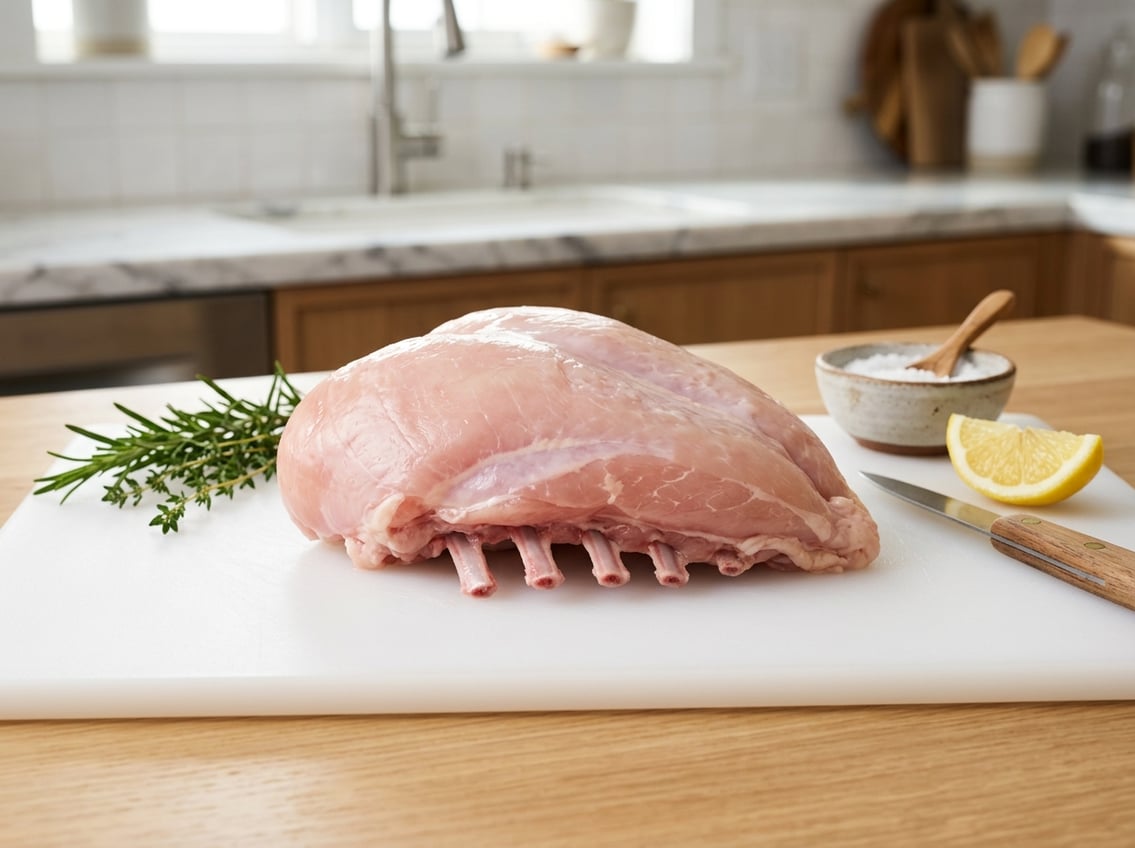
Rib meat can add a little more fat and calories, while also helping the meat stay moist during cooking. The flavor can also taste slightly fuller than plain breast meat.
That comes from the extra tissue near the bone and the small amount of added fat.
Calories and Fat Content Compared With Leaner Cuts
Plain boneless, skinless breast is one of the leanest chicken cuts. Adding rib meat usually raises the fat content a bit, which can also raise calories.
The increase is often modest, but it depends on the exact product. If you compare labels, you may notice a small difference in the nutritional profile, especially versus very lean white meat breast only.
Moisture Retention and Connective Tissue Effects
Rib meat can help the cut stay juicier because it usually has more connective tissue than a fully trimmed breast. That can make the meat feel less dry after cooking.
This matters most when you cook quickly over high heat. A little extra moisture can make a breast more forgiving if you cook it a little longer than planned.
Why the Flavor Can Taste Slightly Richer
Rib meat sits near the bones, so it can carry a deeper chicken flavor than very lean breast meat. It still tastes like white meat, but with a mild richness that some people prefer.
The difference is not as strong as the gap between white meat and dark meat like thigh meat. It is a smaller shift, more like a subtle upgrade in flavor.
When You Will See It and How to Use It
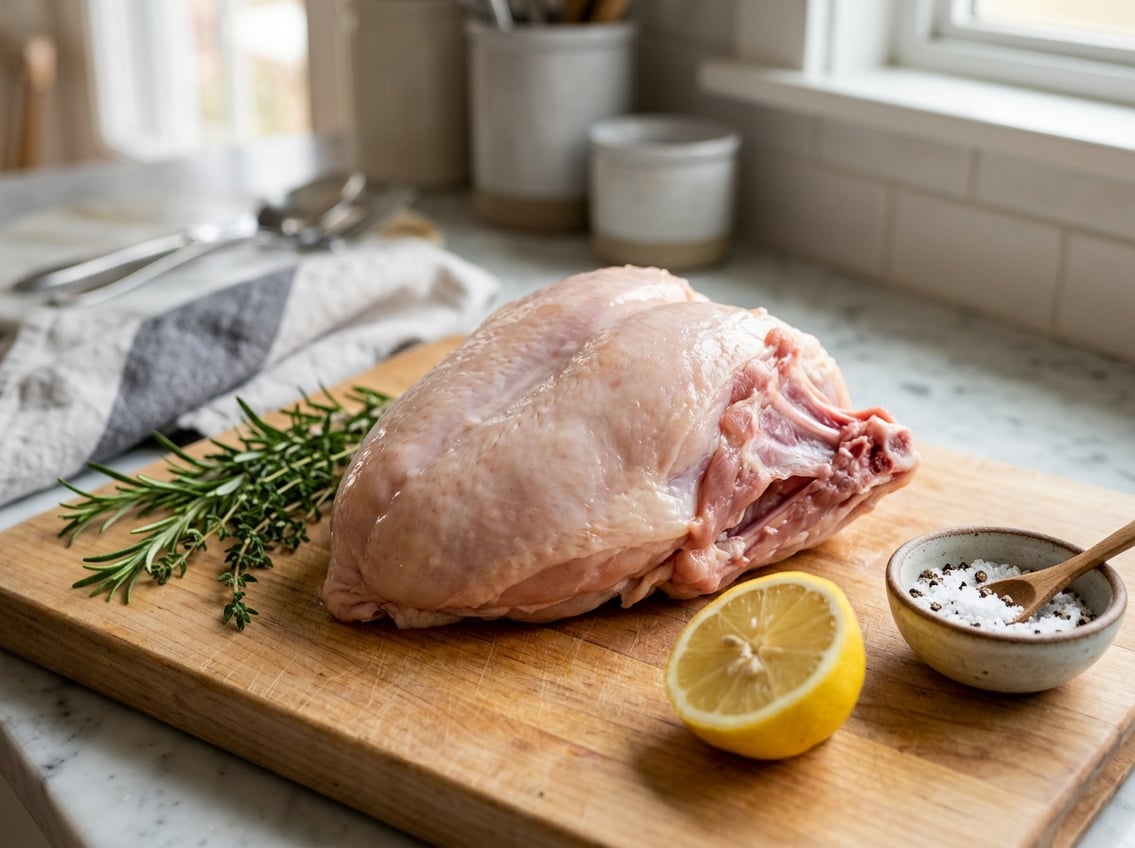
You will most often see this label on packaged chicken in grocery stores, especially in products meant to be affordable and easy to cook. It is also common in processed chicken products where texture, yield, and cost matter.
The label may appear on items with added preservatives or in ready-to-cook formats. It is more about the cut and packaging than about a long ingredient list.
Common Packaged and Processed Products
You may find chicken breast with rib meat in frozen trays, meal kits, and some processed chicken products. It can also show up in chicken nuggets, chicken tenders, and other breaded items where the exact cut is less visible.
In those cases, the label helps you see what part of the bird is being used. It is especially useful when comparing packaged chicken across brands and checking food labeling details.
Best Cooking Methods for This Cut
This cut works well with many cooking methods, including baking, pan-searing, grilling, and air frying. Because it may hold a bit more moisture than a very lean breast, it can be slightly more forgiving.
The main rule is still to avoid overcooking. Use a thermometer and cook chicken to a safe internal temperature, since that matters more than whether the package says chicken breast with rib meat or chicken with rib meat.
When It Is Worth Buying Over Other Options
This option offers a balance of lean protein, mild flavor, and value. You may also find it a good choice if you want slightly juicier chicken for weeknight meals.
Choose plain breast if you want the leanest option possible. Pick rib meat versions if you want a small boost in flavor and moisture without switching to a much richer cut.


