
What Causes Chicken Breast to Be Crunchy? Key Reasons
Two main problems cause chicken breast to be crunchy: overcooking or a meat quality issue like woody breast.
In both cases, you lose the soft, juicy texture you expect and end up with meat that feels dry, hard, or oddly firm.
If you cook chicken breast with too much heat for too long, it often turns crunchy. A woody chicken breast can create a similar texture even when you cook it well.
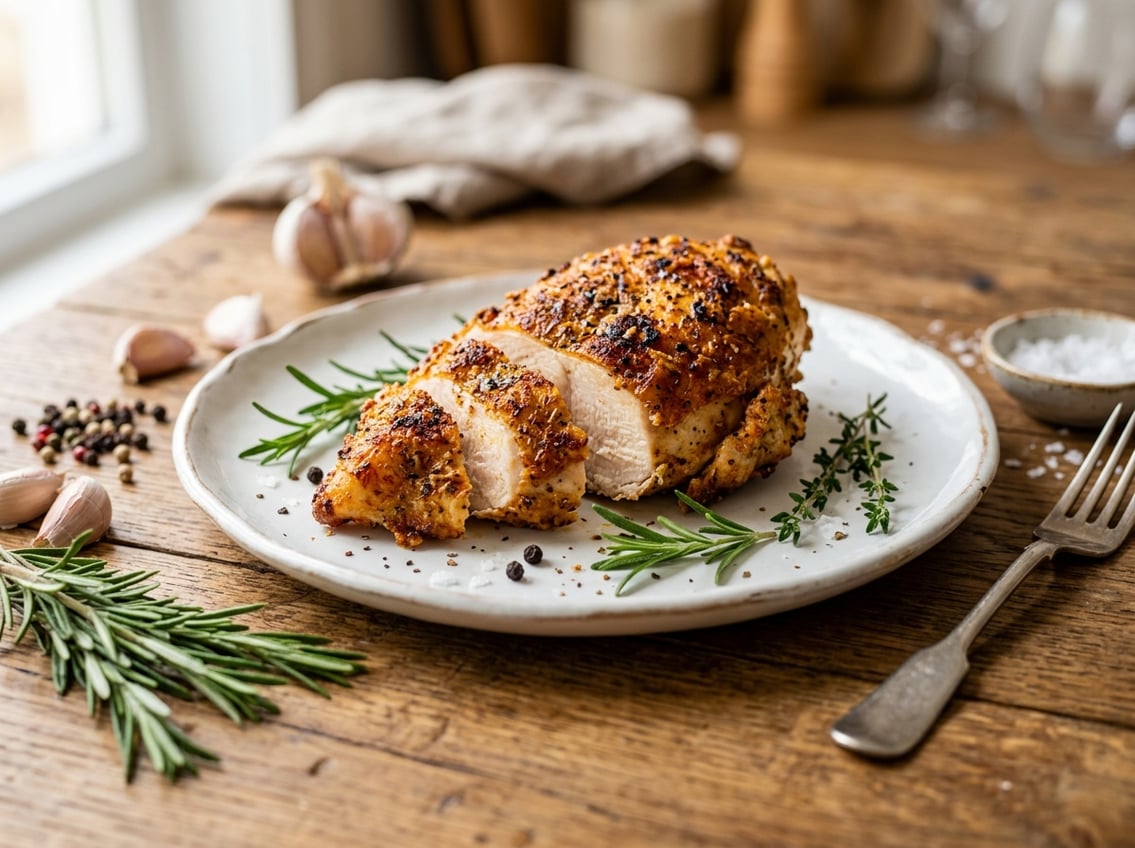
Chicken breast is naturally lean, so it dries out faster than fattier cuts. Temperature control, resting time, and cooking method matter more than you may expect.
With the right approach, you can keep chicken juicy while still getting the crispiness or browning you want.
The Main Reasons Texture Turns Tough or Crunchy
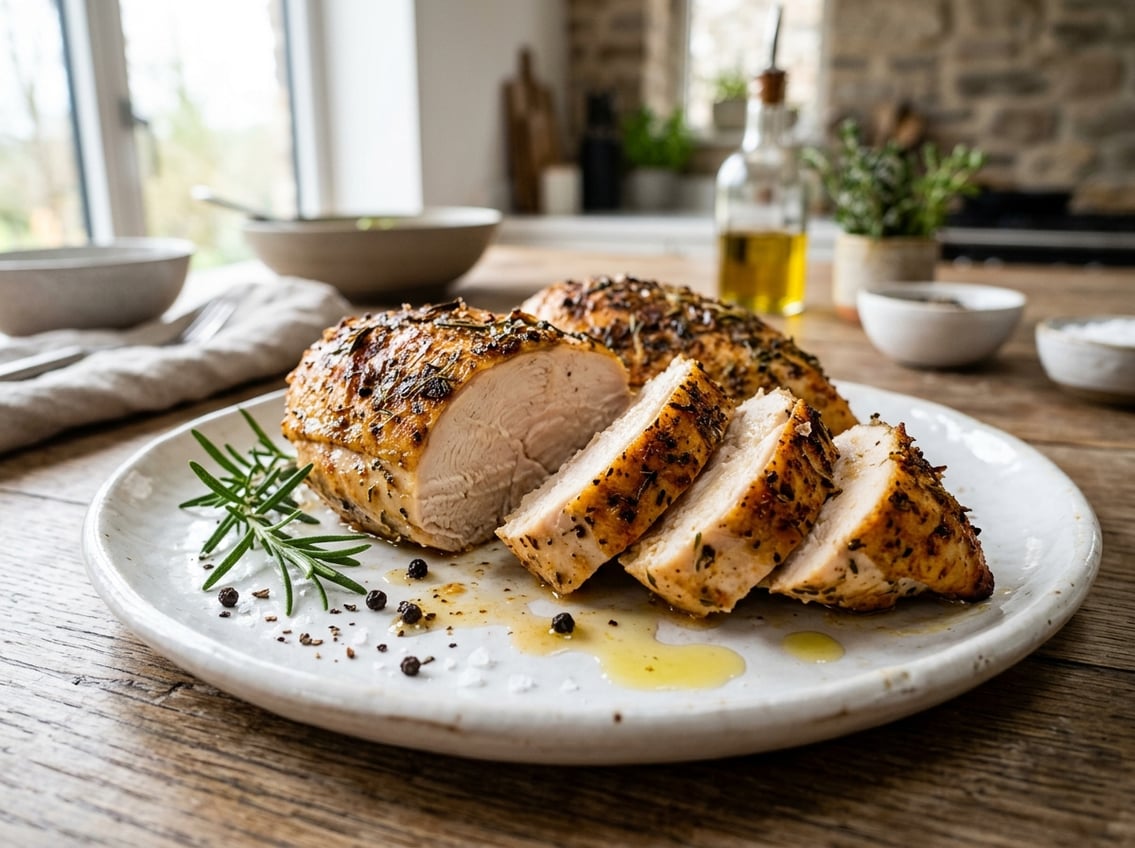
Moisture loss, uneven heating, and using too much heat for the cut cause the main texture problems. When that happens, the outside may brown well, while the inside turns dry and firm instead of juicy.
Steady temperature control, the right oil temperature, and knowing that crispiness should stay on the surface help you avoid these issues.
Overcooking and Moisture Loss
Overcooking chicken is the most common reason chicken breast feels crunchy or dry. As you cook the meat too long, moisture escapes, the fibers tighten, and the breast becomes firm and less tender.
Thin chicken breasts are especially at risk, since a small timing mistake can push the meat past juicy.
Uneven Heat and Poor Temperature Control
Uneven heat can make one part of the breast cook too fast while another part is still catching up. That mismatch often creates a tough outer layer and a dry center.
In pan cooking, crowded pieces trap steam and then brown unevenly, which affects both texture and appearance, as Chef’s Resource notes.
Oil temperature also matters a lot. If oil is too cool, the chicken absorbs more fat and may turn limp. If it is too hot, the outside can harden before the inside cooks evenly.
Why Chicken Breast Dries Out Faster Than Other Cuts
Chicken breast has less fat than thighs or drumsticks, so it has less natural protection during cooking. That means you have a narrower window between fully cooked and dried out.
Chicken breast needs close attention, a thermometer, and careful resting time. The USDA safe endpoint is 165°F, and going far past that is where dryness starts to show.
When the Problem Is Woody Breast Instead of Overcooking
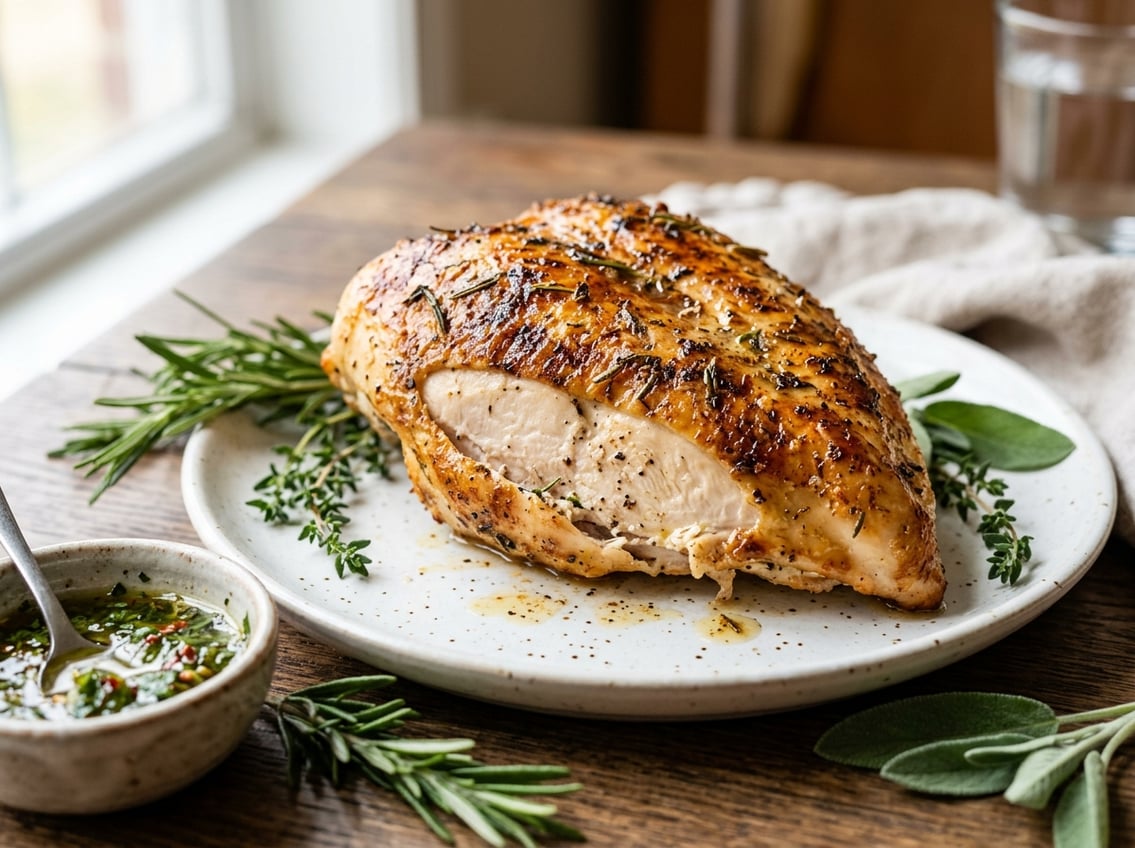
Sometimes the meat itself has a condition called woody breast, which can make it hard, tough, or strangely chewy even when you cook it correctly.
That texture can feel rubbery, firm, or raw-like in the middle. It may also look and feel different before cooking, so checking the meat before it ever hits the pan can save you a bad meal.
How To Recognize Woody Chicken Breast
Woody breast often feels unusually firm when raw. It may also show pale areas, white striping, or a hard feel when you press it.
After cooking, the texture can seem crunchy, rubbery, or stringy instead of tender. TODAY’s report on woody chicken breast links this condition to a muscle abnormality in fast-growing chickens.
Why Woody Breast Feels Hard, Rubbery, or Raw-Like
Changes in the muscle fibers cause woody chicken breast. The meat can contain more connective tissue and become rigid, which gives it a tough bite even after proper cooking.
Woody chicken breast can seem undercooked or hard when it is actually safe to eat. The problem is texture, not doneness.
What To Look for Before Buying Chicken
Look for breasts that feel pliable, not stiff. Avoid packages with meat that looks swollen, very pale, or oddly thick in spots.
If you notice a breast that feels hard before cooking, choose another package. A normal, supple texture is a better sign that you will get juicy chicken after cooking.
How To Prevent Dry Meat and Get Better Browning
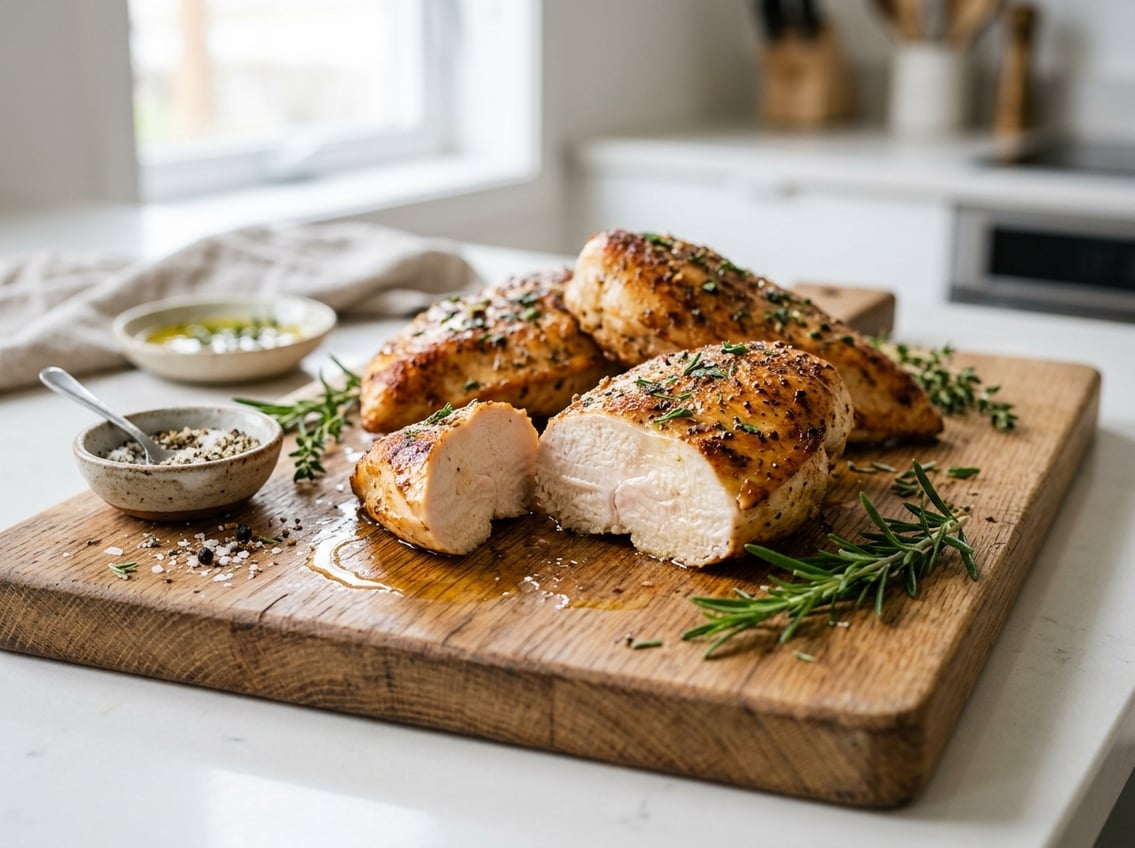
Good moisture control and good browning can work together when you plan ahead. A short brine, a smart marinade, and the right seasoning help the meat stay juicy while the surface cooks up with better color.
You want a crispy exterior or crispy chicken skin without turning the meat dry underneath.
Brine or Marinate for Better Moisture
A simple brine helps the chicken hold onto moisture during cooking. Salt changes how the meat retains water, which can reduce dryness later.
You can also marinate chicken to add flavor and extra moisture. When marinating chicken, keep the time reasonable so the meat stays balanced and does not get mushy.
Seasoning Choices That Support Flavor and Browning
Use seasoning that supports browning, not just flavor. A basic mix of pepper, garlic powder, paprika, and oregano works well on chicken breast.
Spice blends can help too, as long as they do not contain too much sugar, which can burn. A light coating of baking powder can help skin crisp in some recipes, especially on skin-on chicken.
Cooking Methods That Improve Texture
For even browning, use a wire rack in the oven so air can move around the chicken. In a skillet, use canola oil or another neutral oil with a suitable smoke point, and start with hot oil so the surface sears quickly.
An air fryer also works well because air frying pushes hot air around the meat and can help create a crisp, browned surface. For fried chicken, the right oil heat is key, and keeping batches small helps protect both crunch and juiciness.
How To Rescue Chicken That Is Already Too Dry
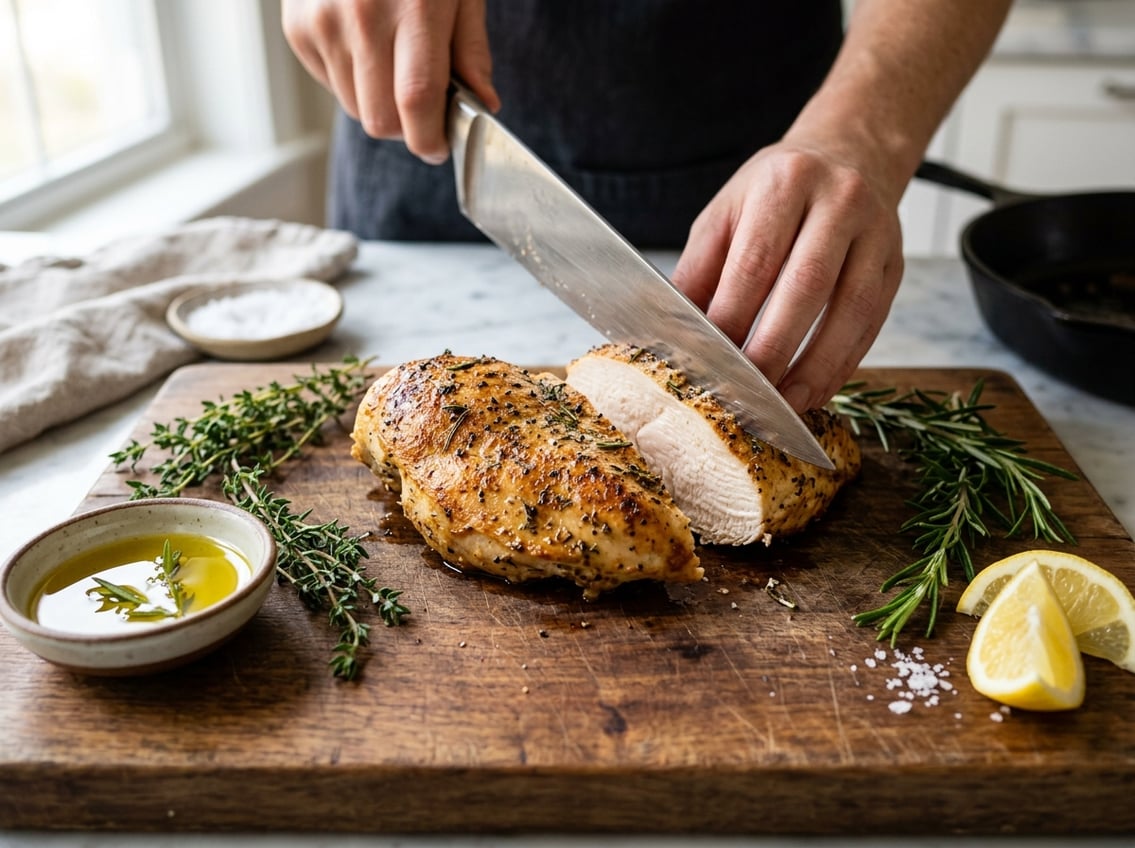
If your chicken is already overdone, add moisture back in a way that fits the dish. You will not fully reverse dryness, yet you can make the meal much better.
Avoid more heat than needed. Gentle methods work better than aggressive reheating, especially with lean breast meat.
Best Ways of Salvaging Overcooked Chicken
For plain chicken, slice it and warm it with broth, gravy, or a pan sauce. This helps the meat absorb some moisture again.
If you use an air fryer, keep the heat low and short, and place the chicken on a wire rack so it does not sit in its own steam. That keeps the surface from getting even drier.
When To Slice, Shred, or Add Sauce
Thin slices work well for sandwiches, rice bowls, and salads. If the chicken is very dry, shredding it and mixing it with sauce, mayo, or dressing can help more than serving it whole.
Sauce becomes part of the bite and brings the dish closer to juicy chicken in feel, even if the breast started out dry.
Mistakes To Avoid During Reheating
Do not microwave dry chicken on high power for long stretches. High heat usually pulls out even more moisture.
Use gentle reheating in the oven or air fryer if the meat is already dry. Add a little liquid instead of cooking longer.


