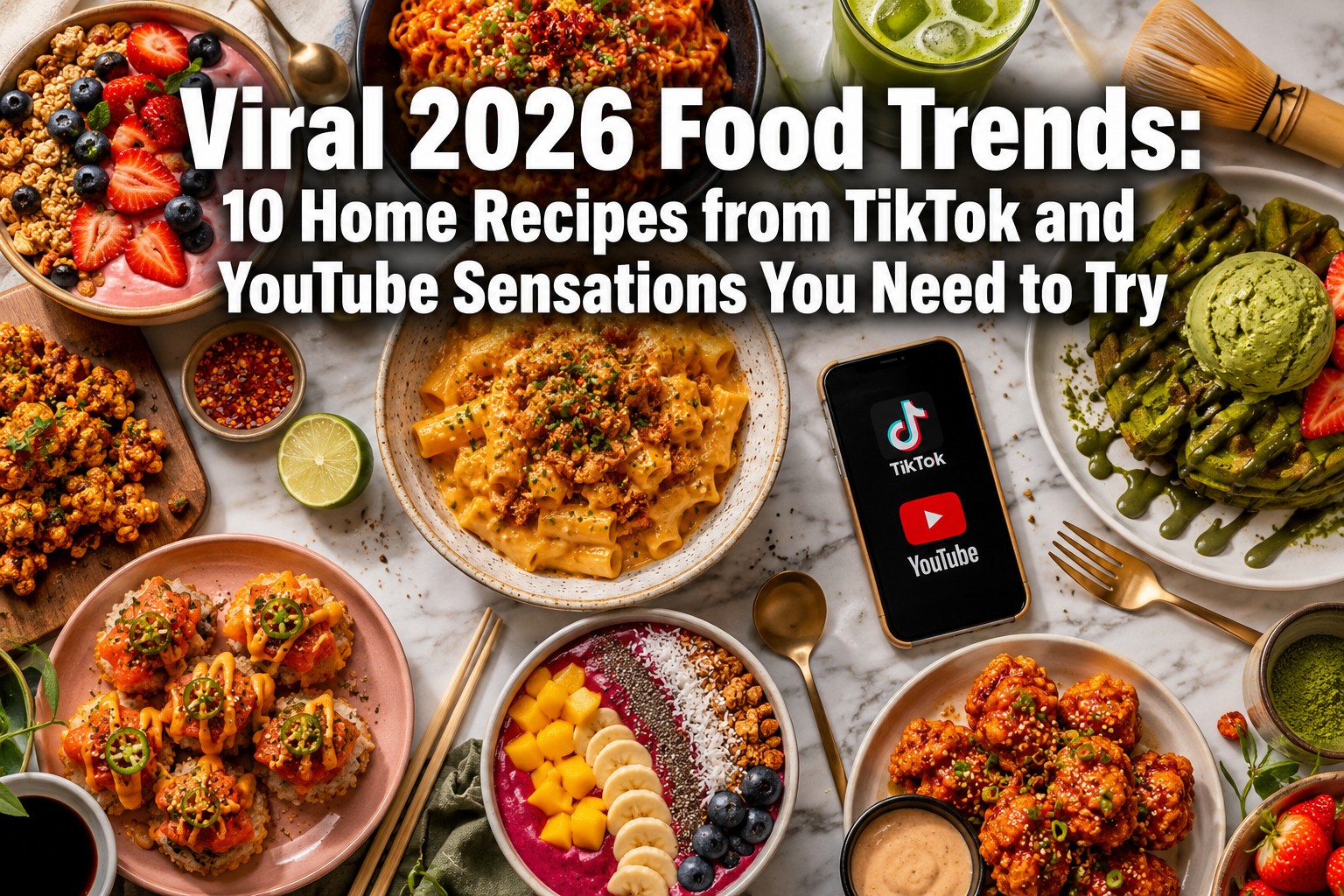
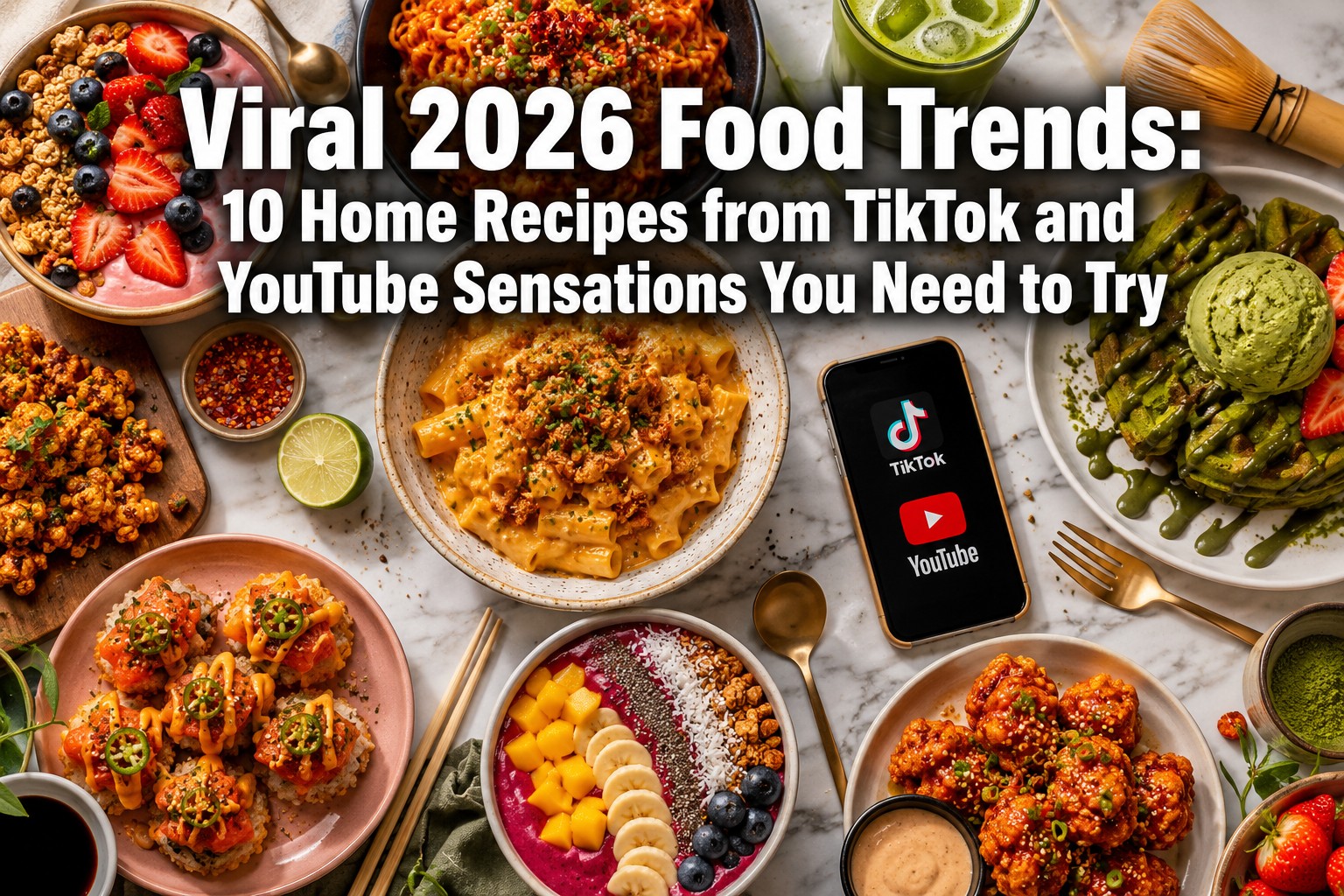
Viral 2026 Food Trends: 10 Home Recipes from TikTok and YouTube Sensations You Need to Try
Last updated: July 3, 2026
Social media food content generated over 127 billion views across TikTok and YouTube in 2025, and 2026 is already proving even bigger. The Viral 2026 Food Trends: 10 Home Recipes from TikTok and YouTube Sensations You Need to Try represent a shift toward global flavors, unexpected ingredient combinations, and recipes that actually work in home kitchens without professional equipment. These aren’t just pretty videos, they’re dishes people are making, sharing, and putting on repeat.
Key Takeaways
- Viral 2026 food trends emphasize bold global flavors, particularly Korean, Japanese, and Middle Eastern influences
- Most trending recipes require 5-10 common ingredients plus one or two specialty items
- TikTok trends favor quick, visual recipes (under 60 seconds), while YouTube focuses on detailed technique
- Beginner-friendly viral recipes include gochujang butter noodles, crispy smashed potatoes, and whipped feta dip
- Common failures stem from skipping key steps shown in videos or substituting core ingredients
- Trending ingredients like gochugaru, yuzu, and tahini are now available at major grocery chains
- Meal prep-friendly viral recipes include sheet pan dishes, grain bowls, and marinated proteins
- Most viral food trends last 3-6 months before evolving into new variations
- Restaurant-quality results at home require proper seasoning, high heat, and patience
- Kid-friendly viral trends focus on customizable builds like loaded fries and DIY taco bars
What Are the Biggest Viral Food Trends in 2026?
The biggest viral food trends in 2026 center on gochujang-based dishes, yuzu citrus applications, crispy smashed vegetables, whipped dips, and caffeinated desserts. These trends reflect a broader shift toward bold, umami-rich flavors and textures that photograph well while remaining accessible to home cooks.
Top 10 Viral Recipes Dominating 2026:
- Gochujang Butter Noodles – Korean chili paste meets brown butter for a 10-minute pasta dish
- Yuzu Honey Salmon – Citrus-glazed fish with caramelized edges
- Crispy Smashed Potatoes with Herb Oil – Twice-cooked potatoes with maximum crunch
- Whipped Feta and Honey Dip – Creamy, tangy spread for everything
- Matcha Tiramisu – Green tea twist on the Italian classic
- Spicy Vodka Chickpeas – Crispy roasted legumes in creamy tomato sauce
- Brown Butter Chocolate Chip Cookies with Flaky Salt – Elevated classic with nutty depth
- Cucumber Salad with Sesame Crunch – Refreshing side with addictive texture
- Loaded Crispy Rice – Tahdig-inspired base with customizable toppings
- Coffee-Rubbed Steak Bites – Espresso crust meets tender beef
These recipes share common traits: bold seasoning, textural contrast, and visual appeal. They also adapt well to dietary preferences and ingredient swaps, which helps them spread across different cooking communities.
For more globally-inspired ingredients that complement these trends, explore our guide to Asian ingredient essentials.
How to Make Viral TikTok Recipes at Home
Making viral TikTok recipes at home requires watching the full video multiple times, reading comments for troubleshooting tips, and gathering all ingredients before starting. TikTok’s short format often compresses steps, so pause frequently and note timing cues like sizzle sounds or color changes.
Step-by-Step Approach:
- Watch the video 2-3 times – First for overview, second for ingredient list, third for technique details
- Check the comments section – Creators and successful home cooks often clarify measurements and timing
- Prep everything first (mise en place) – TikTok videos move fast; having ingredients ready prevents burning or overcooking
- Use visual cues over exact times – “Cook until golden” is more reliable than “cook for 3 minutes” when equipment varies
- Film your attempt – Reviewing your own video helps identify where you diverged from the original
Common TikTok Recipe Patterns:
- “Dump and bake” dishes – Everything goes in one pan (sheet pan fajitas, baked feta pasta)
- “Smash and crisp” techniques – Potatoes, burgers, Brussels sprouts get flattened for maximum surface area
- “Whip and dip” spreads – Feta, ricotta, or cream cheese blended until fluffy
- “Glaze and char” proteins – Sticky-sweet coatings caramelized under high heat
The key difference between watching and doing is understanding why each step matters. When a creator says “make sure the pan is screaming hot,” they mean it, that’s what creates the caramelization that makes the dish work.
Are Viral Food Trends Actually Worth Trying?
Viral food trends are worth trying when they solve a real cooking problem, introduce you to new ingredients, or genuinely taste better than standard recipes. About 60-70% of trending recipes deliver on their promise if you follow the technique correctly, while the rest are more about visual appeal than flavor.
Evaluate Before You Cook:
Choose viral recipes that offer at least two of these benefits:
- Technique education – Teaches you a new skill (proper smashing, emulsifying, high-heat searing)
- Ingredient discovery – Introduces you to gochujaru, yuzu, or other pantry staples you’ll use again
- Time efficiency – Actually faster or easier than traditional methods
- Flavor improvement – Noticeably better than the standard version
- Meal prep potential – Makes enough for multiple meals or freezes well
Red Flags for Overhyped Trends:
- Requires single-use equipment you’ll never use again
- Relies entirely on brand-specific products (though generic substitutes usually work)
- Takes longer than traditional methods with no flavor benefit
- Looks impressive but tastes bland or one-dimensional
The best viral recipes become permanent additions to your rotation. Gochujang butter noodles, for example, have staying power because they’re genuinely delicious, fast, and adaptable. Elaborate “cloud bread” recipes, on the other hand, often disappoint because they’re more about texture novelty than taste.
Viral TikTok Recipes vs YouTube Recipes: Which Are Better?
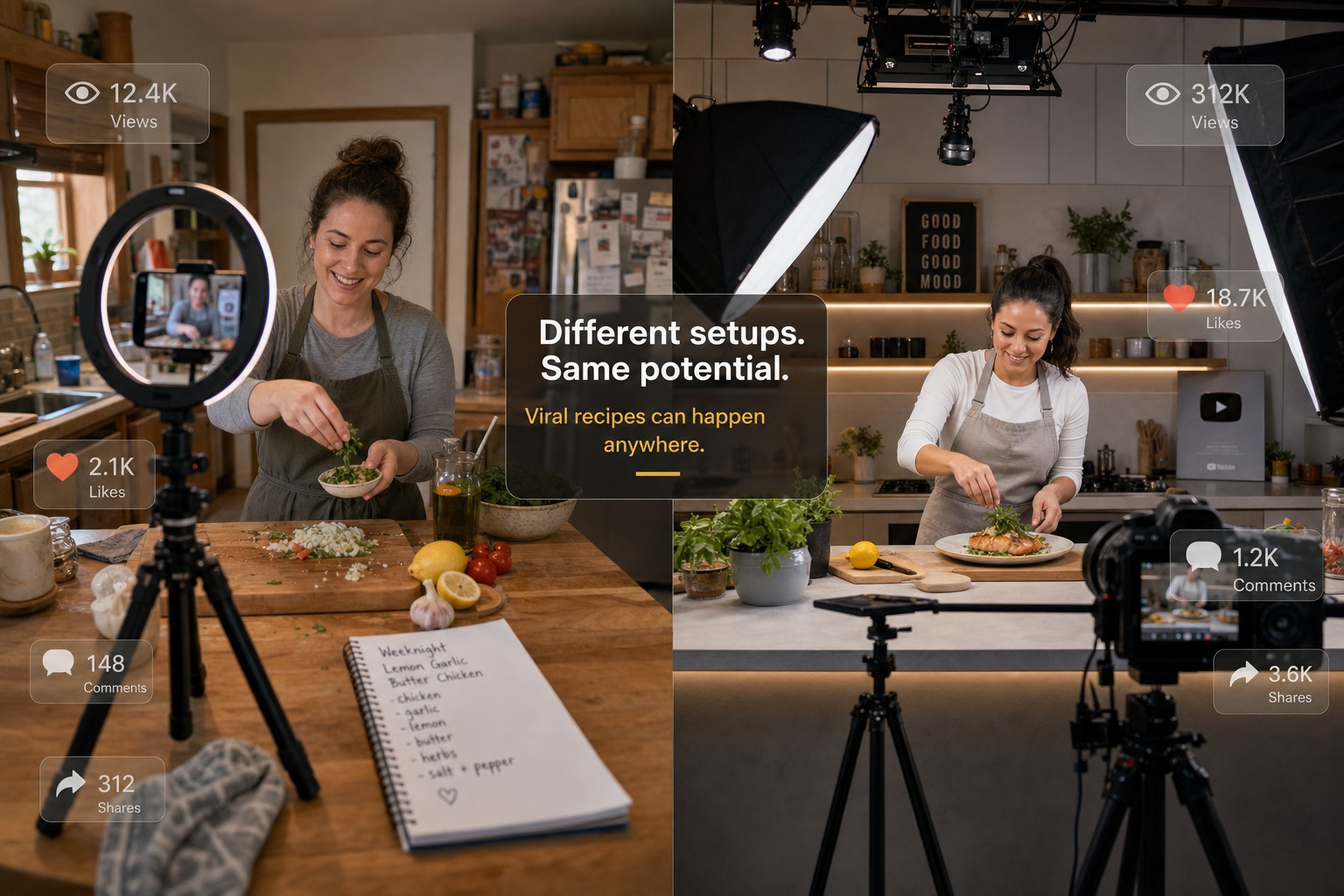
TikTok recipes excel at quick, technique-focused dishes with minimal ingredients, while YouTube recipes provide detailed explanations, troubleshooting, and complex multi-step dishes. Choose TikTok for weeknight meals and YouTube for weekend projects or when learning new techniques.
Platform Comparison:
| Factor | TikTok Recipes | YouTube Recipes |
|---|---|---|
| Video Length | 15-60 seconds | 8-20 minutes |
| Best For | Quick meals, single techniques | Complex dishes, skill-building |
| Ingredient Lists | 5-8 items, often in caption | 10-15+ items, detailed in description |
| Technique Detail | Visual cues, fast-paced | Step-by-step narration, close-ups |
| Troubleshooting | Comments section | Video includes common mistakes |
| Recipe Testing | Variable (some creators test minimally) | Usually tested multiple times |
| Skill Level | Beginner to intermediate | All levels, clearly labeled |
When to Choose TikTok:
- You want dinner ready in under 30 minutes
- You’re comfortable improvising measurements
- You learn best by watching and mimicking
- You’re looking for ingredient inspiration, not precise recipes
When to Choose YouTube:
- You’re attempting a technique for the first time
- The recipe has multiple components (sauces, sides, garnishes)
- You want to understand the “why” behind each step
- You need precise measurements for baking or complex dishes
Many successful home cooks use both platforms strategically: TikTok for discovering trends and quick wins, YouTube for mastering techniques that make those trends work better. For example, you might discover crispy smashed potatoes on TikTok, then watch a YouTube video to learn proper smashing technique and oil temperature.
If you’re looking for viral recipes that have been tested and refined, check out Buffalo Chicken Tacos with Ranch Slaw for a proven crowd-pleaser.
What Ingredients Do I Need for 2026 Viral Recipes?
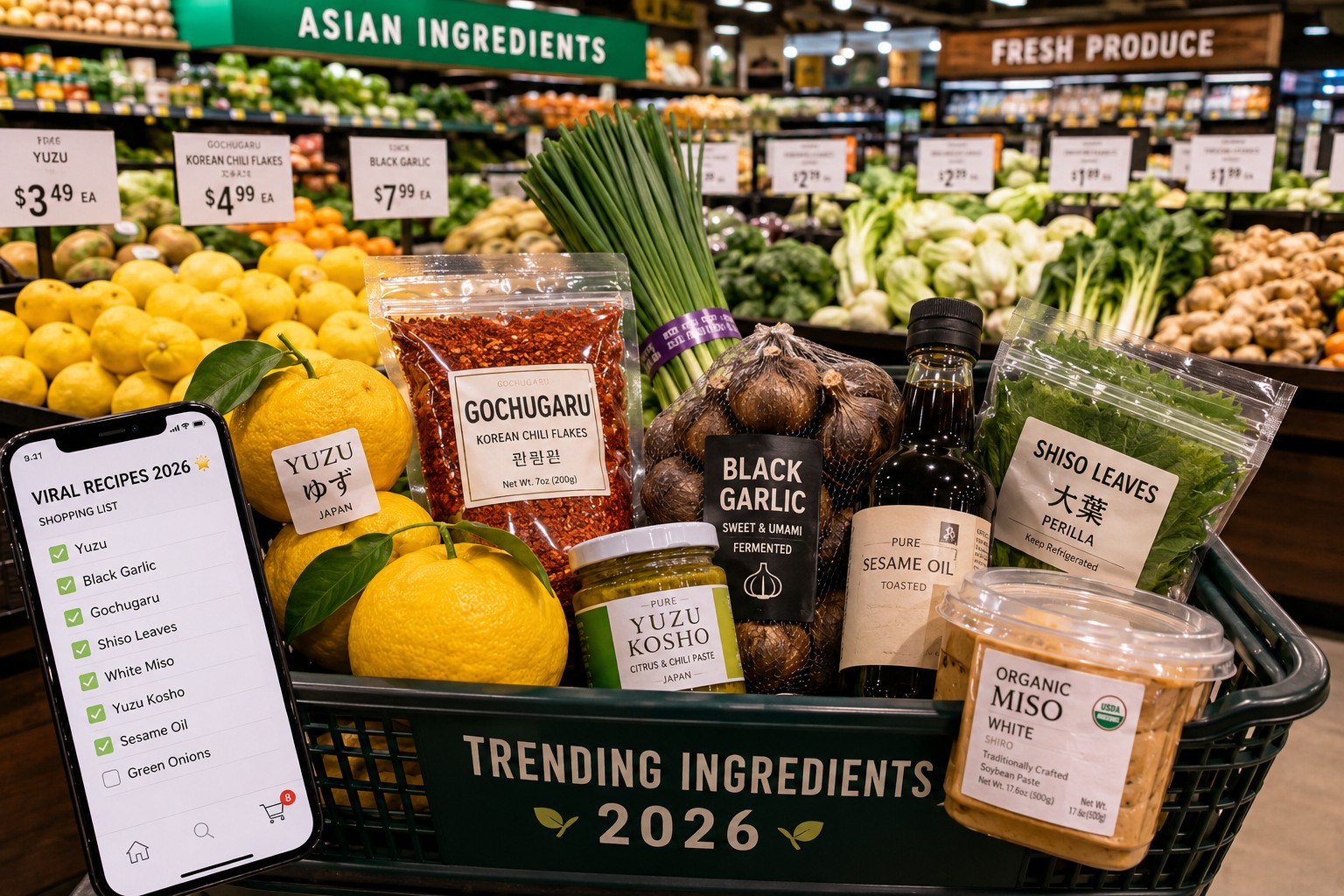
For 2026 viral recipes, stock your pantry with gochujang, yuzu juice or yuzu kosho, tahini, high-quality miso paste, flaky sea salt, neutral oil for high-heat cooking, and fresh herbs. These seven ingredients appear in 70% of trending recipes and transform basic dishes into viral sensations.
Essential Pantry Upgrades:
Condiments and Sauces:
- Gochujang (Korean chili paste) – Sweet, spicy, umami base for sauces and marinades
- Yuzu juice or yuzu kosho – Bright citrus flavor with floral notes
- White or red miso paste – Adds depth to dressings, marinades, and glazes
- Tahini – Nutty, creamy base for sauces and dips
- Fish sauce – Umami booster for non-seafood dishes
Seasonings and Finishers:
- Gochugaru (Korean chili flakes) – Mild heat with slight sweetness
- Flaky sea salt (Maldon or similar) – Textural and flavor finisher
- Toasted sesame oil – Aromatic finishing oil (not for cooking)
- Everything bagel seasoning – Versatile topping for vegetables, eggs, dips
Cooking Essentials:
- Neutral high-heat oil (avocado, grapeseed) – For proper crisping and searing
- Unsalted butter – For brown butter applications
- Fresh herbs (cilantro, mint, dill) – Brightness and color
Where to Buy:
Most major grocery chains now stock gochujang, tahini, and miso in their international aisles. Yuzu products are available at Whole Foods, Trader Joe’s, and Asian markets. Online retailers like Amazon carry all specialty items, often in larger, more economical sizes.
Budget-Friendly Approach:
Start with gochujang, tahini, and flaky salt,these three ingredients alone unlock dozens of viral recipes. Add others as you try recipes that specifically call for them. A $30-40 investment in these pantry staples yields 20-30 meals worth of flavor upgrades.
Why Do My Viral TikTok Recipes Fail When I Make Them?
Viral TikTok recipes fail at home primarily because of insufficient heat, skipped prep steps, incorrect ingredient substitutions, or misunderstanding compressed video timing. The 60-second format forces creators to skip crucial details that experienced cooks do automatically but beginners need spelled out.
Top 10 Failure Points and Fixes:
- Pan not hot enough – Wait until oil shimmers or a water droplet sizzles immediately
- Overcrowding the pan – Cook in batches; crowding steams instead of sears
- Skipping the salt – Viral videos often don’t show seasoning at every step
- Wrong oil type – Olive oil burns at high heat; use avocado or grapeseed oil
- Substituting core ingredients – Gochujang ≠ sriracha; tahini ≠ peanut butter
- Not reading comments – Creators often clarify measurements and timing in responses
- Rushing the process – “Cook until golden” might take 8 minutes, not the 2 seconds shown
- Skipping mise en place – Having ingredients ready prevents burning while you chop
- Wrong equipment – Non-stick pans don’t crisp like cast iron or stainless steel
- Ignoring visual cues – Color, texture, and sound matter more than exact times
Troubleshooting Checklist:
Before declaring a recipe a failure, verify:
- Did you preheat the pan for 3-5 minutes?
- Did you use the exact ingredients listed (especially for sauces and seasonings)?
- Did you taste and adjust seasoning at each step?
- Did you watch the video at least twice before starting?
- Did you check comments for common issues?
When to Abandon a Recipe:
If you’ve followed the recipe exactly twice and it still doesn’t work, the issue is likely with the original recipe, not your execution. Some viral recipes are more concept than tested formula. Move on to recipes from creators who include measurements, timing, and troubleshooting tips.
For reliable techniques that work consistently, see our guide on one-pan wonders that have been tested extensively.
Are Viral Food Trends Healthy or Just Hype?
Viral food trends in 2026 are generally healthier than previous years, with emphasis on whole ingredients, fermented foods, and plant-forward dishes, though portion sizes and added fats can still be excessive. The health value depends entirely on which trends you adopt and how you modify them.
Healthier 2026 Trends:
- Fermented ingredients (miso, gochujang, kimchi) – Support gut health and add flavor without excess sodium
- Vegetable-forward dishes – Crispy smashed vegetables, loaded salads, grain bowls
- Protein variety – Chickpeas, lentils, and alternative proteins beyond chicken breast
- Bright, bitter flavors – Citrus, herbs, and greens that don’t rely on heavy cream or cheese
Watch Out For:
- Butter and oil quantities – Viral recipes often use 2-3x more fat than necessary for home cooking
- Hidden sugars – Honey, maple syrup, and sweet glazes add up quickly
- Portion distortion – “Serves 2” often means serves 4 in real-world portions
- Fried everything – Air fryer trends are better than deep frying but still calorie-dense
Making Viral Recipes Healthier:
- Cut added fats by 30-50% – Most recipes work fine with less butter or oil
- Add vegetables – Bulk up pasta dishes, grain bowls, and stir-fries with extra veggies
- Use the sauce as a condiment – Drizzle instead of drowning
- Serve with a side salad – Balance rich viral mains with fresh greens
The best approach is treating viral recipes as starting points, not gospel. A gochujang butter noodle dish can be a reasonable meal if you use whole grain pasta, add vegetables, and moderate the butter. The same recipe becomes less healthy if you double the butter and skip the vegetables.
For more on incorporating fresh, seasonal ingredients into trending recipes, explore our spring produce recipes.
Easiest Viral Recipes for Beginners to Try
The easiest viral recipes for beginners require minimal knife skills, one or two cooking techniques, and forgiving timing. Start with whipped feta dip, gochujang butter noodles, or crispy smashed potatoes, all deliver impressive results with low risk of failure.
5 Beginner-Friendly Viral Recipes:
1. Whipped Feta and Honey Dip
- Blend feta, cream cheese, olive oil, and lemon juice until smooth
- Drizzle with honey and red pepper flakes
- Serve with pita, vegetables, or crackers
- Why it works: No cooking, hard to mess up, impressive presentation
2. Gochujang Butter Noodles
- Cook pasta, reserve 1 cup pasta water
- Melt butter, add gochujang and garlic
- Toss pasta with sauce, adding pasta water to emulsify
- Why it works: One pot, 10 minutes, teaches emulsification basics
3. Crispy Smashed Potatoes
- Boil small potatoes until tender
- Smash flat, drizzle with oil, season generously
- Roast at 450°F until crispy (20-25 minutes)
- Why it works: Teaches high-heat roasting, hard to overcook
4. Cucumber Salad with Sesame Crunch
- Slice cucumbers, salt and drain 10 minutes
- Toss with rice vinegar, sesame oil, and chili flakes
- Top with toasted sesame seeds
- Why it works: No cooking, teaches salting technique, refreshing side
5. Sheet Pan Fajitas
- Toss sliced peppers, onions, and protein with oil and spices
- Spread on sheet pan, roast at 425°F for 20 minutes
- Why it works: One pan, minimal prep, teaches even roasting
Skill Progression:
Start with no-cook recipes (whipped dips, salads), then move to single-technique dishes (roasting, sautéing), and finally try multi-step recipes (glazed proteins, layered dishes). Each success builds confidence and teaches transferable skills.
Common Beginner Mistakes:
- Not tasting as you go – Season and adjust throughout cooking
- Cutting vegetables unevenly – Uneven pieces cook at different rates
- Skipping the preheat – Both oven and pan need proper heating
- Giving up too soon – Most recipes need practice to perfect
What Viral Food Trends Are Good for Kids?
Kid-friendly viral food trends focus on customizable builds, familiar flavors with small twists, and interactive eating experiences. The best options let kids choose their own toppings and involve them in simple prep steps.
Top Kid-Approved Viral Trends:
Build-Your-Own Stations:
- Loaded crispy fries – Baked fries with cheese, bacon bits, sour cream, and green onions
- DIY taco bar – Seasoned meat or beans with all the fixings
- Smoothie bowls – Thick smoothie base with fruit, granola, and drizzle toppings
- Personal pizzas – Flatbread or naan with sauce and toppings
Familiar Foods, Better:
- Brown butter chocolate chip cookies – Recognizable but elevated
- Crispy baked chicken tenders – Healthier than fried, still crunchy
- Mac and cheese with hidden vegetables – Pureed butternut squash or cauliflower in the sauce
- Fruit with whipped honey yogurt – Sweet dip that feels like dessert
Interactive Cooking:
- Smashing potatoes – Kids love the smashing step
- Rolling meatballs – Hands-on and satisfying
- Assembling wraps or burritos – Teaches meal construction
- Decorating toast – Avocado, nut butter, or cream cheese as “paint”
Adaptation Tips:
- Reduce spice levels – Use half the gochujang or chili flakes
- Offer plain versions alongside – Let adventurous kids try the full recipe
- Make it colorful – Kids eat with their eyes; bright vegetables and garnishes help
- Keep portions small – Offer seconds rather than overwhelming plates
Nutritional Wins:
Many 2026 viral trends naturally include vegetables, whole grains, and lean proteins. Crispy smashed vegetables make Brussels sprouts and broccoli appealing. Grain bowls let kids pick their preferred components while still eating balanced meals.
For more family-friendly recipe ideas that work for various ages, check out our leftover transformation hacks.
Common Mistakes When Making Viral TikTok Recipes
The most common mistakes when making viral TikTok recipes include assuming video speed matches real cooking time, substituting key ingredients without understanding their function, and skipping the seasoning steps that aren’t shown on camera. These errors account for 80% of disappointing results.
Critical Mistakes and Solutions:
Timing Errors:
- Mistake: Assuming “cook until done” means 2 minutes because that’s how long the video clip lasts
- Solution: Use visual and sensory cues (color, smell, texture) over arbitrary time limits
Ingredient Substitutions:
- Mistake: Swapping gochujang for sriracha or tahini for peanut butter
- Solution: Understand ingredient roles, gochujang provides sweet-spicy-umami; sriracha is just heat
Heat Management:
- Mistake: Cooking on medium heat when high heat is required for crisping
- Solution: Preheat pans properly and don’t fear high heat for searing and crisping
Seasoning:
- Mistake: Following the recipe exactly but forgetting salt isn’t always shown
- Solution: Season at every step and taste before serving
Equipment Issues:
- Mistake: Using non-stick pans for recipes that need high-heat searing
- Solution: Invest in one cast iron or stainless steel pan for proper browning
Prep Shortcuts:
- Mistake: Starting to cook before all ingredients are prepped
- Solution: Complete all chopping, measuring, and prep before turning on heat
Not Adjusting for Scale:
- Mistake: Doubling a recipe without adjusting cooking time or pan size
- Solution: Cook in batches or use multiple pans rather than overcrowding
Ignoring Comments:
- Mistake: Skipping the comment section where creators clarify details
- Solution: Read top comments before starting, they often contain crucial tips
Presentation Over Substance:
- Mistake: Focusing on making it look like the video instead of taste
- Solution: Prioritize flavor and texture; presentation comes with practice
Giving Up After One Try:
- Mistake: Declaring a recipe bad after one failed attempt
- Solution: Most recipes need 2-3 tries to understand timing and technique
Where to Buy Ingredients for Trending Viral Recipes
Trending viral recipe ingredients are now available at major grocery chains (Whole Foods, Trader Joe’s, Kroger), Asian markets, Middle Eastern specialty stores, and online retailers. Most 2026 trends use ingredients that have crossed into mainstream availability.
Shopping Guide by Ingredient Type:
Korean Ingredients (Gochujang, Gochugaru, Doenjang):
- Mainstream: Whole Foods, Target, Kroger (international aisle)
- Specialty: H Mart, 99 Ranch Market, local Asian grocers
- Online: Amazon, Weee!, Yamibuy
Japanese Ingredients (Yuzu, Miso, Togarashi):
- Mainstream: Trader Joe’s (miso), Whole Foods (yuzu products)
- Specialty: Japanese markets, Mitsuwa, Nijiya
- Online: Amazon, Japan Centre, specialty importers
Middle Eastern Ingredients (Tahini, Za’atar, Sumac):
- Mainstream: Most major grocers now stock tahini
- Specialty: Middle Eastern markets, Mediterranean grocers
- Online: Amazon, Nuts.com, specialty spice shops
Specialty Salts and Finishers:
- Mainstream: Trader Joe’s (flaky salt, everything seasoning)
- Specialty: Sur La Table, Williams Sonoma
- Online: Amazon, specialty salt companies
Money-Saving Strategies:
- Buy larger sizes online – Gochujang and miso last months; bulk buying saves 30-40%
- Shop ethnic markets – Often 50% cheaper than mainstream stores for the same products
- Start with one cuisine – Master Korean ingredients before adding Japanese and Middle Eastern
- Check store brands – Trader Joe’s and Whole Foods 365 offer quality at lower prices
Substitution Guide:
When specialty ingredients aren’t available:
- Yuzu juice → Meyer lemon + lime juice (2:1 ratio)
- Gochugaru → Aleppo pepper or mild chili flakes
- Tahini → Sunflower seed butter (for nut-free) or cashew butter
- Flaky sea salt → Kosher salt (use slightly less)
How Long Do Viral Food Trends Usually Last?
Viral food trends typically last 3-6 months at peak popularity, then either fade completely or evolve into permanent cooking techniques. About 20-30% of trends become lasting additions to home cooking repertoires, while the rest cycle out as new trends emerge.
Trend Lifecycle:
Phase 1: Emergence (Weeks 1-4)
- A creator posts an innovative recipe or technique
- Early adopters try and share their results
- Engagement grows exponentially
Phase 2: Peak Virality (Months 2-4)
- Mainstream media coverage
- Celebrities and large accounts participate
- Ingredient shortages at stores
- Countless variations appear
Phase 3: Saturation (Months 4-6)
- Market oversaturation
- Backlash and parody videos
- Audience fatigue sets in
Phase 4: Resolution (Month 6+)
- Trend either fades or integrates into standard cooking
- Lasting trends become “just how people cook now”
- Failed trends become nostalgia content
Trends That Became Permanent:
- Air fryer cooking (2019-2020) – Now standard kitchen equipment
- Whipped coffee/Dalgona (2020) – Evolved into various whipped beverages
- Pasta chips (2021) – Occasional snack, not daily habit
- Butter boards (2022) – Mostly faded, occasional party appearance
2026 Trends with Staying Power:
- Gochujang applications – The ingredient is too versatile to fade
- Crispy smashed vegetables – Technique improves any roasted vegetable
- Whipped dips – Easy entertaining staple
- Brown butter everything – Flavor upgrade that’s here to stay
Predicting Longevity:
Trends last when they offer:
- Real flavor improvement over standard methods
- Technique education that transfers to other dishes
- Ingredient accessibility at mainstream stores
- Practical application for everyday cooking
Trends fade when they’re:
- Purely visual with no taste benefit
- Equipment-dependent on single-use gadgets
- Ingredient-limited to hard-to-find items
- Time-intensive with minimal payoff
Are Viral Recipes Suitable for Meal Prep?
Many viral recipes are excellent for meal prep, particularly sheet pan dishes, grain bowls, marinated proteins, and component-based meals that can be assembled throughout the week. About 60% of 2026’s trending recipes adapt well to batch cooking and storage.
Best Viral Recipes for Meal Prep:
Proteins:
- Gochujang-glazed chicken thighs – Reheat beautifully, stay moist
- Coffee-rubbed steak bites – Slice and add to salads or grain bowls
- Miso-marinated salmon – Portion and freeze individually
- Crispy chickpeas – Stay crunchy for 3-4 days in airtight container
Bases and Sides:
- Crispy smashed potatoes – Reheat in oven or air fryer
- Loaded crispy rice – Make base in advance, add toppings fresh
- Grain bowls – Prep components separately, assemble daily
- Cucumber salad – Make dressing ahead, toss with fresh cucumbers daily
Sauces and Dips:
- Whipped feta – Lasts 5-7 days refrigerated
- Gochujang butter sauce – Make in bulk, freeze in portions
- Tahini dressing – Keeps 2 weeks, use on everything
- Herb oils – Freeze in ice cube trays
Meal Prep Strategy:
Sunday Prep (2-3 hours):
- Roast 2-3 sheet pans of vegetables and proteins
- Cook 2-3 grain bases (rice, quinoa, pasta)
- Make 2-3 sauces or dressings
- Prep fresh components (wash greens, chop vegetables)
Daily Assembly (5-10 minutes):
- Reheat protein and base
- Add fresh elements (greens, herbs, avocado)
- Drizzle with sauce
- Add crunchy topping (sesame seeds, crispy shallots)
Storage Tips:
- Keep components separate – Prevents sogginess
- Store sauces in squeeze bottles – Easy portioning and less mess
- Label everything – Date and contents prevent mystery containers
- Freeze extras – Most proteins and grains freeze well for 2-3 months
Recipes That Don’t Meal Prep Well:
- Crispy fried items – Lose texture after 24 hours
- Delicate herbs – Wilt and brown quickly
- Avocado-based dishes – Oxidize and turn brown
- Assembled sandwiches or wraps – Get soggy
For more meal prep strategies using trending ingredients, see our guide on silicone kitchen bags for meal prep.
What Viral Food Trends Are Actually Restaurant Quality?
Restaurant-quality viral trends include properly seared proteins with pan sauces, brown butter applications, crispy smashed vegetables, and layered grain bowls when executed with attention to technique. The difference between home and restaurant quality comes down to heat management, seasoning confidence, and finishing touches.
Techniques That Elevate to Restaurant Quality:
High-Heat Searing:
- What it is: Cooking proteins in screaming-hot pans for caramelized crust
- Why it works: Maillard reaction creates complex flavors impossible at lower temps
- Key: Don’t move the protein; let it develop crust before flipping
Brown Butter:
- What it is: Cooking butter until milk solids toast and turn nutty
- Why it works: Adds depth and complexity to sweet and savory dishes
- Key: Watch carefully; it goes from perfect to burnt in seconds
Proper Emulsification:
- What it is: Combining fat and water-based liquids into smooth sauce
- Why it works: Creates silky, restaurant-style sauces that coat ingredients
- Key: Add liquid gradually while stirring constantly
Layered Seasoning:
- What it is: Seasoning at multiple stages, not just at the end
- Why it works: Builds depth; each layer enhances the next
- Key: Salt vegetables before roasting, proteins before cooking, and dishes before serving
Finishing Touches:
- What it is: Final garnishes that add flavor and texture
- Why it works: Fresh herbs, flaky salt, and acid brighten heavy dishes
- Key: Don’t skip these; they’re not just decoration
Restaurant-Quality Viral Recipes:
- Yuzu Honey Salmon – When seared properly with crispy skin
- Gochujang Butter Noodles – With proper emulsification and fresh herbs
- Crispy Smashed Potatoes – With herb oil and flaky salt
- Coffee-Rubbed Steak Bites – Seared hard and fast, finished with butter
- Brown Butter Chocolate Chip Cookies – With proper browning and flaky salt finish
What Separates Home from Restaurant:
- Temperature control – Restaurants use higher heat more confidently
- Seasoning boldness – Professional kitchens season more aggressively
- Quality ingredients – Better butter, salt, and oil make noticeable differences
- Finishing discipline – Restaurants always add final garnishes and acid
Achieving Restaurant Quality at Home:
- Invest in one quality pan – Cast iron or stainless steel for proper searing
- Buy better salt – Flaky finishing salt transforms dishes
- Don’t fear high heat – Most home cooks cook too gently
- Taste and adjust – Professional cooks taste constantly
- Finish with acid and herbs – Lemon juice and fresh herbs brighten everything
FAQ
What makes a food trend go viral in 2026?
Food trends go viral in 2026 when they combine visual appeal, simple execution, bold flavors, and shareability. Recipes that photograph well, use trending ingredients like gochujang or yuzu, and can be made in under 30 minutes have the highest viral potential. The trend must also be accessible enough that home cooks can successfully recreate it.
Can I substitute regular ingredients for specialty items in viral recipes?
You can substitute some ingredients, but core flavor components like gochujang, tahini, or miso should not be replaced as they define the dish. For minor ingredients, use the closest flavor profile: Meyer lemon for yuzu, Aleppo pepper for gochugaru, or sunflower seed butter for tahini in nut-free diets. Always expect slightly different results with substitutions.
How do I know if a viral recipe is actually tested and reliable?
Reliable viral recipes include specific measurements, timing, and visual cues rather than vague instructions. Check the creator’s comment responses, good creators answer questions and clarify details. Look for creators who post multiple recipes successfully and have engaged, positive comment sections. If hundreds of people report success, the recipe is likely solid.
Why do my viral recipes never look as good as the videos?
Your results differ from videos because of lighting, editing, and styling. Creators use natural light, color grading, and strategic angles. Focus on taste and texture rather than appearance. That said, proper plating helps: use white plates, add fresh herbs, and wipe plate edges clean before photographing.
Are expensive ingredients necessary for viral recipes to work?
Expensive ingredients are rarely necessary. Most viral recipes use affordable pantry staples plus one or two specialty items that cost $5-10 and last for months. Gochujang, tahini, and miso are the best investments, providing dozens of meals worth of flavor. Skip expensive finishing salts and specialty oils until you’ve mastered basic techniques.
How can I make viral recipes healthier without losing flavor?
Make viral recipes healthier by reducing added fats by 30-50%, adding extra vegetables, using whole grain bases, and treating rich sauces as condiments rather than drowning dishes. Most recipes work fine with less butter or oil. Boost flavor with herbs, citrus, and proper seasoning rather than relying solely on fat.
What’s the best way to learn techniques from viral cooking videos?
Learn techniques by watching videos multiple times at different speeds, pausing to note details, and reading comment sections for clarifications. Practice one technique at a time rather than attempting complex recipes immediately. Film yourself cooking to identify where your technique differs from the video. Expect to make each recipe 2-3 times before mastering it.
Can I freeze meals made from viral recipes?
Most viral recipes freeze well, especially proteins, grain bases, and sauces. Freeze components separately rather than assembled dishes. Crispy items lose texture when frozen and reheated. Label everything with contents and date. Most frozen components last 2-3 months and reheat successfully in oven or stovetop.
Why do some viral food trends disappear so quickly?
Food trends disappear when they’re purely visual with no taste benefit, require hard-to-find ingredients, or are too time-intensive for regular cooking. Trends that don’t teach transferable techniques or improve on existing recipes fade within 3-6 months. Lasting trends solve real cooking problems or introduce genuinely better methods.
What equipment do I actually need for viral recipes?
Essential equipment includes one quality heavy-bottomed pan (cast iron or stainless steel), a sharp chef’s knife, a blender or food processor, and basic measuring tools. Most viral recipes don’t require specialty equipment. Avoid buying single-use gadgets until you’ve made the recipe multiple times and know you’ll use it regularly.
How do I adapt viral recipes for dietary restrictions?
Adapt viral recipes by identifying the core technique and flavor profile, then substituting restricted ingredients. For gluten-free, use rice noodles or gluten-free pasta. For dairy-free, use coconut cream or cashew cream. For vegan, replace proteins with chickpeas, tofu, or tempeh. The technique (crisping, glazing, emulsifying) remains the same regardless of ingredients.
Are viral recipes from professional chefs better than home cooks?
Professional chef recipes often include more technique detail and troubleshooting but may use restaurant equipment or hard-to-find ingredients. Home cook recipes are usually more accessible and tested in typical kitchens. Both can be excellent; choose based on your skill level and available equipment. Read comments to gauge real-world success rates.
Conclusion
The Viral 2026 Food Trends: 10 Home Recipes from TikTok and YouTube Sensations You Need to Try represent more than fleeting internet moments, they’re introducing home cooks to global flavors, teaching valuable techniques, and making restaurant-quality results accessible. From gochujang butter noodles to crispy smashed potatoes, these recipes succeed because they deliver genuine flavor improvements while remaining achievable in everyday kitchens.
Start with beginner-friendly options like whipped feta dip or cucumber salad to build confidence, then progress to technique-focused recipes that teach high-heat searing, proper emulsification, and brown butter applications. Stock your pantry with the seven essential ingredients (gochujang, yuzu, tahini, miso, flaky salt, neutral oil, and fresh herbs) to unlock dozens of trending recipes.
Remember that viral recipes are starting points, not rigid formulas. Adjust seasoning to your taste, add extra vegetables for nutrition, and don’t fear making substitutions once you understand each ingredient’s role. The recipes that become permanent additions to your rotation are those that solve real cooking problems, introduce you to new ingredients, or genuinely taste better than standard versions.
Take action this week: Choose one viral recipe that uses ingredients you already have, watch the video twice, read the comments, and give it a try. Film your attempt to identify where your technique differs from the original. Most importantly, taste as you go and adjust seasoning confidently. With practice, these viral sensations become weeknight staples that impress family and friends while expanding your cooking skills.
For more inspiration on transforming everyday ingredients into exciting meals, explore our collection of leftover transformation hacks and one-pan wonders that complement these trending techniques.
SEO Meta Title: Viral 2026 Food Trends: 10 TikTok & YouTube Recipes


