
Master Swicy Magic: 15 Recipes with Hot Honey, Gochujang, and Global Chiles
Last updated: May 22, 2026
Quick Answer
Master Swicy Magic: 15 Recipes with Hot Honey, Gochujang, and Global Chiles combines sweet and spicy flavors using accessible ingredients like hot honey, Korean gochujang paste, and global chiles to create balanced dishes that appeal to both heat lovers and mild-spice eaters. Hot honey launches have grown 61% annually over the past five years, making swicy the fastest-growing flavor trend in 2026. These recipes work across proteins, snacks, and sides, with adjustable heat levels for every palate.
Key Takeaways
- Swicy means sweet-spicy balance: combines sugar, honey, or fruit with chiles to create layered flavor rather than pure heat
- Hot honey is the easiest entry point: mild heat (500-2,000 Scoville) with floral sweetness works on pizza, fried chicken, and charcuterie
- Gochujang adds fermented depth: Korean chile paste brings umami, sweetness, and moderate heat in one ingredient
- Global chiles expand your options: Calabrian, hatch, habanero, and jalapeño each offer distinct flavor profiles beyond generic “spicy”
- Start with 1-2 tablespoons per serving: swicy ingredients are concentrated; add gradually and taste as you go
- Meal prep friendly: most swicy glazes and marinades hold well for 3-5 days refrigerated
- Not every dish benefits: delicate fish, cream-based desserts, and mild cheeses can be overwhelmed by sweet-heat
- Substitutions work with adjustments: sriracha can replace gochujang if you add honey and reduce salt

What Does Swicy Mean in Cooking?
Swicy describes the intentional pairing of sweet and spicy flavors in a single dish or ingredient. Unlike traditional spicy food that focuses on heat alone, swicy balances chile peppers with sugar, honey, fruit, or other sweeteners to create a layered taste experience where neither element dominates.
The term gained mainstream traction in 2024-2025 and became firmly established by 2026, with U.S. restaurant menu items labeled as sweet-spicy jumping 38% in 2023 and continuing to grow.[2] Swicy works because sweetness tempers capsaicin burn while heat prevents cloying sweetness, creating a more complex flavor profile than either component alone.
Common swicy combinations include:
- Hot honey (chile-infused honey)
- Gochujang-based glazes
- Mango-habanero sauces
- Maple-cayenne seasonings
- Pineapple-jalapeño salsas
Choose swicy when you want to add interest to rich proteins like fried chicken, fatty cuts, or starchy sides. Avoid it for dishes where subtle flavors need to shine, such as delicate white fish or fresh mozzarella.
How to Make Hot Honey at Home
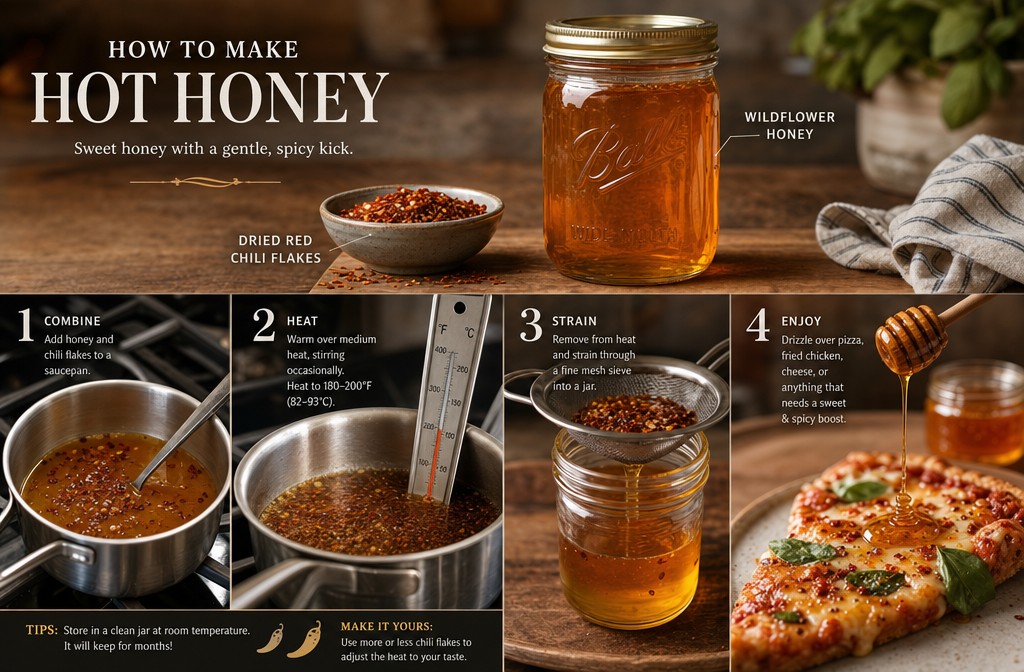
Making hot honey requires just two ingredients and 10 minutes of active time. Combine 1 cup of honey with 1-3 tablespoons of dried red chile flakes in a small saucepan, heat gently to 180°F (not boiling), simmer for 5 minutes, then strain and cool.
Step-by-step process:
- Choose your honey: Wildflower or clover honey works best for mild, floral sweetness
- Select heat level: Start with 1 tablespoon chile flakes for mild (500 Scoville), 2 tablespoons for medium (1,000 Scoville), 3+ for hot (2,000+ Scoville)[1]
- Heat gently: Warm honey and chiles in a saucepan over low heat to 180°F, stirring occasionally
- Steep: Remove from heat and let sit 5-10 minutes for deeper flavor
- Strain: Pour through fine-mesh strainer to remove solids
- Store: Transfer to clean jar; keeps at room temperature for 2-3 months
Common mistake: Boiling honey destroys its floral notes and creates bitter flavors. Keep temperature below 200°F and remove from heat as soon as it’s warm and fragrant.
For variety, add crushed garlic, fresh thyme, or black peppercorns during the heating step. Hot honey made with wildflower honey typically delivers the mild, lingering heat that has made it the benchmark swicy ingredient in 2026.[1]
What Is Gochujang and Where to Buy It
Gochujang is a fermented Korean chile paste made from red chiles, glutinous rice, fermented soybeans, and salt. It delivers moderate heat (1,500-2,500 Scoville), natural sweetness from rice fermentation, and deep umami from soybeans, making it a complete swicy ingredient in one jar.
You can buy gochujang at most major grocery stores in the international or Asian foods aisle, typically in red plastic tubs ranging from 8 oz to 1 lb. Popular brands include Chung Jung One, Mother-In-Law’s, and Bibigo. Online options include Amazon, H Mart, and specialty Korean grocers, with prices ranging from $5-12 per container.
What to look for when buying:
- Spice level: Labels often indicate mild, medium, or hot
- Ingredients: Traditional versions list chile, rice, soybean, salt; avoid those with corn syrup as the first ingredient
- Texture: Should be thick paste, not watery sauce
- Expiration: Unopened lasts 1-2 years; refrigerate after opening and use within 6 months
Gochujang works particularly well in marinades for chicken thighs, glazes for roasted vegetables, and stir-fry sauces. Its fermented complexity means you can use less than you would with plain hot sauce while achieving more layered flavor.
Swicy vs Spicy vs Sweet: What’s the Difference?
Swicy combines sweet and spicy in balanced proportion, while spicy focuses only on heat and sweet contains no heat element. The key difference is intentional flavor layering rather than accidental mixing.
Comparison breakdown:
| Profile | Primary Taste | Heat Level | Example |
|---|---|---|---|
| Swicy | Sweet + spicy balanced | Mild to medium | Hot honey chicken, gochujang glaze |
| Spicy | Heat-forward | Medium to extreme | Buffalo wings, habanero salsa |
| Sweet | Sugar-forward | None | Honey mustard, teriyaki (traditional) |
Swicy works because the sweetness activates different taste receptors than capsaicin, creating a more complex sensory experience. Research on flavor pairing shows that sugar can reduce perceived heat intensity by up to 30%, allowing people with lower spice tolerance to enjoy chile flavors without discomfort.
Choose swicy when you want complexity and broad appeal. Choose spicy when heat is the goal and you’re cooking for spice enthusiasts. Choose sweet when you need kid-friendly or universally mild flavors.
Edge case: Some traditional dishes like Thai sweet chili sauce or Chinese sweet and sour with chiles have always been swicy, but the term and intentional application to Western dishes is what’s new in 2026.
Best Chiles for Swicy Recipes: Beginners
For beginners, start with jalapeño, Calabrian chiles, or gochugaru (Korean chile flakes) because they offer moderate heat (2,500-5,000 Scoville), distinct flavor beyond pure burn, and wide availability in U.S. grocery stores.
Beginner-friendly chile guide:
- Jalapeño (2,500-8,000 Scoville): Fresh, grassy flavor; use fresh or pickled; pairs with honey, mango, pineapple
- Calabrian chile (25,000-40,000 Scoville but used sparingly): Fruity, slightly smoky; sold in oil; works in pasta, on pizza, with ricotta
- Gochugaru (1,500-10,000 Scoville): Smoky, slightly sweet; Korean chile flakes; essential for gochujang-style glazes
- Fresno chile (2,500-10,000 Scoville): Similar to jalapeño but fruitier; great raw in salsas with honey
- Ancho chile powder (1,000-2,000 Scoville): Dried poblano; earthy, raisin-like; excellent in rubs with brown sugar
Avoid these as a beginner: Habanero (100,000-350,000 Scoville), ghost pepper (1,000,000+ Scoville), and Thai bird’s eye (50,000-100,000 Scoville) until you’re comfortable with heat management.
Common mistake: Using too much dried chile powder. Start with 1/4 teaspoon per serving and increase gradually. Dried chiles are 3-5 times more concentrated than fresh.
Tastewise’s 2026 trend data shows jalapeño and mango are now “normalized” swicy ingredients, while Calabrian chili and hatch chile remain in the “emerging” category, meaning they offer differentiation without being too obscure.[1]
Can I Substitute Gochujang with Sriracha?
You can substitute sriracha for gochujang if you add honey and reduce salt, but the flavor will be thinner and more vinegar-forward. Use 1 tablespoon sriracha plus 1 teaspoon honey to replace 1 tablespoon gochujang, and cut added salt by half.
Key differences:
| Ingredient | Heat | Sweetness | Texture | Fermentation |
|---|---|---|---|---|
| Gochujang | Moderate | Natural (rice) | Thick paste | Yes (umami depth) |
| Sriracha | Medium-hot | Minimal | Thin sauce | No (vinegar tang) |
Gochujang brings fermented complexity and natural sweetness from rice, while sriracha is primarily chile, vinegar, and garlic. When substituting, you’ll lose the umami depth but can approximate the sweet-heat balance.
When the substitution works well:
- Quick marinades for grilled chicken breast
- Stir-fry sauces where you’re adding other umami (soy sauce, fish sauce)
- Dipping sauces mixed with mayo or yogurt
When to avoid substituting:
- Traditional Korean dishes (bibimbap, tteokbokki)
- Slow-cooked braises where fermented depth matters
- Recipes where thick paste texture is structural (not just flavor)
If you substitute regularly, consider buying gochujang online in bulk. An 8 oz tub costs $5-8 and lasts months refrigerated, making it more economical than repeated sriracha-honey combinations.
How Much Hot Honey Should I Use in a Recipe?
Start with 1-2 tablespoons of hot honey per serving for glazes and drizzles, or 1/4 cup per pound of protein for marinades. Hot honey is concentrated, so add gradually and taste between additions to avoid overpowering other flavors.
Usage guidelines by application:
- Drizzle (finishing): 1-2 tablespoons per serving (pizza, fried chicken, charcuterie)
- Glaze (cooking): 2-3 tablespoons per serving, applied in last 5 minutes of cooking
- Marinade: 1/4 cup hot honey per pound of meat, combined with oil and acid
- Dressing: 1-2 tablespoons per 1/4 cup oil for vinaigrettes
- Baking: Replace up to 1/3 of sugar in recipes; reduce liquid by 1 tablespoon per 1/4 cup honey used
Common mistake: Adding hot honey too early in high-heat cooking. Honey burns above 350°F, creating bitter flavors. For grilled or roasted dishes, brush on hot honey in the final 3-5 minutes or serve as a finishing drizzle.
Adjusting for heat preference:
- Mild palate: Start with 1 tablespoon and mix with plain honey (50/50 ratio)
- Medium palate: Use as directed in recipe
- High heat tolerance: Double the hot honey or add extra chile flakes to the dish
Hot honey’s mild heat profile (500-2,000 Scoville) means it’s difficult to make a dish inedibly spicy, but you can easily make it too sweet. Balance with acid (vinegar, citrus) or salt if the dish tastes cloying.
Swicy Recipes for People Who Don’t Like Spicy Food
People with low spice tolerance can enjoy swicy flavors by using hot honey at 1/2 strength (mixed with plain honey), choosing mild chiles like poblano or Anaheim (1,000 Scoville or less), and pairing sweet elements with dairy to further reduce heat perception.
Mild swicy recipe strategies:
- Dilute hot honey 50/50 with regular honey for drizzling
- Use gochujang sparingly: 1 teaspoon per serving instead of 1 tablespoon
- Choose mild chiles: Poblano, Anaheim, or banana peppers (under 2,000 Scoville)
- Add dairy: Sour cream, yogurt, or cheese reduces capsaicin burn
- Increase sweet components: More honey, maple syrup, or fruit balances heat
- Remove seeds: Chile seeds and membranes contain 80% of the heat
Beginner-friendly swicy recipes:
- Mild hot honey chicken and waffles: Use 50/50 hot honey blend, drizzle after cooking
- Gochujang-maple roasted carrots: 1 teaspoon gochujang + 2 tablespoons maple syrup per pound of carrots
- Mango-jalapeño salsa: Remove all jalapeño seeds, use 2 cups mango to 1/4 cup jalapeño
- Sweet chili glazed salmon: Combine 1/4 cup sweet chili sauce with 1 tablespoon honey, no additional heat
- Hot honey butter corn: Mix 2 tablespoons butter with 1 teaspoon hot honey per 2 ears of corn
Edge case: If even mild swicy is too much, focus on aromatic “warm” spices like smoked paprika, cumin, or coriander, which add complexity without capsaicin heat.
Common Mistakes When Cooking with Gochujang
The most common mistake is using gochujang straight from the jar without thinning or balancing it with other ingredients. Gochujang is a concentrated paste that needs liquid (water, oil, or vinegar) and often benefits from added sweetness or acid to create a balanced sauce.
Top mistakes and fixes:
- Using it too thick: Thin with water, rice vinegar, or sesame oil (1:1 ratio) before using as a sauce
- Skipping the sweetness boost: Add 1 teaspoon honey or sugar per tablespoon gochujang to enhance natural sweetness
- Burning it: Gochujang contains sugar and burns easily above 400°F; add in final cooking stages or use as a finishing sauce
- Ignoring salt content: Gochujang is salty; reduce or eliminate added salt in recipes
- Not blooming the flavor: For deeper taste, cook gochujang in oil for 30-60 seconds before adding other ingredients
- Using expired paste: Old gochujang loses sweetness and becomes one-dimensionally salty; check dates and refrigerate after opening
Proper gochujang sauce formula:
- 2 tablespoons gochujang
- 1 tablespoon honey or brown sugar
- 1 tablespoon rice vinegar or lime juice
- 1 tablespoon water or oil
- 1 teaspoon sesame oil (optional)
- 1 clove garlic, minced
This creates a balanced glaze for chicken thighs, pork, or vegetables that showcases gochujang’s complexity without overwhelming the dish.
Where to Buy Global Chiles Online
Buy global chiles online from specialty retailers like Rancho Gordo, Penzeys Spices, The Spice House, and Amazon, which offer dried, fresh, and preserved chiles from multiple regions with detailed heat ratings and flavor descriptions.
Top online chile sources:
- Rancho Gordo: Heirloom Mexican chiles (ancho, guajillo, chilhuacle); dried whole pods; $8-15 per bag
- Penzeys Spices: Ground and whole chiles from 20+ regions; detailed Scoville ratings; $4-12 per jar
- The Spice House: Specialty blends and single-origin chiles; sample sizes available; $5-18
- Amazon: Wide selection including Calabrian chiles in oil, gochugaru, and hot honey; Prime shipping
- H Mart online: Korean chiles (gochugaru, whole dried); authentic brands; $6-15
- Kalustyan’s: Middle Eastern and global selection; bulk options; $8-25
What to check before buying:
- Harvest date: Dried chiles lose potency after 1 year; look for current-year harvest
- Scoville rating: Ensure heat level matches your tolerance
- Whole vs. ground: Whole dried chiles last longer (2 years) than ground (6 months)
- Quantity: Start with small amounts (2-4 oz) to test flavor before bulk buying
Storage tip: Keep dried chiles in airtight containers in a cool, dark place. Freeze ground chiles to extend shelf life to 1 year. Fresh chiles can be frozen whole in freezer bags for up to 6 months.
For beginners, start with a sampler pack from Penzeys or The Spice House that includes mild to medium chiles with tasting notes. This helps you identify flavor preferences before committing to larger quantities.
Are Swicy Flavors Good for Meal Prep?
Swicy flavors are excellent for meal prep because the sweet-spicy balance intensifies over 24-48 hours as ingredients marinate, and most swicy glazes and sauces remain stable for 3-5 days refrigerated without separating or losing potency.
Best swicy meal prep applications:
- Marinated proteins: Gochujang chicken, hot honey pork, chile-lime shrimp hold well for 2-3 days
- Grain bowls: Swicy glazed chicken breast over rice with vegetables stays fresh 4-5 days
- Roasted vegetables: Hot honey Brussels sprouts, gochujang carrots, chile-maple sweet potatoes reheat well
- Sauces and dressings: Hot honey vinaigrette, gochujang mayo, swicy peanut sauce last 1 week refrigerated
- Snacks: Swicy nuts, popcorn, and chips maintain crunch for 3-5 days in airtight containers
Meal prep timing tips:
- Marinate overnight: Swicy marinades penetrate better with 12-24 hours
- Store sauces separately: Keep glazes and drizzles in small containers to add just before eating
- Reheat gently: Microwave at 50% power to prevent honey from burning
- Refresh with acid: Add a squeeze of lime or splash of vinegar when reheating to brighten flavors
What doesn’t meal prep well:
- Fried foods with hot honey drizzle (honey makes breading soggy)
- Fresh salsas with raw chiles (texture degrades after 2 days)
- Dairy-based swicy sauces (can separate or curdle)
For maximum efficiency, prep a batch of hot honey and gochujang glaze on Sunday, then use them across multiple proteins and vegetables throughout the week. Both keep for 2-3 weeks refrigerated.
How to Balance Sweet and Spicy in a Dish
Balance sweet and spicy by starting with a 2:1 sweet-to-spicy ratio, then adjusting based on taste, and always including acid (vinegar, citrus) and salt to prevent the dish from becoming one-dimensional or cloying.
The swicy balancing formula:
- 2 parts sweet (honey, sugar, fruit)
- 1 part spicy (chile paste, hot sauce, fresh chiles)
- 1 part acid (vinegar, citrus juice)
- Salt to taste (enhances both sweet and spicy)
- Fat optional (oil, butter, coconut milk to mellow heat)
Step-by-step balancing process:
- Start conservative: Use half the chile amount called for in a recipe
- Taste at room temperature: Heat perception changes when food is hot vs. cold
- Add acid first: If flavors are flat, add vinegar or citrus before more sweet or spicy
- Adjust one element at a time: Add 1 teaspoon increments and taste between additions
- Let it rest: Swicy flavors meld and intensify after 10-15 minutes
Common imbalances and fixes:
| Problem | Symptom | Fix |
|---|---|---|
| Too sweet | Cloying, one-note | Add acid (vinegar, lime) and salt |
| Too spicy | Burning, harsh | Add honey, sugar, or dairy |
| Flat | Boring despite ingredients | Add salt and acid |
| Muddy | Flavors blend together | Add fresh herbs or citrus zest |
Choose this ratio if:
- Mild palate: 3:1 sweet to spicy
- Medium palate: 2:1 sweet to spicy (standard)
- High heat tolerance: 1:1 sweet to spicy
The key is that neither element should dominate. When properly balanced, you should taste sweetness first, followed by heat that builds gradually, with acid providing brightness throughout.
What Dishes Should Not Be Made Swicy?
Delicate dishes with subtle flavors should not be made swicy, including mild white fish (sole, flounder), fresh mozzarella, cream-based desserts, and dishes where a single high-quality ingredient is meant to shine without competition.
Dishes to avoid making swicy:
- Delicate seafood: Dover sole, halibut, scallops (heat overwhelms natural sweetness)
- Fresh cheeses: Mozzarella, burrata, ricotta (unless using very mild hot honey as accent)
- Cream desserts: Panna cotta, crème brûlée, cheesecake (heat clashes with dairy)
- Subtle vegetables: Asparagus, artichokes, fennel (swicy masks their unique flavors)
- Classic preparations: Beef Wellington, coq au vin, traditional French sauces (flavor clash)
- Raw preparations: Oysters, crudo, tartare (heat can overpower freshness)
Why these don’t work: Swicy flavors are bold and attention-grabbing. They work best with rich, fatty, or starchy foods that can stand up to intense seasoning. Delicate ingredients get lost, and traditional dishes that rely on technique and subtle seasoning become unbalanced.
Edge cases where swicy can work:
- Mild fish with careful application: A light hot honey drizzle on grilled salmon works because salmon is fatty enough to balance it
- Desserts with chocolate: Dark chocolate can handle chile heat (Mexican hot chocolate tradition)
- Roasted vegetables: Even delicate vegetables like asparagus can take swicy if roasted until caramelized
Better alternatives for delicate dishes:
- Use aromatic herbs (tarragon, dill, chervil)
- Add citrus zest or juice
- Try compound butters with mild spices
- Stick with classic preparations that highlight the ingredient
When in doubt, ask: “Is this ingredient expensive or hard to find?” If yes, don’t mask it with swicy flavors. Save swicy for everyday proteins, hearty vegetables, and dishes where bold flavor is the goal.
Does Hot Honey Need to Be Refrigerated?
Hot honey does not need refrigeration and can be stored at room temperature for 2-3 months in a sealed container, just like regular honey. Honey’s low moisture content (below 18%) and acidic pH (3.5-4.5) prevent bacterial growth naturally.
Storage guidelines:
- Room temperature: 2-3 months in pantry or cupboard away from direct sunlight
- Refrigerated: 6-12 months, but honey will crystallize and become thick
- Freezer: Not recommended; honey doesn’t freeze solid but becomes difficult to pour
Signs hot honey has gone bad:
- Fermentation smell (yeasty or alcoholic)
- Visible mold on surface (rare but possible if water was introduced)
- Off flavors (bitter, sour, or chemical taste)
Common mistake: Refrigerating hot honey unnecessarily. Cold temperatures cause honey to crystallize and thicken, making it hard to drizzle. If your hot honey crystallizes, place the jar in warm water (not boiling) for 5-10 minutes to reliquefy.
Best storage practices:
- Use a clean, dry spoon each time to prevent introducing moisture
- Keep lid tightly sealed between uses
- Store in glass or food-grade plastic (avoid metal, which can react with honey’s acidity)
- Label with date made so you can track freshness
Edge case: If you live in a very humid climate (above 60% humidity) or your hot honey contains fresh ingredients like garlic or herbs, refrigeration extends shelf life and prevents fermentation. Standard hot honey made with only honey and dried chiles is stable at room temperature.
15 Master Swicy Recipes to Try in 2026
Here are 15 tested swicy recipes using hot honey, gochujang, and global chiles, organized by meal type and heat level, with substitutions and timing notes for each.
Breakfast & Brunch
1. Hot Honey Chicken and Waffles
- Fried chicken breast with 2 tablespoons hot honey drizzle per serving
- Heat level: Mild
- Time: 45 minutes
- Tip: Drizzle honey after plating to keep waffles crisp
2. Gochujang Breakfast Burrito
- Scrambled eggs with 1 teaspoon gochujang, cheese, and salsa
- Heat level: Medium
- Time: 15 minutes
- Substitute: Use sriracha + honey if no gochujang
3. Maple-Cayenne Bacon
- Bacon brushed with maple syrup and cayenne (1/4 teaspoon per 4 strips)
- Heat level: Mild
- Time: 20 minutes
- Meal prep: Make batch on Sunday, reheat daily
Mains
4. Hot Honey Glazed Salmon
- Salmon with 2 tablespoons hot honey + 1 tablespoon soy sauce glaze
- Heat level: Mild
- Time: 20 minutes
- Tip: Apply glaze in last 3 minutes to prevent burning
5. Gochujang Chicken Thighs
- Chicken thighs marinated in gochujang sauce (recipe in Common Mistakes section)
- Heat level: Medium
- Time: 40 minutes (plus 2-hour marinade)
- Meal prep: Marinate overnight for deeper flavor
6. Calabrian Chile Pasta
- Spaghetti with Calabrian chiles in oil, garlic, and parmesan
- Heat level: Medium-hot
- Time: 20 minutes
- Tip: Start with 1 tablespoon chile oil, add more to taste
7. Mango-Habanero Pork Chops
- Grilled pork with mango-habanero glaze (2:1 mango to habanero ratio)
- Heat level: Hot
- Time: 30 minutes
- Substitute: Use jalapeño for milder version
8. Hot Honey Pizza
- Any pizza with hot honey drizzle after baking
- Heat level: Mild
- Time: 15 minutes (using store-bought dough)
- Popular combo: Pepperoni, ricotta, hot honey
Sides & Vegetables
9. Gochujang-Maple Roasted Carrots
- Carrots with 1 teaspoon gochujang + 2 tablespoons maple per pound
- Heat level: Mild
- Time: 35 minutes
- Meal prep: Holds well for 4 days
10. Hot Honey Brussels Sprouts
- Roasted Brussels sprouts with 2 tablespoons hot honey drizzle
- Heat level: Mild
- Time: 30 minutes
- Tip: Add balsamic vinegar for extra tang
11. Swicy Sweet Potato Fries
- Baked fries with cayenne-honey seasoning
- Heat level: Mild
- Time: 40 minutes
- Ratio: 1/4 teaspoon cayenne + 1 tablespoon honey per pound
Snacks & Appetizers
12. Hot Honey Wings
- Baked wings tossed in hot honey and butter (2:1 ratio)
- Heat level: Mild-medium
- Time: 50 minutes
- Tip: Broil last 2 minutes for crispy skin
13. Gochujang Popcorn
- Popcorn drizzled with melted butter and 1 teaspoon gochujang
- Heat level: Medium
- Time: 10 minutes
- Storage: Keeps 3 days in airtight container
14. Swicy Roasted Nuts
- Mixed nuts with honey, cayenne, and rosemary
- Heat level: Mild
- Time: 25 minutes
- Ratio: 2 tablespoons honey + 1/2 teaspoon cayenne per cup nuts
15. Jalapeño-Honey Cornbread
- Cornbread with diced jalapeño and honey swirl
- Heat level: Mild
- Time: 35 minutes
- Tip: Remove jalapeño seeds for milder version
Heat level guide:
- Mild: 500-2,000 Scoville
- Medium: 2,500-10,000 Scoville
- Medium-hot: 10,000-30,000 Scoville
- Hot: 30,000-100,000 Scoville
All recipes can be adjusted by increasing or decreasing the chile component while keeping the sweet element constant. Start conservative and add more heat as desired.
FAQ
What makes a recipe swicy instead of just spicy? A recipe is swicy when it intentionally balances sweet and spicy elements in roughly equal proportion, rather than adding sweetness as an afterthought to spicy food. The sweetness should be noticeable and structural, not just a background note.
Can kids eat swicy food? Kids can eat mild swicy food made with hot honey diluted 50/50 with regular honey or dishes using very mild chiles like poblano (under 2,000 Scoville). Start with tiny amounts and let them control how much they add.
Is swicy food healthy? Swicy food can be healthy if you use natural sweeteners in moderation and pair chiles with lean proteins and vegetables. Capsaicin in chiles may boost metabolism slightly, but added sugars should still be limited to recommended daily amounts.
How long does homemade hot honey last? Homemade hot honey lasts 2-3 months at room temperature in a sealed container, or 6-12 months refrigerated. Honey’s natural preservative properties prevent spoilage when stored properly.
What’s the mildest swicy ingredient for beginners? Hot honey is the mildest swicy ingredient, typically ranging from 500-2,000 Scoville with sweetness that tempers the heat. Start with a 50/50 blend of hot honey and regular honey for even milder flavor.
Can I make swicy food without honey? Yes, use maple syrup, agave, brown sugar, or fruit (mango, pineapple) as the sweet component. Adjust quantities to match honey’s sweetness level, typically using 25% more liquid sweeteners than honey.
Does gochujang go bad? Unopened gochujang lasts 1-2 years at room temperature. Once opened, refrigerate and use within 6 months for best flavor. It’s safe longer but loses sweetness and becomes more salty over time.
What’s the best protein for swicy recipes? Fatty proteins like chicken thighs, pork shoulder, and salmon work best because fat balances heat and carries flavor. Lean proteins like chicken breast can work but need careful moisture management.
Can I use swicy flavors in baking? Yes, but carefully. Hot honey works in cornbread, biscuits, and chocolate desserts. Start by replacing 1/4 of the sugar with hot honey and adjust from there. Avoid cream-based desserts where heat clashes with dairy.
How do I reduce heat if I added too much chile? Add more of the sweet component (honey, sugar), incorporate dairy (sour cream, yogurt, coconut milk), or dilute the dish by adding more of the base ingredients (protein, vegetables, grains).
Are swicy flavors just a trend? Swicy has shown sustained growth since 2023, with hot honey launches up 61% annually over five years and forecasts predicting continued menu expansion through 2027.[2] The flavor profile has moved from trend to mainstream category.
What’s the difference between hot honey and chile-infused honey? They’re the same thing. Hot honey is simply honey infused with chile peppers, typically using dried red chile flakes heated gently in honey then strained.
Conclusion
Master Swicy Magic: 15 Recipes with Hot Honey, Gochujang, and Global Chiles represents the fastest-growing flavor trend in 2026, combining accessible ingredients with bold taste that appeals to both heat lovers and mild-spice eaters. Hot honey’s 61% annual growth rate and gochujang’s expanding presence in mainstream grocery stores make swicy cooking easier than ever to try at home.
Start with these three actionable steps:
- Make a batch of hot honey this week using the simple recipe in this guide (1 cup honey + 1-2 tablespoons chile flakes)
- Buy a tub of gochujang from your local grocery store or Amazon and try the basic glaze formula on chicken thighs or roasted vegetables
- Pick one recipe from the 15 provided that matches your heat tolerance and meal type, then adjust the sweet-to-spicy ratio based on your preference
Remember that swicy cooking is about balance, not heat tolerance. Start conservative with chile amounts, taste as you go, and always include acid and salt to prevent one-dimensional flavors. The 2:1 sweet-to-spicy ratio works for most palates, but adjust freely based on your preferences.
As swicy continues expanding from hot honey into more diverse global chiles like Calabrian, hatch, and habanero varieties, home cooks have more options than ever to create restaurant-quality sweet-heat dishes. The key is understanding that swicy isn’t just adding hot sauce to dessert—it’s the intentional layering of complementary flavors that creates complexity and broad appeal.
References
[1] Swicy Food Trends – https://tastewise.io/blog/swicy-food-trends
[2] Swicy The Sweet Spicy Flavor Taking Over Bakery Snacks – https://www.bakeryandsnacks.com/Article/2025/08/14/swicy-the-sweet-spicy-flavor-taking-over-bakery-snacks/
[3] Flavor Insight Gochujang By The Numbers – https://www.mccormickflavor.com/articles/2018/04/flavor-insight-gochujang-by-the-numbers
[4] The Summer Of Swicy – https://foodinstitute.com/test-site/focus/the-summer-of-swicy/


