
How Long Does It Take to Bake Chicken Thighs: Complete Timing & Tips
You want juicy, safely cooked chicken thighs without guessing. Bone-in, skin-on thighs usually take about 30–40 minutes at moderate oven temperatures, while boneless thighs typically finish in roughly 20–30 minutes. The surest way to confirm doneness is an internal temperature of 165°F.
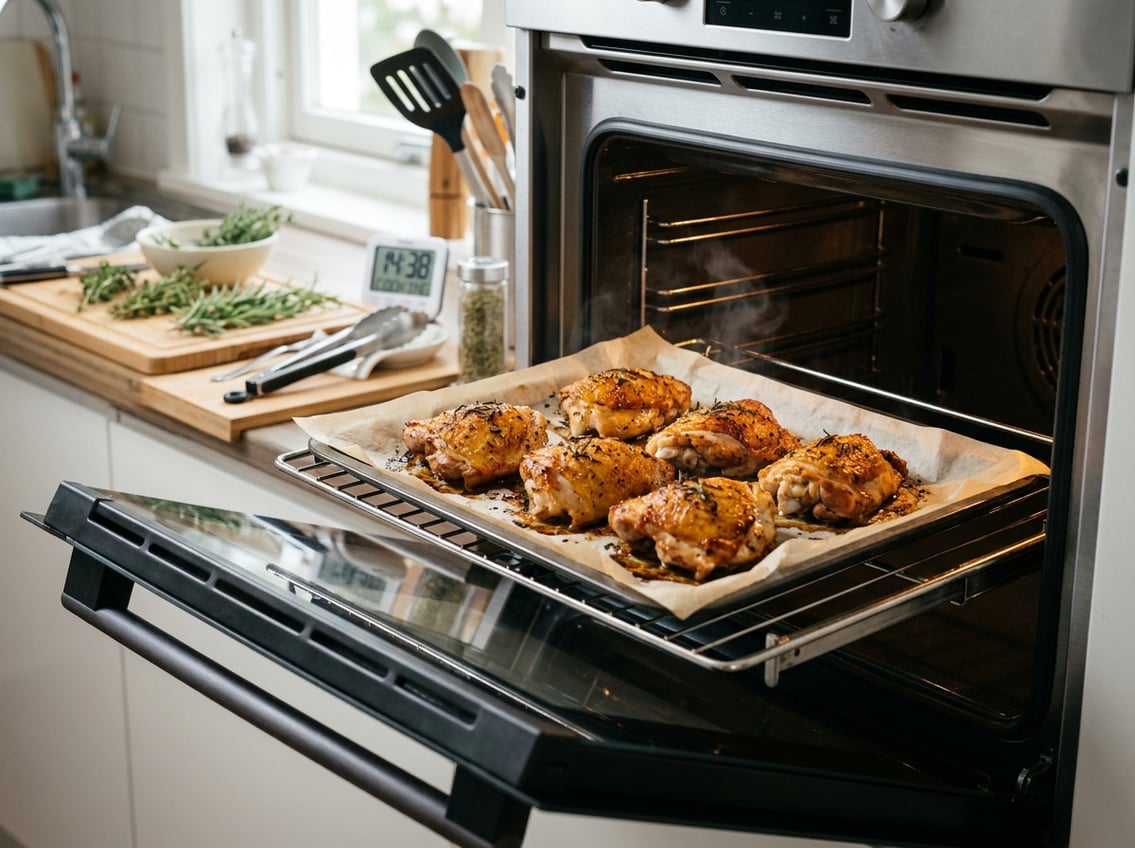
This guide covers bake times for different thigh types, how oven temperature affects texture, and a step-by-step approach for crisp skin and tender meat. You’ll also learn how to use a meat thermometer, tweak techniques for extra crispness, and find quick alternative methods and serving ideas.
Recommended Baking Times for Different Chicken Thigh Types
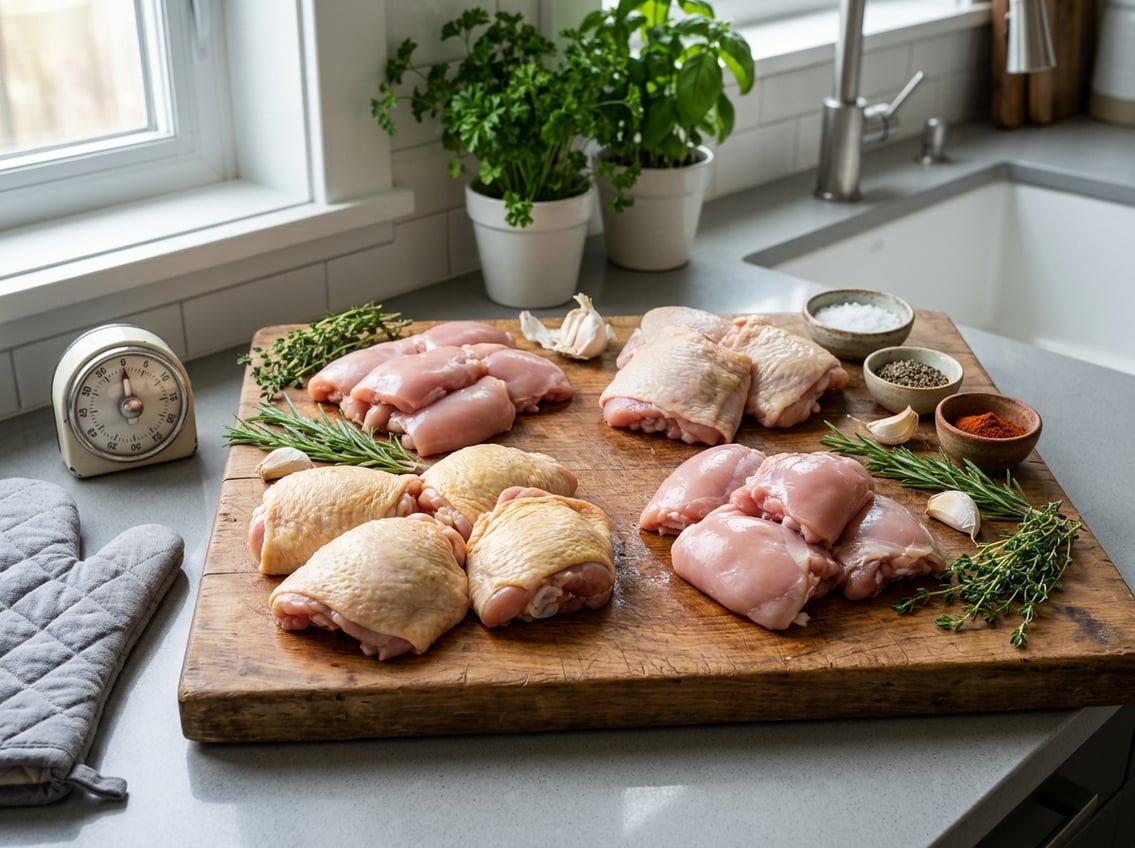
Baking times and temperatures depend on whether thighs have bone or skin. Follow internal temperature guidelines and adjust oven temp for crispness or speed.
Bone-In, Skin-On Chicken Thighs
Bone-in, skin-on thighs need more time because the bone conducts heat more slowly and the skin needs higher heat to crisp. Bake at 400°F (204°C) for 35–45 minutes for average 4–8 oz thighs, or at 375°F (190°C) for 40–50 minutes if you prefer gentler cooking.
Check with an instant-read thermometer and target 165°F (74°C) at the thickest part near the bone. Let thighs rest 5–10 minutes to finish cooking and keep juices locked in.
If you want extra-crispy skin, broil 2–3 minutes at the end and watch closely.
Boneless, Skinless Chicken Thighs
Boneless, skinless thighs cook faster because there’s no bone or skin barrier. Bake at 425°F (218°C) for 15–22 minutes depending on thickness.
Use an instant-read thermometer and remove at 165°F (74°C). Rest 3–5 minutes before slicing to redistribute juices.
Skin-On vs. Skinless Timing
Skin-on pieces require higher or longer heat to render fat and crisp the skin. Skinless pieces don’t need that step.
For skin-on bone-in thighs, 400°F for 35–45 minutes works well. For skinless bone-in, reduce to 375°F and watch for 30–40 minutes.
For boneless thighs, skin-on at 425°F for 18–25 minutes crisps without drying. Boneless skinless at 425°F for 15–22 minutes focuses on speed and tenderness.
Boneless vs. Bone-In Timing
Bone-in slows internal heat transfer, so plan for roughly 10–20 minutes more than boneless at the same oven temp. For example, boneless skinless at 425°F: 15–22 minutes. Bone-in skin-on at 400–425°F: 35–45 minutes.
If you want bone-in flavor but need faster cooking, increase oven temp by 25°F and monitor internal temp closely. Always rely on the 165°F (74°C) internal temperature rather than time alone.
Optimal Oven Temperatures and Their Effects
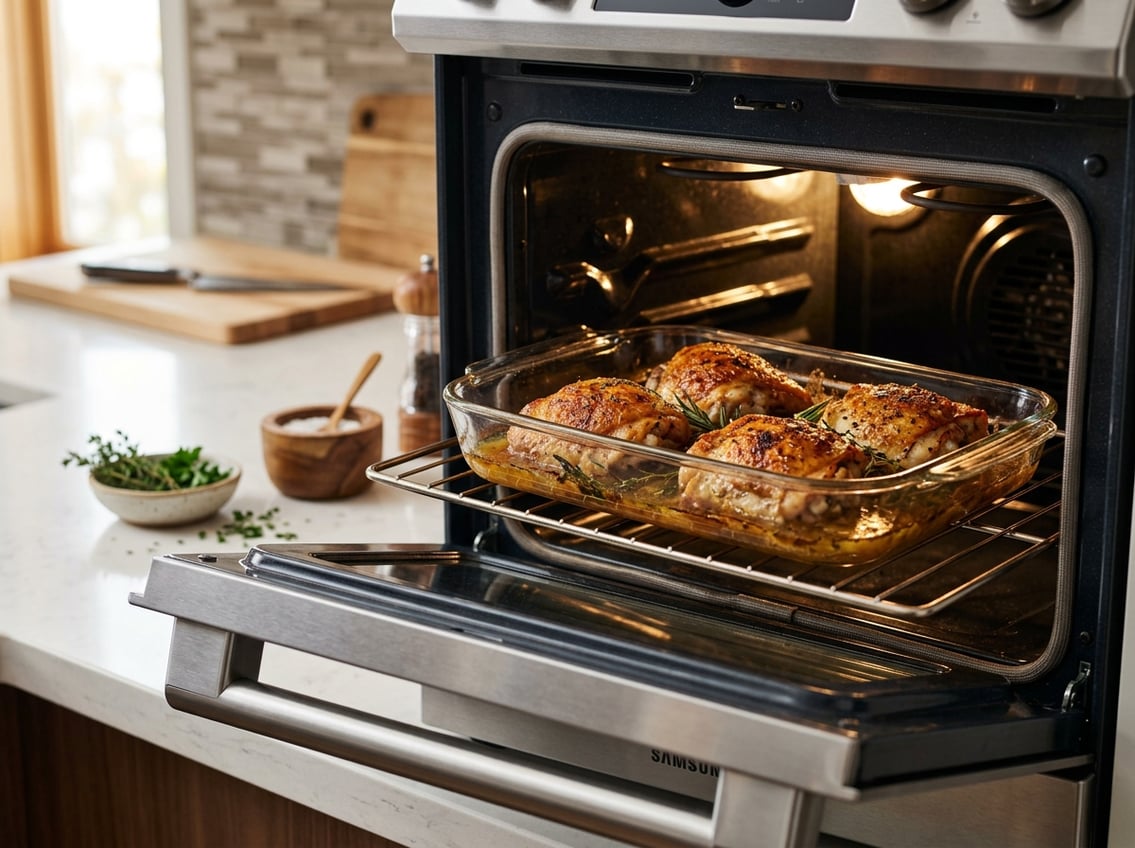
Oven temperature changes cooking time, skin crispness, and moisture retention. Choosing the right temperature helps you bake chicken thighs that reach 165°F without drying or burning.
Baking at 400°F for Ideal Results
Baking chicken thighs at 400°F gives a reliable balance of speed and browning. For boneless, skinless thighs, expect about 20–30 minutes until the internal temperature hits 165°F. Bone-in, skin-on pieces usually take closer to 30–40 minutes depending on size.
The higher heat helps render fat from the skin and create a golden exterior while the meat remains juicy. Arrange thighs in a single layer with space between pieces so hot air circulates and the surface browns.
If you want extra-crisp skin, finish under the broiler for 1–3 minutes and watch closely. Reduce oven time slightly if pieces are small or thin.
High vs. Low Temperatures
High temperatures (425–475°F) shorten bake time and promote crisp, browned skin fast. This works well for smaller or boneless thighs, which can finish in 20–30 minutes.
The trade-off: you must monitor closely to avoid over-browning or drying the interior. Lower temperatures (325–350°F) take longer, about 40–50 minutes for average bone-in thighs, but give more even heat penetration and slightly more forgiving moisture retention.
Choose temperature based on cut and timing. Use 400°F for quick roast with crisp skin, higher heat for faster browning, and lower heat for gentler, more uniform cooking.
Convection vs. Conventional Ovens
Convection ovens use a fan to circulate hot air and typically reduce baking time by 15–25%. For convection, lower the temperature by 25°F or shorten the cook time.
Conventional ovens rely on radiant heat and may produce uneven browning if hot spots exist. Rotate the pan halfway through cooking to promote even color and temperature.
Always rely on an instant-read thermometer rather than time alone, because oven model, thigh size, and whether they’re bone-in or boneless affect final timing.
Step-by-Step Guide to Baking Chicken Thighs
You’ll prepare the thighs, apply seasoning or a quick marinade, and arrange them so heat circulates for even cooking and crispy skin. Follow precise temps, timings, and placement for juicy, safe-to-eat baked chicken thighs.
Preparing Chicken Thighs for the Oven
Start with cold, trimmed thighs. Pat each piece dry with paper towels to remove surface moisture and help the skin crisp.
If pieces vary in size, pound larger ones gently to match the smaller pieces, or separate them so cook times stay consistent. Remove excess fat and any lingering feathers or cartilage.
Bring thighs to room temperature for about 15–20 minutes before baking. This short rest promotes even doneness.
Always use a meat thermometer and aim for 165°F (74°C) in the thickest part without touching bone.
Seasoning and Marinade Suggestions
For quick seasoning, rub each thigh with salt, pepper, and a tablespoon of oil to help spices adhere and promote browning. Use 1 tsp kosher salt per pound as a baseline.
Try a simple dry rub: 1 tsp smoked paprika, 1/2 tsp garlic powder, 1/2 tsp onion powder, and 1/4 tsp cayenne for mild heat.
For a marinade, combine 2 tbsp olive oil, 1 tbsp lemon juice, 2 minced garlic cloves, and 1 tsp Dijon mustard. Marinate 30 minutes to 4 hours in the fridge.
If you want ultra-crispy baked chicken thighs, salt them and refrigerate uncovered for at least 2 hours or overnight to dry the skin more. Pat dry again before oiling and seasoning.
Arranging for Even Cooking
Use a rimmed baking sheet or shallow roasting pan. Line with foil or parchment for easier cleanup and place a wire rack on top if you want maximum air circulation under the thighs.
Arrange thighs skin-side up, spaced at least 1 inch apart so hot air reaches all sides. Don’t overcrowd, as crowding traps steam and yields soggier skin.
Place thicker pieces toward the center of the pan where oven heat is most consistent. Set oven to 400–425°F for a balance of crisp skin and juicy meat.
Bake times vary: about 25–30 minutes for boneless thighs, 35–45 minutes for bone-in. Finish with a 2–4 minute broil if skin needs extra crisping and watch closely.
Using a Meat Thermometer to Check Doneness
Use an instant-read or probe thermometer for the most reliable read on doneness. Insert the thermometer into the thickest part of the thigh, avoiding bone, and check temperature toward the end of the estimated bake time.
Target Internal Temperatures
Aim for an internal temperature of 165°F (74°C) for fully safe chicken thighs. Dark meat like thighs is safe at 165°F, but many cooks pull thighs at 170–175°F (77–79°C) for a more tender, falling-apart texture.
If you use a probe thermometer, set an alarm at your target temp to avoid opening the oven repeatedly. For bone-in thighs, expect slightly longer cook times than boneless.
Calibrate or check your thermometer occasionally in ice water (32°F) and boiling water (212°F) to ensure accuracy.
Resting Chicken Thighs After Baking
After you reach target temperature, rest thighs 5–10 minutes on a cutting board or wire rack. Carryover cooking will raise the internal temp 3–7°F (2–4°C), so factor that in when choosing your pull temperature.
Resting also lets juices redistribute, which improves tenderness and prevents dry meat when you cut.
During rest, tent loosely with foil to retain heat if desired, but avoid sealing tightly. Use a thermometer to spot-check a thigh after 5 minutes to confirm doneness before serving.
Achieving Crispy and Tender Results
You need dry skin, high heat, and accurate temperature control for crispy skin without overcooking the meat. Monitor internal temperature and let the thighs rest to keep them tender.
Tips for Crispy Skin
Pat skin completely dry with paper towels. Rub a thin layer of oil over skin and season, as oil promotes even browning and helps spice adhere.
Use bone-in, skin-on chicken thighs for more flavor and fat to render. Arrange thighs skin-side up on a rimmed baking sheet or on a rack set in the sheet to allow hot air to circulate and fat to drip away.
Bake at 400–425°F (205–220°C) for skin that crisps while the interior cooks. If skin isn’t crisp at the end, broil 2–3 minutes while watching closely.
For extra crispness, sear skin in a hot skillet 2–3 minutes before transferring to the oven.
How to Avoid Dry or Tough Meat
Measure internal temperature with an instant-read thermometer in the thickest part, avoiding bone. Remove thighs when the thermometer reads 165°F (74°C) for safety, but aim for 175–185°F (79–85°C) if you prefer more tender, falling-apart dark meat.
Control cooking time by thigh type. Boneless, skin-on thighs usually finish in about 20–25 minutes at 400°F, while bone-in chicken thighs often need 35–45 minutes.
Let the thighs rest 5–10 minutes after baking to redistribute juices. Tent loosely with foil to maintain warmth while preventing juice loss when you cut into the meat.
Alternative Cooking Methods and Serving Ideas
You can cook thighs quickly with high, dry heat for crisp skin or use a closed appliance for fast, hands-off results. Pair them with starches and bright vegetables that balance the thighs’ richness.
Air Fryer Chicken Thighs
Air fryers create crisp skin and short cook times. Preheat the air fryer to 400°F (200°C).
Pat boneless, skin-on thighs dry, season with salt, pepper, and a bit of oil, and arrange in a single layer so air circulates. Cook 10–14 minutes, flipping halfway, until the internal temperature reaches 165°F (74°C).
For bone-in thighs, increase to 18–22 minutes and check at the thickest part. Use a meat thermometer to avoid undercooking.
If you want extra-crispy skin, finish with a 2–3 minute blast at 420°F. Don’t overcrowd the basket, and brush with a glaze (honey-soy, barbecue) in the last 2–3 minutes to prevent burning.
Best Sides to Serve with Baked Chicken Thighs
Choose sides that contrast texture and cut richness.
Mashed potatoes offer creamy comfort and soak up pan juices. Make them with butter and a splash of milk or chicken stock for depth.
Roasted vegetables like carrots, Brussels sprouts, or asparagus add caramelized flavor and crisp edges. Roast at 425°F alongside bone-in thighs and time vegetables for 20–30 minutes depending on size.
For a lighter option, serve a green salad with lemon vinaigrette. You can also try a simple grain like quinoa tossed with herbs and lemon zest.
Quick serving checklist:
- Mashed potatoes: buttery, smooth, or mashed with skins for texture.
- Roasted veg: toss with oil, salt, and pepper; roast until browned.
- Grain or salad: finish with acid such as lemon or vinegar to cut fat.


