
How Long Can Chicken Thighs Marinate in the Fridge: Safe Timing and Best Practices
You can marinate chicken thighs in the fridge for as little as 30 minutes or up to 24 hours, depending on your marinade. For best flavor without texture problems, aim for 2 to 12 hours for most recipes.
If your marinade contains strong acids like citrus or vinegar, or potent enzymes such as pineapple or papaya, limit marinating to 2 to 4 hours to avoid a mushy texture. Milder, oil- or yogurt-based marinades can go longer, up to about 24 hours.
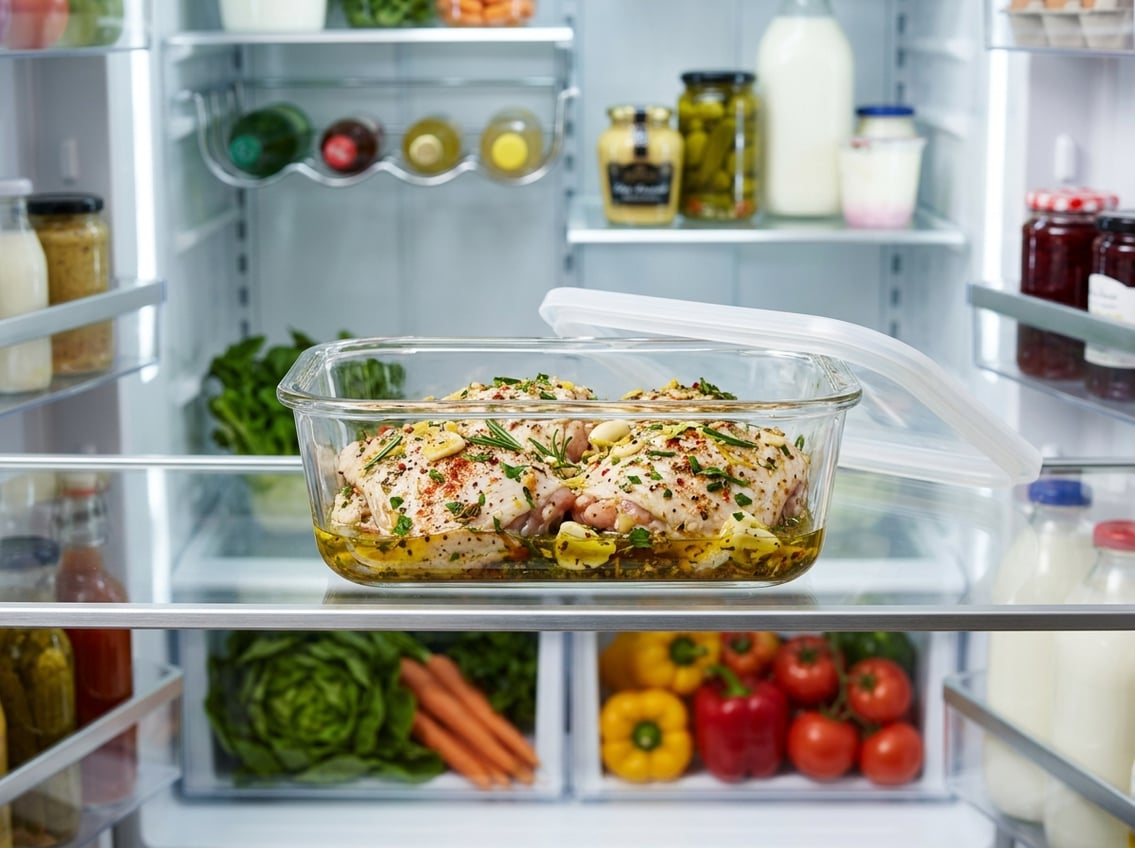
Decide whether you want quick surface flavor and a bit of tenderizing, or deep flavor and maximum juiciness. Choose your timing and ingredients accordingly.
Optimal Marinating Time for Chicken Thighs
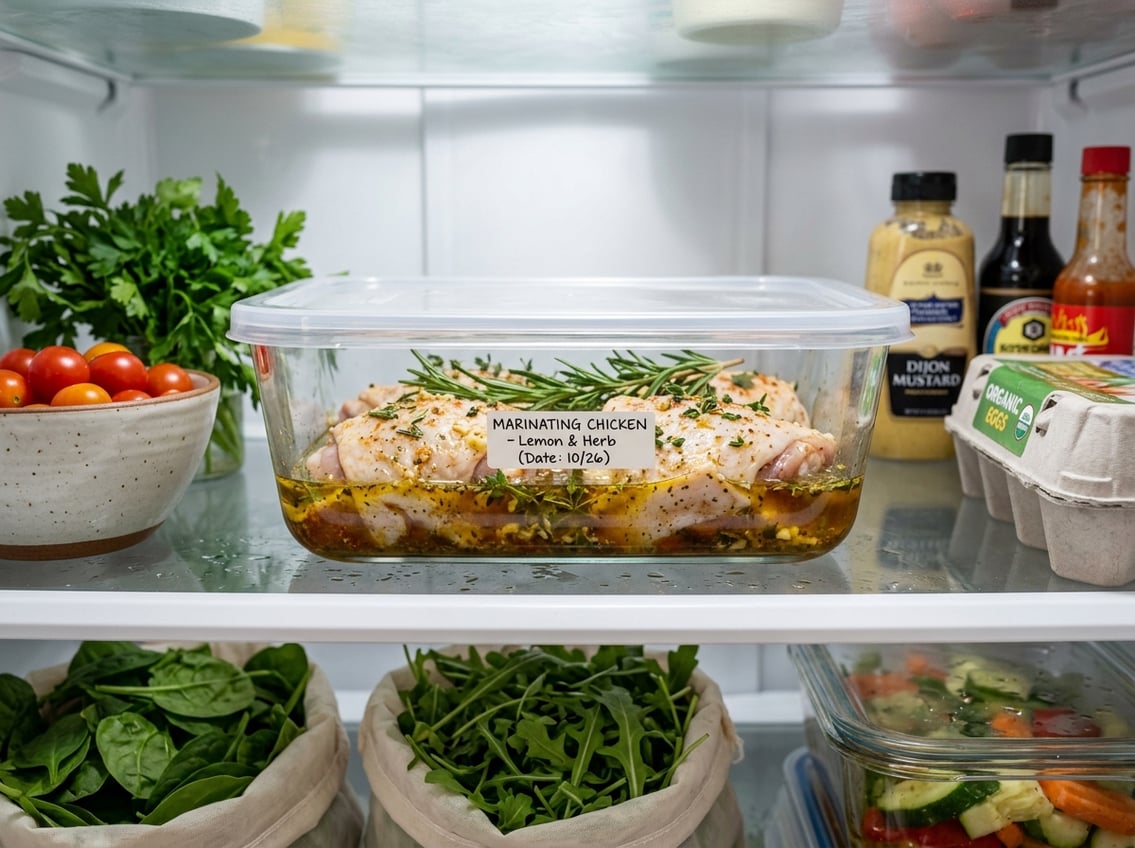
Follow these ranges and cues to avoid bland or mushy meat.
Minimum, Recommended, and Maximum Duration
For small boneless thighs or thin-cut pieces, marinate at least 15 to 30 minutes in the fridge to impart surface flavor. This short time lets garlic, herbs, and salty components season the exterior without altering texture.
For most boneless or bone-in thighs, marinate 2 to 6 hours refrigerated. This window balances penetration and tenderness, letting flavors from oil, soy, herbs, and mild acids develop without damaging fibers.
Use a sealed bag or covered container and place it on the bottom fridge shelf. Avoid marinating longer than 24 hours when acids or strong enzymes are present.
For typical acidic marinades like lemon, vinegar, or wine, limit to 8 to 12 hours for bone-in thighs and 2 to 8 hours for boneless. If you exceed 24 hours, the texture can become mushy as proteins break down.
If you need to prep ahead, freeze thighs in the marinade. They will marinate while thawing and won’t over-tenderize.
Timing Based on Marinade Acidity
Low-acid marinades such as oil, soy, and herbs allow longer times. You can marinate up to 24 hours with mostly oil-based or salty marinades because they flavor without aggressively denaturing proteins.
Medium-acid marinades with moderate lemon, vinegar, or yogurt need shorter windows. For these, 2 to 8 hours is ideal.
The acid tenderizes and adds brightness, but prolonged exposure starts to “cook” the surface and soften texture. High-acid or enzyme-heavy marinades like straight citrus, pineapple, papaya, or heavy vinegar require caution.
Limit these to 30 minutes to 2 hours depending on concentration. Enzymes like bromelain in fresh pineapple break down connective tissue rapidly and can make chicken mushy if left too long.
Quick checklist:
- Low acid: up to 24 hours
- Medium acid: 2 to 8 hours
- High acid/enzymes: 15 minutes to 2 hours
Signs of Over-Marinated Chicken
Texture changes first. Over-marinated chicken becomes overly soft, past tender, and feels mushy or stringy when you press or cut it.
You’ll notice fibers separating rather than holding together. Meat may look paler or slightly translucent when acids have “cooked” proteins.
Marinade may also draw out excess liquid, leaving a soggy surface instead of a glossy coating. Over-marinated chicken tastes overly sour, metallic, or unbalanced because acids and enzymes overpower salt and aromatics.
If you detect those off flavors, reduce future marinating time or dilute the acid. Rinse briefly only if texture or taste is off, pat dry, and adjust cooking time.
Understanding Marinade Ingredients
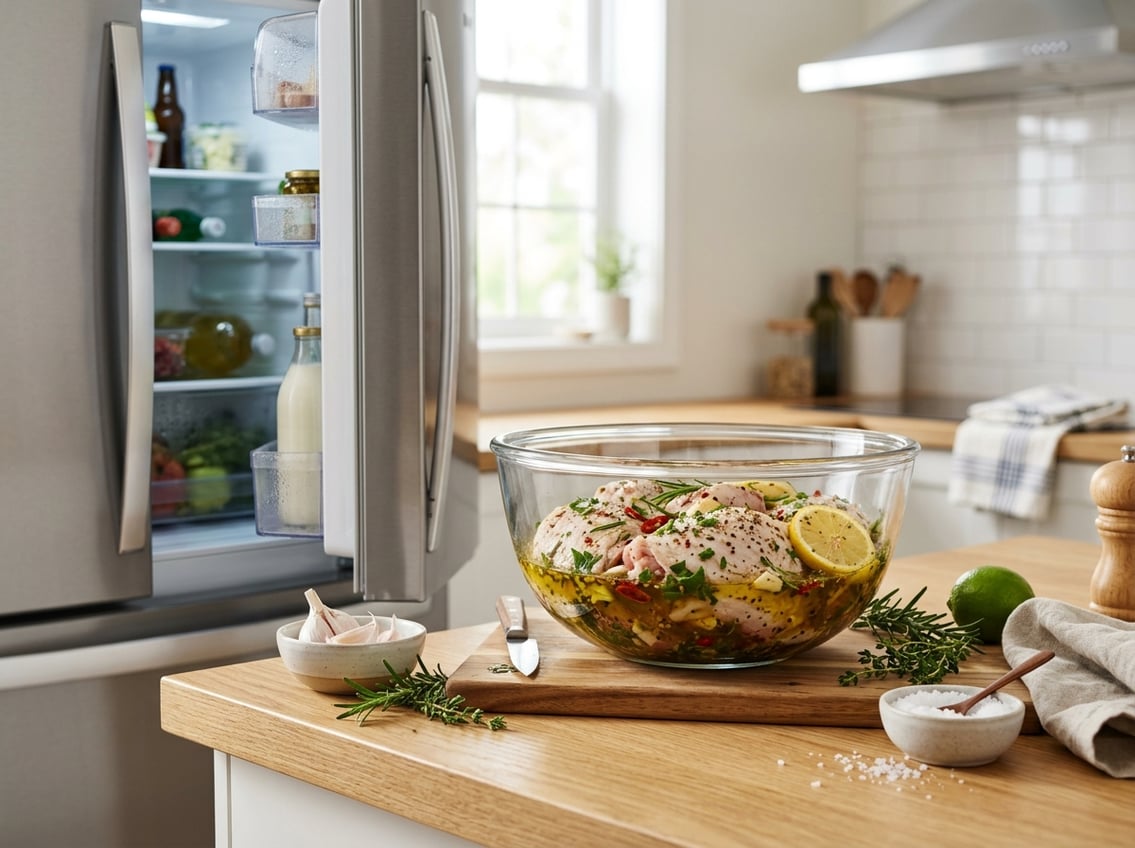
Marinades combine acids, oils, salts, herbs, and sweeteners to change flavor and texture. Knowing what each component does helps you pick a mix that seasons without turning thighs mushy.
Role of Acidic and Oil-Based Marinades
Acidic ingredients like lemon juice, vinegar, yogurt, or wine break down muscle proteins and penetrate the surface of chicken thighs. In small amounts and shorter times (1 to 4 hours for thighs), they tenderize and add brightness.
Too much acid or too long a soak (over 8 to 12 hours for strong acids) weakens fibers and creates a soft, mealy texture. Oil-based elements such as olive oil, vegetable oil, or sesame oil carry fat-soluble flavors and help distribute aromatics evenly.
Oil coats the meat and reduces moisture loss during cooking, which keeps thighs juicier under high heat. Combine oil with acid and salt for balanced penetration and moisture retention.
Choosing the Right Marinade for Flavor and Texture
If you want mostly flavor, use an oil-forward marinade with garlic, herbs, soy sauce, and a splash of citrus. Marinate for 2 to 6 hours.
For tenderizing, use milder acids like buttermilk or yogurt and limit time to 4 to 8 hours to avoid breakdown. Use salt or salty ingredients such as soy sauce or miso to season deeply.
Salt helps proteins retain moisture but will draw out liquid if left too long. Add sugar or honey sparingly, as these boost browning but can burn on high heat.
Reserve a small portion of marinade before adding raw chicken if you plan to baste or make a sauce.
Essential Food Safety Guidelines
Keep chicken chilled, limit marinating time, and never reuse raw marinade for basting or sauce unless you cook it thoroughly. Follow specific refrigeration and handling steps to prevent bacterial growth.
Why Never Marinate Chicken at Room Temperature
Bacteria like Salmonella and Campylobacter multiply quickly at room temperature. When chicken sits out, its surface can enter the danger zone (40 to 140°F / 4 to 60°C) within two hours, or one hour if ambient temperature exceeds 90°F (32°C).
Always thaw and marinate chicken in the refrigerator set at 40°F (4°C) or below. Use a sealed container or heavy-duty zip-top bag to prevent drips and cross-contamination.
If you need faster marination, use smaller pieces or vacuum-sealed bags and marinate in the fridge.
Safe Refrigeration Practices
Refrigerate raw chicken and marinade at 40°F (4°C) or colder. Limit marinating time to 24 to 48 hours depending on the acidity and cut.
For chicken thighs, 12 to 24 hours is often ideal for flavor without texture breakdown from acidic marinades. Store marinating chicken on the bottom shelf to avoid drips onto other foods.
Use airtight containers or bags, remove excess air, and place on a tray. Label with start time and planned cook time to avoid accidental over-marination or forgetting the item.
Why You Should Never Reuse Marinade
Marinade that contacted raw chicken contains bacteria and must not be used as-is. If you want to use the same marinade as a sauce, reserve a portion before adding raw chicken.
Otherwise, bring used marinade to a rolling boil for at least 1 to 2 minutes to ensure safety. Discard any leftover marinade that has only been refrigerated without boiling.
Preparation Tips Before Cooking
Keep excess marinade off the skin and remove surface moisture for better browning and even cooking. Let the chicken sit briefly out of the fridge if you plan to shorten chill time, but follow safe handling steps to avoid bacterial growth.
Pat Dry Before Cooking
Pat each thigh thoroughly with paper towels right before it goes on the heat. Removing surface moisture lets the skin crisp quickly and prevents steam from forming.
If you used a high-sugar or sticky marinade, blot gently first, then press more firmly to remove any residue that would burn under high heat. For skinless thighs, drying helps any coating, rub, or sear develop a better crust.
After drying, season lightly again if needed. Place thighs on a wire rack while you preheat the pan, grill, or oven to keep them elevated and dry.
Bringing Chicken to Room Temperature Safely
If you want more even cooking, take the thighs from fridge to counter for 15 to 20 minutes before cooking. Keep the time short; do not leave raw chicken out for more than two hours, and aim for under an hour in warm kitchens.
Leave thighs in their sealed container or cover them with plastic while they warm slightly to prevent cross-contamination. Pat dry again if condensation forms before you sear or roast.
Use a thermometer to confirm doneness (165°F/74°C internal). For thicker thighs, you can start on high heat to brown, then finish at 350 to 400°F in the oven for even cooking without overbrowning the exterior.
How to Cook Marinated Chicken Thighs
Keep the pan, oven, or grill hot and avoid overcrowding. Cook to an internal temperature of 165°F (74°C) and rest the thighs for 5 to 10 minutes before serving to let juices redistribute.
Oven-Baked Chicken Thighs
Preheat the oven to 425°F (220°C). Arrange bone-in, skin-on thighs on a rimmed baking sheet or in a roasting pan, skin side up, leaving at least 1 inch between pieces for even browning.
Pat excess marinade off the skin with a paper towel to help it crisp. Roast for 25 to 35 minutes depending on size, then check temperature with an instant-read thermometer inserted into the thickest part without touching bone.
If you want extra-crispy skin, switch to broil for the last 2 to 3 minutes while watching closely. Rest 5 to 10 minutes before serving.
Grilled Chicken Thighs
Preheat a gas or charcoal grill to medium-high (about 400 to 450°F/200 to 230°C). Oil the grates to prevent sticking and place thighs skin-side down over direct heat for 4 to 6 minutes to develop char.
Move to indirect heat to finish. Use bone-in thighs for juicier results; cook covered if using indirect heat to maintain steady temperature.
Grill 18 to 25 minutes total, flipping once or twice, until the internal temperature reaches 165°F (74°C). If you reserved marinade that wasn’t in contact with raw meat, brush it on during the last 3 to 5 minutes of grilling and allow it to set.
Let thighs rest 5 minutes before serving.
Pan-Seared Chicken Thighs
Heat a heavy skillet (cast iron preferred) over medium-high heat until hot. Add a tablespoon of oil and place thighs skin-side down; press briefly for even contact.
Cook skin-side down without moving for 6 to 8 minutes until deep golden and crisp. Flip and reduce heat to medium.
For boneless thighs, cook another 4 to 6 minutes; for bone-in, cook 12 to 15 minutes, covered, until internal temp is 165°F (74°C). You can finish thicker pieces in a 375°F (190°C) oven for 6 to 10 minutes.
Remove from pan and rest 5 minutes. Deglaze the pan with a splash of stock, wine, or reserved (boiled) marinade to make a quick pan sauce.
Troubleshooting Common Marinating Issues
Address common problems like meat becoming too soft, bitter, or unevenly seasoned, and learn fixes you can apply quickly to rescue the chicken.
Avoiding Over-Marination
If your chicken becomes mushy, acidic breakdown is likely the cause. Acidic marinades such as citrus, vinegar, or wine start breaking proteins within a few hours.
Limit those to 2 to 6 hours for skinless thighs and keep them under 12 hours for bone-in. For mixed marinades with yogurt or buttermilk, you can safely extend time to about 8 to 12 hours because the dairy buffers acid action.
If you already over-marinated, rinse the thighs under cold water and pat dry to remove excess surface acid. Then apply a short, neutral brine (5 to 10 minutes in 1 to 2% salt water) to restore moisture and balance salt uptake.
Cook with gentler, lower-heat methods like braising or baking at moderate temperature to avoid further softening the texture.
Tips to prevent repeat issues:
- Use a timer and label containers with start time.
- Omit added salt for marination longer than 2 hours.
- Marinate in the fridge in a sealed bag for even contact and minimal exposure to acid puddles.
Dealing with Texture or Flavor Problems
If the chicken tastes overly sour or bitter, you likely used too much acid or marinated it too long. Dilute future marinades with oil, yogurt, or a small amount of sugar or honey to soften harsh acids.
To fix already sour meat, rinse it and briefly soak it in a mild, slightly sweetened liquid (water with 1–2 teaspoons sugar per cup) for 10–15 minutes. Pat the meat dry and re-season lightly.
Uneven seasoning often happens when the marinade does not contact the meat well. Use a resealable bag and massage the meat thoroughly, or score thick pieces to help the marinade penetrate.
If flavors seem weak after cooking, add a quick glaze or sauce on the stove for 3–5 minutes to boost flavor and brightness. For texture problems like dryness, avoid overcooking and aim for 165°F (74°C) internal temperature.
Let the meat rest 5–10 minutes to help redistribute juices.
Quick checklist:
- Rinse and pat dry if the meat is over-acidified.
- Use a short brine to restore moisture.
- Score or thin thick pieces for even flavor.
- Finish with glaze or sauce to correct weak taste.


