
What Does Chicken Thighs Need to Be Cooked To: Safe Temps, Tips, and Best Methods
You need to cook chicken thighs—whether bone-in or boneless, skin-on or skinless—until the thickest part reaches 165°F (74°C) to be safe and juicy.
Aim for an internal temperature of 165°F measured with an instant-read thermometer. This single check prevents undercooking while letting you keep dark meat tender.
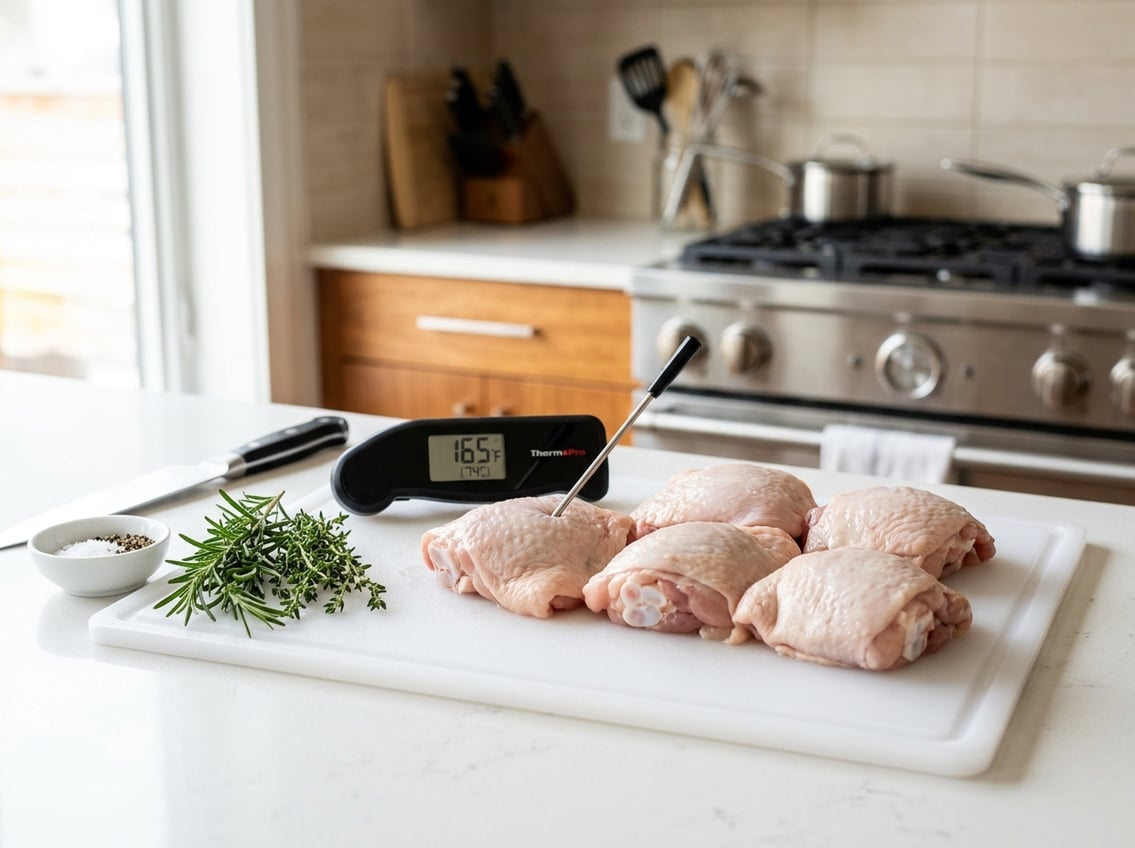
Cooking just to 165°F gives you moist dark meat. Higher temps, if desired for crispier skin or falling-off-the-bone results, require careful timing to avoid drying.
Temperature affects texture and flavor. You can use baking, roasting, grilling, or pan-searing to help you reach the ideal result.
Essential Internal Temperatures for Chicken Thighs
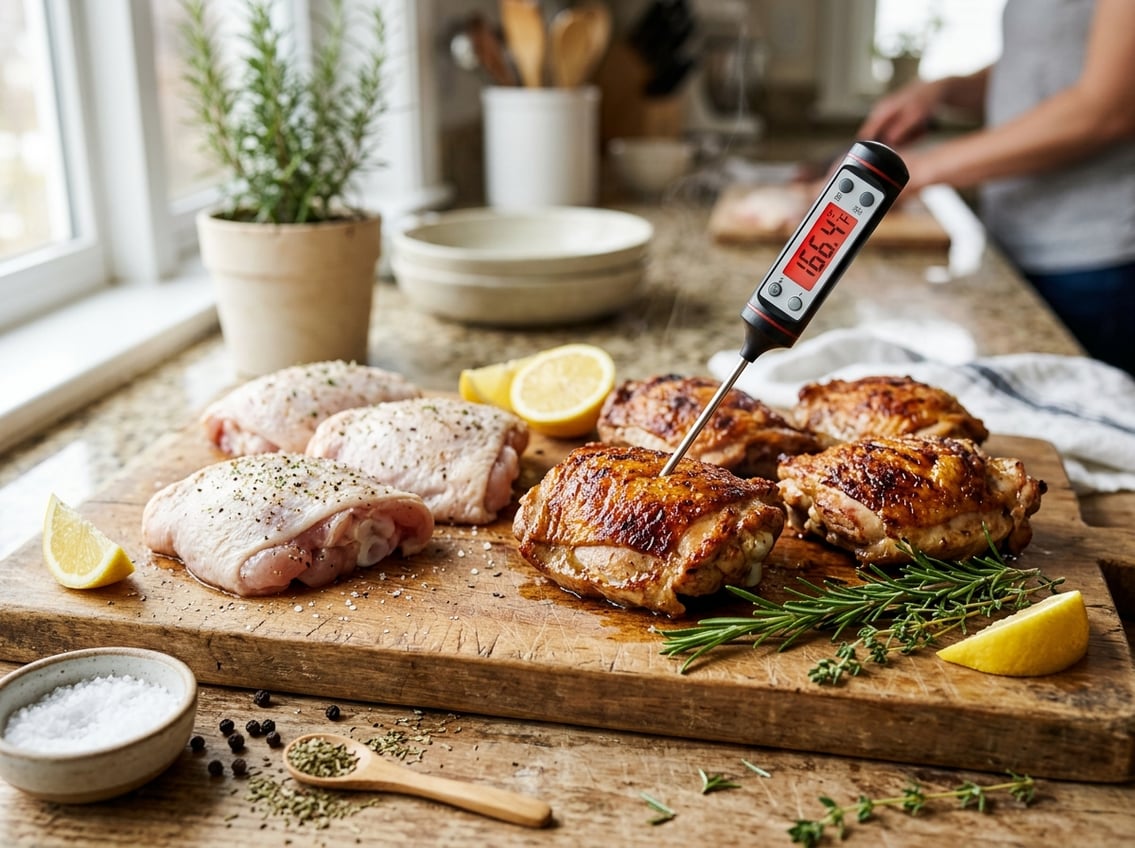
Cook chicken thighs to a safe minimum, but remember that dark meat benefits from higher final temperatures for extra tenderness.
Use an instant-read thermometer in the thickest part of the thigh, avoiding bone, to take accurate readings.
USDA Recommendations for Poultry
The USDA sets the safe minimum internal temperature for all poultry at 165°F (74°C). Insert the thermometer into the thickest part of the thigh without touching bone and confirm the reading in at least two spots for larger pieces.
Hold the thermometer until it stabilizes to avoid false low readings. Reaching 165°F kills common pathogens like Salmonella when the temperature is reached throughout the meat.
If you reheat cooked thighs, heat them back to 165°F before serving to ensure safety.
Why Higher Temps Yield Tender Results
Chicken thighs contain more connective tissue (collagen) than breasts. When you cook thighs to 175–195°F (79–91°C), collagen converts to gelatin, making the meat more tender and succulent.
Aim for about 175°F for reliably tender thighs that still cling to the bone. Push toward 190–195°F if you want melting, pull-apart texture.
Keep the meat at the target temperature long enough for collagen breakdown. Slow roasting, braising, or indirect grilling helps you do that without drying the meat.
How Temperature Affects Flavor and Texture
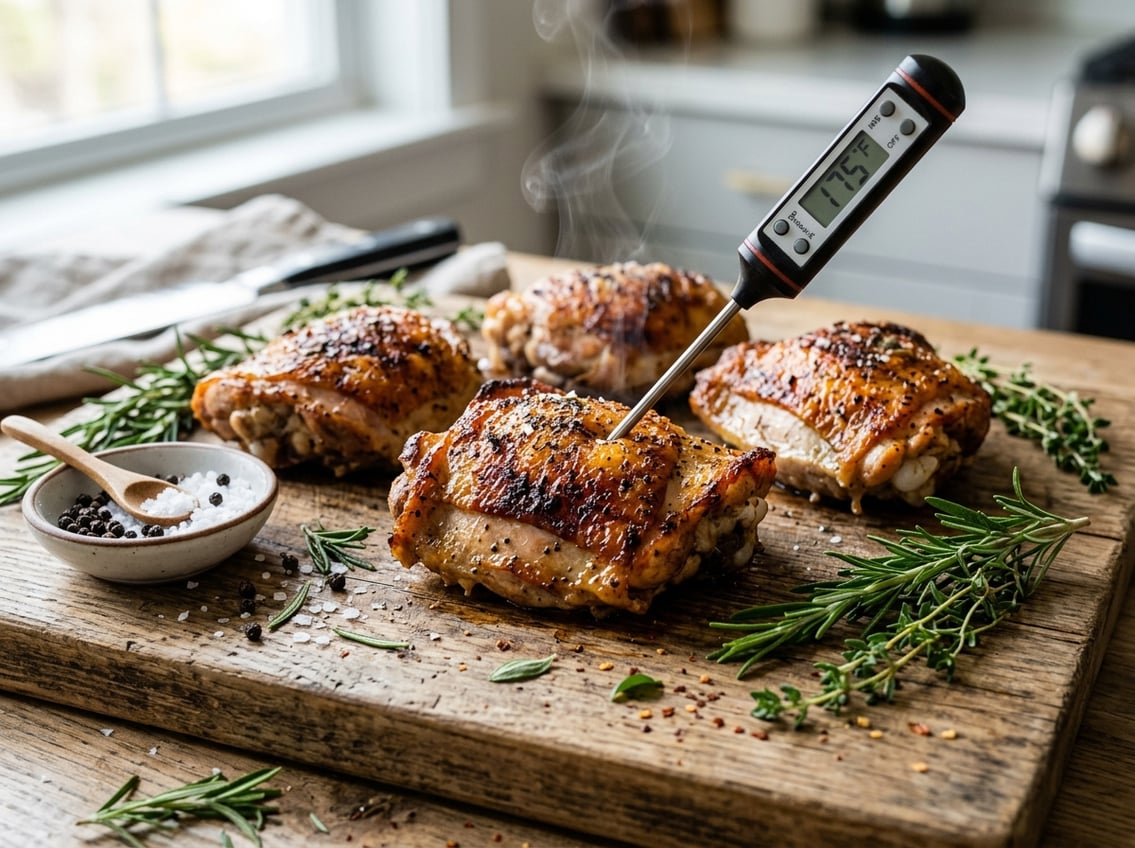
Temperature controls whether your thighs stay juicy, become tender, or turn stringy.
Small differences in degrees and cooking time determine how much fat renders, how collagen converts to gelatin, and how intense the chicken’s flavor becomes.
Moisture Retention and Succulence
When you heat chicken thighs, fat melts and muscle fibers contract. If you stop at about 165°F, the meat is safe and reasonably moist, but much of the intramuscular fat and connective tissue remain intact.
Cooking thighs to the 175–195°F range increases rendered fat and gelatin, which you perceive as juiciness and mouthfeel.
Low-and-slow methods keep the interior moist by allowing collagen to melt before muscle fibers squeeze out water. High, fast heat risks tight muscle fibers and surface dryness, so use finishing sears for crisp skin rather than high initial temps.
Key points:
- Aim probe into the thickest part, avoid bone for accurate readings.
- Rest thighs 5–10 minutes for carryover juiciness.
Collagen Breakdown Explained
Dark meat in thighs contains more connective tissue than breast meat. Collagen starts to soften around 160–170°F but needs time and higher endpoint temps (175–195°F) to fully convert into gelatin for a tender texture.
You get different results depending on the heating profile. Rapid rise to temperature melts less collagen and can leave you with chewy fibers.
Slow, sustained heat lets collagen hydrolyze into gelatin, lubricating the meat and boosting savory flavor.
Practical techniques include braising, which keeps the environment moist and transfers heat gently. Sous-vide at controlled temperatures for several hours gives even gelatinization without overbrowning.
Low oven roasting or indirect grilling lets you push thighs into the higher temp window without drying them out.
Use a thermometer and target the temperature that matches the texture you want: 165°F for safe, intact slices; 185–195°F for pull-apart, gelatin-rich dark meat.
Accurately Measuring Doneness
You need a reliable internal temperature and a consistent technique to avoid undercooking or drying out chicken thighs.
The right thermometer and correct probe placement determine accurate readings.
Choosing Between Instant-Read and Meat Thermometers
Use an instant-read thermometer for quick checks at the end of cooking. Instant-read units give fast, accurate results in 2–10 seconds and are ideal for checking several thighs before resting.
Choose a digital model with a thin probe and a fast response time.
Use a leave-in meat thermometer when you need continuous monitoring, such as roasting bone-in thighs in the oven. These stay inserted and track carryover cooking during resting.
Pick one with a probe long enough to reach the center of larger pieces and a clear remote or oven-safe display.
For both types, prioritize accuracy within ±1–2°F and a waterproof stainless-steel probe. Calibrate periodically if your model allows, and keep batteries fresh to avoid slow or false readings.
Proper Placement and Technique
Insert the probe into the thickest part of the thigh without touching bone, cartilage, or gristle. Bone conducts heat and will produce a falsely high reading.
Position the tip in the center of the meat mass, about halfway between the skin and the bone for bone-in thighs.
For instant-read checks, hold the probe steady until the temperature stabilizes; most digital instant-reads settle in under 10 seconds.
For leave-in thermometers, confirm the tip sits in the same central spot before you close the oven or grill.
Check a few pieces when cooking multiple thighs since size and placement on the pan can cause uneven doneness.
Aim for at least 165°F for safety, or 175–185°F if you prefer thigh connective tissue broken down for extra tenderness.
Best Methods for Cooking Chicken Thighs
You want tender dark meat with a safe internal temperature and a desirable texture.
The methods below focus on timing, temps, and simple techniques that produce juicy, well-browned chicken thighs every time.
Baking Chicken Thighs for Juicy Results
Baking gives you consistent heat and hands-off control, ideal for bone-in, skin-on thighs.
Preheat the oven to 400°F (205°C) for crispy skin and bake on a rimmed sheet or in a roasting pan.
Arrange thighs skin-side up with space between pieces so hot air circulates. Season simply with salt and pepper or a rub.
Roast until the thickest part reaches 165–175°F (74–79°C). For tender dark meat, target 175°F; that level breaks down connective tissue without drying the thigh.
Let the thighs rest 5–10 minutes uncovered to let juices redistribute and skin stay crisp.
If you prefer lower-and-slower, set oven to 350°F (175°C) and cook longer. Finish under the broiler for 1–2 minutes if the skin needs extra crisping.
Use a probe thermometer for repeatable results.
Grilled Chicken Thighs and Smoky Flavor
Grilling adds char and smoke that complements dark meat’s richer flavor.
Preheat a two-zone grill: one side high heat (about 450–500°F) and one side medium.
Sear skin-side first over high heat 3–5 minutes to render fat and get color. Move thighs to the cooler side to finish cooking through without burning the skin.
Aim for an internal temp of 165–175°F (74–79°C) depending on your texture preference. 175°F yields more tender, fall-apart dark meat.
Close the lid while finishing to maintain even temps.
For boneless thighs, reduce sear time and watch closely; they cook faster.
Brush with sauce only in the last few minutes to avoid sugar burn.
Let rest briefly before serving for juicier results.
Slow Cooking and Braising Approaches
Slow cooking and braising excel when you want ultra-tender dark meat and infused flavor.
Use bone-in thighs for best texture. Sear skin-side first in a hot pan to brown and render fat.
Add liquid—stock, wine, or a flavorful sauce—to come halfway up the thighs. Simmer gently on low heat or set a slow cooker to low.
Cook until meat easily pulls from the bone and internal temp reaches at least 165°F. Braise to 185°F or higher to fully break down connective tissue for shreddable thighs.
Finish by reducing the braising liquid into a glaze or by crisping skin under a broiler for a minute if desired.
This method yields richly flavored, tender chicken thighs ideal for stews, tacos, or rice bowls.
Temperature Guidelines for Popular Cooking Styles
Aim for an internal temperature that ensures safety and the texture you want. 165°F (74°C) is the USDA minimum, but many cooks prefer 175–195°F (79–91°C) for juicier, more tender dark meat.
Use an instant-read thermometer in the thickest part of the thigh, avoiding bone contact.
Oven Roasting and Baking
Preheat your oven between 375°F and 425°F (190–220°C) depending on skin crispness.
For bone-in thighs, 400–425°F gives a crisp exterior in about 30–40 minutes. Check for 165°F as the minimum and 175°F or higher if you want more collagen breakdown.
For boneless thighs, 375–400°F shortens the cook to 20–30 minutes.
Place thighs skin-side up on a rack or sheet pan to promote even heat circulation.
If you want the meat very tender, roast at 325–350°F longer (40–60 minutes) until 190–195°F. This develops gelatin without drying.
Rest for 5–10 minutes before cutting to allow juices to redistribute.
Grilling Techniques
Set up a two-zone fire: direct high heat (450–550°F) for searing, and indirect moderate heat (300–350°F) for finishing.
Sear skin-side down 2–4 minutes to develop char, then move to indirect heat to carry thighs to at least 165°F. Aim for 175–190°F for more tender results.
Use a probe or instant-read thermometer through the thickest part, away from bone.
Flip only as needed to avoid flare-ups and uneven char.
For bone-in grilled chicken thighs, total cook time commonly runs 20–35 minutes depending on size and grill temperature.
Pan Frying and Sautéing
Heat a heavy skillet over medium-high heat and use oil with a high smoke point.
For skin-on thighs, start skin-side down to render fat and crisp the skin. Reduce heat to medium and cook 12–18 minutes per side depending on thickness.
Boneless thighs typically take 6–10 minutes per side.
Control temperature to avoid burning the exterior before the interior reaches 165°F.
If the pan gets too hot, lower it and finish in a 350°F oven until the thickest part hits your target.
Drain excess fat and rest thighs briefly to keep them juicy.
Air Frying and Other Modern Tools
Preheat the air fryer to 375–400°F (190–205°C).
Arrange thighs in a single layer with space for airflow. Boneless thighs often finish in 12–18 minutes; bone-in usually needs 18–25 minutes.
Flip halfway for even browning.
With sous-vide, set the water bath to 165–175°F for safe, tender results. Finish with a hot pan or broiler to crisp skin.
For combi ovens or countertop convection, reduce conventional oven times by about 10–15% and follow the same internal temperature targets.
Always verify doneness with an instant-read thermometer.
Expert Tips for Ensuring Safe and Delicious Chicken Thighs
Use a reliable thermometer, cook to the right temperature, and let the meat rest so juices redistribute and the final temperature stabilizes.
Resting and Serving Best Practices
Use an instant-read meat thermometer to confirm chicken thighs reach at least 165°F (74°C) in the thickest part near the bone for bone-in pieces.
For bone-in thighs, carryover heat can raise the internal temperature a few degrees during rest.
After you remove thighs from heat, tent them loosely with foil and rest for 5–10 minutes.
This keeps the exterior warm while juices redistribute, which makes the meat more tender and prevents the juices from running out when you cut.
Slice against the grain for bite-sized tenderness and serve on a warmed plate to maintain temperature.
If you brined or marinated the thighs, pat them dry before searing to promote crisp skin and avoid steaming.
Avoiding Common Pitfalls
Don’t rely on color alone. Dark meat can remain slightly pink near the bone even when it is safe.
Always check the temperature with a calibrated instant-read thermometer. Insert it into the thickest part without touching bone.
Avoid overcrowding the pan or grill. Crowding causes steam and prevents browning and crisping of skin.
Cook in batches if necessary. Keep finished thighs on a low oven rack at about 200°F (95°C) to stay warm and crisp.
If you fry, monitor the oil temperature with a thermometer. Keep it near 350°F (175°C).
For baking or roasting, start at 425°F (220°C) to crisp the skin. Reduce the heat if needed to finish cooking without overbrowning.


