
How to Grill Chicken Thighs: Expert Methods for Juicy, Flavorful Results
You can achieve juicy, flavorful grilled chicken thighs by using a two-zone grill method. Sear the thighs over high heat, then finish cooking over medium or indirect heat, aiming for an internal temperature of 165°F and allowing the thighs to rest for best results.
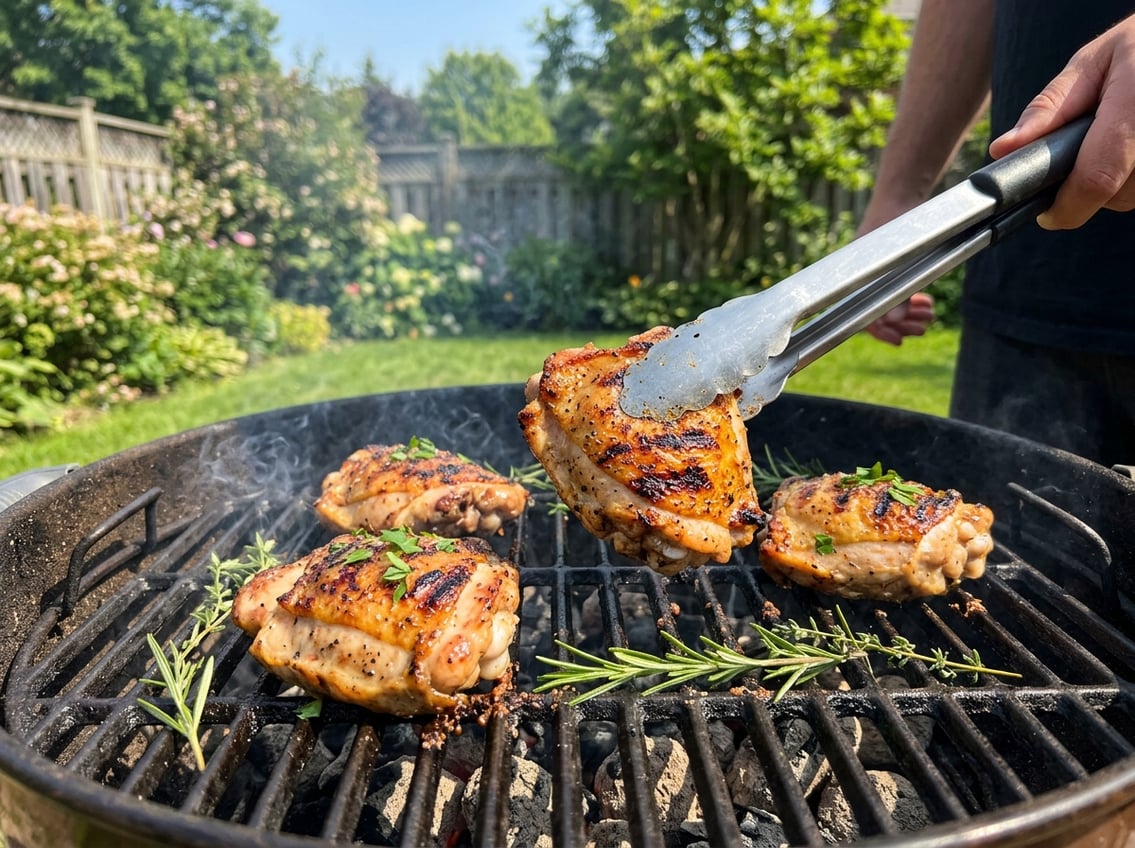
Choose bone-in thighs for deeper flavor and forgiving cook times, or boneless for speed and convenience. Prep with a simple marinade or dry rub, set up your grill for direct and indirect heat, and use short searing and gentler finishing steps to lock in juice and get the char you want.
You have options for grill setup, timing, temperature checks, and flavor ideas that fit your schedule and taste.
Choosing the Right Chicken Thighs
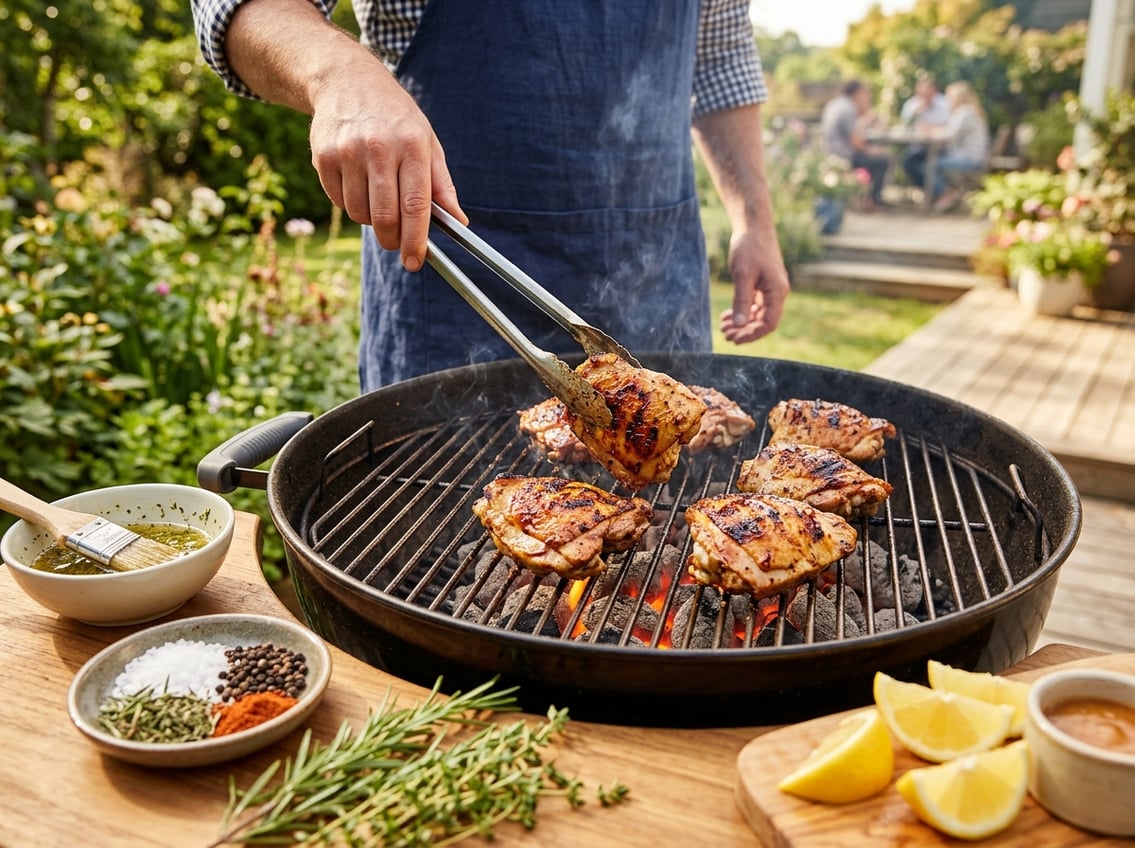
Pick thighs that match how you want to cook and eat. Decide if you want the richer flavor and protection of bone-in or the speed and convenience of boneless.
Choose skin-on for a crisp exterior or skinless for quicker, leaner results.
Bone-In vs Boneless and Skin-On vs Skinless
Bone-in chicken thighs offer more flavor and stay juicier during longer grilling. The bone slows heat transfer, so bone-in thighs handle indirect, lower-temperature grilling without drying out; expect 25–40 minutes depending on size.
Boneless chicken thighs cook quickly and evenly over direct heat. They reach 165°F in about 8–12 minutes and are easy to slice for sandwiches or salads.
Skin-on thighs allow fat to render and crisp, creating a satisfying contrast between crunchy skin and tender meat. If you prefer less fat or a leaner dish, choose skinless or boneless skinless chicken thighs; they grill faster and absorb marinades more directly.
Use skin-on for char and texture, and skinless when you need speed or lower calories.
Why Thighs Are Better Than Breasts for Grilling
Thighs contain more intramuscular fat and connective tissue than breasts, which keeps them moist under high heat. That fat carries flavor and helps the meat tolerate longer cook times without drying out.
Dark meat responds well to bold rubs and acidic marinades and won’t become stringy when grilled over direct flame.
Thighs handle flare-ups or uneven grill zones well. They accept smoke, char, and higher internal temperatures without losing juiciness.
For quick high-heat sears, boneless thighs give a textured crust with minimal risk.
Selecting Quality Cuts
Look for thighs that are plump, with pale-pink meat and minimal dark spots. For bone-in chicken thighs, check that the bone sits clean and the joint area looks intact.
Avoid cuts with a strong odor. For skin-on thighs, pick pieces with skin that’s dry and slightly elastic.
Wet or sticky skin can indicate older product. For boneless or boneless skinless chicken thighs, seek uniform thickness to ensure even cooking.
Pound thicker pieces if needed. Consider portion size: small thighs grill faster but may finish unevenly next to larger pieces.
When possible, choose thighs labeled fresh or never-frozen for best texture. Buy higher-welfare or pasture-raised if you prioritize flavor nuance.
Essential Preparation Steps
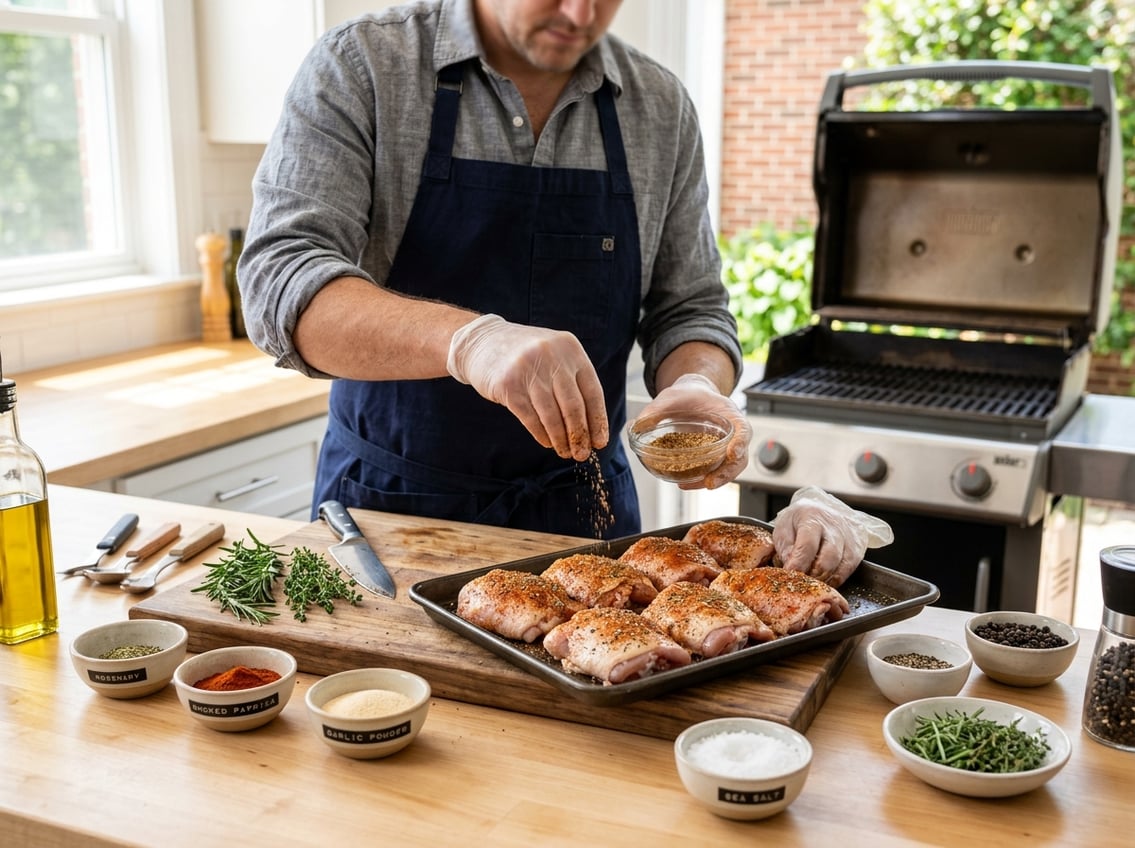
Prepare the thighs so they cook evenly and develop a crisp exterior. Focus on trimming excess fat and skin, choosing a marinade or dry rub, and seasoning with the right amount of kosher salt and black pepper.
Trimming and Patting Dry
Remove large excess fat and loose skin to avoid flare-ups and uneven charring. Trim only what affects cooking; leave an even thin layer of skin on skin-on thighs to crisp during grilling.
Pat the thighs completely dry with paper towels before seasoning or marinating. Dry surfaces sear better, produce a crisper skin, and help rubs adhere.
If you plan to brine, salt lightly (about 1 tsp kosher salt per cup of water) and brine for 30–60 minutes for boneless or up to 2 hours for bone-in. Rinse briefly after brining and pat dry before applying a rub or marinade.
Marinating and Dry Rubs
Choose a marinade with oil, acid (like lemon or vinegar), aromatics (garlic, herbs), and salt to flavor and tenderize. Marinate boneless thighs 30 minutes to 4 hours; avoid longer acidic marinades to prevent mealy texture.
For a quick option, toss thighs in a marinade and refrigerate in a sealed bag. Reserve some marinade for basting only if you cook it to 165°F first.
Dry rubs work well for bone-in thighs and when you want a crusty exterior. Combine kosher salt, freshly ground black pepper, paprika, garlic powder, and a touch of brown sugar or smoked paprika for balance.
Apply rub 15–30 minutes before grilling for better adhesion, or up to overnight for deeper flavor.
Optimal Seasoning for Flavor
Start with kosher salt as your base—use roughly ½ to 1 teaspoon per thigh depending on size. Adjust salt if you brined earlier to avoid over-salting.
Use freshly cracked black pepper for a bright, peppery note. Complement with garlic powder or minced garlic, and an herb like thyme or rosemary for aroma.
If you want char and sweetness, include a small amount of brown sugar or honey in the rub or glaze; apply toward the end of grilling to prevent burning.
If following a specific recipe, match seasoning levels to the method. Increase bold spices for quick, high-heat grilling and favor gentler herbs for low-and-slow indirect cooking.
Let seasoned thighs sit at room temperature 15–20 minutes before grilling for even cooking.
Setting Up Your Grill
Get the grill clean, preheated, and arranged so you can control searing and slow cooking. Set burners and vents to create a hot sear zone and a cooler zone for finishing.
Keep tools and a thermometer close at hand.
Preheating and Temperature Control
Preheat your gas or charcoal grill for 10–15 minutes until grates reach target temperature. For bone-in thighs, aim for 350–400°F, and for boneless, 400–450°F.
Use a reliable grill or probe thermometer to confirm surface and ambient temperatures. Stabilize the grill temperature before you put chicken on.
On gas grills, light all burners to preheat then reduce one side to low for an indirect zone. On charcoal, bank coals to one side and leave the opposite side cooler.
Keep the lid closed except when turning to prevent temperature swings.
Check internal meat temp with an instant-read thermometer inserted into the thickest part without touching bone. Pull thighs at 165°F and rest 5–10 minutes.
Direct vs Indirect Heat
Create two zones: direct high heat for searing and indirect moderate heat for finishing. Place thighs skin-side down over direct heat for 3–6 minutes to brown and crisp the skin, then move them to the cooler side to cook through without burning.
Use direct heat for grill marks and quick caramelization. Use indirect heat for bone-in thighs that need longer time to reach 165°F without charring.
Monitor grill grate temp and rotate pieces rather than increasing flame. This keeps the exterior crisp while the interior reaches safe temperature without drying out.
Preventing Flare-Ups
Trim excess fat and pat thighs dry before seasoning to prevent flare-ups. Excess oil or fat dripping onto flames causes flames to spike; use a drip tray on the indirect side to catch drippings when possible.
If a flare-up occurs, move the affected thighs to the indirect zone and close the lid briefly to starve flames of oxygen. Avoid dousing with water.
Keep a long-handled brush and tongs handy to reposition or press lightly if needed. If you use a sauce that contains sugar, apply it in the last 3–5 minutes of grilling to reduce burning and flare-up risk.
Cooking Techniques for Juicy Grilled Chicken
Use controlled heat, a short brine or marinade, and check doneness with a thermometer for juicy thighs. Focus on even thickness, skin-on for crispness, and resting the meat before slicing.
How Long to Grill Chicken Thighs
Bone-in thighs usually take 20–30 minutes over medium heat (around 350–400°F), depending on size. Start over direct medium-high heat to render fat and crisp the skin for 4–6 minutes per side, then move to indirect heat to finish.
Boneless thighs cook faster: plan 8–12 minutes total over medium-high heat, flipping once. If pieces vary in thickness, pound or trim them so they cook evenly.
Marinated or brined thighs may brown faster; watch for flare-ups from dripping fat. Adjust time for grill type.
Gas grills heat steadily; charcoal can produce hotter spots, so set up a cooler zone. Use an instant-read meat thermometer rather than clock-watching.
Flipping and Grill Marks
Flip thighs only once or twice to develop even browning and distinct grill marks. Place skin-side down first and leave untouched for 4–6 minutes to form a crisp crust.
If you want crosshatch grill marks, rotate the thigh 45 degrees halfway through the first sear. For boneless thighs, handle gently to avoid tearing the meat.
Use tongs, not a fork, to preserve juices. Manage flare-ups by moving pieces to indirect heat briefly.
Consistent contact and minimal flipping give the best combination of crust, grill marks, and juiciness.
Internal Temperature for Doneness
Use an instant-read meat thermometer to confirm doneness. For bone-in thighs, aim for 175°F; the higher temperature melts connective tissue and yields tender, juicy dark meat.
For boneless chicken thighs, target 165–170°F. Insert the probe into the thickest part without touching bone for an accurate reading.
If temperature stalls, move the thigh to indirect heat and close the lid to finish. After removing from the grill, tent the thighs loosely with foil and rest 5–10 minutes.
Carryover heat will raise internal temperature a few degrees and redistribute juices, keeping your grilled chicken thighs moist when you slice.
Flavor Variations and BBQ Tips
Use a balance of acid, salt, fat, and smoke to build flavor. Choose a glaze for a sticky finish, a marinade for deep infusion, or a dry rub for a crisped crust.
Homemade BBQ Sauce and Glazing
Make a simple sauce with equal parts ketchup and brown sugar, then add 2 tbsp apple cider vinegar, 1 tbsp Worcestershire, 1 tsp smoked paprika, and salt and pepper to taste. Simmer 10–15 minutes to meld flavors and reduce slightly.
Brush sauce on during the last 5–10 minutes of grilling over indirect or medium heat. Apply thin layers, turning and reapplying once or twice to build a sticky glaze.
For smoke-forward profiles, add a tablespoon of liquid smoke or finish with a quick smoke session using soaked wood chips. Reserve some sauce for serving.
Seasoning Ideas and Marinades
For a dry rub, combine 1 tbsp paprika, 1 tsp cumin, 1 tsp garlic powder, 1 tsp onion powder, 1 tsp brown sugar, and 1 tsp salt. Rub generously and let sit 30 minutes to an hour at room temperature, or overnight in the fridge for deeper flavor.
For a basic wet marinade: 1/4 cup olive oil, 2 tbsp soy sauce, 2 tbsp lemon juice, 2 cloves minced garlic, and 1 tsp honey. Marinate boneless thighs 30 minutes to 4 hours.
Avoid over-marinating with acid to prevent a mealy texture. Consider these targeted variations:
- Asian-style: soy, rice vinegar, sesame oil, ginger, and chili.
- Mediterranean: yogurt, lemon, oregano, and garlic.
- Spicy-sweet: hot honey or gochujang plus brown sugar.
Always pat thighs dry before grilling to promote browning and apply rub or pat off excess marinade if skin will be grilled.
Making BBQ Chicken Thighs
Choose bone-in, skin-on thighs for richer flavor and more forgiving grilling. Use boneless, skinless thighs for fast, direct-heat cooks.
Aim for an internal temperature of 165°F. Some chefs pull at 170–175°F to break down connective tissue for extra tenderness.
Set up two-zone grilling. Sear thighs over direct high heat for 2–4 minutes per side.
Move them to indirect medium heat (350–400°F) to finish cooking. Bone-in pieces usually take 25–40 minutes total, while boneless thighs finish in 8–12 minutes.
Rest thighs for 5 minutes before serving to let juices redistribute. Add sauce near the end to avoid burnt sugars.
Use a meat thermometer to ensure safety and consistent results.
Serving Suggestions and Pairings
Balance flavors and textures by pairing juicy, charred chicken thighs with a creamy starch and a crunchy slaw. Add a grilled vegetable for variety.
Pick one sauce to tie the plate together. BBQ, chimichurri, or a lemon-garlic pan sauce work well.
Classic Side Dishes
Choose a creamy starch, a crisp salad, and a grilled vegetable for a simple plate.
- Potato salad: Use waxy potatoes, chopped chives, and a tangy mustard-mayo dressing. Chill before serving.
- Coleslaw: Make a crunchy slaw with green cabbage, carrot, apple cider vinegar, and a touch of sugar. Serve cold.
- Grilled corn on the cob: Brush ears with olive oil and salt, grill until lightly charred, then finish with butter and cilantro or a squeeze of lime.
- Grilled vegetables: Toss bell peppers, zucchini, and red onion in oil and oregano. Grill to complement smoky chicken.
Creative Ways to Serve Grilled Chicken Thighs
Use the thighs as a flexible protein for bowls, tacos, and sandwiches.
- Rice or grain bowl: Slice thighs and arrange over cilantro-lime rice or quinoa. Add black beans, avocado, pickled red onion, and a drizzle of chimichurri.
- Tacos or flatbreads: Shred or thinly slice thighs, top with quick slaw, cotija or feta, and a squeeze of lime.
- Sandwich or pita: Pile sliced thighs with tomato, greens, and a garlic-yogurt sauce.
- Salad topper: Place warm sliced thighs on arugula or mixed greens with roasted beets and crumbled goat cheese.
Storing and Reheating Leftovers
Handle leftovers carefully to keep texture and safety.
Cool chicken within two hours. Refrigerate it in an airtight container for up to 3–4 days.
Keep sauces separate to preserve crust and moisture.
For the oven method, preheat to 325°F (160°C). Place thighs on a baking sheet, cover loosely with foil, and heat for 10–15 minutes until the internal temperature reaches 165°F (74°C).
This method helps retain juiciness.
For a quick stovetop option, slice the thighs and reheat them in a skillet with a tablespoon of oil over medium heat. Turn once and add a splash of broth if the chicken seems dry.
To use the microwave, set it to low power and heat in 30-second bursts. Let the chicken rest between cycles to avoid rubbery meat.


