
What Do Chicken Thighs Need to Be Cooked to: Temperatures, Types, and Best Cooking Tips
You want to know the safe and ideal internal temperature for chicken thighs so you can stop guessing and start cooking with confidence. Bone-in and boneless thighs behave differently, but the clear safety baseline is 165°F. For juicier, more tender dark meat, many cooks aim higher—around 175–195°F—depending on texture and cooking method.
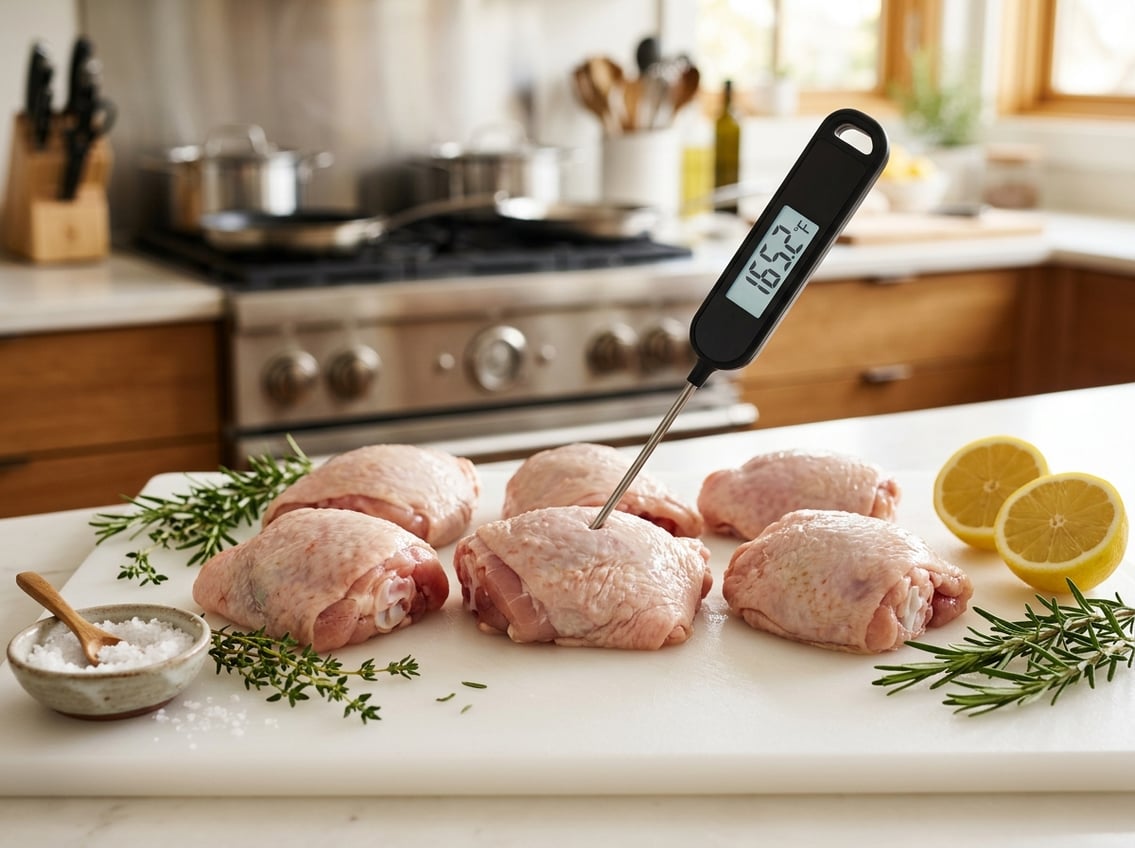
Aim for at least 165°F for safety, but expect better texture between 175°F and 195°F. Lower in that range gives firm but moist thighs, higher gives meltingly tender results.
This post covers how those targets change with bone-in versus boneless thighs, oven settings for baking, alternative methods like braising and grilling, and simple seasoning or marinating steps for the most flavor without overcooking.
You’ll also find guidance on testing temperature correctly and quick tips for popular recipes so your next batch comes out reliably juicy and well-seasoned.
Safe Internal Temperatures for Chicken Thighs
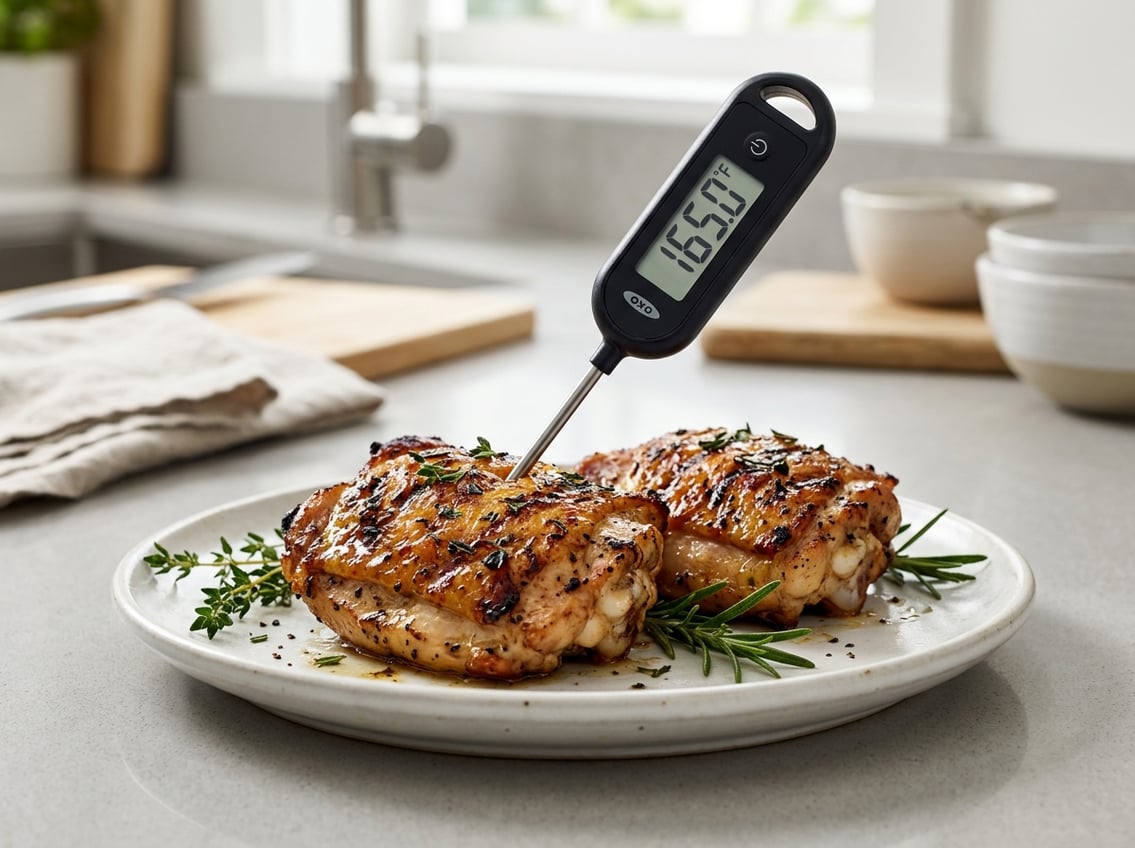
Cook chicken thighs to a temperature that eliminates pathogens and achieves the texture you want. Use an instant-read thermometer and target specific temp ranges depending on whether you prioritize safety, juiciness, or breaking down connective tissue.
USDA Guidelines Explained
The USDA requires poultry reach a minimum internal temperature of 165°F (74°C) measured at the thickest part to be considered safe immediately. This guideline ensures common bacteria like Salmonella and Campylobacter are reduced to safe levels with a single-point temperature check.
If you hold thighs at temperatures below 165°F, you must extend the time at that lower temperature to achieve equivalent pathogen reduction. That time/temperature tradeoff matters most for sous-vide or slow-cooking methods. For home baking or roasting, use the 165°F minimum as your safety target.
Optimal Temperatures for Juiciness and Tenderness
Dark meat becomes more tender at higher finish temperatures because connective tissue melts into gelatin. Many cooks prefer 175–195°F (79–91°C) for thighs.
At 175°F, thighs stay tender with a slightly fibrous bite. At 190–195°F, you get very soft, almost fall-from-the-bone texture.
For juicy but intact thighs, aim for 175–185°F. For maximum tenderness in braises or long bakes, push toward 190–195°F.
Avoid exceeding 210°F, which can dry or make meat stringy. Higher finish temps require longer cook times, so plan for extended baking or low-and-slow methods.
Checking Doneness and Using a Meat Thermometer
Insert an instant-read thermometer into the thickest part of the thigh, avoiding bone by at least 1/4 inch. Wait a few seconds for a stable reading.
Take readings from two spots on bone-in pieces for accuracy. If baking chicken thighs at 400°F, bone-in thighs reach 165°F in about 35–45 minutes; boneless thighs take 20–30 minutes.
For crisp skin, finish at higher heat or broil briefly once the internal temp is near target. Let thighs rest 5–10 minutes after cooking to allow carryover heat to raise the internal temperature and redistribute juices.
Comparing Chicken Thigh Types and Their Cooking Needs
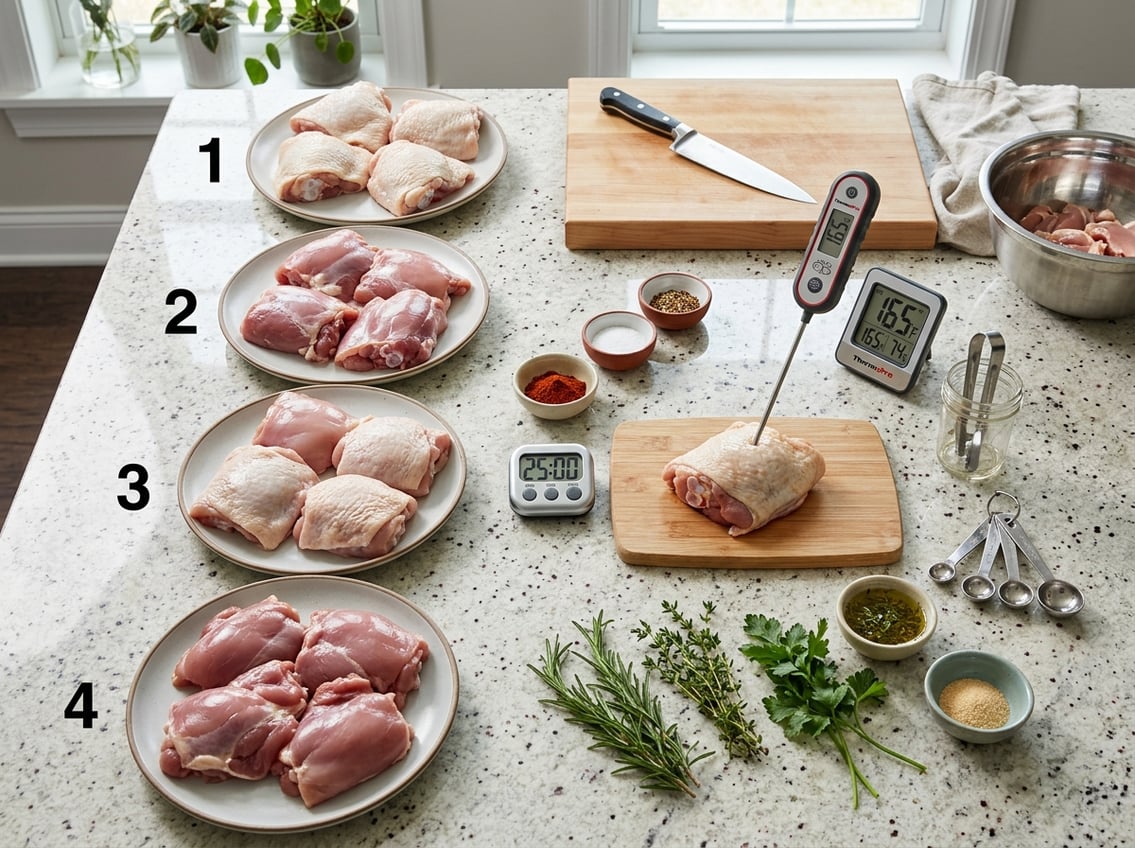
Different thigh styles change how long you cook them and how you manage heat and moisture. Pay attention to bone, skin, and thickness to match cooking time and technique.
Bone-In vs. Boneless Thighs
Bone-in chicken thighs take longer to reach a safe internal temperature because the bone slows heat penetration. Expect roughly 10–20% longer cook times than similar-sized boneless pieces.
Roast bone-in thighs at 400°F for about 35–45 minutes until the thickest part registers 165°F. Insert the thermometer beside the bone for accuracy.
The bone adds flavor and helps retain juiciness during higher-heat methods like grilling or roasting. If you braise or slow-cook, bone-in thighs benefit most because connective tissue breaks down into gelatin, improving texture.
Choose boneless thighs for fast, even cooking—pan-searing, stir-frying, or quick grilling. Adjust marinades and liquid amount slightly for boneless cuts, which have less fat.
Skin-On vs. Skinless Thighs
Skin-on chicken thighs need techniques that render and crisp the skin while bringing the meat to 165°F. Start skin-side down in a hot pan or use high oven heat to render fat and brown the skin.
Lower the temperature to finish the interior if needed. Monitor surface color and internal temp to avoid burnt skin with undercooked meat.
Skinless thighs cook faster and dry out sooner if overcooked because they lack the protective fat layer. Shorten cook time or add liquid, marinades, or sauce to maintain juiciness.
For high-heat methods, cut cook times by several minutes compared with skin-on pieces. For braises or stews, skinless thighs absorb flavors more readily and need no extra time versus skin-on when simmered slowly.
Essential Oven Settings for Baking Chicken Thighs
Set your oven to the proper temperature. Check internal temperature with a probe and adjust time based on bone-in vs boneless and skin-on vs skinless.
Use dry heat and brief high-heat finishing to get both safe doneness and crispy skin.
Choosing the Right Oven Temperature
Preheat to 400°F (200°C) for even cooking and skin crisping. This temperature cooks the meat through without drying it and browns the skin within 25–35 minutes for most thighs.
For a lower-temperature method, use 350°F (175°C) and extend the bake to 35–45 minutes for very tender meat. For faster, crispier results, boost to 425°F (220°C) for the last 8–10 minutes of baking.
Confirm doneness with an instant-read thermometer: target 165°F (74°C) in the thickest part of the thigh. Pull the thighs at 160–163°F and rest 5–10 minutes so carryover heat reaches 165°F.
Baking Times by Thigh Type
Bone-in, skin-on thighs: bake at 400°F for about 30–40 minutes. Thicker pieces can need up to 45 minutes.
Check temperature at the bone-proximate thickest point. Boneless, skinless thighs: bake at 400°F for about 20–30 minutes.
Start checking internal temp at 18 minutes to avoid overcooking. If you bake a mixed batch, remove boneless pieces earlier.
Use this quick reference:
- Bone-in, skin-on: 30–40 min (400°F)
- Boneless, skinless: 18–25 min (400°F)
- 350°F slow-bake: add 10–15 minutes to above times
Always rely on the 165°F (74°C) internal temp rather than time alone for food safety and best texture.
How to Achieve Crispy Skin
Dry the skin thoroughly with paper towels before seasoning. Lightly coat skin with oil and salt to promote browning.
Place thighs on a wire rack over a baking sheet so hot air circulates under and around each piece. That prevents soggy undersides and helps even crisping.
Finish under a broiler or increase oven to 425°F for the final 6–10 minutes if the skin hasn’t browned. Watch closely to avoid burning.
For extra crisp, pat with a bit more oil or sprinkle a small amount of baking powder into your seasoning; it raises pH and encourages crisping without changing flavor.
Flavor Maximization: Seasoning and Marinating Techniques
Seasoning and marinating affect flavor, texture, and moisture more than cooking temperature alone. Use salt, acid, oil, and aromatics to build layers of taste and keep thighs tender and juicy.
Benefits of Marinating Chicken Thighs
Marinating infuses flavor into the meat and helps tenderize tougher connective tissue in thighs. Acidic components like lemon, vinegar, or yogurt slightly break down proteins, while oil carries fat-soluble aromatics and helps the surface brown.
Because thighs contain more collagen than breasts, a short marinate (30 minutes) adds noticeable flavor, while 2–8 hours deepens that flavor without harming texture. Avoid highly acidic marinades longer than 12–24 hours to prevent a mushy surface.
Marinades also increase perceived juiciness by allowing seasoning to penetrate beyond the skin.
Best Rubs and Marinades
Choose a rub or marinade based on cooking method and flavor profile you want.
-
Dry rub (for roasting, grilling, air fryer):
- Salt, black pepper, garlic powder, smoked paprika, a pinch of baking powder for crisp skin.
- Apply 30–60 minutes ahead or refrigerate overnight for deeper flavor.
-
Classic wet marinades (for pan-searing, baking, grilling):
- Olive oil, lemon juice, minced garlic, fresh thyme or rosemary, 1 tsp salt per pound.
- Soy-ginger: soy sauce, sesame oil, grated ginger, honey, rice vinegar.
-
Tenderizing marinades:
- Greek yogurt or buttermilk with garlic and lemon for 2–8 hours.
Use about 1–2 tablespoons of marinade per thigh and ensure full contact. Pat dry before high-heat cooking to encourage browning.
Timing and Methods for Marinating
Time your marinate to match your goals and schedule.
- Quick: 30–60 minutes at room temp for surface flavor and slight tenderizing.
- Optimal: 2–8 hours in the refrigerator for deeper penetration and noticeable texture change.
- Maximum: Up to 24 hours for low-acid or dairy-based marinades. Avoid more than 24 hours with strong acids.
Vacuum-seal or use a zip-top bag and press out air to improve contact and save space. Turn or massage the bag every few hours to redistribute marinade.
For bone-in thighs, increase time toward the upper end because bones slow penetration. Always marinate in the refrigerator and discard used marinade or boil it for 2–3 minutes before using as a sauce.
Tips for Retaining Juiciness
Salt at least 30 minutes before cooking or up to overnight in the fridge; this allows salt to draw out then reabsorb juices into the meat. Pat thighs dry before searing or roasting to ensure skin crisps and moisture stays inside the meat.
Cook to target internal temperatures appropriate for the cut: pull boneless at about 165°F and bone-in at about 175°F for a juicier, more tender result. Rest cooked thighs 5–10 minutes tented loosely with foil to redistribute juices.
Reheat gently in the oven at 300°F or covered in a skillet with a splash of stock to avoid drying leftover thighs.
Alternative Cooking Methods Beyond Baking
You need reliable temperatures, short rest time, and the right method to match the cut. Each technique below explains temperature targets, timing, and small techniques that produce the best texture and flavor.
Roasting Chicken Thighs for Flavor
Roast bone-in, skin-on thighs at 425°F (220°C) to develop browned skin and deep flavor while finishing the interior without drying. Arrange thighs skin-side up on a rimmed baking sheet or a roasting pan with a wire rack so hot air circulates and fat renders evenly.
Pat the skin dry and season well with salt at least 15–30 minutes before roasting; this helps the skin crisp and seasons meat through the rendered fat.
Use a probe or instant-read thermometer and aim for 165°F (74°C) in the thickest part near the bone. Rest the thighs 5–10 minutes so juices redistribute.
If you want extra caramelization, start at 450°F for 10 minutes, then reduce to 400–425°F for the remaining time. Add root vegetables to the pan for one-pan roasting; they’ll cook in the chicken fat and absorb flavor.
How to Grill Chicken Thighs
Set up a two-zone grill with direct high heat for searing and indirect medium heat for finishing. Sear the chicken skin-side down over high heat for 3–5 minutes to crisp and char the skin.
Move the thighs to indirect heat so they reach 165°F (74°C) without burning the exterior. Brush the thighs with oil or a thin glaze before searing to prevent sticking and encourage browning.
Grill boneless, skinless thighs over medium-high heat and flip them frequently to avoid flare-ups and hot spots. They usually cook faster, often 6–10 minutes total depending on thickness.
Apply BBQ sauce in the last 2–3 minutes to prevent burning. Check the internal temperature and let the meat rest for 5–8 minutes before slicing.
Pan-Frying for Crispiness
Heat a heavy skillet, preferably cast iron, over medium-high heat and add enough oil to come halfway up the sides of the thighs for shallow frying. Dry and season the thighs, then start skin-side down and press gently so the skin contacts the pan for even browning.
Keep the oil temperature around 325–350°F (160–175°C). If the oil is too hot, the skin will char before the interior cooks. If too cool, the crust will absorb oil and become greasy.
Cook bone-in thighs for 6–10 minutes per side, adjusting for size. Boneless pieces will finish faster.
Use a thermometer to confirm 165°F (74°C) at the thickest point. Let the thighs rest on a wire rack to keep the crust crisp while the juices settle.
Poaching for Moisture
Poaching keeps thighs tender and works well when you want moist meat for salads, tacos, or shredded dishes. Submerge thighs in an aromatic liquid such as water, stock, or wine with onion, garlic, bay leaf, and peppercorns, then bring to a gentle simmer.
Keep the surface at a bare simmer with small bubbles rather than a rolling boil to avoid toughening the meat. Poach bone-in thighs for about 20–30 minutes and boneless for 15–20 minutes, until the internal temperature reaches 165°F (74°C).
Remove the thighs and let them rest briefly. If you want crisp skin, sear the thighs quickly in a hot pan. Save the poaching liquid for sauces or soup.
Popular Recipes and Serving Suggestions
Explore weeknight-friendly baked options and global-inspired preparations that highlight the thigh’s rich texture. Focus on cooking times, finishing steps for crisp skin, and sides that balance the richness.
Classic Baked Chicken Thigh Recipes
Bake bone-in, skin-on thighs at 400°F (204°C) for 30–40 minutes until they reach 165°F (74°C). Finish under the broiler for 1–3 minutes to crisp the skin.
Pat the skin dry, season with salt and pepper, and use a light oil or butter to help with browning.
Try these flavor profiles:
- Lemon-herb: lemon zest, garlic, thyme, and a splash of white wine.
- Honey-mustard: Dijon, honey, and a pinch of smoked paprika.
- Pan-sear then oven-finish: brown skin for 6–8 minutes, then transfer to a 400°F oven for 15–20 minutes.
Serve with starches like roasted potatoes, rice pilaf, or a bright salad. For leftovers, slice warm thighs into wraps, grain bowls, or quick fried rice.
Creative Chicken Thigh Dishes
Use thighs for braises, curries, and sheet-pan meals. Their higher fat content yields deep flavor and tender texture.
Cook braises low and slow by simmering for 35 to 50 minutes. You can also use pressure cooking to get similar results in less time.
Ideas to expand your repertoire:
- For Jamaican brown stew, marinate the chicken, brown it, then slow-stew with molasses and spices for a rich gravy.
- For tandoori-style, use a yogurt, garlic, and ginger marinade, then broil on high for charred edges.
- For a sheet-pan meal with vegetables, roast at 425°F (218°C) for 30 to 35 minutes. Toss the veggies midway for even caramelization.
Pair these dishes with sides that echo the sauce. Try coconut rice for curries, crusty bread for braises, and quick pickles or a citrus slaw to brighten richer preparations.


