
Do Chicken Breast Tenderloins Have Tendons? Explained
You may wonder if chicken breast tenderloins have tendons when you see that thin white string running through the meat. The short answer is yes, chicken tenderloins often contain a tendon, and it is a normal part of the bird’s anatomy.
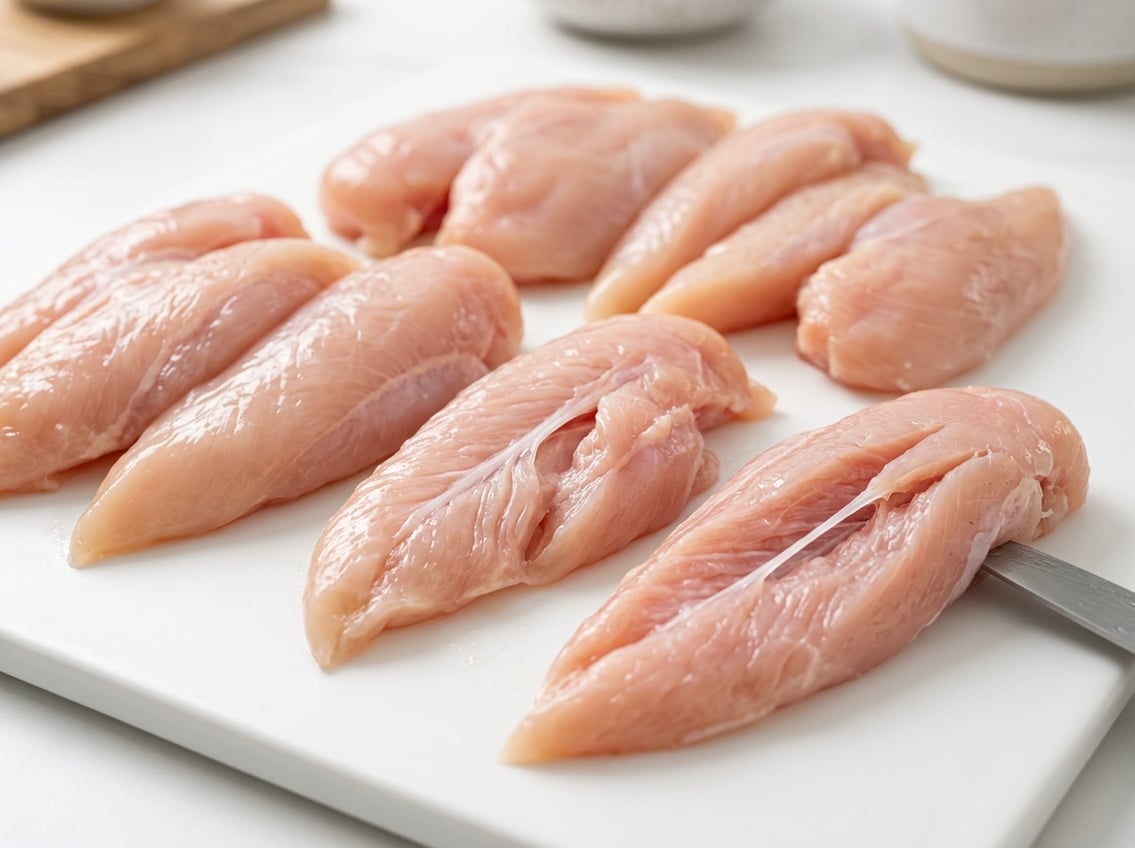
That white string is usually a tendon, and it is safe to eat. However, it can turn tough or rubbery when cooked.
If you want a cleaner texture in chicken tenders, you can remove it before cooking or simply trim it out if it bothers you.
What the White String in Tenderloins Actually Is
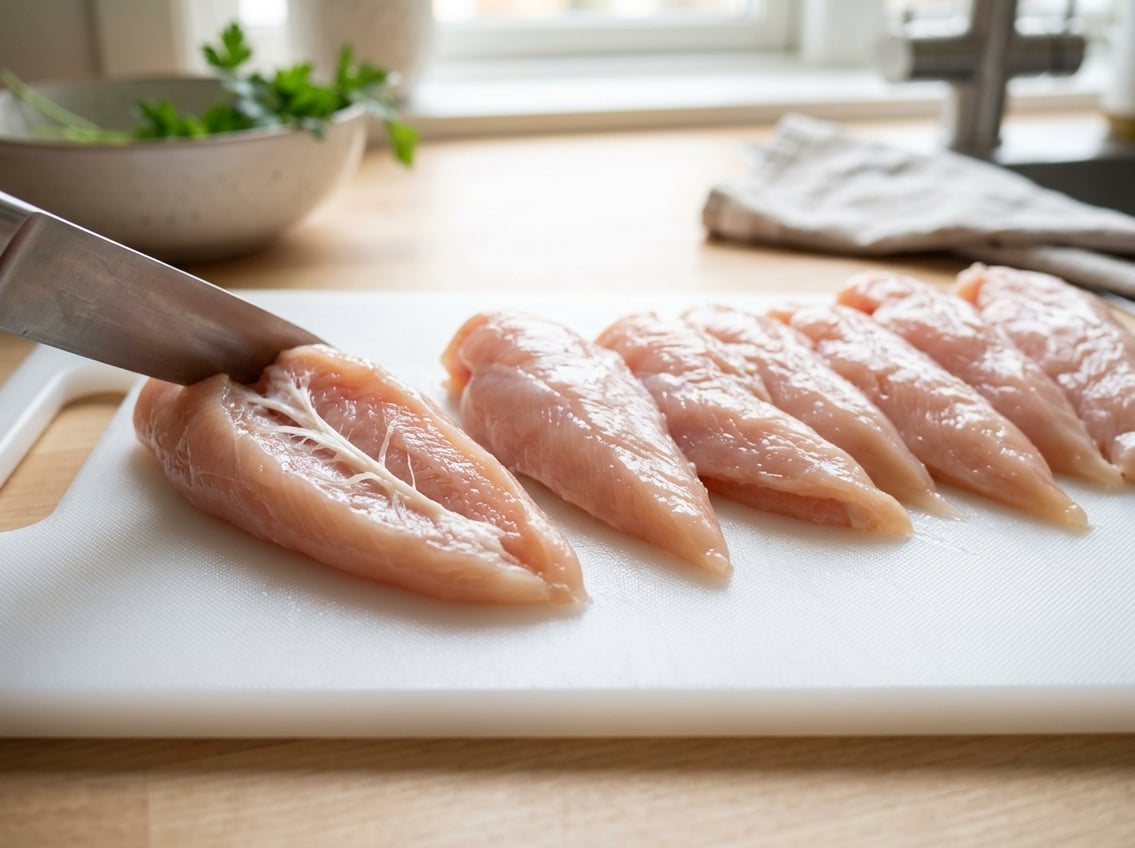
That white string in a chicken tenderloin is a tendon in chicken tender meat, not bone, plastic, or a defect. As EatingWell explains, it is connective tissue that helps attach muscle to bone.
The tendon is common in chicken tenderloins because the tenderloin is a separate muscle that sits under the breast. You may see it more clearly when the tenderloin is sold attached to the breast or when the cut is trimmed tightly.
Why Chicken Tenderloins Naturally Contain a Tendon
Chicken tenderloins are sometimes called hanging tenders, and they are a distinct muscle, not just sliced breast meat. Since the muscle has to connect to the rest of the chicken, a tendon often comes with it.
Where the Tendon Sits in the Meat
The tendon usually runs through the center or along one side of the tenderloin. It looks like a narrow white cord that stays firmer than the surrounding meat.
You may notice it most when you slice into the tenderloin lengthwise or tear it apart after cooking. It can also shrink slightly as it heats.
How Tendon Differs From Fat, Gristle, and Membrane
A tendon is firmer and more rope-like than fat. Fat looks softer and usually turns translucent when cooked.
It also differs from gristle and membrane. Gristle is more cartilage-like, while membrane is thin and flexible.
A chicken tendon feels dense, holds its shape, and often pulls taut when you stretch it.
Whether You Need to Remove It Before Cooking
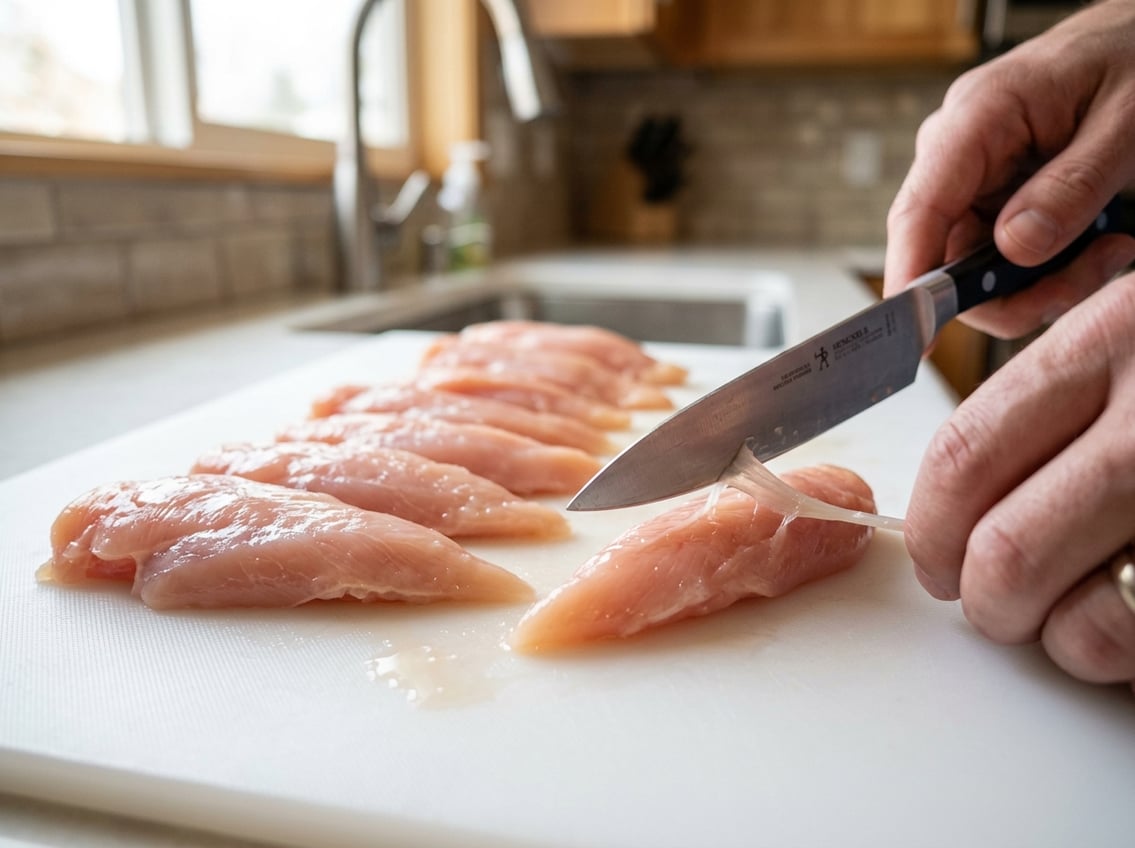
You do not need to remove the tendon before cooking. The tendon is edible and safe, though many people prefer to take it out for texture reasons.
Tendons in chicken can become firmer as they cook, so the choice depends on how you want your chicken tenders to feel on the plate.
Is Chicken Tendon Safe to Eat
Yes, chicken tendon is safe to eat when the chicken is cooked properly. It is not a hazard by itself.
The issue is that it can stay chewy. If you dislike a firm, stringy bite in your chicken tenders, you may want to remove it.
Texture Changes When Tenderloins Are Cooked
Heat makes the tendon tighten and contract. That can make the strip feel tougher than the surrounding meat, especially in cooked strips or breaded chicken tenders.
In thinner cuts, the tendon may also cause a slight curl or pull in the meat. Some cooks trim it first for this reason.
When It Makes Sense to Leave It In or Trim It Out
If you are short on time, you can leave it in and still cook chicken tenders well. It will not ruin the dish.
Trim it out if you want a smoother bite, if you are making delicate breaded strips, or if the tendon is thick and easy to spot. For children or picky eaters, removing it often makes the result more pleasant.
Best Ways to Trim Tenderloins Cleanly

You can use a sharp knife, a fork and paper towel, or kitchen shears, depending on what feels easiest in your kitchen.
A steady grip matters more than speed. Aim to remove the tendon without shredding the tenderloin.
Using a Sharp Knife Without Tearing the Meat
Place the tenderloin on a cutting board with the pointy end facing you. Grip the white end of the tendon with a paper towel, then angle a sharp knife just under it.
Pull the tendon taut while sliding the knife gently along the board. This helps you cut the tendon free while keeping the meat intact.
How to Pull the Tendon Out With a Fork or Paper Towel
A fork can help anchor the chicken while you pull. Hold the tendon with a paper towel, slip it between the fork tines if needed, then pull slowly in the opposite direction.
This method works well when the tendon is long and easy to grab. It often removes the tendon cleanly without much cutting.
When Kitchen Shears Are the Better Option
Kitchen shears are useful when the tendon is short or when you only need to trim a small section. They also help if the meat is slippery.
Use shears for fast cleanup, especially if you are processing several chicken tenders at once. If the tendon is deeply set, a knife or pull method may still give you a cleaner result.
Cooking Tips for Better Texture
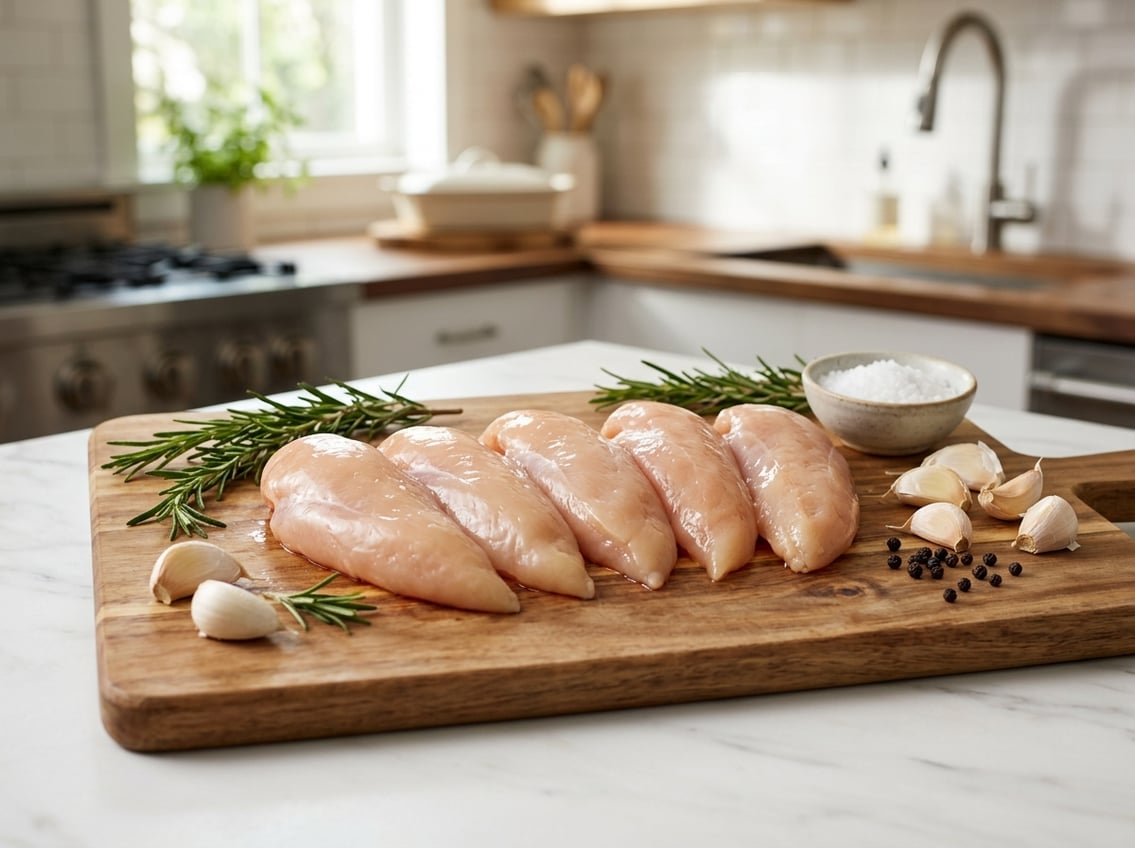
Good texture starts with a clean trim and even sizing. Once the tendon is removed, chicken tenders usually cook more evenly and are easier to bite through.
The cooking method matters too. High heat can make the tendon tighten, so trimming helps most when you want a tender finish.
How Trimming Affects Breaded and Fried Strips
When you bread and fry chicken tenders, any tendon left in the meat can turn firm under the crust. That can create a noticeable tug when you bite into it.
Removing the tendon gives you a smoother strip and a more even bite. It also helps the meat lie flatter, which can make coating and frying more consistent.
Best Approaches for Sautéing, Baking, and Grilling
For sautéing, keep the heat medium to medium-high so the outside browns without drying the meat. For baking, use a moderate oven and avoid overcooking.
Grilling works well if the tenderloins are trimmed and lightly oiled. Since tendons in chicken tighten with heat, a neat trim helps the meat stay more even on the grill.
How to Avoid Tough or Rubbery Results
Do not overcook chicken tenders. Dry meat feels tougher than it should.
Cook to a safe internal temperature, then stop.
If you leave the tendon in, you can expect a firmer bite in that one spot. Trim it first to get chicken tenders that stay juicy, tender, and easy to chew.


