
Can There Be Worms in Chicken Breast? What to Know
You may wonder, can there be worms in chicken breast, especially when you spot a white string, odd speck, or moving bit in raw meat.
In most cases, you are not seeing a worm. Raw chicken can still be safe when you handle and cook it correctly.
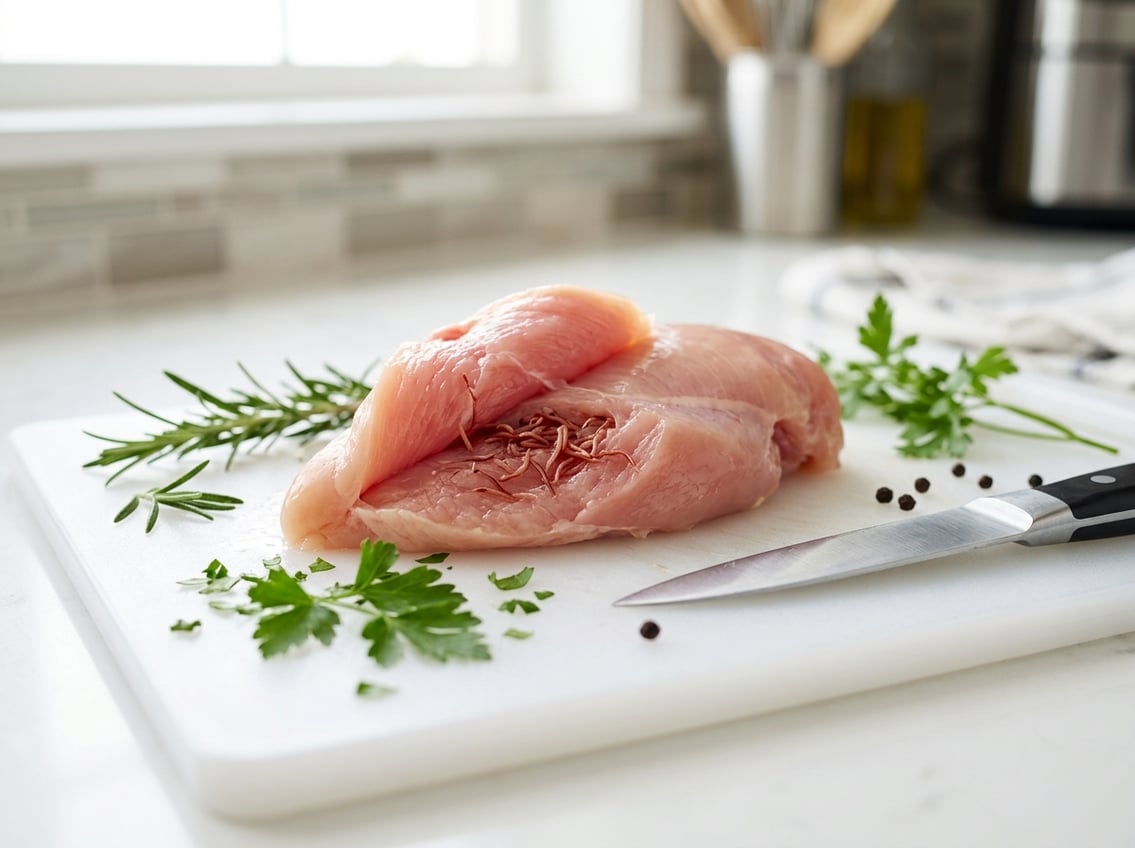
Worms are far more likely to be found in the bird’s digestive tract than in the breast meat you buy at the store.
Raw poultry can carry germs such as salmonella and campylobacter. These bacteria can cause food poisoning even when no parasites are present.
If the chicken looks off, smells bad, or shows signs of spoilage, throw it out.
What You Might Actually Be Seeing in Chicken Breast
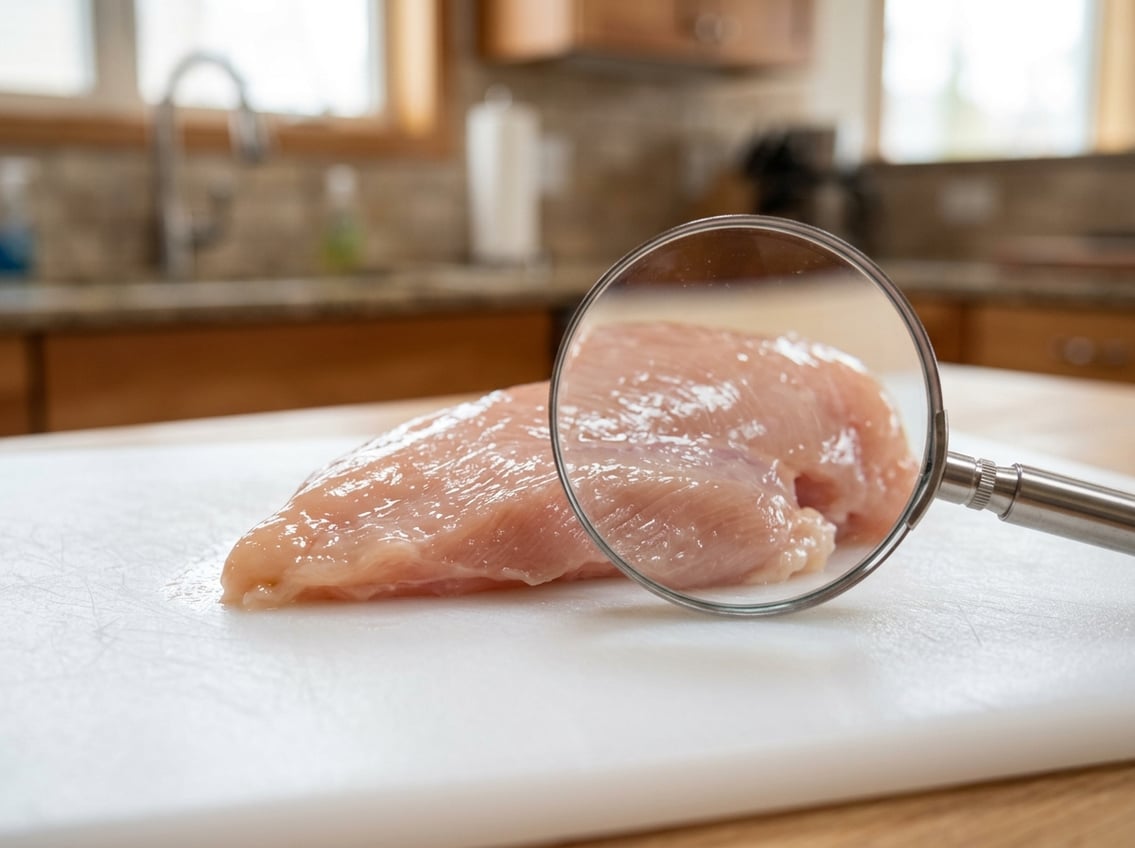
Most strange-looking things in chicken breast are not worms or worm eggs. You are usually seeing normal muscle tissue, connective tissue, fat, or processing flaws.
Raw chicken can also carry bacteria, so any odd appearance deserves a careful check.
Normal Tissue vs. Possible Parasites
Chicken breast contains muscle fibers that can look stringy or pale when raw.
Tiny white bits are often fat, and thin lines can be connective tissue.
True worms in raw chicken rarely appear in commercially processed breast meat.
Maggots are not normal in packaged chicken. If you see anything that seems to move, treat the meat as unsafe.
When Stringy White Material Is Likely Tendon or Blood Vessel
A narrow white strip in chicken breast is often a tendon or blood vessel, not a parasite.
Tendons look rubbery and run in a straight line through the meat. Blood vessels can look red, dark, or thread-like.
If the piece stays attached to the muscle and does not move, it is much more likely to be normal tissue.
A worm would usually look like a separate body, not part of the chicken itself.
Red Flags That Make Raw Chicken Unsafe
Watch for a sour smell, slimy feel, gray color, green patches, or leaking liquid in the package.
These are spoilage signs, not signs of a healthy product.
If you see anything that looks like a worm infestation, treat the chicken as unsafe and avoid tasting it.
When in doubt, discard it and clean any surfaces it touched to reduce food poisoning risk.
Real Parasite Risks in Poultry and Meat Safety
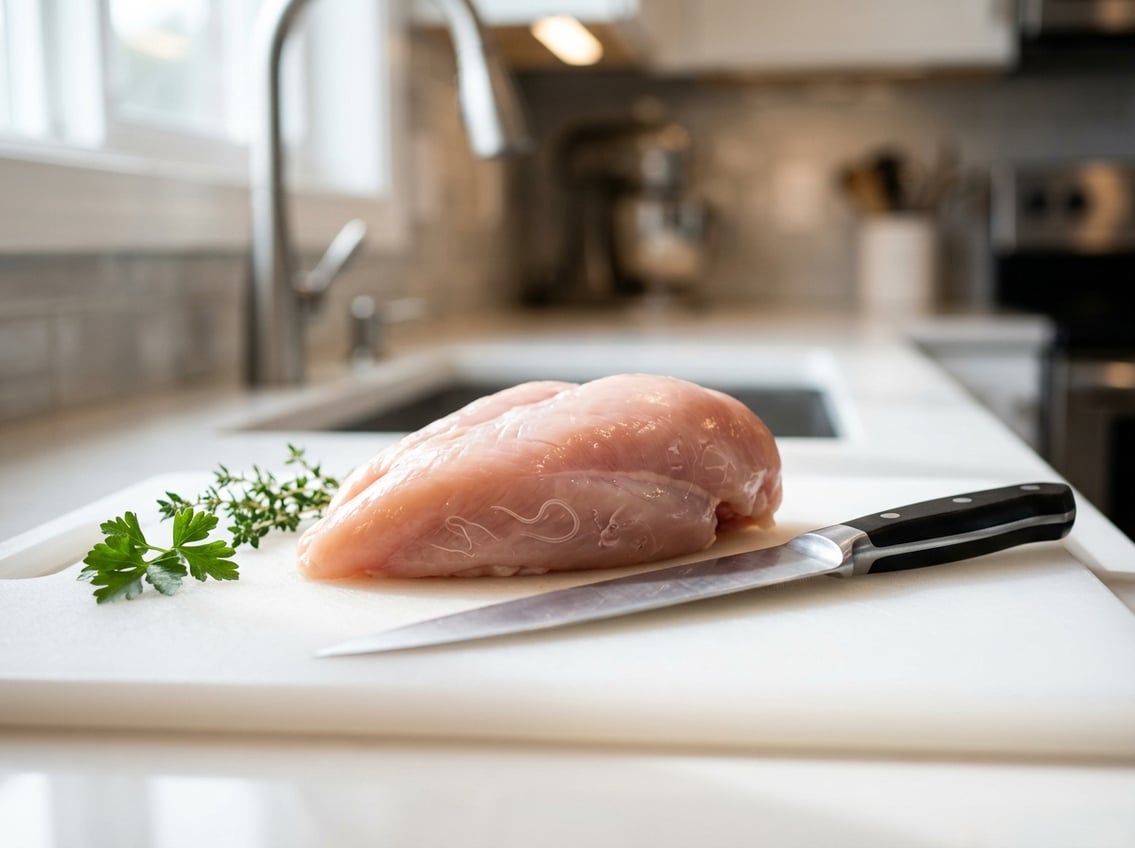
Chickens can carry internal parasites and intestinal parasites, especially in flocks with poor control measures.
The species that affect birds are usually different from the ones that affect people, and the main risk is often bacteria rather than visible worms.
A flock with a high parasite load may also have poor growth or reduced egg production.
Which Parasites Can Affect Chickens
Common chicken parasites include roundworms, tapeworms, ascaridia galli, heterakis gallinarum, cecal worms, capillary worms, capillaria, hairworms, gapeworms, gizzard worms, and eye worm.
These are usually found in the digestive tract or nearby tissues, not as obvious worms in chicken breast.
Some poultry parasites need an intermediate host such as earthworms, snails, or bugs before they can infect birds.
The parasite taenia can also use this kind of life cycle in some animals.
Not every worm species in birds affects people. Trichinella is tied to trichinellosis, but it is not a typical chicken parasite.
Blackhead disease is a poultry health issue, though it is not the same as a visible worm problem.
How Internal Parasites Reach Birds
Chickens pick up worms from contaminated soil, droppings, feed, water, and infected hosts.
Birds that peck outdoors, free-range, or live near wildlife face more exposure.
A flock can build up a problem over time if manure is not managed and housing stays damp or crowded.
Worms in chickens are often a flock management issue rather than a meat issue you can spot by eye.
What This Means for People Handling or Eating Chicken
For people, the main safety issue is cooking and hygiene.
Raw poultry can spread bacteria on hands, counters, and cutting boards, leading to food poisoning.
A worm seen in live birds does not mean the breast meat is full of parasites.
Safe cooking, clean handling, and buying from reputable sellers protect you best.
What to Do If You Suspect a Problem

If the package looks damaged, the meat smells bad, or you see anything that looks like a worm, do not eat it.
If the issue seems tied to flock health, signs such as worms in chicken poop, worms in droppings, or a higher parasite load matter more than the breast meat itself.
Whether to Discard, Return, or Report the Product
If the chicken is spoiled, slimy, or clearly contaminated, discard it.
If you think the issue is a packaging or processing defect, contact the store or processor and keep the label and receipt.
If several products seem affected, or if you believe there is a widespread safety issue, report it to the retailer and your local food safety authority.
Keep the chicken refrigerated while you decide, or throw it away promptly if you are unsure.
Safe Handling and Cooking Steps at Home
Wash your hands with soap after touching raw chicken.
Clean knives, counters, and boards with hot soapy water, then sanitize them.
Cook chicken to an internal temperature of 165°F (74°C).
That step reduces the risk from salmonella, campylobacter, and other germs that can cause food poisoning.
When Backyard Flock Owners Should Check Birds and Droppings
If your chickens seem thin, tired, or are laying less, check for signs of worms in the flock.
Reduced egg production can happen when the parasite load is high.
Look at droppings for unusual movement, long pale strands, or changes that suggest a worm problem.
A veterinarian or poultry specialist can help confirm whether worm eggs or adult parasites are present.
Preventing Worm Problems in Live Chickens
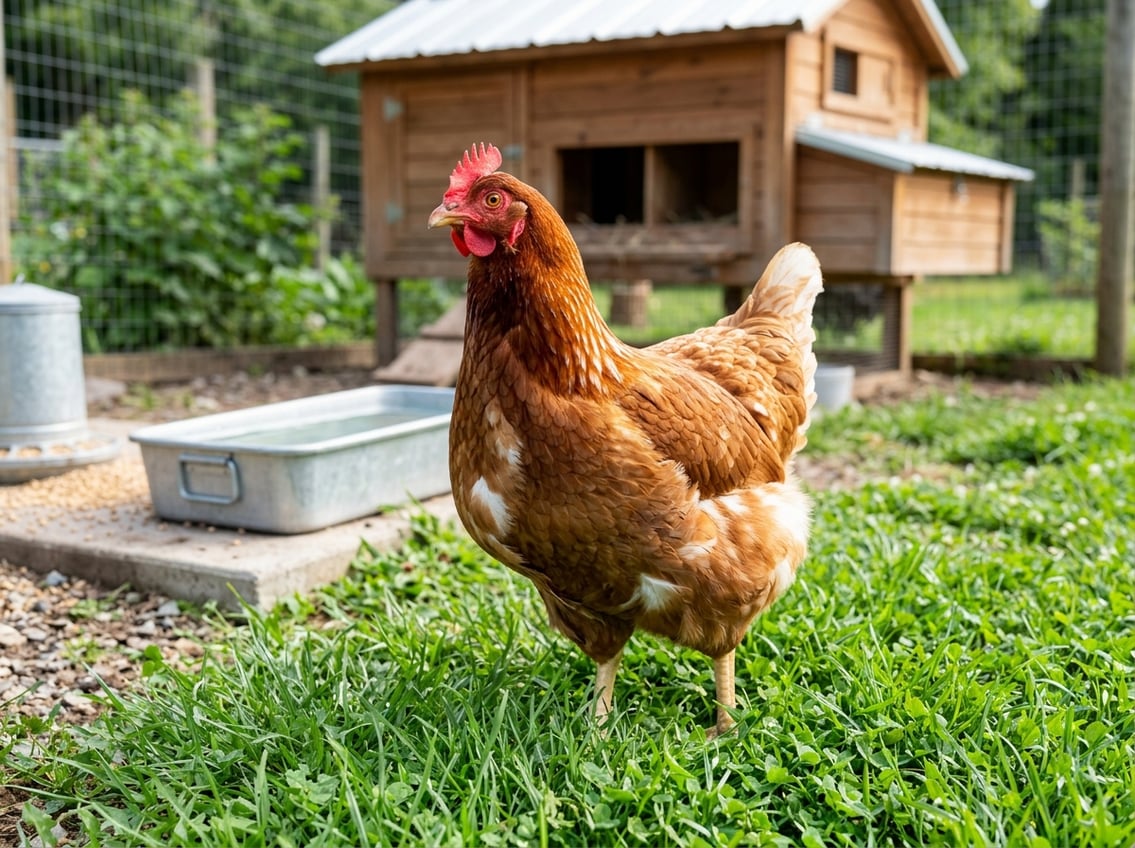
You lower worm risk by keeping housing clean, limiting exposure to contaminated ground, and using veterinary guidance for treatment.
Preventing worm infestation in live birds is much easier than fixing a flock after parasites spread.
Flock Hygiene and Exposure Control
Keep coops dry, remove droppings often, and rotate ranging areas when possible.
Clean feed and water containers so birds do not keep re-exposing themselves to parasite eggs.
Limit access from wild birds, rodents, and damp areas where internal parasites can spread.
In many flocks, red mite and scaly leg mite control also matters because stressed birds handle other health problems less well.
Regular Deworming and Veterinary Guidance
Use regular deworming only when it fits your flock and your vet’s advice.
The right plan depends on species, age, housing, and local risk.
Products such as fenbendazole and Safe-Guard are commonly used under veterinary direction.
Other options sometimes used in poultry include flubendazole, ivermectin, piperazine, albendazole, and levamisole, but not every product is approved for every bird or situation.
Medication Options and Withdrawal Periods
Always check the egg withdrawal period and meat withdrawal period before you use any dewormer. These waiting periods matter because residues can remain in eggs or meat if you process birds too soon.
Do not rely on diatomaceous earth as a full treatment for a real worm problem. Some keepers may use it as part of a broader management routine, but it does not replace proper diagnosis and targeted treatment.


