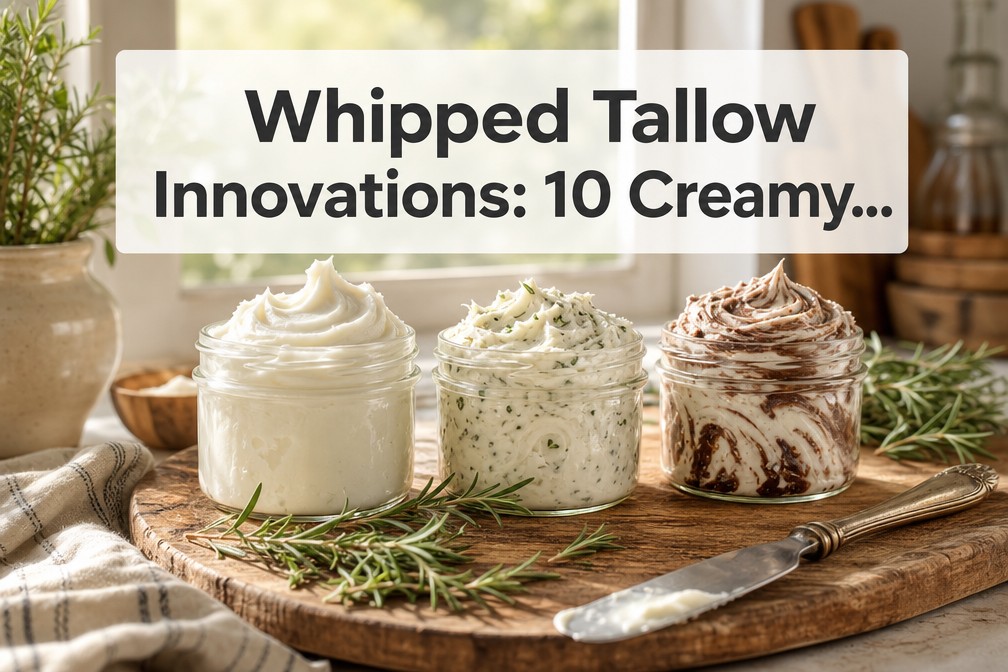
Whipped Tallow Innovations: 10 Creamy Recipes from Spreads to Dessert Bases in 2026
Last updated: July 14, 2026
Whipped tallow is rendered beef fat that’s been aerated into a light, butter-like spread with a neutral flavor and silky texture. In 2026, home cooks are rediscovering this ancestral fat as a versatile ingredient for everything from morning toast to chocolate truffles, thanks to its high smoke point, stable shelf life, and compatibility with keto and dairy-free diets. This guide covers ten creamy whipped tallow innovations, from savory spreads to dessert bases, plus troubleshooting tips and storage advice.
Key Takeaways
- Whipped tallow is rendered beef fat whipped with air to create a spreadable, butter-like consistency with a neutral taste
- It’s dairy-free, keto-friendly, and shelf-stable at room temperature for weeks when properly rendered
- Grass-fed tallow offers a cleaner flavor and higher nutrient density than conventional grain-fed versions
- Common uses include toast spreads, pie crusts, frosting bases, and chocolate truffles
- Separation or graininess usually results from temperature fluctuations during whipping or improper cooling
- Store whipped tallow in airtight containers away from light; refrigerate for extended shelf life up to six months
- Whipped tallow for cooking differs from skincare tallow in purity standards and added ingredients
What Is Whipped Tallow and How Is It Different from Regular Tallow?
Whipped tallow is rendered beef fat that’s been beaten with a mixer to incorporate air, transforming the dense, waxy solid into a light, fluffy spread similar to whipped butter. Regular tallow is simply the purified fat rendered from beef suet (the hard fat around kidneys and loins), which solidifies into a firm, opaque block at room temperature. The whipping process breaks down the fat crystals and introduces tiny air bubbles, creating a spreadable texture that melts easily on warm foods.
Key differences:
- Texture: Regular tallow is hard and waxy; whipped tallow is soft and spreadable
- Volume: Whipping increases volume by 30-50% due to incorporated air
- Mouthfeel: Whipped tallow feels lighter and creamier on the palate
- Application: Regular tallow works best for high-heat cooking and soap-making; whipped tallow excels as a spread or baking ingredient
The whipping step also allows you to blend in flavors like herbs, honey, or vanilla before the fat sets, making it a versatile base for both sweet and savory recipes.
How to Make Whipped Tallow at Home Step by Step
Making whipped tallow at home requires just two ingredients and about 30 minutes of active time. Start with high-quality rendered tallow (either homemade or store-bought), let it reach the right temperature, then whip until fluffy.
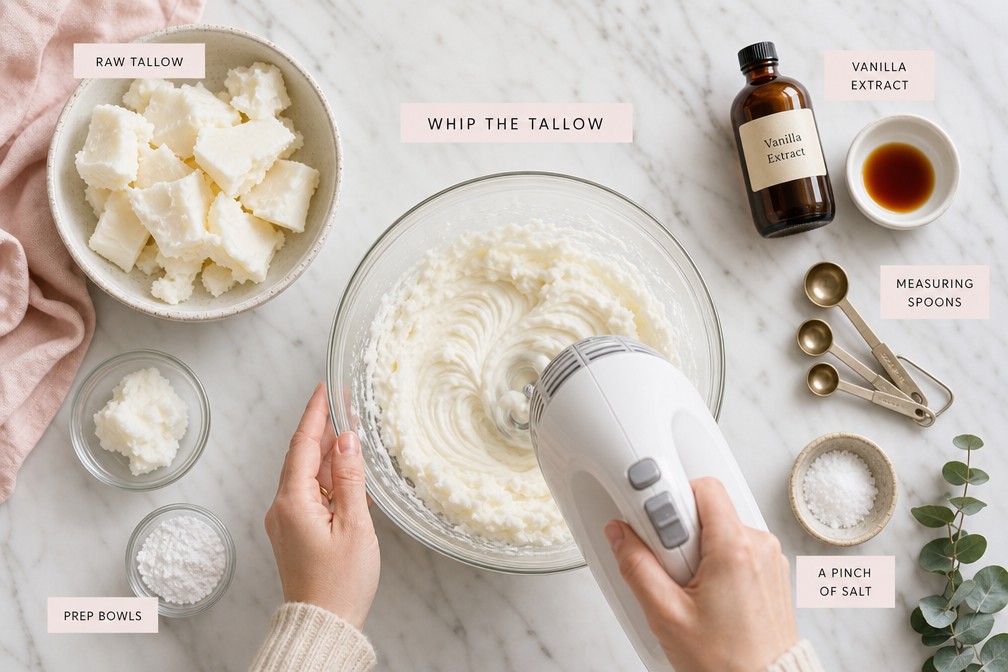
Ingredients:
- 1 cup rendered tallow (grass-fed preferred)
- Optional: 1-2 tablespoons flavor add-ins (honey, vanilla, sea salt, herbs)
Step-by-step process:
- Melt the tallow: Place rendered tallow in a small saucepan over low heat until fully liquid (about 120-130°F). Remove from heat and let cool to room temperature, stirring occasionally.
- Monitor temperature: The tallow should reach 70-75°F before whipping. Too warm and it won’t hold air; too cold and it becomes grainy. Use a kitchen thermometer for precision.
- Whip: Pour the cooled liquid tallow into a mixing bowl. Using a hand mixer or stand mixer on medium-high speed, beat for 5-8 minutes until the tallow turns white, doubles in volume, and forms soft peaks.
- Add flavors: In the last minute of whipping, add any optional ingredients like vanilla extract, honey, or minced herbs. Mix until just combined.
- Transfer and set: Spoon the whipped tallow into clean glass jars. Let sit at room temperature for 1-2 hours to firm up, then cover and store.
Common mistake: Whipping tallow that’s too warm (above 80°F) results in a mixture that deflates and separates. Always wait for the tallow to cool to the touch before starting.
For more precision in your kitchen projects, check out our guide on smart kitchen scales for home cooking.
Where to Buy Grass-Fed Tallow for Whipping
Grass-fed tallow is available from specialty butchers, online retailers, and some health food stores. Look for tallow labeled “100% grass-fed,” “pasture-raised,” or “suet” from regenerative farms, which typically offers a cleaner flavor and higher concentrations of omega-3 fatty acids and vitamins A, D, and K2 compared to grain-fed versions.
Top sources in 2026:
- Local butcher shops: Many butchers sell rendered tallow or raw suet you can render yourself (usually $3-6 per pound)
- Online specialty retailers: Brands like Fatworks, Epic Provisions, and US Wellness Meats ship grass-fed tallow nationwide
- Farmers markets: Direct-from-farm purchases often yield the freshest product at competitive prices
- Whole animal processors: If you buy a quarter or half cow, request the suet and render it at home
What to look for:
- Pure white or cream color (yellow tint suggests grain-fed diet)
- Mild, clean aroma (no strong beef smell)
- Firm texture at room temperature
- Transparent sourcing information (farm name, feed type)
Avoid tallow with added preservatives or hydrogenated fats, which compromise both flavor and nutritional quality.
Does Whipped Tallow Taste Like Beef or Is It Neutral?
Properly rendered and whipped tallow has a remarkably neutral, mild flavor with a subtle richness but no strong beef taste. The rendering process removes most of the meat proteins and impurities that carry the “beefy” flavor, leaving behind pure fat that tastes clean and slightly sweet. Grass-fed tallow tends to be even more neutral than grain-fed, with a hint of buttery, almost nutty notes.
Flavor profile:
- Unflavored whipped tallow: Neutral, slightly sweet, creamy mouthfeel
- Grass-fed vs. grain-fed: Grass-fed is cleaner and less “meaty”
- Temperature impact: Warm tallow releases more aroma; cold tallow is nearly flavorless
When you might detect beef flavor:
- Improperly rendered tallow with meat particles left in
- Tallow stored too long or exposed to light (develops rancid notes)
- Low-quality commercial tallow with additives
For most applications, whipped tallow functions as a butter substitute without adding any meat flavor to your dishes. In blind taste tests, many people can’t distinguish between whipped tallow and cultured butter when used on toast.
Whipped Tallow vs. Whipped Butter: Which Is Healthier?
Both whipped tallow and whipped butter offer nutritional benefits, but the “healthier” choice depends on your dietary needs and health goals. Whipped tallow is dairy-free, higher in stable saturated fats, and contains fat-soluble vitamins from grass-fed sources, while butter provides conjugated linoleic acid (CLA) and butyrate, a beneficial short-chain fatty acid.
Nutritional comparison (per tablespoon):
| Nutrient | Whipped Tallow | Whipped Butter |
|---|---|---|
| Calories | ~115 | ~100 |
| Total Fat | 13g | 11g |
| Saturated Fat | 6g | 7g |
| Monounsaturated Fat | 6g | 3g |
| Cholesterol | 14mg | 30mg |
| Vitamins | A, D, K2, E | A, D, K2, butyrate |
Choose whipped tallow if you:
- Have dairy allergies or lactose intolerance
- Follow a strict paleo or Whole30 diet
- Want a higher smoke point for cooking (400°F vs. 350°F)
- Prefer a more neutral flavor base
Choose whipped butter if you:
- Tolerate dairy well and enjoy the flavor
- Want the gut health benefits of butyrate
- Prefer a lower calorie option per serving
- Value the traditional taste in baked goods
Both fats are stable at room temperature and provide sustained energy on keto or low-carb diets. Neither is inherently “healthier”, quality matters more than type.
10 Whipped Tallow Innovations: Creamy Recipes from Spreads to Dessert Bases
These ten recipes showcase whipped tallow’s versatility across sweet and savory applications. Each recipe starts with basic whipped tallow (see preparation steps above) and adds specific flavors or techniques.

1. Herb & Sea Salt Toast Spread
Mix 1 cup whipped tallow with 2 tablespoons minced fresh rosemary, 1 tablespoon fresh thyme, 1 teaspoon flaky sea salt, and ½ teaspoon black pepper. Spread on warm sourdough or use as a finishing butter for grilled vegetables.
2. Honey Cinnamon Breakfast Spread
Fold 3 tablespoons raw honey and 1 teaspoon ground cinnamon into whipped tallow. Perfect on pancakes, waffles, or morning toast. The honey adds natural sweetness without refined sugar.
3. Garlic Parmesan Compound Spread
Blend 1 cup whipped tallow with 3 cloves roasted garlic (mashed), ¼ cup grated Parmesan, and 1 tablespoon fresh parsley. Use on steak, roasted potatoes, or as a pasta finishing sauce.
4. Flaky Pie Crust Base
Replace butter in your favorite pie crust recipe with cold whipped tallow (use 1:1 ratio). The result is an ultra-flaky, tender crust with no dairy. Works beautifully for both sweet and savory pies.
5. Chocolate Tallow Truffles
Melt 4 oz dark chocolate (70% cacao) and mix with ½ cup whipped tallow until smooth. Chill until firm, then scoop into balls and roll in cocoa powder. The tallow creates a silky ganache texture that melts on the tongue.
6. Vanilla Bean Frosting Base
Whip 1 cup tallow with ½ cup powdered erythritol (or powdered sugar), 1 tablespoon vanilla extract, and seeds from 1 vanilla bean. Pipe onto cupcakes or layer cakes. This frosting holds shape at room temperature better than buttercream.
7. Lemon Herb Finishing Butter
Combine whipped tallow with 2 tablespoons lemon zest, 1 tablespoon fresh dill, and 1 teaspoon lemon juice. Melt over grilled fish, steamed asparagus, or roasted chicken for bright, fresh flavor.
8. Maple Pecan Dessert Spread
Toast ½ cup chopped pecans and fold into whipped tallow with 3 tablespoons pure maple syrup and a pinch of sea salt. Serve with apple slices, spread on sweet potato toast, or use as a filling for thumbprint cookies.
9. Spiced Chai Whipped Cream Alternative
Infuse melted tallow with 1 chai tea bag for 10 minutes, strain, cool, then whip with 1 tablespoon honey and ½ teaspoon vanilla. Dollop on pumpkin pie or warm spiced desserts as a dairy-free whipped cream substitute.
10. Savory Mushroom Pâté Base
Sauté 8 oz mushrooms with shallots until caramelized, cool completely, then blend with ½ cup whipped tallow, 1 tablespoon balsamic vinegar, and fresh thyme. Spread on crackers or use as a sandwich spread.
For more creative recipe ideas, explore our collection of nostalgic home cooking reboots with modern twists.
Can You Use Whipped Tallow as Frosting on Cakes?
Yes, whipped tallow makes an excellent dairy-free frosting base that holds its shape at room temperature better than traditional buttercream. When sweetened with powdered sugar or a keto-friendly sweetener and flavored with vanilla, cocoa, or fruit extracts, whipped tallow creates a stable, pipeable frosting with a smooth mouthfeel. The key is achieving the right consistency through proper whipping and temperature control.
Advantages of tallow frosting:
- Stays firm at room temperature (no melting at parties)
- Dairy-free and paleo-friendly
- Less sweet than traditional buttercream (you control sugar levels)
- Pipes cleanly and holds decorative shapes
How to make it:
- Start with fully whipped, room-temperature tallow
- Gradually add powdered sweetener (start with ½ cup per 1 cup tallow)
- Add 1-2 tablespoons vanilla extract or other flavoring
- Whip on high speed for 2-3 minutes until fluffy and increased in volume
- Adjust consistency with more sweetener (thicker) or a teaspoon of liquid (thinner)
Best uses: Layer cakes, cupcakes, sheet cakes, and piped decorations. The neutral flavor pairs well with chocolate, vanilla, lemon, and spice cakes.
Not ideal for: Delicate decorations requiring very stiff peaks (like intricate flowers), as tallow frosting is slightly softer than traditional buttercream made with shortening.
Whipped Tallow for Keto Desserts: Recipes and Tips
Whipped tallow is a keto powerhouse ingredient, providing pure fat with zero carbs and a neutral flavor that adapts to both sweet and savory applications. Its stable saturated fat profile supports ketosis while adding richness and texture to low-carb desserts. In 2026, keto bakers are using whipped tallow to replace butter, coconut oil, and heavy cream in everything from fat bombs to mousse.
Top keto applications:
Fat Bombs: Mix whipped tallow with cocoa powder, almond butter, and stevia. Roll into balls and freeze for grab-and-go energy.
Keto Mousse: Whip cold tallow with cream cheese, vanilla, and powdered erythritol until fluffy. Chill and serve with berries.
Low-Carb Pie Crust: Combine almond flour, whipped tallow, and an egg for a tender, flaky crust with 2g net carbs per slice.
Chocolate Bark: Melt dark chocolate (85% cacao) with whipped tallow, spread thin, and top with nuts and sea salt.
Bulletproof Dessert Base: Blend whipped tallow into coffee-flavored desserts for sustained energy and satiety.
Macro benefits per tablespoon:
- Fat: 13g
- Protein: 0g
- Carbs: 0g
- Calories: 115
Tips for keto success:
- Use powdered erythritol or monk fruit for sweetness (liquid stevia can make tallow grainy)
- Add a pinch of salt to enhance sweet flavors
- Chill tallow-based desserts for best texture
- Pair with high-fat ingredients like nuts, coconut, and dark chocolate
Why Does My Whipped Tallow Separate or Get Grainy?
Whipped tallow separates or develops a grainy texture when fat crystals form unevenly, usually due to temperature fluctuations during preparation or storage. The most common causes are whipping tallow that’s too warm, cooling it too quickly, or exposing finished whipped tallow to temperature swings. Proper temperature control throughout the process prevents these issues.
Common causes and fixes:
Problem: Separation (liquid fat pools on top)
- Cause: Tallow was too warm when whipped (above 80°F)
- Fix: Re-melt completely, cool to 70-75°F, and whip again
- Prevention: Use a thermometer and wait for proper cooling
Problem: Grainy texture
- Cause: Rapid cooling or temperature shock during setting
- Fix: Gently warm to 90°F, stir smooth, cool slowly at room temperature, then re-whip
- Prevention: Let whipped tallow set at room temperature, not in the fridge
Problem: Won’t hold peaks
- Cause: Tallow too warm or not whipped long enough
- Fix: Chill bowl and beaters for 10 minutes, then whip cold tallow on high speed
- Prevention: Whip for full 5-8 minutes until volume doubles
Problem: Deflates after whipping
- Cause: Over-whipping or adding liquid ingredients too quickly
- Fix: Fold in any liquids gently at the end; avoid over-mixing
- Prevention: Add extracts and liquids in the final 30 seconds of whipping
Pro tip: If your whipped tallow develops any of these issues, you can always re-melt and start over. Tallow is forgiving and can be re-whipped multiple times without losing quality.
Is Whipped Tallow Safe for People with Dairy Allergies?
Yes, pure whipped tallow is completely dairy-free and safe for people with dairy allergies, lactose intolerance, or casein sensitivity. Tallow is rendered from beef fat, which contains no milk proteins, lactose, or dairy-derived compounds. This makes it an excellent butter substitute for anyone avoiding dairy for medical, dietary, or ethical reasons.
Allergy considerations:
Safe for:
- Lactose intolerance (no milk sugar)
- Casein allergy (no milk proteins)
- Whey allergy (no milk proteins)
- Paleo and Whole30 diets (no dairy allowed)
Check labels for:
- Added butter or cream (some commercial products blend fats)
- Shared equipment warnings (cross-contamination risk)
- “Natural flavors” that might contain dairy derivatives
Pure tallow contains:
- Only rendered beef fat
- No milk proteins or sugars
- No common allergens (unless contaminated)
Important: Always verify that your tallow source is 100% pure beef fat with no added ingredients. Some commercial “tallow spreads” blend in butter or cream for flavor, which would not be safe for dairy allergies. When making whipped tallow at home, ensure all equipment is clean and free from dairy residue.
If you have severe allergies, contact the manufacturer to confirm processing practices and potential cross-contamination risks.
Whipped Tallow Shelf Life and Storage Tips
Properly stored whipped tallow lasts 2-3 months at room temperature, 6 months refrigerated, or up to one year frozen. The high saturated fat content makes tallow naturally shelf-stable and resistant to rancidity compared to polyunsaturated oils. Storage conditions matter more than time, keep whipped tallow away from light, heat, and moisture for maximum freshness.
Storage guidelines:
Room temperature (65-75°F):
- Duration: 2-3 months
- Container: Airtight glass jar or ceramic crock
- Location: Cool, dark cupboard away from stove
- Best for: Daily use spreads
Refrigerated (35-40°F):
- Duration: 6 months
- Container: Airtight glass jar
- Note: Tallow will firm up; let sit 10 minutes before using
- Best for: Long-term storage
Frozen (0°F or below):
- Duration: 12 months
- Container: Freezer-safe glass jar or silicone molds
- Tip: Freeze in small portions for easy thawing
- Best for: Bulk preparation
Signs of spoilage:
- Off smell (sour, rancid, or strongly beefy)
- Color change (yellowing or dark spots)
- Mold growth (discard immediately)
- Unusual texture (slimy or separated)
Pro tips:
- Use clean utensils every time to prevent contamination
- Store in dark glass to protect from light oxidation
- Label jars with preparation date
- Don’t mix old and new batches
For more precision in your kitchen storage and meal prep, check out our guide on smart kitchen scale recipes for portion perfection.
Best Alternatives to Whipped Tallow for Vegan Diets
Whipped tallow is an animal product, so vegans need plant-based alternatives that mimic its creamy texture and neutral flavor. The best substitutes are coconut oil, refined cocoa butter, and vegetable shortening, each offering different benefits for spreads, baking, and desserts. Choose based on your flavor preferences and intended use.
Top vegan alternatives:
Whipped Coconut Cream:
- How to make: Chill full-fat coconut milk overnight, scoop out solid cream, whip until fluffy
- Best for: Sweet spreads, frosting, dessert toppings
- Flavor: Mild coconut taste (use refined coconut oil for neutral flavor)
- Texture: Light and airy, similar to whipped tallow
Whipped Cocoa Butter:
- How to make: Melt refined cocoa butter, cool to 75°F, whip until white and fluffy
- Best for: Chocolate desserts, body butter, stable frostings
- Flavor: Neutral (refined) or chocolate (unrefined)
- Texture: Very similar to whipped tallow, holds shape well
Vegan Butter (store-bought):
- Brands: Miyoko’s, Earth Balance, Country Crock Plant Butter
- Best for: Toast spreads, baking, cooking
- Flavor: Buttery, familiar
- Texture: Soft and spreadable, less fluffy than whipped options
Whipped Vegetable Shortening:
- How to make: Whip palm shortening or Crisco with vanilla and sweetener
- Best for: Frosting, pie crusts, baking
- Flavor: Neutral
- Texture: Stable, pipeable, holds decorations
Nut Butter Blends:
- How to make: Whip cashew or almond butter with coconut oil and sweetener
- Best for: Spreads, dessert bases, fat bombs
- Flavor: Nutty, rich
- Texture: Creamy but denser than whipped tallow
Comparison tip: For the closest texture match to whipped tallow, use refined cocoa butter or palm shortening. For the best flavor in sweet applications, choose whipped coconut cream.
Common Mistakes When Whipping Tallow for the First Time
First-time tallow whippers often struggle with temperature control, timing, and equipment choices. The most common mistakes are starting with tallow that’s too warm or too cold, not whipping long enough, and using the wrong type of mixer. Understanding these pitfalls helps you achieve perfect, fluffy whipped tallow on your first try.
Mistake #1: Wrong starting temperature
- Problem: Whipping tallow above 80°F or below 65°F
- Result: Won’t hold air, stays liquid, or becomes grainy
- Solution: Use a thermometer; aim for 70-75°F (feels cool to touch but not cold)
Mistake #2: Not whipping long enough
- Problem: Stopping after 2-3 minutes when tallow looks creamy
- Result: Dense texture, doesn’t increase in volume, won’t hold peaks
- Solution: Whip for full 5-8 minutes until color turns white and volume doubles
Mistake #3: Using a whisk instead of beaters
- Problem: Hand whisking or using a balloon whisk
- Result: Exhausting, inconsistent results, takes 20+ minutes
- Solution: Use an electric hand mixer or stand mixer with paddle attachment
Mistake #4: Adding cold ingredients
- Problem: Mixing in cold honey, cold extracts, or refrigerated add-ins
- Result: Tallow seizes, becomes lumpy, loses air
- Solution: Bring all add-ins to room temperature before incorporating
Mistake #5: Refrigerating immediately
- Problem: Putting whipped tallow in fridge right after whipping
- Result: Grainy texture, uneven crystallization
- Solution: Let set at room temperature for 1-2 hours first
Mistake #6: Using low-quality tallow
- Problem: Starting with tallow that has impurities or off-flavors
- Result: Beefy taste, won’t whip properly, poor texture
- Solution: Use clean, properly rendered, grass-fed tallow
Pro tip: Practice with a small batch (½ cup) first to get a feel for the process before making larger quantities.
Can You Use Whipped Tallow on Toast Like Butter?
Absolutely, whipped tallow works beautifully as a butter substitute on warm toast, providing a rich, creamy spread with a neutral flavor that lets toppings shine. The heat from the toast melts the tallow slightly, creating a luxurious, butter-like experience without any dairy. Many people prefer it to butter for its cleaner taste and stable texture at room temperature.
How to use:
- Toast bread until hot (the warmth helps tallow melt and spread)
- Scoop a tablespoon of room-temperature whipped tallow
- Spread immediately while toast is warm
- Add toppings: jam, honey, avocado, or eggs
Best toast pairings:
- Sweet: Whipped tallow + raw honey + cinnamon
- Savory: Whipped tallow + flaky salt + sliced tomato
- Breakfast: Whipped tallow + mashed avocado + everything bagel seasoning
- Classic: Plain whipped tallow on sourdough (tastes like cultured butter)
Texture notes:
- On hot toast: Melts into bread, creating rich, satisfying mouthfeel
- On room-temp toast: Spreads like soft butter, stays on surface
- Compared to butter: Slightly less “tangy,” more neutral, equally satisfying
Flavor customization:
- Add herbs (rosemary, thyme) for savory toast
- Mix in honey or maple syrup for sweet applications
- Blend in garlic and sea salt for garlic bread
For more breakfast and meal ideas, explore our collection of 30-minute weeknight pasta recipes.
Whipped Tallow for Skincare vs. Whipped Tallow for Cooking
Whipped tallow for skincare and cooking are fundamentally the same product, rendered beef fat whipped with air, but they differ in purity standards, added ingredients, and intended use. Skincare tallow must be cosmetic-grade with no food additives, while cooking tallow can include flavors and sweeteners. Never use skincare tallow with essential oils or fragrances for cooking, and avoid using cooking tallow with food-grade additives on skin.
Key differences:
| Aspect | Cooking Tallow | Skincare Tallow |
|---|---|---|
| Purity | Food-grade rendered fat | Cosmetic-grade, triple-filtered |
| Add-ins | Herbs, honey, salt, vanilla | Essential oils, vitamin E, beeswax |
| Processing | Single or double rendering | Triple rendering, no impurities |
| Packaging | Food-safe jars | Cosmetic containers, airless pumps |
| Shelf life | 2-3 months room temp | 6-12 months with preservatives |
| Price | $8-15 per 8 oz | $15-30 per 4 oz |
When to use cooking tallow:
- Toast spreads, baking, frying
- Pie crusts, frosting, desserts
- Any recipe calling for butter or shortening
- Flavored with food-safe ingredients only
When to use skincare tallow:
- Face moisturizer, body balm
- Diaper cream, healing salve
- Lip balm, hand cream
- Contains skin-nourishing additives
Can you use cooking tallow on skin? Yes, if it’s pure, unflavored, and properly rendered with no food additives. Plain whipped tallow is identical whether labeled for cooking or skincare. However, don’t use tallow with garlic, honey, or vanilla on your face.
Can you use skincare tallow for cooking? No, if it contains essential oils, fragrances, or non-food-grade preservatives. These ingredients are safe for topical use but not for consumption.
Best practice: Keep separate batches for each purpose, clearly labeled to avoid confusion.
Frequently Asked Questions
How long does whipped tallow last at room temperature? Whipped tallow lasts 2-3 months at room temperature when stored in an airtight container away from light and heat. The high saturated fat content makes it naturally shelf-stable and resistant to rancidity.
Can I freeze whipped tallow for later use? Yes, whipped tallow freezes beautifully for up to 12 months. Store in freezer-safe glass jars or silicone molds, and thaw at room temperature for 1-2 hours before using. The texture remains fluffy after thawing.
Does whipped tallow need to be refrigerated? No, whipped tallow doesn’t require refrigeration for short-term storage (2-3 months). Refrigeration extends shelf life to 6 months but makes the tallow very firm. Let it sit at room temperature for 10 minutes before using.
What’s the smoke point of whipped tallow? Whipped tallow has a smoke point around 400°F, the same as regular tallow. This makes it suitable for high-heat cooking, though the whipped texture is better suited for spreading and baking than frying.
Can I use whipped tallow in coffee like butter? Yes, whipped tallow works in bulletproof coffee just like butter or ghee. Add 1-2 tablespoons to hot coffee and blend until frothy. It provides sustained energy and a creamy texture without dairy.
Is whipped tallow keto-friendly? Absolutely. Whipped tallow contains zero carbs and provides pure fat, making it ideal for ketogenic diets. It supports ketosis while adding richness to low-carb recipes.
Why is my whipped tallow yellow instead of white? Yellow tallow usually indicates a grain-fed beef source or improper rendering. Grass-fed tallow whips up pure white or cream-colored. Yellow tallow is still safe to use but may have a slightly stronger flavor.
Can I whip tallow with a hand whisk? While possible, hand whisking takes 20-30 minutes of vigorous effort and produces inconsistent results. An electric hand mixer or stand mixer is strongly recommended for best texture and efficiency.
Does whipped tallow work for dairy-free baking? Yes, whipped tallow is an excellent dairy-free baking fat. Use it 1:1 in place of butter for pie crusts, cookies, and cakes. It creates tender, flaky results without any dairy.
What does whipped tallow taste like? Properly rendered whipped tallow tastes neutral and mildly rich, with no strong beef flavor. Grass-fed versions have a subtle, buttery quality. The taste is clean and slightly sweet, not meaty.
Can I add cocoa powder to whipped tallow? Yes, add 2-3 tablespoons of cocoa powder per cup of whipped tallow during the final minute of whipping. This creates a chocolate spread or frosting base perfect for desserts.
Is whipped tallow healthier than margarine? Whipped tallow is a whole food with no trans fats, artificial additives, or hydrogenated oils, unlike most margarines. It provides fat-soluble vitamins and stable saturated fats, making it a cleaner choice for many people.
Conclusion
Whipped tallow innovations are transforming how home cooks approach both traditional and modern recipes in 2026. This versatile, butter-like spread offers a dairy-free, keto-friendly alternative that works equally well on morning toast and in chocolate truffles. From herb-infused savory spreads to stable cake frostings, the ten recipes covered here demonstrate tallow’s remarkable range.
Key actions to take:
Start by sourcing high-quality grass-fed tallow from a local butcher or trusted online retailer. Practice the basic whipping technique with a small batch, paying close attention to temperature (70-75°F is ideal). Once you’ve mastered plain whipped tallow, experiment with the flavor combinations that appeal to your taste, whether that’s honey cinnamon for breakfast or garlic parmesan for dinner.
Store your creations properly in airtight glass jars, and don’t be discouraged by early mistakes like graininess or separation. These issues are easily fixed by re-melting and re-whipping. As you build confidence, try substituting whipped tallow for butter in your favorite recipes, from pie crusts to frostings.
The ancestral fat trend isn’t just nostalgia, it’s a return to whole-food ingredients that nourish and satisfy. Whether you’re avoiding dairy, following a keto diet, or simply curious about traditional cooking fats, whipped tallow deserves a place in your kitchen repertoire.


