
Which Is the Best Way to Cut Chicken Breast? A Clear Guide
Which is the best way to cut chicken breast? In most cases, you get the best results when you cut against the grain, use a sharp knife, and choose the cut that matches the recipe.
That simple approach helps you keep chicken breast tender, even, and easier to cook.
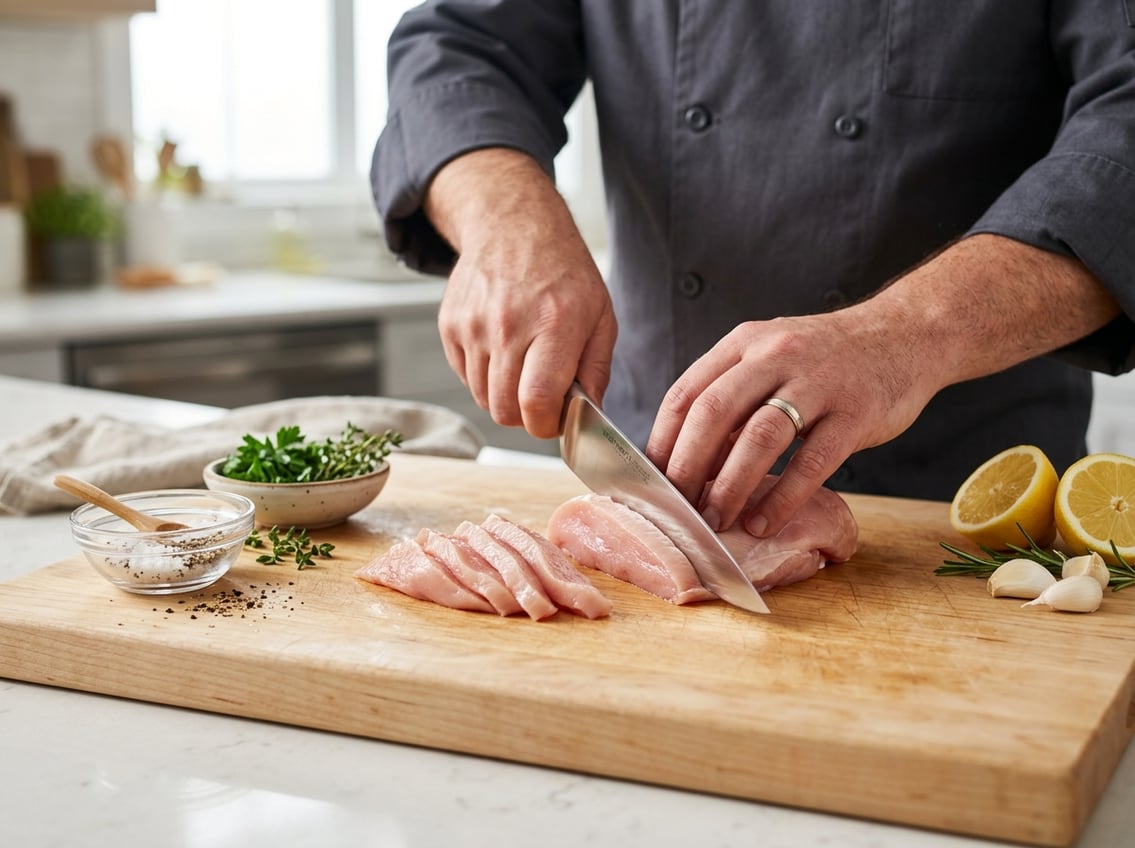
If you want juicy chicken breast, start by slicing it against the grain and matching the shape to your dish.
That choice affects texture, cooking time, and how evenly the meat cooks.
You do not need fancy tools to get clean cuts.
With a stable cutting board, a sharp knife, and a few basic habits, you can cut chicken breast with confidence.
Start With the Best Core Technique
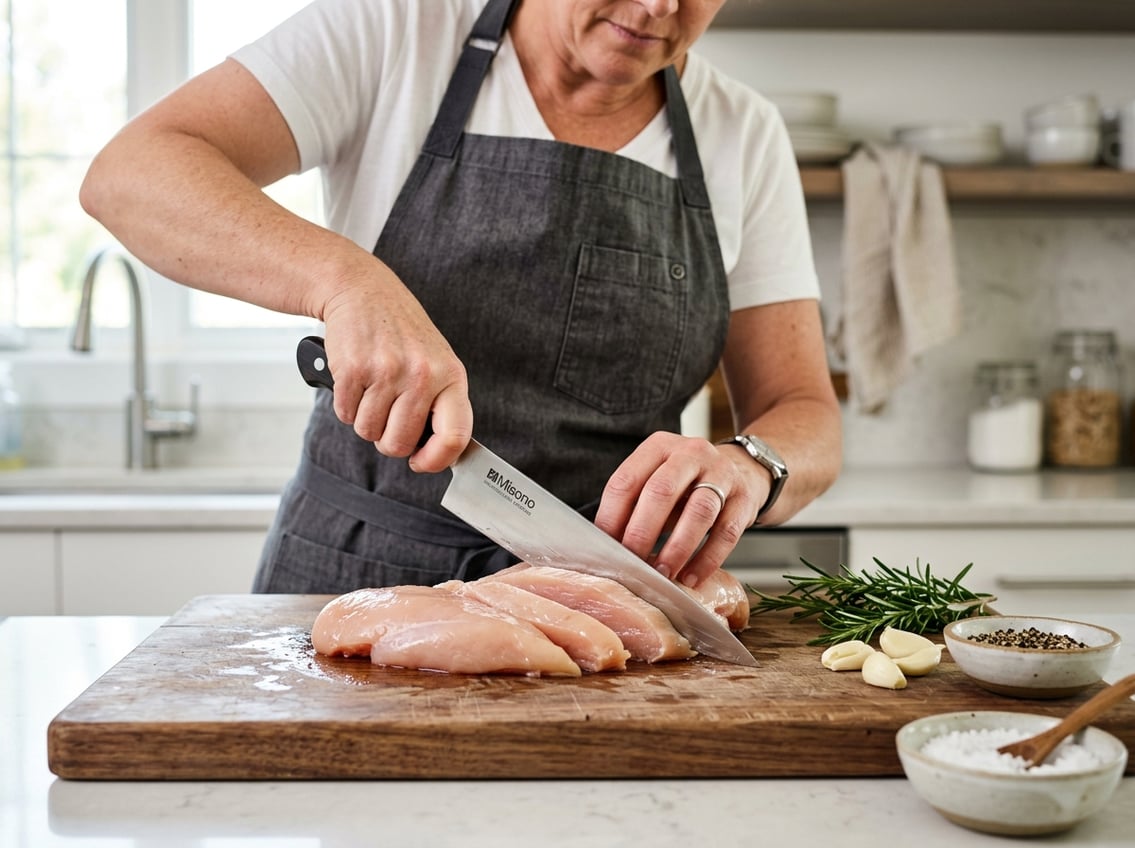
Make it a habit to cut against the grain every time you slice chicken breast.
This gives you a more tender bite and helps the meat stay pleasant to chew.
Why Cutting Against the Grain Matters
The grain is the direction of the muscle fibers.
When you cut across those fibers, the finished pieces feel less stringy and more tender.
That matters even more with a lean cut like chicken breast, which can turn dry or tough if you slice it poorly.
Cutting against the grain improves texture and supports even cooking.
How to Spot the Grain on a Chicken Breast
Look closely at the surface of the meat.
You will see thin lines running in one direction, and those are the muscle fibers.
Hold your knife perpendicular to those lines when you slice chicken.
If the breast curves, follow the local direction of the fibers in each part instead of forcing one straight line across the whole piece.
How Even Thickness Helps You Keep Chicken Tender
Even thickness helps the chicken cook at the same rate from edge to center.
If one side is much thicker, the thin end can dry out before the thick end is done.
You can trim, pound, or butterfly the breast to make the thickness more uniform.
That gives you cleaner results whether you grill, pan-sear, or bake.
Choose the Right Cut for the Recipe
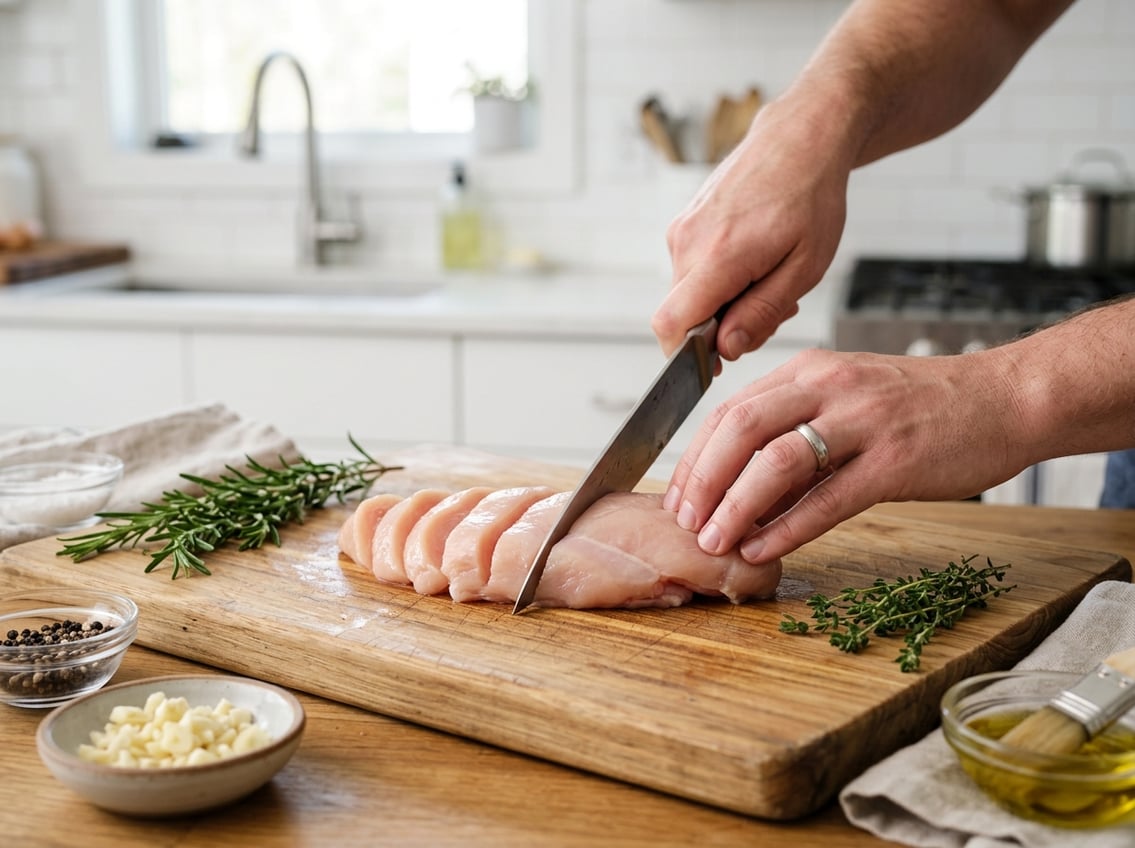
The best way to cut chicken breast depends on what you plan to cook.
Thin slices, cubes, cutlets, and a butterfly cut all serve different purposes, and each one changes the cooking time and final texture.
Thin Slices and Strips for Stir-Fries and Chicken Tenders
Use thin slices when you want fast cooking and good browning.
Strips work well for stir-fries, salads, fajitas, and homemade chicken tenders.
Hold the breast steady and slice into even strips.
Keeping the pieces the same width helps them cook at the same speed.
Cubes for Skewers, Soups, and Fast Weeknight Meals
To cube chicken breast, first cut it into strips.
Then turn the strips and cut across them into bite-size pieces.
This method works well for skewers, soups, pasta, and quick skillet meals.
Starting with strips first helps you make cleaner, more even cubes.
That matters when you want pieces that finish cooking at the same time.
Cutlets for Chicken Parmesan and Chicken Marsala
Cutlets are thin, flat pieces made by slicing the breast horizontally into two thinner pieces.
They are a strong choice for breaded dishes like chicken parmesan and pan-cooked meals like chicken marsala.
Chicken cutlets cook quickly and hold breading well.
Slicing horizontally through the thickest part gives you two even pieces.
Butterflied Breasts for Faster, More Even Cooking
To butterfly a chicken breast, slice it horizontally most of the way through, then open it like a book.
If you stop short of cutting all the way through, you get a butterfly chicken breast that lies flat and cooks more evenly.
Use this method for grilling, stuffing, or quick pan cooking.
It is a good choice when you want shorter cook time without making the meat too thin.
Tools and Setup That Make Cutting Easier
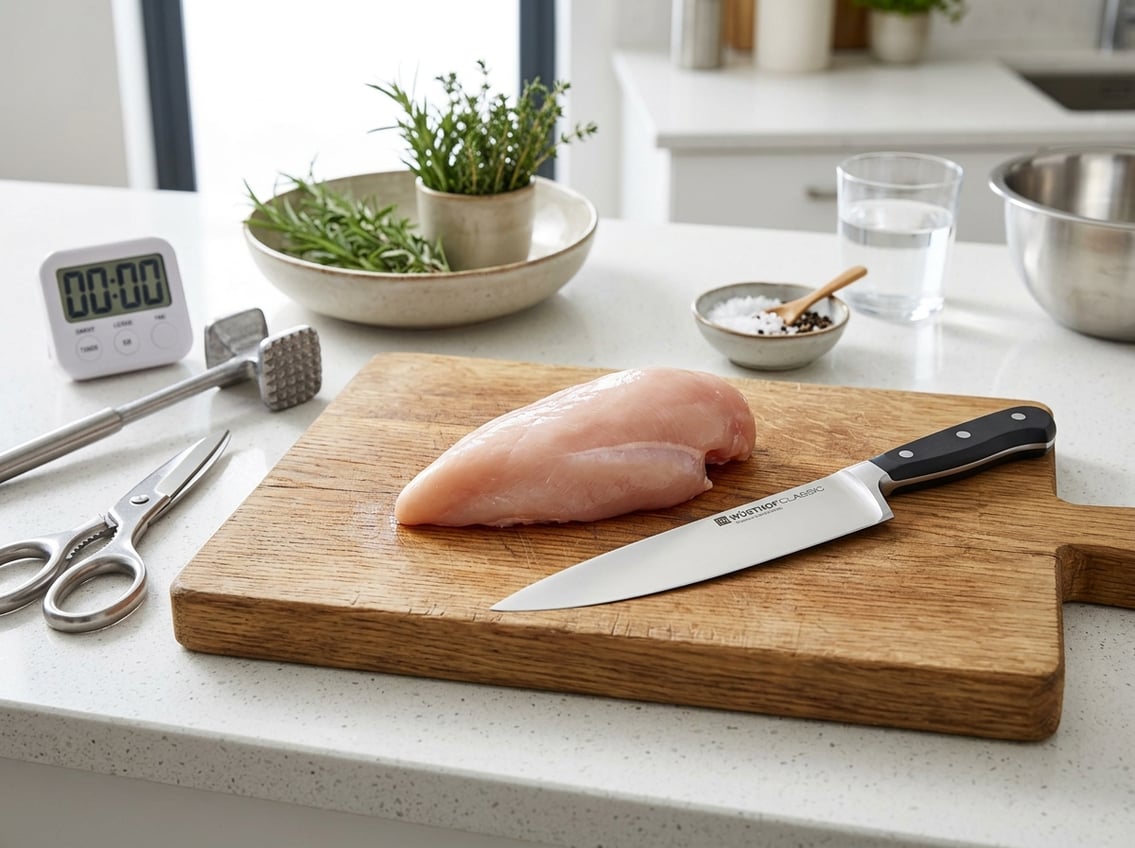
Good tools make cutting chicken breast safer and more accurate.
A sharp knife, a stable cutting board, and a few simple prep steps help you get cleaner cuts with less slipping.
Best Knife and Cutting Board Setup
Use a sharp chef’s knife or boning knife on a solid cutting board.
A dull blade needs more pressure, which makes slipping more likely and gives you ragged cuts.
Keep the board steady on the counter.
If needed, place a damp towel underneath it so it does not move while you work.
When to Use a Meat Pounder
A meat pounder helps when the breast is thick in one spot and thin in another.
Light pounding can even out the thickness, which helps the chicken cook more evenly.
Use it when you want cutlets for dishes like chicken parmesan or chicken marsala.
Place the meat between sheets of plastic wrap or in a storage bag before you pound it.
How to Make Raw Chicken Less Slippery and Easier to Handle
Cold chicken is easier to cut cleanly than chicken that is warm or too soft.
If the breast feels slippery, chill it for a short time before you start cutting.
Pat the surface dry with paper towels first.
Drying the chicken gives your knife a better grip and helps you make neater slices, especially when you are making strips, cubes, or cutlets.


