
What Does Chicken Breast Look Like When It Goes Bad? Key Signs
You can usually spot spoilage by checking the color, smell, and texture of the meat. A fresh chicken breast should look pink and moist, not gray, green, slimy, or sticky.
If your chicken breast looks discolored, feels slimy, smells off, or has been stored too long, you should throw it out to reduce the risk of foodborne illness.
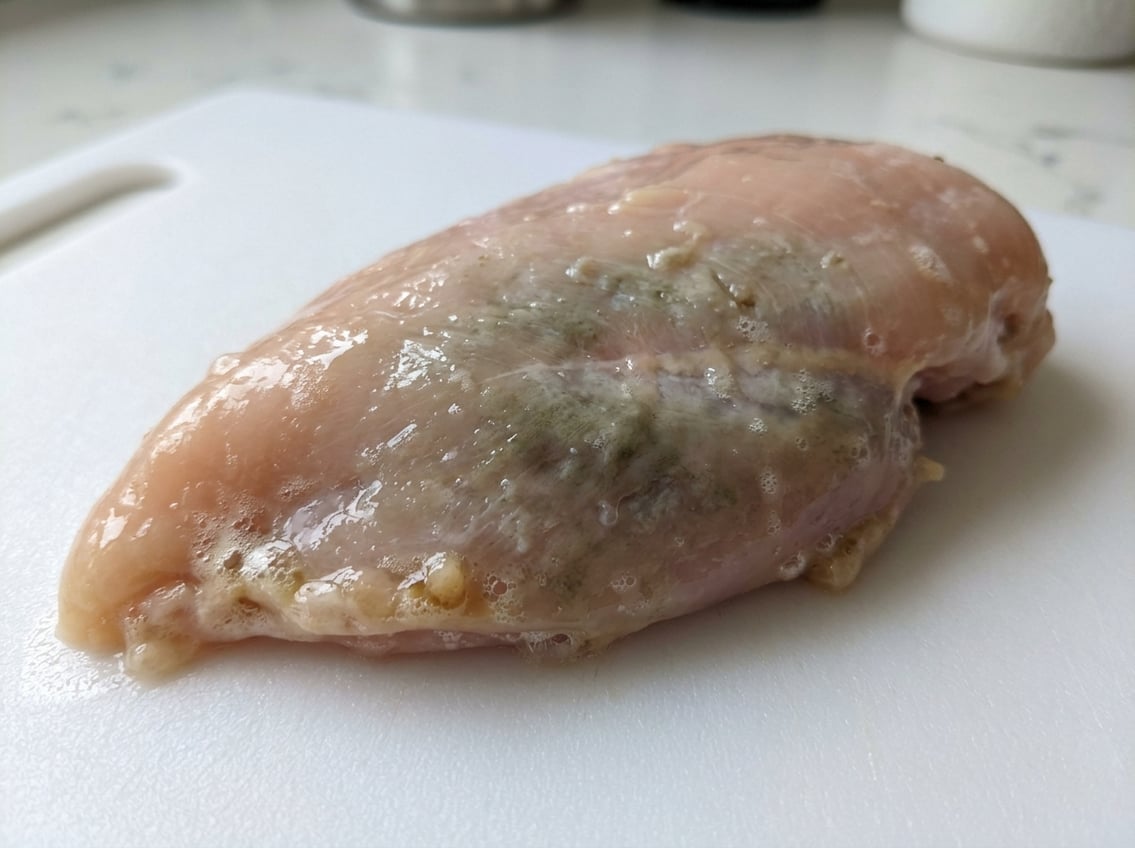
Spoiled chicken is not always obvious at first glance. A package can look normal and still be unsafe if the storage time, smell, or texture has changed.
Check more than one sign before you decide to cook chicken.
Visual Signs to Check First
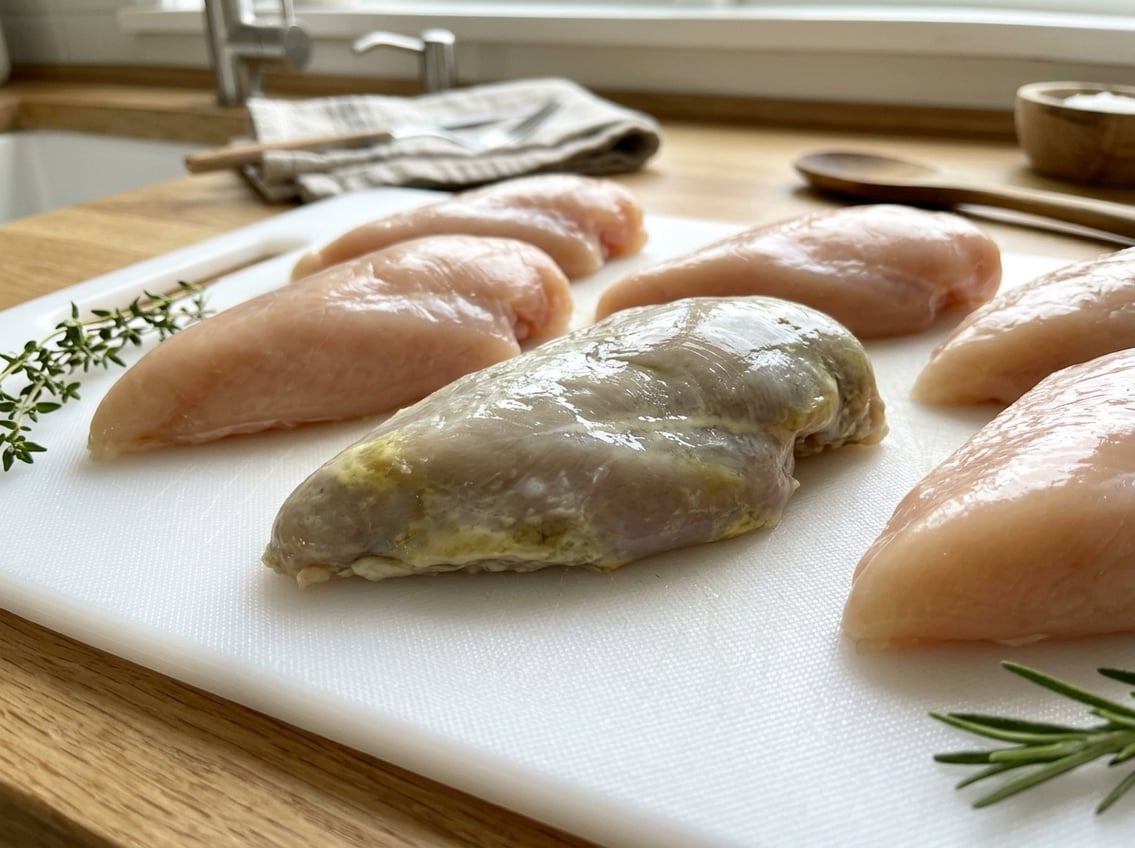
When you check raw chicken, look at the color first. Then touch the surface and notice any smell.
A single red flag can point to spoilage. A mix of changes makes it much more likely the chicken is unsafe.
If you worry about salmonella or e. coli, treat clear signs of spoilage as a reason to discard the meat.
Color Changes From Pink to Gray, Yellow, or Green
Fresh raw chicken breast usually looks light pink with white fat. According to Healthline’s guide on bad chicken, gray, green, or yellow color changes are strong signs that the chicken has gone bad.
Small shifts in color can happen as raw chicken sits in the fridge, and a slight fade does not always mean spoilage. If the meat looks dull, muddy, or patchy instead of fresh pink, you should be cautious.
Slimy Surface, Sticky Film, and Other Texture Clues
Fresh raw chicken should feel moist and soft, not slippery. If the surface feels slimy, tacky, or sticky, that is a common sign of spoilage.
You may also notice a thin film on the meat or residue on your fingers after touching it.
Mold, Dark Spots, and Other Clear Red Flags
Any visible mold means you should throw the chicken away. Do not cut away the bad part and keep the rest, because bacteria and mold can spread beyond what you see.
Dark spots can also be a problem, especially if they appear with a bad smell or slimy texture.
How Raw, Cooked, and Frozen Chicken Differ
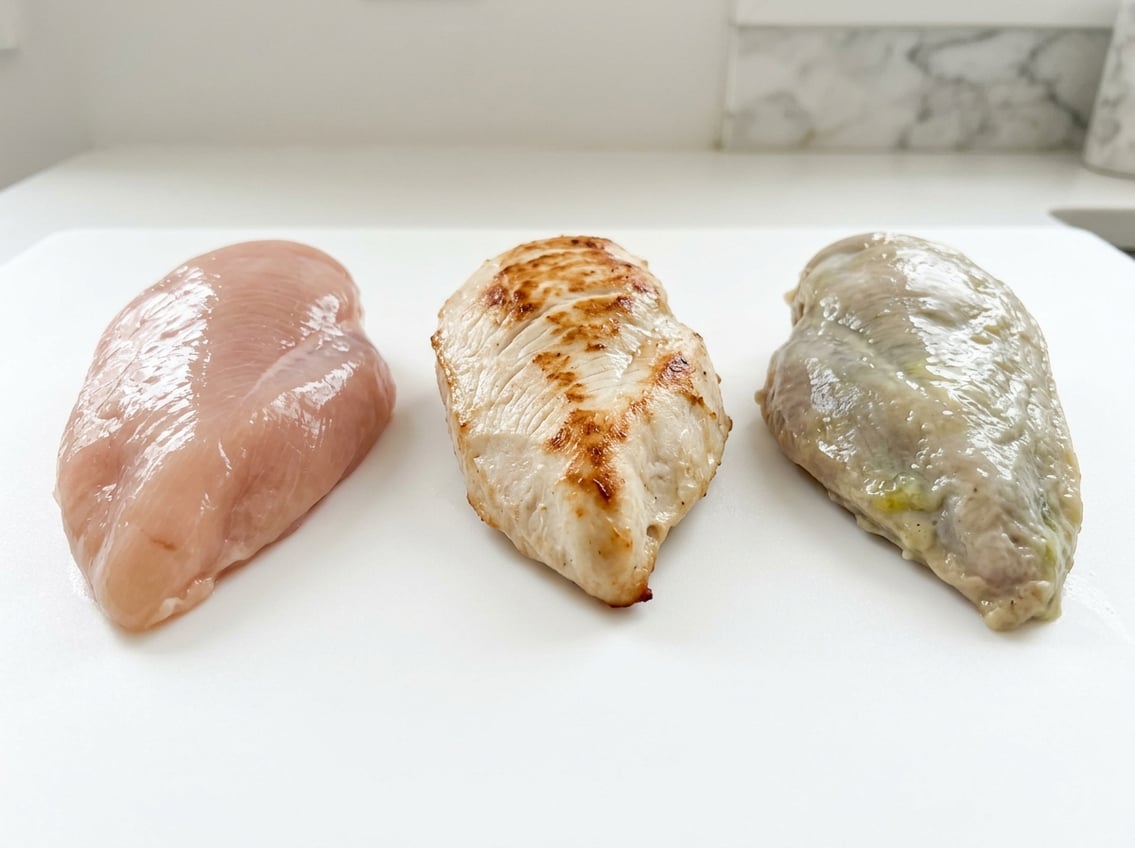
Raw, cooked, and frozen chicken do not look the same. You need to judge each one by its normal appearance.
Spoiled meat often looks dull, dry, slimy, or off in smell and texture.
What Fresh Raw Chicken Should Look Like
Fresh raw chicken breast should look light pink and glossy, with white fat. It should not have a strong smell.
A faint color shift can happen from air exposure, which does not always mean the meat is bad.
Raw chicken is usually best used within 1 to 2 days in the fridge, as noted by Healthline.
How Cooked Chicken Changes as It Spoils
Cooked chicken should look white or lightly browned, depending on the seasoning and cooking method. If it starts turning gray, green, or develops mold, it is no longer safe.
Cooked chicken that turns slimy, sticky, or very soft is a bad sign. You should throw it out rather than reheat it.
Frozen Chicken, Ice Crystals, and Freezer Burn
Frozen chicken can look dry on the surface even when it is still safe. Ice crystals and white, dry patches often point to freezer burn, which affects quality more than safety.
Freezer burn does not always mean the chicken is spoiled, but it can make the meat taste stale or tough. If frozen chicken has a bad odor after thawing, or if the texture is off, it is safer to discard it.
Storage Clues That Help You Decide
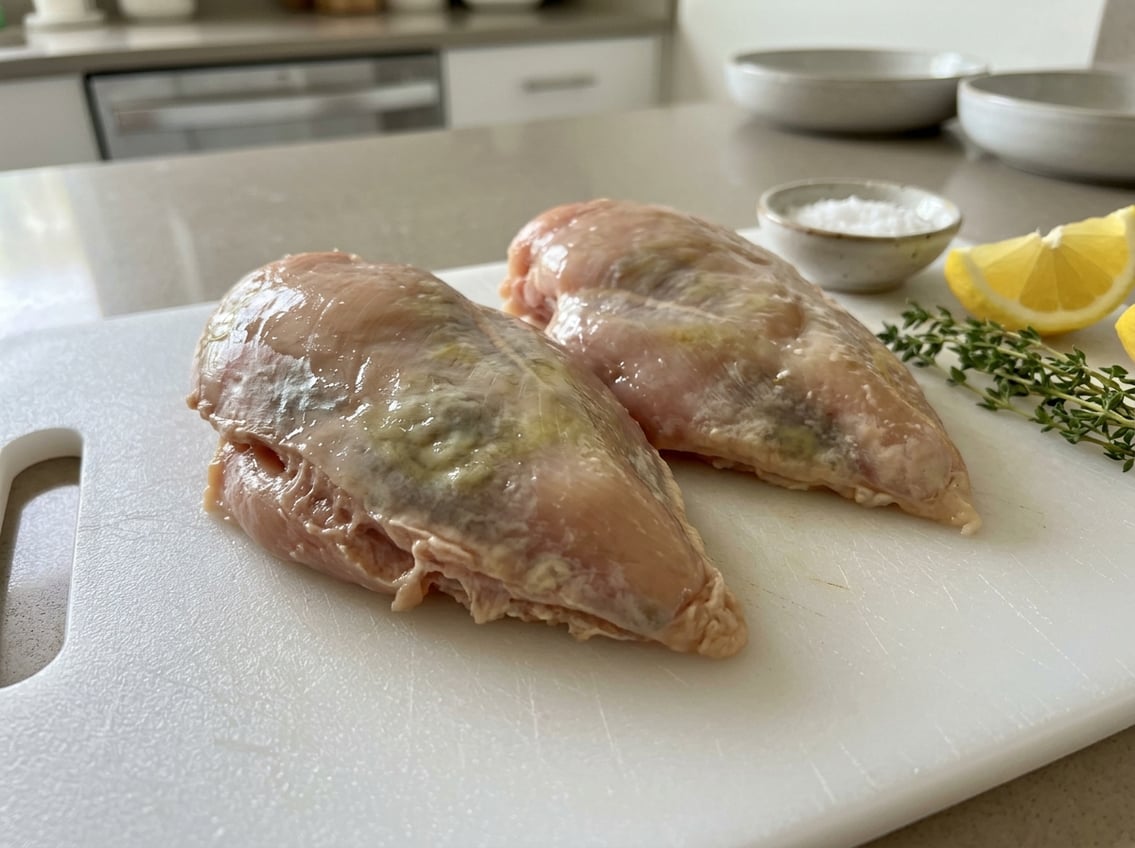
Storage time gives you important context. Even if chicken looks normal, the expiration date, pack date, and time in the fridge help you judge whether it is still safe.
Expiration Date, Pack Date, and Time in the Fridge
Check the use-by date before you buy or cook chicken. The pack date tells you when the chicken was packaged, while the use-by date is the one that matters most for home use.
Raw chicken in the fridge usually lasts only 1 to 2 days, and cooked chicken keeps for about 3 to 4 days when stored cold. If your chicken is past that window, appearance alone is not enough to make it safe.
Proper Storage for Raw Chicken and Leftovers
Proper storage helps slow spoilage. Keep raw chicken cold at 40°F or below.
Store cooked leftovers in a sealed container right after eating. Do not leave raw or cooked chicken sitting out for long periods.
Freezing Chicken Safely With Freezer Bags or Aluminum Foil
If you do not plan to use raw chicken soon, freeze it before it spoils. Use freezer bags or wrap the chicken tightly in aluminum foil so air does not dry it out.
Write the purchase date on the package before you freeze chicken breast. That makes it easier to track how long it has been stored.
When to Throw It Out Immediately
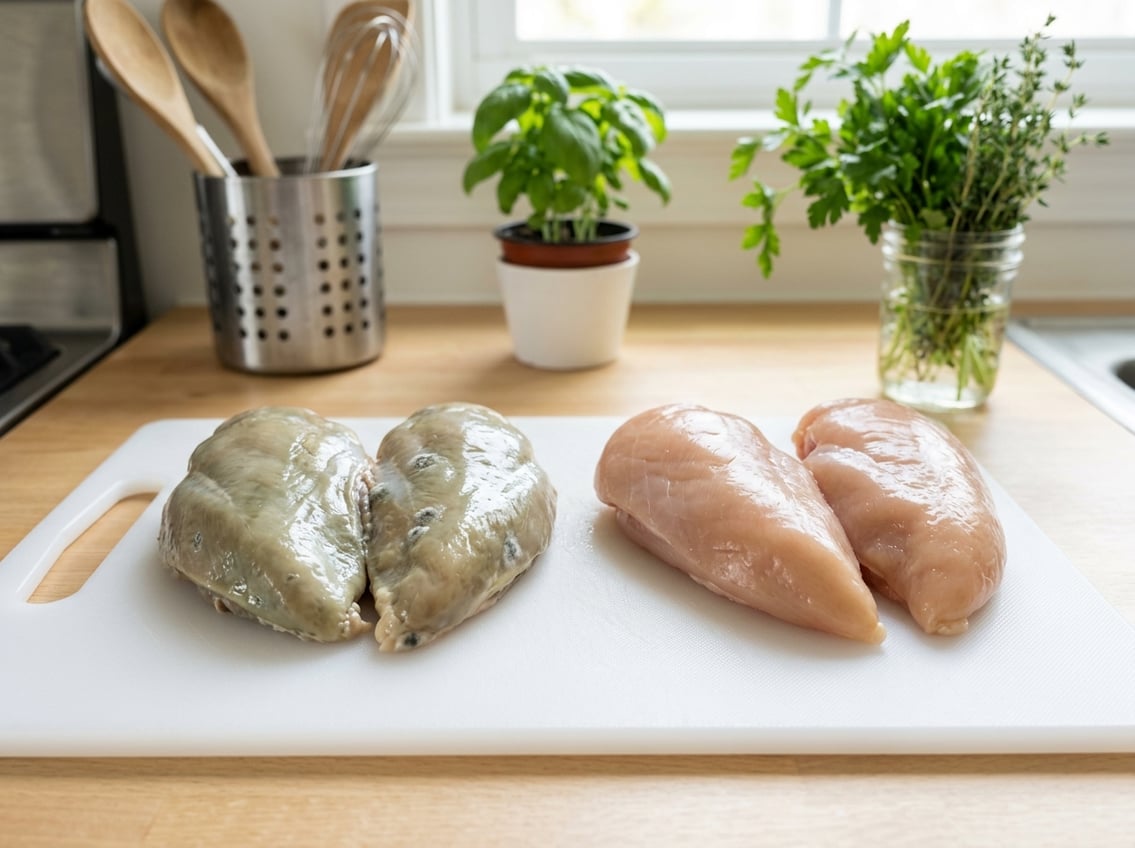
If the meat looks bad, smells bad, or has been stored too long, the safest choice is to throw it away.
Warning Signs Linked to Foodborne Illness Risk
A strong sour smell, gray or green color, and slimy texture all warn you about spoilage. These changes can point to bacteria growth and a higher risk of foodborne illness, including salmonella and e. coli.
The risk goes up if the chicken has been left in the temperature danger zone or kept past its safe storage time.
Why Smell, Appearance, and Storage History Matter Together
Smell alone is not enough, because some spoiled chicken may not smell very strong at first. Appearance alone is not enough either, because seasoning or packaging can hide changes.
Use all three clues together: smell, appearance, and storage history. If two or more of them raise concern, discard the chicken.
When in Doubt, Do Not Taste-Test Chicken
Do not taste chicken to check whether it is bad. Even a small bite can expose you to bacteria if the meat is spoiled.
If you feel unsure, throw it out. Choose safety when the chicken breast looks questionable or you cannot confirm how long it has been stored.


