
Which Is More Nutritious Chicken Breast or Thigh? Key Differences
You often hear that chicken breast is the leaner choice, and chicken thigh is the juicier one. When you ask which is more nutritious chicken breast or thigh, the answer depends on what you mean by nutritious.
If you want more protein per calorie and less fat, chicken breast usually wins. If you want more flavor, a little more iron and zinc, and a richer texture, chicken thigh can be the better fit.

Both cuts can fit into a healthy diet. The real difference comes down to serving sizes, skin, cooking method, and your personal nutrition goal.
What the Nutrition Comparison Shows First
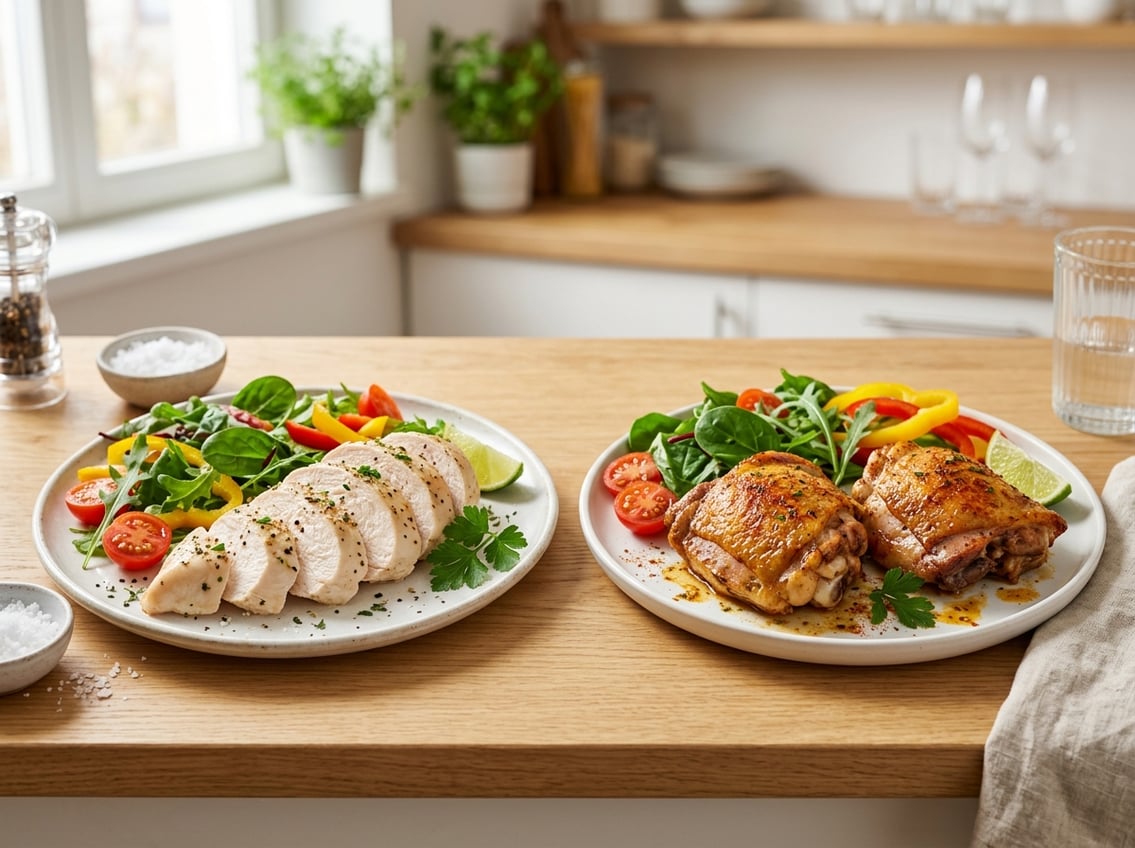
Chicken breast and chicken thigh both provide lean protein, especially when you choose skinless portions and control your serving size. Chicken breast gives you more protein per calorie, while chicken thigh has more fat and calories per serving.
Calories, Protein, and Fat Per Serving
A roasted, skinless chicken breast has about 165 calories and 31 grams of protein per 100 grams. A roasted, skinless chicken thigh has about 179 calories and 24.8 grams of protein per 100 grams, according to Verywell Health’s comparison of chicken breast vs thigh.
The breast is also lower in fat, with about 3.57 grams versus 8.15 grams in the thigh. Chicken breast is a stronger choice when you want a high-protein diet with fewer calories.
Chicken thigh still provides good protein, just with more fat in each serving.
Why Chicken Breast Is Higher in Protein Per Calorie
Chicken breast is a classic lean protein because it is made of muscle that does less work than the muscles in the legs. That lower-fat structure means more of each bite is protein and less is energy from fat.
If your goal is to keep calories lower while reaching your protein target, chicken breast gives you a better protein per calorie ratio.
Why Chicken Thighs Usually Have More Fat and Calories
Chicken thighs come from a more active muscle group, so they naturally carry more fat and a richer texture. They also tend to have more monounsaturated fat and polyunsaturated fat than breast meat, which helps explain their softer mouthfeel and stronger flavor.
More fat means more calories. For many people, that is not a problem, especially if you value taste and fullness over the leanest possible cut.
Nutrients Beyond Macros
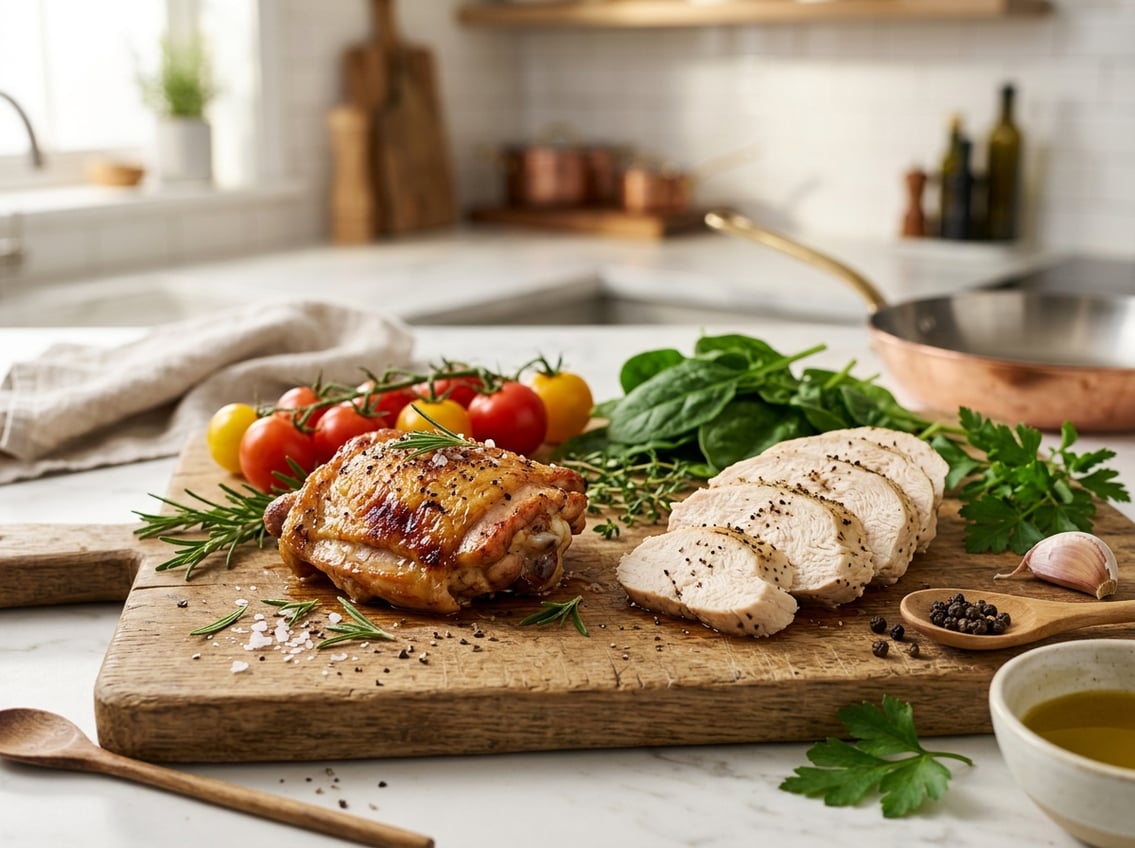
Protein and fat are only part of the picture. Chicken breast and chicken thigh also differ in micronutrients, and the difference comes from how each cut is built, including the amount of myoglobin in the darker meat.
White Meat vs Dark Meat and the Role of Myoglobin
Chicken breast is white meat, while chicken thigh is dark meat. Dark meat gets its deeper color from myoglobin, a protein that stores oxygen in muscle tissue.
That extra myoglobin helps explain why thighs taste richer and look darker. It also lines up with their higher levels of certain minerals and B vitamins.
Where Thighs Can Offer More Iron, Zinc, and B Vitamins
Chicken thighs can give you a small edge in iron and zinc. In the roasted, skinless comparison from Verywell Health, thighs had slightly more iron and much more zinc than breasts, along with a bit more vitamin B-12.
Those nutrients matter for oxygen transport, immune function, and energy metabolism.
Where Breasts Can Offer More Niacin, Vitamin B6, and Choline
Chicken breast often gives you more niacin, vitamin B6, and choline. In the same comparison, breast had more vitamin B6 and choline than thigh, and it is also a strong source of niacin.
These nutrients support energy use, nervous system function, and cell health.
How Skin, Portions, and Cooking Change the Answer
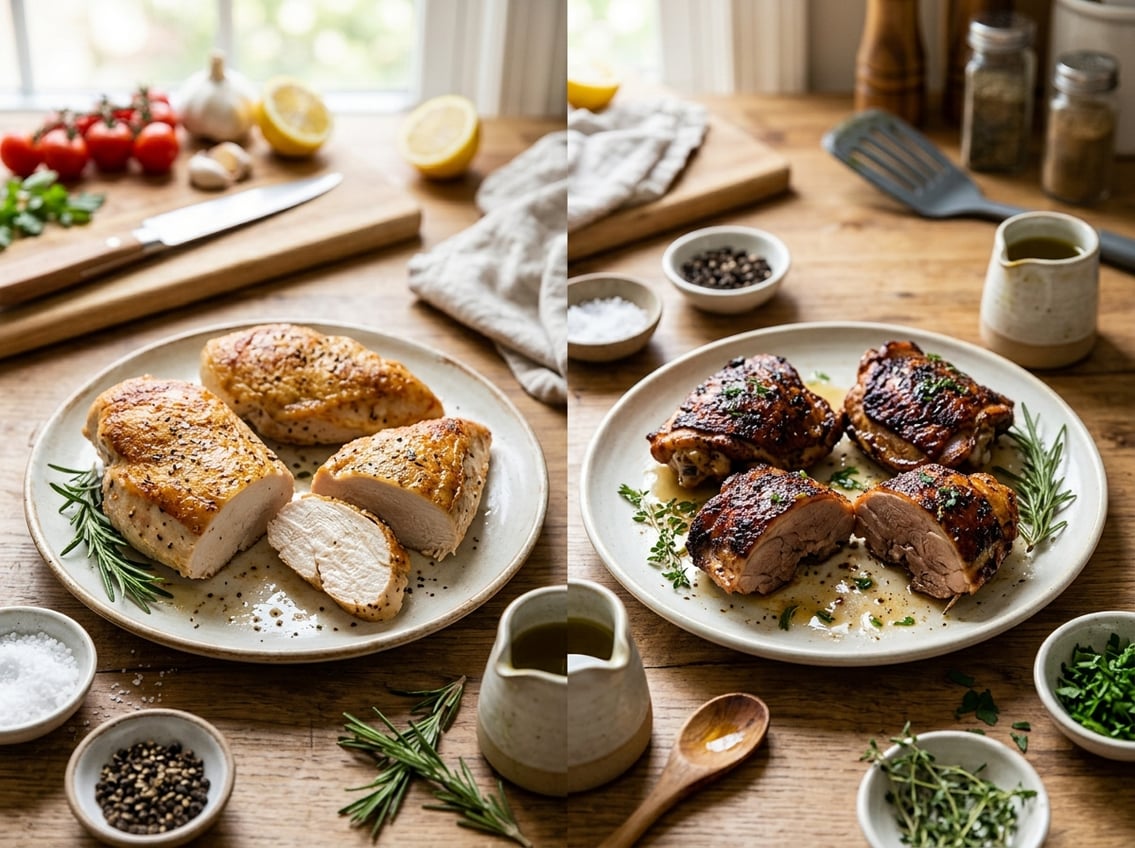
Skin, cooking style, and serving size can change the nutrition gap a lot. A skin-on thigh is a very different food from a skinless chicken breast, even before you add oil, breading, or sauces.
Skinless Chicken vs Skin-On Chicken
Skinless chicken is the better choice when you want lower fat and fewer calories. According to Verywell Health, leaving the skin on can raise fat and calories by about 25% to 30%.
The skin adds a lot of extra energy to both thighs and breasts.
Healthier Cooking Methods for Either Cut
Baking, grilling, and roasting help keep chicken lighter. Fried or breaded chicken can add a lot of extra fat and calories.
If you want the cleaner option, keep added oils low and choose simple seasonings.
How Serving Sizes Affect Calories, Fat, and Fullness
Serving sizes matter as much as the cut itself. A large portion of thigh can easily deliver more calories than a modest portion of breast, even if both are cooked the same way.
Portion control helps you match your food to your goal.
Choosing the Better Cut for Your Goal

Your best choice depends on what you want from the meal. Chicken breast and chicken thighs both belong in a balanced kitchen, and each one has a clear use.
Best Option for Weight Loss and Lean Meal Prep
If you want the best protein per calorie, chicken breast is usually the better pick. It is the leaner option, and it makes it easier to hit protein targets without using up many calories.
Skinless chicken breast is the most practical choice when you want tight calorie control.
Best Option for Fullness, Flavor, and Flexible Cooking
If you care more about taste, tenderness, and staying full, chicken thighs often have the edge. The extra fat gives them more flavor and a juicier texture, which can make meals feel more satisfying.
Chicken thighs also hold up well in many cooking methods, from roasting to shredding in soups, bowls, and tacos. For many home cooks, that flexibility makes them easier to enjoy regularly.
When Mixing Both Cuts Makes the Most Sense
You do not need to choose only one.
Mixing chicken breast and chicken thighs in your weekly meals gives you a balance of lean protein, flavor, and nutrients.
This approach works well when you want the lightness of breast on some days and the richer taste of thigh on others.
It is a simple way to keep meals varied without making nutrition harder to manage.


