
Is It Safe to Boil Chicken Breast From Frozen? What to Know
If you are asking is it safe to boil chicken breast from frozen, the short answer is yes, as long as you cook it fully and check the internal temperature.
You can boil frozen chicken, and food safety depends on reaching a safe doneness point, not on whether the meat started frozen.
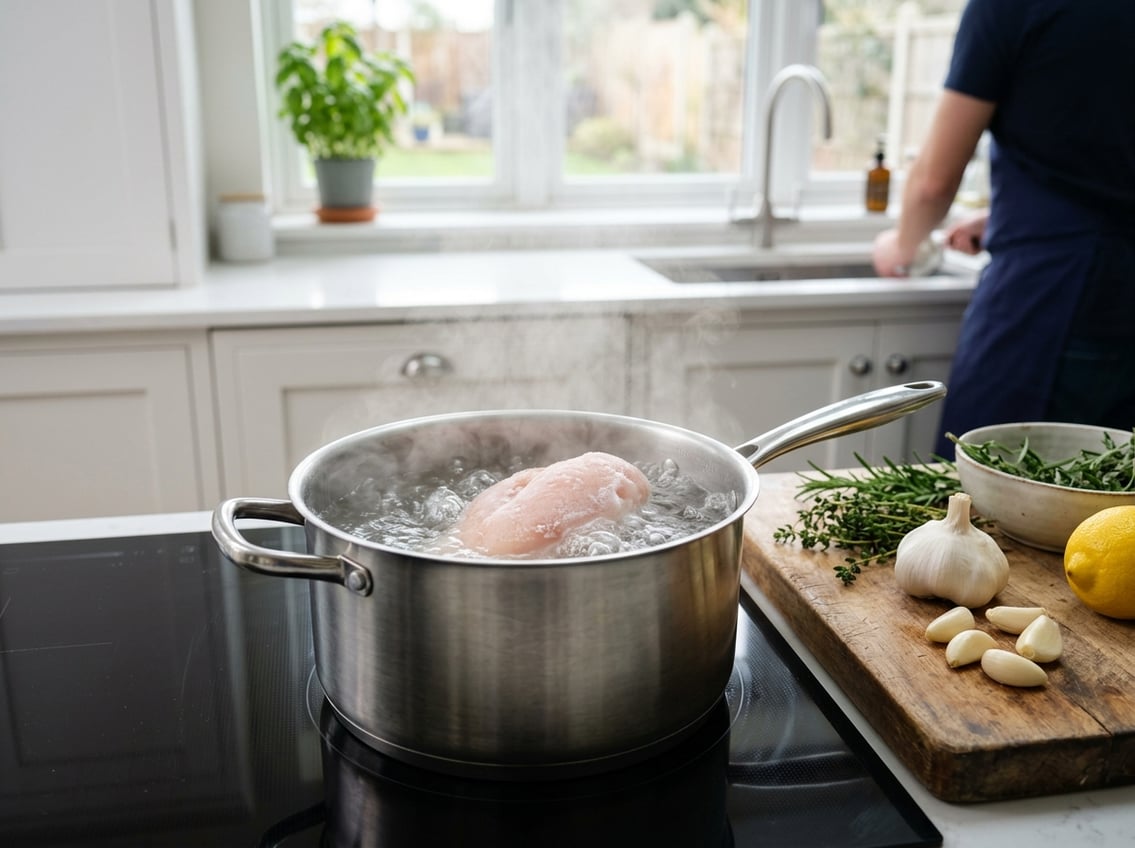
This method works when you need dinner fast and forgot to thaw the meat.
It is also useful when you want shredded chicken for soup, salad, or meal prep.
The key is simple: boil frozen chicken breast until the thickest part reaches 165°F, then let it rest briefly before you slice or shred it.
When Boiling Frozen Chicken Breast Is Safe
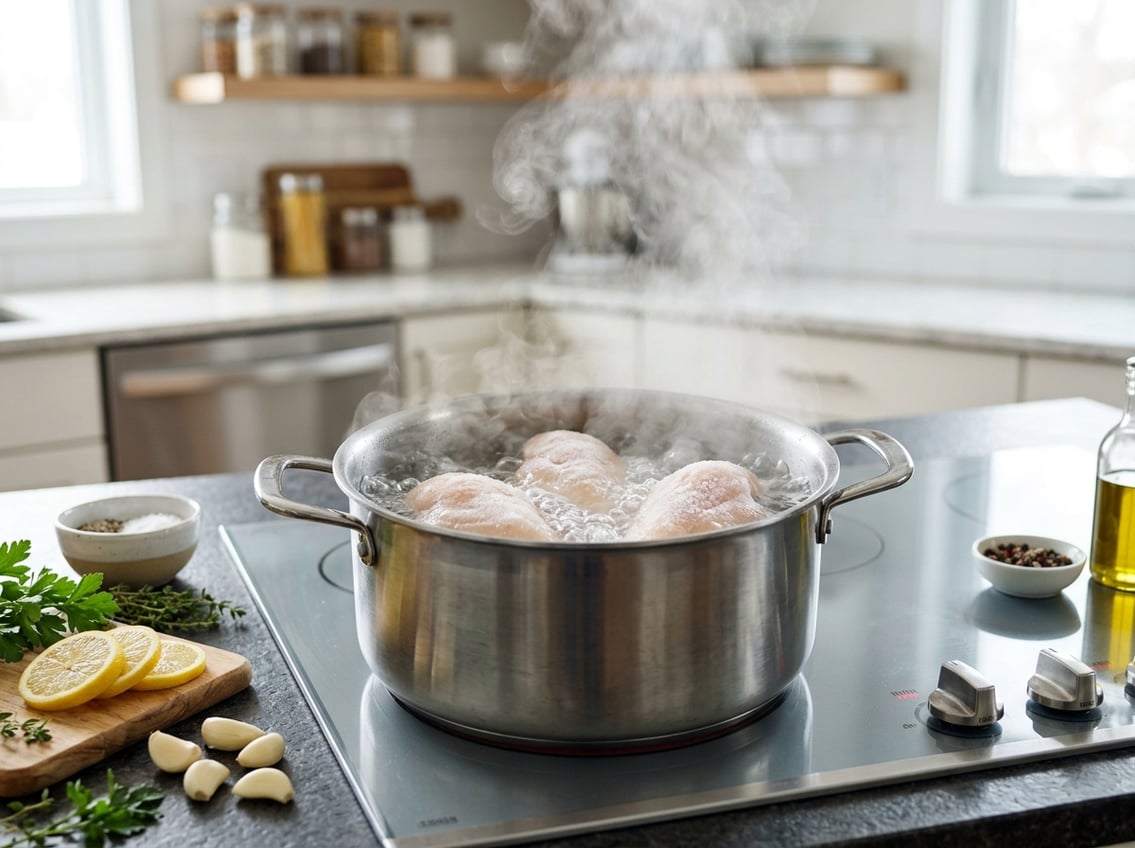
You can safely boil frozen chicken breast when you keep the meat covered in liquid, cook it all the way through, and verify doneness with a meat thermometer.
Food safety depends on internal temperature, not appearance alone.
This method is a practical choice for boneless breasts, and it can work well for soups and shredded chicken.
According to Longbourn Farm’s frozen chicken guide, you can cook frozen chicken breast safely as long as it reaches 165°F.
The 165°F Rule and Why It Matters
Chicken is safe to eat when the thickest part reaches 165°F.
That temperature reduces the risk of harmful bacteria in poultry, which is why a meat thermometer matters more than the clock.
You should check the internal temperature in the thickest part of the breast.
If it has not reached 165°F, keep cooking it and test again.
Why Frozen Chicken Takes Longer Than Fresh
Frozen chicken starts colder, so the center needs more time to warm up.
The outside can cook while the center is still coming up to temperature, which is why steady heat and full coverage matter.
That extra time is normal.
You only need to plan for a longer cook time than you would with thawed chicken.
When This Method Is Not the Best Choice
Boiling frozen chicken breast is not the best option when you want browning, crisp skin, or very precise texture.
It also is not ideal for stuffed chicken or recipes that depend on even shaping before cooking.
If your breasts are very thick or uneven, another method may give you better control.
In those cases, thawing first can make the result more consistent.
How to Cook It Evenly Without Drying It Out
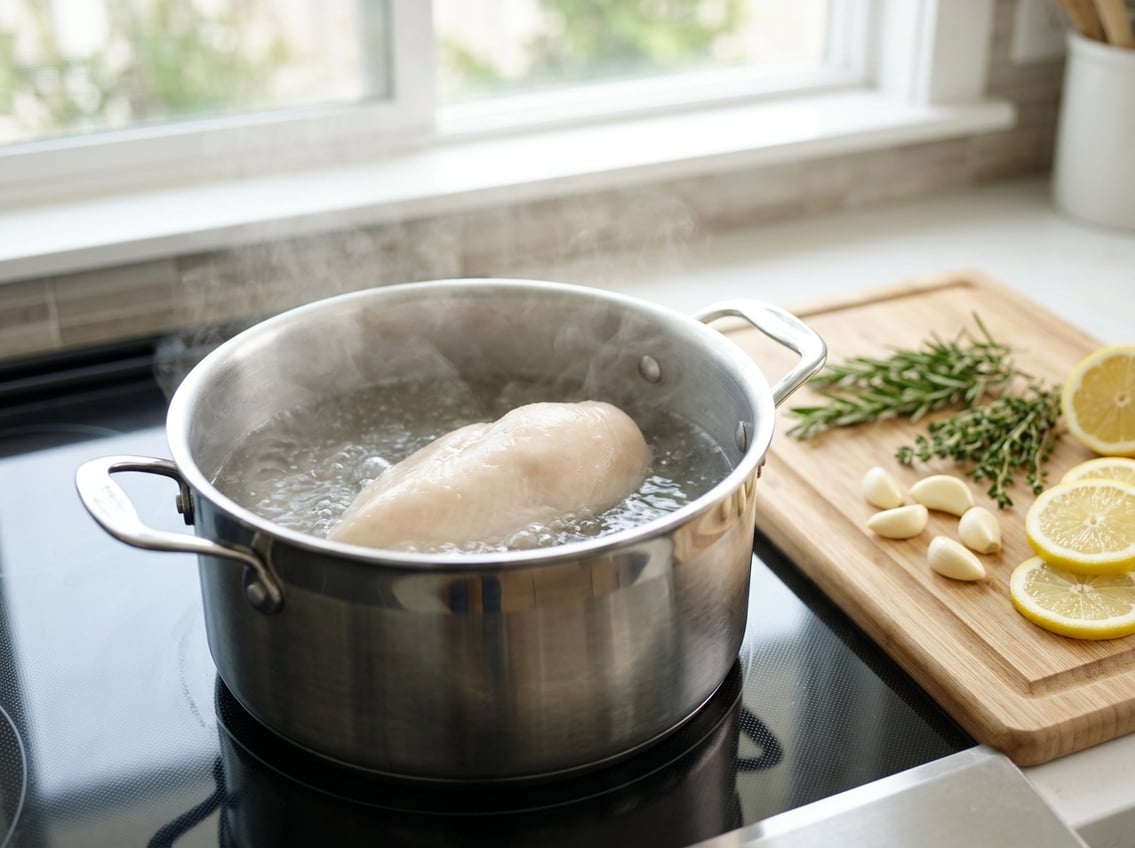
Aim for gentle, even heat.
You want the water hot enough to cook the chicken efficiently, then calm enough to avoid harsh bubbling that can make the outside tough before the inside is done.
Use enough liquid to cover the meat.
Keep the pieces similar in size when you can, which helps reduce uneven cooking in boiled frozen chicken breasts.
Start With Cold Water and Full Coverage
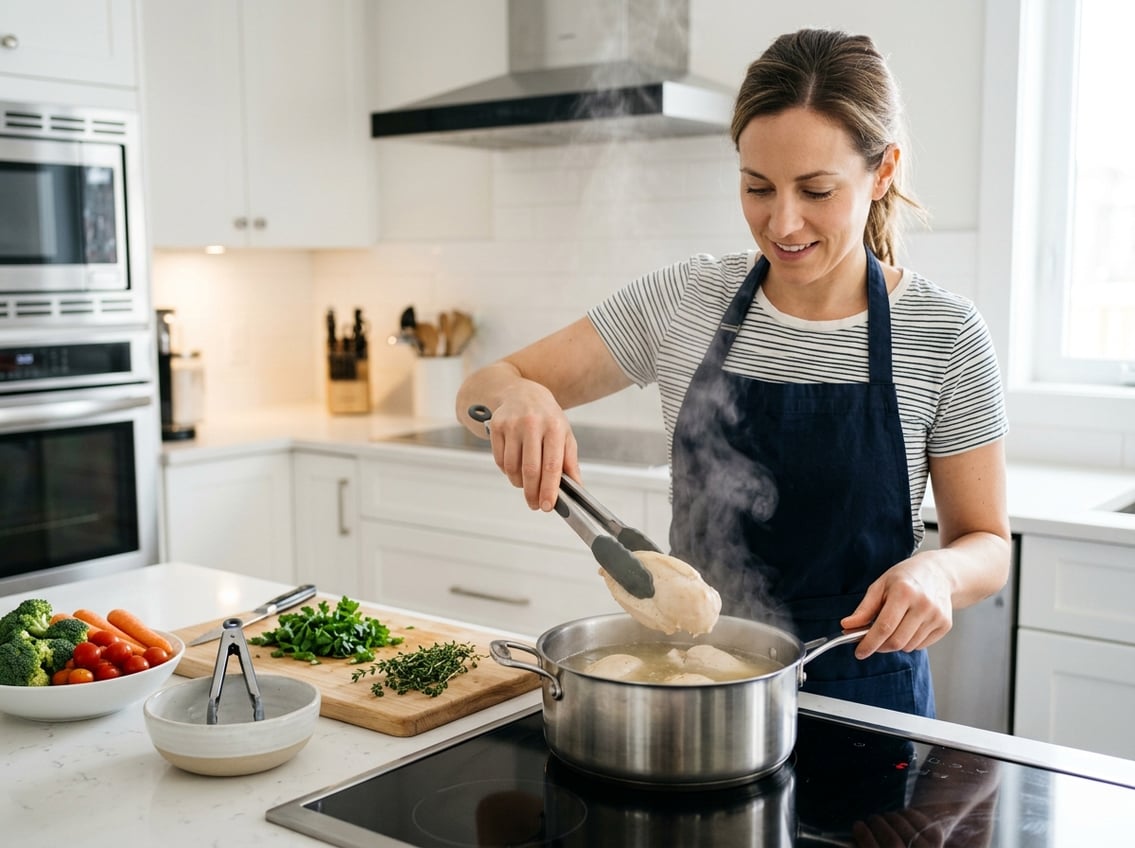
Place the frozen chicken in a pot and cover it completely with cold water or broth.
Starting cold gives the outside less of a shock and helps the chicken heat more evenly.
If part of the meat sits above the liquid, it will cook unevenly.
Add more water as needed so the chicken stays submerged.
Bring to a Boil, Then Switch to Simmering
Bring the pot to a boil first, then lower it to a gentle simmer.
Strong boiling can make the outside of boiled frozen chicken cook too fast while the center lags behind.
A steady simmer is usually enough for boiling chicken.
It keeps the liquid hot without beating the meat apart.
How to Avoid Uneven Cooking in Thick Pieces
Thicker breasts need more time, and very thick ends may cook slower than thin ones.
If the pieces vary a lot, you may want to pound them after thawing next time, or cook them separately by size.
Rotate the pieces once during cooking if needed.
That can help the heat reach all sides more evenly.
Timing, Temperature, and Doneness Checks
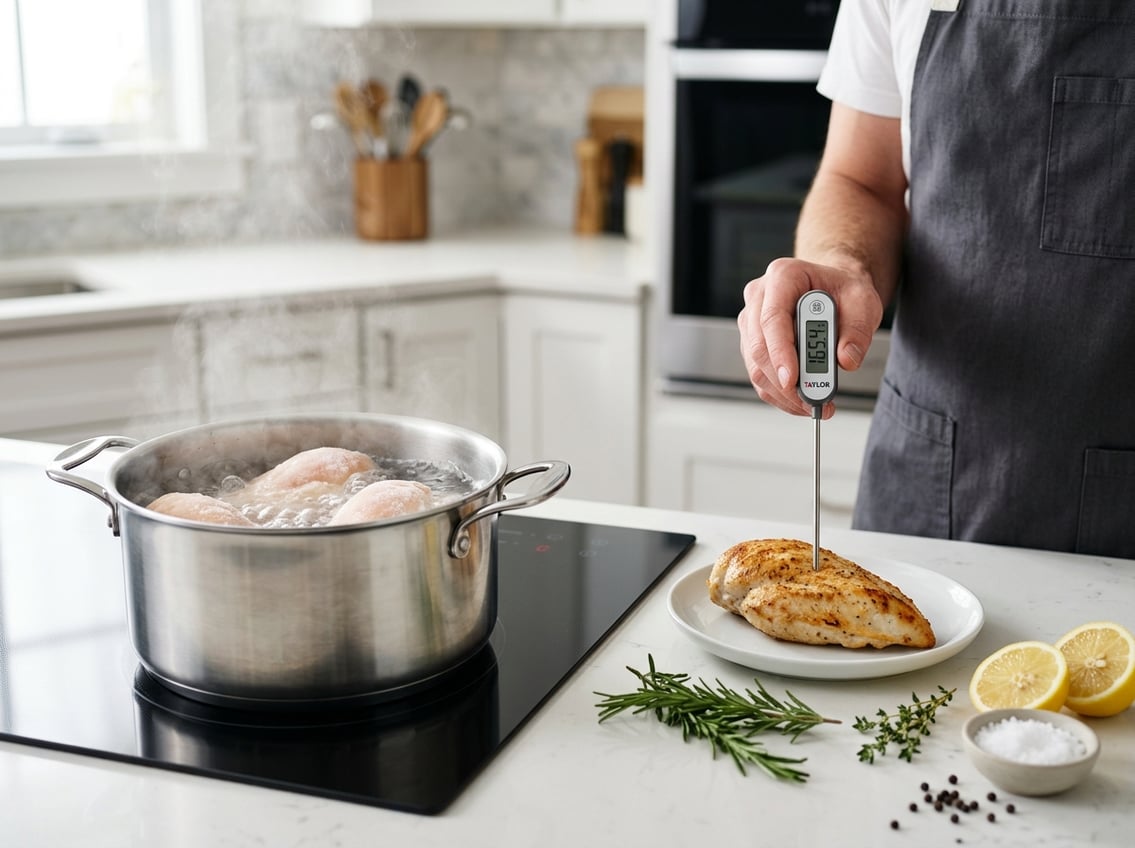
Use time as a rough guide, not a guarantee.
The safest way to know how long to boil frozen chicken breast is to use both time and temperature, then confirm the thickest part is fully cooked.
For a simple kitchen reference, Longbourn Farm notes that frozen chicken breasts often take about 20 to 25 minutes, with larger pieces taking longer.
Typical Time Range for Boneless Breasts
Most boneless frozen chicken breasts need about 20 to 25 minutes in simmering liquid, though smaller pieces may finish sooner.
Larger breasts can take 30 minutes or more.
If you are boiling frozen chicken breasts for shredding, keep the heat steady and test early.
It is easier to add a few more minutes than to fix overcooked chicken.
How Size and Thickness Change the Cook Time
Thick breasts need longer because heat moves inward slowly.
Thin breasts cook faster and may become dry if you keep them in the pot too long.
Two breasts of very different sizes may not finish at the same time.
When possible, choose pieces that are close in size.
Best Way to Test the Thickest Part
Insert a meat thermometer into the thickest part of the breast, away from the pot bottom and away from any bone.
Wait for the reading to settle, then look for 165°F.
If the center is not there yet, keep cooking and test again in a few minutes.
Do not rely on color alone, since frozen chicken can look done on the outside before it is safe inside.
Handling, Serving, and Smart Uses After Cooking
Safe handling matters as much as cooking.
Clean tools, separate raw and cooked chicken, and store leftovers quickly to lower the risk of cross-contamination.
The USDA’s food safety basics stress clean hands, clean surfaces, and careful cooking.
Those habits matter any time you boil chicken from frozen.
Preventing Cross-Contamination in the Kitchen
Use one plate or cutting board for raw chicken and a separate one for cooked chicken.
Wash your hands, knives, and counters after handling the raw meat.
Do not return cooked chicken to the same plate that held it before boiling.
That simple step helps keep the meal safe.
How to Shred, Slice, or Dice for Meals
Let the chicken rest for a few minutes after cooking so the juices settle.
Then shred it with two forks, slice it for sandwiches, or dice it for salads and casseroles.
If the chicken feels too hot to handle, wait a bit longer.
Warm chicken is easier to shred and less likely to fall apart unevenly.
Ways to Use the Chicken and Save the Broth
You can use boiled frozen chicken for chicken salad, chicken noodle soup, tacos, grain bowls, and wraps.
If you cooked the chicken in plain water or broth, strain and cool the liquid first to save the broth.
You can add that cooking liquid to rice, soup, or pan sauces.
This method lets you get more use out of the same pot.


