
How Do You Know Chicken Breast Is Ready? Key Signs
How do you know chicken breast is ready? Check the internal temperature first, then use appearance and texture as backup.
If you cook chicken breast for dinner, a thermometer gives you the clearest sign that it is both safe and cooked through.
Chicken breast is ready when the thickest part reaches a safe minimum internal temperature of 165°F (74°C), and the meat looks opaque, feels firm, and gives clear juices.
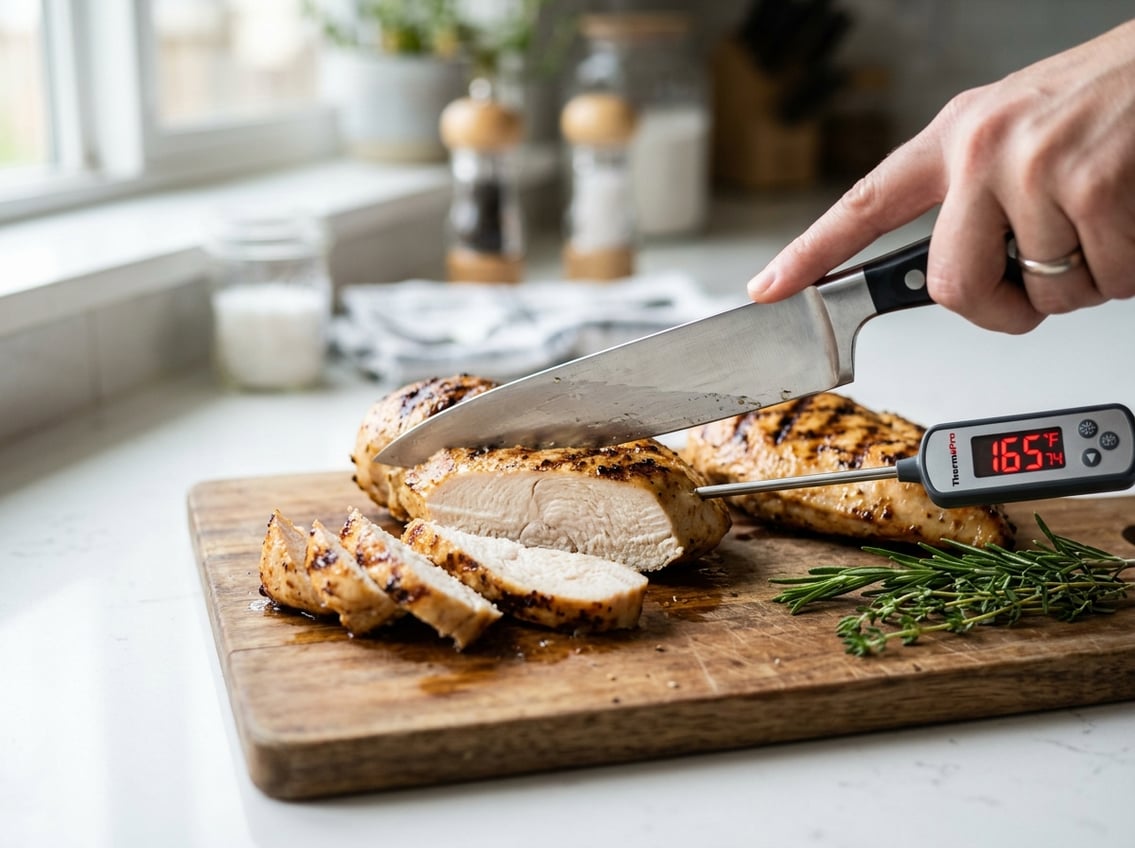
The single temperature check matters because chicken can look done before it truly is.
Visual cues help, but a meat thermometer or instant-read thermometer is more dependable.
Check Doneness by Temperature First
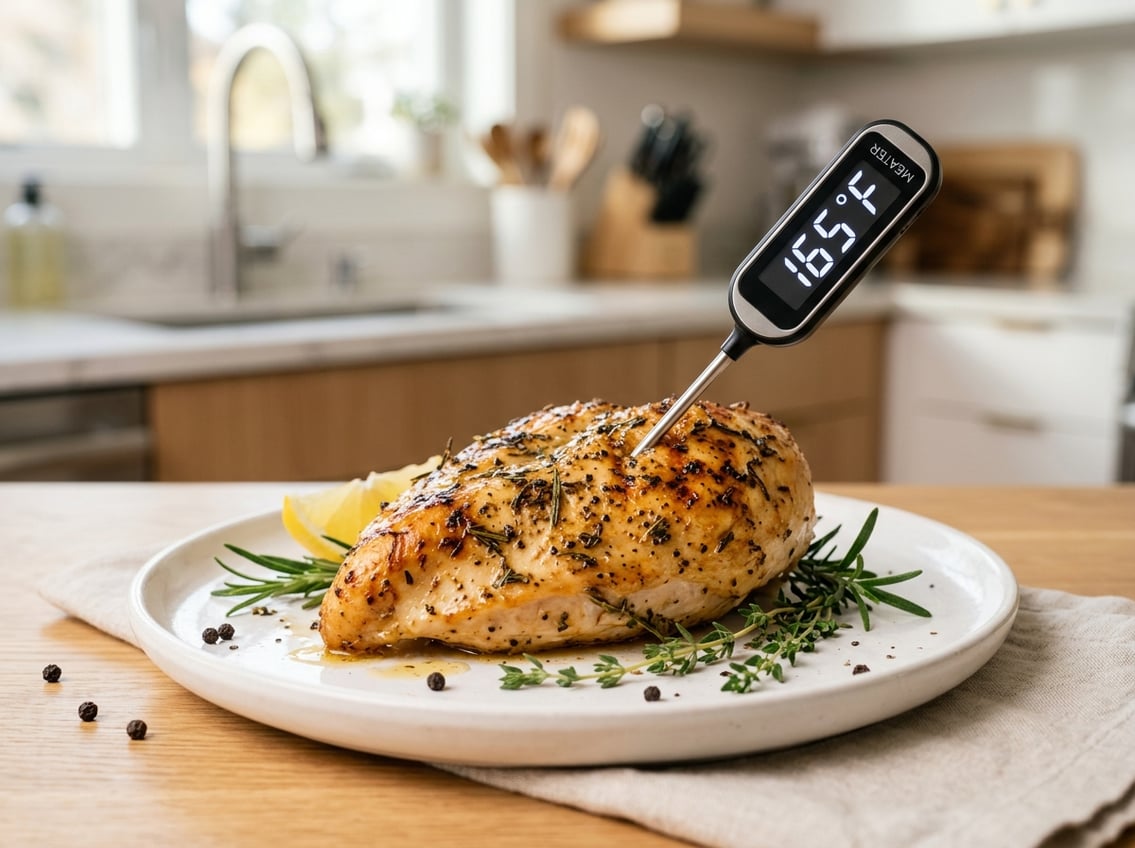
A thermometer gives you the clearest answer when cooking chicken.
It removes guesswork and helps you avoid food safety risks and dry meat.
Use an Instant-Read Thermometer
An instant-read thermometer is the easiest tool for checking doneness.
It gives you a quick reading without keeping the chicken out of the heat for long.
A standard meat thermometer also works if it reads accurately and reaches the center of the breast.
Clean the probe before and after use.
Insert It Into the Thickest Part
Place the probe into the thickest part of the breast, since that spot heats up last.
If you test a thinner edge, you may get a number that is too high and think the chicken is ready too soon.
Aim for the center of the meat, not the surface.
If the breast is uneven, check the thickest area first.
Know the Safe Minimum of 165°F (74°C)
The safe minimum internal temperature for chicken breast is 165°F (74°C).
According to the USDA safe minimum temperature guidance, poultry should reach 165°F (74°C) before serving.
Once your thermometer shows that number in the thickest part, remove the chicken from the heat.
Avoid False Readings
If the thermometer touches bone, the reading can mislead you.
Bone holds and transfers heat differently from the meat around it.
The same problem can happen if the probe hits the pan or sits too close to the surface.
Keep the tip centered in the meat for the most accurate result.
Use Visual and Texture Cues as Backup
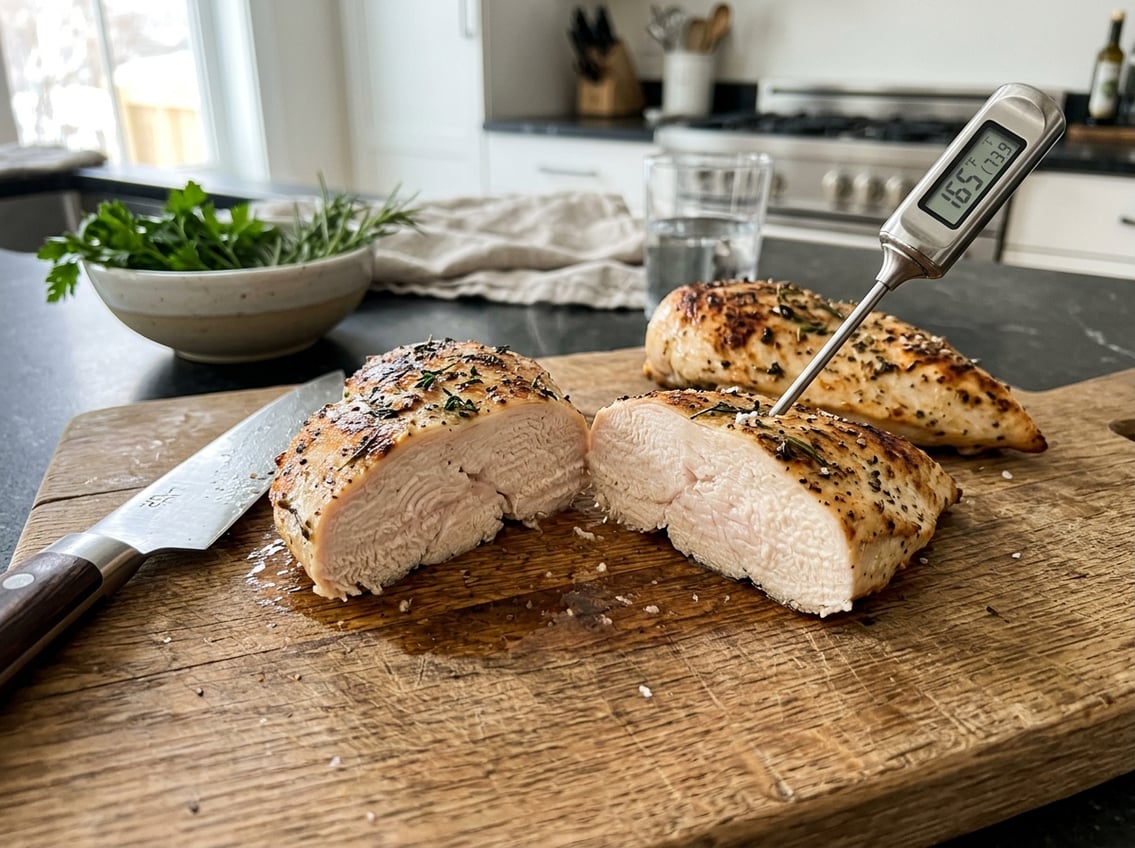
Appearance and texture confirm what your thermometer shows.
These signs are useful when you want extra confidence after you have checked the temperature.
What White Meat and Clear Juices Show
Cooked chicken breast usually looks opaque and white through the thickest part.
If you cut into it and the juices run clear, that is another sign it is close to done.
A little pink color near the bone or in very moist areas can still happen, so do not depend on color alone.
Use these signs as support, not as your only test.
How Firmness and Springiness Indicate Doneness
Cooked chicken breast should feel firm with a little spring when pressed.
Raw chicken feels softer and more squishy.
You can compare it to the fleshy part at the base of your thumb.
When chicken is ready, the texture should feel set, not jiggly.
Why Pink Color Alone Is Not a Perfect Test
Pink meat does not always mean the chicken is unsafe, and white meat does not always mean it is fully cooked.
Lighting, marinades, and cooking method can all change the color you see.
A thermometer still gives you the best answer.
Prevent Undercooking and Overcooking
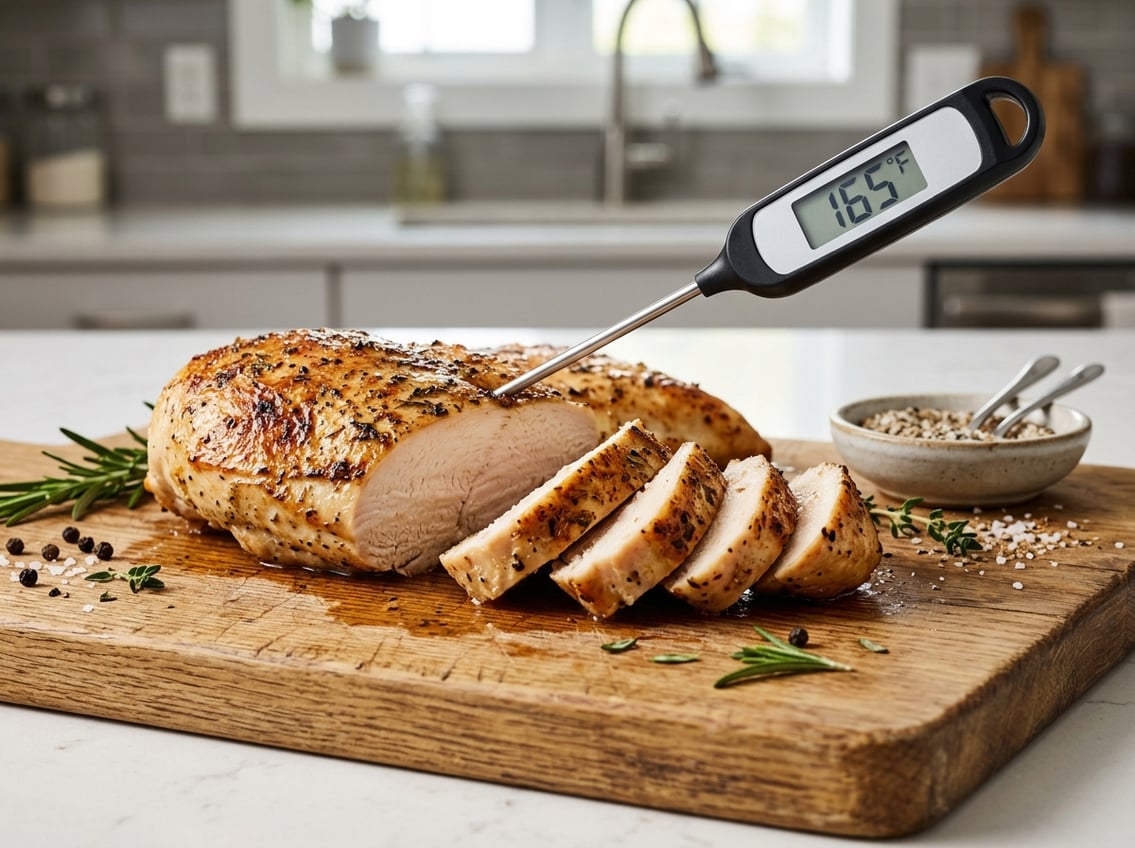
Getting chicken breast right is a balance.
You want it to reach the safe minimum internal temperature without drying out from too much heat or too much time.
How Carryover Cooking Changes the Final Temperature
Chicken keeps cooking after you remove it from the heat.
This is called carryover cooking, and it can raise the final temperature by a few degrees.
You may want to pull the chicken a little early and let it rest.
Your thermometer should still show at least 165°F by the time you serve it.
Why Thickness Affects Cooking Time
Thicker chicken breasts take longer to cook than thin ones.
A small, even breast may be ready quickly, while a large or uneven one needs more time.
This is why time alone is not a good test.
Two chicken breasts in the same pan can finish at very different moments.
When to Rest Chicken Breast Before Slicing
Let the chicken rest for a few minutes before you cut it.
Resting helps the juices stay in the meat, so the breast stays more tender.
It also gives the heat time to spread through the center.
If you slice too soon, the juices can run out and the meat can seem drier.
Understand the Food Safety Risks
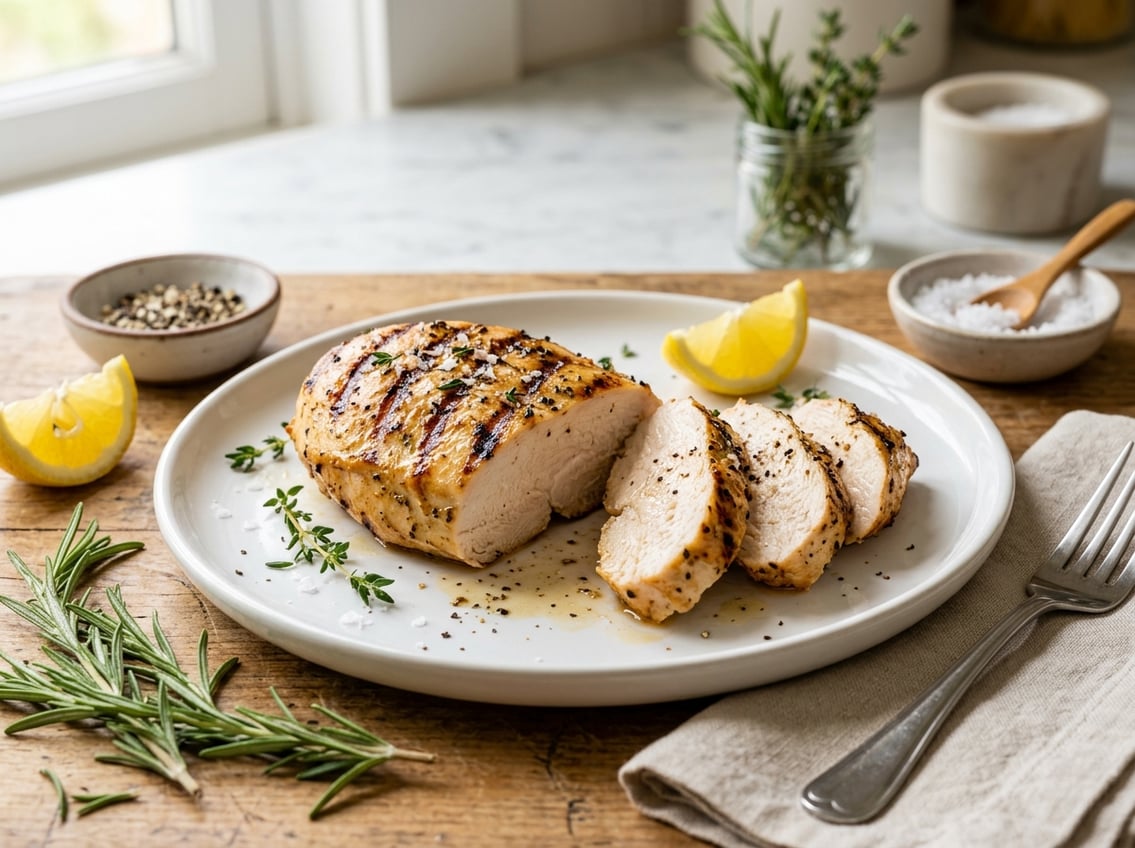
Undercooked chicken is a real safety issue, not just a texture problem.
You need the right internal temperature to reduce the risk of foodborne illness.
Why Chicken Must Reach a Safe Internal Temperature
Chicken breast must reach 165°F (74°C) to be safe to eat.
That temperature helps kill harmful bacteria that may be present in raw poultry.
The thermometer reading is more trustworthy than guesswork, especially with thicker pieces or higher-heat cooking methods.
How Campylobacter and Other Bacteria Affect Safety
Raw or undercooked chicken can carry bacteria such as campylobacter, as well as salmonella.
These germs can cause stomach cramps, fever, vomiting, and diarrhea.
The CDC notes that campylobacter is a common cause of foodborne illness in the U.S. and can spread through raw poultry and cross-contamination.
You can read more in the CDC’s campylobacter prevention guidance.
What to Do if You Cut In and It Is Still Underdone
If you slice into the chicken and see raw meat inside, put it back on the heat right away.
Check the thickest part again with your thermometer after a few more minutes.
Do not serve chicken breast that is still below 165°F.
Keep cooking it until the center reaches the safe minimum and the texture turns firm and opaque.


