
Can You Use Chicken Breast for Chicken Soup? Best Methods
You can use chicken breast for chicken soup, and it works especially well when you want a lighter, faster pot of comfort food. The key is choosing the right cooking method so the meat stays moist and the broth still tastes rich.
If you handle the timing well, chicken breast gives you tender meat and a clear flavor. The soup base turns out clean and works for weeknight meals.
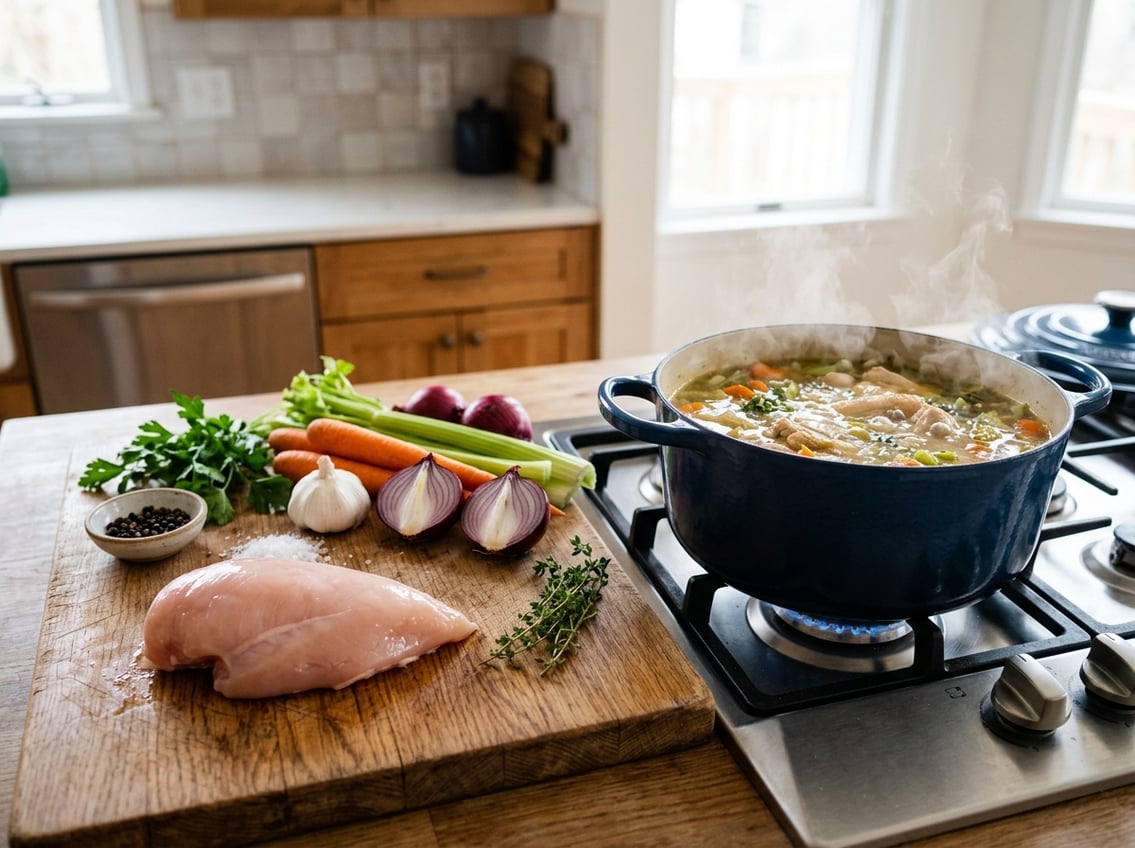
Chicken breast for soup is a smart choice when you want easy shredding and simple seasoning. It also offers a short cook time.
It is less rich than dark meat, so the result is usually a lighter chicken breast soup. This style fits well with noodles, vegetables, and mild herbs.
When Chicken Breast Works Best in Soup
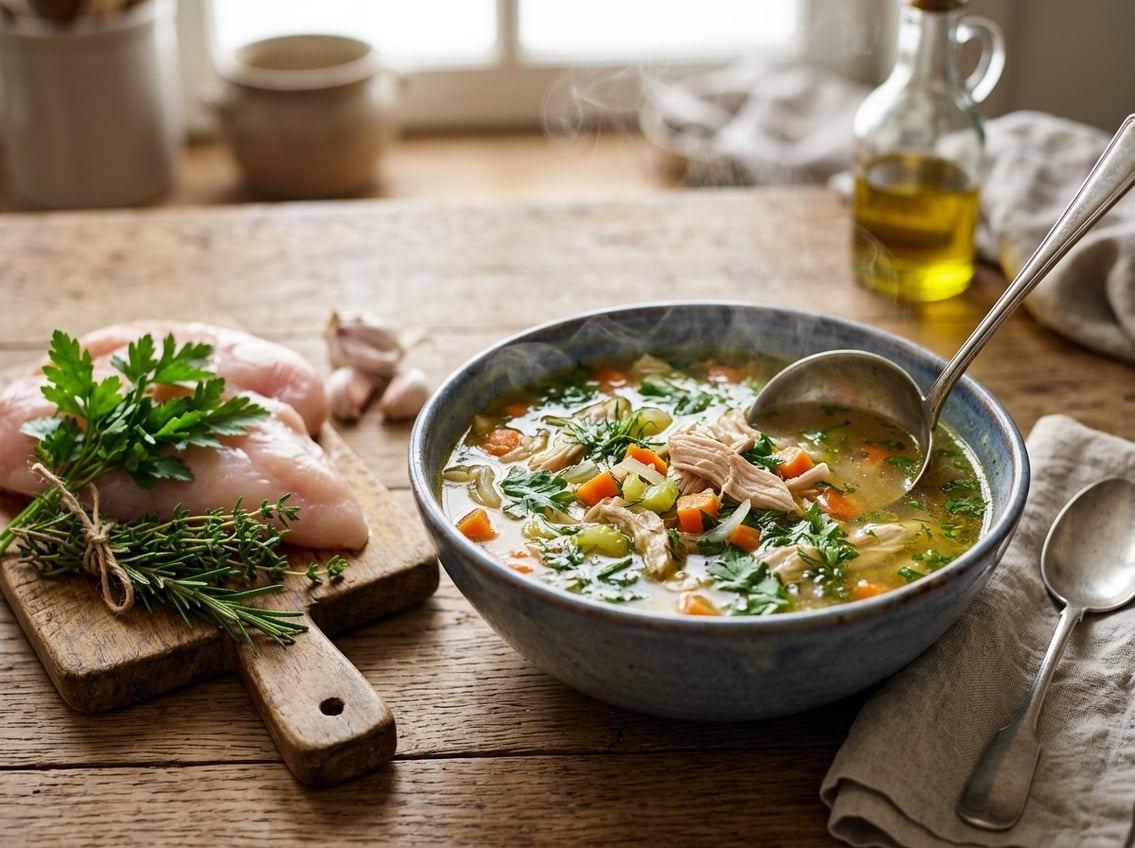
Boneless chicken breast works best when you want a quick soup recipe with clean flavor. The pieces shred easily and the broth stays simple.
For a hearty chicken soup, chicken breast provides lean protein without a heavy finish. It also works well in chicken noodle soup and chicken and vegetable soup.
In these soups, the broth, noodles, and vegetables carry much of the flavor.
Why It Is a Good Choice for Light, Quick Soups
Chicken breast suits fast meals because it cooks evenly and does not need long simmering. That makes it useful for a classic chicken noodle soup on a busy night.
It is also easy to portion. If you want a soup that feels balanced and not greasy, boneless chicken breast is a practical choice.
How It Compares With Dark Meat and Whole Chicken
Dark meat gives soup more body and a deeper taste because it has more fat and connective tissue. A whole chicken can also add more flavor to the broth as it cooks.
Chicken breast is milder, so the soup base depends more on broth, stock, onions, and herbs. For a lighter result, that is often a benefit.
Best Soup Styles for Boneless Cuts
Boneless chicken breast works best in broth-based soups with short cooking times. It fits especially well in chicken noodle soup, chicken and vegetable soup, and simple chicken soup recipes with carrots, celery, and herbs.
It is less ideal for long-simmered soups that depend on collagen-rich meat for texture. In those cases, thighs or a whole chicken usually give better results.
How to Cook It Without Drying It Out
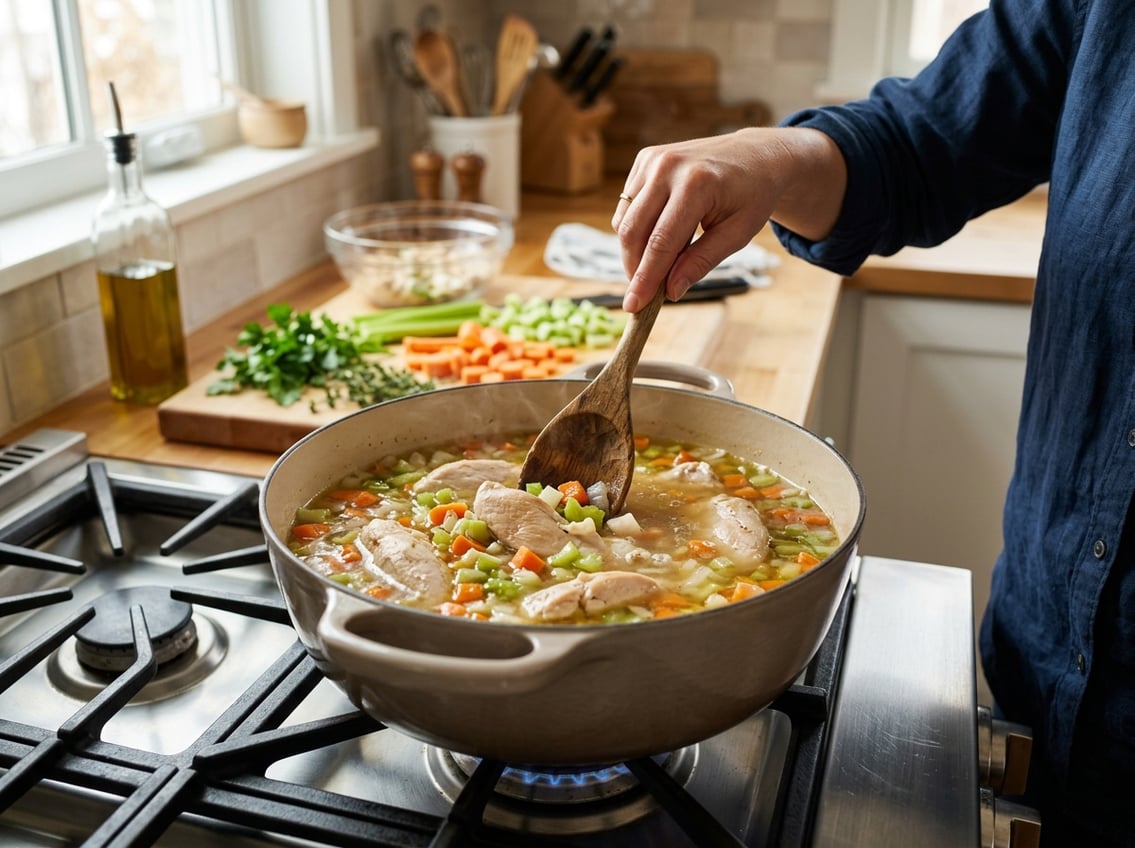
The main risk with cooking chicken breast for soup is dryness. You get the best result by using gentle heat, checking doneness early, and keeping the meat in liquid when possible.
A meat thermometer helps you stop at the right point. Chicken breast is done at 165°F, and that final temperature matters more than the clock.
Poaching for Tender, Shreddable Meat
Poaching works well for chicken breast because the meat stays in moist liquid. Chef’s Resource recommends gentle simmering to retain moisture and flavor in soup chicken.
They also suggest resting the meat in the broth before shredding, which helps keep it tender. Read their guide to poaching chicken breast for soup.
Use broth, water, or stock with onion, celery, carrots, and herbs. Keep the liquid at a gentle simmer, not a rolling boil, so the meat stays succulent instead of turning stringy.
Simmering Directly in the Soup Base
You can cook chicken breast directly in the soup base after the vegetables have started softening. This method works well when you want one pot and less cleanup.
Add the chicken breast near the end of cooking. Keep the soup at a low simmer until the meat reaches 165°F.
Pull it out, shred it, then return it to the pot so it does not keep cooking too long.
When a Seared Finish Adds More Flavor
A seared chicken breast can add a deeper savory note before it goes into the soup. This works best when you want a bit more browning in the final flavor.
Sear only briefly, just enough to build color. The soup still needs gentle cooking after that, since a long simmer after searing can dry out the meat.
Building a Flavorful Pot From Simple Ingredients
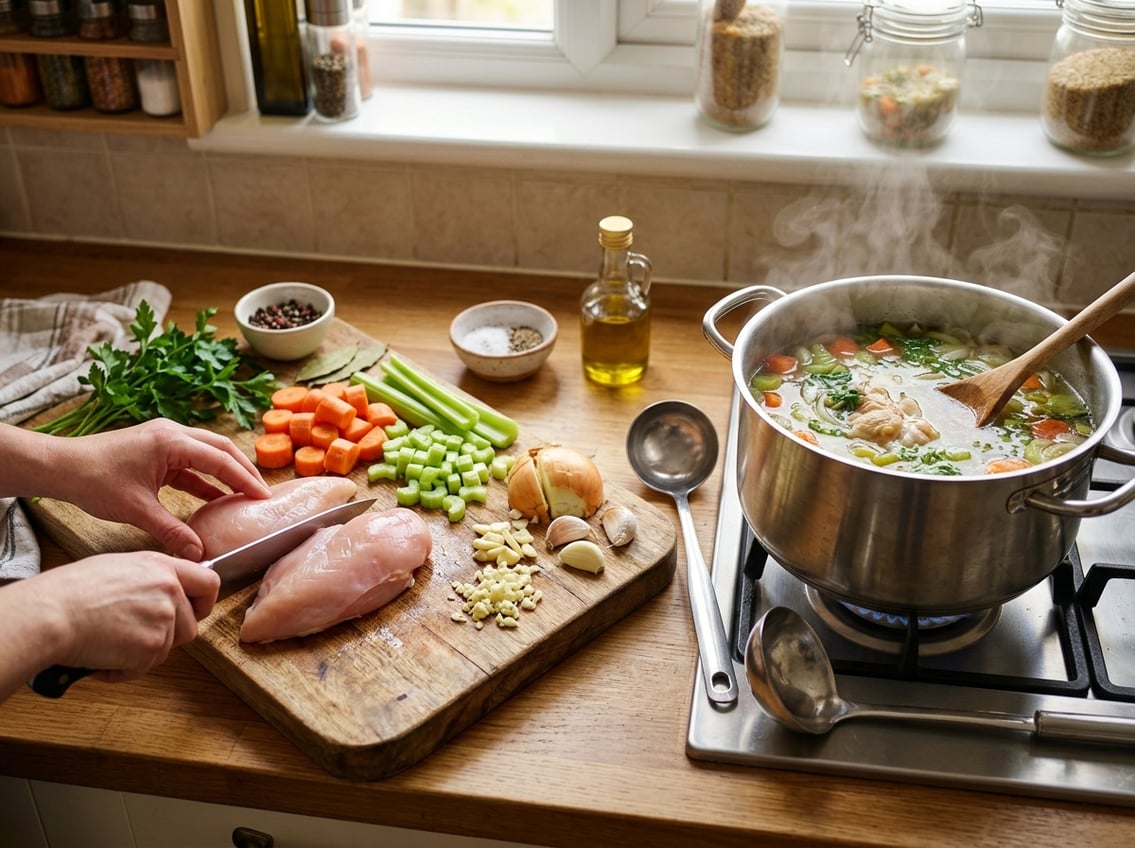
A good chicken soup starts with a solid soup base, not with fancy extras. Onion, garlic, carrots, celery, and a well-seasoned broth support chicken breast well.
You also want to think about timing. Some ingredients need a long simmer, while others stay brighter if you add them near the end.
Choosing Between Chicken Broth, Stock, and Soup Base
Chicken broth gives you a lighter, cleaner flavor, while chicken stock usually has more body. If you want a fuller taste, stock is often the better choice for chicken soup.
Soup base or bouillon can help if your broth tastes thin. Use it carefully, since too much can make the soup salty.
The Best Aromatics and Vegetables to Start With
Onion, garlic, carrots, and celery form the standard base. They add sweetness, depth, and balance to chicken soup without overpowering the chicken breast.
Olive oil can help soften the vegetables before the liquid goes in. Dried thyme is a strong match for chicken and adds a simple herbal note.
When to Add Noodles, Herbs, and Seasonings
Egg noodles should go in near the end so they stay firm. If you cook them too long, they can turn soft and soak up too much broth.
Add dried thyme early, then taste again near the end and adjust salt and pepper. Fresh herbs can go in at the end if you want a brighter finish.
Storage, Reheating, and Make-Ahead Tips
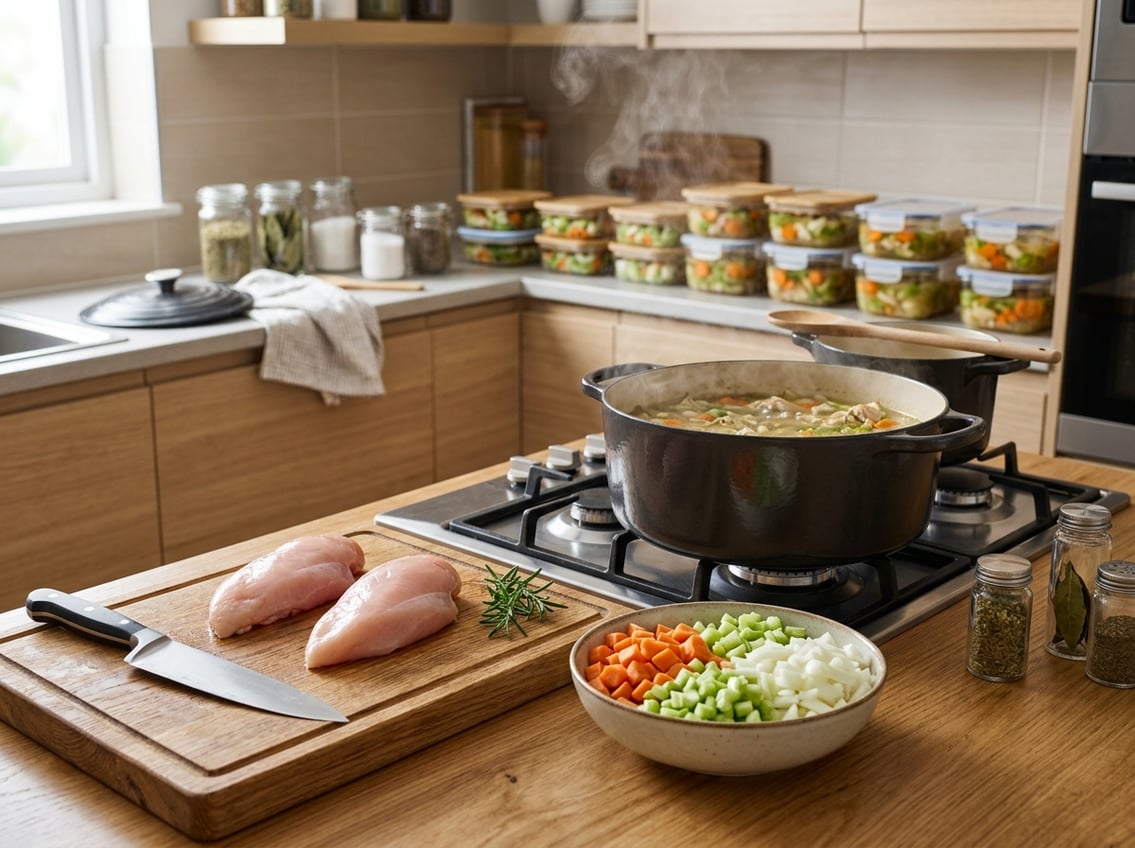
Chicken breast soup stores well, especially if you keep the noodles separate. That helps the texture stay better after reheating.
A little planning also makes leftovers easier to use for lunch or another dinner. The goal is to keep the chicken moist and the broth clear.
How to Store Leftovers Safely
Let the soup cool a bit, then move it to an airtight container and refrigerate it within two hours. If you used egg noodles, keep in mind that they will keep soaking up broth in storage.
For best quality, eat chicken breast soup within 3 to 4 days. If you want longer storage, freeze the soup without noodles when possible.
Best Ways to Reheat Without Overcooking the Chicken
Reheat soup slowly on the stovetop over medium-low heat. This gives the chicken breast a better chance of staying tender.
If the soup has thickened, add a splash of chicken broth to loosen it. Warm it only until steaming hot, not until it boils hard.
How to Prep Soup Ahead for Better Texture
Cook the broth, vegetables, and chicken first for make-ahead soup. Chill them together or separately.
Shred the chicken in advance and store it with a little broth to protect moisture. When you reheat, add egg noodles fresh so they hold their texture better.
This method makes it easier to finish your chicken breast soup quickly on a busy day.


