
Which Is Better Chicken Breast or Thigh? Key Differences
Which is better chicken breast or thigh depends on your goal, your budget, and how you like to eat.
If you want the leanest choice with the most protein for the calories, chicken breast is usually the better pick.
If you want more flavor, more juiciness, and a cut that is easier to keep tender, chicken thigh often wins.

Chicken breast is leaner and higher in protein per calorie, while chicken thigh is richer, more flavorful, and often more filling.
Both cuts fit into a healthy diet.
The real difference comes down to serving size, calories, protein content, fat content, and how you cook them.
Quick Answer by Health Goal
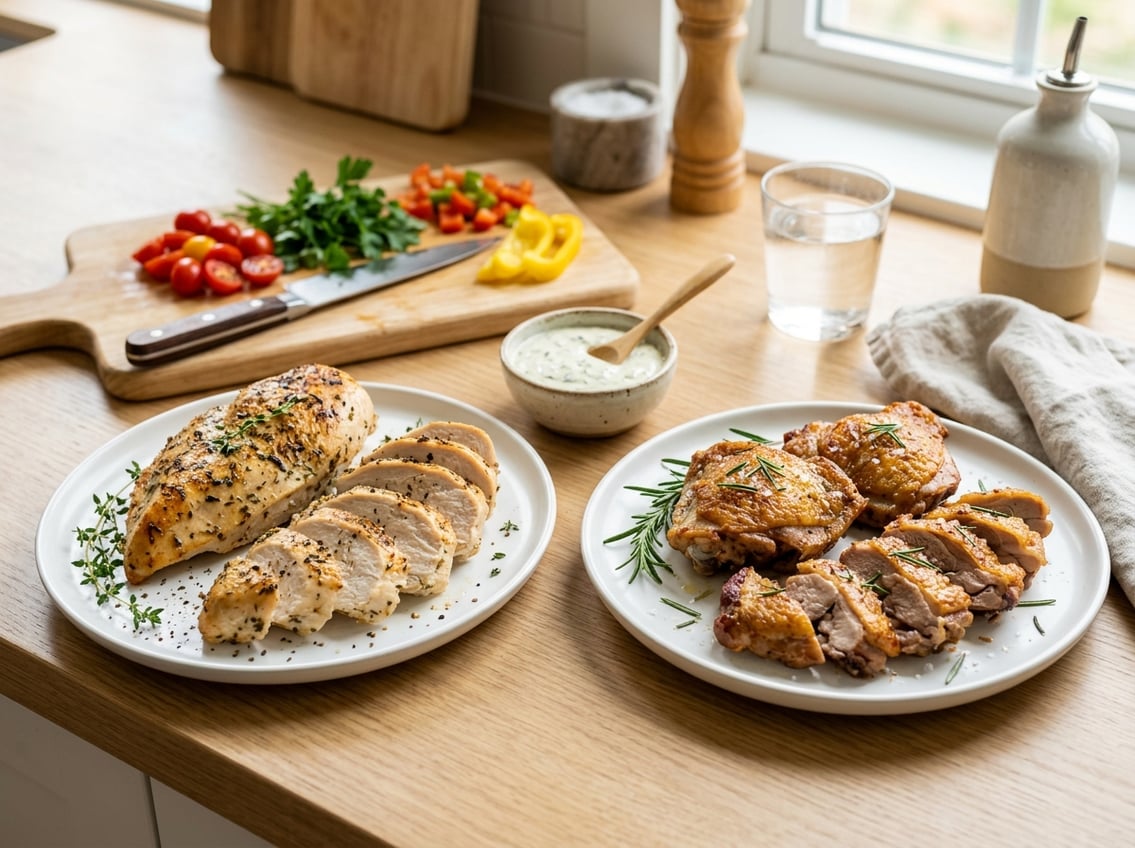
Your best choice changes with the goal you care about most.
Chicken breast gives you more lean protein, while chicken thigh gives you more fat, more flavor, and more tolerance for high-heat cooking.
Best Pick for Weight Loss and Weight Management
For weight loss and weight management, chicken breast is usually the stronger choice.
It gives you more protein per calorie, which helps you stay within your calorie target while keeping your protein intake high.
Chicken breast is also a better fit when you want lean protein with lower fat content.
That makes portion control easier, especially if you are tracking macronutrients.
Best Pick for Muscle Growth and High-Protein Foods
For muscle growth, chicken breast is usually the better pick because of its higher protein density.
A serving gives you more protein without many extra calories or much saturated fat.
Chicken thigh still works well if you need more calories or prefer a richer meal.
For many people, the best option is the one you will actually eat consistently as part of a high-protein foods plan.
Best Pick for Satiety, Flavor, and Everyday Eating
For satiety, flavor, and everyday eating, chicken thigh often feels more satisfying.
Its higher fat content and higher juiciness can make meals taste better and feel less dry.
If you get bored with plain lean protein, thighs can help you stay on track.
Healthy fats also support flavor, so the meal may feel more complete without heavy sauces.
Nutrition Facts That Actually Matter
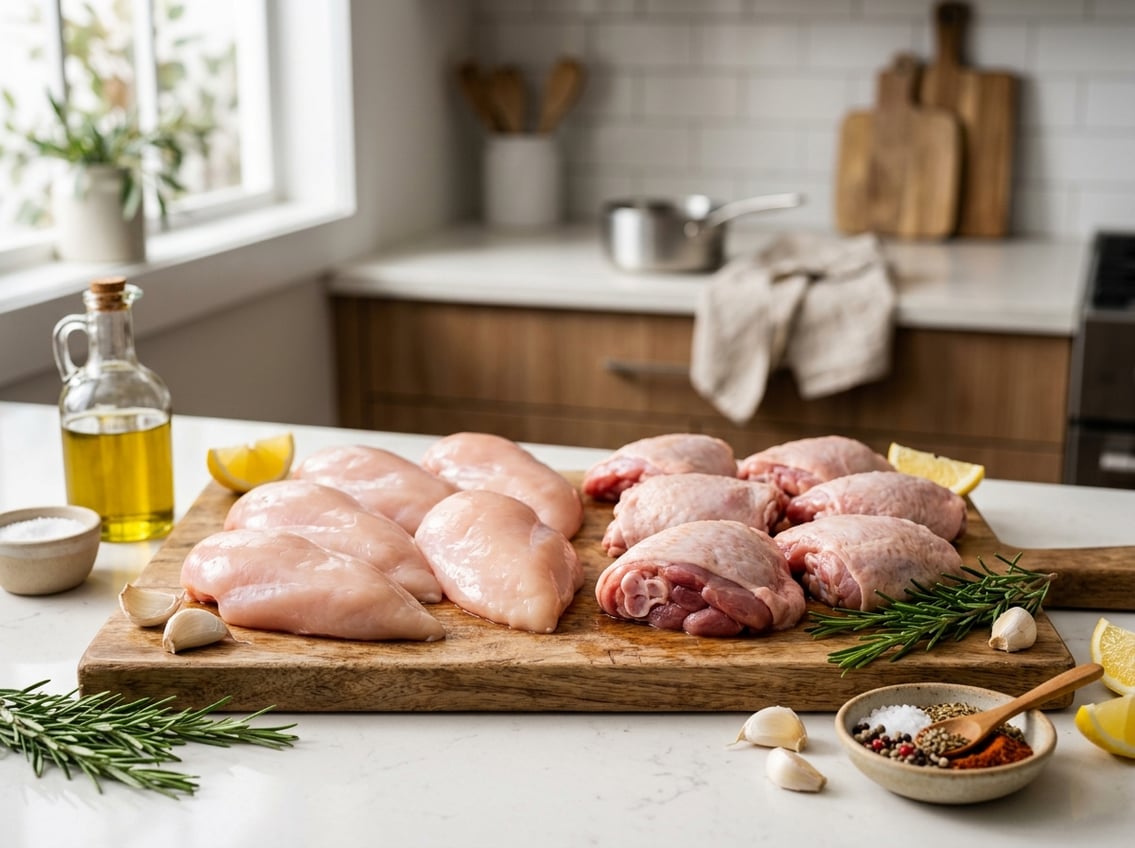
The numbers that matter most are calories, protein content, fat content, and serving size.
White meat and dark meat also behave differently in the body, which explains why the two cuts taste and cook differently.
Calories, Protein, and Fat per Serving Size
A common comparison uses 100 grams of roasted, skinless chicken.
According to Verywell Health, skinless chicken breast has about 165 calories, 31 grams of protein, and 3.57 grams of fat.
Skinless chicken thigh has about 179 calories, 24.8 grams of protein, and 8.15 grams of fat.
That gap grows when you leave the skin on chicken.
Skinless chicken breast is usually the leanest option, while skinless chicken thigh still carries more fat and calories per serving.
White Meat vs Dark Meat and Why It Matters
Chicken breast is white meat, and chicken thigh is dark meat.
Dark meat contains more myoglobin, a protein that helps store oxygen in muscle tissue, which is part of why thighs taste richer and look darker.
This difference also affects texture.
White meat is usually milder and leaner, while dark meat tends to stay juicier during cooking.
Vitamins, Minerals, Cholesterol, and Sodium
Chicken breast and chicken thigh both provide useful vitamins and minerals.
Breast often has more vitamin B3, riboflavin, selenium, phosphorus, and choline.
Thigh often has more vitamin B12, iron, and zinc, as noted in FoodStruct’s comparison and its nutrient breakdown.
Both cuts contain some cholesterol, and sodium depends a lot on seasoning and processing.
Skin-on chicken raises fat intake, and pre-seasoned products can add a lot of sodium, so you should check labels carefully.
Cooking Performance and Flavor
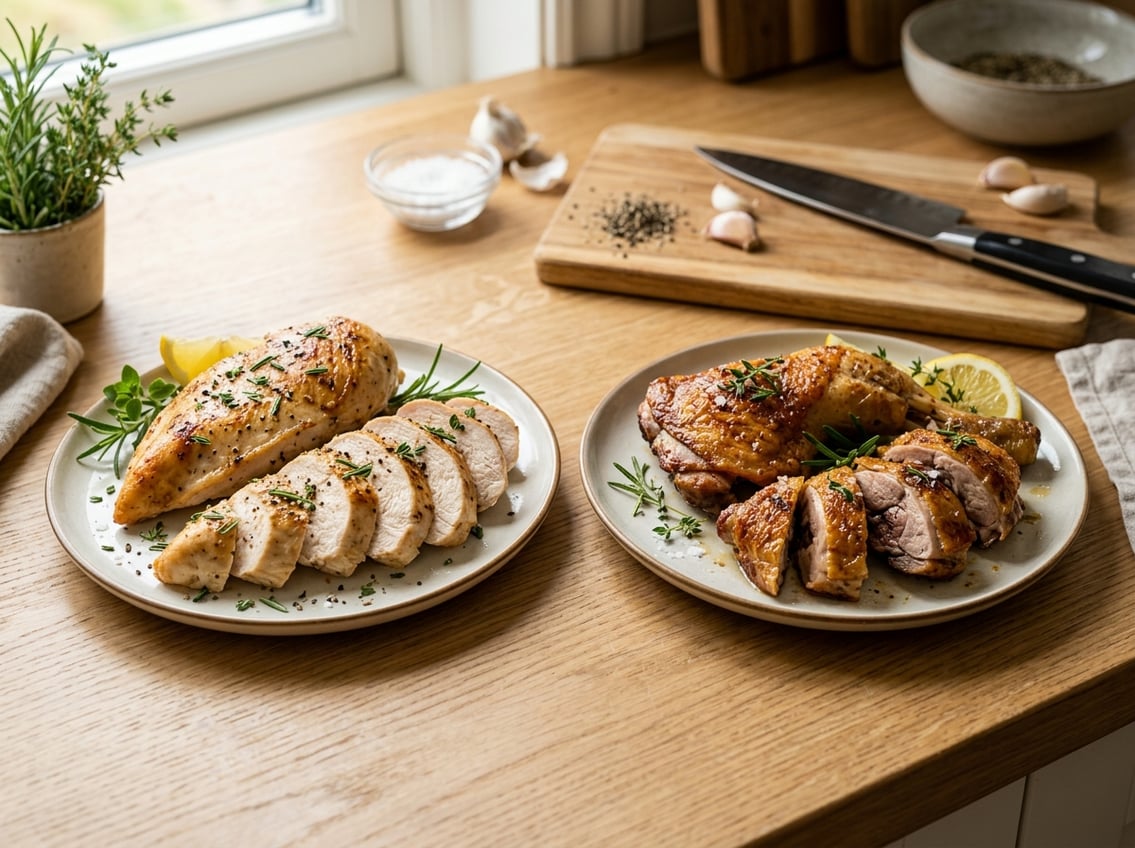
Your cooking method changes the result as much as the cut itself.
Breast and thigh both work well in many dishes, yet they behave differently with heat, moisture, and seasoning.
Grilling, Roasting, and Baking Results
Chicken breast works best for quick grilling, roasting, or baking with a clean flavor.
It can dry out fast, so you need careful timing and moderate heat.
Chicken thigh is more forgiving in these cooking methods.
It keeps more juiciness and can handle a little extra time without turning tough.
Slow-Cooked Dishes, Connective Tissue, and Juiciness
For slow-cooked dishes, chicken thigh usually performs better.
It has more connective tissue and collagen, which break down during long cooking and turn into gelatin for a softer texture.
Thighs work well in a slow cooker, braises, soups, and shredded chicken recipes.
Breast can also work in a slow cooker, but you need to watch it closely to avoid a dry result.
Marinades, Olive Oil, Avocado, and Avoiding Excess Char
Marinades help both cuts, especially if you want more flavor without heavy sauces.
A light marinade with olive oil, citrus, garlic, herbs, or spices can improve taste without adding too much fat.
If you grill chicken, avoid blackened or overly charred surfaces.
Verywell Health notes that grilling, baking, and roasting are healthier choices than fried chicken, and they also help you control fat and calories.
Cost, Meal Prep, and Choosing the Right Cut
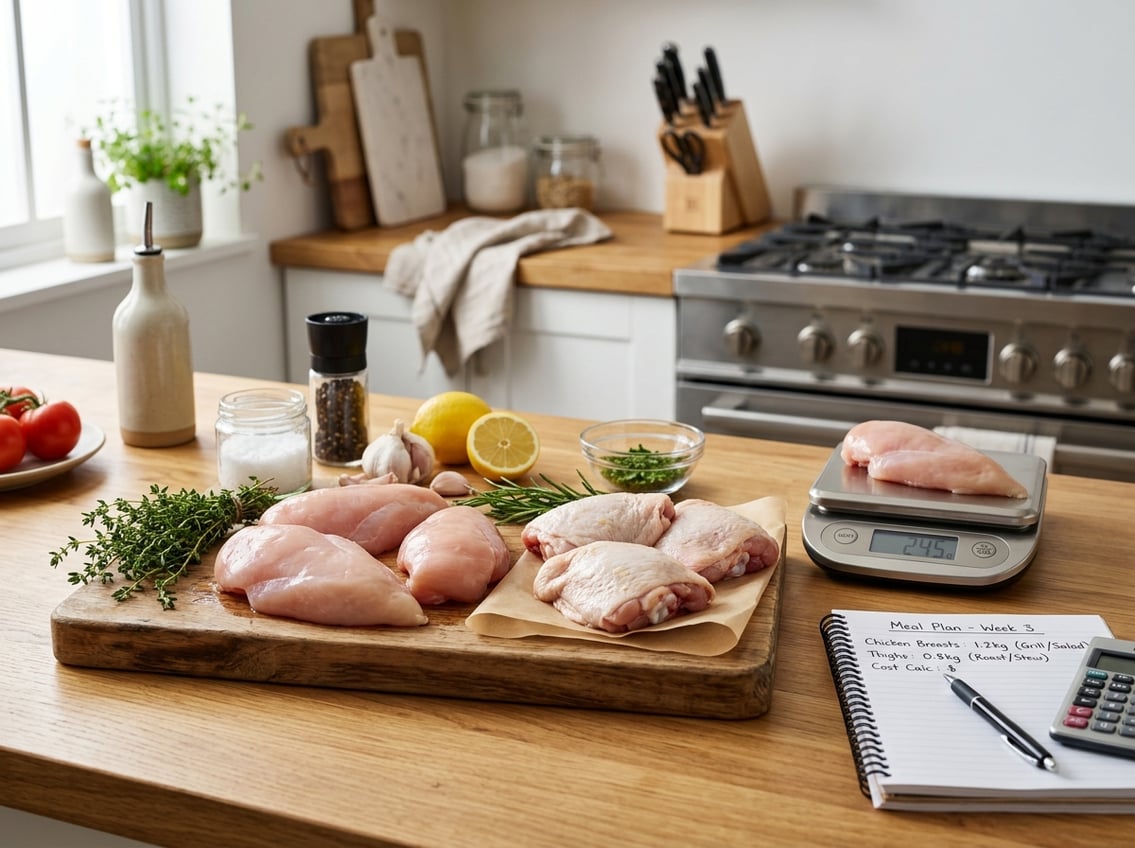
Cost and meal prep often decide the winner in real life.
Chicken thigh is usually cheaper by the pound, while chicken breast is easier when you want very lean protein for simple meals.
Budget, Convenience, and Batch Cooking
If you cook in batches, both cuts can work well for meal prep.
Chicken breast is easy to portion for weight management, and chicken thigh gives you more flavor across several meals.
When prices matter, thighs often offer better value.
That makes them useful when you want to stretch your grocery budget without giving up protein.
When to Choose Breast, Thigh, or a Mix of Both
Choose chicken breast when you want lower calories or higher protein density. It works well for a plan focused on muscle growth or weight loss.
Pick chicken thigh when you want more satiety or flavor. This cut stays juicy with less effort.
You can use both cuts in your meals. This way, you get the lean profile of breast and the richer taste of thigh in the same week.


