
When Do You Know Chicken Thighs Are Done: Expert Guide to Doneness
You want chicken thighs that are safe, juicy, and not dry. The simplest, most reliable way to know is by temperature.
Use a digital instant-read thermometer in the thickest part of the thigh, avoiding bone. The USDA minimum is 165°F (74°C), but many cooks aim for 175–185°F for a more tender result.
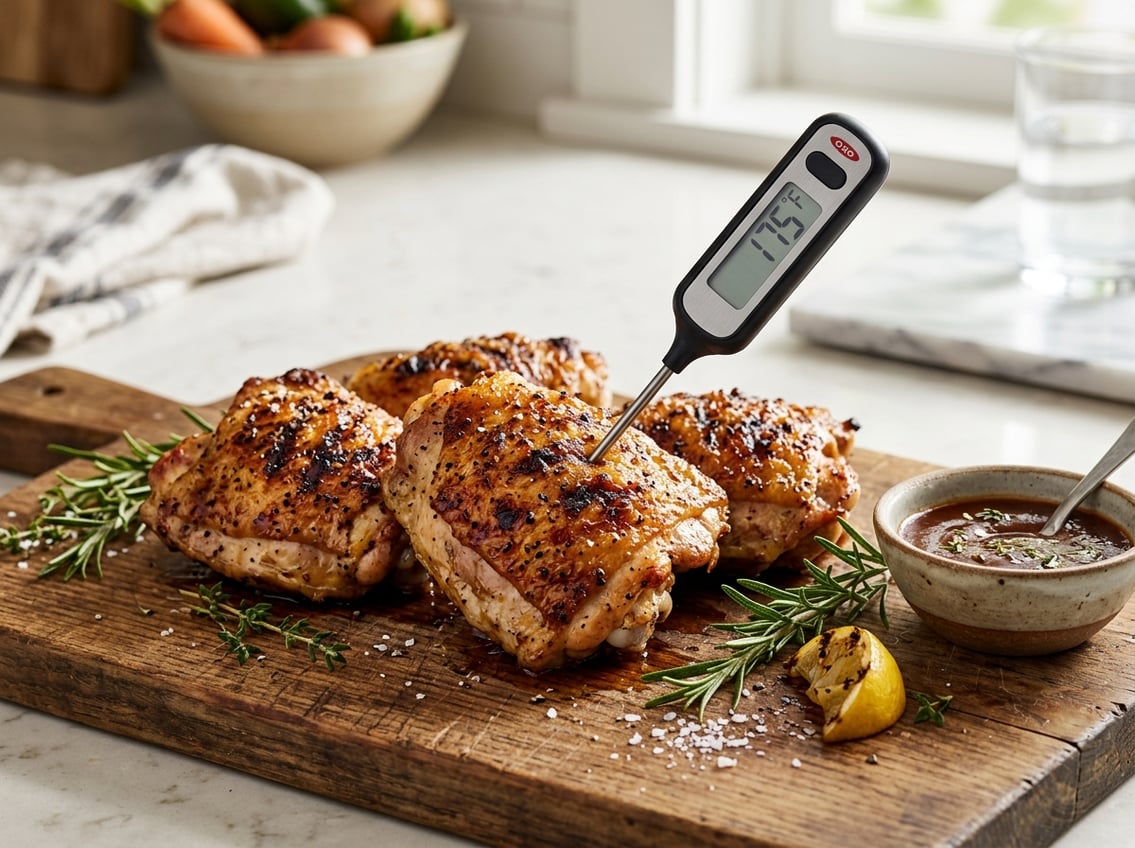
You can also use practical cues like how bone-in vs. boneless or skin-on vs. skinless changes timing. Learn where to place the probe and what visual and texture signs matter.
This article covers safe target temperatures, accurate thermometer use, typical cooking times and methods, and small techniques to keep thighs juicy and flavorful.
The Importance of Proper Chicken Thigh Doneness
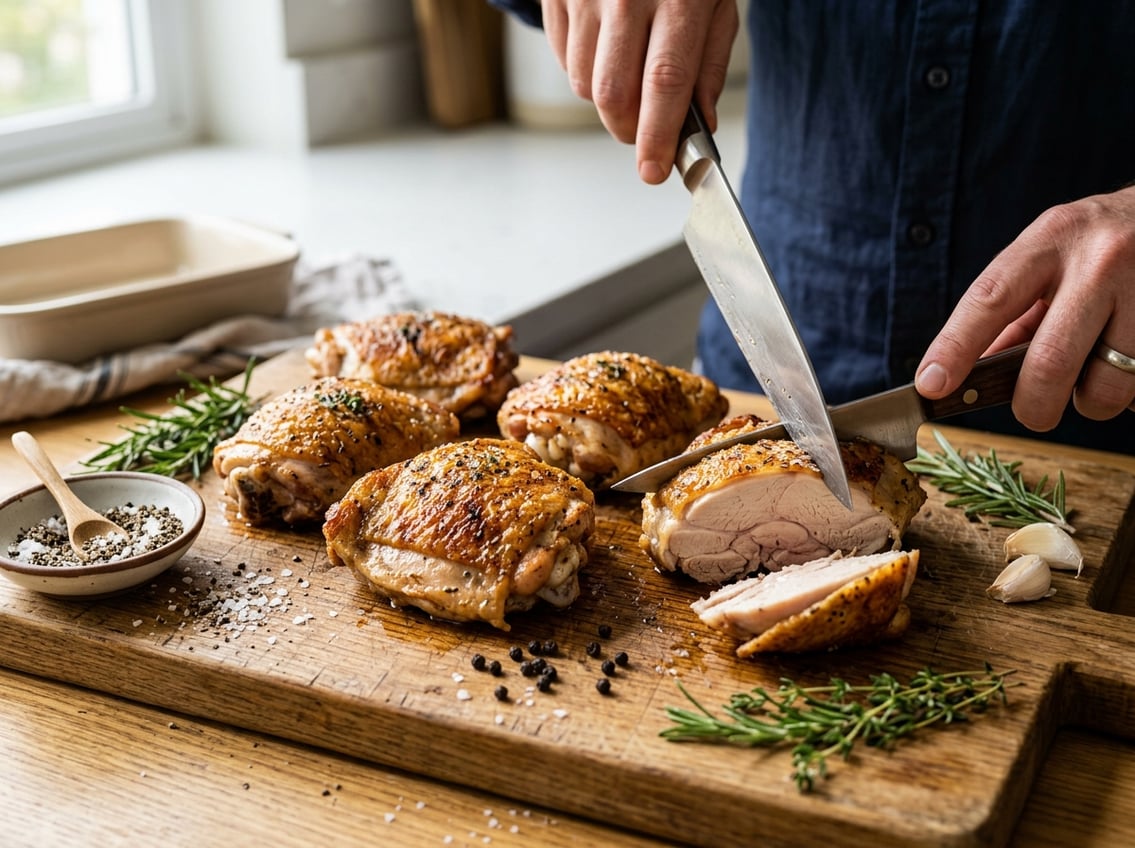
Proper doneness ensures safety and preserves the texture and flavor you expect from chicken thighs. You need a reliable target temperature and clear sensory cues so your thighs are neither risky nor dry.
Food Safety and Bacteria Risks
You must reach a safe internal temperature to kill Salmonella and Campylobacter commonly found in raw poultry. Insert an instant-read thermometer into the thickest part of the thigh, avoiding bone; the USDA minimum safe temperature is 165°F (74°C).
Carryover heat can raise the temperature slightly after you remove the thighs from heat. If you prefer higher final temperatures for texture, let the thighs rest 5–10 minutes to allow juices to redistribute.
Avoid relying only on color. Dark meat can remain slightly pink near the bone even when safe.
When in doubt, check temperature in two places on larger thighs to confirm doneness.
Texture and Flavor Considerations
Chicken thighs contain more fat and connective tissue than breasts, so they tolerate higher cooking temperatures without drying out. For tender chicken thighs, aim for 175–185°F (79–85°C) if you want the collagen to break down and yield a fall-apart texture.
If you prefer firmer, sliceable thighs, stop around 165–170°F (74–77°C) and rest briefly. This preserves juiciness while avoiding a stringy texture.
Use methods like searing followed by lower, controlled heat or braising to transform connective tissue while keeping moisture. Let the thighs rest 5 minutes before serving to improve texture and concentrate flavor.
Internal Temperature Recommendations
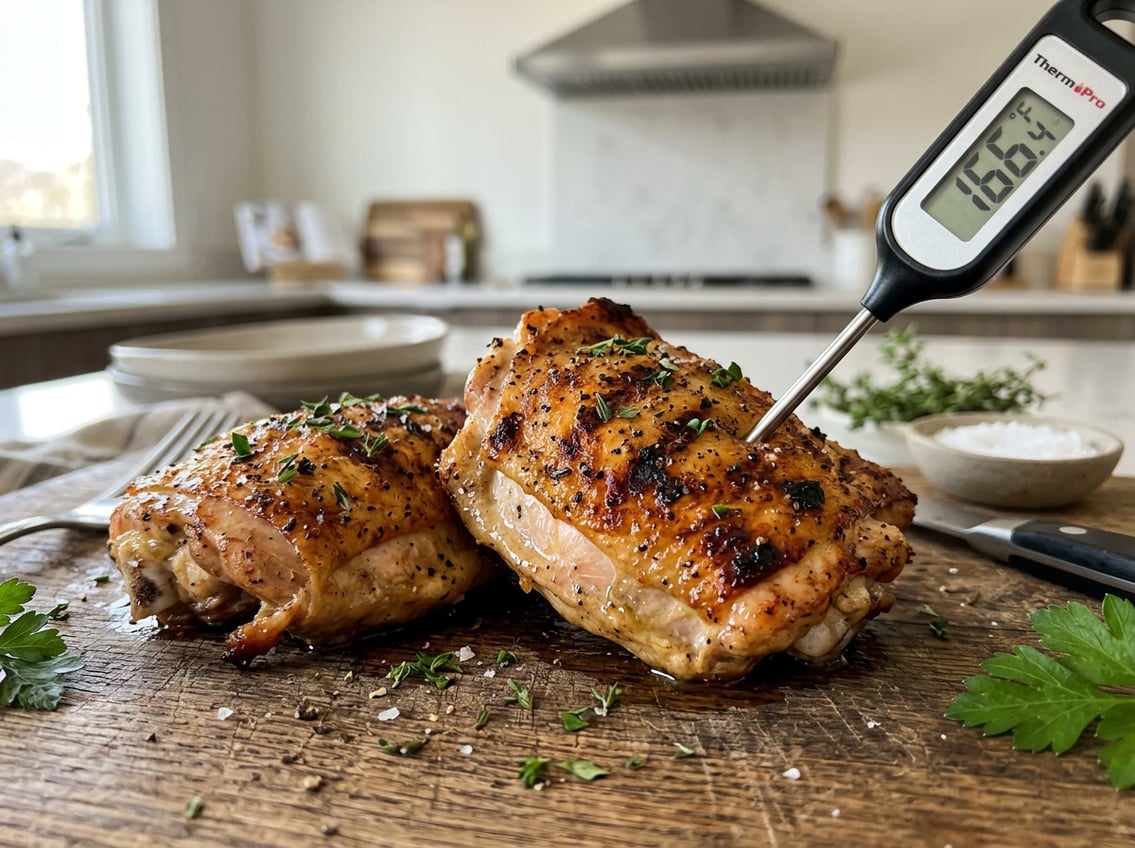
Cooking chicken thighs to the right temperature ensures safety and the texture you want. Use an instant-read thermometer in the thickest part of the thigh, avoiding bone, to check doneness.
Safe Minimum and Optimal Ranges
The safe minimum internal temperature for poultry is 165°F (74°C). Reach that temperature to kill Salmonella and Campylobacter if you measure at the thickest part of the meat and avoid touching bone.
For texture, dark meat behaves differently than breast meat. If you prefer a firmer but fully cooked thigh, take the internal temperature to about 175°F (79°C).
If you want meltingly tender thighs where connective tissue has broken down, aim for 190–195°F (88–91°C). Higher temperatures require gentler, slower cooking to avoid drying the exterior.
After removing from heat, rest the thighs 5–10 minutes. Carryover heat can raise the internal temperature slightly and redistribute juices.
Temperature Guidelines for Bone-In and Boneless Thighs
Bone-in thighs usually take longer to reach target temperature because the bone slows heat transfer. Insert the thermometer into the thickest portion next to the bone but not touching it.
For bone-in, use the same target ranges—165°F safe minimum, 175°F for tender but intact meat, 190–195°F for fall-apart texture—but allow extra cooking time.
Boneless thighs heat faster and are more prone to overcooking. Check temperature earlier and often.
Aim for 165–175°F for juicy, fully cooked boneless thighs. Pull them closer to 165°F if you plan a short rest and want to avoid toughness.
If a recipe calls for shredding or long cooking, you can still take boneless thighs to higher temps, but use low heat and longer time to prevent a dry exterior.
Quick checklist:
- Insert thermometer into thickest part, ¼ inch from bone for bone-in.
- Avoid touching bone for accurate reading.
- Rest meat 5–10 minutes before slicing or shredding.
How to Use a Meat Thermometer for Accuracy
Use the right tool for the job and place the probe where the meat is coolest. Read temperature after the display stabilizes.
Small moves in probe placement change readings, so control depth and angle deliberately.
Instant-Read Thermometers
Instant-read thermometers give fast, accurate surface-to-core readings and work best for thinner cuts like boneless or skinless chicken thighs. Hold the probe so the tip reaches the thickest part of the meat without touching bone or pan surfaces.
Insert from the side toward the center for a clear path to the deepest muscle. Wait 2–5 seconds for a digital instant-read to stabilize.
Clean the probe between checks to avoid cross-contamination. Use the instant-read to verify doneness just before removing thighs from heat.
Account for 3–5°F (1.5–3°C) carryover if you’ll rest the meat.
Leave-In and Probe Thermometers
Leave-in probes and oven thermometers let you monitor temperature while the meat cooks. Insert the probe so the tip sits in the thickest, boneless part of the thigh, avoiding bone and fat pockets.
Route the cable out of the oven door without crimping it. Calibrate or check accuracy before use.
Use leave-in probes for roasting or smoking when you need continuous data. Set alerts for target temperature.
Remember that probe placement matters more than probe type.
Proper Thermometer Placement Techniques
Aim for the coolest part of the thigh, typically the center of the thickest muscle, not the surface or near bone. For bone-in thighs, insert the probe from the side so the tip sits adjacent to but not touching the bone.
For boneless thighs, push the probe straight into the center thickness. If unsure, push the probe completely through and slowly withdraw until you see the lowest stable reading.
Mark consistent insertion depth for repeatable checks. Clean and sanitize the probe after each use.
Avoid repeated pokes that let juices escape.
Visual and Textural Signs of Doneness
Look for clear juices, opaque meat, skin that has pulled back from the bone, and a firm-but-yielding texture. Use these cues together, as none are perfect alone.
Color of Juices and Meat
Cut into the thickest part of the thigh or make a small slit to check juices. Cooked chicken thighs will release clear or very faintly tinged juices.
Any bright pink, red, or bloody liquid indicates undercooking and requires more time. Inspect the meat color next to the bone and at the center.
Properly cooked thigh meat is opaque and light brown to white in the fibers, not glossy or translucent. A slight pink hue near the bone can persist even when safe, so prioritize clear juices and, when possible, a thermometer reading.
Skin Appearance and Shrinkage
Observe how the skin and meat sit on the bone. Tender chicken thighs that are done often show slight pullback of the meat from the bone tip and modest shrinkage around joints.
This separation signals heat has reached near-bone areas. Crisped, evenly browned skin usually means you’ve developed good surface heat.
Overcooked chicken thighs will have very dark, dry skin and excessively tight shrinkage. For boneless thighs, look for uniform browning and no raw, gelatinous areas.
Texture and Firmness Testing
Press the thickest part of the thigh with your finger or tongs. When chicken thighs are done, the meat feels firm but still yields slightly.
Undercooked meat feels soft and jiggly. Overcooked meat feels dry and tough.
If you cut into the thigh, note fiber separation and moisture retention. Tender chicken thighs will separate along muscle fibers and retain juices.
Use short presses to avoid squeezing out juices. Combine this tactile check with visual cues for the best assessment.
Cooking Times and Methods for Chicken Thighs
Aim for an internal temperature target and adjust time by cut, thickness, and heat source. Bone-in thighs take longer and tolerate higher final temps.
Boneless cook faster and need closer monitoring to avoid drying.
Oven Roasting and Baking
Roast boneless thighs at 400°F (205°C) for about 20–30 minutes depending on thickness. Check with an instant-read thermometer.
Remove when the thickest point reads 170–175°F for tender, fully rendered meat. For bone-in thighs, roast at 425°F (218°C) for 35–45 minutes, or until the bone area reaches 175–185°F.
Use a single layer on a rimmed sheet pan or baking dish so air circulates and skin crisps. Pat skin dry and brush with oil to promote browning.
If you prefer lower and slower, 350°F (177°C) for 30–40 minutes (boneless) and 40–50 minutes (bone-in) works. Expect less crisping.
Always rest thighs 5 minutes; carryover will raise temp 2–5°F and redistribute juices.
Grilling Chicken Thighs
Preheat grill to medium-high (about 400–450°F) and create a two-zone setup if possible. Sear skin-side down over direct heat for 3–5 minutes to crisp, then move to indirect heat to finish.
Boneless thighs typically finish in 8–12 minutes total. Flip once and target 165–175°F.
Bone-in thighs need 20–30 minutes, turning occasionally, and target 175–185°F near the bone.
Watch for flare-ups that char the exterior before the center cooks. Use an instant-read or leave-in probe and rely on texture cues when grilling multiple pieces.
Cooking from Frozen: Key Tips
You can cook thighs from frozen, but plan for about 50% longer cook time. Use a lower initial heat to avoid burned exterior and raw center.
Oven-bake frozen boneless thighs at 375°F (190°C) for 30–40 minutes. Bone-in needs 45–60 minutes.
Always verify internal temp—165°F minimum, but 170–180°F yields better texture. Avoid grilling fully frozen pieces directly over high heat.
Thaw slightly in a sealed bag under cool running water or use indirect heat on the grill. Pat thawed or partially thawed thighs dry before searing to prevent steaming and promote browning.
Tips for Juicy and Tender Chicken Thighs
Use a thermometer, control heat, and let the meat rest to keep thighs moist and tender. Season and add fat where needed.
Match cooking time to bone-in vs boneless pieces.
Avoiding Overcooking
Overcooked chicken thighs become dry and stringy quickly, so stop relying on time alone. Aim for an internal temperature of 175°F (79°C) for bone-in or boneless dark meat.
Insert an instant-read thermometer into the thickest part without touching bone. If the thermometer reads 170–173°F, remove the thighs from the heat and tent with foil.
Carryover will raise the temperature to target. Control surface browning by cooking on medium heat rather than high.
For oven baking, roast at 375–400°F and check at 30 minutes for smaller pieces. For pan-searing, brown skin first then finish in a 350°F oven.
Use shorter cook times for boneless, skinless thighs (typically 20–30 minutes in the oven). Add a couple of minutes for bone-in pieces.
Resting and Carryover Cooking
Resting lets juices redistribute and finishes cooking gently. After you remove thighs from heat, tent loosely with foil for 5–10 minutes.
This raises internal temp a few degrees and prevents juice loss when you cut. Cutting too soon forces flavorful juices onto the cutting board, which dries the meat.
Rest time also firms the texture slightly so slices hold together, giving you tender chicken thighs. If you need to hold thighs before serving, keep them covered and in a warm (around 140°F) oven for up to 20 minutes to preserve moisture without further cooking.
Enhancing Flavor and Moisture
Marinades, brines, and fat improve tenderness and taste. A simple brine (1/4 cup salt per quart water, 30–60 minutes) helps meat retain moisture.
Avoid long brines on small pieces to prevent a spongy texture. Use oil, butter, or rendered fat under the skin or in the pan to encourage browning and juiciness.
For flavor layering, season under the skin. Let thighs rest uncovered in the fridge for a few hours to dry the skin for crispness while keeping the meat moist.
Try low-and-slow methods for very tender thighs. Braise at 300–325°F or cook sous-vide at 165–170°F for several hours, then finish with high heat for crisping.
For quick meals, sear skin-side down until golden. Finish in a 375°F oven until the thermometer reads 175°F.


