
What Is the Meaning of Chicken Leg: Interpretations and Impact
You might mean the literal piece of poultry used in cooking, or the slang jab about someone’s slim limbs. Both meanings matter.
In culinary and anatomical terms, a chicken leg refers to the lower hind limb of a bird. This commonly includes the thigh and drumstick as either a combined cut or separate pieces for cooking.
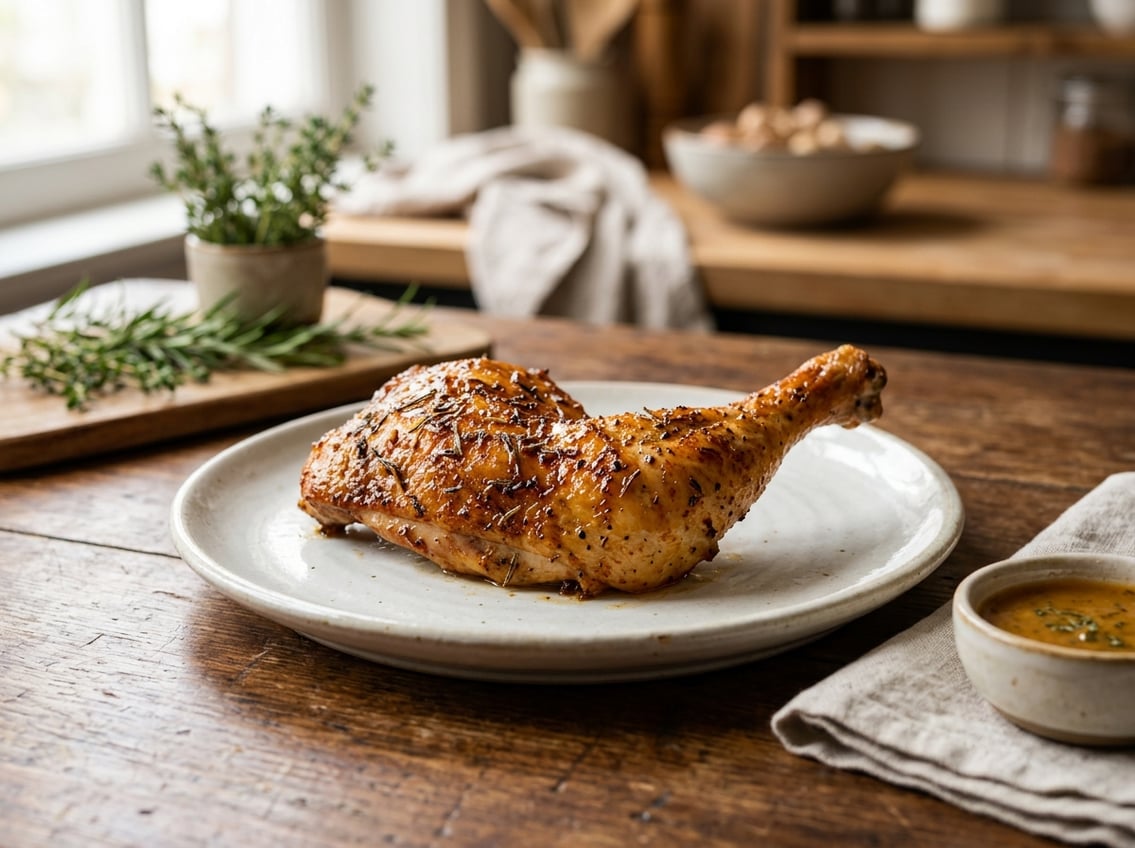
In everyday speech, calling someone “chicken legs” usually points to naturally thin or underdeveloped legs. In food contexts, “chicken leg” simply names a flavorful dark-meat cut (thigh plus drumstick) used for roasting, grilling, and braising.
Literal Definitions in Anatomy and Cuisine
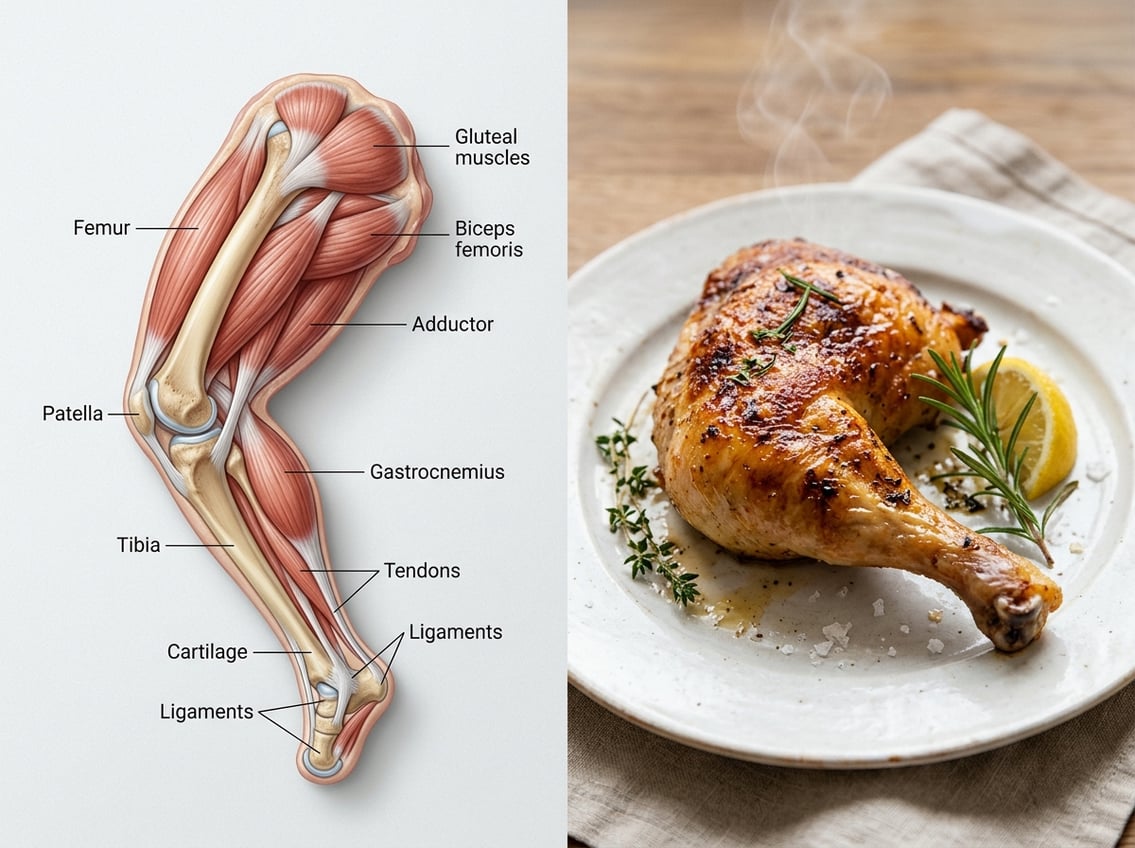
You’ll find the chicken leg described both as an anatomical unit and as a culinary cut. The following paragraphs define its parts, cooking uses, and how the bird’s leg compares with human leg anatomy.
Parts of a Chicken Leg and Drumstick
A chicken leg comprises two main parts: the thigh (upper leg) and the drumstick (lower leg).
The thigh sits above the knee joint, attaches to the body, and contains the femur. It yields dark meat and more connective tissue.
The drumstick is the portion below the knee joint and includes the tibia and fibula.
It’s meatier near the joint and tapers toward the foot. The bone gives flavor when making stock.
You’ll also encounter related parts: leg quarters (thigh plus drumstick), hamstrings analogues in the thigh muscles, and nearby cuts such as the wing and breast that differ in meat type and texture.
Chicken Legs in Culinary Contexts
In cooking, “chicken leg” can mean the combined thigh and drumstick or, more casually, either piece alone.
Restaurants label items precisely: “leg quarter” for both parts, “drumstick” for the lower leg, and “thigh” for the upper portion.
Dark meat from legs tolerates long, moist cooking and stays tender in braises, stews, and slow-roasts.
The drumstick’s shape makes it ideal for grilling, frying, and hands-on eating. The bone adds depth to sauces and stocks.
Choose chicken legs when you want richer flavor, higher fat, and forgiving cooking times compared with lean breast meat.
Use the bones for stock and the skin for crisp roasting to maximize taste.
Comparing Human and Chicken Leg Anatomy
A chicken leg and a human leg share functional similarities. Both support weight and enable locomotion.
The chicken thigh aligns roughly with your upper leg (femur area). The drumstick corresponds to your lower leg bones.
Muscle composition differs. Chicken leg muscles contain more dark meat (oxidative fibers) suited to sustained activity, while human legs have mixed fiber types for varied movement.
Chickens have a distinct knee joint orientation and digitigrade posture, walking on toes, unlike your plantigrade stance.
Chicken “hamstrings” are smaller and arranged for rapid pecking and running bursts, not long-distance walking.
These anatomical differences explain why chicken legs taste and cook differently from other poultry cuts and why their joint and bone structure influence culinary techniques.
Slang Usage and Social Context

People use “chicken leg” and “chicken legs” to comment on leg appearance, often calling attention to slimness or weak muscle development.
The phrase appears in casual speech, online posts, gym culture, and teasing. It can carry playful, neutral, or hurtful tones depending on who says it and why.
Origins of the Term in Popular Culture
The comparison to a bird’s leg comes from simple visual likeness. Thin, bony limbs evoke a chicken leg.
Early uses appeared in everyday slang and bodybuilding circles where “chicken legs” labeled underdeveloped leg muscles or someone who skips leg workouts.
Media and comedy have reinforced the image, using the term for quick, visual humor in sketches and social media posts.
That exposure normalized the phrase and made it common in gym banter and schoolyard teasing alike.
Because it’s vivid and short, the phrase spread fast in informal settings.
“Chicken Legs” as Informal Description
When someone calls you “chicken legs,” they usually refer to skinny, slender, or thin legs. The label can be descriptive or pejorative, implying weak or underdeveloped legs.
Context matters. Friends might use it jokingly, while strangers or bullies can use it to body shame.
Online, the term shows up in memes and comments where tone is easy to misread.
In fitness contexts, “chicken legs” often specifically targets lack of muscle mass rather than overall body fat.
That usage can push you toward training changes, but it can also reinforce negative body image if delivered harshly.
Gender and Age Stereotypes
People apply “chicken legs” unevenly across gender and age. Women and girls more often face the term tied to appearance and attractiveness, while men may hear it in bodybuilding or sports contexts about strength and muscle.
Adolescents experience the phrase frequently during peer interactions, which can affect self-esteem and body image during vulnerable developmental years.
Older adults may encounter it less as an insult and more as a neutral observation about thinness.
The label can reflect cultural expectations. Slim legs are praised in fashion but criticized in strength sports, so the impact depends on the community and the intent behind the words.
Physical Traits and Characteristics
You will find descriptions of thin or underdeveloped legs, and a clear comparison with more muscular or average legs.
Focus on bone structure, visible muscle mass, and common functional differences.
Defining Features of Slim or Underdeveloped Legs
Slim or “chicken leg” appearance usually shows a narrow thigh and calf with minimal muscle bulk.
You may notice little visible gastrocnemius or soleus development around the calf and a thin shank between knee joint and ankle.
Skin often sits closer to bone on the lower leg, making bone landmarks like the tibia and fibula more prominent.
Fat layer tends to be low or evenly distributed rather than causing rounded contours.
Functionally, you might experience less power in movements that demand calf strength, such as sprinting or repeated calf raises.
Common causes include genetics, low body weight, or infrequent resistance training focused on lower limbs.
Addressing underdeveloped legs typically involves targeted exercises, progressive overload, and attention to knee-friendly form to avoid joint strain.
Differences From Muscular or Average Legs
Muscular or average legs present thicker thighs and fuller calves with clear muscle separation.
You will see a rounded calf profile when viewed from the side and anterior thigh mass above the knee joint that contributes to stronger force production.
Stronger legs give you better stability, sprint capacity, and resistance to fatigue during repeated knee flexion and extension.
Training differences explain much of the contrast. People with muscular legs often perform loaded movements (squats, lunges, calf raises) regularly, using higher volume or heavier loads than those with skinny legs.
Appearance alone does not determine health. However, underdeveloped legs may correlate with lower functional strength.
You can improve size and function through consistent progressive calf raises, compound leg lifts, and balanced programming that respects knee mechanics.
Causes of Naturally Thin or Underdeveloped Legs
You may notice leg thinness from inherited traits, metabolic differences, or from daily habits like low activity or poor nutrition.
Both biology and behavior influence whether your legs look slender, underdeveloped, or out of proportion with your upper body.
Genetic and Metabolic Factors
Your genes set a baseline for muscle fiber type, limb length, and fat distribution.
If your family tends to have slim calves and narrow thighs, you likely inherited a body pattern that produces “skinny legs” or what people call “chicken legs.”
Some people naturally carry a higher proportion of slow-twitch or fast-twitch fibers. That affects how your legs respond to different training and whether they bulk easily.
Hormonal differences, such as lower testosterone or thyroid variations, can also limit muscle growth and make legs appear underdeveloped.
Medical conditions, for example certain neuromuscular disorders or long-term inactivity after injury, can produce genuine muscle wasting.
If your thin legs are sudden, asymmetric, or accompanied by weakness, numbness, or tiredness, you should consult a clinician for targeted testing.
Lifestyle, Nutrition, and Lack of Exercise
Your daily activity level strongly shapes leg development.
Jobs or routines that emphasize sitting and minimal lower-body loading lead to smaller quads, glutes, and calves.
If you already do mostly upper-body workouts, your legs may stay comparatively thin and accentuate a “chicken legs” look.
Diet supplies the building blocks for muscle. Insufficient calories or low protein intake prevents growth even when you train.
Track protein (aim for about 1.6–2.2 g/kg if building muscle) and ensure you eat slightly above maintenance to add leg mass.
Training choices matter. Low-volume, low-intensity cardio alone won’t build substantial leg muscle.
Prioritize compound lifts (squats, deadlifts, lunges), progressive overload, and include targeted calf work.
Rest and sleep also affect recovery. Chronic under-recovery blunts gains and can worsen body-image frustration.
Societal Perception and Body Image
People often react to slender or “chicken legs” with quick judgments that affect clothing choices, social interactions, and mental wellbeing.
Expect to see both teasing and admiration depending on context. These responses shape how you view your body.
Body Shaming and Self-Esteem Challenges
Being called “chicken legs” can feel like a personal attack on your appearance.
Name-calling and jokes from peers or online can lower your self-esteem and make you avoid activities like shorts or swimming.
You may internalize comments and compare your legs to others, which increases body image anxiety.
That pressure often leads to restrictive eating, overexercising, or avoidance of exercise that could actually help you build muscle safely.
If comments come from fitness spaces, they might push you toward aggressive training rather than balanced strength work.
Focus on evidence-based steps: progressive resistance training, adequate protein, and rest.
Seek supportive people or professionals when shaming affects your mental health.
Fashion and Media Representation
Fashion and media treat slender legs inconsistently. Some trends glorify thinness, while athletic imagery emphasizes muscle.
Advertising often edits legs to fit an ideal, which distorts what you expect of your own body.
Clothing can either hide or highlight your legs. Styles like tapered pants, A-line skirts, or layered looks can add visual balance.
Fitted shorts and bodycon skirts draw attention to skinny legs, so choose items that match how you want to be seen.
Representation matters. When media shows diverse leg types, your self-image improves.
Look for brands and creators that feature real bodies, and follow stylists who offer concrete tips for proportion and fit rather than promoting a single ideal.
Improvement and Fitness Approaches
Focus on progressive resistance for the major leg muscles and match your calories and protein to training demands.
Prioritize compound lifts, consistent volume, and modest calorie surplus to build measurable size in quads, hamstrings, and calves.
Strengthening Exercises: Squats, Lunges, and Calf Raises
Squats target your quads, glutes, and indirectly the hamstrings. Perform back or front squats 2–4 times weekly with 3–5 sets of 5–12 reps, increasing load when you can complete the top of the rep range.
Use full range of motion and braced core to protect your lower back.
Lunges add single-leg balance and correct asymmetries common with chicken legs. Do walking lunges, split squats, or reverse lunges for 3–4 sets of 8–12 reps per leg.
Focus on controlled descent and driving through the heel to emphasize posterior chain engagement.
Calf raises build the gastrocnemius and soleus for calf thickness.
Use standing calf raises for gastrocnemius (heavy, lower-rep sets) and seated calf raises for soleus (higher-rep sets).
Aim for 3–5 sets, mixing 6–12 heavy reps and 12–25 lighter reps. Track load and volume weekly to ensure consistent progression.
Balanced Nutrition for Supporting Leg Growth
Increase daily protein to about 1.6–2.2 g per kg of body weight to support muscle repair and hypertrophy. Spread intake across meals and include a protein source within 1–2 hours after heavy leg sessions to aid recovery.
Create a modest calorie surplus of 200–400 kcal per day if your primary goal is size. Pair that with progressive overload so added calories fuel muscle, not excess fat.
Prioritize whole-food carbohydrates like rice, oats, and potatoes around workouts for glycogen and training intensity. Include healthy fats and micronutrient-rich vegetables to support hormone balance and recovery.


