
What’s the Best Way to Marinate Chicken Thighs: Expert Methods and Flavor Tips
You want juicy, flavorful chicken thighs that don’t dry out or taste flat.
Use a balanced marinade that combines salt (or soy sauce) for brining, an acid or enzyme for tenderizing, fat for flavor transfer, and aromatics for depth. Marinate for about 1–2 hours (or up to overnight for bone-in) to let the flavors penetrate without over-salting.

This guide covers the core elements that make a chicken thigh marinade work.
You’ll see how to choose between boneless, skinless, and bone-in thighs, get a step-by-step marinating method, and find reliable marinade recipes and cooking techniques for marinated chicken thighs.
Core Elements of an Effective Chicken Thigh Marinade
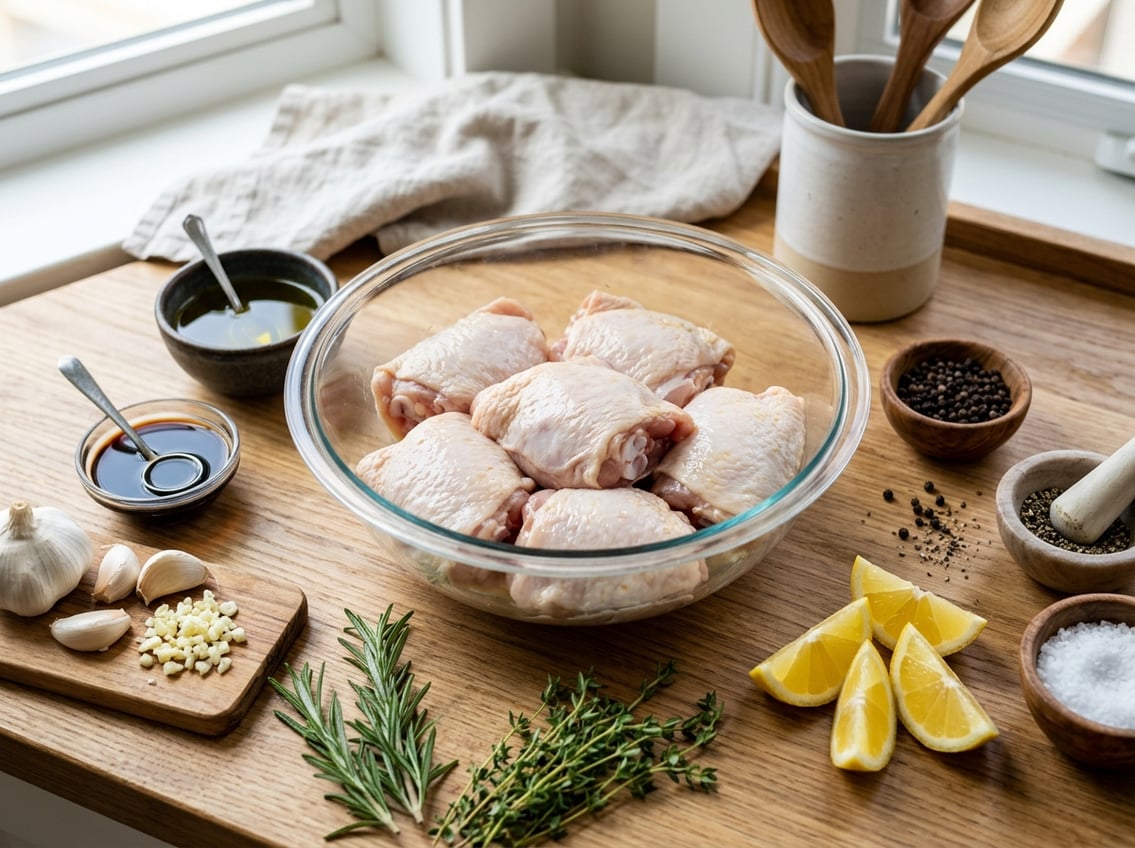
Good marinades tenderize, carry flavor, and create a surface that browns well.
Use ingredients that penetrate the dark meat of thighs while balancing moisture and taste.
Key Marinade Ingredients and Their Roles
Salt or a salty liquid (soy sauce, tamari, or salted brine) seasons deep into chicken thighs and helps proteins retain moisture.
Use 1–2% salt by weight of the chicken or about 1 tablespoon kosher salt per pound for a direct marinade.
Acids like lemon juice, vinegar, or yogurt break down connective tissue and speed flavor uptake.
Keep acid to 1–2 tablespoons per pound to avoid mushy texture during long marinades.
Sweeteners such as honey, brown sugar, or maple balance acid and boost caramelization during grilling or roasting.
Use 1 teaspoon to 1 tablespoon per pound so the exterior doesn’t burn.
Aromatics (garlic, ginger, shallot) and spices (paprika, cumin, black pepper) provide surface flavor.
Crush or mince them to release oils.
Umami boosters—soy sauce, fish sauce, miso, or anchovy paste—add savory depth without extra salt when used in small amounts.
Mustard or a touch of oil helps ingredients adhere and improves browning.
Balancing Flavors: Acid, Sweet, Umami, and Spice
Aim for a simple ratio: acid (20–30%), oil (10–20%), and flavorings (50–70%) by volume.
This keeps thighs juicy and lets seasonings shine.
Counter strong acid (vinegar, citrus) with a sweet element (honey or sugar) and an umami source (soy or miso).
For example: 2 tbsp lemon, 1 tbsp honey, 1 tbsp soy per pound of chicken gives bright, balanced flavor.
Match spice intensity to cooking method.
Bold smoked paprika and cumin work well for high-heat grilling; delicate herbs and lemon pair better with oven-baked thighs.
Adjust salt last.
Taste the marinade after mixing (diluted with a small splash of water if needed), and remember thighs will absorb salt during marination.
Choosing Oils and Fresh Vs. Dried Herbs
Use neutral oils with higher smoke points—canola, grapeseed, or light olive oil—for grilling to protect marinades from burning.
Reserve robust extra-virgin olive oil for low-heat roasting or finishing.
Oil carries fat-soluble flavors and helps with browning.
Add 1–2 tablespoons per pound of chicken.
Fresh herbs (parsley, cilantro, thyme) give bright aroma and work best for marinating under 6–8 hours.
Dried herbs (oregano, rosemary, thyme) concentrate flavor and withstand longer marination and high heat; use about one-third the volume of fresh.
Combine one fresh and one dried herb when possible.
This gives brightness and staying power in your chicken thigh marinades.
Selecting Chicken Thighs: Boneless, Skinless, and Bone-In Options

Choose thighs based on cooking time, texture you want, and how you plan to marinate and finish them.
Boneless thighs speed up prep and soak up marinade quickly; bone-in thighs need longer cook time but offer deeper flavor and juicier results.
Boneless Skinless Chicken Thighs: Benefits and Uses
Boneless skinless chicken thighs cook faster and require less knife work.
They suit weeknight meals and recipes where you want quick, even cooking.
They absorb marinades rapidly because the surface area of exposed meat soaks up acid, oil, and aromatics.
They are ideal for short marinades (30 minutes to 2 hours) or quick high-heat methods like pan-searing, stir-frying, or grilling.
Because they lack skin and bone, they brown differently and can dry out if overcooked.
Use marinades with a balance of oil and acid plus umami (soy, miso, yogurt) to boost flavor and keep the meat tender.
Plan roughly 1/2 pound boneless thighs per person when serving as the main.
Bone-In Chicken Thighs: Texture and Flavor Considerations
Bone-in chicken thighs take longer to cook but deliver more depth of flavor and a juicier texture.
Roast, braise, or grill them after marinating for best results.
The bone conducts and retains heat, which helps the meat reach doneness without drying.
Marrow and connective tissue release flavor during cooking, improving the final taste.
If you want crispy skin, leave it on and use a marinade that’s not too sugary, or pat skin dry before high-heat searing.
For braises and slow roasts, a longer marinade (several hours to overnight) lets flavors penetrate deeper.
Add about 3/4 to 1 pound bone-in thighs per person because pieces are larger and cooking yield differs from boneless cuts.
Step-by-Step Guide to Marinating Chicken Thighs
Prepare a balanced marinade, choose an appropriate container, and chill the chicken for the right amount of time.
Use oil, acid, salt, and aromatics in proportions that match your chosen cook method.
Marinating Times for Maximum Flavor
Marinate boneless thighs for 3–12 hours and bone-in thighs for 6–24 hours for noticeable flavor and tenderness.
Shorter times (30 minutes–2 hours) work if your marinade is oil-forward and uses salt or soy for quick surface seasoning.
Avoid very acidic marinades longer than 4–6 hours on thin cuts.
Citrus, vinegar, or yogurt can break down proteins and create a mushy texture.
If you plan a long soak (overnight to 24 hours), use a gentler acid ratio (3:1 oil-to-acid) and include salt or soy to help penetrate the meat evenly.
For enzymatic marinades (pineapple, papaya, kiwi), limit contact to under 1 hour for boneless thighs.
Always refrigerate while marinating.
Plan timing around your cooking schedule so the meat rests a short time in the fridge after removing from the marinade.
Tips for Even Coating and Best Absorption
Pat thighs dry, then gently score thick areas or use a fork to allow better penetration of the marinade.
Place thighs in a resealable plastic bag or shallow nonreactive container and press out excess air.
Use a 2:1 or 3:1 oil-to-acid ratio depending on acid strength.
Add salt (or soy sauce) and a small amount of sugar or honey to improve moisture retention and caramelization.
Massage the bag for 30–60 seconds to distribute flavors.
Flip the bag once or twice during marination for even coating.
If you want the effect of a brine plus flavor, dissolve salt in the marinade first and allow at least 2–4 hours.
For a quick marinade, blend ingredients so they emulsify and cling to the thighs during cooking.
Food Safety During Marination
Always marinate in the refrigerator at 40°F (4°C) or below.
Do not marinate on the countertop.
Keep raw chicken on the bottom shelf or in a leak-proof container to prevent cross-contamination.
Discard any leftover marinade that contacted raw chicken, or bring it to a full boil for at least one minute before using as a sauce or baste.
Use clean utensils and plates when handling cooked chicken.
Never reuse the raw-marinated container or tongs without washing them first.
If you need to cook after marinating, pat the thighs lightly to remove excess marinade so they brown properly.
Cook to an internal temperature of 165°F (74°C).
Popular Chicken Thigh Marinade Recipes
These recipes focus on reliable ingredient ratios and clear flavor goals.
Balance salt, acid, fat, and aromatics so your thighs stay juicy and well-seasoned.
Choose a base (soy, yogurt, oil, or citrus), add a sweet or spicy element if desired, and adjust marinating time to avoid over-salting.
Classic Sweet and Savory Marinades
Pair a salty element like soy sauce or kosher salt with a sweetener such as honey or maple syrup.
Use 2 tbsp soy sauce, 2 tbsp oil, 1–2 tbsp honey, 2 garlic cloves (minced), 1 tsp smoked paprika, and 1 tsp black pepper for about 6 thighs.
Marinate 1–1.5 hours in the fridge for boneless thighs.
Reduce salt or skip it if you plan longer than 2 hours.
The sugar helps caramelize on the grill while the oil and soy penetrate for juiciness.
You can swap honey for brown sugar or maple, add lemon zest for brightness, or mix in 1 tsp Dijon mustard for tang.
For baking, pat the thighs dry before cooking to help browning.
Spicy Chicken Thigh Marinade Variations
Build layers for heat: a salty base, an acid, and one or two spicy agents.
Try 3 tbsp soy or Worcestershire, 2 tbsp olive oil, 2 tbsp lime juice, 1–2 tbsp chipotle in adobo (or 1–2 tsp cayenne), 3 garlic cloves, and 1 tsp brown sugar.
Marinate 30 minutes to 2 hours depending on salt level.
Chipotle adds smoky heat and helps with color; fresh chiles give bright heat.
Balance spice with a touch of sweet or dairy (yogurt) if the heat feels too sharp.
Reserve a small amount of marinade (before adding raw chicken) to brush during cooking for extra glaze.
If using yogurt as the base, cut acidic elements to prevent curdling.
Global Flavor Profiles: Mediterranean and Asian Inspirations
For Mediterranean flavor, combine olive oil, lemon juice and zest, garlic, oregano, and a pinch of crushed red pepper.
Use 1/3 cup oil, juice of 1 lemon, 3 crushed garlic cloves, 1 tbsp dried oregano, and 1 tsp salt.
Marinate 1–3 hours.
The citrus brightens while oregano gives herbal depth.
Add yogurt for a Greek-style chicken thigh marinade to tenderize and add creaminess.
For Asian flavor, build on soy or tamari, rice vinegar, sesame oil, garlic, and ginger.
Try 3 tbsp soy, 1 tbsp sesame oil, 2 tbsp rice vinegar, 1 tbsp honey, 2 cloves garlic, 1 tbsp grated ginger.
Marinate 30–90 minutes.
For stronger umami, add 1 tbsp fish sauce or miso paste.
Both profiles let you tailor spice and salt levels.
Match cooking method—grill for char, oven or air fryer for even cooking—to the marinade for best results.
Best Cooking Methods for Marinated Chicken Thighs
Choose a method that matches your time, texture preference, and equipment.
Each method below gives a reliable internal temperature target and practical steps to keep thighs juicy and well-browned.
How to Cook Marinated Chicken Thighs on the Grill
Preheat the grill to medium-high, about 400°F (204°C). Oil the grates to prevent sticking.
Place thighs on the grill skin-side down if they have skin. Grill bone-in thighs for 6–8 minutes per side, and boneless thighs for 4–6 minutes per side.
Check the internal temperature with an instant-read thermometer and remove the chicken when it reaches 165°F (74°C). Watch for flare-ups from dripping marinade and move pieces if flames char too quickly.
Sear over direct heat for the first 2–3 minutes per side if you want a smoky char. Move the thighs to indirect heat to finish cooking.
If using sticky marinades with sugar or honey, reduce direct high heat near the end to prevent burning. Let the meat rest for 5 minutes before serving to allow juices to redistribute.
Baking Marinated Chicken Thighs in the Oven
Preheat your oven to 425°F (220°C) for balanced browning and tender meat. Arrange thighs in a single layer on a rimmed sheet pan or baking dish, leaving space between pieces for airflow.
Bake bone-in thighs for 20–25 minutes and boneless thighs for 15–20 minutes. Check internal temperature with a thermometer and aim for 165°F (74°C).
For crisper skin, broil for 2–4 minutes at the end while watching closely. Pat skin dry before baking to improve crisping.
Spoon or brush reserved marinade over the thighs during the last 5–8 minutes for extra glaze, but only use marinade that has been boiled if it touched raw chicken.
Pan-Searing and Other Techniques
Heat 1–2 tablespoons of oil in a skillet over medium-high heat until shimmering. Place thighs skin-side down and press lightly to ensure contact.
Cook for 5–7 minutes until deeply browned. Flip, reduce heat to medium, cover or add a splash of broth, and finish cooking until thighs reach 165°F (74°C).
For boneless thighs, cook for 4–6 minutes per side. Use pan juices to make a quick sauce by deglazing with wine, stock, or lemon juice, then scrape browned bits and simmer to thicken.
Slow-cook thighs for a shreddable, tender texture by cooking on low heat for 6–8 hours. Air-fry at 380°F (193°C) for 18–22 minutes for crisp results.
Adjust times based on thigh size and whether they are bone-in or boneless.
Tips for Juicy and Flavorful Results Every Time
Control acid and salt in your marinade and match marinating time to the cut. Use a hot sear or grill finish to lock in juices and add color.
Keep excess marinade off the surface before cooking. Let thighs rest after cooking for even juices.
Avoiding Common Marinating Mistakes
Limit marinating time to 2–6 hours for bone-in thighs when using acidic ingredients like lemon juice, vinegar, or yogurt. For very fatty thighs, marinate up to 8–12 hours, but reduce acid if marinating longer.
Use about 1–2 teaspoons kosher salt per pound of chicken or brine instead of oversalting the marinade. Never marinate at room temperature for more than 30 minutes.
Seal marinated chicken thighs in a zip-top bag or covered container and refrigerate immediately for longer marinating times. Pat thighs mostly dry before cooking to promote browning.
Enhancing Flavor Through Basting and Resting
Boil reserved marinade for at least 3–5 minutes before using it to baste, or discard it. Baste grilled or pan-seared thighs during the last 5–8 minutes with a fresh mix of oil, honey, or a reduced portion of cooked marinade.
Rest cooked thighs for 5–10 minutes on a warm plate before cutting. Finish with a small brush of citrus or herb oil after cooking for extra flavor without softening the crust.
Serving Suggestions and Pairings
Pair marinated chicken thighs with medium-acid sides that cut richness. Try lemony couscous, simple tomato salad, or pickled cucumbers.
For starches, choose roasted potatoes, coconut rice, or buttered polenta. These pair well with different marinades such as herb-garlic, Asian-sesame, or honey-mustard.
Add chopped parsley, cilantro, or scallions for freshness and color. Slice thighs over grains for meal prep or serve them whole on a platter for family-style dining.


