
What Are the Different Ways to Cook Chicken Thighs: Techniques, Tips, and Recipe Inspirations
Chicken thighs adapt to almost any cooking method, from quick searing and air-frying to slow braising and high-heat roasting. Bone-in, skin-on, and boneless thighs each work best with certain techniques, so matching the cut to the method ensures juicy, flavorful results.
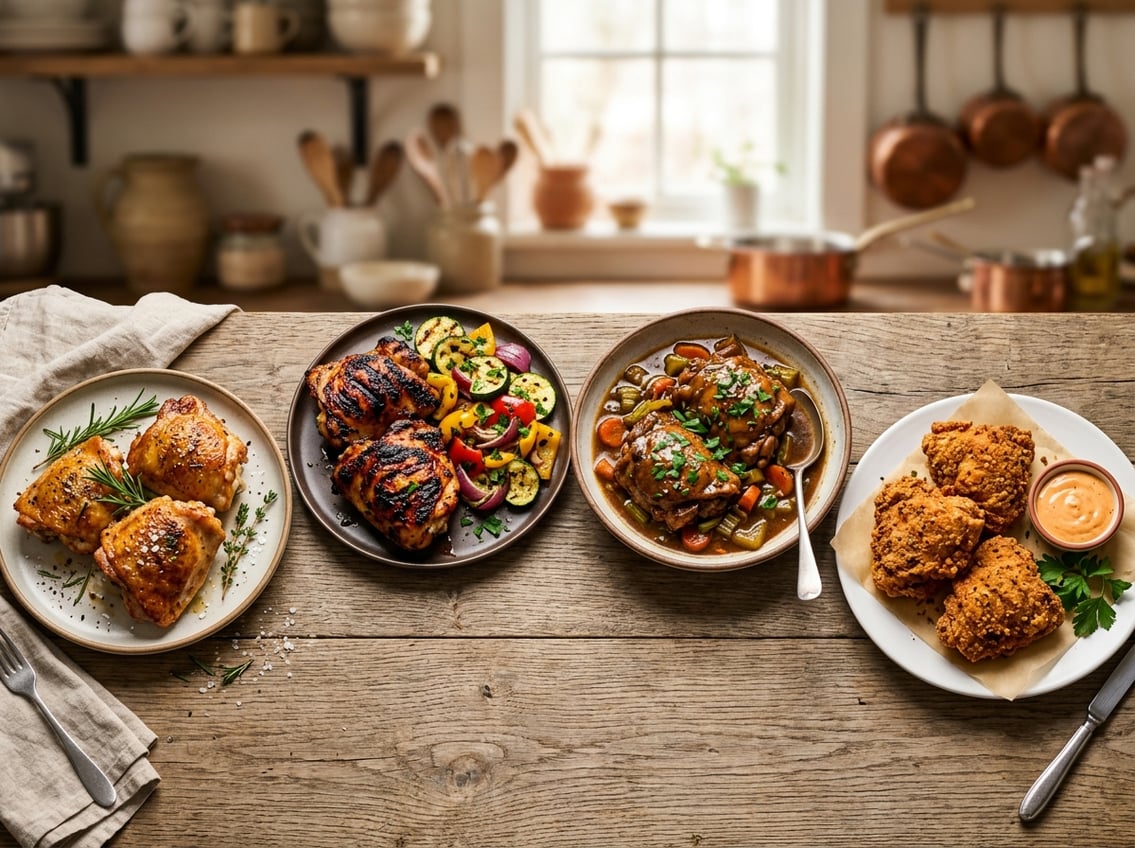
This guide covers practical options like oven roasting, broiling, stovetop searing, grilling, pressure-cooking, slow-cooking, air frying, and quick pan approaches. You’ll get tips on which thigh type to use and how to time each method.
Chicken Thigh Types and Their Best Uses
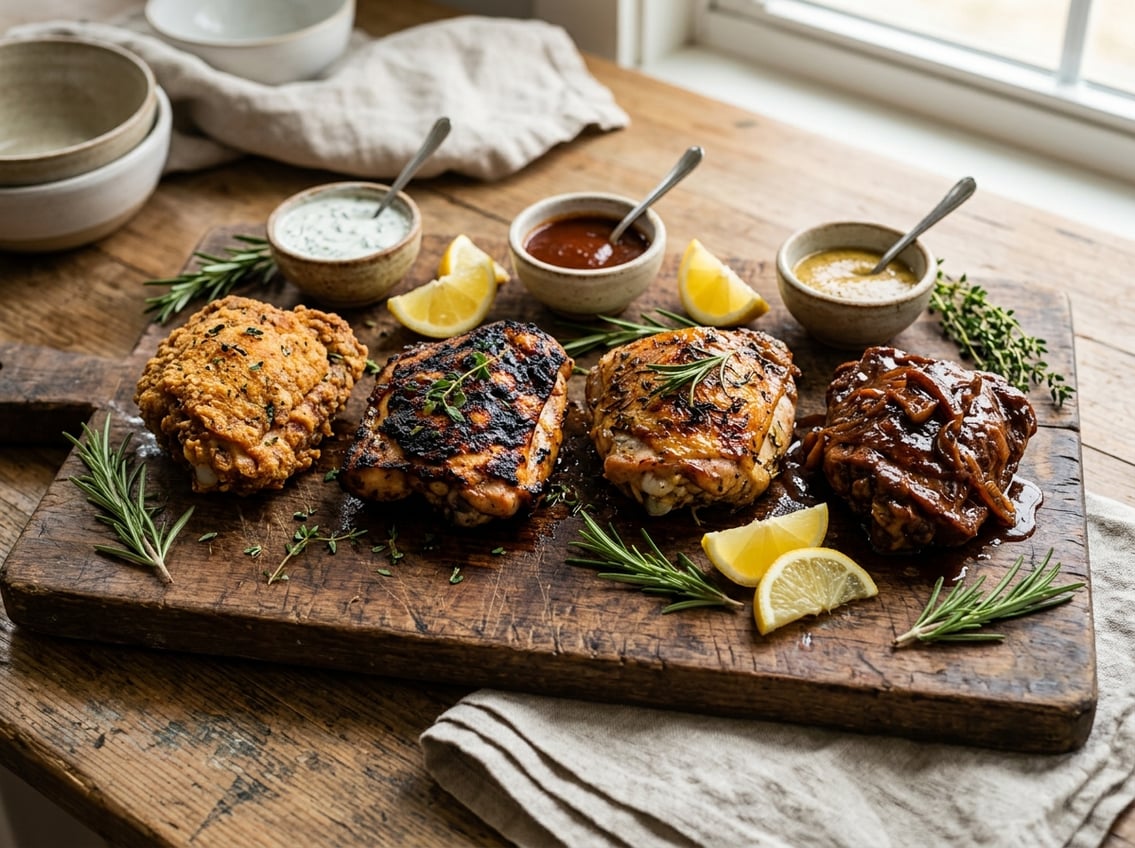
Choose the cut that matches your cooking method and desired texture. Some cuts give you crisp, caramelized skin, while others speed up prep or absorb sauces more easily.
Bone-In, Skin-On Varieties
Bone-in, skin-on chicken thighs deliver the most flavor and the best crisp skin when you roast, grill, or pan-sear them. The bone keeps the meat moist during long cooks, so use this cut for 35–50 minute oven roasts, braises, or direct grilling over medium heat.
Season the skin well and start skin-side down in a hot pan for 6–10 minutes to render fat and build a brown crust. The rendered fat flavors pan sauces and braises.
Use bone-in, skin-on thighs for plate-ready presentation or when you want a sauce with deep chicken flavor. Test temperature at the thickest part next to the bone, as these take longer to reach 165°F/74°C.
Boneless, Skinless Options
Boneless, skinless chicken thighs cook quickly and shred easily. They work well in stir-fries, curries, tacos, and quick skillet dishes where even, fast cooking matters.
Trim excess fat and marinate or brine briefly (30–60 minutes) to keep them juicy. Without skin, they can dry out if overcooked.
Choose boneless, skinless thighs for convenience, faster slicing, or dishes where sauce or seasoning should coat the meat evenly. They’re great for shredding for tacos or adding to rice and noodle bowls.
Bone-In, Skinless Selections
Bone-in, skinless thighs fall between the other cuts in flavor and cook time. You lose the crispy skin but keep the moisture advantage of the bone, which helps during slow braises, stews, and oven cooking.
These work well in soups, slow-cooked ragouts, or any recipe where bone-derived gelatin improves mouthfeel. Season the meat directly and sear briefly to add color before braising.
Monitor internal temperature at the bone. Cooking time is slightly less than skin-on but longer than boneless.
Use bone-in, skinless thighs when you want rich stock or sauce and prefer no skin in the finished dish. They yield tender meat that holds together during long cooks.
Oven Techniques: Roasting, Baking, and Broiling
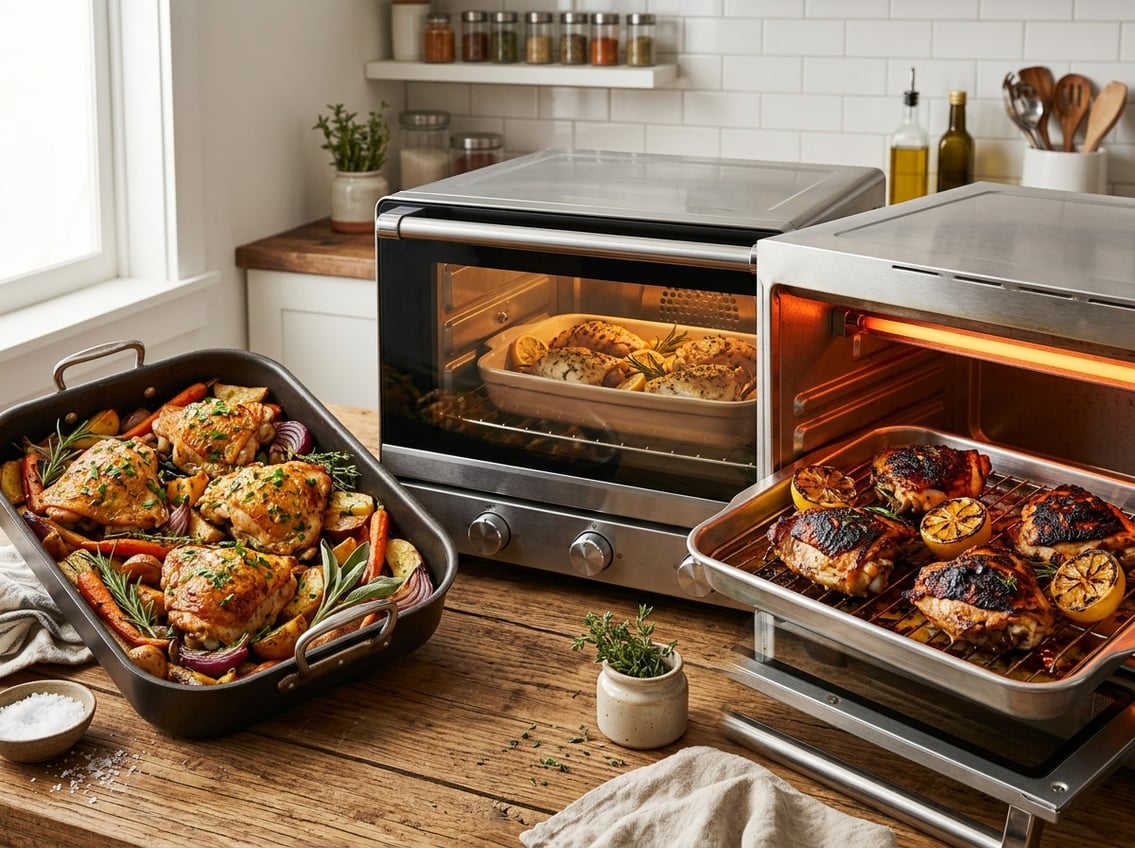
Oven methods let you control skin texture and interior juiciness by adjusting heat and placement in the oven. Pick a technique based on whether you want browned skin, hands-off cooking, or fast, high-heat crisping.
Classic Baked Chicken Thighs
Baking uses steady, moderate oven heat (375–425°F) to cook chicken thighs through without aggressive browning. Pat thighs dry, season with salt and pepper, and optionally rub with a marinade of olive oil, minced garlic, lemon zest, and herbs.
Place skin-side up in a shallow baking dish with space between pieces for even air circulation. Bake until a thermometer reads 165°F in the thickest part, about 25–35 minutes for bone-in thighs.
Sheet-Pan Meals
Sheet-pan chicken pairs roasted chicken thighs with vegetables for a one-pan dinner. Use a rimmed baking sheet, single layer, skin-side up, and toss veggies in oil and garlic so everything browns together.
Arrange larger items toward the edges where heat is higher. Roast at 400–425°F; denser vegetables may need a 10–15 minute head start.
Finish thighs under the broiler for 1–2 minutes if the skin looks pale.
Broiling for Crispiness
Broiling uses direct top heat to brown and crisp skin quickly. Place an oven rack 4–6 inches from the broiler.
After you par-cook thighs by baking or pan-searing, move them skin-side up to a broiler-safe pan and broil for 2–6 minutes until the skin blisters and deepens in color. Watch closely to prevent burning.
Broiling works well for crispy skin without extra oil. Use broiling as a finishing step rather than the only cooking method for bone-in thighs.
Crispy and Roasted Variations
Roasting at higher temperatures (425–450°F) creates rapid browning and concentrated flavor. Dry the skin thoroughly and brush with oil or a mustard-garlic paste before roasting.
Roast on a wire rack over a sheet pan to keep thighs out of pooled juices for crispier skin. For more flavor, marinate thighs for 2–6 hours before roasting.
Sear skin-side down in a hot skillet for 6–8 minutes, then finish in a 425°F oven for both intense browning and juicy meat.
Stovetop and Skillet Cooking Methods
Stovetop techniques give you fast, controllable heat and let you build fond for sauces. Choose between crisp, high-heat finishes and low, liquid-driven cooking based on your texture and sauce goals.
Sautéing and Pan-Frying
Sautéing and pan-frying create crisp skin and concentrated flavor. Use a heavy skillet and pat thighs dry.
Start skin-side down in a cold or medium-hot pan to render fat slowly. For bone-in, skin-on thighs, cook skin-side down 8–12 minutes until golden, then flip and finish 6–10 minutes or transfer to a 400°F oven.
Keep space between pieces to avoid steaming. Season simply, and deglaze the pan with wine, stock, or vinegar to make a quick sauce.
Check doneness with a thermometer in the thickest part, avoiding the bone.
Braising and Smothering
Braising and smothering break down connective tissue for silky chicken thighs. Brown thighs first to develop flavor, then add vegetables and enough liquid to come halfway up the meat.
Cover and simmer on low heat for 30–45 minutes for bone-in thighs until the meat pulls easily from the bone. Smothered chicken uses a shallow pool of seasoned gravy and a lower simmer to keep the skin tender.
Skim excess fat, adjust seasoning near the end, and finish with herbs or a splash of acid to brighten the sauce.
Chicken Stroganoff and Pasta Dishes
You can use thighs in creamy, sauce-forward dishes like chicken stroganoff and chicken pasta. Trim fat from boneless thighs and cut into bite-sized pieces.
Sear in a hot skillet until browned, remove, then sauté mushrooms and onions in the same pan. Deglaze with stock or wine, return the chicken, and finish with sour cream or crème fraîche for stroganoff.
For pasta, build the sauce with garlic, tomatoes or cream, and herbs. Toss cooked pasta into the skillet so it absorbs flavors.
Chicken and Dumplings
Chicken and dumplings uses braised thighs for deeply flavored broth and tender meat. Brown bone-in thighs briefly, then simmer with onions, celery, carrots, and stock for 30–60 minutes.
Remove thighs, shred the meat, and return it to the pot. Drop dumpling batter onto the simmering liquid and cover until dumplings puff and cook through, about 12–15 minutes.
Season the stew and finish with chopped parsley.
Grilling and Outdoor Cooking
Grilling gives you crisp skin, smoky flavor, and fast cooking times when you control heat and timing. Use direct heat for searing and indirect heat to finish, and choose marinades or rubs that match the thigh’s fattier profile.
Grilled Chicken Thighs
Pat thighs dry and season with salt and pepper to promote crisp skin and even browning. Sear skin-side down over direct heat until browned, about 5–8 minutes depending on thickness.
Move thighs to indirect heat or lower the flame to finish cooking to 165°F internal temperature. For bone-in thighs, plan 20–30 minutes total; boneless thighs usually take 12–18 minutes.
Rest thighs 5 minutes before serving to let juices redistribute.
Marinades, Rubs, and Global Flavors
Use a marinade to tenderize and add surface flavor, or a dry rub to build a crust that resists burning. Combine an acid, oil, salt, and aromatics for marinades; marinate 30 minutes to 6 hours.
A simple rub of smoked paprika, cumin, garlic powder, salt, and black pepper gives reliable flavor and helps form a crisp exterior. Add sugar near the end of grilling to prevent burning.
Score the skin lightly and pat dry after marinating for better crisping.
Gochujang and Thai BBQ
Gochujang combines fermented chili paste with soy, garlic, and sugar for a sticky, savory glaze that caramelizes on the grill. Whisk gochujang with soy sauce, rice vinegar, sesame oil, ginger, and honey.
Brush onto thighs during the last 5–8 minutes of cooking. For Thai-style BBQ, mix fish sauce, lime juice, palm sugar, garlic, and cilantro for a tangy marinade.
Grill over medium-high heat, basting occasionally, and serve with extra herbs and lime wedges.
Southwestern and Cilantro-Lime
Southwestern flavors use smoked paprika, cumin, chili powder, garlic, and brown sugar. Rub thighs and let them rest 30–60 minutes before grilling.
Char over direct heat briefly, then move to indirect heat to finish. Blend cilantro, lime juice, olive oil, salt, and garlic into a chimichurri-style sauce.
Spoon over rested thighs or serve alongside. The citrus brightens the dish and cilantro ties into the spice mix for a balanced result.
Slow Cooker, Instant Pot, and Pressure Cooking
Use slow cooking for set-and-forget tenderness. Use pressure cooking when you need fast, consistent results that still yield moist meat.
Both methods excel with bone-in thighs and adapt well to braises, stews, and saucy dishes.
Slow Cooker Chicken Thighs
Slow cookers create fork-tender thighs with minimal hands-on time. Brown thighs briefly on the stove for better color.
Add aromatics and a cup or two of liquid like broth, wine, or tomato sauce, then cook on low for 6–8 hours or high for 3–4 hours.
Root vegetables tolerate long cooks. Add delicate items like peas or bell pepper in the last 30–60 minutes.
Use bone-in, skin-on thighs for flavor. The skin softens but the meat stays juicier.
Finish under a broiler or in a hot pan if you want crisp skin before serving.
Instant Pot Favorites
The Instant Pot delivers tender thighs quickly while preserving moisture and nutrients. Sear on “Sauté,” add 3/4–1 cup liquid, and pressure cook for 8–12 minutes for bone-in thighs or 6–8 for boneless, then let pressure release naturally for 5–10 minutes.
Pressure cooking needs less liquid because it traps steam. Add quick-cook vegetables after pressure release to keep them from getting mushy.
The Instant Pot can brown, slow-cook, or keep food warm, making it a single-pot solution for weeknight dinners.
Chicken Adobo and Cacciatore
Pressure or slow cooking works well for adobo and cacciatore, but timing changes the texture. For Instant Pot chicken adobo, sear thighs, add soy, vinegar, garlic, bay leaves, and 1/2 cup water; pressure cook for 10–12 minutes for bone-in, then release pressure based on how intense you want the sauce.
For slow cooker chicken adobo, combine ingredients and cook on low 4–6 hours so the vinegar mellows and the sauce concentrates.
Chicken cacciatore uses tomato-based braising liquids. Pressure cook cacciatore for 10–12 minutes for bone-in thighs; slow cooker cacciatore needs 4–6 hours on low.
Finish both dishes with fresh herbs and reduce the sauce briefly if you want it thicker.
Soup and Stew Classics
Pressure cooking makes rich chicken stock and tender thigh meat quickly. Slow-cooking develops deeper flavor.
For chicken noodle soup, pressure cook thighs with onion, carrot, celery, and 4 cups broth for 8–10 minutes, then shred and add noodles, cooking them separately for best texture.
For chicken tortilla soup, pressure cook with tomatoes, chiles, corn, and spices for 8–10 minutes. Add tortillas and cilantro after releasing pressure.
For chicken and wild rice soup, par-cook wild rice separately or add it during the last hour in the slow cooker. In the Instant Pot, cook rice with the thighs for 20–25 minutes.
Both appliances make hearty, flavorful soups with minimal fuss.
International Flavors and Creative Recipes
Bone-in or boneless chicken thighs handle bold sauces, slow braises, and high-heat finishes well.
Try spice-forward curried dishes, sauced rice bowls, sweet-savory glazed preparations, and layered casserole or street-style fillings.
Chicken Curry and Indian-Inspired Dishes
Use thighs for curry because their higher fat content keeps meat tender during long simmering. Brown the thighs first to develop fond, then add aromatics like onion, garlic, ginger, and whole spices such as cumin, coriander, and garam masala.
For saucy dishes like butter chicken or tikka masala, finish with cream or yogurt and simmer just until the thighs reach 165–175°F so they stay juicy.
If you prefer a thinner, brighter curry, use coconut milk and green or red chili paste; add tamarind or lemon for tang.
Try a braised adobo-style variant with soy, vinegar, garlic, and black pepper, served with rice to mirror Filipino adobo’s balance of tang and umami.
Japanese Oyakodon and Rice Bowls
Oyakodon features thighs cut into bite-size pieces, simmered briefly in a dashi-soy-mirin broth, then joined with gently set eggs and served over steamed rice.
Use skinless, boneless thighs for even cooking and a richer mouthfeel than breast meat.
Thinly slice scallions and add shiitake or enoki mushrooms for texture.
Cook the thighs until just done, pour beaten eggs over the simmering pan, and remove when eggs are slightly runny. Carryover heat finishes them as you plate.
Swap dashi for chicken stock and add chili paste for a spicier rice-bowl variant.
Bourbon, Orange, and Deviled Styles
Bourbon chicken gets a sticky glaze of soy, brown sugar, and bourbon reduced until syrupy. Thighs handle the high heat and glaze well without drying.
For orange-style thighs, use orange juice, zest, rice vinegar, and a touch of chili paste. Pan-sear and finish in the glaze so the citrus caramelizes and coats the skin.
Deviled chicken thighs use a tangy, spiced crumb or sauce—mustard, paprika, cayenne, and breadcrumbs or a mayonnaise-based coating—baked until crisp.
Start with a sear for color, then finish in a low oven (350–375°F) to preserve juices.
Casseroles, Tacos, and Enchiladas
Shred cooked thighs for casseroles, enchilada fillings, and tacos. The meat holds moisture and soaks up sauces.
For a chicken enchilada casserole, braise thighs in a chili-tomato sauce, shred, mix with cheese and spices, layer with tortillas, and bake until bubbling.
For tacos, pan-roast thighs with cumin, oregano, and smoked paprika. Finish with a squeeze of lime and top with pickled onion.
Add crumbled chorizo for a smoky pork-chicken mix.
Use adobo-style thighs as a rice bowl or taco protein. The soy-vinegar punch pairs well with cilantro, avocado, and a simple slaw.
Air Fryer and Quick Cooking Solutions
You can get crispy skin, juicy meat, or a full meal in 20–30 minutes using an air fryer or fast oven methods.
These approaches use high heat, minimal oil, and simple seasonings so you finish dinner quickly without sacrificing texture or flavor.
Air Fryer Chicken Thighs
Air fryers crisp skin by circulating very hot air around bone-in, skin-on thighs. Pat thighs dry, rub with a small amount of neutral oil like canola or avocado, and season with salt, pepper, paprika, and garlic powder.
For extra crispiness, lightly dust the skin with baking powder. It raises pH and speeds browning without changing taste.
Preheat the air fryer to 375–400°F (190–205°C). Lay thighs skin-side down with space between pieces.
Cook about 12 minutes, flip, then cook another 10–14 minutes until internal temperature reads 165°F (74°C). Rest 5 minutes before serving.
Tips:
- Use a meat thermometer for accuracy.
- Don’t overcrowd the basket; work in batches if needed.
- Boneless or skinless thighs need 15–18 minutes total and will be less crispy.
Crispy Results in Less Time
You can get crispy chicken thighs quickly by controlling moisture and using high heat. Dry the skin thoroughly with paper towels and apply a light coating of oil and seasoning for even browning.
Baking powder on the skin creates extra crunch.
For the air fryer, cook at 375–400°F for 20–26 minutes, flipping once. For the oven or toaster oven, place thighs on a wire rack over a sheet pan at 425°F (220°C) for 25–30 minutes, rotating once.
For frozen thighs, increase time by 10–15 minutes and check doneness with a thermometer.
Avoid heavy marinades before crisping. Pat dry after marinating to preserve skin texture.
Quick Sheet-Pan and Pasta Meals
Sheet-pan chicken thighs become full meals with vegetables in one tray and minimal hands-on time. Place bone-in, skin-on thighs on a rimmed sheet pan with chopped potatoes, carrots, or Brussels sprouts.
Toss the vegetables with oil, salt, and herbs. Roast at 400–425°F (200–220°C) for 25–35 minutes until the thighs reach 165°F and the skin browns.
For a fast chicken pasta, sear seasoned boneless thighs in a skillet until they brown. Simmer them in a simple sauce of olive oil, garlic, crushed tomatoes or cream, and a spoonful of honey or honey garlic sauce.
Toss with cooked pasta and parsley. For honey garlic chicken thighs, brown the thighs, add a honey-garlic sauce, reduce briefly, then combine with pasta for a 20–30 minute weeknight dinner.


