
Is It Possible to Over Boil Chicken Breast? Key Tips
You may wonder, is it possible to over boil chicken breast, and the answer is yes. Chicken breast is lean, so it can go from tender to dry in a short time if it stays in hot water too long.
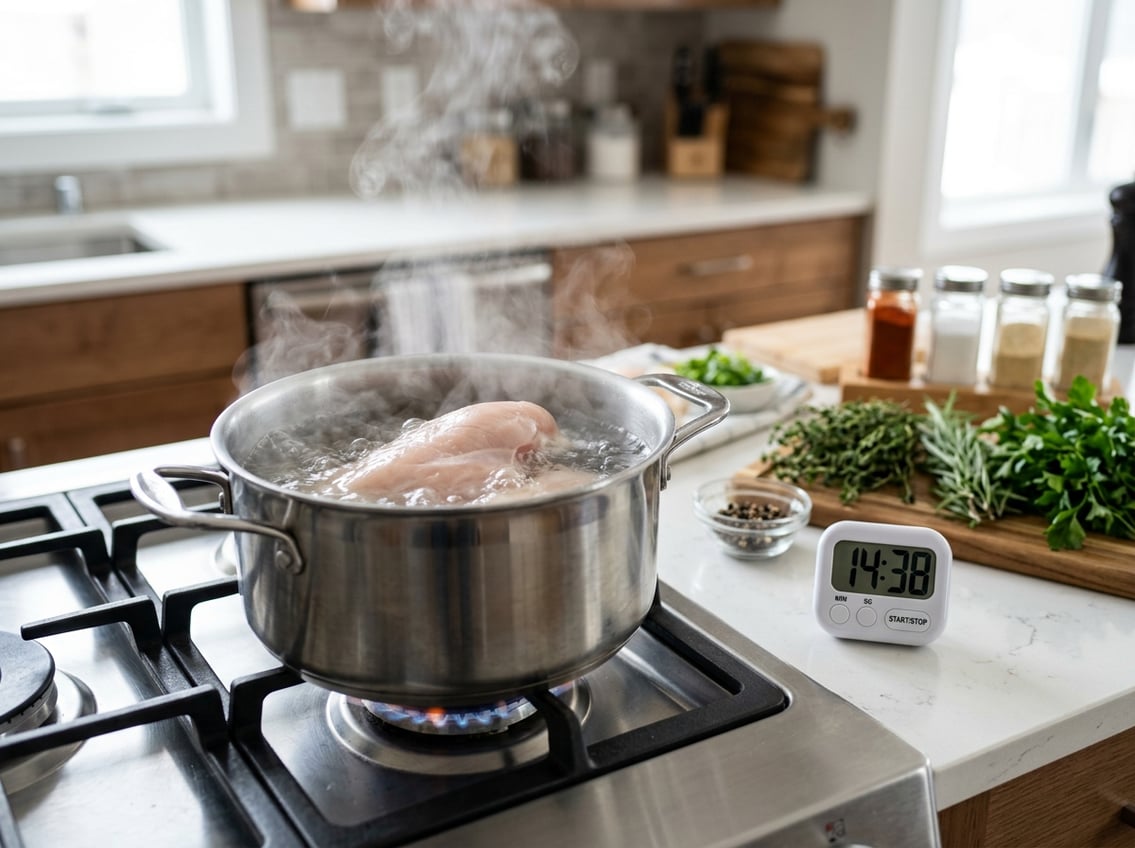
Boiling chicken breast does not need to be tricky. If you use a gentle simmer, watch the time, and stop when the meat reaches a safe temperature, you can get juicy results instead of stringy, rubbery meat.
The main goal is to cook the chicken just until it is done, then take it out before it loses too much moisture.
What Happens When Chicken Breast Cooks Too Long
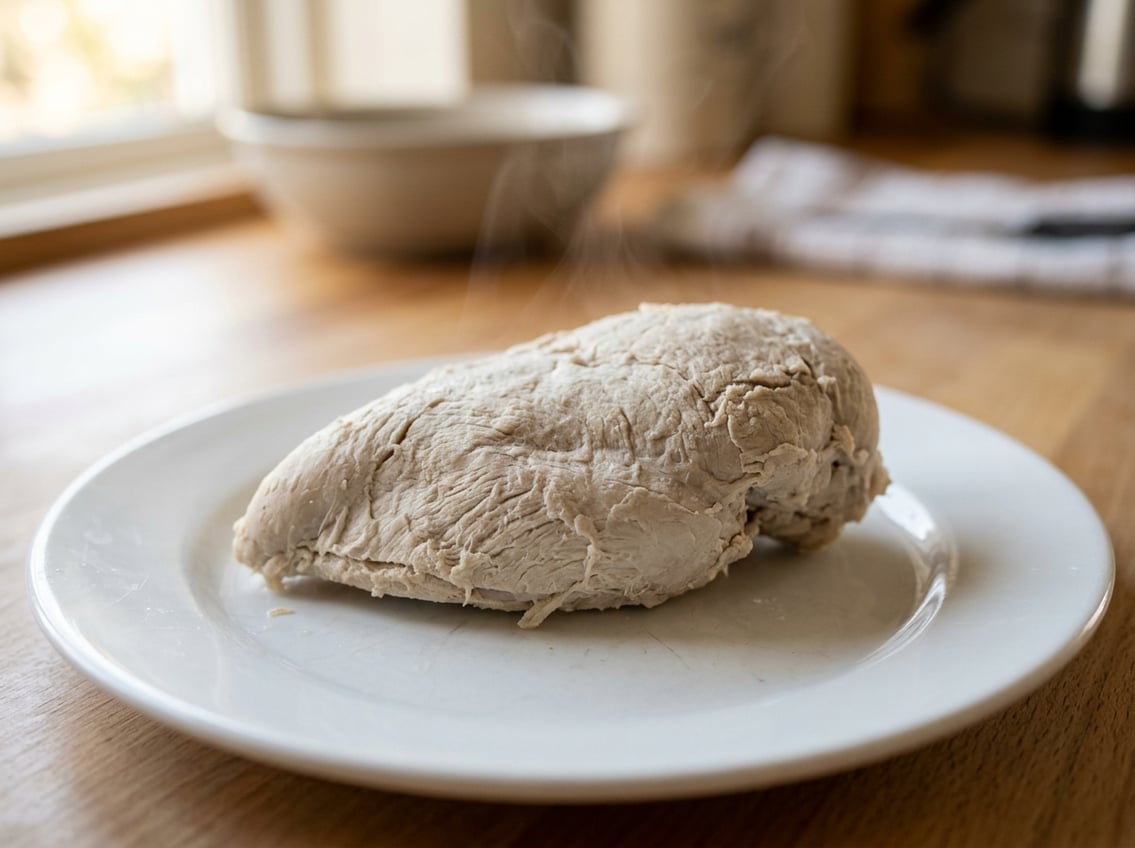
When you cook chicken breast too long, the proteins tighten and push moisture out. That is why overcooked chicken often feels dry, dense, and hard to chew.
The meat can also lose flavor as it keeps cooking.
Why Lean Meat Dries Out Quickly
Chicken breast has very little fat compared with darker cuts. That means it does not have much built-in protection against heat, so it dries out faster than fattier meat.
If you overboil chicken breast, the texture can shift from tender to stringy in just a few extra minutes. A rolling boil makes that happen even faster because the heat is more aggressive.
Signs of Overcooked Texture and Flavor
Overcooked chicken usually looks pale and shrunken, and it may pull apart in dry strands. The surface can feel rubbery even when the inside is fully cooked.
Flavor also fades when the meat stays in water too long. The chicken can taste flat, bland, or slightly chalky instead of juicy and savory.
How Overcooked Meat Differs From Properly Simmered Chicken
Properly simmered chicken stays moist and slices cleanly. It should feel firm yet tender, not tough or squeaky.
Over boiled chicken feels tight and dry through the center.
How Long to Simmer for Tender Results
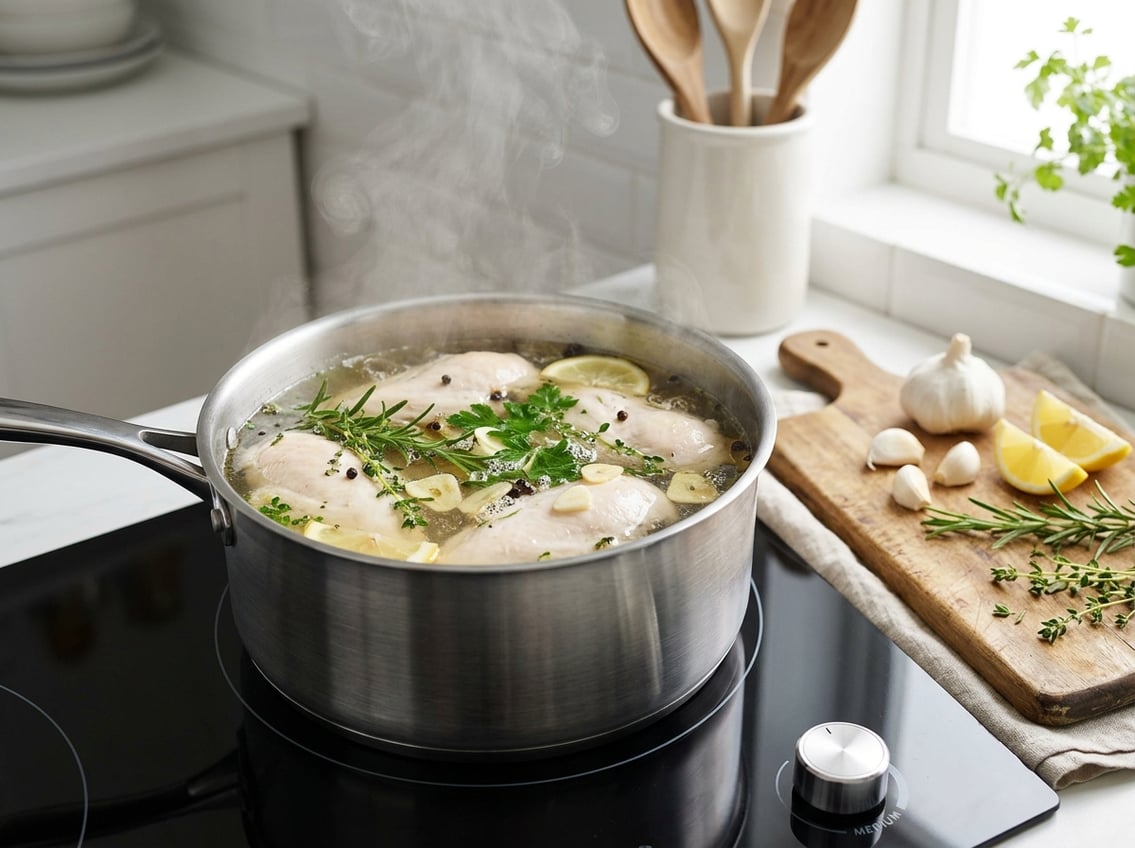
Timing matters more than boiling hard. With boiling chicken, a gentle simmer gives you better control and helps the meat stay tender.
Typical Timing for Boneless and Bone-In Cuts
For boneless boiling chicken breast, many cooks start checking around 10 to 15 minutes, depending on thickness. Bone-in pieces usually take longer because the bone slows the heat.
Thin cutlets cook faster than full, thick breasts. If the pieces are uneven, the smaller ones can overcook before the larger ones are ready.
Why a Gentle Simmer Works Better Than a Rolling Boil
A rolling boil is too harsh for most chicken breasts. It can make the outside tighten before the center finishes cooking.
A gentle simmer keeps the temperature steadier. That softer heat helps boiling chicken breast cook through without turning dry.
Using 165°F to Know When to Stop
A thermometer is the most reliable way to know when to stop. Chicken is safe to eat at 165°F in the thickest part.
Once the chicken reaches that temperature, remove it from the heat right away so it does not keep cooking for long in the hot liquid.
Best Ways to Prevent Dry, Rubbery Chicken
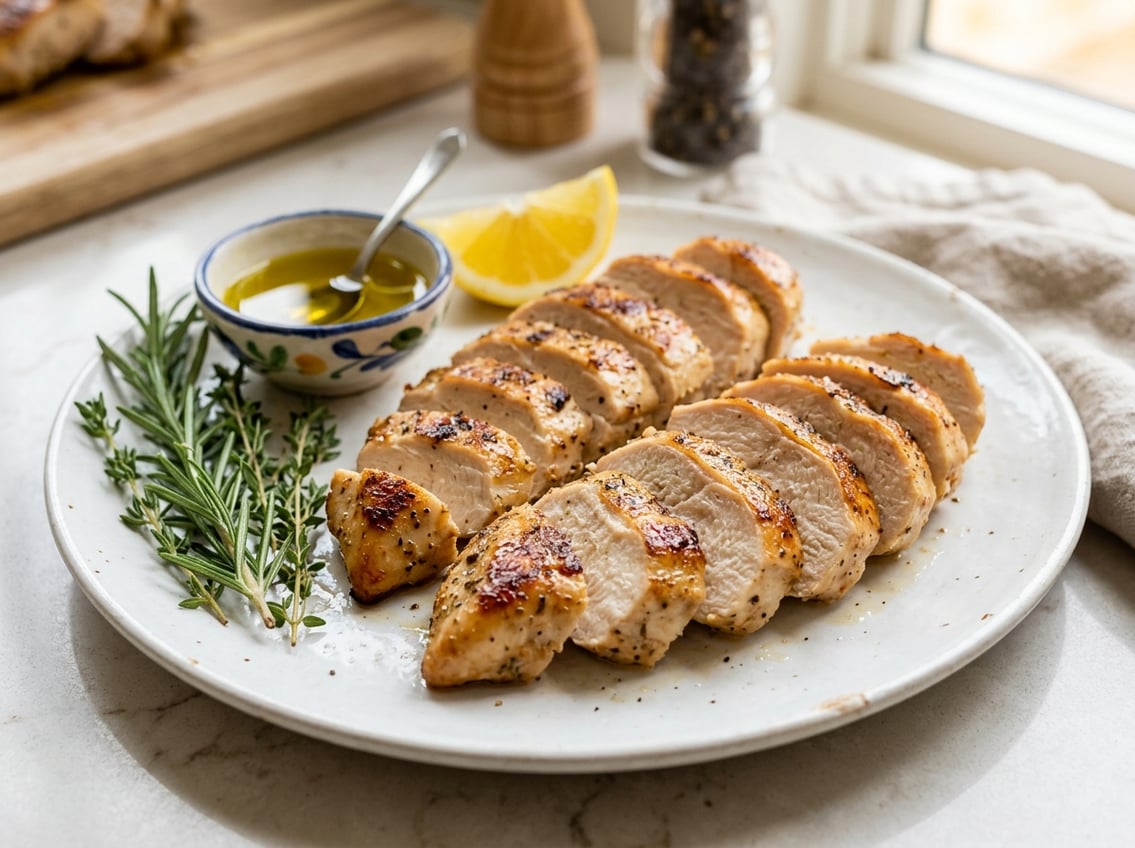
You can prevent overcooking chicken with a few simple habits. Even small changes, like using even-sized pieces and checking temperature, make a clear difference.
Start in Cold Water and Keep Pieces Even
Start chicken in cold water to help it warm more gradually. That gives you a wider window before the outside turns tough.
Try to use pieces that are similar in size and thickness. When one breast is much thicker than the other, the thinner piece can overcook while you wait for the thicker one to finish.
Use a Thermometer Instead of Guessing
A thermometer removes the guesswork from boiling chicken. You can check the thickest part and stop right at 165°F.
This matters most with chicken breast because it dries out quickly. Cooking to temperature is one of the best ways to prevent rubbery meat.
Resting and Holding Chicken in Broth for More Moisture
After cooking, let the chicken rest for a few minutes before slicing. Resting helps the juices settle instead of running out right away.
If you are not serving it immediately, keep the chicken in a little warm broth. That can help maintain moisture better than leaving it uncovered on a plate.
How to Save and Use Chicken That Turned Out Dry
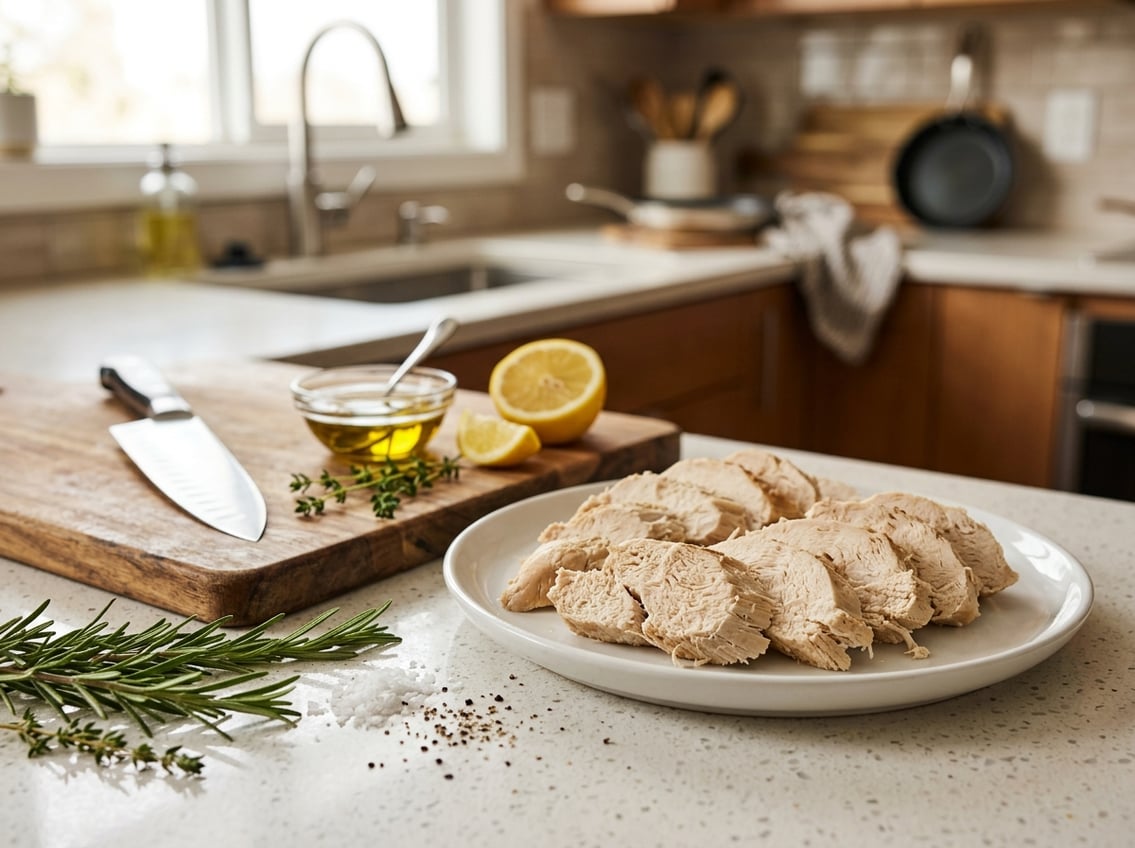
Dry chicken does not need to go to waste. You can often improve the texture by changing how you serve it, especially in dishes with sauce or added liquid.
When Shredding Helps
Shredding is one of the easiest ways to make over boiled chicken more usable. Small pieces blend better into soups, tacos, casseroles, and salads.
Dry chicken can still work well when it is mixed with other ingredients. In a dish with dressing, broth, or sauce, the texture is much less noticeable.
Adding Moisture With Broth, Sauce, or Dressing
If the chicken feels dry, cut it into slices or shreds and warm it gently in broth. A sauce can also help, especially barbecue sauce, cream sauce, curry, or gravy.
A salad dressing or mayo-based mix can help too. The extra moisture coats the meat and makes each bite easier to chew.
When Baking Chicken or Other Methods May Be Better
If boiling keeps giving you dry results, you may want to try another method.
Baking chicken in a covered dish or roasting it with a little fat gives you more control over texture.
You can also poach chicken instead of boiling it hard.
That slower method is often easier to manage when you want a softer result.


