
How Can I Boil Frozen Chicken Breast Safely and Fast
How can you boil frozen chicken breast safely and fast? Boil it in a pot of water with steady simmer, simple seasonings, and check with a meat thermometer.
Cook the chicken gently so it stays juicy while reaching a safe internal temperature.
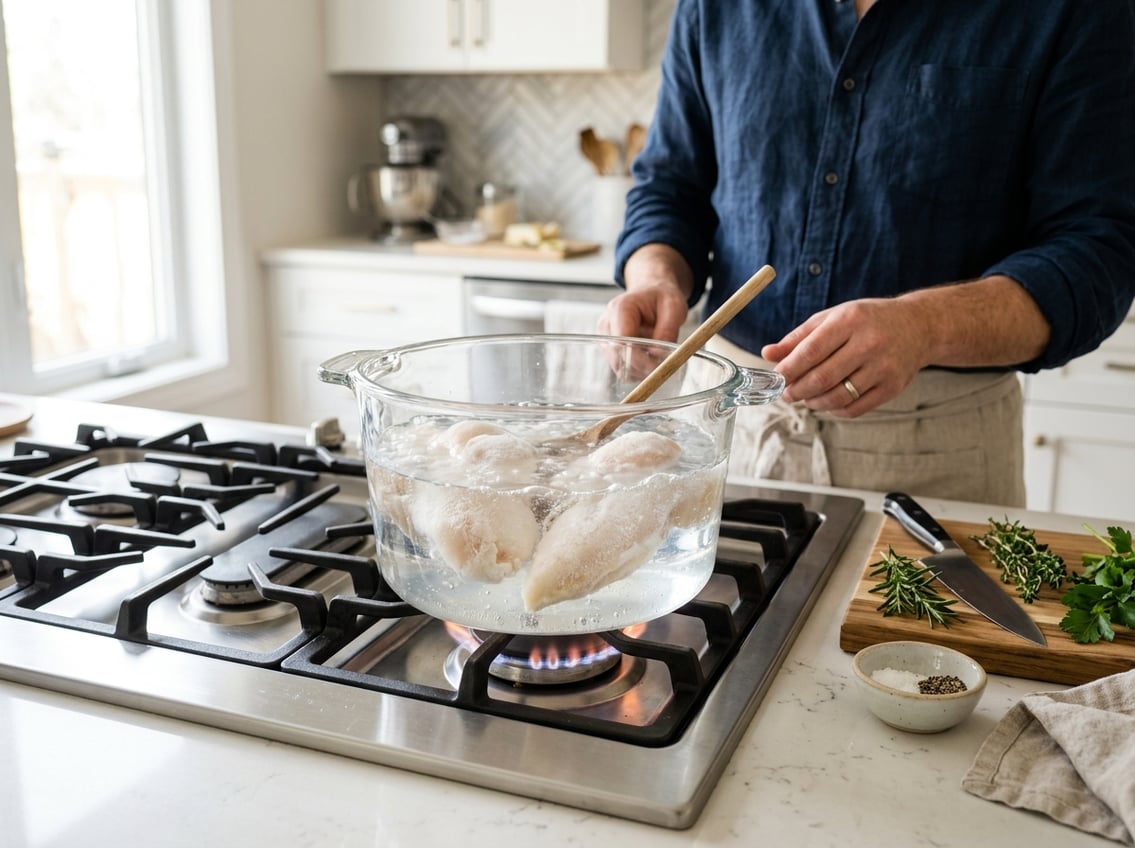
Boil frozen chicken breast until the thickest part reaches 165°F. A gentle simmer gives you the best mix of speed, safety, and texture.
If you need dinner fast, this is a practical way to cook frozen boneless skinless chicken breasts without thawing.
Boiling frozen chicken breast works well for shredding, slicing, dicing, soups, salads, and meal prep. The method is simple and gives you a light broth you can use later.
As noted in a quick frozen chicken guide, you can fit this approach into a weeknight meal in under 30 minutes.
Boiling Frozen Chicken Breast Step by Step
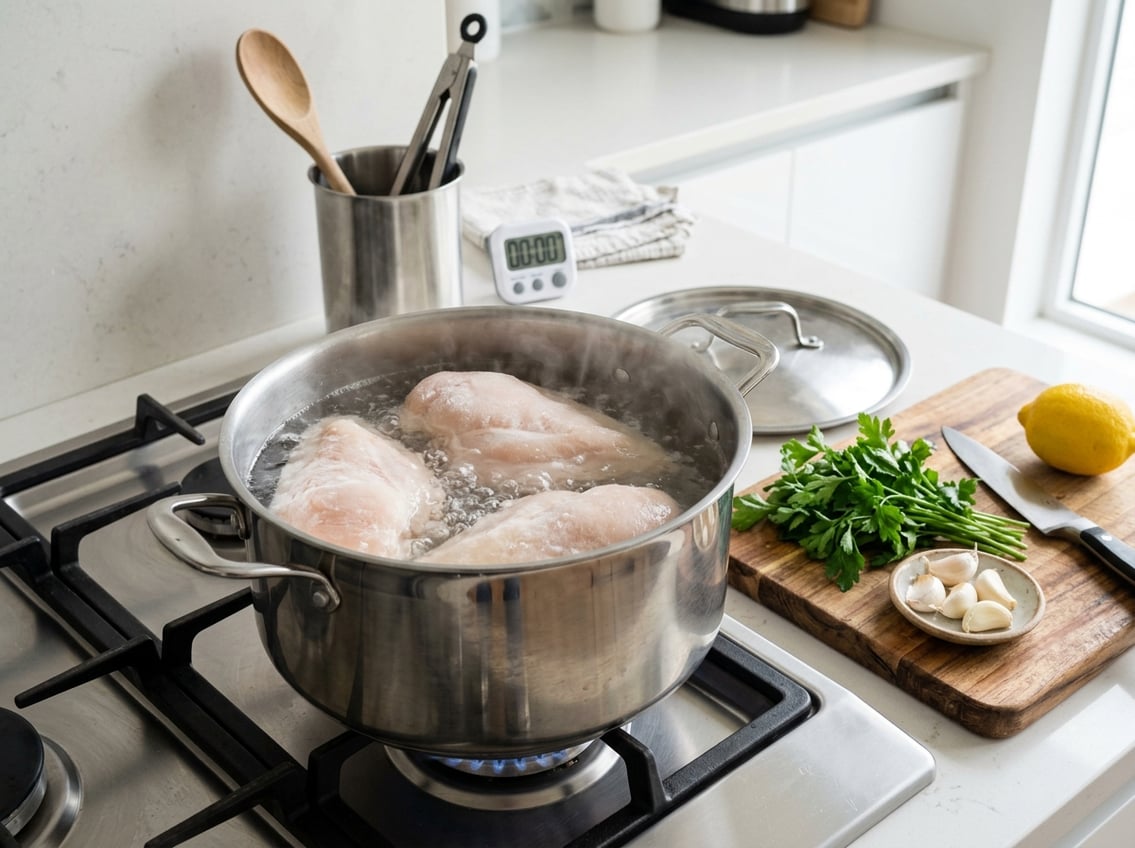
Keep the chicken pieces in one layer and use enough water for even heat. Use a gentle simmer, not a hard boil, so the outside does not overcook before the center is done.
What You Need Before You Start
Gather frozen boneless skinless chicken breasts, a large pot, water, salt, and a meat thermometer. Add garlic, onion, peppercorns, and a bay leaf for more flavor.
If your chicken breasts are stuck together, separate them first if you can. Evenly sized pieces will cook more evenly.
How to Set Up the Pot for Even Cooking
Place the frozen chicken breasts in a single layer in the pot. Cover the chicken with cold water by 1 to 2 inches.
Starting with cold water helps the meat warm more evenly. Avoid crowding the pot so the chicken cooks evenly.
When to Boil and When to Simmer
Bring the water to a boil over medium-high heat, then lower it to a gentle simmer. A rolling boil can make the texture dry.
If you want to boil frozen chicken for shredding, simmering keeps the meat tender and gives you more control.
How to Check for Doneness
Check the thickest part of the chicken with a meat thermometer. The safe internal temperature is 165°F.
If you do not have a thermometer, cut into the thickest piece and check that the center is no longer pink and the juices run clear.
Timing, Safety, and Common Mistakes
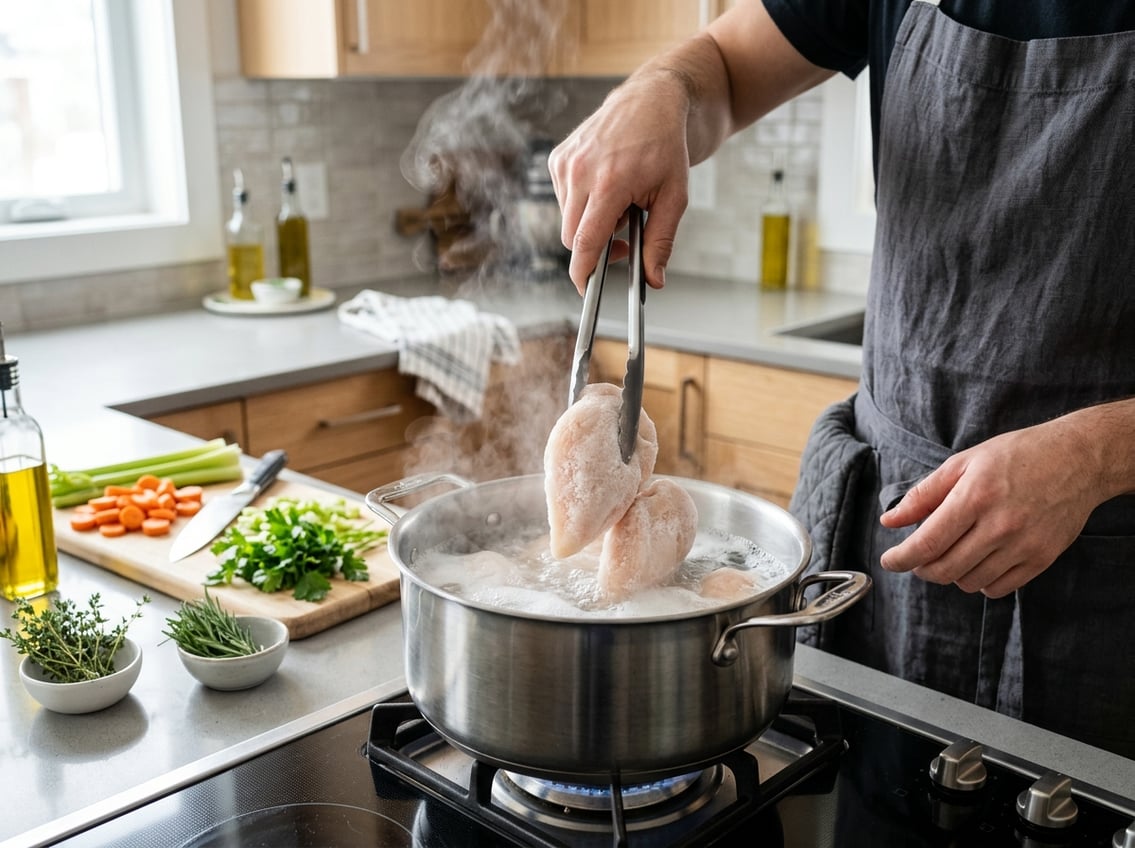
The cooking time depends on size, thickness, and whether the breasts are separated or frozen together. Always check the center before serving.
How Long Small, Medium, and Large Pieces Take
Most frozen chicken breasts cook in 18 to 30 minutes. Smaller pieces may finish in about 18 to 20 minutes, medium breasts in 20 to 25 minutes, and larger pieces in 25 to 30 minutes.
If you need a general guide for how long to boil frozen chicken breast, start checking near the early end of that range. Larger or thicker breasts may need a few extra minutes.
The Safe Internal Temperature to Reach
Aim for 165°F in the thickest part of the chicken. That is when the chicken is safe to eat.
If the thermometer reads below 165°F, simmer longer and check again after a few minutes.
Mistakes That Make Chicken Tough or Undercooked
A hard boil can make the outside stringy before the center is done. Overcrowding the pot also slows even cooking.
If you are not sure the chicken is done, cook a little longer and check again. Undercooked poultry is not safe.
Flavor, Shredding, and Easy Meal Uses
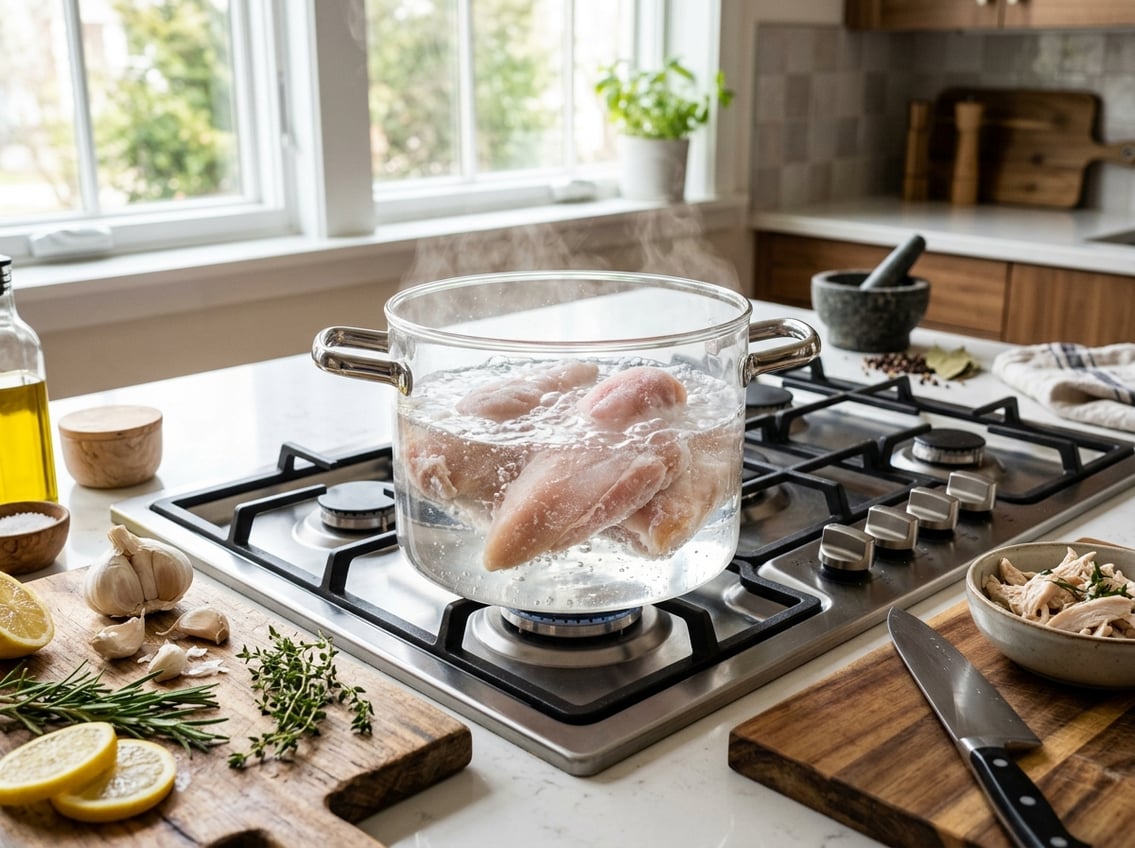
Boiled frozen chicken breast tastes mild and clean, making it easy to use in many meals. The cooking liquid can carry flavor into the meat.
The finished chicken is simple to shred or cube.
Best Seasonings for the Cooking Liquid
Salt is the minimum. Garlic, onion, bay leaf, and peppercorns are easy add-ins.
Use chicken broth instead of part of the water for a richer taste. For stronger flavor, add celery, parsley stems, or a slice of lemon.
A basic frozen chicken breasts recipe often keeps the seasoning simple so the chicken works in many dishes.
How to Shred, Slice, or Cube the Chicken
Let the chicken rest for about 5 minutes after cooking. Shred with two forks, slice across the grain, or cube it once cool enough to handle.
For very fine shreds, place the chicken in a bowl and use a hand mixer on low speed. This works well for tacos, dips, or chicken salad.
Ways to Use It in Quick Meals
Use boiled frozen chicken breast in soup, pasta, rice bowls, quesadillas, sandwiches, or salads. It also works well in meal prep containers with vegetables and grains.
Store boiled chicken with a little broth so it stays moist. This makes reheating easier.
Thawing, Storing, and Reheating Leftovers
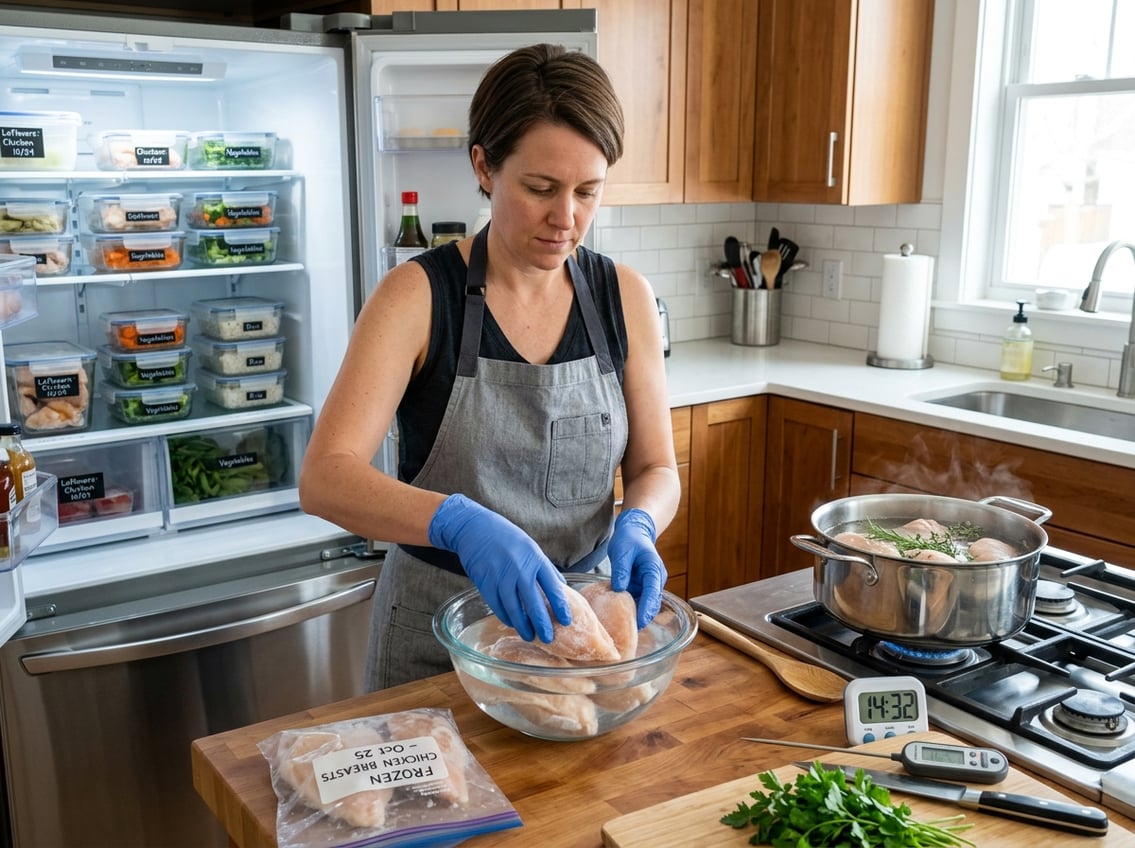
Sometimes you should thaw first, and sometimes you do not need to. The right choice depends on your time, the shape of the chicken, and how you want to serve it.
When It Makes Sense to Thaw First
Thaw frozen chicken if the pieces are very thick, stuck together, or uneven. Thawing helps you cook more evenly if you plan to grill, pan-sear, or roast.
If you choose to thaw frozen chicken, do it safely in the refrigerator, in cold water, or in the microwave right before cooking. Never thaw chicken on the counter.
Safe Refrigerator and Freezer Storage
Store cooked chicken in the refrigerator within 2 hours of cooking. Keep it in an airtight container, and use it within 3 to 4 days.
For longer storage, freeze it in portions with a little broth or cooking liquid. This helps prevent dryness and makes it easier to use later.
How to Reheat Without Drying It Out
Gently reheat chicken in a skillet with a splash of broth or water. You can also warm it covered in the microwave at a lower setting.
Short heating times help keep the meat tender. If you reheat chicken that was boiled from frozen, stop as soon as it is hot through.
High heat for too long can make it dry and tough.


