
Do You Cut Chicken Breast With or Against the Grain?
You usually cut chicken breast against the grain when you want the most tender bite. This shortens the muscle fibers and makes the meat easier to chew.
Cutting with the grain can make sense for some prep styles. You might want longer strips or more control over shape.
Do you cut chicken breast with or against the grain depends on the dish and how you plan to cook it.
If you choose the right direction, you can improve texture without changing the recipe.
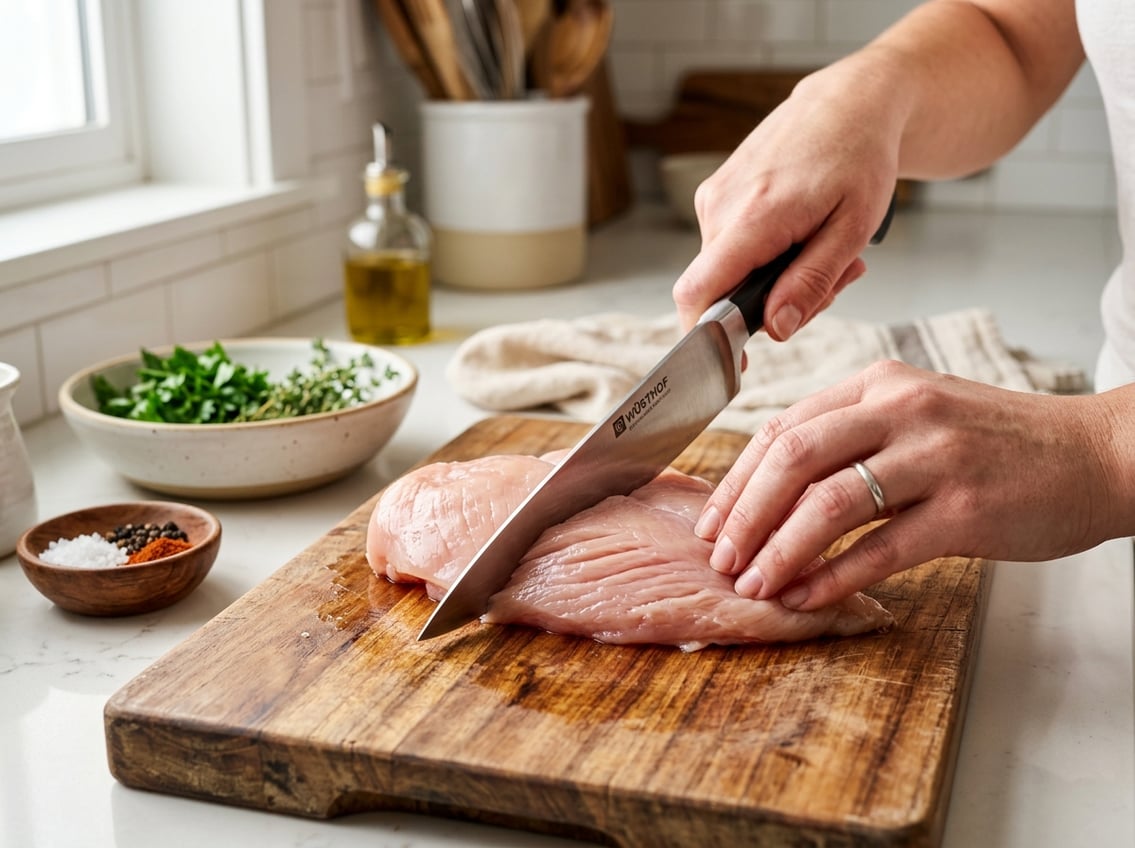
The grain is the direction of the muscle fibers in the meat.
Once you spot those lines, cutting chicken breast becomes easier and more consistent.
The Short Answer and When Each Direction Works Best
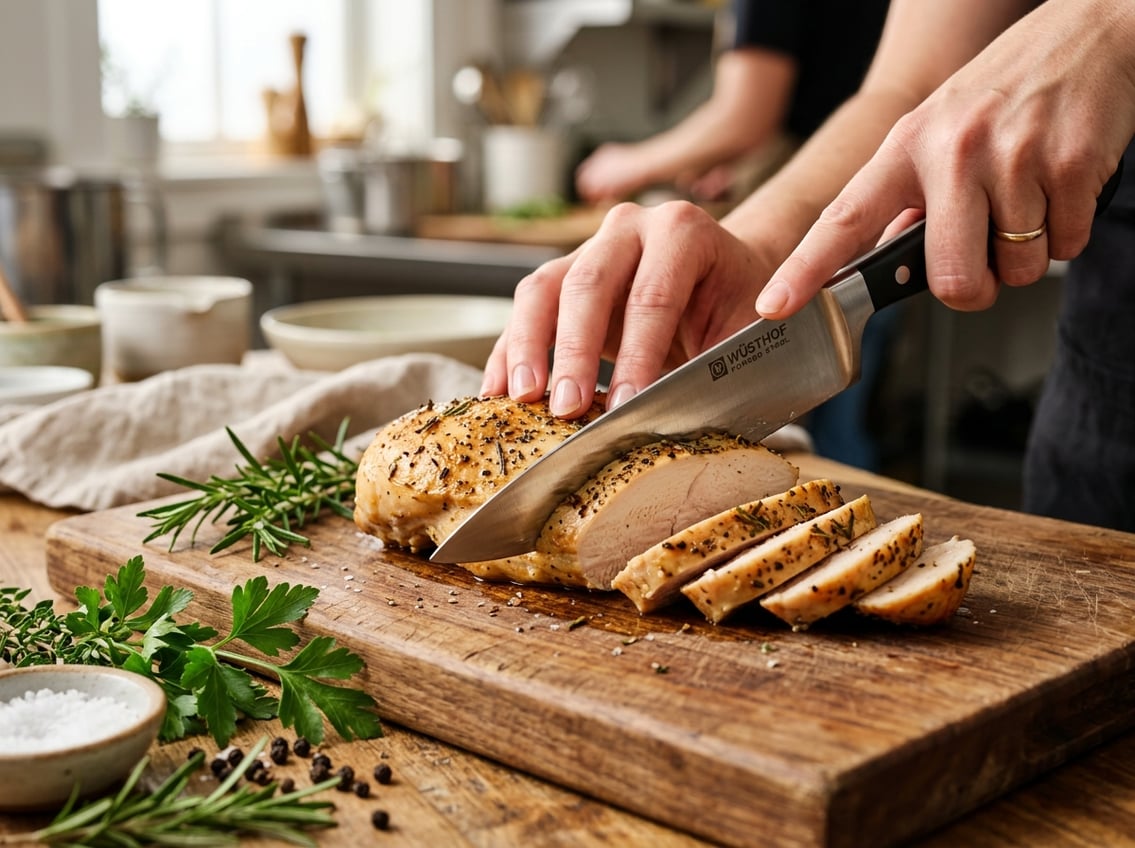
For most meals, cutting against the grain gives a more tender result.
Many guides on cutting chicken breast recommend slicing across the fibers.
Why Cutting Against the Grain Usually Makes Chicken More Tender
When you cut against the grain, you shorten the muscle fibers instead of leaving them long.
This means less chewing and a softer bite, which works well for grilled, baked, or pan-seared chicken breast.
It also helps cooked chicken breast feel less stringy.
If you want a juicy chicken breast that slices cleanly, this is usually the best direction.
When Cutting With the Grain Is the Better Choice
Cutting with the grain works well when you want longer pieces for stir-fries, wraps, or certain salad toppings.
Those longer strips can hold shape better during fast cooking and tossing.
It can also help if you need a specific presentation or plan to cut the meat again later.
In that case, cut with the grain first for easier handling.
How Cooking Method Changes the Best Direction
If you cook chicken breast whole, slice against the grain after cooking for the best texture.
This is especially true for roasted or pan-cooked chicken, where the meat can turn dry if the fibers stay long.
If you cook pieces, the cut direction matters less than the size and evenness.
Thin strips and small cubes cook quickly, so even cooking is the main goal.
How to Find the Grain and Slice It Correctly
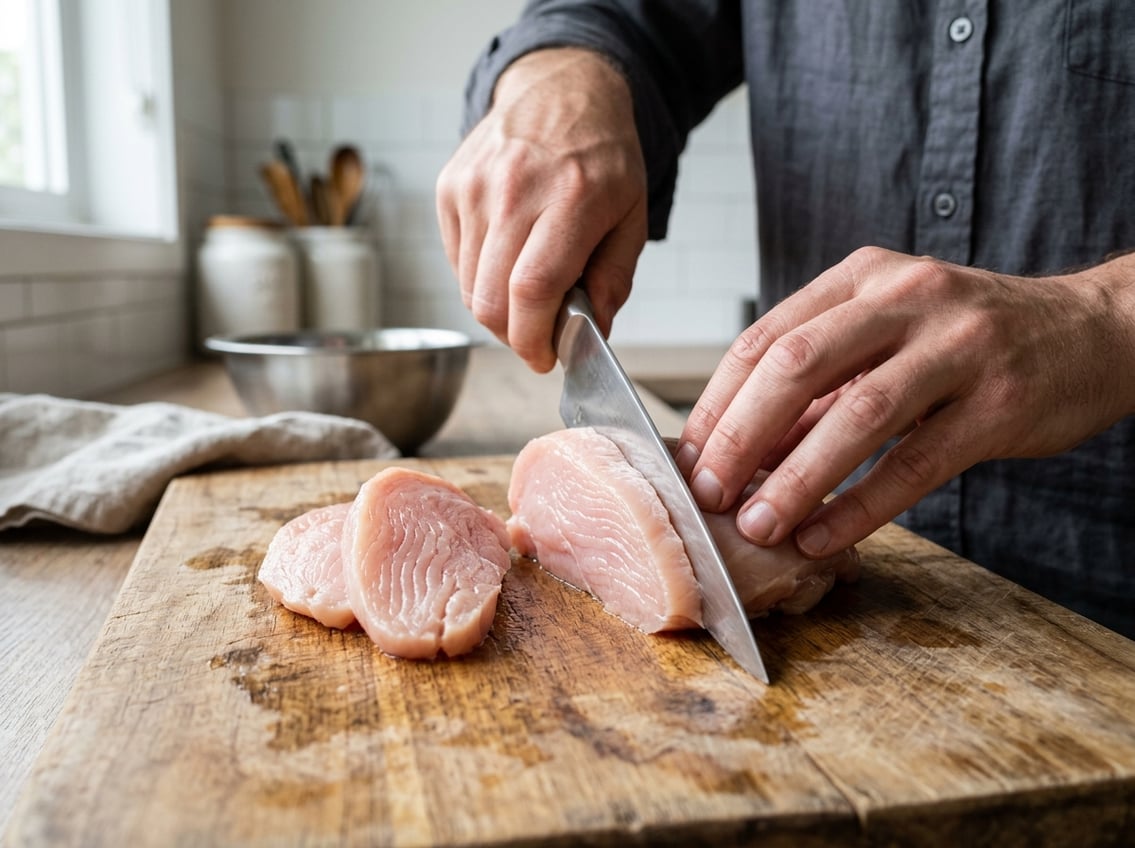
The grain is easy to miss when the surface is wet or the breast is uneven.
Look for parallel lines in the meat, then plan your cut so the knife crosses those lines at a right angle or close to it.
How to Identify Muscle Fibers on a Chicken Breast
Place the chicken breast on a cutting board and look closely at the surface.
You should see faint lines running in one direction, and those lines show the muscle fibers.
A clean cut against those lines is the key to cutting chicken against the grain.
If the breast is thick, check both ends, since the grain can shift slightly across the piece.
Knife Angle, Thickness, and Even Slices
Use a sharp chef’s knife and make smooth, controlled cuts.
A slight angle can help create wider slices, while straight-down cuts make narrower pieces.
Keep slice thickness even so the chicken cooks at the same rate.
Uneven cuts can leave one piece dry and another undercooked.
How to Cut Chicken Breast More Easily When It Is Slippery
If the chicken is slippery, pat it dry with paper towels first.
A dry surface gives you better grip and cleaner cuts.
You can also chill the breast for a few minutes before slicing.
Slightly firmer meat is easier to control, which helps when you are learning how to cut chicken.
Best Cutting Styles for Common Chicken Prep

Different recipes need different cuts.
The best style depends on whether you want quick cooking, a specific shape, or a tender finished bite.
How to Dice Chicken Breast for Stir-Fries and Salads
To dice chicken breast, first slice it into even strips, then turn the strips and cut them into cubes.
This gives you pieces that cook at the same speed and mix well into salads or grain bowls.
If you want to dice chicken breast, start with a steady board and a sharp knife.
For recipes where the chicken is cooked in small pieces, grain direction matters less than making the dice the same size.
How to Cut Chicken Breast Into Strips for Chicken Tenders
To make strips for chicken tenders, slice the breast into long pieces about the same width.
You can cut with the grain for longer shape or across the grain if you want a softer bite.
For many home recipes, the strips are easiest to handle when they are not too thin.
If you are learning how to cut chicken breast, aim for even width so the tenders cook at the same pace.
How to Butterfly a Breast Into a Chicken Cutlet
To make a chicken cutlet, hold the breast flat and slice it horizontally, starting from the thicker side.
Stop before cutting all the way through, then open it like a book.
This gives you a thinner piece that cooks fast and evenly.
After butterflying, you can gently pound it to the same thickness for breaded cutlets or quick pan cooking.
Mistakes That Affect Texture and Cooking Results

A few cutting mistakes can make chicken breast dry, tough, or uneven.
The biggest issues are slice size, knife quality, and how the cuts match the recipe.
Cutting Too Thin or Too Thick for the Recipe
Very thin slices cook fast and can dry out before you notice it.
Very thick slices can stay raw in the center while the outside is already done.
Match the slice size to the cooking method.
Fast dishes need thinner pieces, while roasting or pan-searing can handle thicker portions if you keep them even.
Using a Dull Knife and Tearing the Meat
A dull knife presses and tears instead of slicing cleanly.
That rough cut can make the meat look ragged and feel less tender.
Use a sharp knife and let the blade do the work.
Clean cuts matter even more when you are cutting against the grain.
Ignoring Slice Size When Trying to Keep Chicken Juicy
Keeping chicken juicy depends on more than just cutting direction. Cooking time is also important.
Smaller pieces cook faster. Watch them closely to avoid drying out.
For juicy chicken breast, cut evenly and stop cooking when the meat is done. Combine proper slicing with careful heat control for the best texture.


