
Do You Bake Chicken Thighs Covered or Uncovered: Techniques and Tips
Decide what you value more: crisp, golden skin or guaranteed juiciness.
If you want crispy baked chicken thighs, leave them uncovered at a high oven temperature. If you want to prioritize moist, forgiving meat, cover them for part of the cook and uncover at the end to finish the skin.
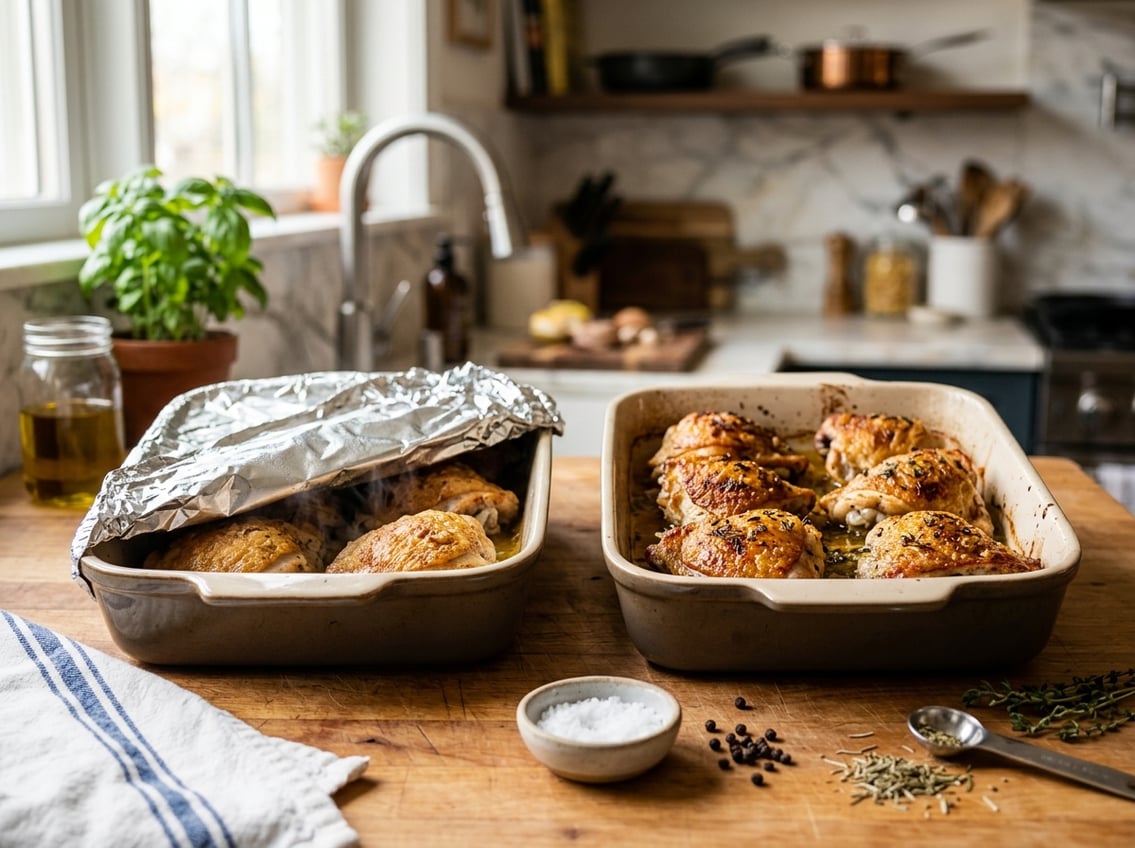
Covering affects moisture, timing, and browning. Choose skin-on or skinless thighs, use seasoning and brining tricks, and follow step-by-step baking techniques that work in a home oven.
Try quick serving ideas and adapt the same approach to other chicken parts for consistent results.
Covering vs. Uncovering Chicken Thighs in the Oven
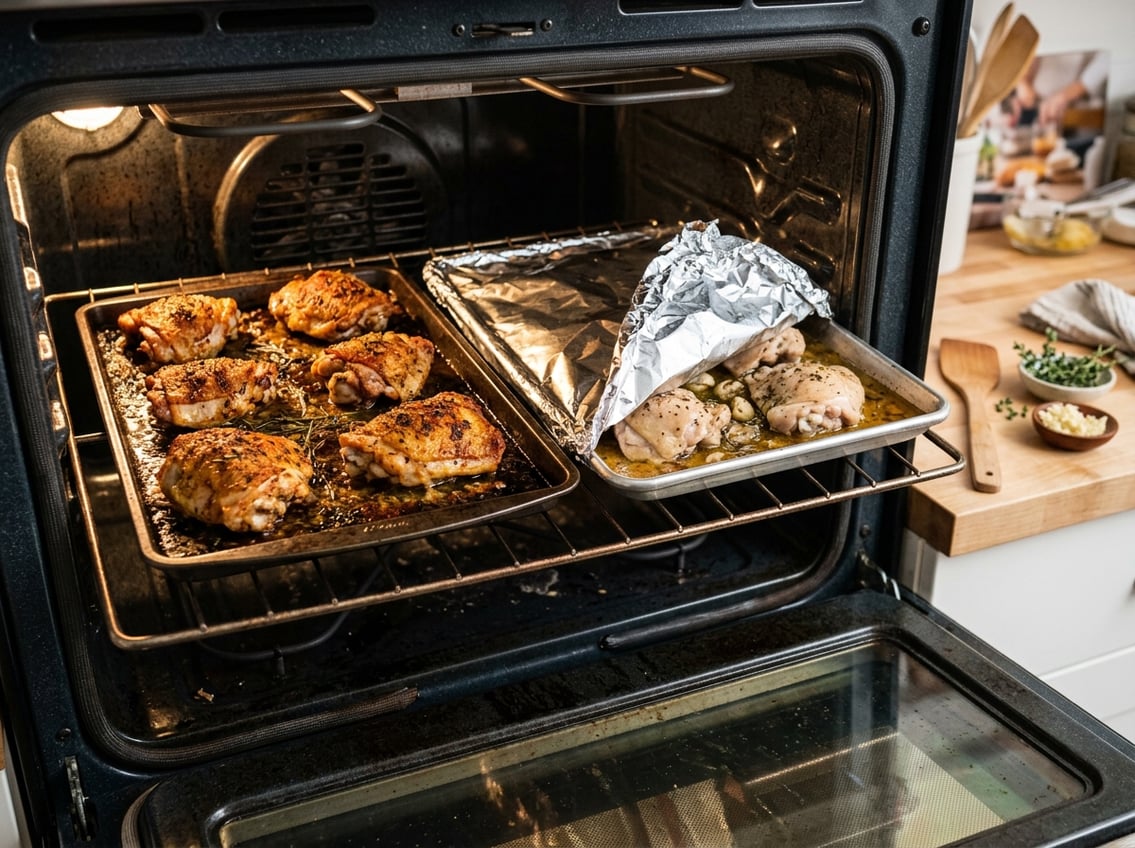
Covering chicken thighs traps steam and preserves moisture. Leaving them uncovered lets surface moisture evaporate and the skin brown.
Choose based on whether you prioritize tender meat or crispy skin. Consider a hybrid approach for both.
Impact on Juiciness and Texture
When you cover chicken thighs with foil or a lid, you create a moist cooking environment that reduces evaporative loss. The trapped steam slows surface drying, so dark meat stays more forgiving and you’ll notice fewer dry spots even if internal temperature briefly overshoots 165°F (74°C).
If you want uniformly tender meat, start covered at 350–375°F for most recipes. Check internal temperature in the thickest part without touching bone, then remove the cover near target doneness to finish.
Uncovered baking at higher heat concentrates heat on the surface. This can cause slight tightening of proteins, making the meat feel firmer but still juicy if timed correctly.
Use a thermometer rather than time alone to protect juiciness.
How Covering Affects Skin Crispiness
Covering chicken thighs prevents the skin from drying and crisping because steam keeps the skin wet. If you cover for the entire bake, expect soft, pale skin that won’t brown well.
To get crisp skin, leave thighs uncovered at 400–450°F, or remove the cover for the last 10–15 minutes. Pat skin dry and use a light coating of oil or salt to encourage browning when uncovered.
If the recipe includes a sauce, apply it after the skin crisps. Sauced skin will soften quickly.
A brief broil at the end can also boost crispiness, but watch closely to avoid burning.
Partial Covering and Hybrid Methods
Hybrid methods use both covered and uncovered stages to balance juiciness and crispiness. Cover for two-thirds of the total cook time, then uncover to brown the skin.
Start covered at a moderate temperature (350–375°F) to let the meat cook through gently. Increase heat to 400–450°F or switch to broil for the final 8–12 minutes to render fat and crisp skin.
You can also tent loosely with foil to reduce direct steam while still retaining some moisture. This technique works well when baking chicken thighs with vegetables.
Cover to soften root vegetables, then uncover to roast both components together.
Achieving Perfectly Baked Chicken Thighs
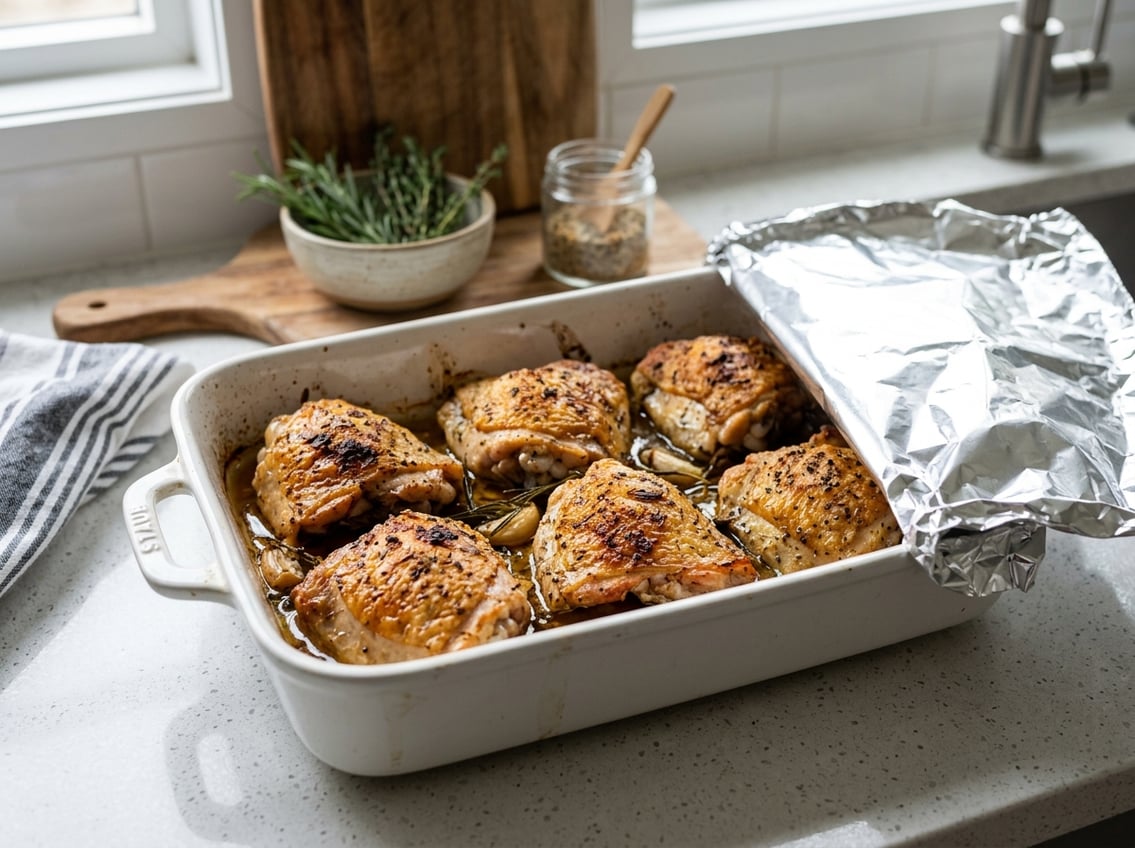
Aim for thighs that are juicy inside, crisp at the skin, and reliably done every time. Control oven temperature, timing, and check final temperature to get that balance.
Ideal Oven Temperatures
Set your oven between 375°F and 400°F for best results. Use 375°F for gentler, more forgiving cooking that reduces risk of dried edges; 400°F is better when you want crisp skin and shorter bake times.
If you use bone-in, skin-on thighs, 375°F gives even heat through the bone without overcooking the exterior. For boneless, skinless thighs, use 400°F to develop browning quickly since these pieces cook faster.
Always preheat the oven fully so the thighs start cooking at the correct rate.
Coat thighs lightly with oil and arrange skin-side up in a single layer. This helps conductive heat and air circulation produce crisp skin while locking moisture in the meat.
Recommended Baking Times
Bone-in, skin-on thighs typically need 35–45 minutes at 400°F or 45–55 minutes at 375°F. Boneless, skinless thighs usually finish in 20–30 minutes at 400°F or 25–35 minutes at 375°F.
Use these ranges as starting points and adjust for thigh size and oven variation. If you cook a full sheet pan of thighs, expect the longer end of the range; crowded pans reduce airflow and extend cooking time.
Flip or baste only if you want a more evenly browned underside, but keep skin-side up for best crisping.
Rest the thighs 5–10 minutes after removing them from the oven. Resting lets juices redistribute so the final bite stays moist.
Checking for Doneness
Use an instant-read thermometer for accurate results. Insert into the thickest part of the thigh without touching bone.
Target 175°F (80°C) for bone-in thighs and about 170°F (77°C) for boneless thighs to keep the meat juicy while fully cooked. Visual signs help but don’t replace temperature checks.
Juices should run clear and the meat should pull easily from the bone. If the thermometer reads lower than the target, return the thighs to the oven and check every 5 minutes.
Avoid relying on cooking time alone. Ovens vary and thigh size differs, so internal temperature is the single most reliable indicator that your chicken thighs are perfectly baked and safe to eat.
Choosing Between Skin-On and Skinless Chicken Thighs
Choosing skin-on or skinless changes texture, cooking technique, and the outcome of moisture and crispness. Decide if you want crispy exterior and richer flavor from the skin, or a leaner piece that benefits from moist cooking and shorter exposure to high heat.
Benefits of Skin-On for Baking
Skin-on thighs deliver a crisp, golden exterior when baked uncovered at higher temperatures (425–450°F). The skin renders fat during cooking, which bastes the meat and helps the surface brown.
Keep the skin dry before cooking by patting with paper towels and seasoning under and over the skin for deeper flavor. Use a wire rack or elevate thighs on a sheet pan so air circulates and skin crisps evenly.
If you need extra juiciness, tent with foil for the first part of baking, then uncover to finish and crisp.
Flavor and Moisture Retention
Skin-on thighs naturally stay juicier because the skin acts as a barrier that slows moisture loss. Remove thighs from the oven at 160–163°F and rest them; carryover cooking brings them to the safe 165°F while preserving succulence.
If you bake covered, the trapped steam further reduces drying, producing very tender, moist meat but softer skin. For a balance, bake skin-on uncovered for full crisp, or start covered and finish uncovered to combine tenderness with a crisp finish.
Techniques for Seasoning and Marinating
Season for crispy, well-browned baked chicken thighs. Marinate for deeper flavor, and choose between dry spices, wet rubs, and sauces to suit covered or uncovered baking.
Best Practices for Seasoning
Start with dry, paper-towel-dried skin-on thighs for the best crisping when you bake chicken uncovered. Pat the thighs dry, then salt them at least 30 minutes before cooking or up to overnight in the fridge; this gives salt time to penetrate and improves texture.
Season both sides just before baking if you need a quick prep. Use kosher salt (about 3/4–1 tsp per pound) and a little oil to help seasonings stick.
Place thighs on a wire rack over a sheet pan to promote even air circulation and browning during baking.
If you plan to cover for part of the cook to keep meat juicier, apply bolder seasonings or a light glaze toward the end so flavors don’t steam away. Always check internal temperature with a probe in the thickest part, away from bone.
Marinating for Enhanced Flavor
Marinating adds acidity, oil, and flavor compounds that tenderize and flavor baked chicken thighs. Use an acid (lemon juice, vinegar, or yogurt), oil (olive or neutral), and aromatics (garlic, ginger, herbs) in roughly a 3:1 oil-to-acid ratio to balance tenderness and moisture retention.
Marinate skinless thighs 30 minutes to 2 hours. Skin-on thighs benefit from 2–12 hours in the fridge.
Avoid overly long acid-heavy marinades (over 12–24 hours) that can make meat mushy. Always marinate in the refrigerator and discard used marinade or boil it before using as a sauce.
For one-pan baking, pat excess marinade off to promote browning when you bake chicken uncovered. If you plan to bake covered to keep moisture, leave a thinner coating of marinade on the thighs to prevent sogginess.
Using Spices, Rubs, and Sauces
Use dry rubs when you want crisp skin and concentrated surface flavor for baking chicken uncovered. Combine paprika, black pepper, garlic powder, and a touch of sugar for color and caramelization.
Massage the rub under the skin when possible for direct meat contact. Use wet rubs or sauces (yogurt-based, mustard, BBQ) when you plan to bake covered or to create a finishing glaze.
Apply sauces in the last 10–15 minutes of uncovered baking to avoid burning and to preserve bright flavors. For saucy bakes, start covered to retain juiciness, then uncover to reduce and thicken the sauce.
Keep a small spice chart by your prep area: heat level (chili flakes), aromatics (onion/garlic), and base (salt, sugar, acid). This helps you quickly assemble a rub or sauce tailored to how you’ll bake the thighs and the texture you want.
Step-by-Step Process for Baking Chicken Thighs
Prepare the thighs, choose whether to cover them, and finish by resting and serving. Follow specific temps, timings, and techniques to get juicy meat and a desired skin texture.
Preparation and Pan Set Up
Start with bone-in, skin-on or boneless thighs. Pat each piece thoroughly dry with paper towels to help skin crisp and seasoning stick.
Trim excess fat or loose skin if needed. Season evenly with salt and pepper, then add garlic, smoked paprika, or a spice rub.
Lightly brush or drizzle oil (1–2 tsp per thigh) to promote browning. If using a marinade, let the thighs rest in the fridge 30 minutes to 4 hours; discard excess marinade before baking.
Use a rimmed baking sheet, shallow roasting pan, or ovenproof dish. For crisper skin, place thighs on a wire rack set over the pan so air circulates.
Line the pan with foil or parchment for easier cleanup, but avoid covering the thighs at this stage unless you plan the covered method. Preheat the oven to 375°F for a balance of even cooking and skin crisping.
If you prefer faster cooking, set 400°F and reduce time by about 10 minutes. Check internal temperature rather than relying on time alone.
Implementing Covered and Uncovered Methods
Uncovered: Arrange thighs skin-side up in a single layer. Bake uncovered at 375°F for 30–45 minutes (400°F for 25–30 minutes) until the thickest part reads 175°F for bone-in or 170°F for boneless.
This method dries and crisps the skin and concentrates pan juices. Covered: Put thighs in a single layer, add a splash (2–4 tbsp) of broth or sauce to the pan, and tent tightly with aluminum foil.
Bake at 375°F for 35–50 minutes until internal temps match the same targets. Covering traps steam, yields moister meat, and prevents skin from crisping.
If you want some browning, remove foil for the last 8–12 minutes and switch to broil for 1–2 minutes while watching closely.
Hybrid option: Start covered to retain moisture (20–30 minutes), then finish uncovered to crisp skin (10–15 minutes). Always verify doneness with an instant-read thermometer inserted into the thickest part without touching bone.
Resting and Serving Suggestions
When the thighs reach target temperature, remove them from the oven and transfer to a cutting board or warm plate. Tent loosely with foil and rest 5–10 minutes; this redistributes juices and raises internal temp a few degrees.
Serve skin-on thighs whole or slice across the grain for boneless pieces. Spoon pan juices or a quick pan sauce over the meat if you baked covered and want added flavor.
For crispy results, serve immediately after resting so skin stays crunchy. Store leftovers in an airtight container within 2 hours; refrigerate up to 3 days or freeze up to 4 months.
Reheat gently in a 325°F oven to preserve texture or crisp skin under a quick broil while monitoring closely.
Serving Ideas and Using Leftovers
Pair baked chicken thighs with sides that balance fat and flavor. Store them promptly and transform leftovers into quick meals.
Focus on crisp vegetables, bright acids, and simple reheating to keep texture and safety intact.
What to Serve with Baked Chicken Thighs
Serve thighs with one or two contrasting elements to cut through their richness. Try a crisp salad of arugula, shaved fennel, and lemon vinaigrette. The acidity brightens the skin and meat.
Starches that soak up juices work well. Roast baby potatoes with rosemary or prepare herbed couscous.
For vegetables, roast broccoli or Brussels sprouts at high heat. This gives them a slight char while the thighs rest.
Sauces pair nicely. Add a spoonful of chimichurri, tzatziki, or a simple pan jus made from drippings.
Plate one thigh, a fist-sized portion of starch, and a generous vegetable side for a balanced meal.
Storing and Reheating Baked Chicken
Cool thighs within two hours, then refrigerate them in an airtight container for up to four days. Slice or shred before storing if you plan to use them in salads or sandwiches. Whole thighs retain moisture better for reheating.
Reheat in a 325°F (160°C) oven on a rack over a tray for 10 to 15 minutes to revive the skin and avoid drying. For faster reheating, use a skillet over medium-low heat with a splash of broth, covered, until warmed through.
Microwave only chopped chicken and use short bursts to prevent rubberiness. Always heat to 165°F (74°C) internally.
Creative Uses for Leftover Thighs
Shred thighs into salads. Mix with mayonnaise or Greek yogurt, celery, green apple, and Dijon for a chicken salad that works in sandwiches and pita pockets.
Turn thighs into quick bowls. Layer rice or grains, sautéed greens, pickled vegetables, and sliced thighs, then finish with a drizzle of sesame oil or lemon.
Use chopped thighs in warm dishes. Add to pasta with cream and peas, fold into fried rice with scallions and soy sauce, or top a flatbread with BBQ sauce and mozzarella for a fast pizza-style meal.
Freeze cooked, shredded meat in portions for two to three months to simplify future meals.
Additional Tips for Baking Other Chicken Parts
Covering affects moisture and skin texture differently across cuts. Adjust time, temperature, and whether you cover based on thickness, bone presence, and your preference for crispy skin.
Baking Chicken Breast
Chicken breast cooks faster and dries out more easily than thighs. For boneless breasts, bake at 400°F (200°C) uncovered for 18 to 22 minutes, or until the internal temperature reaches 160 to 162°F (71 to 72°C). Rest for three to five minutes to reach 165°F (74°C).
If you want extra juiciness, cover with foil for the first half of cooking, then remove it to brown the top.
For bone-in breasts, add five to ten minutes to cooking time. Start covered to prevent the meat near the bone from drying.
Use a meat thermometer in the thickest part without touching bone. Brining or a short marinade of 30 minutes to two hours helps retain moisture. Pat dry before browning the surface to promote color.
Translating Tips to Other Chicken Cuts
Use the same principles. Thicker or bone-in pieces need lower heat or longer time.
Thin cuts need higher heat and less time. Use this quick reference:
- Boneless thighs or legs: Bake at 400–425°F for 20–30 minutes. Leave uncovered for crisp skin.
- Bone-in thighs or legs: Bake at 375–400°F for 30–45 minutes. Cover early if you worry about drying.
- Wings: Bake at 400–425°F for 25–35 minutes. Leave uncovered for crisp skin.
Check the internal temperature and make sure it reaches 165°F (74°C). If you cover the chicken, the interior cooks slightly faster but the skin stays softer.
If you leave pieces uncovered, you get more browning and more evaporation of surface moisture.


