
Do I Wash Chicken Breast Before Cooking? Safety First
If you are asking do I wash chicken breast before cooking, the safest answer is no.
Washing raw chicken breast does not make it safer, and it can spread bacteria around your sink, counters, and utensils.
You get better chicken safety by handling the meat carefully, keeping your kitchen clean, and cooking it to 165°F.
That simple approach reduces the chance of cross-contamination and foodborne illness without adding an extra risky step.
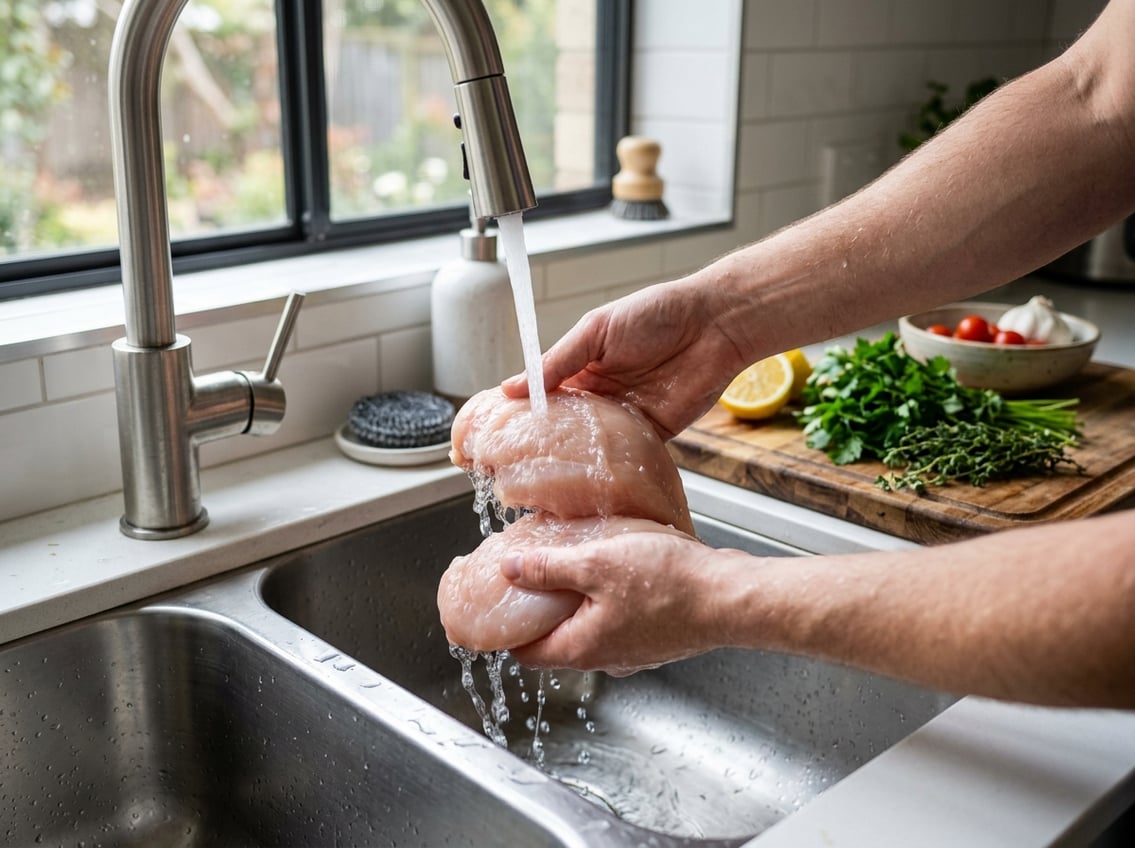
Many people feel familiar with rinsing poultry, so the question of whether you should wash chicken keeps coming up.
In the U.S., food safety guidance has moved away from washing because splashing water can spread germs farther than you expect, especially in a busy kitchen.
The Short Answer and Why It Matters
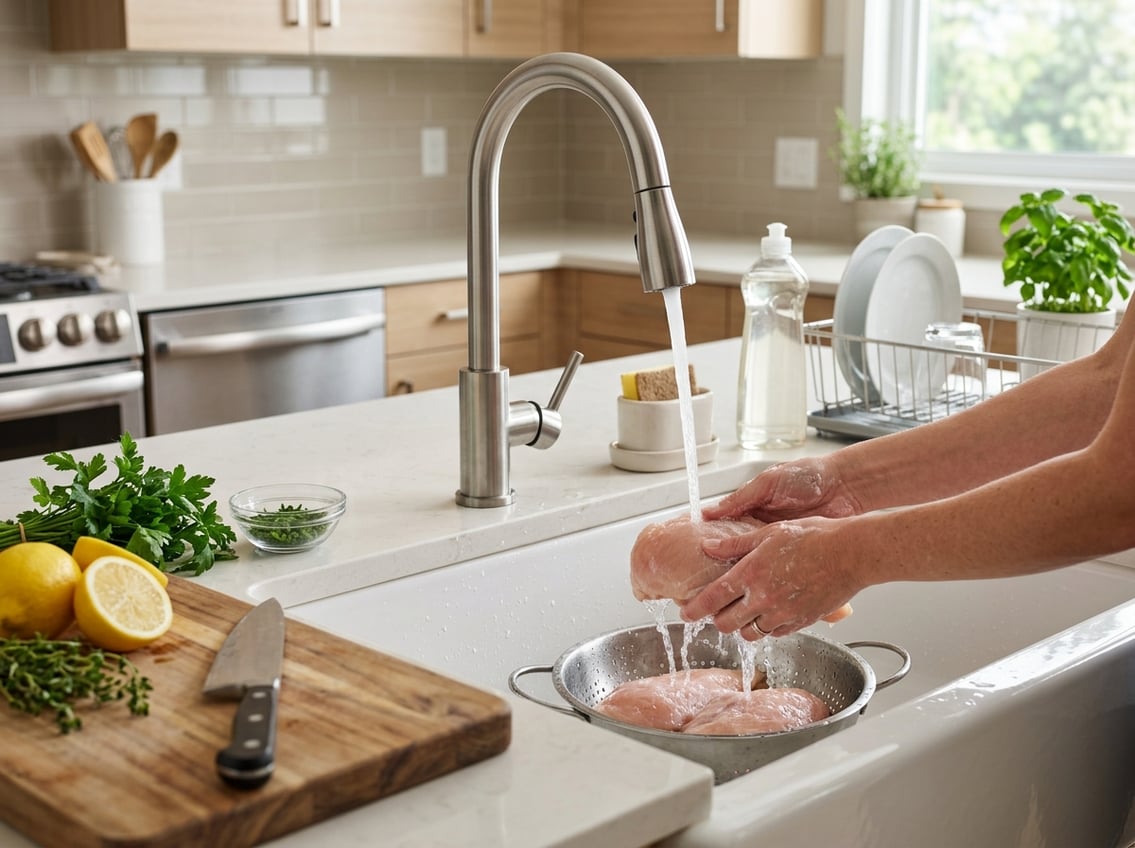
Do not wash chicken breast before cooking.
Washing raw chicken can move bacteria around your kitchen instead of removing it, which raises the risk of cross-contamination and foodborne illness.
The main concern is not the appearance of the meat, but the spread of germs such as salmonella and campylobacter.
Food safety experts advise you to avoid washing chicken because rinsing raw chicken does not make it safer.
The sink, faucet, counters, and nearby tools can all pick up bacteria from splashing water, as noted by Cook Answers.
Why Washing Raw Chicken Raises Foodborne Illness Risk
When you wash raw chicken, water can splash tiny droplets onto nearby surfaces.
Those droplets can land on cutting boards, dish towels, produce, or your hands.
The meat may still contain bacteria even after rinsing.
Cooking makes it safe, not water.
How Salmonella and Campylobacter Spread in the Kitchen
Salmonella and campylobacter can move from raw poultry to anything that touches it.
That includes the sink, the faucet handle, a knife, and even the sleeve of your shirt.
Once those germs spread, they can reach ready-to-eat foods and create a foodborne illness risk.
This is why cross-contamination matters so much in poultry prep.
Why Cooking Works Better Than Rinsing Chicken
Cooking destroys harmful bacteria when you reach the right internal temperature.
Rinsing cannot do that, and it does not remove the bacteria that may be inside the surface crevices of the meat.
Experts say to avoid washing chicken and focus on safe cooking instead.
The safest goal is simple, clean handling plus full cooking.
What to Do Instead Before Cooking
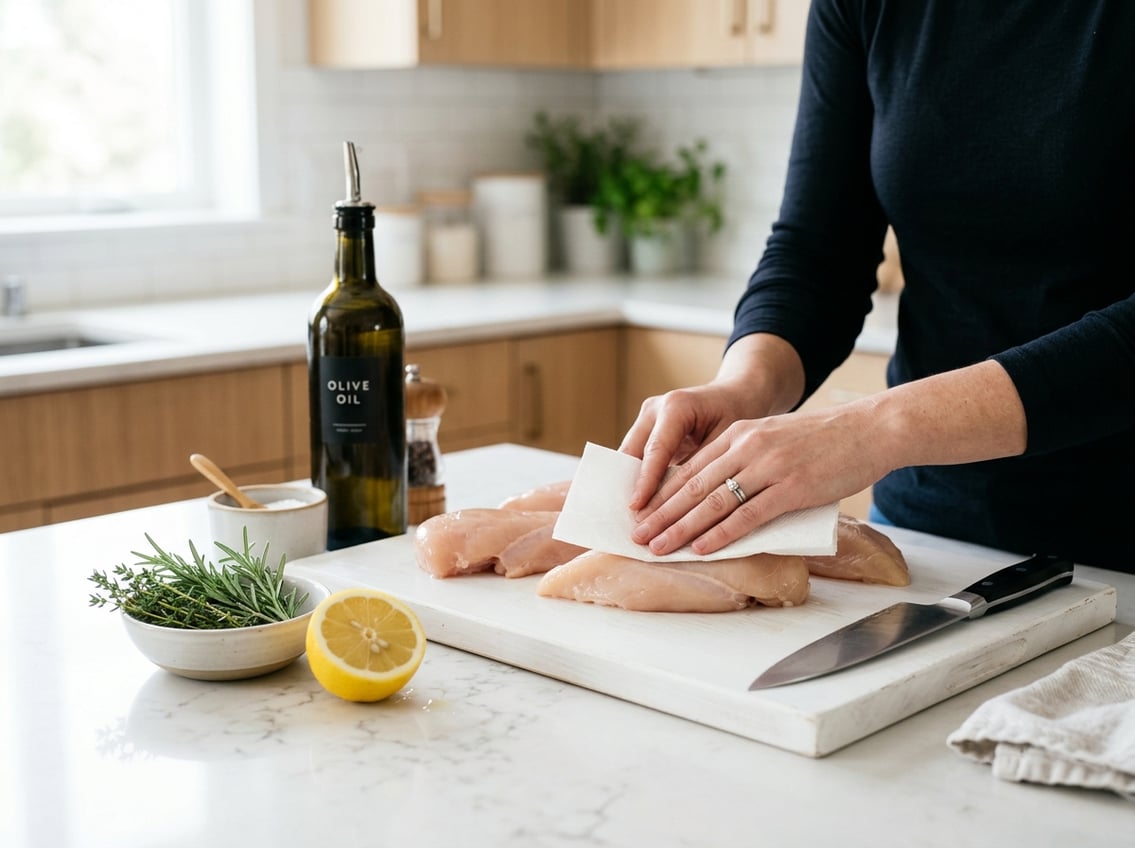
You do not need to wash chicken breast to get good results.
A few dry prep steps work better, keep your food safer, and help the chicken cook more evenly.
Pat Chicken Breast Dry for Better Browning
If the chicken looks wet from package liquid, pat it dry with paper towels.
This helps the surface brown better in the pan or oven.
Drying the meat is safer than rinsing it under water.
It also gives you better texture and color.
Open Packaging and Discard Juices Carefully
Open the package over the sink or a plate so any drips stay contained.
Throw away the packaging right away and clean up any liquid that touches the counter.
Do not let package juices touch salad ingredients, bread, or other ready-to-eat foods.
This is one of the easiest ways to prevent cross-contamination.
Handling Raw Poultry With Separate Tools and Surfaces
Use a separate cutting board, knife, and plate for raw poultry.
Keep those tools away from cooked food and fresh produce.
Good kitchen hygiene matters here.
As Cook Answers notes, separate tools and careful cleanup are safer than washing chicken breast.
Safe Handling From Fridge to Stove
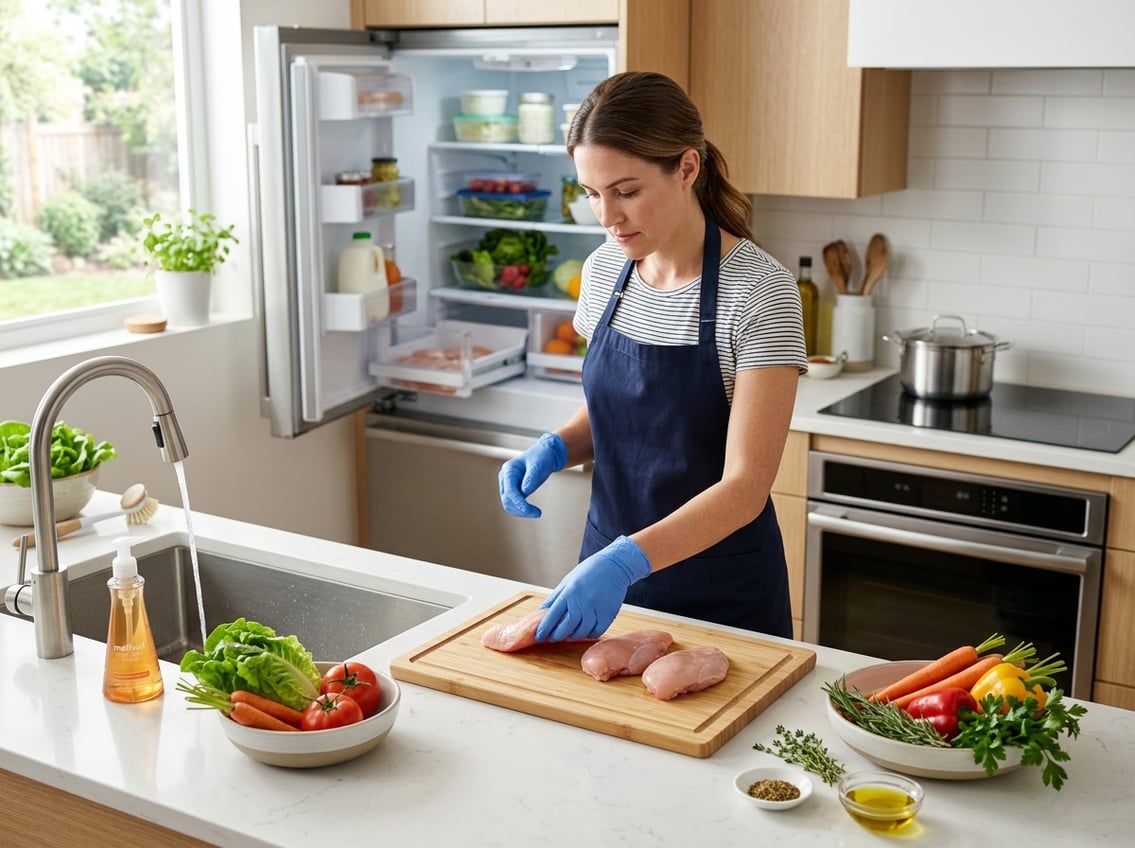
Safe chicken prep starts before you cook and continues until the pan or oven is done.
Thawing, handwashing, and surface cleaning all help prevent foodborne illness.
Thawing Chicken the Safe Way
If your chicken breast is frozen, thaw it in the refrigerator, in cold water that you change often, or in the microwave if you plan to cook it right away.
Do not leave it out on the counter.
Safe thawing keeps the meat out of the temperature range where bacteria grow quickly.
It also helps you control juices better during prep.
Handwashing and Surface Cleaning Basics
Wash your hands with soap and warm water after touching raw poultry.
Clean counters, sinks, cutting boards, and knives with hot, soapy water right away.
Kitchen hygiene is one of your strongest tools against cross-contamination.
A clean workspace matters as much as the cooking step.
Cook Chicken Breast to 165°F
Use a food thermometer and cook chicken breast to 165°F.
That temperature is the standard used to make poultry safe to eat, as noted by Food Handler’s Guide.
Do not guess by color alone.
A thermometer gives you the clearest answer on chicken safety.
Why the Habit Persists
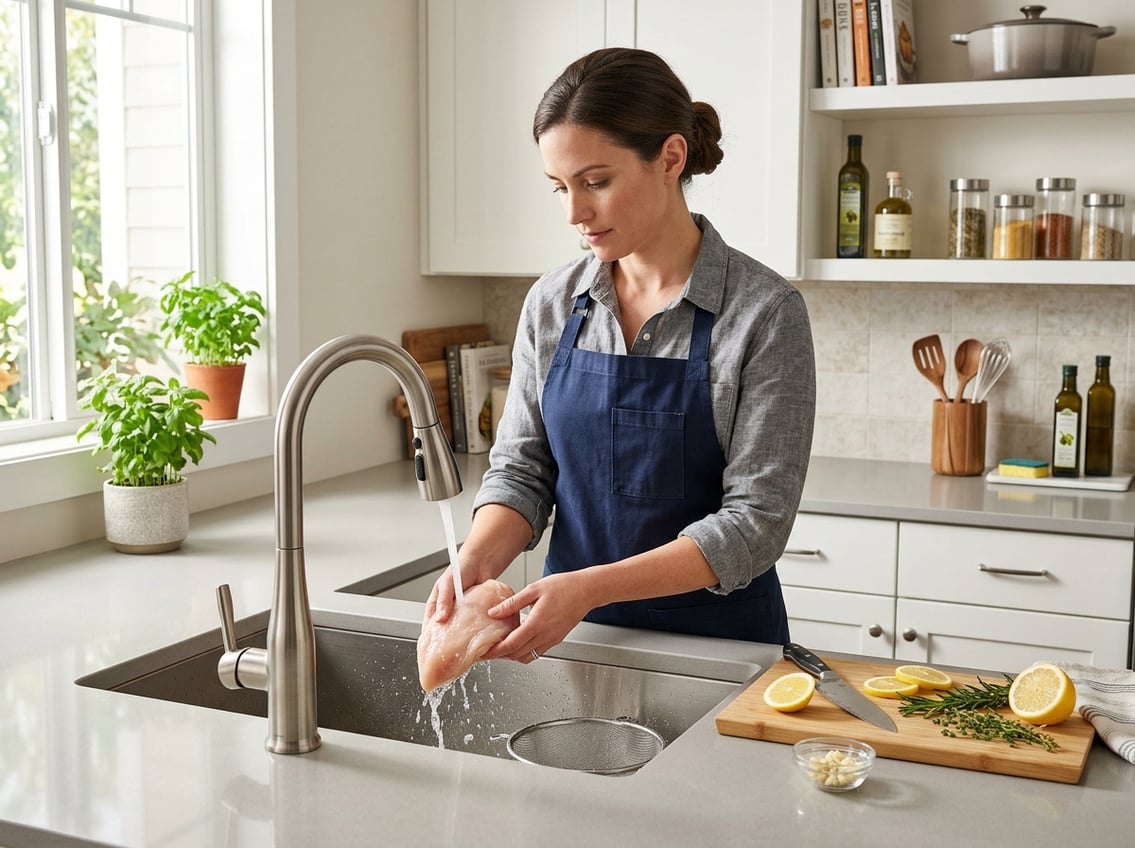
People still wash chicken because the habit feels clean and familiar.
You may have learned it from family, older recipes, or kitchen routines that were passed down for years.
Older Recipes and Family Kitchen Traditions
Many households grew up with the idea that you should wash chicken before cooking.
That advice has stayed in place because it was repeated often, not because it is safer.
You may also see the habit in online videos and social posts, which can make it seem normal.
A recent Health article notes that people still debate the issue on social platforms.
Concerns About Sliminess and Package Liquid
Some people wash chicken because they dislike the slippery feel or the liquid in the package.
That concern is common, especially with chicken breast.
Patting the meat dry and discarding package liquid carefully solves those issues without rinsing.
That approach keeps your prep cleaner and safer.
How to Reassure Readers Without Recommending Washing
If you still wonder should I wash chicken, the safest answer is no.
You do not need to wash chicken breast before cooking to make it clean enough to eat.
A careful prep routine keeps your food safe.
This approach also helps keep your kitchen sanitary.


