
Do Chicken Thighs Have More Calories Than Breast? Nutrition and Comparison
Chicken thighs generally contain more calories than chicken breasts because thighs have higher fat content.
If you choose boneless, skinless cuts, expect roughly 170–180 calories per 100 g for thighs and about 160–165 calories per 100 g for breasts.
The gap widens if you keep the skin.
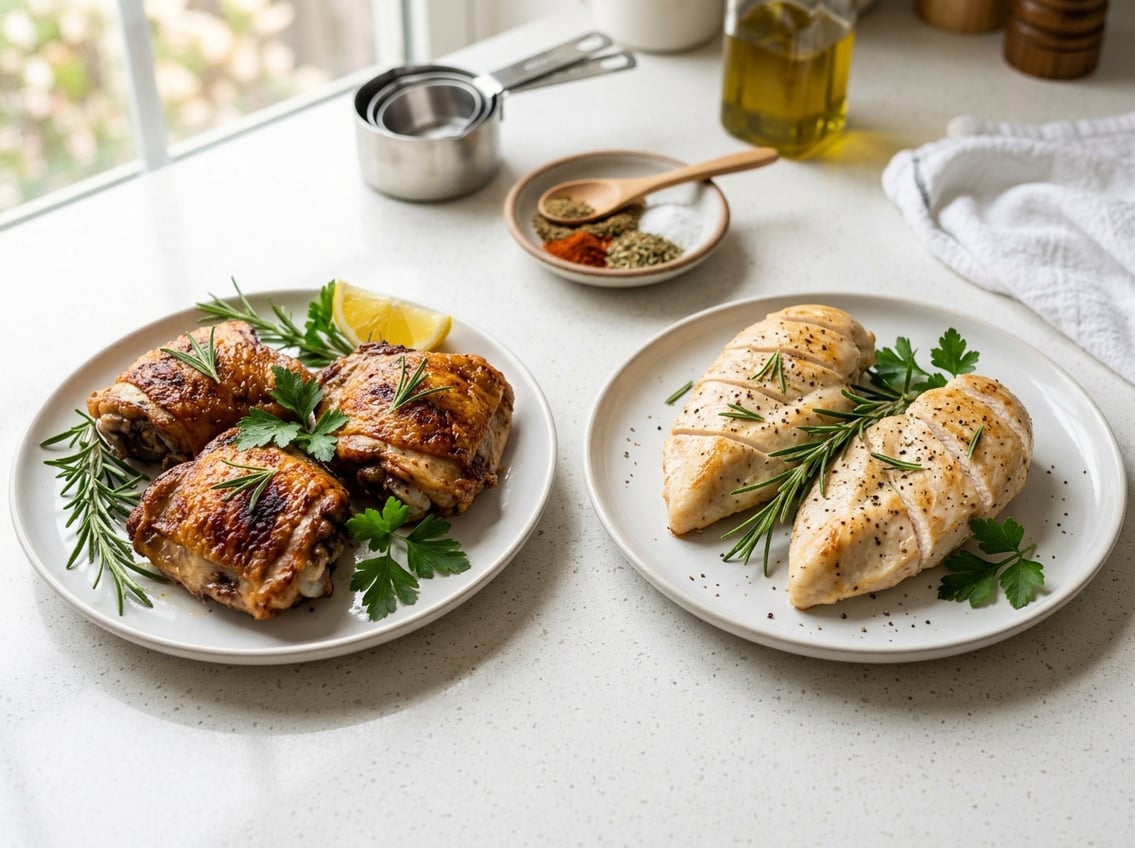
If you care about protein, cooking methods, or specific nutrients, those small calorie differences come with trade-offs.
Thighs offer more flavor, moisture, and some minerals, while breasts provide leaner protein and fewer saturated fats.
Calorie Differences Between Chicken Thighs and Breasts
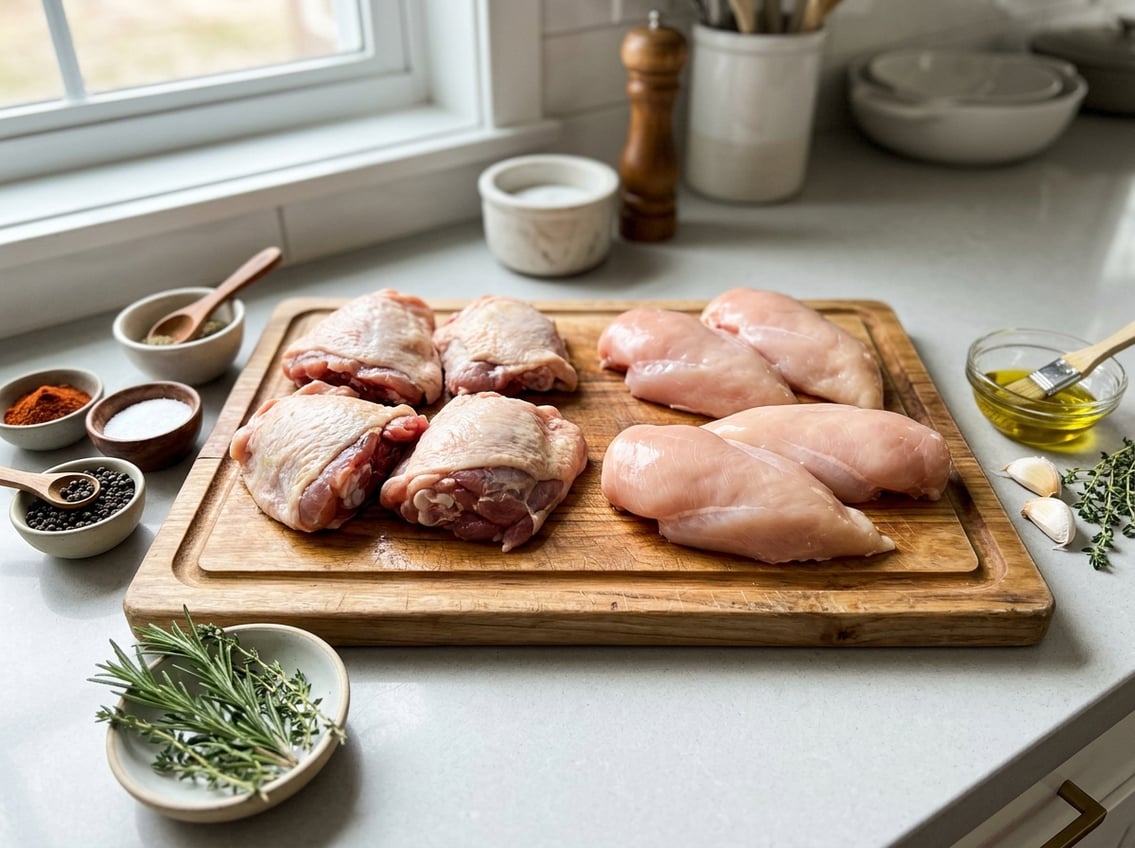
Chicken thighs and chicken breasts differ measurably in calories, and those numbers change noticeably when you leave the skin on.
Choose skinless cuts and watch portion size to control calories quickly.
Typical Calorie Values Per 100g
Boneless skinless chicken breast typically contains about 120–130 kcal per 100 grams and delivers roughly 23–26 g of protein.
Boneless skinless chicken thigh usually ranges from about 160–190 kcal with around 18–22 g of protein.
The breast gives more protein per calorie, while the thigh contains more fat, which raises calories.
If you track macros, expect a 30–60 kcal difference per 100 g, with breast as the lower-calorie option.
Impact of Skin-On vs Skinless Cuts
Keeping the skin increases calories substantially because most added energy comes from fat in the skin.
Skin-on chicken breast can climb to 170–200 kcal per 100 g; skin-on thigh can exceed 220 kcal per 100 g.
Removing skin cuts total fat and saturated fat and reduces calories by roughly 30–50 kcal per 100 g depending on cut.
Roasting with skin renders fat into the pan, but skin-on meat often still has higher calories than the skinless equivalent.
Choose skinless chicken breasts or thighs for lower calories, and reserve skin-on for times when flavor and juiciness matter more.
Serving Sizes and Practical Portion Choices
Standard serving sizes on labels are 85–100 g (3–3.5 oz).
For skinless chicken breast, a 100 g serving gives about 120–130 kcal.
For skinless thigh, expect about 160–180 kcal for the same portion.
If you eat a typical 6 oz (170 g) piece, that’s about 200–220 kcal for breast and 270–320 kcal for thigh (skinless).
Use a food scale or visualize portions: a 100 g breast is about the size of a deck of cards; a 100 g thigh is slightly smaller but denser.
Adjust portions based on your calorie target and the cut you prefer.
Comparing Protein and Fat Content
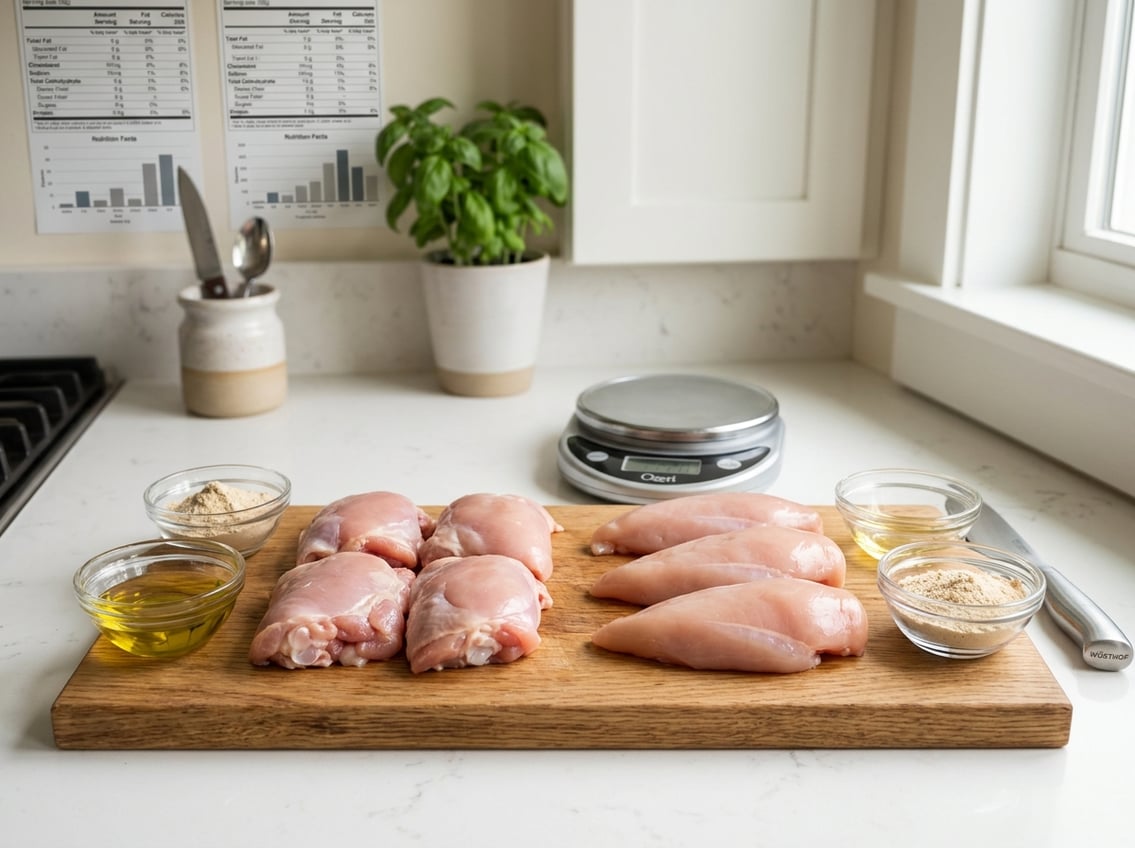
Breasts give more protein per gram, while thighs supply more fat and a slightly higher calorie count.
Both cuts are nutritious; your choice depends on protein goals, satiety needs, and cooking methods.
Lean Protein in Breasts vs Thighs
You get more protein from skinless chicken breast than from an equivalent weight of skinless chicken thigh.
For example, 100 g of cooked skinless chicken breast typically provides about 30–32 g protein, whereas 100 g of cooked skinless thigh gives roughly 24–26 g.
Choose breast when you prioritize protein density for muscle building, weight management, or protein-per-meal targets.
Thighs still supply substantial protein and can be preferable when you need a tender, forgiving cut for longer cooking.
Fat Content and Types in Each Cut
Skinless chicken thighs contain more total and saturated fat than skinless breasts.
Typical values for 100 g cooked: breast has about 3–4 g total fat and 1 g saturated fat, while thigh has about 8–10 g total fat and 2–3 g saturated fat.
The fat in thighs boosts flavor and juiciness and provides fat-soluble nutrients.
If you remove the skin, you cut much of the visible fat but not all intramuscular fat.
Choose thighs when you want richer texture; choose breasts when you need lower total and saturated fat.
Energy Density and Meal Planning
Because thighs have more fat, they are higher in calories per serving.
For a 3-ounce (85 g) cooked portion: skinless breast is about 140 kcal, skinless thigh about 170 kcal.
Plan meals by portioning: use breast for lower-calorie, high-protein plates and thigh for dishes where fat improves mouthfeel.
Track added fats from cooking—oil and sauces often add more calories than the cut difference does.
Micronutrients and Health Impacts
Chicken thighs and breasts differ in minerals, B vitamins, and muscle pigments that affect nutrient density.
Iron, Zinc, and Vitamins
Thighs contain more iron and zinc per serving than breasts.
Iron in thighs is mainly heme iron, which your body absorbs more efficiently than non-heme iron from plant foods.
Zinc supports immune function and wound healing, and thighs typically provide more zinc than breasts.
For B vitamins, breasts tend to be higher in vitamin B6, while thighs often supply more vitamin B12 and slightly higher amounts of niacin and riboflavin.
If you’re monitoring B6 for metabolism or B12 for nerve health, choose the cut that matches your needs.
A 3-ounce cooked skinless thigh offers more iron and zinc but also more calories and fat than the same amount of breast.
Myoglobin Content and Meat Color
Myoglobin gives dark meat its color and stores oxygen in muscle.
Thighs have higher myoglobin levels than breasts because they are used for sustained movement, so the meat appears darker and richer in certain nutrients.
Higher myoglobin correlates with greater iron content and subtly different flavor profiles.
That darker color signals a different nutrient makeup.
When you cook thighs, myoglobin influences browning and moisture retention, often yielding juicier results than breast meat.
If you prefer milder flavor and lower fat, choose breasts.
If you want richer taste and higher heme iron, opt for thighs.
Effect on Wellness and Dietary Choices
Choosing thighs or breasts affects calorie, fat, and micronutrient balance in your meals.
If you aim for lower calories and saturated fat, breasts are usually the better fit.
If you need more iron or zinc, thighs help meet those targets with fewer external supplements.
Eating thighs occasionally as part of a balanced plate with vegetables and whole grains provides beneficial nutrients.
Frequent consumption of skin-on, fried thighs raises saturated fat and calorie intake, which can affect cardiovascular risk.
Remove skin to lower fat, grill or bake instead of frying, and pair either cut with vitamin C–rich vegetables to improve iron absorption.
Choose based on your specific nutrient needs.
Cooking Methods and Their Effects on Calories
Different cooking methods change how much fat stays in the meat and whether added fats or coatings increase calories.
Choosing skinless cuts and dry-heat methods typically keeps calories lower, while frying and breading add the most.
Impact of Baking, Grilling, and Roasting
Baking, grilling, and roasting use dry heat that allows some fat to drip away.
A skinless chicken thigh retains more fat than a skinless chicken breast, but both lose surface fat during cooking.
A 4‑ounce skinless chicken breast often ends up leaner than a same‑size skinless thigh after baking or grilling because the thigh starts with higher intramuscular fat.
Grilled and roasted chicken develop browning without added oil when you use a rack or direct heat.
If you baste with oil or butter, account for roughly 40–120 calories per tablespoon added.
Marinades based on citrus, vinegar, or herbs add negligible calories compared with oil-based marinades.
Frying and Breaded Options
Frying and breading significantly increase calories because the coating soaks up oil and the crust adds carbohydrates.
A breaded, fried chicken thigh can contain 50–100% more calories than a baked, skinless thigh of the same weight.
Pan-frying in a tablespoon of oil can add about 120 calories; deep-frying multiplies oil absorption and total calories further.
Breaded chicken breast narrows the calorie gap with thighs because the coating adds fat and carbs to a previously lean cut.
If you choose fried options, drain on paper and trim visible fat to cut some oil.
Fried or breaded versions remain much higher in calories than baked, grilled, or roasted skinless pieces.
Practical Tips to Lower Calorie Content
Choose skinless chicken breast or skinless chicken thighs to start; removing skin cuts significant surface fat.
Cook on a rack, use nonstick pans, or grill to let fat drip away instead of frying in oil.
Use oil spray or measure oil precisely—1 teaspoon adds about 40 calories while a tablespoon adds about 120.
Favor herbs, spices, citrus juice, or yogurt-based marinades instead of oil-heavy ones.
When you want crispness, try panko baked at high heat or air-frying to reduce oil uptake compared with traditional frying.
Flavor, Texture, and Culinary Uses
Thighs bring richer, fattier flavor and better moisture retention.
Breasts deliver a milder taste and firmer bite.
Both cuts work in many dishes.
Choose thighs when you need juiciness or sustained heat, and choose breasts for lean, quick-cooking applications.
Moisture and Juiciness in Thighs vs Breasts
Chicken thighs contain more intramuscular fat and connective tissue than chicken breasts, which helps them stay moist during long cooking.
Thighs remain tender when braised, stewed, or roasted at high temperature because the fat renders and lubricates the meat.
Breasts are much leaner and can dry out quickly if overcooked.
Cook breasts briefly over direct heat, sous-vide, or brine them first to improve juiciness.
For precise results, use a thermometer: remove breasts at 62–65°C (144–149°F) and thighs at 74°C (165°F) if you prefer fully set dark meat.
Best Uses in Different Recipes
Use chicken thighs for slow-cooked dishes like coq au vin, curries, pulled chicken, and braises that benefit from their fat and connective tissue.
Thighs also work well on the grill when you want forgiving cuts that stay juicy through direct heat.
Reserve breasts for quick pan-sears, cutlets, salads, and stir-fries where a mild flavor and firm texture work best.
Slice or pound breasts thin for even cooking.
Swap one for the other in many recipes, but adjust cook time and moisture strategy—longer, lower heat for thighs; shorter, higher-precision cooking for breasts.
Affordability and Versatility
Thighs are usually less expensive per pound than breasts, making them a cost-effective choice for families and high-volume meals.
Their forgiving nature lets you use simpler techniques without risking a dry result.
Breasts remain popular for diet-focused meals because of lower fat and higher protein density.
They’re versatile in portion control and meal prep, but may require marinades, brining, or careful timing to match the textural reliability that thighs provide.
Choosing the Best Cut for Your Goals
Choose the cut that matches your calorie targets, protein needs, and taste preferences.
Small swaps—skinless chicken breast for lower calories or thighs for extra calories and flavor—change meal macros and cooking outcomes.
Weight Management and Fitness
If you track calories, skinless chicken breast gives you more protein per calorie.
A 3‑ounce cooked breast typically provides about 25–27 g protein and roughly 120 calories.
Use breasts for lean-protein meals like grilled salads, stir-fries, or batch-cooked strips for portioned lunches.
If you need extra calories for mass gain or long training sessions, chicken thighs provide more energy and fat.
A 3‑ounce cooked thigh often contains about 150–170 calories and about 10 g fat.
Add thighs when you want richer texture and higher calorie density without increasing portion size.
For muscle growth, prioritize total daily protein (aim for about 1.2–2.0 g/kg body weight) and fit either cut into your overall plan.
Heart Health Considerations
For heart-healthy goals, choose skinless chicken breast to reduce saturated fat and total calories. Lower fat intake can help manage LDL cholesterol when you combine it with a diet rich in vegetables, whole grains, and healthy fats like olive oil.
Grill, bake, or steam chicken breasts. Avoid frying or using heavy cream-based sauces that add saturated fat.
If you prefer thighs, remove the skin and trim visible fat to narrow the difference. Thighs contain more monounsaturated and saturated fat, so eat them in moderation and balance them with fiber-rich foods and omega‑3 sources.
Monitor portion sizes and use healthy cooking methods to keep saturated fat within recommended limits (generally less than 10% of total calories, or lower if advised).
Balanced Meal Planning Strategies
Match the cut to the meal role. Use skinless chicken breast in higher-volume, lower-calorie dishes such as grain bowls, vegetable-heavy stir-fries, and lean sandwiches.
This approach lets you eat more veggies without overshooting calories. Use thighs in recipes where juiciness matters, like slow-cooked stews, braises, or charred kebabs.
Thighs improve mouthfeel and reduce the need for added oils or butter. Plan portions and track macros if accuracy matters.
For example, swap one 4-ounce cooked breast (about 160 calories, 34 grams protein) for one 4-ounce cooked thigh (about 200–220 calories, 28 grams protein). Rotate both cuts across the week to meet protein needs and preserve dietary variety.
Adjust calories by changing portion size, skin inclusion, or cooking fats.


