
Should Chicken Thighs Be Covered in the Oven: Moisture vs. Crisp
You want juicy, safely cooked chicken thighs and a crisp skin when it matters.
Cover the thighs during the first part of baking to trap moisture and ensure even cooking, then uncover toward the end to let the skin brown and crisp.
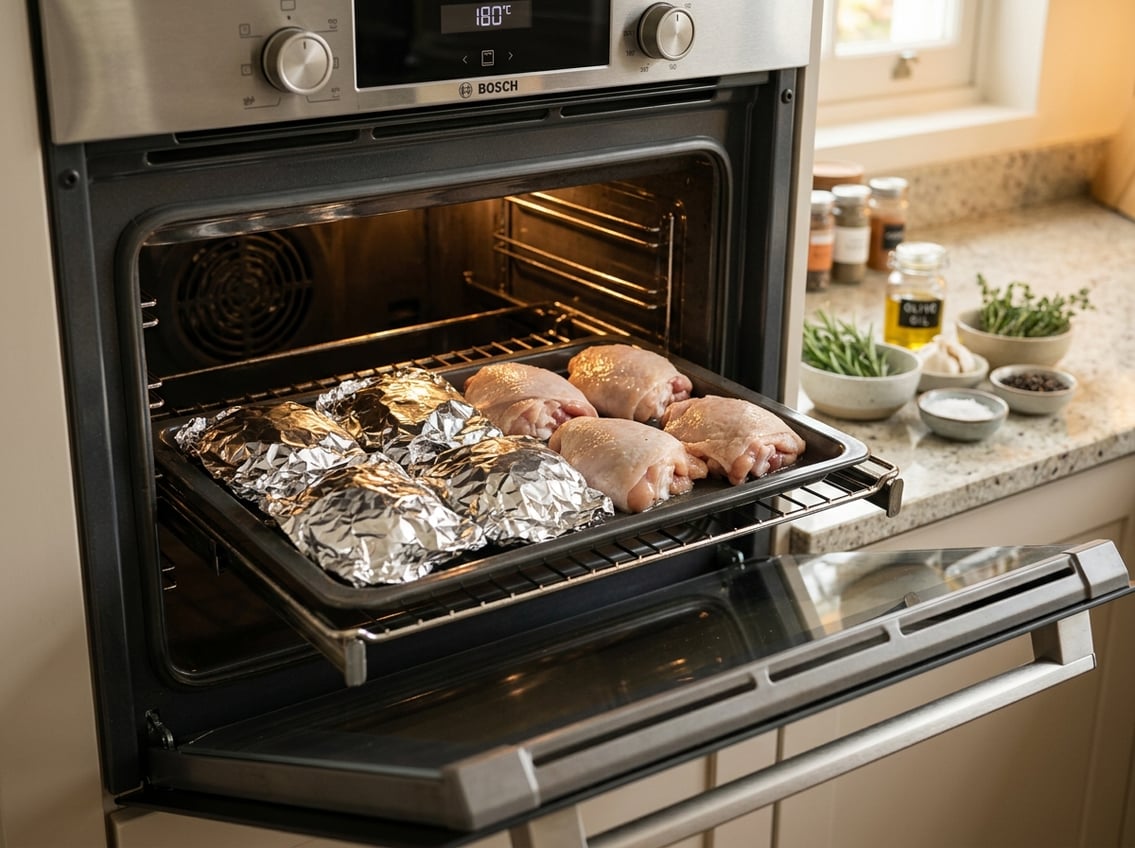
Covering helps retain juices, while leaving the pan open produces better browning.
Cut (bone-in, boneless, skin-on, skinless), oven temperature, and timing all change the approach, so you can bake chicken thighs confidently every time.
Moisture Retention: Covering Chicken Thighs in the Oven
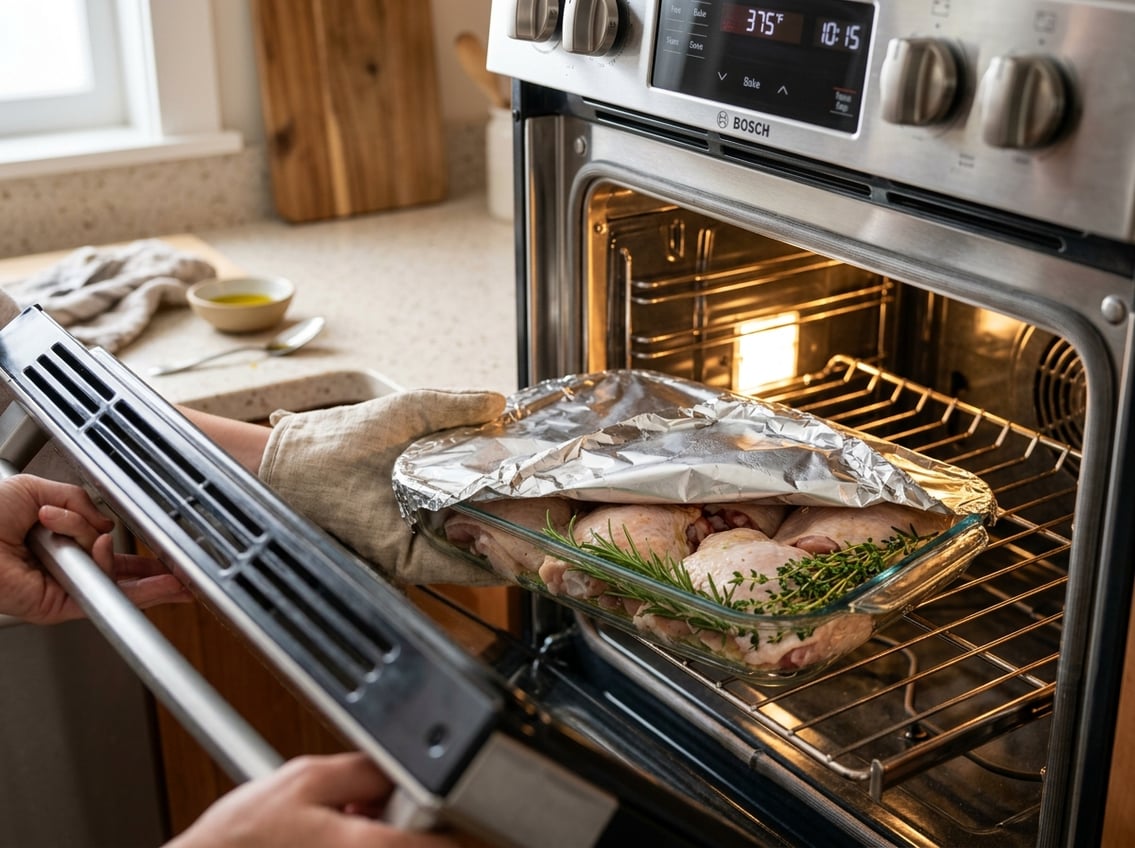
When you cover chicken thighs, steam builds inside the pan and limits evaporation.
That steam keeps the muscle fibers hydrated, so bone-in chicken thighs stay juicier than when left fully exposed.
Covering also evens out oven heat around the pieces, which reduces the chance that the exterior overcooks while the thickest part reaches temperature.
If you want reliably juicy chicken thighs for slicing or shredding, start covered for most of the cook time, then uncover briefly to finish.
Covered cooking can slightly shorten oven time because trapped heat speeds cooking.
Always use a thermometer and remove thighs at about 160–163°F (71–73°C); carryover will bring them to a safe 165°F (74°C) without drying.
Steam concentrates flavors from any marinade, rub, or sauce because volatile compounds stay in the pan.
That increases seasoning penetration into the meat, which benefits plain or lightly seasoned chicken thighs.
Steaming limits surface browning, so you’ll get less crispy, browned skin if you keep thighs covered the entire time.
To balance flavor and texture, braise or roast covered with a flavored liquid, then remove the cover and roast at high heat or broil for 5–8 minutes to crisp the skin and develop color.
If you use bone-in chicken thighs, the bone releases gelatin that combines with pan juices under a cover, enriching the finished sauce and mouthfeel.
Spoon those juices back over the meat after uncovering to preserve both moisture and flavor.
Use a covered method when your priority is juicy chicken thighs for casseroles, braises, or recipes where crisp skin isn’t essential.
Start covered for about 70–85% of the total cook time to trap moisture, then uncover for the last 10–15 minutes if you want some skin crispness.
If you prefer fully crispy skin, skip covering or only tent foil loosely to prevent over-browning while still limiting excessive dryness.
Covered cooking works well at moderate temperatures (325–375°F / 160–190°C).
For a fast crisp finish after uncovering, raise heat to 425°F (220°C) or use the broiler briefly.
Achieving Crispy Skin: Baking Uncovered
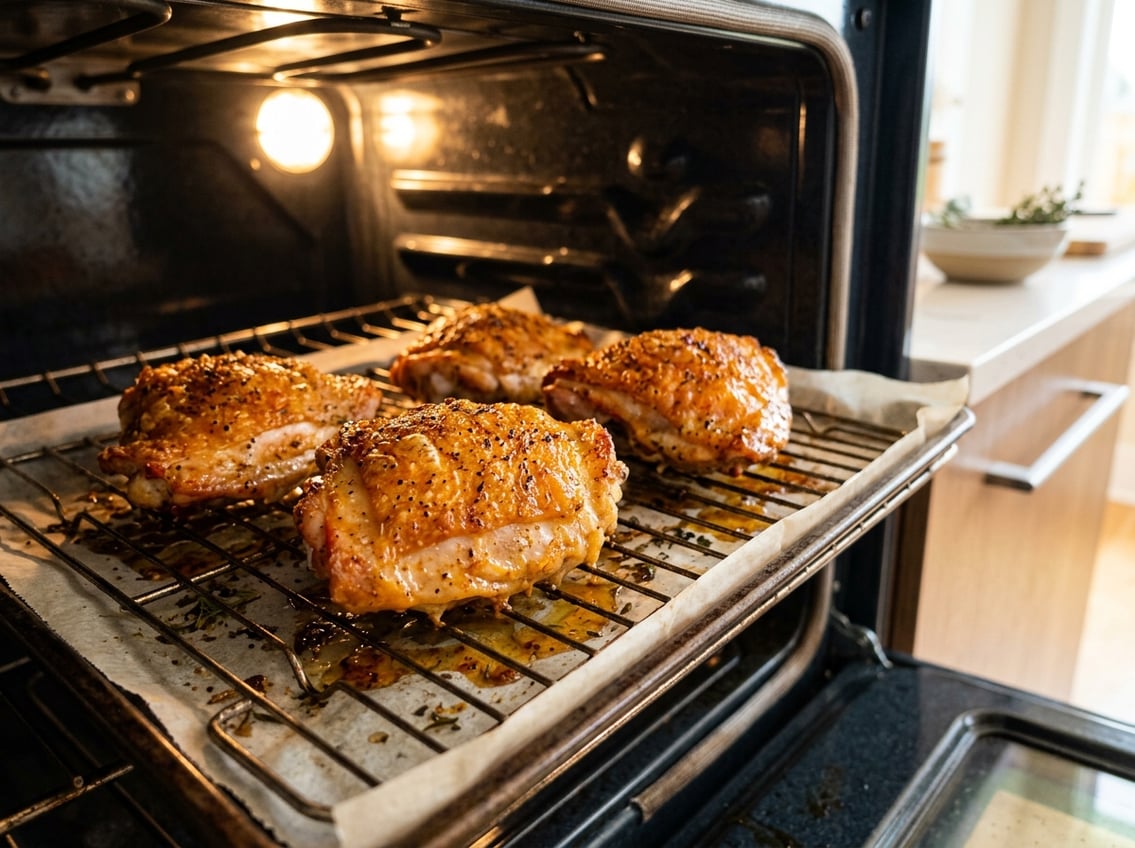
Leave the thighs uncovered in a hot oven to encourage surface evaporation and browning, which produces crisp skin while keeping the meat juicy.
Proper temperature, dry skin, and spacing matter more than long cooking times.
Baking skin-on chicken thighs uncovered lets steam escape so the skin dries and renders fat efficiently.
Without a lid or foil trapping moisture, the skin browns through Maillard reactions and develops a crisp texture within 25–40 minutes at 400–450°F for bone-in thighs.
Keep the thighs single-layered on a rimmed baking sheet or in a roasting pan.
Pat them very dry, trim loose skin, and space them at least 1 inch apart so hot air circulates.
A wire rack over a sheet pan speeds airflow under the pieces and reduces contact, which prevents soggy undersides.
Season just before baking or use a light oil to help browning.
Rotate the pan once halfway through and check internal temperature; remove at 165°F.
You can get crisp skin and tender meat by using different heat phases and the right oven temperature.
Start at a higher temperature (425°F) to crisp the skin, then lower slightly if the thighs are browning too quickly while the interior needs time to reach 165°F.
Bone-in, skin-on chicken thighs benefit from longer gentle finishing because bones slow heat penetration.
Use a meat thermometer in the thickest part without touching bone to judge doneness.
Rest the thighs 5–10 minutes after baking; carryover heat evens the temperature and keeps juices inside the meat.
If you want faster browning without drying, sear skin side down in a cold skillet until the fat renders, then transfer the pan to the oven to finish.
That stovetop-to-oven technique combines targeted crisping with controlled internal cooking.
Soggy skin usually comes from trapped steam, excess surface moisture, or overcrowding.
Always pat thighs dry with paper towels and refrigerate uncovered for 30–60 minutes if you have time; surface moisture will evaporate and skin will crisp better in the oven.
Avoid covering the pan and don’t nestle thighs tightly together.
If juices collect in the pan, tilt or lift the thighs onto a rack so they’re not sitting in rendered fat.
If you must bake covered for tenderness, remove the cover for the last 10–15 minutes and increase heat to re-crisp the skin.
Hybrid Baking Techniques for Best Results
Use a timed cover-uncover approach, control oven heat in stages, and monitor internal temperature to get juicy meat with crisp skin.
Small adjustments to when you tent foil and when you raise heat make the biggest difference.
Start covered to protect the meat from drying, then uncover for the final browning.
For bone-in, skin-on thighs, bake at 350°F covered for 25–30 minutes, then remove foil and continue at 400–425°F for 10–15 minutes until the skin browns.
For boneless or thinner thighs, shorten the covered phase to 10–15 minutes because they reach safe temperature faster.
Tent foil loosely so steam reduces evaporation without steaming the skin flat.
Use an instant-read thermometer; pull thighs at 160–163°F and rest 5–10 minutes so carryover raises them to 165°F.
If you use a glaze, apply it in the last 10 minutes uncovered so sugars caramelize rather than burn under foil.
Pat skin dry before seasoning to speed fat rendering and encourage crisping once uncovered.
A light oil coating and a pinch of baking powder on skin help create a dryer surface and better browning.
If you prefer maximum juiciness over crunch, keep the thighs covered for most of the bake and only flash-broil for 1–3 minutes at the end to firm the skin without losing much moisture.
Place thighs on a wire rack over a rimmed sheet to let rendered fat drip away and air circulate.
That reduces sitting in juices, which keeps skin crisper while the covered phase preserves internal moisture.
Always judge doneness by temperature, not time, to avoid overbaking and drying the meat during the crisping step.
Use a two-stage temperature plan: moderate heat for covered cooking, higher heat for finishing.
Start at 325–350°F when covered to bring the interior safely up without overbrowning the exterior.
Raise to 400–450°F for the last 8–15 minutes to render fat and brown skin quickly.
For convection ovens, reduce temps by 10–15% or shorten times by roughly the same amount.
If thighs brown too fast after uncovering, lower the top rack or reduce heat by 25°F and extend time until the thermometer reads 160–163°F.
For extra crispness without overcooking, finish under a 2–4 minute broil while watching closely.
Choosing the Right Cut: Bone-In, Boneless, Skin-On, or Skinless
Pick the cut that matches your time, equipment, and desired finish.
Bone-in and skin-on add flavor and protect against drying, while boneless and skinless speed cooking and suit wet methods.
Bone-in chicken thighs retain more internal moisture because the bone slows heat transfer and helps keep meat juicy.
The connective tissue near the bone breaks down during cooking, adding silkiness and a richer mouthfeel.
Expect slightly longer cook times — plan for 5–10 extra minutes versus boneless pieces.
Skin-on thighs build a crispy exterior when roasted or seared, since the rendered fat crisps the skin and bastes the meat.
Skinless thighs lack that barrier and will brown less; they also lose surface fat that helps mouthfeel, so they can taste leaner even though thigh meat remains relatively fatty.
Boneless thighs cook fastest and are easiest to slice evenly, but they can overcook quickly if left uncovered at high heat.
Bone-in, skin-on: roast at 400–425°F (200–220°C) uncovered on a rack or sheet pan to crisp skin and finish to 165°F (74°C) at the thickest point.
Pat skin dry, salt early, and let rest 5–10 minutes before serving.
Use a probe thermometer to avoid guessing.
Boneless, skinless: sear in a hot pan then finish in a 375–400°F oven or cook entirely at 375°F for about 20–25 minutes depending on thickness.
Consider a short brine or marinade to improve juiciness and add a final glaze to keep the surface moist.
Skin-on, boneless: you get crisp skin with faster cook times than bone-in.
Use high direct heat and remove from pan when skin browns; finish in a low oven if needed to reach safe temperature.
Skinless, bone-in: uncommon but useful for braises and slow cooking.
Covering during braising preserves moisture; for roasting, remove cover near the end to develop color.
Oven Temperatures and Baking Times
Choose a baking temperature that matches your goal.
Lower heat gives tender, pull-apart meat.
Higher heat gives crispy skin and shorter cook time.
Adjust the time for bone-in vs boneless pieces and for how thick each thigh is.
Common oven settings for chicken thighs are 375°F (190°C) and 425°F (220°C).
375°F (190°C) works for even cooking when you prefer a gentler roast.
Bone-in, skin-on thighs typically take about 40–50 minutes at this temperature.
425°F (220°C) gives crisp skin and faster cooking.
Bone-in thighs usually finish in 30–40 minutes; boneless thighs often take 20–30 minutes.
If you start covered, bake covered for the first 20–30 minutes at 375°F, then uncover and raise to 400–425°F for 5–15 minutes to crisp the skin.
Always preheat the oven and position the rack in the middle for even heat.
Thicker or larger thighs lengthen cook time; bone-in pieces take longer than boneless.
Boneless, skinless thighs (about 1/2–3/4 inch): expect 20–30 minutes at 425°F.
Bone-in, skin-on thighs (about 1–1.5 inches): expect 30–50 minutes depending on temperature.
Leave space between pieces and use a single layer.
If thighs vary in size, remove smaller pieces early or start larger ones on a separate tray.
Use a thermometer rather than clock time when sizes differ.
Internal temperature is the reliable check: insert a probe into the thickest part without touching bone.
Target 165°F (74°C) per USDA.
For thighs, you can remove them at 165°F and let carryover heat raise them slightly.
Juices should run clear; meat near the bone should not be pink.
Skin should be crisp if you aimed for browning.
If skin isn’t crisp after reaching 165°F, use a 2–4 minute broil, watching closely.
For frozen thighs, add roughly 50% more time and verify 165°F throughout.
Serving and Pairing Ideas
Choose sides that match the texture you achieved.
Crisp skin benefits from creamy or acidic sides, while covered, juicier thighs pair well with roasted or braised vegetables.
Focus on timing so everything finishes hot.
Starches that hold heat and quick salads work best.
Best Sides to Serve with Baked Chicken Thighs
Pair crispy skin thighs with buttery mashed potatoes or creamy polenta to balance the crunch and fat.
Roast green beans or Brussels sprouts in olive oil and garlic for a matching oven finish. Cut vegetables uniformly so they cook in the same time as the thighs.
If you bake thighs covered and they turn out juicy, serve sides that soak up sauce. Rice pilaf, couscous, or lemon-herb quinoa work well.
For a fresh contrast, toss arugula, cherry tomatoes, lemon vinaigrette, and shaved Parmesan for a simple salad.
Lift the dish with sauces and garnishes. Spoon pan juices over the thighs, add chopped parsley or cilantro, or finish with lemon wedges.
For a quick meal, pair with steamed green beans and garlic bread to keep prep minimal.
Leftover Storage and Reheating
Cool leftovers within two hours. Refrigerate them in an airtight container for up to 3–4 days.
If you have bone-in, skin-on baked chicken thighs, separate the meat from the bone for faster, more even reheating when possible.
Freeze portions in freezer-safe bags for up to 3 months. Label with the date and use within that window.
Reheat leftovers in a 350°F (175°C) oven on a baking sheet for 12–18 minutes until the internal temperature reaches 165°F (74°C).
For crispy skin, reheat uncovered and finish under the broiler for 1–2 minutes while watching closely.
Microwave a quick single portion, but cover loosely and add a splash of broth to prevent drying. Transfer to a hot skillet for 30–60 seconds if you want to restore some texture.


