
Are Chicken Breasts or Thighs Better for Your Goals?
You may be asking, are chicken breasts or thighs better for your goals, and the answer depends on what you want from your meals. If you care most about lower calories and higher lean protein, chicken breast usually fits better.
If you want more flavor, tenderness, and easier cooking, chicken thighs often work better.
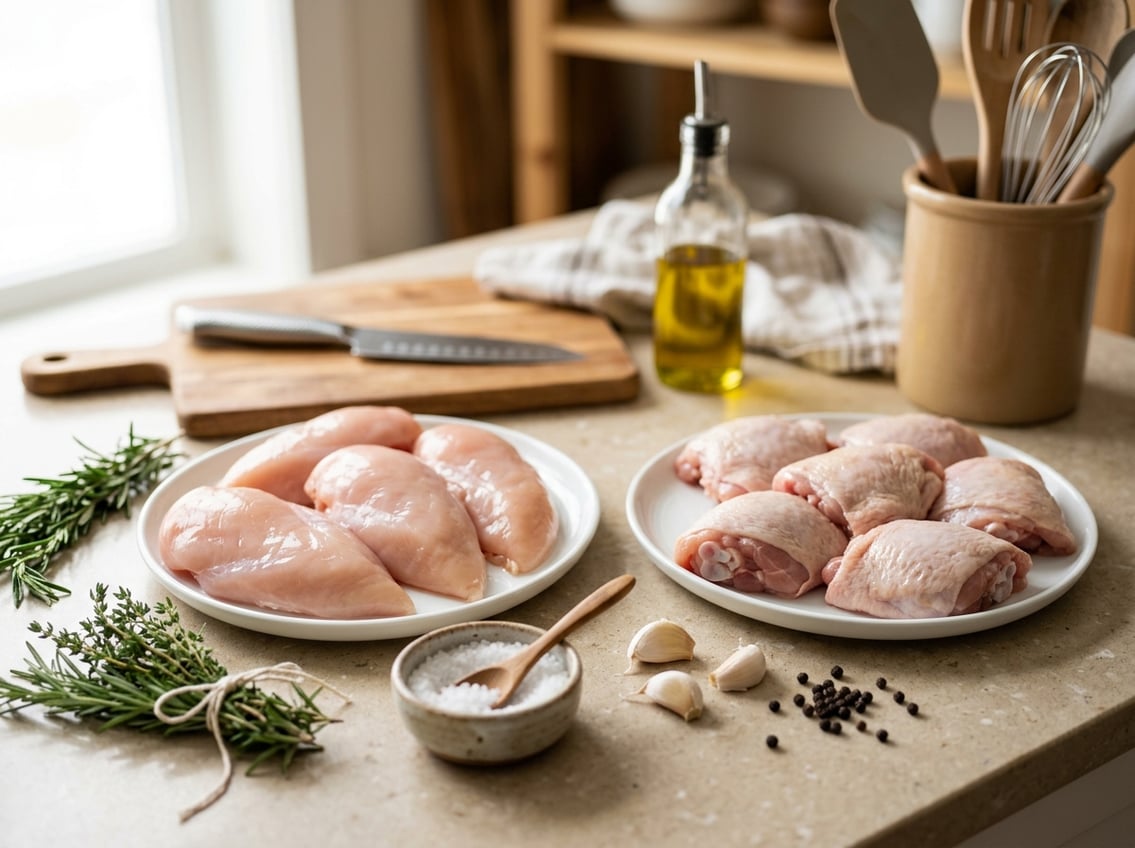
Both cuts can fit into a healthy diet, and both give you useful nutrition. A registered dietitian will usually tell you to choose based on your target, your taste preference, and how you plan to cook it.
Chicken breasts and chicken thighs differ in calories, protein, fat content, and cooking results. The better choice is not the same for every meal.
Best Choice by Nutrition Goal
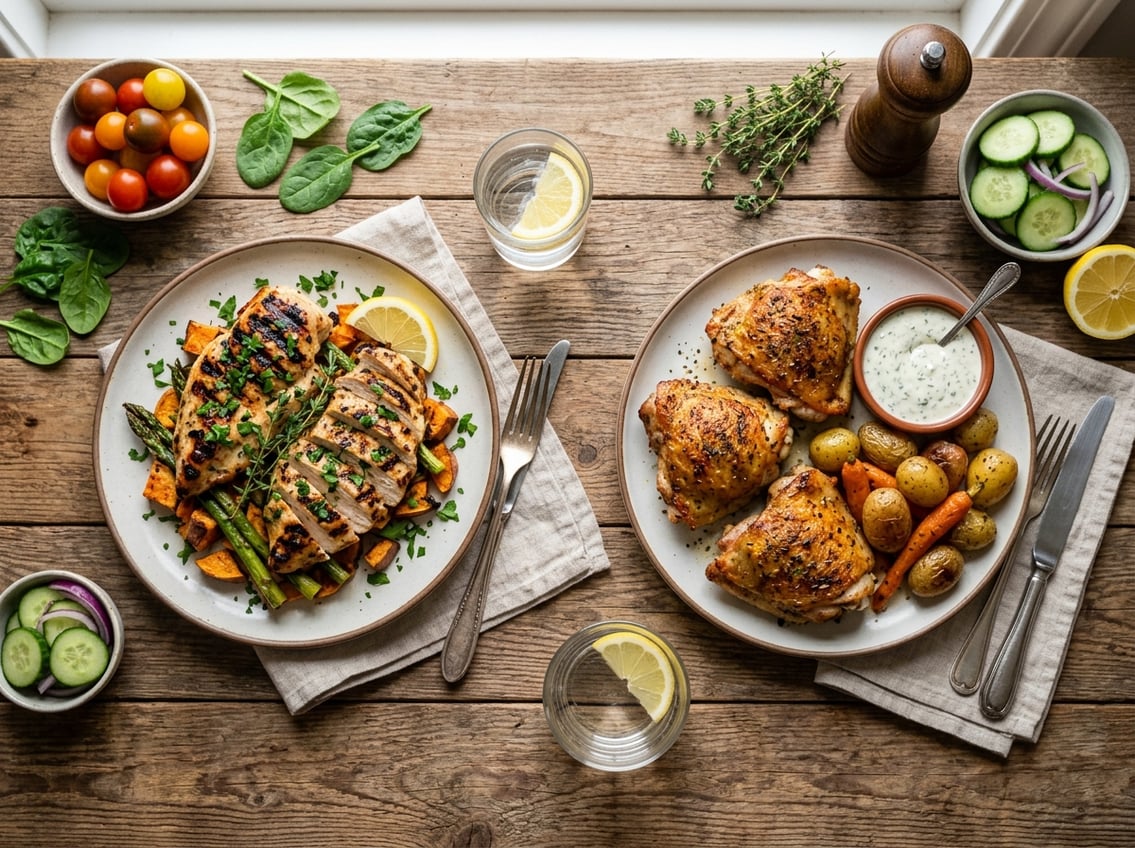
Chicken breast is the leaner choice. Chicken thighs bring more fat and a richer taste.
That difference changes how each cut fits your nutrition goals, from weight control to sports meals and balanced eating.
Lower Calories and Fat Intake
If your goal is to cut calories or keep fat content lower, skinless chicken breast is usually the better pick. A three-ounce serving of boneless, skinless chicken breast has about 140 calories and 3 grams of fat, while the same amount of boneless, skinless chicken thighs has about 170 calories and 9 grams of fat, according to The Pioneer Woman.
That difference can matter if you eat chicken often. Skinless chicken breast also gives you a very lean protein option that works well when you want to build meals around vegetables, grains, and sauces with controlled portions.
Higher Protein and Lean Protein Priorities
Chicken breasts are often the go-to choice when you want more protein with less fat. They deliver a high amount of amino acids without much extra fat.
Chicken thighs still provide solid protein, so they also fit a healthy diet.
If you need the leanest option for meal prep, post-workout meals, or lower-fat eating, chicken breast usually wins.
Vitamins, Minerals, and Amino Acids Compared
Both cuts provide useful vitamins and minerals, including b vitamins, niacin, phosphorus, vitamin b12, choline, and potassium. They also supply amino acids your body uses for muscle repair and other functions.
The difference in micronutrients is usually smaller than the difference in calories and fat. Both skinless chicken breast and skinless chicken thighs can support good nutrition, as long as the rest of your plate also supports your goals.
Both cuts are also naturally low in sodium before seasoning, which helps if you watch salt intake.
Flavor, Texture, and Satisfaction
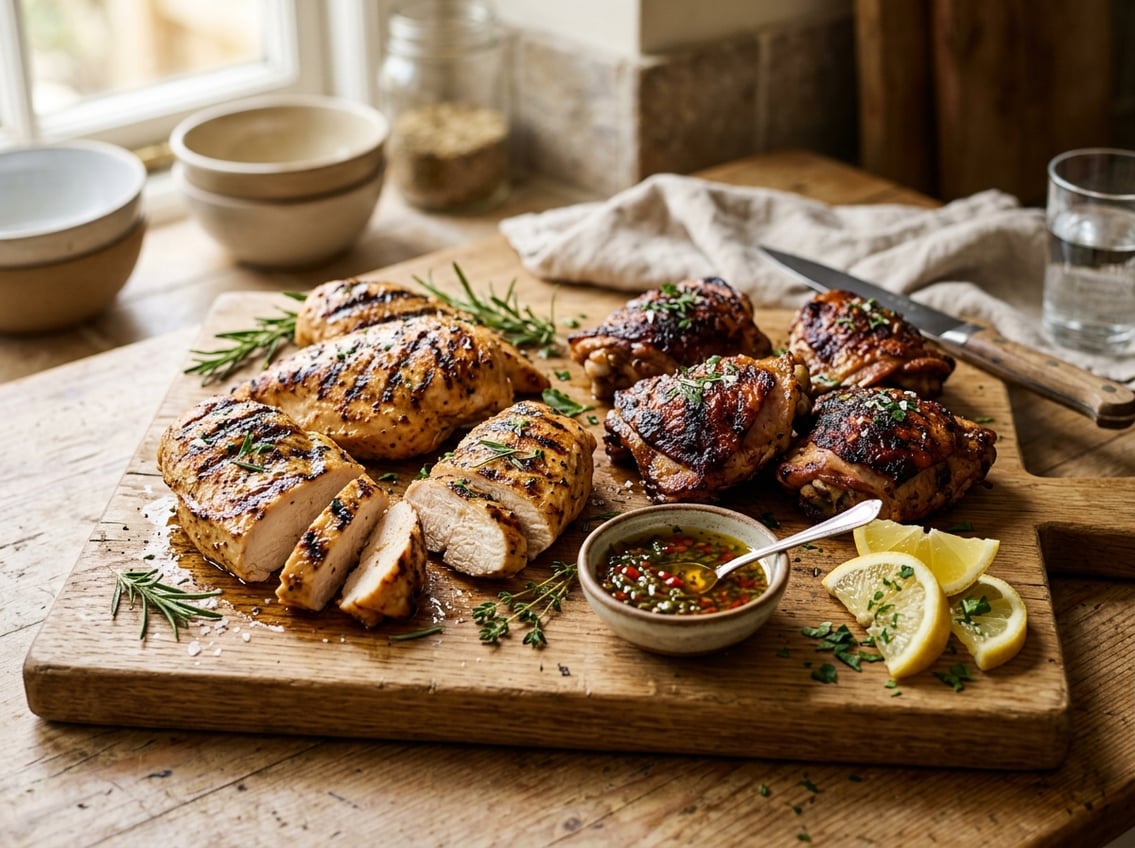
Chicken thighs usually taste richer and stay juicier. Chicken breast has a milder flavor and firmer texture.
Your choice can affect not just nutrition, but also how satisfied you feel after eating.
Why Dark Meat Tastes Richer
Chicken thighs are dark meat, and they contain more myoglobin than chicken breast. They also have more intramuscular fat and marbling, which adds flavor and helps the meat stay moist.
That extra fat content gives thighs a fuller taste. Many people prefer them in dishes where the chicken is the main flavor, not just a base for sauce or seasoning.
Why Breast Meat Can Dry Out Faster
Chicken breast is white meat and has less fat, so it can dry out faster if you cook it too long. Overcooking is the main reason chicken breast turns tough or chalky.
The firmer texture can still be useful. It slices cleanly, holds its shape well, and works well in salads, wraps, and sandwiches where you want a neat bite.
How Skin and Fat Change the Eating Experience
Skin-on chicken adds more richness, crispness, and flavor because the skin and fat help protect the meat during cooking. Skinless chicken gives you a lighter result and makes it easier to control calories.
If you like a juicier bite, chicken thighs often feel more forgiving. If you want a cleaner, leaner taste, chicken breast usually fits better.
Which Cut Works Best for Cooking

Your best choice also depends on cooking methods and how much convenience you need. Some recipes work better with chicken breasts, while others are easier and more reliable with chicken thighs.
Fast Weeknight Meals and Convenience
For quick meals, skinless chicken breast is easy to portion and cook fast. It works well when you want simple grilled chicken, baked chicken, or poached chicken for salads and meal prep.
Chicken thighs are also convenient, especially when you want a forgiving cut that stays moist. If you do not want to worry as much about exact timing, thighs can be easier to manage.
Grilling, Baking, and Poaching Results
Chicken breasts do well with grilling and baking when you keep an eye on doneness. Thin cutlets cook fast and are useful when you want a simple dinner with vegetables or rice.
Chicken thighs handle higher heat well and stay juicy. They also work nicely in the oven, especially when you want a richer result without much effort.
Poached chicken usually makes more sense with breasts, since the mild flavor and lean texture fit shredding or slicing. That makes it a good choice for soups, casseroles, and cold dishes.
Slow Cooker and Marinated Dishes
Chicken thighs shine in the slow cooker because they stay tender during long cooking times. They also absorb marinades well, which adds flavor to the finished dish.
Chicken breasts can work in the slow cooker, too, but you need careful timing to avoid drying them out. For dishes with strong sauces or long simmering, thighs often give you more reliable results.
Cost, Labels, and Practical Buying Tips
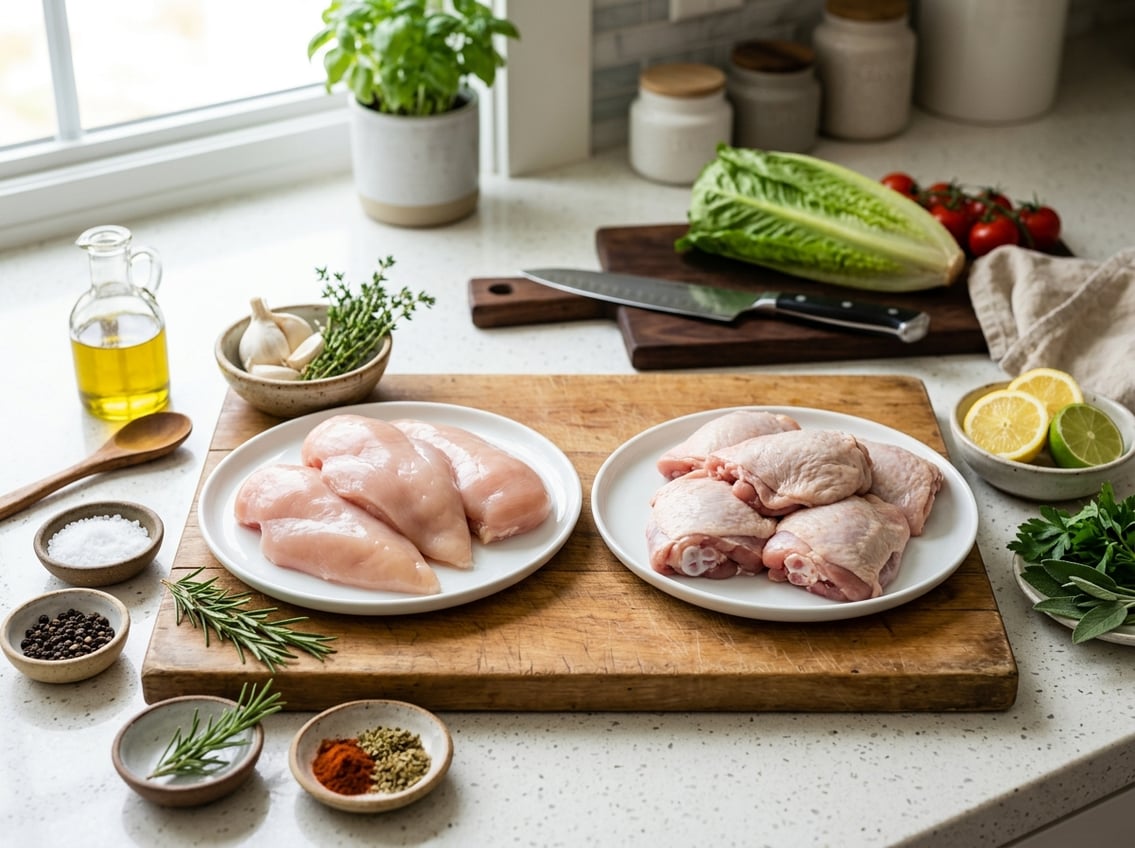
Price, package labels, and added ingredients can change the value of what you buy. The cheapest option is not always the best choice if you care about nutrition, convenience, or meal quality.
Price Differences and Value per Meal
Chicken thighs often cost less than chicken breasts, which can make them a strong value choice for families and batch cooking. Chicken breast can cost more, especially when it is boneless and skinless.
If you want the lowest cost per meal, thighs are often a good pick. If you want a leaner cut and do not mind paying more, breasts may still be worth it.
Skin-On vs Skinless at the Store
Skin-on chicken gives you more flavor and moisture, while skinless chicken is easier to use in lighter meals. If you want better calorie control, skinless chicken is usually the simpler choice.
For a healthy diet, either can work. The key is to match the cut to the rest of the meal, since sauces, sides, and portion size matter too.
What to Check in Pre-Seasoned Packages
Pre-seasoned or marinated chicken can save time. Check the label for sodium and added ingredients.
Some products contain gluten. Read the package carefully if you avoid it.
If you want more control, buy plain chicken breast or chicken thighs and season them yourself.


