
Which Is More Expensive Chicken Breast or Thigh? Price Guide
In most U.S. grocery stores, chicken breast costs more per pound than chicken thigh. Demand, fat content, and how the cuts are processed and sold create the price gap.
If you want to save money, chicken thighs are usually the better buy. Chicken breasts cost more because shoppers pay a premium for lean meat and boneless convenience.
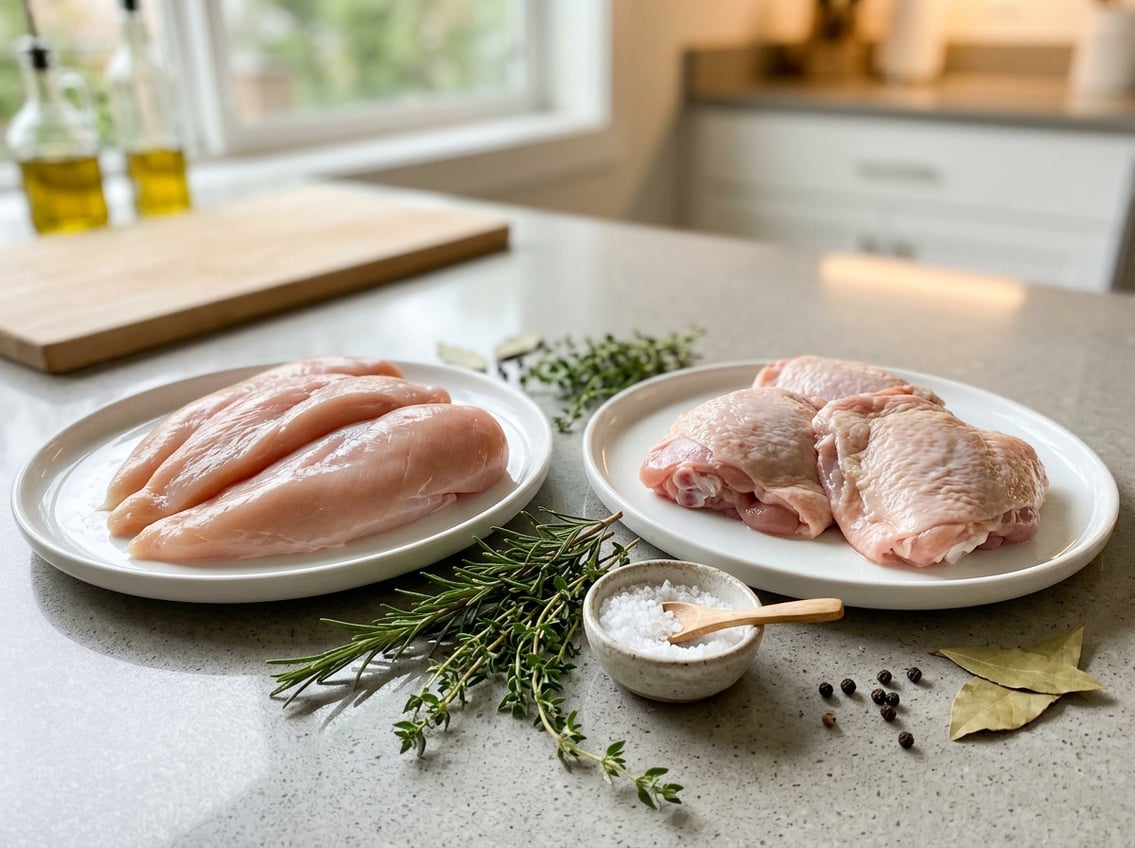
The shelf price tells only part of the story. Bone-in cuts, skin-on packs, frozen bundles, and sales can change the gap quickly, so your best choice depends on what you cook and how you shop.
Quick Price Comparison at the Meat Case
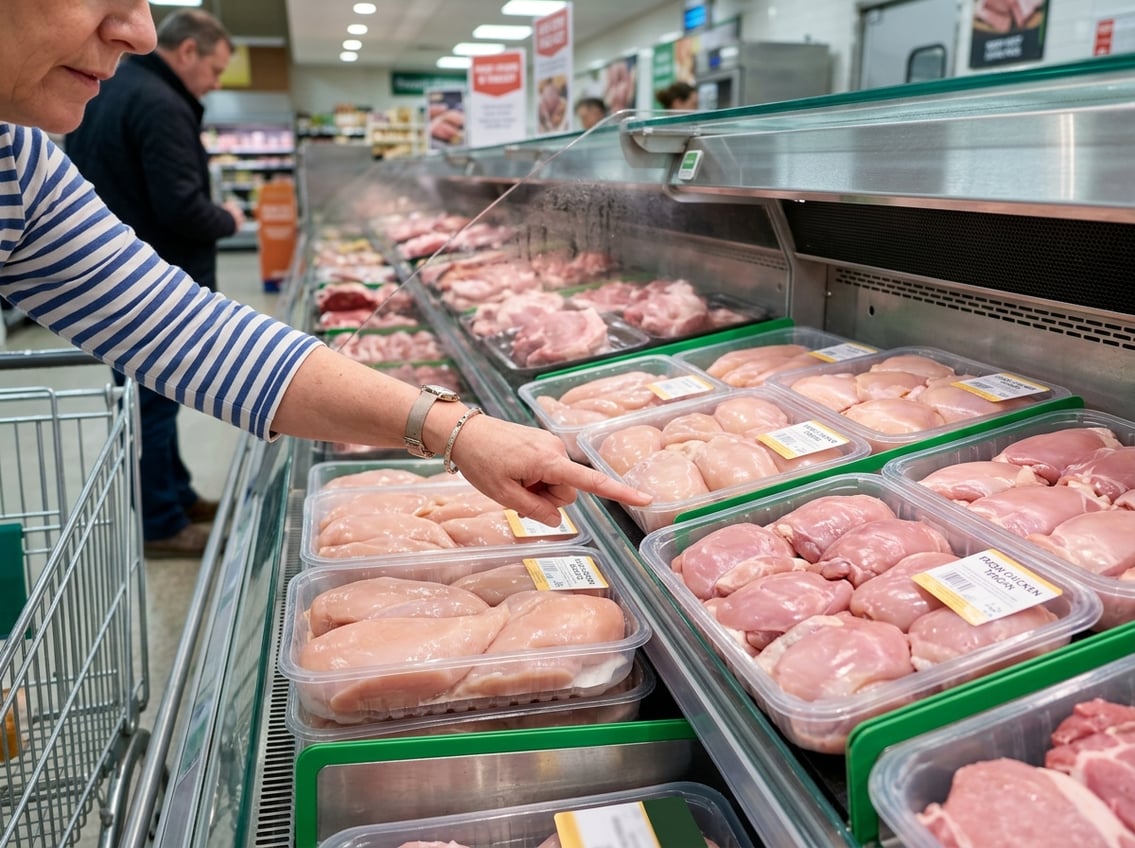
At the meat case, chicken breasts usually sit at the higher end of the price range. Chicken thighs usually cost less per pound.
Skinless chicken breasts often carry the highest shelf price among common retail chicken cuts. Boneless and trimmed breasts especially cost more.
Average Price Per Pound for Common Retail Cuts
A typical grocery pattern in the U.S. looks like this:
| Cut | Common price pattern |
|---|---|
| Boneless, skinless chicken breasts | Highest among standard cuts |
| Bone-in chicken breasts | Often a little cheaper than boneless |
| Boneless, skinless chicken thighs | Usually cheaper than breasts |
| Bone-in, skin-on chicken thighs | Often the lowest priced fresh cut |
Retail examples show chicken breasts around $3.49 per pound and thighs around $1.99 per pound at Walmart. Organic cuts cost more for both types.
A separate market snapshot found local prices ranging from about $2.99 to $8.99 per pound for breasts and $1.99 to $7.49 per pound for thighs, depending on the store and product mix. See the price comparison from Chicken Breast Vs. Thigh: Which Cut Saves You More Money? and the market notes from Why Pros Choose Chicken Thighs Over Breast Every Time.
Why Chicken Breasts Usually Cost More
Many shoppers want lean, boneless meat with mild flavor and easy prep, so chicken breasts usually cost more. Higher demand pushes up chicken pricing.
Breasts have less fat, which makes them feel like a premium cut to many buyers. Thighs have more fat content, so stores often price them lower even though they are flavorful and useful in many recipes.
When Chicken Thighs Can Be Priced Higher
Chicken thighs can cost more when stores sell them as boneless, skinless pieces, organic chicken, or in smaller convenience packs. Extra trimming and packaging raise the price.
Regional demand can also shift the gap. In some stores, a sale on breasts or a shortage of thighs can flip the usual pattern for a short time.
What Drives the Price Gap
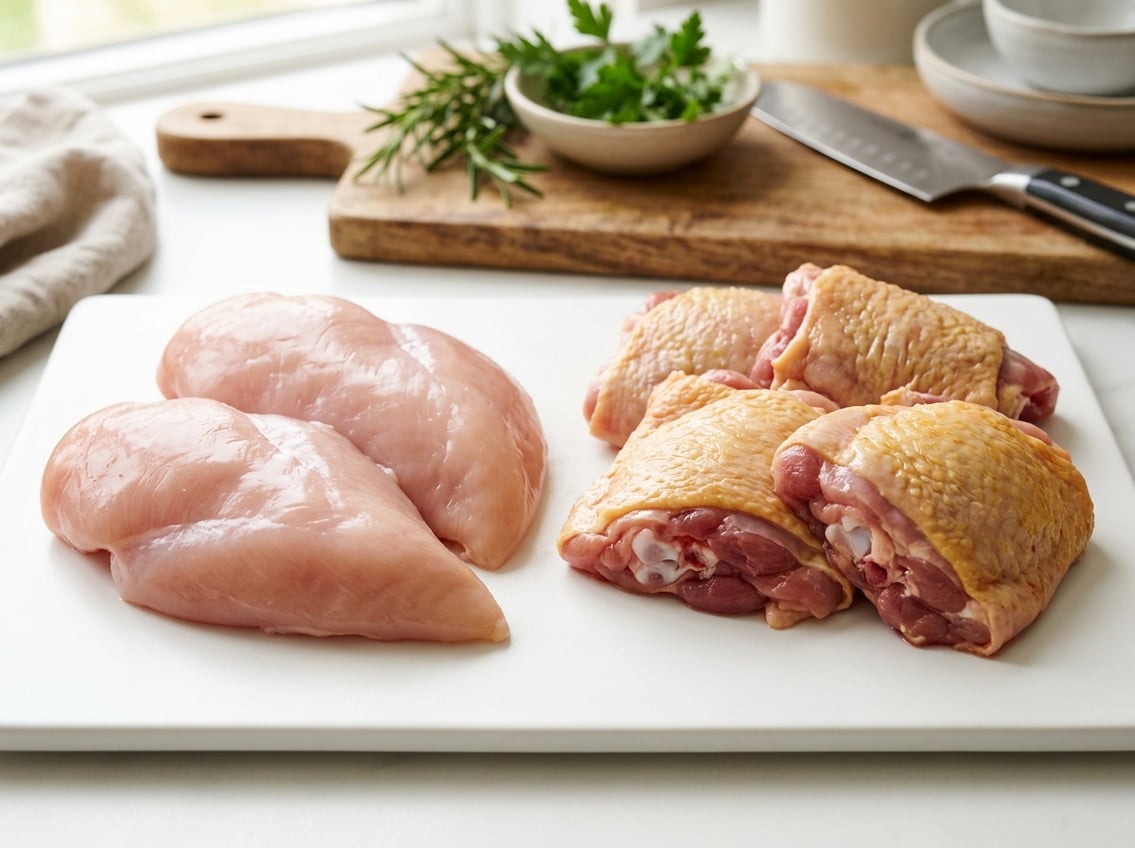
Shopper preferences, store processing, and supply chain costs usually drive the price gap.
Consumer Demand and the Premium on Lean Meat
Chicken breast stays popular because many shoppers see it as the leaner option. That demand supports higher chicken pricing, especially for boneless packages.
Chicken thighs often appeal to value shoppers and cooks who want more flavor at a lower price. When demand leans toward breasts, thighs usually stay cheaper.
Processing, Packaging, and Cut Format
A boneless, skinless breast needs more trimming and handling than a simple bone-in cut. That extra work adds cost.
The same applies to thighs sold in convenience formats. When you pay for skinless, boneless, or pre-portioned chicken cuts, you also pay for labor and packaging.
Feed Costs, Transportation Costs, and Organic Chicken
Feed costs affect the whole bird, so they influence both cuts. Transportation costs matter because chicken must move from processing plants to stores in a chilled chain.
Organic chicken usually costs more because the production rules are stricter and more expensive. As noted in Chicken Breast Vs. Thigh: Which Cut Saves You More Money?, organic breasts and thighs both rise in price, though breasts usually stay higher.
Seasonality, Grilling Demand, and Sales Cycles
Chicken prices move with demand cycles. Grilling season can raise interest in breasts, while colder months can shift shoppers toward thighs for baking and braising.
Sales and promotions can change the usual ranking for a week or two. Frozen chicken and bulk purchases also create their own pricing patterns, especially when stores clear space or push larger packs.
Cost Per Serving Versus Shelf Price
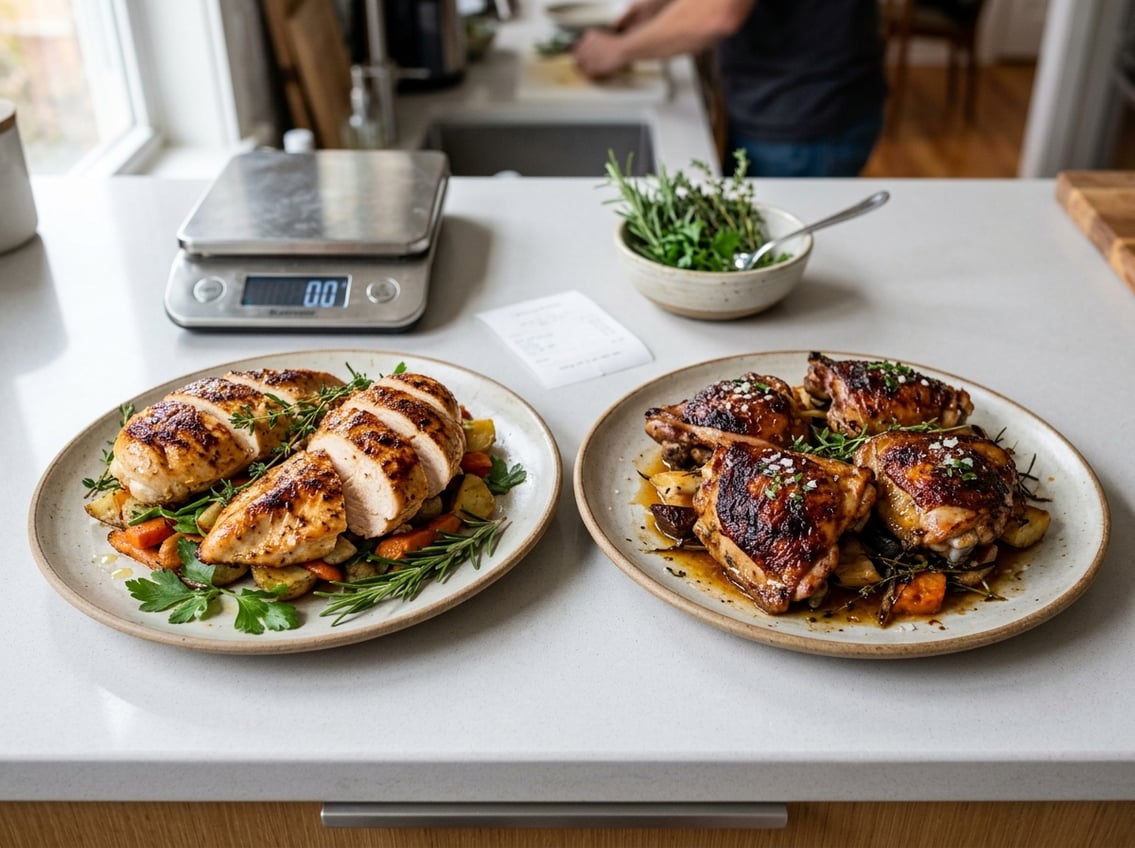
The lowest price per pound is not always the lowest cost per meal. You need to think about edible yield, cooking time, and how much food actually reaches the plate.
Bone-In Versus Boneless Value
Bone-in chicken often has a lower sticker price, yet part of the weight is bone and skin. Boneless meat costs more per pound, but more of that pound is usable.
A cheap-looking pack of thighs may not be the cheapest choice per serving if you discard a lot of weight.
Edible Yield, Cooking Time, and Meal Planning
Recent retail analysis found that thighs can yield about 70% edible meat, while breasts can yield about 85% because they contain less bone and fat. The true cost per edible pound can move closer than the shelf tag suggests, even if thighs still win on price in many stores, as shown in Chicken Breast Vs. Thigh: Which Cut Saves You More Money?.
Cooking time matters too. Breasts cook faster, while thighs tolerate longer cooking and still stay juicy.
If you meal plan around the cut, you can reduce waste and stretch your budget.
Frozen Packs, Bulk Purchases, and Whole Bird Savings
Frozen chicken often costs less than fresh chicken, especially in larger packs. Bulk purchases can lower the price per pound if you have freezer space and a plan for using it.
Whole chickens can offer the best value if you are willing to do the breakdown yourself. Buying whole chicken lets you use every part, and it often costs less than buying separate chicken cuts.
For shoppers who watch sales and promotions, that can be the strongest budget move.
Choosing Based on Nutrition and Cooking Style
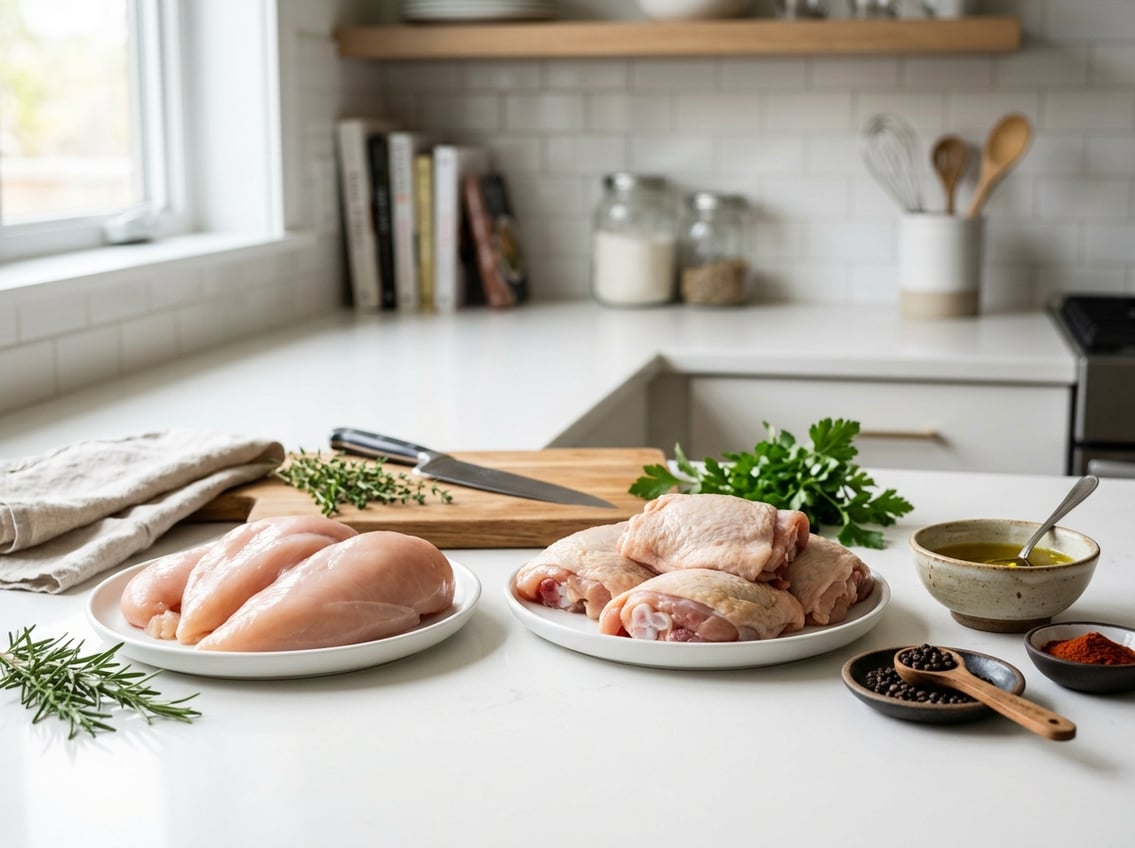
Your choice should fit both your nutrition goals and the way you cook. Chicken breast and chicken thigh each bring different strengths to the table.
Protein Content, Calories, and the Healthier Option
Chicken breast is usually the leaner choice. It tends to offer more protein content per calorie and less fat, so it is often seen as the healthier option for low-fat meal plans.
Chicken thigh has more calories and more fat, which can be useful if you want richer flavor or a more filling meal. It also still provides protein, iron, and zinc.
Flavor, Texture, and Versatility in Recipes
Chicken thigh has a stronger flavor and a softer texture. Chicken breast is milder and firmer, which makes it easy to season many ways.
If you want versatility, both work well. Breasts fit simple prep and meal prep boxes, while thighs work well when you want more moisture and richer taste.
Best Uses for Baking, Braising, Stewing, and Grilling
Chicken breast cooks quickly, making it ideal for baking and quick grilling. It can dry out if overcooked, so timing matters.
Chicken thigh suits braising, stewing, and slower cooking methods. The extra fat keeps it tender during longer cooking.


