
When Baking Chicken Thighs: Should You Cover It? Expert Tips for Perfect Results
Decide whether to cover chicken thighs based on the result you want. Covering traps moisture and prevents drying, while baking uncovered lets the skin crisp and brown.
If you want juicier meat with less chance of overbrowning, cover for part of the bake. Remove the cover near the end to crisp the skin.
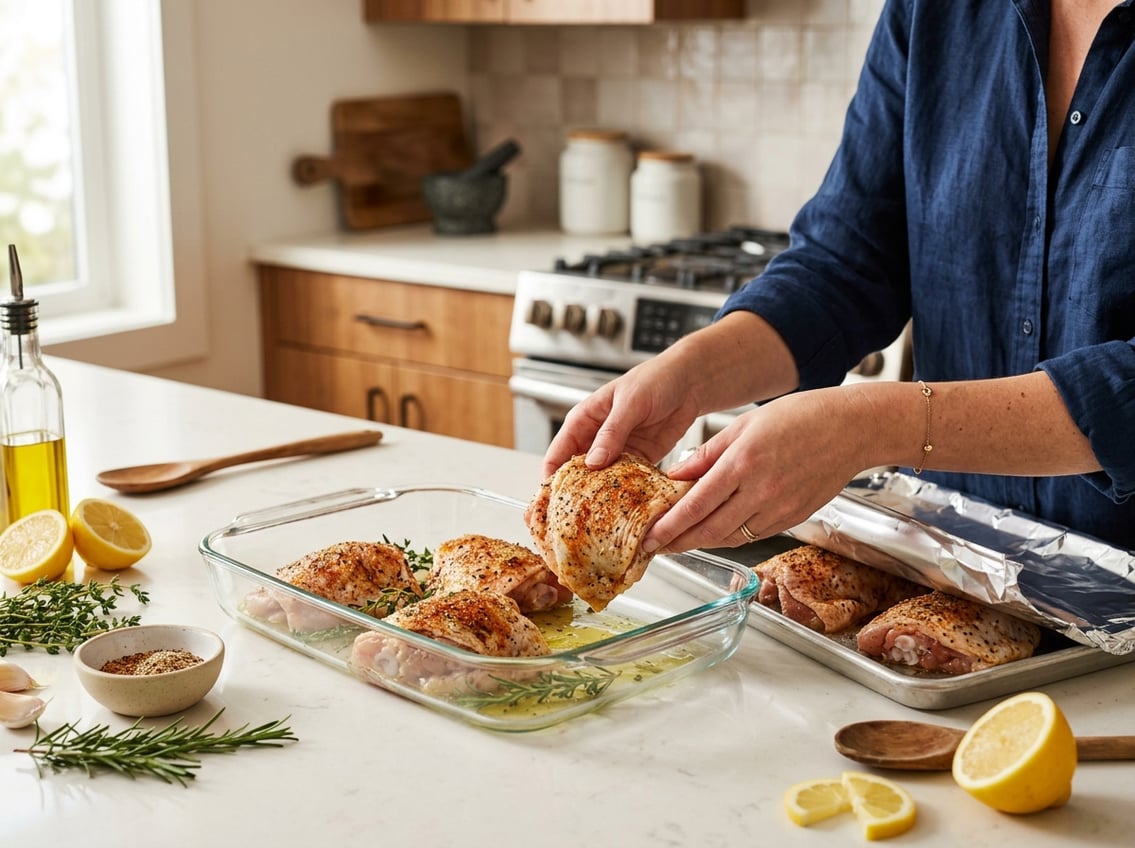
Covering changes cooking time, moisture retention, and the Maillard browning that creates crispy skin. You’ll also find guidance on temperature choices, bone-in versus boneless, and skin-on versus skinless options.
Practical techniques help you get juicy, flavorful thighs while avoiding common mistakes.
The Impact of Covering Chicken Thighs During Baking
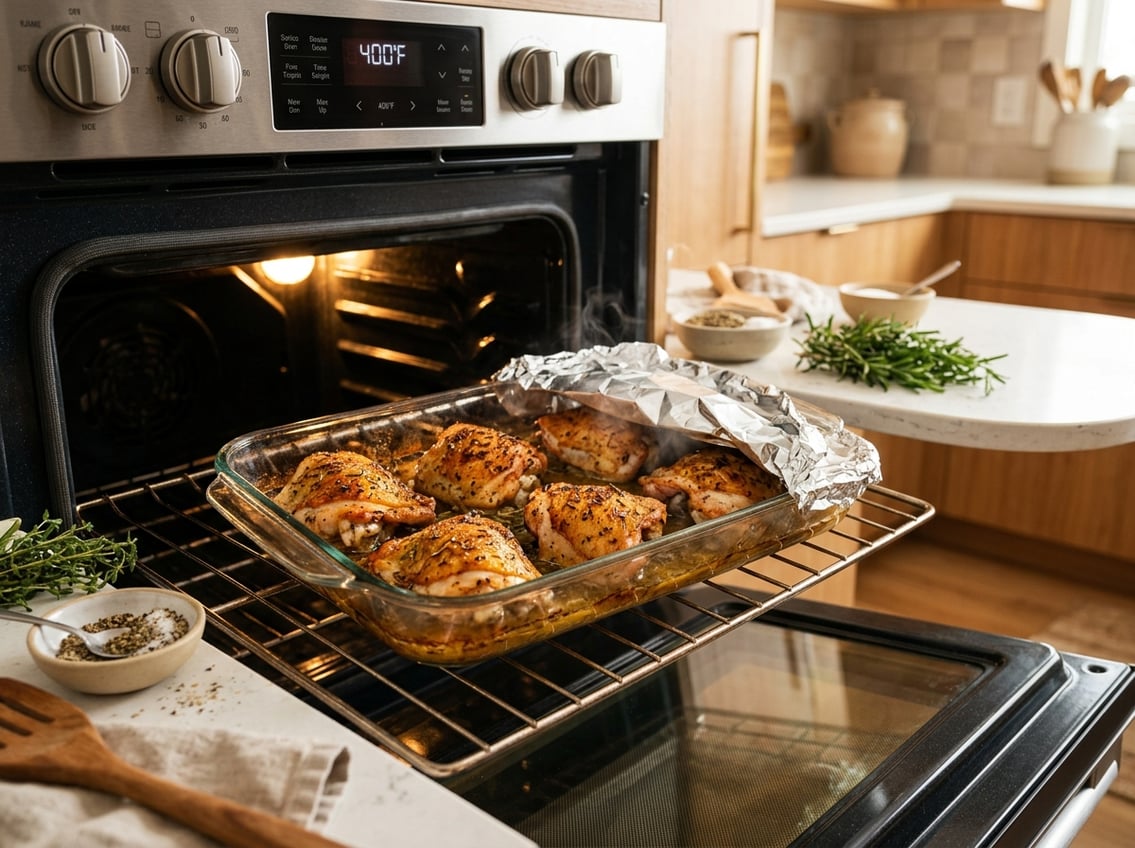
Covering chicken thighs affects how much moisture they keep and whether the skin crisps. You’ll trade surface dryness for internal juiciness when you trap steam.
You’ll need to adjust timing and temperature if you want both tender meat and a browned exterior.
Moisture Retention and Juiciness
When you cover chicken thighs with foil or a lid, steam stays inside the pan. That steam reduces evaporation from the meat surface, so the thighs lose less moisture and stay juicier, especially for bone-in or thicker thighs.
Covering helps most at moderate temperatures (about 350–375°F / 175–190°C) or when thighs start cold from the fridge. It shortens the time the surface is exposed to dry oven air, lowering the risk of the interior overcooking before it reaches 165°F (74°C).
To maximize juiciness without soggy skin, cover for the first portion of baking. Remove the cover late in the cook to allow surface drying and browning.
Crispy Skin Considerations
Covering prevents the skin from drying and stops the Maillard reaction that produces crispness and brown color. If you cover the thighs for the entire bake, you’ll get soft, pale skin even when the meat is cooked.
To get crispy skin while keeping the meat juicy, try this routine:
- Bake covered for 20–30 minutes to cook through gently.
- Remove the cover and raise the oven to 400–425°F (200–220°C) for 10–15 minutes or broil briefly, watching closely.
Pat the skin dry and rub with a little oil or salt before baking to help browning once you uncover.
Even Cooking Distribution
When you cover chicken thighs, you improve heat distribution by creating a more uniform microclimate in the pan. Steam and reflected heat reduce hot spots and help bone-in thighs reach safe temperature more evenly.
This helps when you bake mixed sizes or a crowded pan. Without a cover, outer pieces brown and potentially dry faster than center pieces.
With a cover, you reduce the gap between the internal temperature of the thickest and thinnest pieces. Use a meat thermometer in the thickest part, avoiding bone, to confirm even doneness.
If you uncover late for crisping, check multiple pieces because surface browning can progress quickly.
Choosing Between Covered and Uncovered Baking
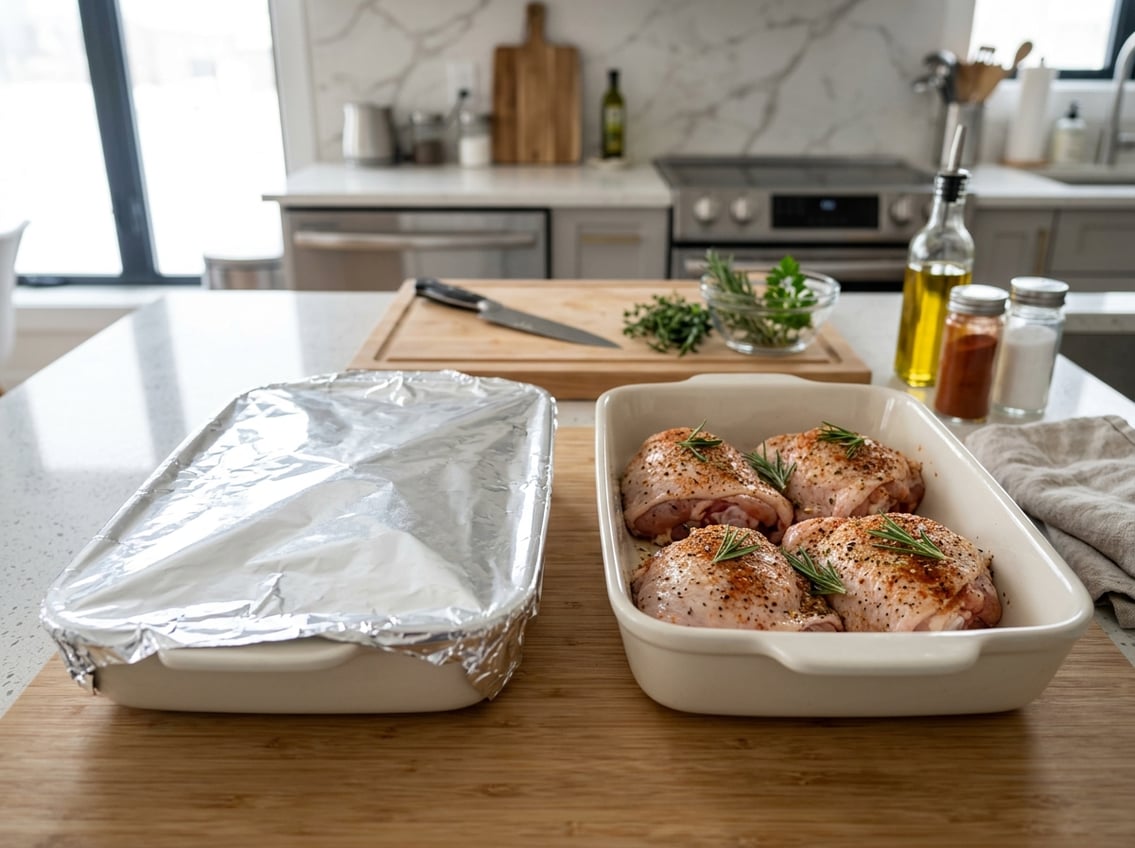
Decide if you want crispy skin or maximum juiciness, and plan timing and temperatures accordingly. Use a covered start or full cover to retain moisture, and switch to uncovered if you want browning.
Partial Covering and Hybrid Techniques
Partial covering gives you control. Start with foil or a lid to trap steam, then remove it for the last 15–30 minutes to brown skin.
This method prevents over-drying while still allowing the Maillard reaction to develop a golden crust. Use a loose tent of foil so steam escapes gradually.
Seal tightly only if you want very soft skin. For oven-baked chicken thighs, set the oven 10–20°F higher during the uncovered finish to promote crisping without extending total cook time.
If you use a braising liquid, keep the thighs covered longer to stay tender. Lift the cover right before the end so excess liquid can evaporate and the skin firms up.
Balancing Texture and Flavor
Covering chicken thighs while baking locks in moisture and concentrates flavors from marinades and rubs. You’ll get juicier meat but softer skin, which works well if you plan to shred or sauce the thighs afterward.
Baking chicken thighs uncovered exposes skin to dry heat, producing a crisp exterior and a slightly firmer interior near the surface. That texture enhances salted or spice-rubbed skins and helps glaze stick.
Choose based on the final dish. Keep thighs covered for salads, tacos, or stews where tenderness matters. Go uncovered for plated entrees where skin crispness is a primary appeal.
When to Uncover for Best Results
Uncover toward the end when internal temperature reaches about 155–160°F and you need a 5–10°F carryover to reach 165°F safely. Removing the cover in the last 15–30 minutes gives time for browning without overcooking the meat.
If you want evenly browned skin, move the rack higher in the oven and switch to broil for 1–3 minutes while watching closely. Avoid prolonged broiling; thin spots on skin can burn quickly.
Time the uncover with your thermometer checks and sauce additions so the skin crisps while the meat finishes cooking.
Baking Time and Temperature Factors
Timing, temperature, and whether the thighs have bones determine juiciness, doneness, and skin crispness. Choose your oven setting and check internal temperature rather than relying solely on minutes.
How Long to Bake Chicken Thighs
Baking time depends on thigh size and whether they’re bone-in or boneless. For average bone-in, skin-on thighs (about 6–8 oz each), bake for 30–40 minutes at 400°F (204°C).
Boneless, skinless thighs of similar weight usually take 20–30 minutes at the same temperature. Always verify doneness with an instant-read thermometer; the USDA target is 165°F (74°C) in the thickest part.
Let thighs rest 5–10 minutes after baking. Carryover heat evens the temperature and retains juices.
If you prefer very tender meat, remove at 160–163°F and rest to reach 165°F.
Effect of Bone-In vs. Boneless
Bones slow heat penetration, so bone-in thighs need more time than boneless. Add 5–15 minutes for bone-in thighs compared to boneless at the same oven settings.
Skin-on thighs also take slightly longer but yield crisper skin when roasted at higher heat. Boneless thighs heat faster and suit quicker meals.
Bones add flavor and help prevent overcooking, especially at moderate temperatures. Adjust time based on thigh thickness rather than weight alone.
Oven Temperature Recommendations
Choose temperature based on your priorities: moisture or crispness. For crisp skin, bake at 425°F (218°C) for 25–40 minutes depending on bone presence.
For juicier, more forgiving results, 375°F (190°C) for 35–45 minutes works well for bone-in thighs.
Use these quick guide points:
- 425°F (218°C): 20–30 min boneless, 30–40 min bone-in for crispy skin.
- 400°F (204°C): 20–30 min boneless, 30–40 min bone-in for balanced results.
- 375°F (190°C): 25–35 min boneless, 35–45 min bone-in for extra moisture.
Place thighs skin-side up on a rack or sheet for air circulation. Check internal temp instead of relying on clock time.
The Role of Skin-On Versus Skinless Thighs
Skin affects flavor, moisture retention, and how you should time covering while baking. Your choice between skin-on and skinless changes oven temperature, covering time, and finishing methods.
Advantages of Skin-On Chicken Thighs
Skin-on chicken thighs provide a built-in fat layer that protects the meat during baking. That fat renders as the thighs cook, basting the meat and reducing the risk of dryness even if you cover them part of the time.
You also get more flavor from the skin. As the skin browns, it develops Maillard flavors that transfer to the meat.
Many cooks remove foil for the final 10–20 minutes to crisp the skin. If you want both juiciness and a crispy crust, start covered then finish uncovered at higher heat or under the broiler.
Skin-on thighs tolerate longer cook times and lower temperatures better than skinless pieces. That flexibility makes them forgiving when you’re adjusting covered vs. uncovered bake times.
How Skin Affects Moisture and Crispness
Skin creates a moisture barrier. When the skin remains intact, internal juices stay trapped, so you can cover the dish early to speed even cooking without losing as much succulence.
However, the skin’s moisture must be managed to crisp. Pat skin dry before seasoning; excess surface moisture prevents browning.
If you keep thighs covered too long, steam softens the skin and prevents Maillard browning. For crispy, juicy baked chicken thighs, bake covered at 375°F (190°C) for the first 20–30 minutes to ensure even cooking.
Remove the cover and raise temperature to 400–425°F (200–220°C) or broil briefly to render fat and crisp the skin. If you choose skinless thighs, skip the crisping stage and reduce overall cook time to avoid drying the meat.
Techniques for Flavorful and Juicy Oven-Baked Chicken Thighs
Use direct-seasoning and brief marinating to build deep flavor. Finish prep steps that promote a crispy skin and moist interior.
Seasoning and Marinating Methods
Pat the thighs dry with paper towels before seasoning. For a basic rub, mix 2 tbsp paprika, 1 tbsp garlic powder, 1 tbsp onion powder, 1 tsp chili powder, 1 tsp dried oregano, 1 tsp salt, and 1 tsp black pepper.
Rub 1–2 tsp of this mix per thigh into and under the skin when possible. For more depth, marinate 30 minutes to 8 hours.
Use an acid (1–2 tbsp lemon juice or vinegar) plus 2 tbsp oil and 1–2 cloves minced garlic per pound. Don’t marinate more than 8–12 hours for skin-on thighs; long acid exposure can change texture.
If you’re short on time, a 15–30 minute salt brine (1 tbsp kosher salt per 2 cups water) firms the meat and helps retain juices.
If you want a sticky glaze, apply it in the last 10 minutes of baking so sugars caramelize without burning. Reserve a small amount of marinade separately if you plan to baste during or serve as a sauce.
Preparation for Optimal Results
Preheat the oven to a high temperature—425°F (218°C) works well for crispy skin and tender meat. Arrange bone-in thighs skin-side up on a wire rack set over a rimmed baking sheet so hot air circulates and fat drips away.
If you don’t have a rack, place on a lightly oiled sheet but rotate halfway through cooking. Use an instant-read thermometer to check doneness; remove at 165°F (74°C) and let rest 5–10 minutes.
For even cooking, bring thighs to room temperature for 20–30 minutes before baking. If you choose to cover the pan for part of cooking, do it only for large, overcrowded trays.
Start uncovered to crisp skin, then tent loosely with foil if the exterior browns too fast while the interior finishes.
Common Mistakes and Expert Tips for Baking Chicken Thighs
Control moisture and surface texture by matching oven temperature, pan choice, and whether you cover the thighs. Use a thermometer, give skin room to crisp, and rest the meat before slicing.
Avoiding Dryness or Sogginess
When you bake chicken thighs uncovered at 400°F (200°C), the hot dry air helps render fat and crisp skin. Use a rimmed baking sheet or shallow roasting pan so air circulates.
Overcrowding traps steam and produces soggy skin. Pat thighs dry with paper towels and apply a thin coat of oil or a dry rub to encourage browning.
If you marinate in wet mixtures, shake off excess and blot the surface before baking. If you prefer lower temperatures (325–350°F), cover loosely with foil for the first portion of the bake, then remove for the last 10–15 minutes to finish browning.
Bone-in, skin-on thighs tolerate higher heat. Boneless thighs cook faster and risk drying out if overbaked.
Use a wire rack over the pan for best texture.
Checking Doneness and Serving Ideas
Check internal temperature at the thickest part near the bone for bone-in thighs or at the center for boneless. Insert a probe thermometer; 165°F (74°C) is safe, but removing the chicken at 160–162°F and letting it rest for 5–8 minutes gives juicier results as carryover heat raises the temperature slightly.
Look for clear juices and no pink near the bone. If the skin isn’t crisp, broil for 1–3 minutes while watching closely.
Serve oven-baked chicken thighs straight from the pan or transfer them to a plate to rest. Slice boneless thighs against the grain.
Pair the chicken with roasted vegetables, rice, or a fresh salad. Spoon pan juices or a quick pan sauce over the meat for extra flavor.


