
What Is a Good Way to Fix Chicken Breast Fast
What is a good way to fix chicken breast fast? The best quick fix is to slice it thin, add moisture back with broth or sauce, and warm it gently so it does not dry out more.
If you can still salvage the chicken, slicing and adding moisture gives you a better result than using more heat.
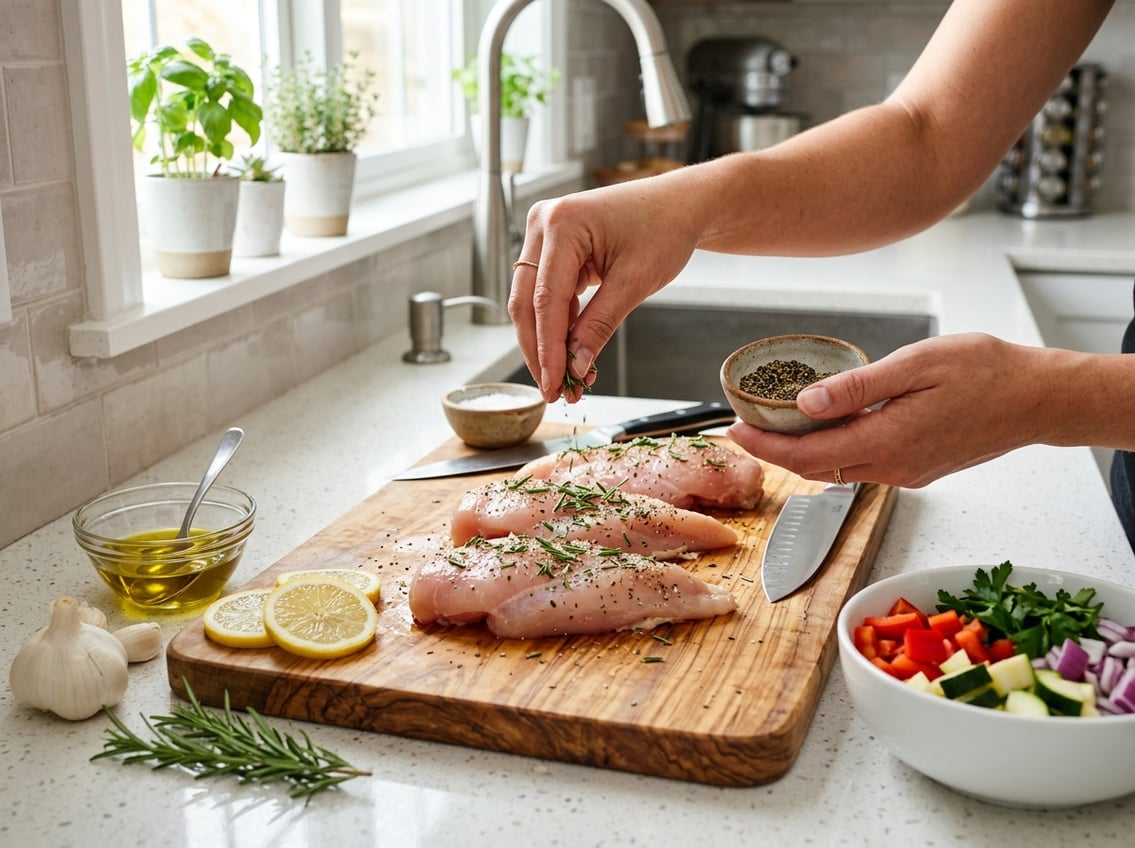
The most reliable way to keep chicken breast good is to stop cooking early, let it rest, and use moisture from the start.
Chicken breasts are lean, so they lose moisture fast when overcooked.
A baked chicken breast can still taste good if you fix the texture the right way and choose a better method next time.
Quick Fixes for Dry or Tough Chicken
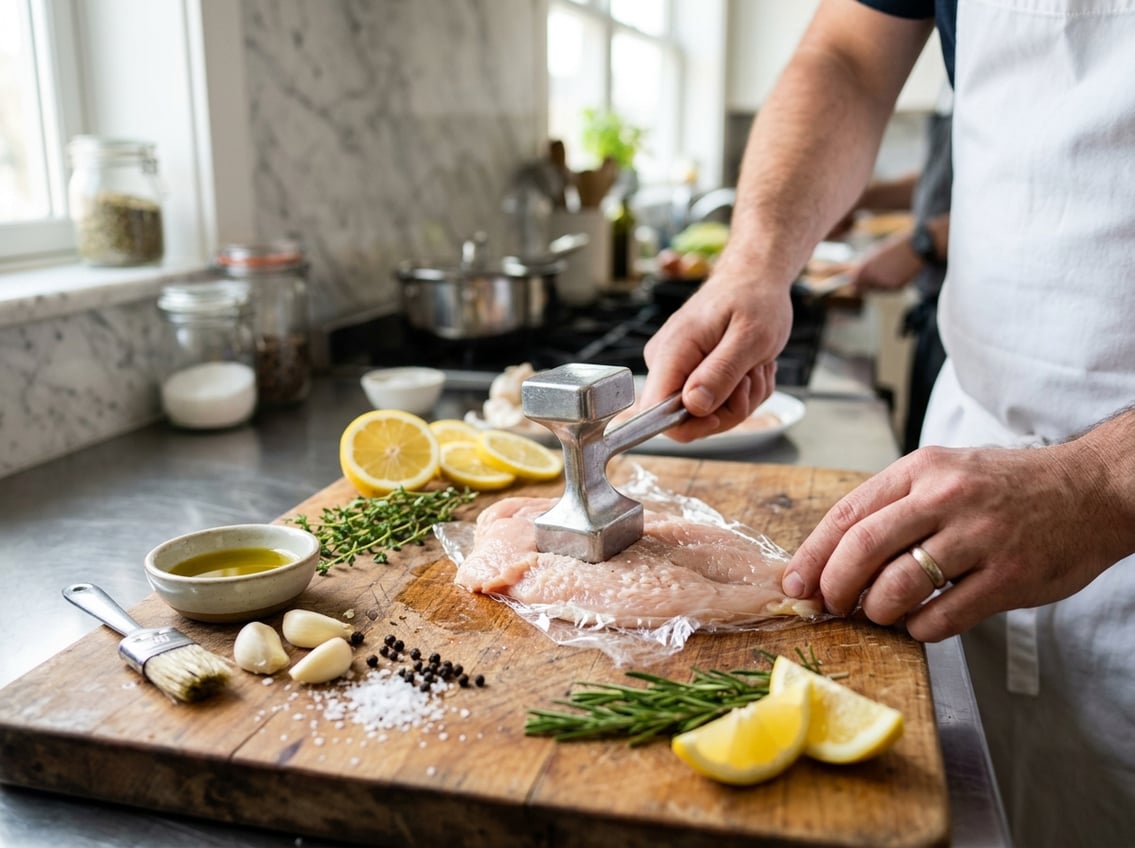
You can usually use dry chicken breasts if they are only a little overdone.
The goal is to add moisture, reduce chewiness, and use just enough heat.
A cutting board, a sharp knife, and a small amount of liquid help a lot.
Slice Thin and Add Moisture Back
Cut the chicken across the grain into thin slices on a cutting board.
Thin pieces feel less dry because they are easier to chew and hold sauce better.
Drizzle the slices with warm broth, pan juices, or a light sauce.
If you serve baked chicken breast with rice, pasta, or vegetables, that extra moisture helps the whole plate taste better.
Shred and Toss With Sauce or Broth
If you cannot slice the chicken nicely, shred it with two forks.
Toss the pieces with a little broth, salsa, gravy, or dressing so the meat absorbs flavor.
This method works well for tacos, soups, grain bowls, and casseroles.
Warm Gently Instead of Re-Cooking
Use low heat to reheat chicken breasts.
Add a splash of broth or water, cover the pan, and warm just until heated through.
Microwaving works if you use short bursts and cover the meat with a damp paper towel.
High heat makes a baked chicken breast even tougher.
When Chicken Is Beyond Saving
If the chicken tastes burnt, feels leathery, or smells off, throw it away.
Very dry chicken can still work in soup or salad, but unsafe chicken should be discarded.
How to Keep Chicken Breast Juicy Next Time
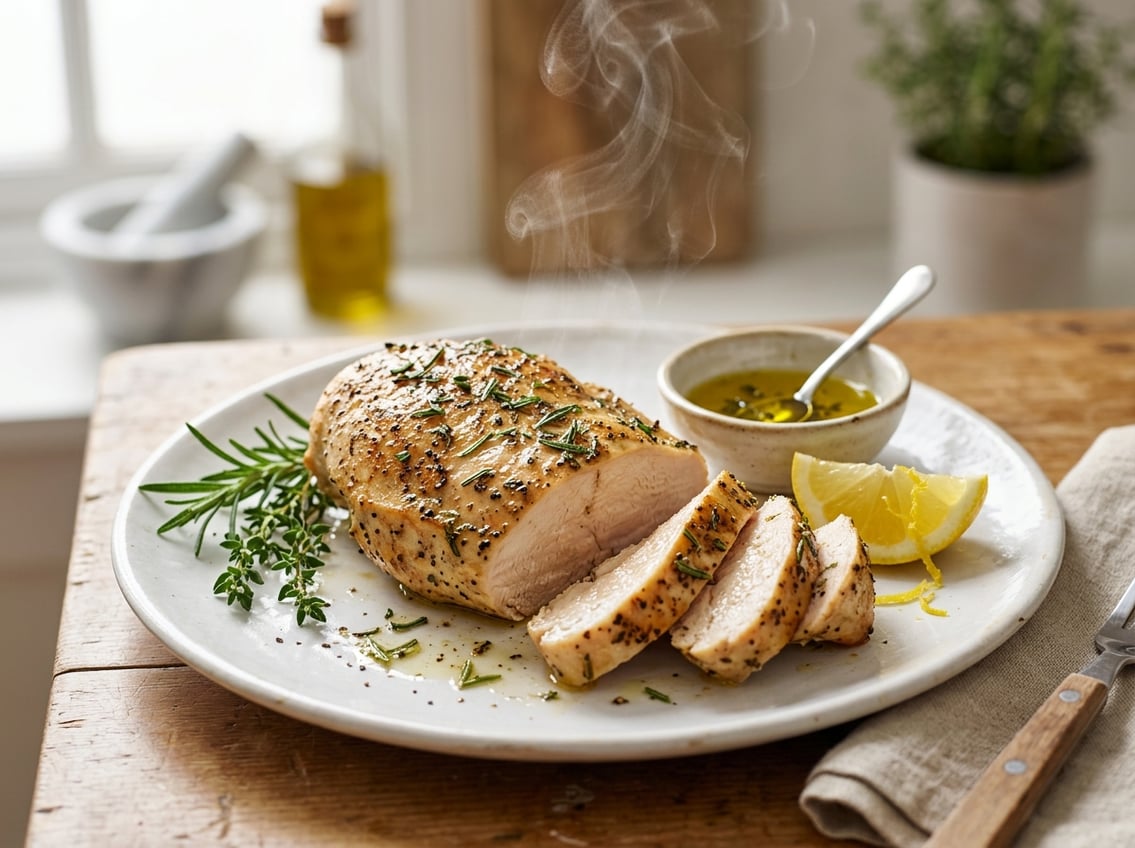
Juicy chicken starts before you turn on the heat.
You need even thickness, proper seasoning, and the right cut for the recipe.
Chefs told Simply Recipes that brining and careful cooking help you get better results with chicken breasts, especially lean boneless pieces Simply Recipes.
Use a Meat Thermometer and Pull Early
A meat thermometer helps you avoid dry chicken.
Check the thickest part and pull the chicken before it goes too far past done.
Chicken is safe at 165°F, but the temperature often rises a little after you take it off the heat.
If you cook chicken breast to the edge of doneness and let it rest, you reduce the chance of a dry result.
Pound to an Even Thickness
If one end of the breast is much thicker than the other, it cooks unevenly.
Lightly pound chicken breast so the whole piece has a similar thickness.
That step helps the thinner part avoid drying out while the thicker part finishes cooking.
It also makes boneless chicken breast easier to bake or grill evenly.
Choose a Quick Brine or Overnight Brine
A quick brine or overnight brine improves moisture and flavor.
According to Simply Recipes, even 20 to 30 minutes in salt helps, and an overnight brine gives boneless chicken breast more time to absorb seasoning and moisture Simply Recipes.
A brine is especially useful when you want skinless chicken breast to taste less plain.
Pick the Right Cut for the Job
Bone-in chicken breast and skin-on chicken breast usually stay juicier than boneless or skinless chicken breast.
The bone and skin protect the meat during cooking.
For fast meals, boneless pieces cook quickly.
For roasts or special meals, bone-in chicken breast often gives you a better result.
Best Cooking Methods by Situation
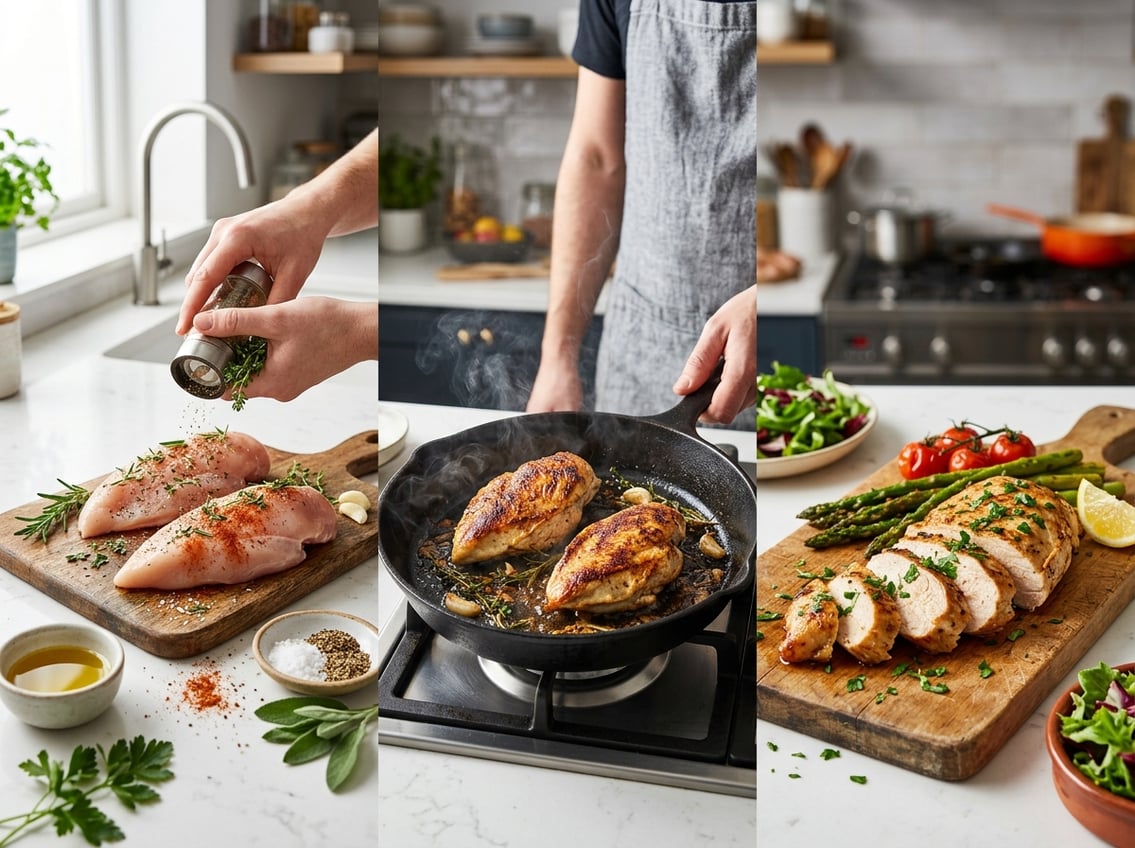
Your goal, timing, and how you plan to use the chicken determine the best cooking method.
Bake chicken for easy cleanup, grill chicken for stronger flavor, poach chicken for shredding, and use a slow cooker for a hands-off meal.
Bake for Easy Meal Prep
Bake chicken breasts on a sheet pan or in a baking dish for a simple routine.
This works for lunches, salads, wraps, and dinner prep.
Moderate heat and a thermometer give you better results than guesswork.
If you are learning how to bake chicken, start with boneless chicken breast for faster cook time or bone-in chicken breast for more flavor and moisture.
Grill for Smoky Flavor
Grill chicken over medium heat for a charred outside and smoky flavor.
This method is good when you marinate first or use even-sized pieces.
Keep the lid closed as needed and check temperature often.
Avoid high heat that burns the outside before the inside is done.
Poach for Tender Shredded Chicken
Poach chicken when you need very tender meat for soup, enchiladas, or chicken salad.
Keep the water or broth at a gentle simmer, not a hard boil.
This method works well for boneless chicken breast because gentle heat lowers the risk of toughness.
Use a Slow Cooker for Hands-Off Meals
A slow cooker lets you make moist shredded chicken with minimal attention.
Add broth, seasoning, and chicken, then cook until the meat pulls apart easily.
This method works best for sauces, sandwiches, and meal prep.
For boneless chicken breast, check early so it does not turn stringy.
Simple Setup, Timing, and Handling Tips
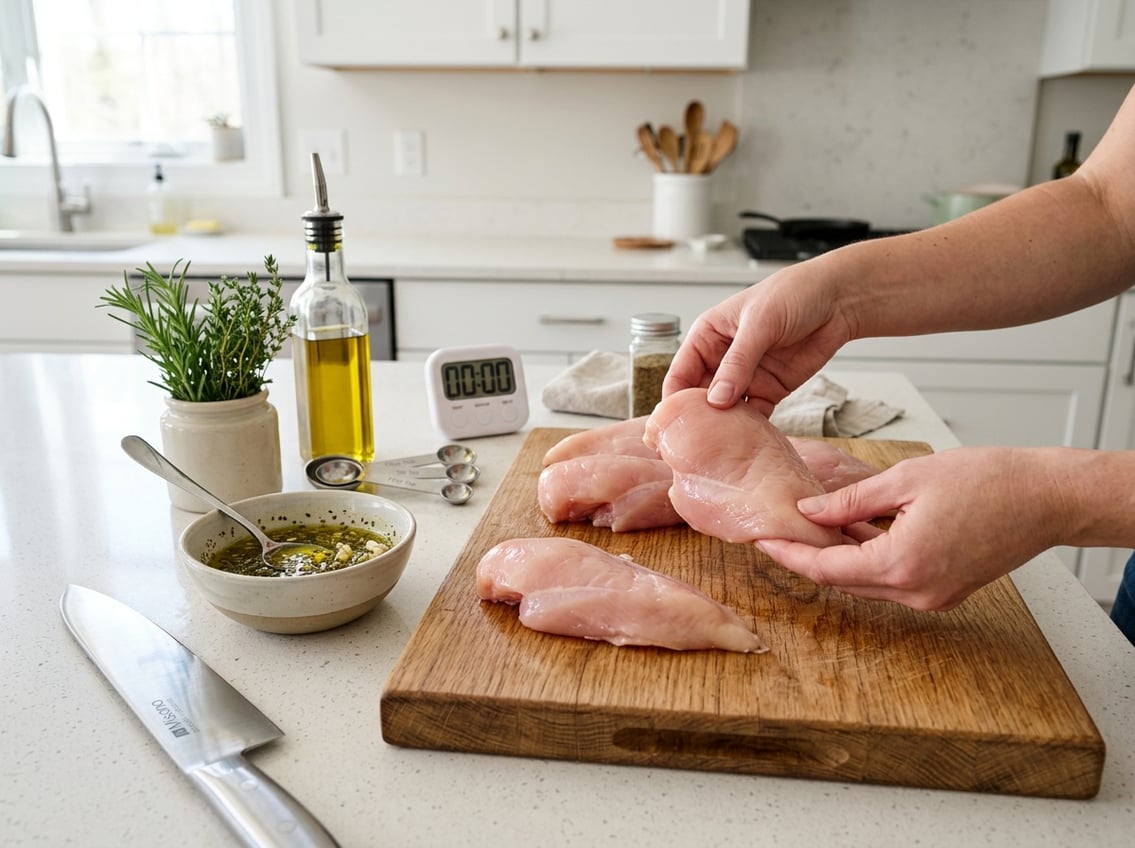
Good setup helps you avoid dry chicken before it reaches the oven or pan.
Use the right pan, keep your tools ready, and rest the meat after cooking.
These small steps improve a baked chicken breast more than most extra seasonings.
Use a Baking Sheet or Baking Dish Wisely
A baking sheet gives you more surface area, which helps chicken brown.
A baking dish holds juices better, which can be useful if you want more moisture around the meat.
Choose the pan that fits your goal.
If you want cleaner edges and faster browning, use a sheet.
If you want more liquid at the bottom, use a dish.
Line Pans With Parchment Paper When Helpful
Parchment paper makes cleanup easier and helps prevent sticking.
Use it when you bake chicken breasts with a light coating, such as spice rubs or thin marinades.
Do not use parchment when you need extra browning from direct pan contact.
Use it when convenience matters more than a deep crust.
Rest Before Slicing
Let the chicken rest for several minutes after cooking.
That pause helps juices settle back into the meat instead of running onto the cutting board.
Use your cutting board only after the rest time is done.
If you slice too soon, even a well-cooked baked chicken breast can seem dry.
Store and Reheat Without Drying Out
Place leftover chicken in a sealed container as soon as it cools.
Add a little broth or sauce before reheating to keep the meat from tightening up.
Reheat using low heat and short cooking times.
This method helps keep the chicken moist.


