
What Do I Cook Chicken Breast at in the Oven? Temp Guide
If you want to know what temperature to cook chicken breast in the oven, set it between 375°F and 425°F. The right temperature depends on the size of the breast and how much browning you prefer.
For most boneless, skinless chicken breasts, bake at 375°F to 400°F and check with a thermometer for juicy results.
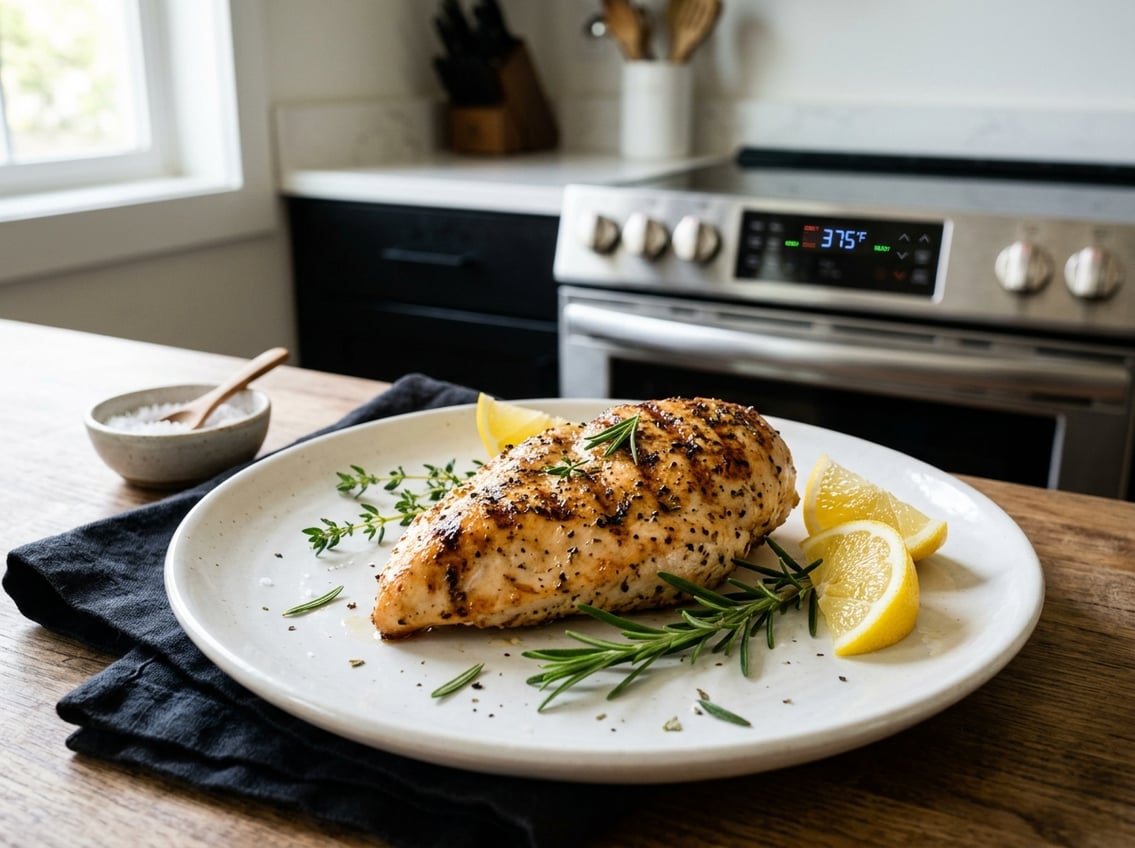
Chicken breast dries out quickly because it is lean. Set the right temperature and avoid overcooking to keep it tender and easy to slice.
You need more than just the right oven setting. Make the thickness even, season simply, and use a meat thermometer to know when to stop cooking.
Best Oven Temperature for Chicken Breast
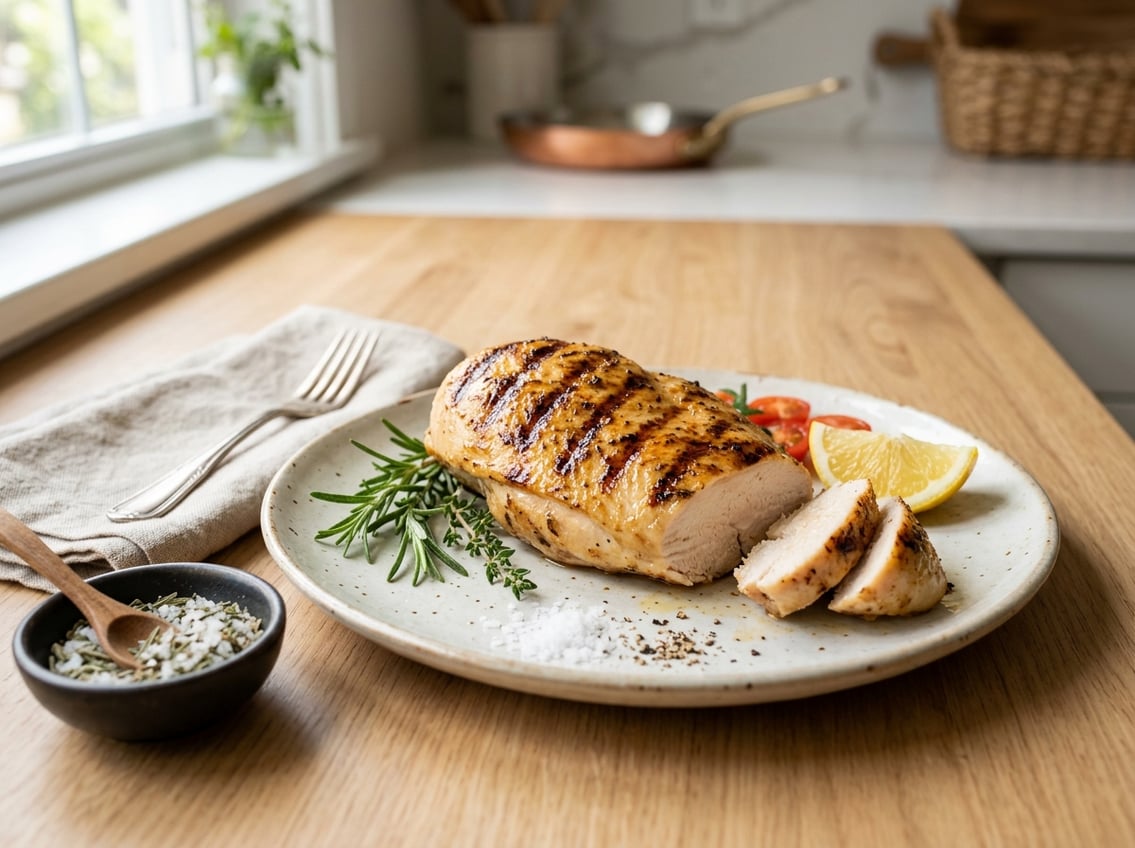
Choose the oven temperature based on the result you want. Lower heat gives you more control, while higher heat browns the outside faster and shortens cooking time.
Check the center with a meat thermometer or instant-read thermometer for the best result. Cooking time changes with thickness, pan type, and whether you use boneless or bone-in chicken breast.
When to Use 375°F, 400°F, or 425°F
Use 375°F for steady, even cooking. This temperature is great for thicker breasts or dishes with a little liquid.
400°F gives more color than 375°F and keeps the chicken juicy if you watch the time.
425°F works for thinner breasts or when you want faster cooking and a lightly browned outside.
How Long Different Sizes Usually Take
Thin chicken breasts take about 15 to 18 minutes at 425°F. Average boneless breasts usually need 18 to 25 minutes at 400°F.
At 375°F, standard boneless breasts take around 20 to 30 minutes. Bone-in chicken breast takes longer because the bone slows heat flow.
The Safe Internal Temperature to Aim For
Aim for a safe internal temperature of 165°F at the thickest part. The USDA also recommends 165°F for poultry.
Some cooks pull the chicken at 160°F and let it rest so carryover heat brings it up to 165°F. This method can help keep the chicken juicier if the center reaches the safe range during resting.
Prep Steps That Keep It Juicy
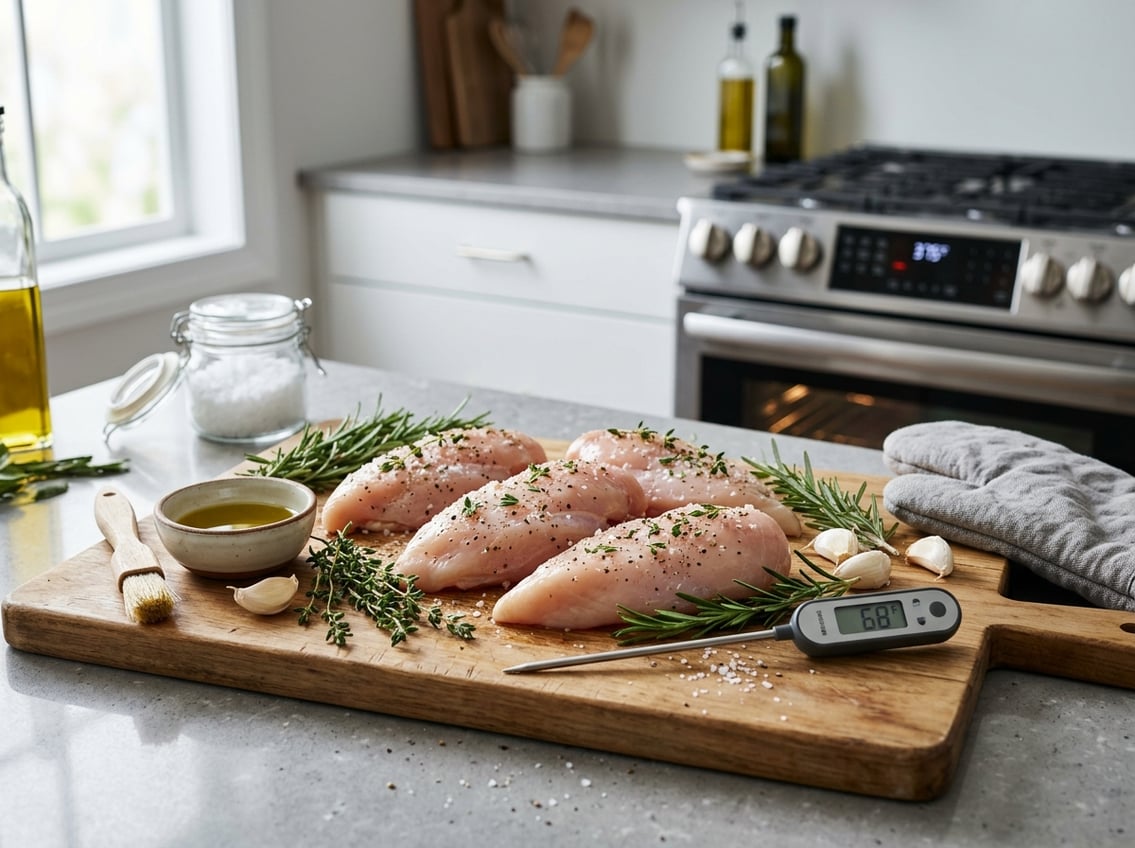
Good prep makes a big difference before the chicken goes in the oven. Make the pieces even, season well, and use a setup that holds moisture.
A few simple steps help your chicken stay tender and flavorful.
Why You Should Pound Chicken to Even Thickness
If one side is thick and the other is thin, the thin end dries out first. Pound chicken to even thickness so it cooks at the same pace.
Use a meat mallet or rolling pin with plastic wrap or parchment on top. Aim for 1/2 to 3/4 inch thickness for boneless breasts.
Simple Seasoning That Works Every Time
Mix salt and pepper, garlic powder, onion powder, and paprika for reliable flavor. Add a light coating of avocado oil to help seasoning stick and the surface brown.
Keep the seasoning layer even. Too much spice can burn, and too little leaves the chicken bland.
Choosing a Pan, Baking Dish, or Parchment Setup
A baking dish keeps juices close and helps with moisture. A sheet pan lined with parchment paper gives more browning and easier cleanup.
Use a baking dish for saucier recipes. Choose a sheet pan for drier heat and more color.
How to Bake It Without Drying It Out
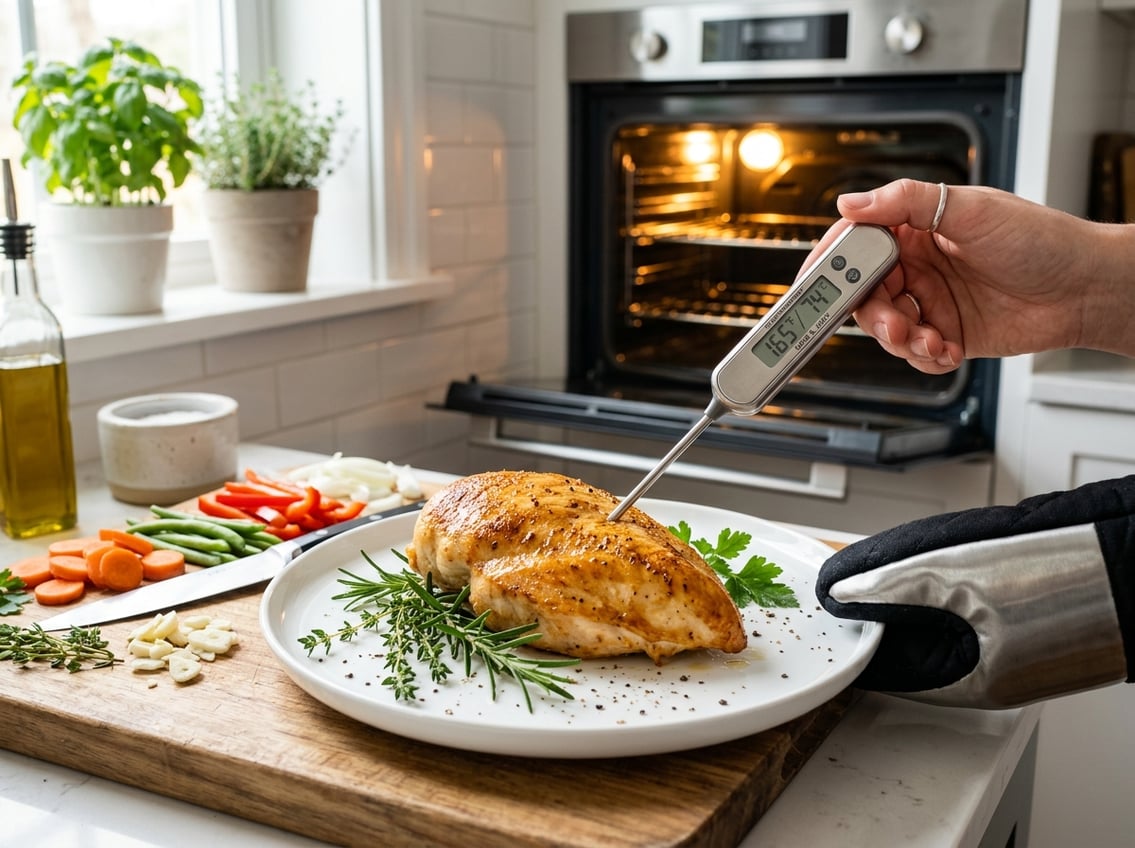
Control the heat, thickness, and timing to bake chicken breast well. Use a meat thermometer to check for doneness.
Remove the chicken at the right moment and let it rest before slicing.
Step-by-Step Oven Method
- Preheat the oven to 375°F, 400°F, or 425°F based on your recipe and breast size.
- Pat the chicken dry, then season both sides.
- Place the chicken in a baking dish or on a parchment-lined sheet pan.
- Bake until the center reaches the target temperature.
- Rest the chicken before cutting.
Start checking early and use an instant-read thermometer for accuracy. Boneless breasts at 375°F often finish in about 20 minutes.
When to Pull the Chicken and Let It Rest
Pull the chicken when the thickest part reaches 160°F to 165°F. Rest for 5 to 10 minutes so juices settle and the temperature finishes rising.
If you slice too soon, juices run out and the meat can seem dry even if cooked well.
Common Mistakes That Cause Dry or Rubbery Meat
Overcooking is the biggest problem. A few extra minutes can make the chicken tough.
Uneven thickness, skipping the thermometer, too little seasoning, and cutting right away also cause dry results. Match thickness, heat, and cook time for the best outcome.
Storing and Reusing Cooked Chicken
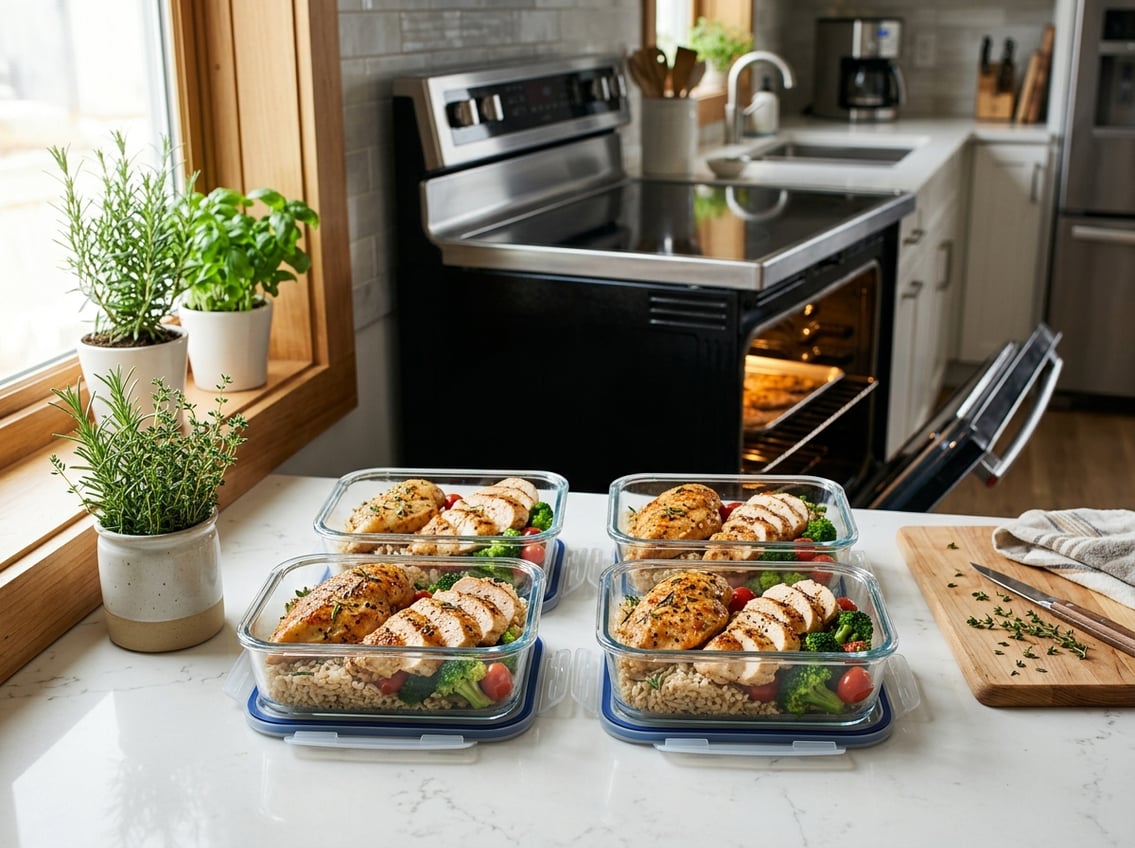
Store cooked chicken breast properly to keep it safe and easy to use later. Use baked chicken for lunches, dinners, or meal prep.
Cool it quickly, store it well, and reheat gently to avoid drying it out.
How to Store Baked Chicken Safely
Let chicken cool a bit, then place it in a sealed container and refrigerate within two hours. Store in the fridge for up to 3 to 4 days.
Freeze portions in airtight bags or containers for longer storage. Label with the date and use older chicken first.
Best Ways to Reheat Leftover Portions
Reheat leftover chicken breast in the oven to help hold moisture. Cover the chicken in an oven-safe dish and warm at 350°F until it reaches 165°F again.
You can also reheat small pieces in a skillet with a splash of broth or water. Keep the heat low so the chicken warms through without drying out.
Easy Ways to Use It in Meals Later
Slice baked chicken breast for salads, sandwiches, wraps, and grain bowls.
Chop it for soups, pasta, quesadillas, or tacos.
You can use leftover chicken breast in another recipe when you need a fast dinner.
Since you already cooked the meat, you only need to focus on flavor and gentle reheating.


